
-
Brain Scoop: The ‘Sistine Chapel of Taxidermy’ – Conserving Akeley’s Elephants
Read more: Brain Scoop: The ‘Sistine Chapel of Taxidermy’ – Conserving Akeley’s ElephantsThe Brain Scoop has an episode about the 100+ year old elephants at the Field Museum in Stanley Field Hall. They were created by Carl Akeley and his wife Delia way back in the early 1900s. A previous episodes from 2013 are here and here.
-

ESCONI Events February 2018
Read more: ESCONI Events February 2018Field trips require membership, but visitors are welcome at all meetings! Rescheduled for Mar 9th ESCONI General Meeting, 8:00 PM College of Dupage – Tech Ed (TEC) Building, Room 1038B (Map) – Topic: “Human Evolution – an update.” by Dr. Dan Gebo from the Department of Anthropology at NIU Sat, Feb 17th Warehouse Work Day, 9:00 AM – 2:00 PM – (Map) – Preparation for the 2018 Show in March. Please meet in the back of the building! Sat, Feb 17th ESCONI Paleontology Study Group Meeting, 7:30 PM College of Dupage – Tech Ed (TEC) Building, Room 1038B (Map) –…
-

34 million year old carnivore named after the Egyptian god of the Underworld
Read more: 34 million year old carnivore named after the Egyptian god of the UnderworldPLOS Paleo’s Blog has an article about a newly described canine-like fossil from Egypt. Masrasector nananubis, or little “Anubis”, was a dog-like creature that lived during the late Eocene about 34 million years ago. The researchers that authored the open access paper are Matthew Borths from Ohio University and Erik Seiffert from the University of Southern California. The specimens were collected over more than a decade from the Fayum Depression in Egypt. An interview with Matthew Borths is available here. The animal is known as a hyaenodont, which you might be able to guess from the name is a relative…
-
Reminder: ESCONI Gem, Mineral, and Fossil Show will be held on March 24th and 25th, 2018
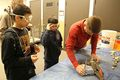
Read more: Reminder: ESCONI Gem, Mineral, and Fossil Show will be held on March 24th and 25th, 2018Saturday, March 24th – 10 a.m. to 5 p.m.Sunday, March 25th – 10 a.m. to 4 p.m. Free admittance and parking! Exploreyour interests Shop for jewelry, gems, fossils, minerals from world-class vendors List to Follow Soon, Stay tuned! Find unique and interesting books at the used book sale Learn from members of club demonstrating their hobbies and collections Bid and buy gems, minerals and fossils at the Silent Auction and Live Auctions(photos of some items will be posted on website a week before show) Enjoy amazing displays from the Field Museum & Lizzadro Museum Winan amazing earth-science related prize in…
-
Palaeocast Episode 85: Ichthyosaurs
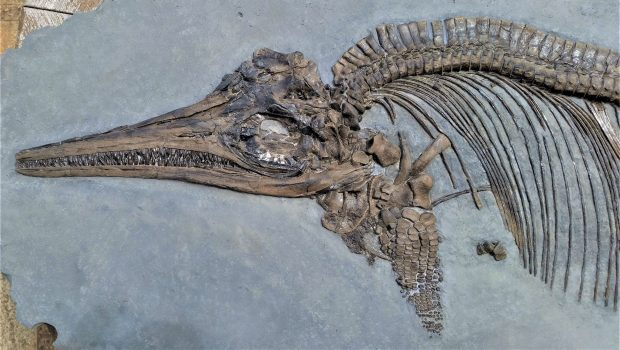
Read more: Palaeocast Episode 85: IchthyosaursThe Palaeocast podcast has a new episode on Ichthyosaurs. The discussion centers around a new documentary called “Attenborough and the Sea Dragon”. Ichthyosaurs are large marine reptiles that existed for most of the Mesozoic Era. The most familiar forms superficially represent dolphins, but some earlier ichthyosaurs were more eel like. They could attain huge proportions, with some genera reaching up to 21m long. They were active predators feeding on belemnite, fishes and even other marine reptiles! In this episode, we talk to Dr Ben Moon and Fiann Smithwick, researchers at the University of Bristol, UK. Both have recently been involved…
-
Mineral Monday #1: Here’s How Much It Costs to Buy a Diamond the Size of a Tennis Ball
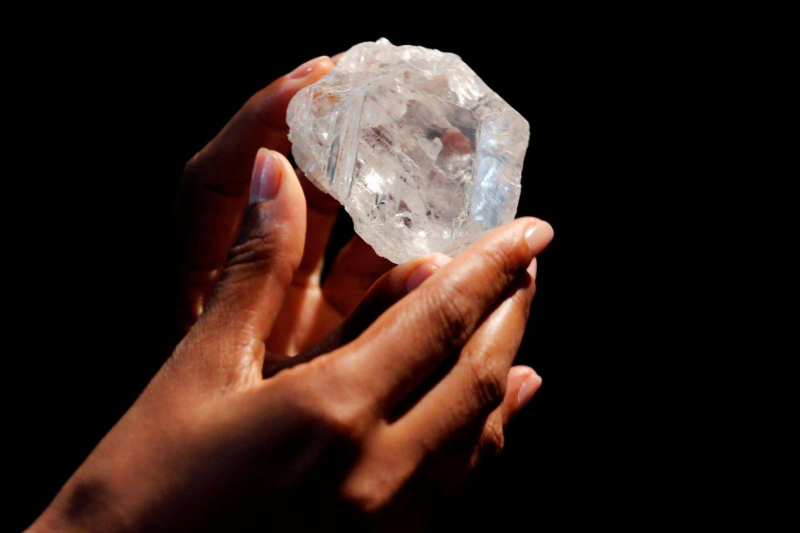
Read more: Mineral Monday #1: Here’s How Much It Costs to Buy a Diamond the Size of a Tennis BallFortune has a story about a diamond that weighs 1,109 carats. The stone, which was sold recently by the Canadian mining company Lucara Diamond, was discovered in 2015 at Lucara’s Karowe mine in Botswana. This is the largest diamond found in the last century. The record is held by the Cullinan Diamond, which was found in 1906 in South Africa. After a year of negotiations, the British jeweler Graff Diamonds has bought the world’s second-largest diamond, the tennis-ball-sized Lesedi La Rona. The Canadian mining outfit Lucara Diamond (LUCRF) had been struggling to sell the 1,109-carat uncut stone, with a Sotheby’s…
-
CBC Quirks & Quarks – Why extinct creatures fought with their tails, while today animals use their heads
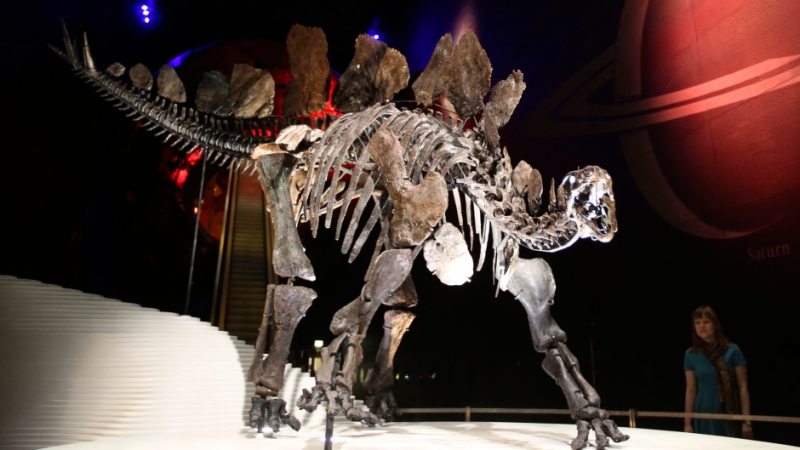
Read more: CBC Quirks & Quarks – Why extinct creatures fought with their tails, while today animals use their headsCBC Radio’s Quirks & Quarks has a segment about dinosaurs that fought with their tails. There were quite a few dinosaurs that evolved defence mechanisms centered around their tails. Examples are Stegosaurs, Ankylosaurs, and maybe some Sauropods. Modern animals with powerful weapons, overwhelmingly use their heads instead of their tails, think rams, deer, elk, with large horns. A paper, by Victoria Arbour and Lindsay Zammo in the Proceedings of the Royal Society B, speaks to why this has changed. To use your tail as an effective weapon, you likely have to be a large, armoured herbivore. That’s the conclusion of…
-
Warehouse Work Day – Saturday, February 10th, 2018, 9:00 – 2:00ish
Read more: Warehouse Work Day – Saturday, February 10th, 2018, 9:00 – 2:00ishIf you have some time, come join our work day at the warehouse on Saturday, February 10th, 2018 from 9:00-2:00ish. The warehouse address is 900 Knell in Montgomery, IL. Please meet/enter in the back of the warehouse ONLY. You will see railroad tracks along the back of the warehouse. Drive all the way to the end in the back. For more information, contact Jim Fairchild at 1-630-497-9700 or e-mail at esconi@hotmail.com
-
PaleoFest 2018 Speakers – March 3rd and 4th, 2018
Read more: PaleoFest 2018 Speakers – March 3rd and 4th, 2018The PaleoFest 2018 speakers have been announced. It’s an all-star cast all around! The dinner speaker is Steve Brusatte. His talk is titled “The Rise and Fall of the Dinosaurs”. Many details can be found in the FAQ. Saturday & Sunday Lectures: Dr. Philip Currie University of Alberta Dr. David Evans University of Toronto & Royal Ontario Museum Cary Woodruff PhD Student, University of Toronto Dr. Brandon Peecook Meeker Postdoctoral Fellow, Field Museum Amy Atwater Paleontology Collections Manager, Museum of the Rockies Dr. Lauren Sallan University of Pennsylvania Dr. Alida Bailleul Postdoctoral Research Associate University of Missouri School of Medicine…
-
Monster Otters, Motörhead Crocs, and Zuul: The Best Paleo Art of 2017
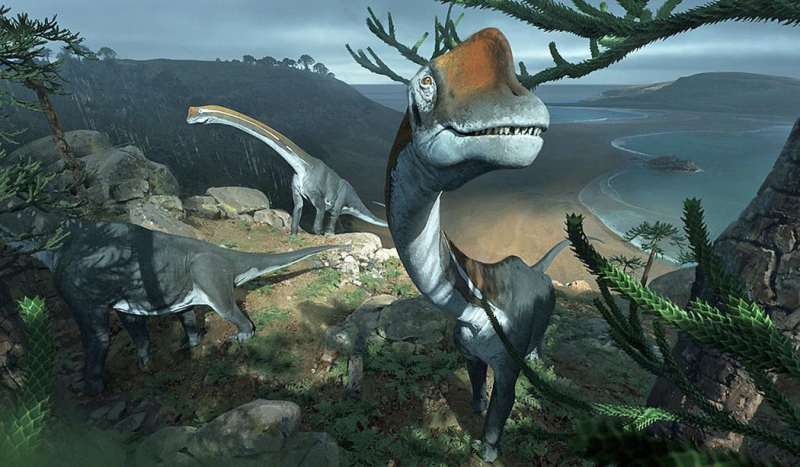
Read more: Monster Otters, Motörhead Crocs, and Zuul: The Best Paleo Art of 2017Motherboard has a blog entry that shows some of the best paleo art of 2017. This year includes: The 2016 story included our friend the Tully Monster.
-
Chicago Rocks & Minerals Society’s 69th Annual Silent Auction – Saturday, March 10th, 2018
Read more: Chicago Rocks & Minerals Society’s 69th Annual Silent Auction – Saturday, March 10th, 2018The Chicago Rocks & Minerals Society will be having its 69th Annual Silent Auction on Saturday, March 10th, 2018 from 6:00 – 9:00 PM. The event will be held at St. Peter's United Church of Christ Gymnasium, 8013 Laramie Ave., Skokie, IL (across the street from the Skokie Public Library on Oakton). Families are welcome! Rockhounds of all ages can bid on a fascinating array of rocks, crystals, minerals, fossils, handmade jewelry, crafts, lapidary treasures including slabs and cabochons, books, magazines, and more. There are always great finds and bargains to be had. Plus, we have a special table of…
-
Warehouse Work Day – Saturday, January 20th, 2018, 9:00 – 2:00ish
Read more: Warehouse Work Day – Saturday, January 20th, 2018, 9:00 – 2:00ishSorry for the late notice. If you have some time, come join our work day at the warehouse on Saturday, January 20th, 2018 from 9:00-2:00ish. The warehouse address is 900 Knell in Montgomery, IL. Please meet/enter in the back of the warehouse ONLY. You will see railroad tracks along the back of the warehouse. Drive all the way to the end in the back. For more information, contact Jim Fairchild at 1-630-497-9700 or e-mail at esconi@hotmail.com
-
Reminder: Next General Meeting is on Friday, January 12th, 2018 – Dennis Whitney on the Ordovian of Morocco
Read more: Reminder: Next General Meeting is on Friday, January 12th, 2018 – Dennis Whitney on the Ordovian of MoroccoThe title of Dennis Whitney's talk at our January 12, 2018 meeting is “The Ordovician of the Anti-Atlas Mountains.” In the talk he will discuss his 2011 and 2013 trips to Morocco and the geology and paleontology of the various collecting sites which were visited.
-

A Warning About Paleontology!
Read more: A Warning About Paleontology!Ran across this recently… Enjoy!
-
ESCONI Events January 2018
Read more: ESCONI Events January 2018Field trips require membership, but visitors are welcome at all meetings! Fri, Jan 12th ESCONI General Meeting, 8:00 PM College of Dupage – Tech Ed (TEC) Building, Room 1038B (Map) – Topic: “The Ordovician of the Anti-Atlas Mountains.” by Dennis Whitney Sat, Jan 20th Warehouse Work Day, 9:00 AM – 2:00 PM – (Map) – Preparation for the 2018 Show in March. Please meet in the back of the building! Sat, Jan 20th ESCONI Paleontology Study Group Meeting, 7:30 PM College of Dupage – Tech Ed (TEC) Building, Room 1038B (Map) – Topic: “Mazon Creek Plants” by Tom Williams
-
Top Fossil Discoveries of 2017
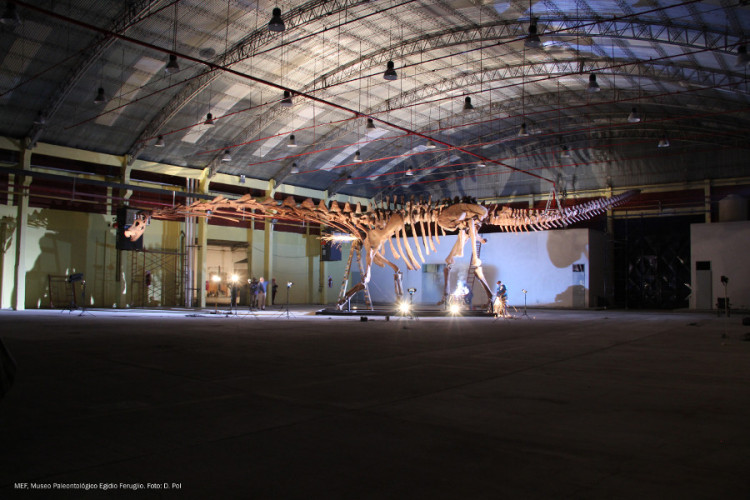
Read more: Top Fossil Discoveries of 2017The blog “Letters from Gondwana” has a post entitled “Top Fossil Discoveries of 2017”. The entries include Borealopelta markmitchelli (the ankylosaurian “mummy” discovered in Alberta), Junornis houi (a new bird from the early Cretaceous), Patagotitan mayorum (the largest and most complete titanosaur discovered to date – from Patagonia, Argentina). There’s a few more with some links to the original papers.
-

NOVA: Day the Dinosaurs Died
Read more: NOVA: Day the Dinosaurs DiedPBS NOVA has a program on the “Day the Dinosaurs Died”. The full episode is available for viewing on the PBS website! Program DescriptionA seven-mile-wide asteroid collided with Earth 66 million years ago, triggering a chain of events that coincide with the end of the dinosaurs. But experts have long debated exactly what happened when the asteroid struck and how the giant beasts met their end. Now, scientists have uncovered compelling new clues about the catastrophe—from New Jersey to the wilds of Patagonia—and an international expedition of scientists has drilled into the impact crater off the coast of Mexico, recovering…
-
CBC: Ancient spider cousin had 5 sets of jaws for crushing its prey
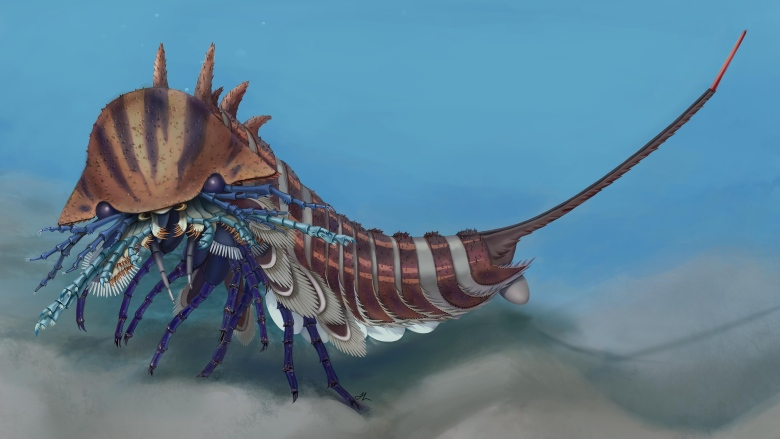
Read more: CBC: Ancient spider cousin had 5 sets of jaws for crushing its preyArtistic reconstruction of Habelia optata on the Cambrian seafloor. Habelia is thought to have been an active predator, eating small animals with hard carapaces, such as trilobites. (Joanna Liang/Royal Ontario Museum) CBC has an article with new information about a Cambrian predator. The animal, Habelia optata, lived about 508 million years ago. It now appears that it is a relative of spiders and scorpions say researchers from the Royal Ontario Museum and the University of Toronto. Fossil specimens of Habelia were first collected in 1912 in the Burgess Shale by Charles Walcott. The original paper was published in BMC Evolutionary…
-
Scientists decry Trump’s move to strip fossil treasures from Utah’s Grand Staircase monument
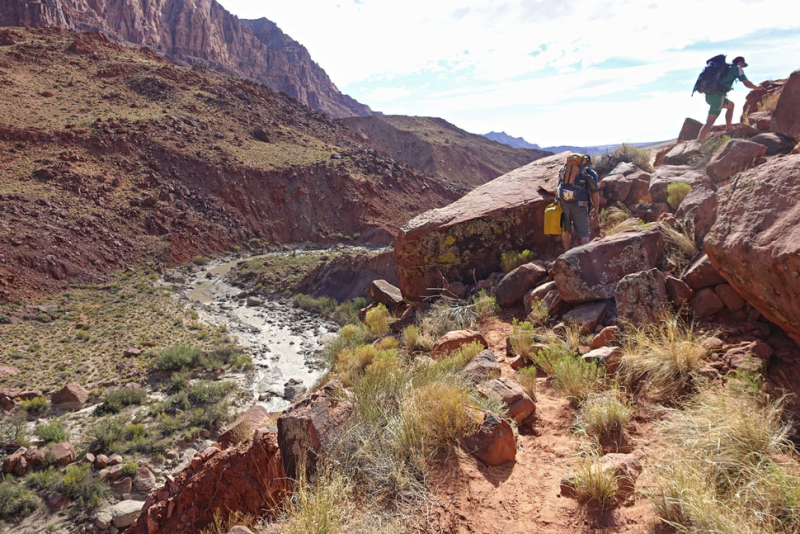
Read more: Scientists decry Trump’s move to strip fossil treasures from Utah’s Grand Staircase monumentThe Salt Lake Tribune has an article about the recent Presidential to free up parts of the Grand Staircase-Escalante National Monument for development. There are many concerns that this change will imperil one of the world’s richest paleontological areas. Some of the researchers are now suing in federal court to halt the move. The Grand Staircase was declared a National Monument in 1996 by then President Bill Clinton. A 1,650 square-mile triangle bounded by the Straight Cliffs on the east and the Cockscomb on the west, the Kaiparowits contains an unbroken fossil record spanning about 25 million years of the…
-
National Geographic: Ticks That Fed on Dinosaurs Found Trapped in Amber
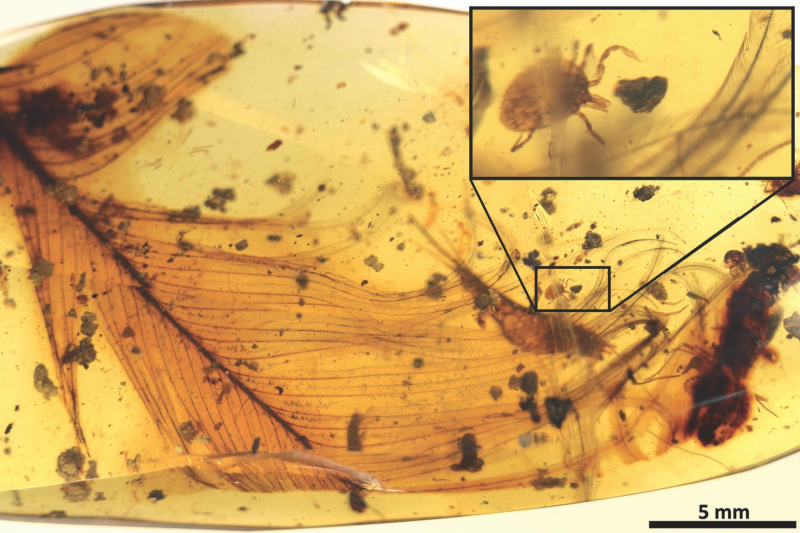
Read more: National Geographic: Ticks That Fed on Dinosaurs Found Trapped in AmberNational Geographic has a story straight out of Jurassic Park. The story is about the recent discovery of blood-filled ticks trapped in Burmese amber. The amber dates to the Cretaceous period, about 99 million years old. This places the fossil firmly into the age of dinosaurs and implies that these ticks probably feed on feathered dinosaurs. The paper describing this discovery appeared in the journal Nature Communications. One of these parasites is tangled up in a possible dinosaur feather found encased in a lump of amber. Another was found in a separate piece of amber from the same region and…

ESCONI Gem, Mineral, and Fossil Show
Most Recent Post
- Ancient bees found nesting inside fossil bones in rare cave discovery
 Science Daily has a post about a recent paper that looked at novel bee nesting behavior. Researchers working on the Caribbean island of Hispaniola discovered a rare and unusual fossil interaction in a cave, ancient bees used fossilized bones as nesting sites.
- About ESCONI
- Around the Web
- Calendar of Events
- Code of Ethics and Conduct
- ESCONI Books for Sale
- ESCONI Gem, Mineral, and Fossil Show
- ESCONI in the News
- ESCONI Videos
- Field Trips
- Flashback Friday
- Fossil Friday
- Mazon Creek
- Mazon Monday
- Member Spotlight
- Membership Information
- Reference Material
- Throwback Thursday
- Trilobite Tuesday
Field trips require membership, but visitors are welcome at all meetings!
| Friday, April 10th | General Meeting – 8:00 PM via Zoom. Jessica Hull will present “Life in the Devonian Period, The Age of Fishes.” |
| Saturday, April 11th | Junior Study Group Meeting – 2:00 PM, in person at the College of DuPage Technical Education Center (TEC) Building – Room 1038A (Map). Katherine Howard will present on Sand and Sediment Collecting. Specifics of this meeting are available from Scott Galloway, 630-670-2591, gallowayscottf@gmail.com. |
| Saturday, April 18th | Paleontology Study Group – 7:30 PM via Zoom and in person at the College of DuPage, TEC, Room 1038B (Map). Keith Robitschek will present “Digging the Marl of the Lance Formation.” |
| Friday, April 24th | MAPS Expo XLVII – Springfield, IL. |
| Saturday, April 25th | MAPS Expo XLVII – Springfield, IL. |
| Sunday, April 26th | MAPS Expo XLVII – Springfield, IL. |
| No meeting this month | Mineralogy Study Group |