
-
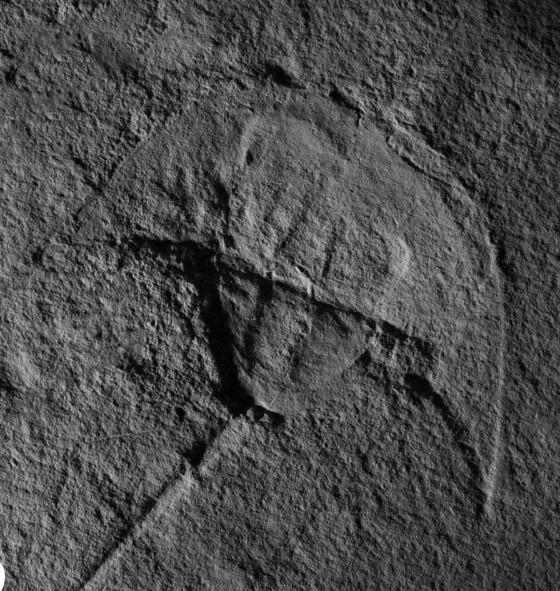
New 245 Million Year Old Horseshoe Crab Discovered in Idaho by ESCONI Member
Read more: New 245 Million Year Old Horseshoe Crab Discovered in Idaho by ESCONI MemberLive Science has a story about a new species of horseshoe crab. The crab lived during the Triassic Period about 245 million years ago. It was discovered by ESCONI member Trick Runions and is called Vaderlimulus tricki. The name stems from the shape of the head shield, which resembles the helmet worn by Darth Vader from the Star Wars film series. A team from the New Mexico Museum of Natural History in Albuquerque named the specimen and published a paper in the current issue of the German paleontological journal Neues Jahrbuch für Geologie und Paläontologie. The fossil of an ancient…
-

CBC Quirks & Quarks – New dinosaur had duck legs, a swan neck and penguin flippers
Read more: CBC Quirks & Quarks – New dinosaur had duck legs, a swan neck and penguin flippersCBC Radio’s Quirks & Quarks has a segment about a new dinosaur discovery. The new species is called Halszkaraptor and it lived during the Cretaceous Period about 71 to 75 million years ago in what is present day Mongolia. The original paper appeared in Nature. Halskaraptor was somewhere between the size of a chicken and a turkey. It had an unusual array of features never seen before in one dinosaur. Halszkaraptor had a heron-like neck, flipper-type forelimbs much like a penguin, and webbed feet similar to those of a duck. Dr. Philip Currie, a professor and Canada Research Chair in…
-
2018 ESCONI Gem, Mineral, and Fossil Show March 24th and March 25th
Read more: 2018 ESCONI Gem, Mineral, and Fossil Show March 24th and March 25thSaturday, March 24th – 10 a.m. to 5 p.m.Sunday, March 25th – 10 a.m. to 4 p.m. Free admittance and parking! Exploreyour interests Shop for jewelry, gems, fossils, minerals from world-class vendors List to Follow Soon, Stay tuned! Find unique and interesting books at the used book sale Learn from members of club demonstrating their hobbies and collections Bid and buy gems, minerals and fossils at the Silent Auction and Live Auctions(photos of some items will be posted on website a week before show) Enjoy amazing displays from the Field Museum & Lizzadro Museum Winan amazing earth-science related prize in…
-
ESCONI Gem, Mineral, and Fossil Show will be held on March 24th and 25th, 2018
Read more: ESCONI Gem, Mineral, and Fossil Show will be held on March 24th and 25th, 2018The ESCONI Gem, Mineral, and Fossil Show for 2018 will be held on March 24th and 25th at the DuPage County Fairgrounds. Same location as last year. Save the date! Download the ESCONI 2018 Show Flyer
-
Holiday Party Pictures
Read more: Holiday Party PicturesThe Holiday Party was a great time. And, yes, there were balloons! Afterward, we took in an excellent talk about the Maya. Happy Holidays!
-

ESCONI Events December 2017
Read more: ESCONI Events December 2017Field trips require membership, but visitors are welcome at all meetings! Fri, Dec 1st ESCONI Holiday Party, 5:30-7:30 – Cozymels in Wheaton, IL. Map Fri, Dec 1st ESCONI General Meeting, 8:00 PM College of Dupage – Tech Ed (TEC) Building, Room 1038B (Map) – Topic: “In the Realm of the Submerged Crocodile: Archaeology at the Maya City of Ka’kabish, Belize” by Dr. Kerry Sagebiel from NIU Sat, Dec 9th ESCONI Minerology Study Group Meeting, 7:30 PM College of Dupage – Tech Ed (TEC) Building, Room 1038B (Map) – Topic: “Mineral Identification Contest” Bring 3 minerals and 4 labels ESCONI Paleontology…
-
Reminder: ESCONI 2017 Holiday Dinner Friday, December 1st, 2017
Read more: Reminder: ESCONI 2017 Holiday Dinner Friday, December 1st, 2017The ESCONI 2017 Holiday Dinner is scheduled for Friday, December 1st, 2017 at Cozymel's in Wheaton, starting at 5:30-7:30 PM. The room has been reserved for 30 people but we can handle a few more if needed. I have asked them to set up the tables in a different configuration than the "L" shape from the last two years, since it creates a space problem for those sitting at the inside corner. The December speaker is Dr. Kerry Sagebiel from NIU. The title of her program is "In the Realm of the Submerged Crocodile: Archaeology at the Maya City…
-
-

Field Museum: A Thanksgiving Tale of Two Horns
Read more: Field Museum: A Thanksgiving Tale of Two HornsThe Field Museum has a blog post about ammonites and Thanksgiving. What do Thanksgiving and a fossil ammonite have in common? In ancient times, the Egyptians, Greeks, and Romans associated the coiled horns of rams with gods, power, virility, fertility, and abundance. The cornucopia—a conical wicker basket with a never-ending supply of food flowing from it—comes from Latin cornu copiae or “horn of plenty.” The Greeks and Romans both used the cornucopia as a symbol of the harvest, prosperity, and abundance. In paleontology, Pliny the Elder (in 79 AD) collected some strange rocks near Pompeii that he called ammonis cornua…
-

What’s the Point of T-Rex’s Tiny Arms?
Read more: What’s the Point of T-Rex’s Tiny Arms?The Daily Beast has an article about T-Rex’s tiny arms. What were they used for, grabbing, slashing, mating? Steven Stanley, a geologist at the University of Hawaii at Manoa, presented a paper at the Geological Society of America’s annual meeting. The conventional wisdom, as far as T. rex arms go, is that they atrophied over evolutionary time as natural selection in the animals came to favor the bitey, bitey over the grabby, grabby. Tyrannosaurus arms may have ultimately had some use, but it wasn’t much of one. They simply had too little strength and not enough reach to do a…
-
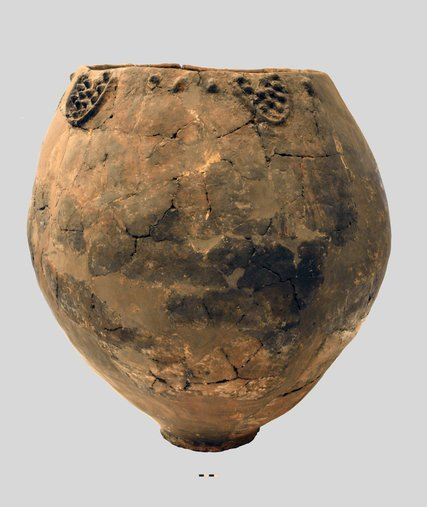
NY Times: Wine From Prehistoric Georgia With an 8,000-Year-Old Vintage
Read more: NY Times: Wine From Prehistoric Georgia With an 8,000-Year-Old VintageThe NY Times has a story about the discovery of 8000 year old wine. Looking for some vintage wine for the holidays? Well, researchers in Georgia have found wine that dates back to about 6000 BC. Too bad… or maybe too good, it’s just wine residue. The find was described in a paper published in the journal Proceedings of the National Academy of Sciences. The findings push back the previous date for the oldest evidence of winemaking by about 600 to 1,000 years, which Dr. McGovern previously identified in Iran. But it does not dethrone China as the location of…
-
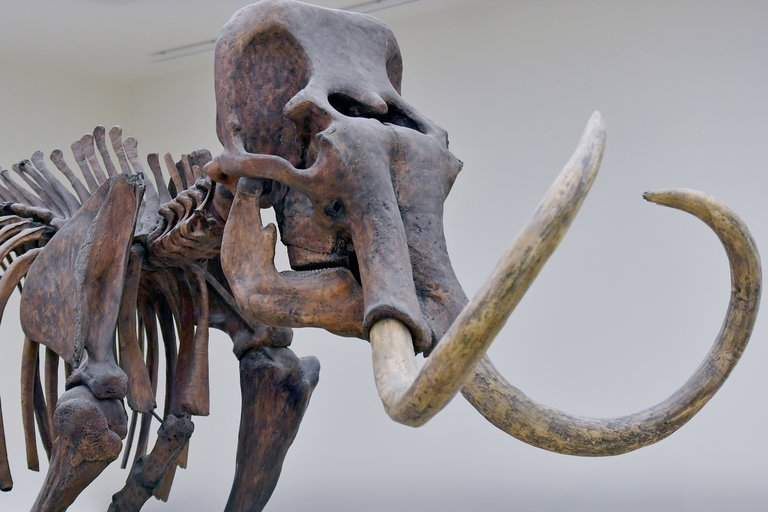
NY Times: Male Mammoths Died in ‘Silly Ways’ More Often Than Females, Study Finds
Read more: NY Times: Male Mammoths Died in ‘Silly Ways’ More Often Than Females, Study FindsThe NY Times has a story about a study which details how Male Mammoths may have lived and died. The study, published last week in the journal Current Biology, found that roughly two-thirds of the fossilized Mammoth specimens were male. The authors speculate that the skewed sex-ratio was due to risk behavior by young males after leaving the protection of their mothers. Swallowed by a sinkhole. Washed away by a mudflow. Drowned after falling through thin ice. These are the fates that many unlucky mammoths suffered in Siberia thousands of years ago. Their well-preserved fossils have provided paleobiologists with insight…
-
New analysis of Chicxulub asteroid suggests it may have struck in vulnerable spot
Read more: New analysis of Chicxulub asteroid suggests it may have struck in vulnerable spotPhys.org has a story about the Chicxulub asteroid that took out the dinosaurs. A paper published in the journal Scientific Reports suggests that had the asteroid struck the Earth in a different location it is possible the non-avian dinosaurs may have survived the event. The researchers from Tokohu University analysed multiple data sources about the area surrounding the impact. The resulting simulation showed how much soot was generated by the hydrocarbons in the ground under and around the impact site. Scientists around the world have reached a consensus regarding the reason that the dinosaurs (except for bird relatives) went extinct—a…
-
Happy Birthday ESCONI!
Read more: Happy Birthday ESCONI!ESCONI (Earth Science Club of Northern Illinois) was founded on November 11, 1949 with an initial meeting of 13 people interested in Earth Sciences. William Allaway was the 1st President of ESCONI. The purpose of ESCONI: The aim of the Earth Science Club of Northern Illinois is to promote an interest in the earth sciences, among these are geology, paleontology, mineralogy, micromounting, and the lapidary arts. The ESCONI Bulletin, Earth Science News, has been published 11 times per year continuously since January 1950. Excerpts from the original historical document (NewsletterHistory.pdf) On November 11, 1949. Thirteen People, each interested in some phase of…
-
Waubonsie HS in Aurora is hosting a free event titles “Spinosaurus: Lost Giant of the Cretaceous” on November 17th, 2017
Read more: Waubonsie HS in Aurora is hosting a free event titles “Spinosaurus: Lost Giant of the Cretaceous” on November 17th, 2017Spinosaurus: Lost Giant of the CretaceousMeet Spinosaurus, the largest predatory dinosaur yet discovered—larger than T. rex—and hear the incredible story of how this prehistoric giant was almost lost to science, before being brought back to light with the help of a remarkable young paleontologist, Dr. Nizar Ibrahim, a National Geographic Explorer With amazing video recreating the lost world of the Cretaceous Era Sahara, Ibrahim will tell the story of Spinosaurus’ discovery, loss, and rediscovery, and explain what makes this ancient monster unique. November 17, 2017 6:30-7:30pm (doors open at 6:00pm) Waubonsie Valley High School Auditorium 2590 Ogden Ave, Aurora (Door…
-
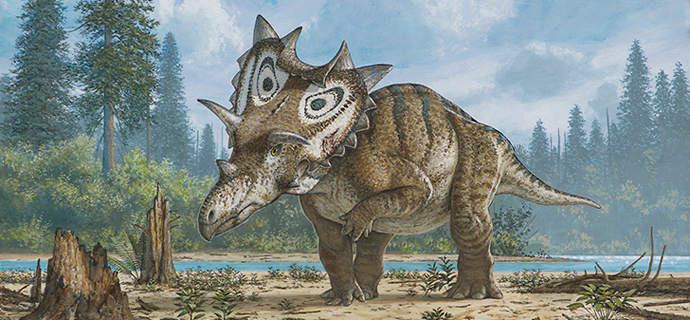
PLOS Paleo: Vote for the Top 10 Taxa of 2017
Read more: PLOS Paleo: Vote for the Top 10 Taxa of 2017On the PLOS Paleo blog, you can vote for the top 10 taxa of 2017. There’s many interesting choices, both vertebrate and invertebrate, dinosaurs (Burianosaurus augusta and Borealopelta markmitchelli), fish (Babelichthys olneyi), cats (Anatoliadelphys maasae), and beetles (Antarctotechus balli) are just a few of the possible selections. Have fun and tell all your friends! Hurry and vote the survey closes on November 15th, 2017. The survey page is here.
-
Reminder: General Meeting November 10th, 2017: What do we know about life on early Earth?
Read more: Reminder: General Meeting November 10th, 2017: What do we know about life on early Earth?The title of Dr. D’Arcy Meyer-Dombard’s program at our November 2017 meeting is “What do we know about life on early Earth?” The speaker at our February 9, 2018 meeting will be Dr. Dan Gebo from the Department of Anthropology at NIU. His research focuses on understanding locomotor adaptation and evolution in living and fossil primates, particularly the haplorhines (the clade that includes humans). You can read more about him at http://www.niu.edu/anthro/faculty_staff/faculty/gebo.shtml
-

NY Times: Ancient Fossil Offers a New European Ancestor to Giraffes
Read more: NY Times: Ancient Fossil Offers a New European Ancestor to GiraffesThe NY Times has a story about giraffes, more specifically… the ancestors of giraffes. Decannatherium rex lived during the late Miocene in Spain. The fossil specimen fills in a lot of gaps in what we knew about giraffes. The lead author of the study was Dr. Maria Rios, a researcher with the Museo Nacional de Ciencias Naturales-CSIC in Madrid. The paper was published in PLOS One. A near-perfect fossil unearthed close to Madrid appears to be an ancient European ancestor of giraffes, representing a new species in the family and one that had two sets of bony bumps on its…
-

ABC: ‘Shale ale’ beer filtered through fossils the latest craze in Australia’s booming craft brewing industry
Read more: ABC: ‘Shale ale’ beer filtered through fossils the latest craze in Australia’s booming craft brewing industryABC in Australia has an intriguing story about the latest beer craze in Australia. Shale ale is from Kangaroo Island, which is famous for Cambrian Era fossil lagerstatten. Emu Bay is the famous fossil locality. The beer was created to celebrate the discoveries on the island. Kangaroo Island brewer Mike Holden is set to release a ‘shale ale’ beer, commemorating 10 years of fossil research on the South Australian island. Mr Holden said the ale was filtered through fossil-rich shale that was more than half a billion years old. “We just thought for this one, why not let the millions…
-
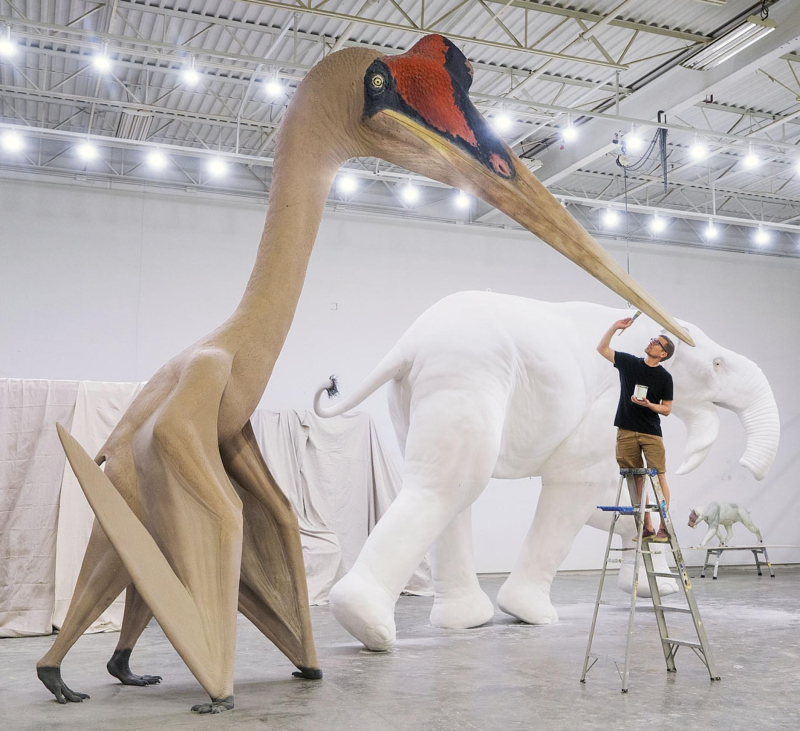
NatGeo: Why Pterosaurs Were the Weirdest Wonders on Wings
Read more: NatGeo: Why Pterosaurs Were the Weirdest Wonders on WingsNational Geographic Magazine has a interesting story in their November 2017 issue. Large and small pterosaurs are some of the strangest animals to ever live. They went extinct 65 million years ago during the end Cretaceous mass extinction event. This article has many details and great pictures which describe what and who pterosaurs were during their 162 million years on Earth. Most people respond to the word ‘pterosaurs’ with a puzzled expression, until you add, ‘like pterodactyls.’ That’s the common name given to the first pterosaur discovered in the 18th century. Scientists have since described more than 200 pterosaur species,…

ESCONI Gem, Mineral, and Fossil Show
Most Recent Post
- PBS Terra: The Cascadia Megaquake Is Inevitable. And It Will Reshape America Forever
 PBS Terra has an interesting new video. This one covers the history, science, and future of the Cascadia Subduction Zone in the Pacific Northwest.
- About ESCONI
- Around the Web
- Calendar of Events
- Code of Ethics and Conduct
- ESCONI Books for Sale
- ESCONI Gem, Mineral, and Fossil Show
- ESCONI in the News
- ESCONI Videos
- Field Trips
- Flashback Friday
- Fossil Friday
- Mazon Creek
- Mazon Monday
- Member Spotlight
- Membership Information
- Reference Material
- Throwback Thursday
- Trilobite Tuesday
Field trips require membership, but visitors are welcome at all meetings!
| Friday, April 10th | General Meeting – 8:00 PM via Zoom. Jessica Hull will present “Life in the Devonian Period, The Age of Fishes.” |
| Saturday, April 11th | Junior Study Group Meeting – 2:00 PM, in person at the College of DuPage Technical Education Center (TEC) Building – Room 1038A (Map). Katherine Howard will present on Sand and Sediment Collecting. Specifics of this meeting are available from Scott Galloway, 630-670-2591, gallowayscottf@gmail.com. |
| Saturday, April 18th | Paleontology Study Group – 7:30 PM via Zoom and in person at the College of DuPage, TEC, Room 1038B (Map). Keith Robitschek will present “Digging the Marl of the Lance Formation.” |
| Friday, April 24th | MAPS Expo XLVII – Springfield, IL. |
| Saturday, April 25th | MAPS Expo XLVII – Springfield, IL. |
| Sunday, April 26th | MAPS Expo XLVII – Springfield, IL. |
| No meeting this month | Mineralogy Study Group |