
-
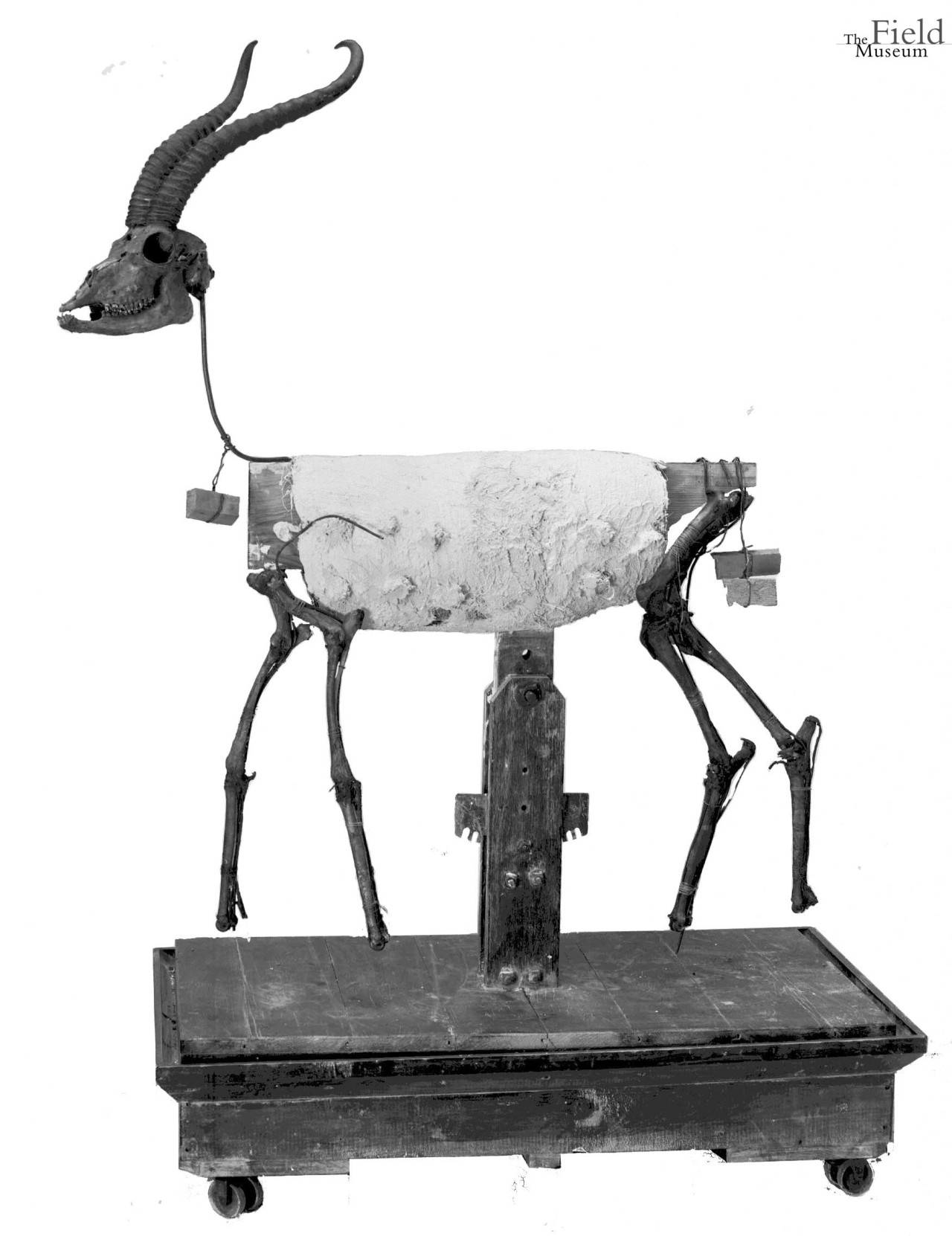
Throwback Thursday #172: Field Museum Photo Archives – Soemmerring’s Gazelle
Read more: Throwback Thursday #172: Field Museum Photo Archives – Soemmerring’s GazelleThis is Throwback Thursday #172. In these, we look back into the past at ESCONI specifically and Earth Science in general. If you have any contributions, (science, pictures, stories, etc …), please send them to esconi.info@gmail.com. Thanks! Here’s a few photos from the Field Museum Photo Archives over on Tumbler. Unfortunately, the photo blog hasn’t updated since 2015, but there are still many good photos to browse! Soemmerring’s Gazelle. These photos are from February 1934. They ran as a Taxidermy Tuesday on the Field Museum Photo Archives in July 2014. Taxidermy Tuesday, Soemmerring’s Gazelle. For the next few weeks Taxidermy Tuesday is…
-

5 million-year-old fossils reveal 2 new species of saber-toothed cats in South Africa
Read more: 5 million-year-old fossils reveal 2 new species of saber-toothed cats in South AfricaLiveScience has a story about some fossil discoveries in South Africa. Two new species of saber-toothed cats, Dinofelis werdelini and Lokotunjailurus chimsamyae, have been discovered near the town of Langebaanweg on the west coast of South Africa. These animals lived about 5.2 million years ago. While excavating the fossil bones, two known species were also found, Adeilosmilus kabir and Yoshi obscura. All four species belong to the extinct group Machairodontinae, which means “dagger-tooth”. See the description of the find in a paper in the journal iScience. In the study, the researchers compared the bones of the newly uncovered species and known saber-toothed cats…
-
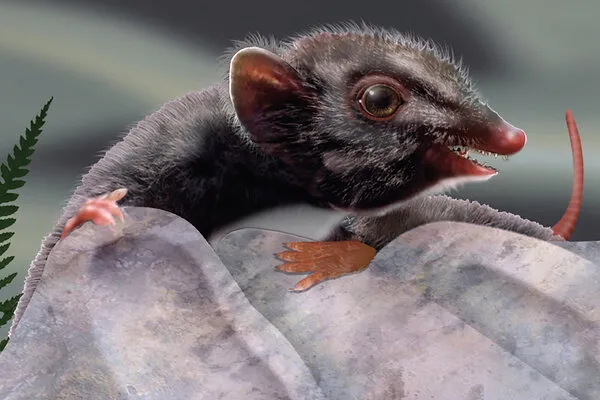
Fossils Where They Don’t Belong? Maybe We Just Didn’t Look Hard Enough
Read more: Fossils Where They Don’t Belong? Maybe We Just Didn’t Look Hard EnoughA life reconstruction of Ambondro mahabo, the four-inch-long tribosphenic mammal.Credit…Flynn & Wyss, Scientific American, 2004 The New York Times has an article about an unexpected discovery. In 1996, paleontologists found mammal bones in an unexpected place…. northwestern Madagascar. A tiny 167 million year old jaw fragment from an animal that was out of place by 25 million years. The fossil belonged to Ambondro mahabo, a small creature that opened the door to the conclusion that modern mammals originated in the Southern Hemisphere. “The prevailing wisdom suggested that we shouldn’t find something like that from the time interval we were sampling,…
-
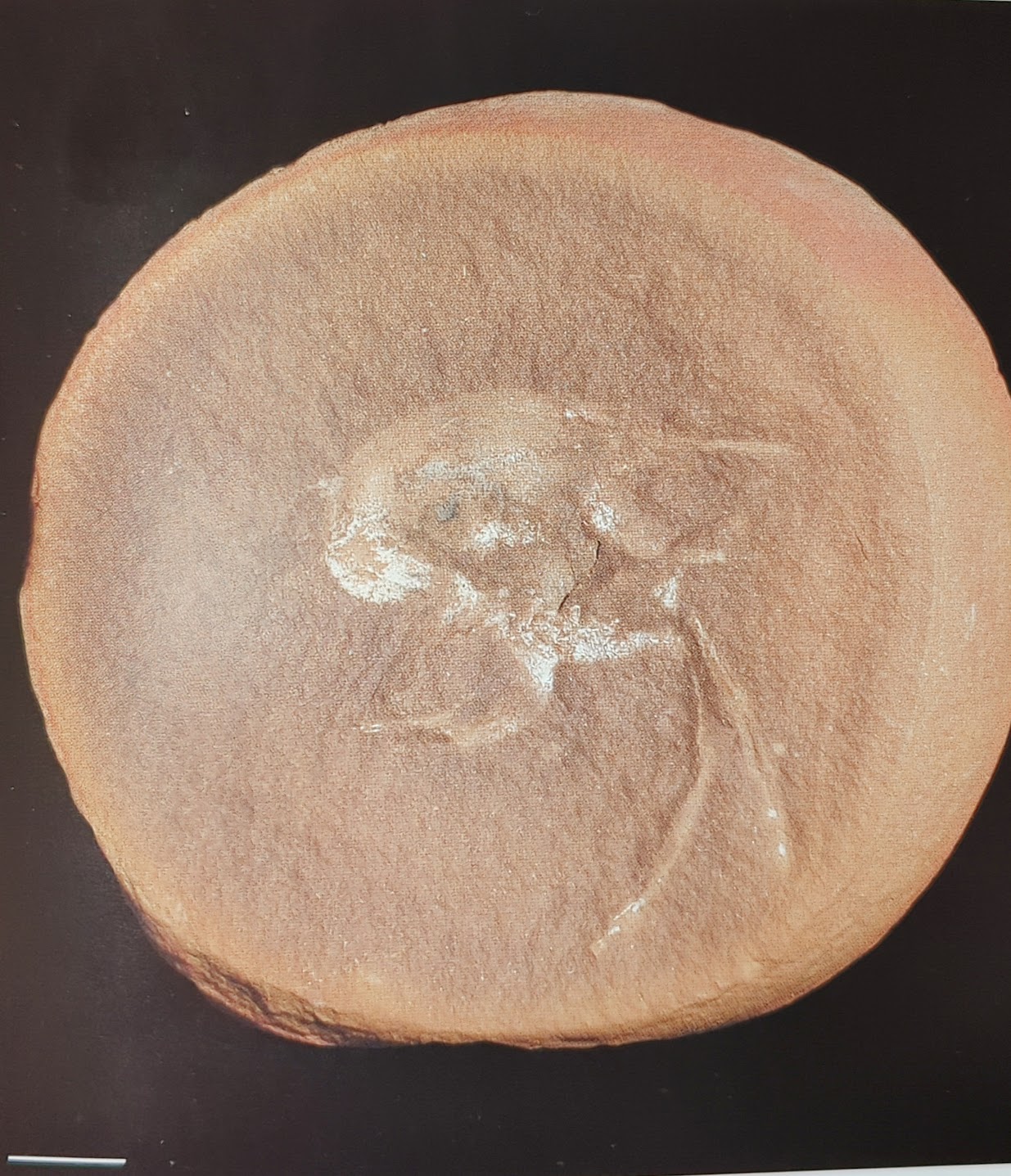
Mazon Monday #174: Flea Shrimp
Read more: Mazon Monday #174: Flea ShrimpThis is Mazon Monday post #174. What’s your favorite Mazon Creek fossil? Tell us at email:esconi.info@gmail.com. Thylacocephala are considered problematic. They are known from some species in the Paleozoic and a few more from Mesozoic, with no known extant forms. There are two species of Thylacocephala, often referred to as “flea shrimp”, from Mazon Creek – Convexicaris mazonensis and Concavicaris georgeorum. They are both exceedingly rare with Concavicaris georgeorum being the most common. Either would fulfill a bucket list item on any serious Mazon collector’s want list. They were both described in 1990 by Frederick Schram in the paper “On…
-
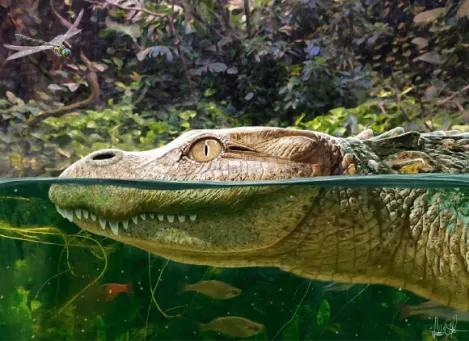
Fossil of Deep-Snouted Alligator Species Found in Thailand
Read more: Fossil of Deep-Snouted Alligator Species Found in ThailandSciNews has a story about the discovery of a new species of extinct alligator. Alligator munensis lived at least as recently as about 230,000 years ago in what is now Thailand. This newly identified species is closely related to the Chinese alligator Alligator sinensis. A nearly complete skull of A. munensis was found at the Ban Si Liam locality in the Thai province of Nakhon Ratchasima. The description was published in the journal Scientific Reports. The researchers identified several skull features that are unique to Alligator munensis, including a broad and short snout, a tall skull, reduced number of tooth sockets…
-
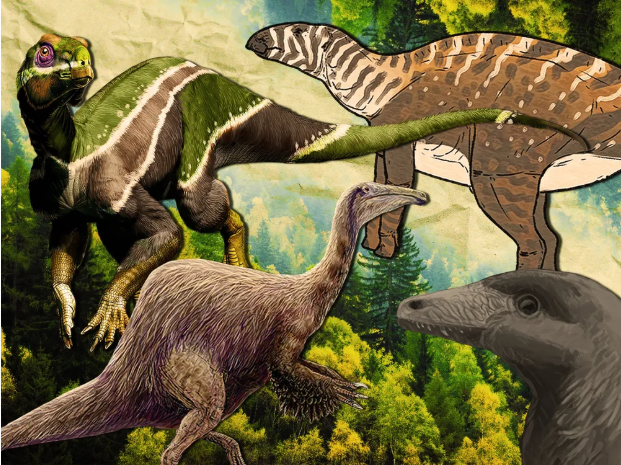
How Many Dinosaurs Remain Undiscovered?
Read more: How Many Dinosaurs Remain Undiscovered?Smithsonian Magazine has a story about about dinosaur discovery. Specifically, the rate of discovery and how many are left to be found. New dinosaur species are described about every two weeks. Which means around 25 or more new dinosaur species each year. These new species come from all over the world. A 2006 study estimated that 30% of all non-avian dinosaurs had already been found. That estimate seems high, non-avian dinosaurs existed for 170 million years. That’s a long time for evolution to experiment. Unfortunately (or fortunately), fossilization is a random and rare process with weathering and geologic processes happening…
-

Fossil Friday #170: Trochonema Snails from Belvidere
Read more: Fossil Friday #170: Trochonema Snails from BelvidereThis is the “Fossil Friday” post #170. Expect this to be a somewhat regular feature of the website. We will post any fossil pictures you send in to esconi.info@gmail.com. Please include a short description or story. Check the #FossilFriday Twitter hash tag for contributions from around the world! Today, we have a very sweet little snail from the quarry in Belvedere, IL. The rocks in that area date to the Ordovican Period, which spanned from about 490 to 443 million years ago, This particular fossil is an example of a snail of the genus Trochonema. Since the fossil is an…
-
Throwback Thursday #171: Fossil Cycad National Monument
Read more: Throwback Thursday #171: Fossil Cycad National MonumentThis is Throwback Thursday #171. In these, we look back into the past at ESCONI specifically and Earth Science in general. If you have any contributions, (science, pictures, stories, etc …), please send them to esconi.info@gmail.com. Thanks! Fossil Cycad National Monument was authorized as National Monument in 1922 by President Warren G. Harding. It was located in southwestern South Dakota and encompassed 320 acres. It’s one of the few national monuments to be completely stripped of its status. The National Park Services has a page devoted to the monument. Fossils from the site date to the Cretaceous Period about 120…
-
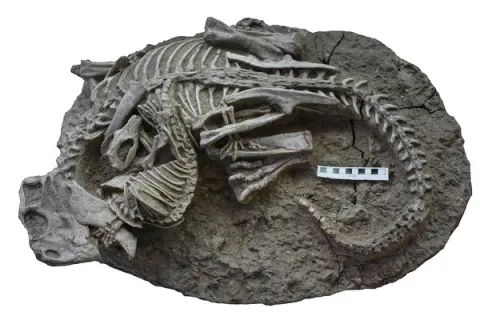
This Fossil Is a Freeze-Frame of a Mammal Fighting a Dinosaur
Read more: This Fossil Is a Freeze-Frame of a Mammal Fighting a DinosaurThe New York Times has a story about an interesting dinosaur fossil from China. A 125 million year old fossil of a Psittacosaurus and a Repenomamus seems to show a fight to the death between a dinosaur and an ancestral mammal. It was discovered in 2012 by farmers in the Chinese province of Liaoning. Liaoning is known for superbly preserved fossil dating to the early Cretaceous Period. The fossil was described in a paper in the journal Scientific Reports. A section of the paper addresses the authenticity of the specimen. The prehistoric skirmish took place around 125 million years ago,…
-
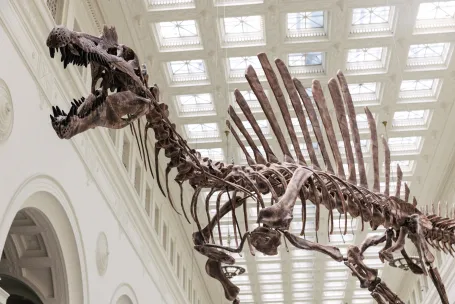
LET’S NAME OUR NEW SPINOSAURUS!
Read more: LET’S NAME OUR NEW SPINOSAURUS!The Field Museum sent a message that they need help picking a name for their new Spinosaur. Cast your vote today! Spinosaurus is here, now we need a name! This cast is a replica of a fish-eating dinosaur that lived during the Cretaceous Period, about 95 million years ago. It spent much of its time in the rivers of North Africa, where its paddle-like tail helped it swim and its crocodile-like jaws allowed it to snatch its prey. Voted on by Field Museum staff, three potential names rose to the top of the submissions. Now it’s your turn! Vote for your…
-

Mazon Monday #173: Halicyne max
Read more: Mazon Monday #173: Halicyne maxThis is Mazon Monday post #173. What’s your favorite Mazon Creek fossil? Tell us at email:esconi.info@gmail.com. Halicyne max is a species of Cycloidea from Mazon Creek. Other Cycloidea species known from Mazon Creek are Cyclus americanus, Cyclus obesus, and Apionicon apiodes. Of these, the most commonly known is Cyclus americanus. Halicyne max was described in 1997 by Frederick Schram, Ronald Vonk, and Cees H. J. Hof in the paper “Mazon Creek Cycloidea”, which appeared in the Journal of Paleontology. Abstract The Mazon Creek Cycloidea contain four taxa: Cyclus americanus Packard, 1885, Cyclus obesus, new species, Halicyne max, new species, and Apionicon apioides, new genus, new species. We…
-
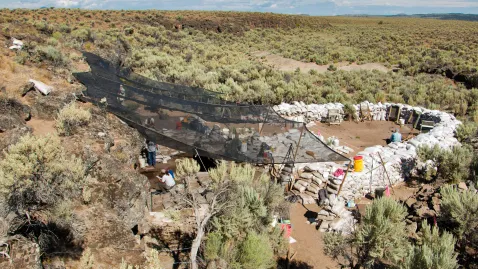
Stone tools and camel tooth suggest people were in the Pacific Northwest more than 18,000 years ago
Read more: Stone tools and camel tooth suggest people were in the Pacific Northwest more than 18,000 years agoLiveScience has a story about some new discoveries of human artifacts in the Pacific Northwest. Archaeologists made the discoveries at the site of Rimrock Draw in Oregon. They have been excavating a stone shelter there for the last few years. More details can be found in a synopsis prepared by Patrick O’Grady of the Museum of Natural and Cultural History at the University of Oregon. Stone tools and the teeth of an extinct camel and bison discovered in central Oregon show that people were living in North America 18,250 years ago, new research finds. Although this is not the earliest…
-
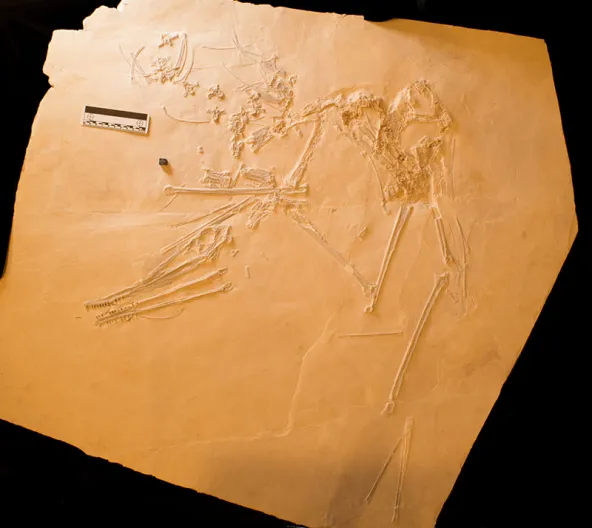
New fossil flying reptile ‘Elvis’ takes flight
Read more: New fossil flying reptile ‘Elvis’ takes flightLong time ESCONI members Bruce and Rene’ Lauer of sent us a message to highlight some new research they’ve been working on. They’re both listed as authors on a paper that describes a new large ctenochasmatid pterosaur from the Solnhofen of Germany. The animal, Petrodactyle wellnhoferi, lived during the Jurassic about 145 million years ago, when southern Germany was an archipelago of islands. The name translates as ‘Wellnhofer’s stone-finger’ which honors legendary German palaeontologist Peter Wellnhofer who spent his career working on German pterosaurs. Pterosaurs and other animals like Archaeopteryx have been found in the Solnhofen for a long time. The…
-
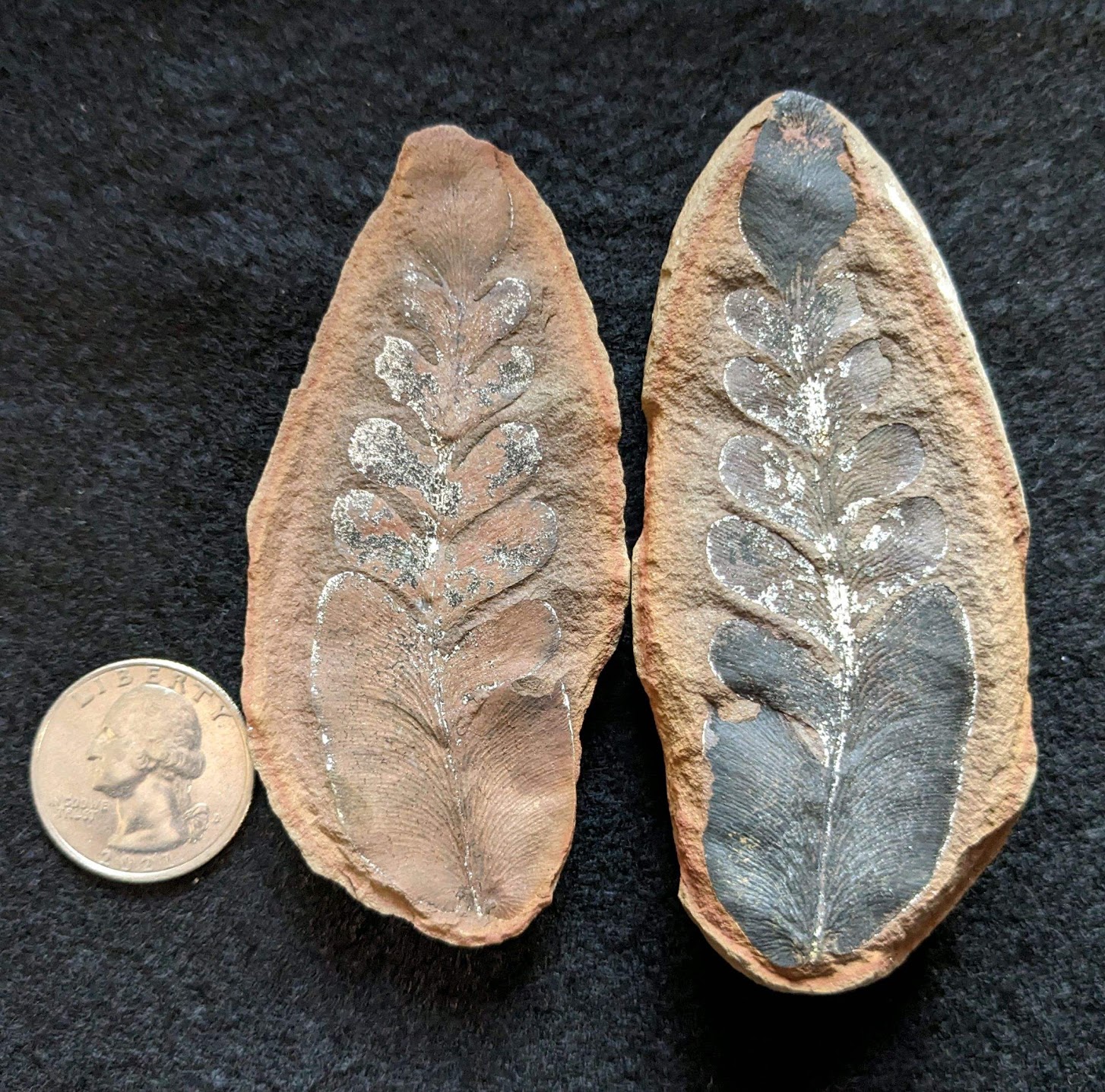
Fossil Friday #169: Odontopteris subcuneata
Read more: Fossil Friday #169: Odontopteris subcuneataThis is the “Fossil Friday” post #169. Expect this to be a somewhat regular feature of the website. We will post any fossil pictures you send in to esconi.info@gmail.com. Please include a short description or story. Check the #FossilFriday Twitter hash tag for contributions from around the world! Odontopteris subcuneata is an uncommon form that was borne on the same plant that produced Macroneuropteris scheuchzerii. It was described in 1847 by Charles James Fox Bunbury. At that time, Bunbury was Britain’s leading paleobotanist. We looked at O. subcuneata back in Mazon Monday #100. Have a look for more details. This…
-

Throwback Thursday #170: Surefire Signs You’re a Rockhound
Read more: Throwback Thursday #170: Surefire Signs You’re a RockhoundThis is Throwback Thursday #170. In these, we look back into the past at ESCONI specifically and Earth Science in general. If you have any contributions, (science, pictures, stories, etc …), please send them to esconi.info@gmail.com. Thanks! ——————————————————————————————- The following list appeared in the January 1998 edition of the newsletter. It was reprinted from the “Pick & Shovel” from November 1996. The “Pick and Shovel” is the newsletter of the Lincoln Gem and Mineral Club in Lincoln, Nebraska. They started up in 1959 and I’m happy to say are still in operation. Surefire Signs You’re a Rockhound You own more…
-
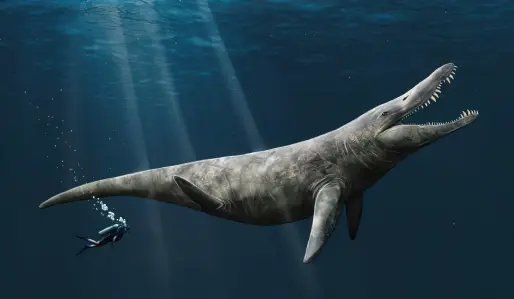
Twice the Size of a Killer Whale – New Evidence Suggests Giant Pliosaurs Swam in Late Jurassic Seas
Read more: Twice the Size of a Killer Whale – New Evidence Suggests Giant Pliosaurs Swam in Late Jurassic SeasSciTechDaily has a story about some truly huge pliosaurs that lived during the Jurassic Period. A paper in the journal Proceedings of the Geologists’ Association describes a vertebrae, which suggests a pliosaur that may have reached almost 15 meters in length as depicted by Liopleurodon in the BBC program “Walking with Dinosaurs”. More than two decades ago, the depiction of a 25-meter-long Liopleurodon in the BBC’s documentary series, Walking with Dinosaurs, instigated fervent discussions about the true size of this pliosaur. The portrayal was generally deemed as excessively exaggerated, with the more accepted theory suggesting an adult Liopleurodon would have measured just…
-

The Discovery and Controversy of Spinosaurus
Read more: The Discovery and Controversy of SpinosaurusThe Field Museum has an interesting video on Youtube. The video is a presentation by Dr. Jingmai O’Connor, who is the Associate Curator of Fossil Reptiles, on Spinosaurus. With its crocodile-like jaws set in a skull that is 20% longer than T. rex and its large dorsal sail, Spinosaurus aegyptiacus is one of the most iconic dinosaurs. However, this species was almost lost to science when the first specimen was destroyed in WW2. Through chance, hard work, and perseverance, a second skeleton was discovered. This specimen reveals that Spinosaurus had a paddle-like tail adapted for aquatic locomotion, a first among dinosaurs.…
-

Mazon Monday #172: Fossil Insect Symposium 1990
Read more: Mazon Monday #172: Fossil Insect Symposium 1990This is Mazon Monday post #172. What’s your favorite Mazon Creek fossil? Tell us at email:esconi.info@gmail.com. On May 18th, 1990, ESCONI was part of a symposium on Mazon Creek fossil insects from Pit 11. Unfortunately, there aren’t many details. However, we recently ran across some photos from the event at the Carbon Hill School Museum in their Tom Testa collection. Tom donated the photos and other miscellaneous materials. His Mazon Creek collection resides at the Field Museum of Natural History in Chicago. Here’s a report that appeared in the July/August 1990 ESCONI newsletter. FOSSIL SYMPOSIUM On May 18, 1990, ESCONI…
-
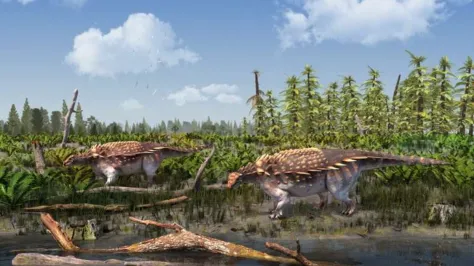
Blade-like spikes covered newly discovered dinosaur unearthed in the UK
Read more: Blade-like spikes covered newly discovered dinosaur unearthed in the UKLive Science has a story about a dinosaur discovery in the UK. The new dinosaur, Vectipelta barretti, was discovered in 1993 on the Isle of Wight. It belongs to the sub-order Ankylosauria, which are low, wide, armored, plant-eating dinosaurs. This animal lived about 140 million years ago during the early Cretaceous Period. The description of this new species was published in the Journal of Systematic Palaeontology. The Isle of Wight is a fossil hotspot, with more than 20 different dinosaurs being uncovered there, including large sauropods and a pair of carnivorous predators with “crocodile-like faces” in 2021. Only two ankylosaur genera, Polacanthus and Hylaeosaurus, had…
-
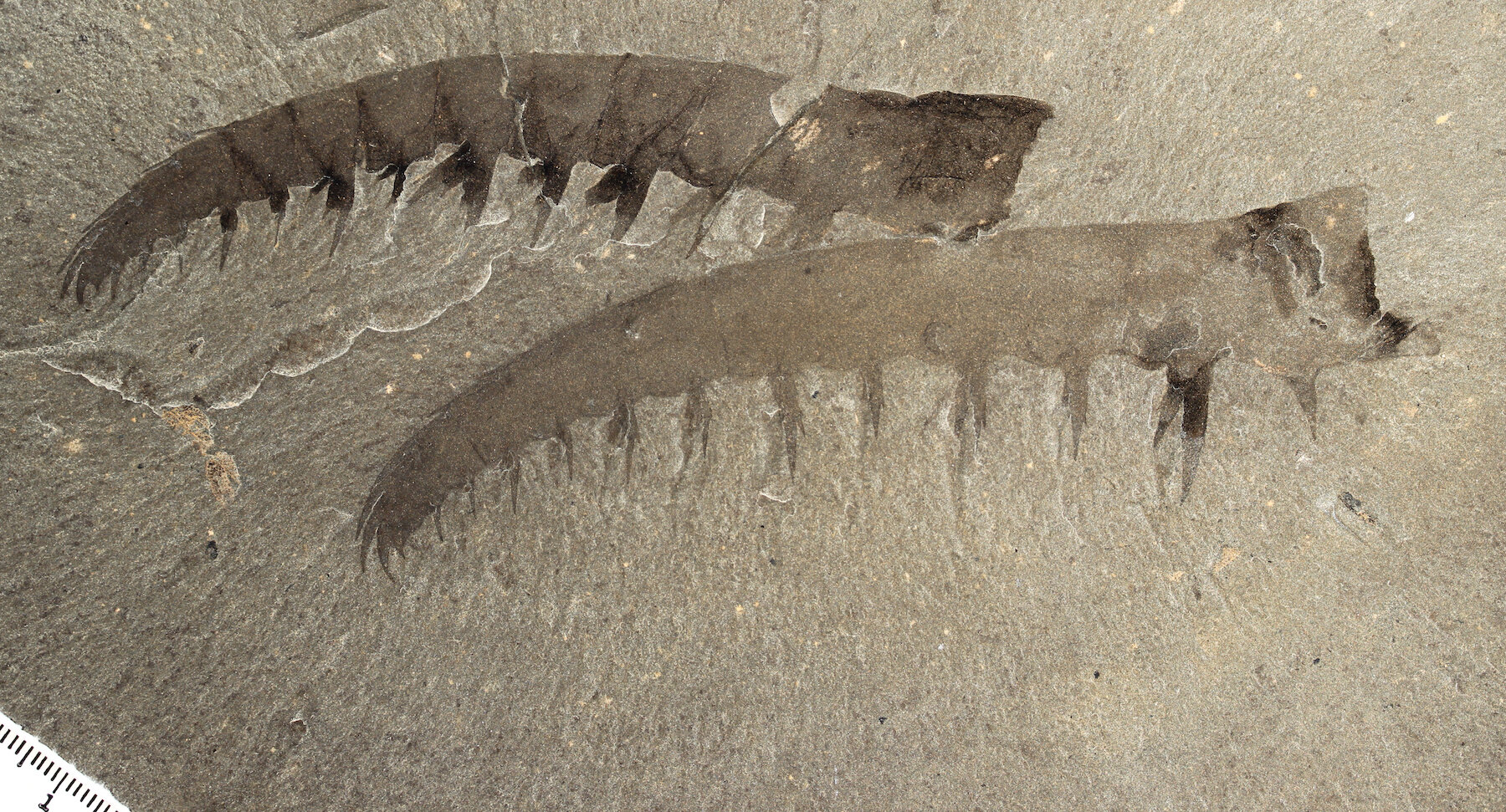
Apex predator of the Cambrian likely sought soft over crunchy prey
Read more: Apex predator of the Cambrian likely sought soft over crunchy preyPhys.org has a story about one of the largest predators of the Cambrian Period. Anomalocaris canadensis, which means “weird shrimp from Canada”, was first discovered in the 1800’s in fossil deposits around Mt. Stephen in British Columbia. Until the discovery of the Burgess Shale, the front appendages and body fossils were thought to be separate animals. A new paper in the journal Proceedings of the Royal Society B looked at the front appendages and concluded they weren’t strong enough to crush trilobite exoskeletons. Recent research found the armor-plated, ring-shaped mouthparts of A. canadensis were also probably unable to process hard food.…

ESCONI Gem, Mineral, and Fossil Show
Most Recent Post
- ESCONI April 2026 General Meeting via Zoom – “Life in the Devonian Period, The Age of Fishes”
 The April 2026 General Meeting will be held on April 10th, 2026 at 8:00 via Zoom. At the meeting, Jessica Hull will present “Life in the Devonian Period, The Age of Fishes.” The Devonian Period was a crucial moment in the history of life. In this presentation, Jessica Hull will bring fossils to life by describing how they would have lived based on the most up to date research. Dunkleosteus fans won’t want to miss this!
- About ESCONI
- Around the Web
- Calendar of Events
- Code of Ethics and Conduct
- ESCONI Books for Sale
- ESCONI Gem, Mineral, and Fossil Show
- ESCONI in the News
- ESCONI Videos
- Field Trips
- Flashback Friday
- Fossil Friday
- Mazon Creek
- Mazon Monday
- Member Spotlight
- Membership Information
- Reference Material
- Throwback Thursday
- Trilobite Tuesday
Field trips require membership, but visitors are welcome at all meetings!
| Friday, April 10th | General Meeting – 8:00 PM via Zoom. Jessica Hull will present “Life in the Devonian Period, The Age of Fishes.” |
| Saturday, April 11th | Junior Study Group Meeting – 2:00 PM, in person at the College of DuPage Technical Education Center (TEC) Building – Room 1038A (Map). Katherine Howard will present on Sand and Sediment Collecting. Specifics of this meeting are available from Scott Galloway, 630-670-2591, gallowayscottf@gmail.com. |
| Saturday, April 18th | Paleontology Study Group – 7:30 PM via Zoom and in person at the College of DuPage, TEC, Room 1038B (Map). Keith Robitschek will present “Digging the Marl of the Lance Formation.” |
| Friday, April 24th | MAPS Expo XLVII – Springfield, IL. |
| Saturday, April 25th | MAPS Expo XLVII – Springfield, IL. |
| Sunday, April 26th | MAPS Expo XLVII – Springfield, IL. |
| No meeting this month | Mineralogy Study Group |