
-

PBS Eons: Did a Tsunami Swallow Part of Europe?
Read more: PBS Eons: Did a Tsunami Swallow Part of Europe?PBS Eons has a new video on Youtube. This one is about the England…what happened to Doggerland? What was it and how did it disappear? What happened to the piece of prime prehistoric real estate known as Doggerland? While a massive megatsunami might have drowned it for good, the underlying reason that it now lies under the sea may have actually been the same thing that made it so great in the first place.
-

Fossil Friday #176: Aphlebia crispa
Read more: Fossil Friday #176: Aphlebia crispaThis is the “Fossil Friday” post #176. Expect this to be a somewhat regular feature of the website. We will post any fossil pictures you send in to esconi.info@gmail.com. Please include a short description or story. Check the #FossilFriday Twitter hash tag for contributions from around the world! —————————————————– Fossil Friday has become a family affair as today’s gorgeous Aphlebia crispa comes from Heath McDonald, who is the father of Caden McDonald who submitted last week’s Calymene celebra. Aphlebia is a strange leafy fossil that looks a little like lettuce. It is very rare and this is a splendid example…
-
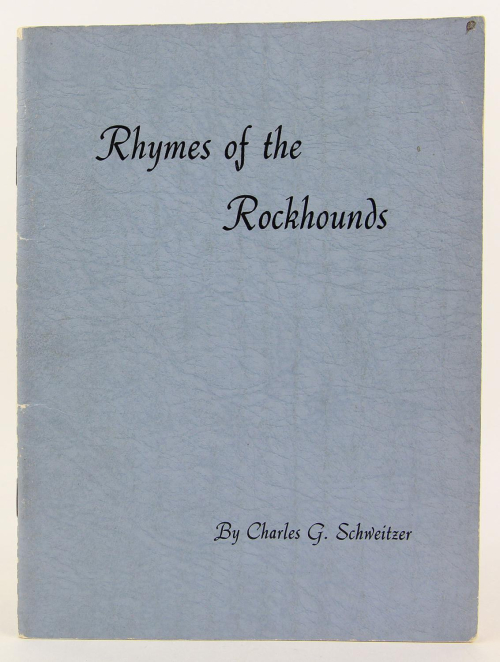
Throwback Thursday #177: The Rockhound’s Creed
Read more: Throwback Thursday #177: The Rockhound’s CreedThis is Throwback Thursday #177. In these, we look back into the past at ESCONI specifically and Earth Science in general. If you have any contributions, (science, pictures, stories, etc …), please send them to esconi.info@gmail.com. Thanks! We’ve featured the poems of Charles Schweitzer a few times in the past. In Throwback Thursday #59, we looked at “The Rock Pile”, TBT #73 was “The Rockhound’s Wish”, and TBT #98 was “The Rock I Threw Away”. All of these appear in his book of poems titled “Rhymes of the Rockhounds”, which was published in the mid 1950’s. The Rockhound’s Creed HERE, take…
-

Three-eyed distant relative of insects and crustaceans reveals details of early animal evolution
Read more: Three-eyed distant relative of insects and crustaceans reveals details of early animal evolutionPhys.org has a story about the evolution of insects and crustaceans. Kylinxia zhangi is an early arthropod related to insects and crustaceans. It lived about 520 million years ago during the Cambrian Period. It was part of the famous Chengjiang fossil locality, which is located in the Yunnan Province in southern China. A team which consisted of researchers from the University of Leicester, Yunnan Key Laboratory for Paleobiology and the Institute of Paleontology at Yunnan University, Chengjiang Fossil Museum, and the Natural History Museum in London, found that K. zhangi reveals clues to the evolution of the arthropod head. …
-

ESCONI Events September 2023
Read more: ESCONI Events September 2023Field trips require membership, but visitors are welcome at all meetings! Fri, Sep 8th ESCONI General Meeting 8:00 PM – Topic: “Tropical rainforests – A 300-million-year-old history” by Fabiany Herrera, the Assistant Curator of Paleobotany at the Field Museum Zoom link Sat, Sep 9th ESCONI Junior Meeting – 6:30 PM at College of DuPage – Topic: “North Carolina Microfossils” Specifics of this meeting are available from Scott Galloway, 630-670-2591, gallowayscottf@gmail.com. The meeting will be in person at the College of DuPage Tech Ed (TEC) Building, Room 1038A (Map). Sat, Sep 16th ESCONI Field Trip to Braceville, IL for Mazon Creek Fossils. …
-

Inside The Ancient City Of Baiae, The Notorious Roman Party Town That Now Sits On The Ocean Floor
Read more: Inside The Ancient City Of Baiae, The Notorious Roman Party Town That Now Sits On The Ocean Floorallthatsinteresting.com has a story about the Roman city of Baiae. Located about 150 miles south of Rome, it was a resort town for wealth Romans. Much of it is under water now, but the ancient Roman relics preserved there give us clues to its hedonistic past. The exact date of Baiae’s construction is still a mystery. But by the 1st century B.C.E., the town had already become a popular destination for ancient Roman elites. Notable figures like Julius Caesar, Augustus, and Nero would all go on to own spectacular homes there. Though many were attracted to the area’s natural hot…
-
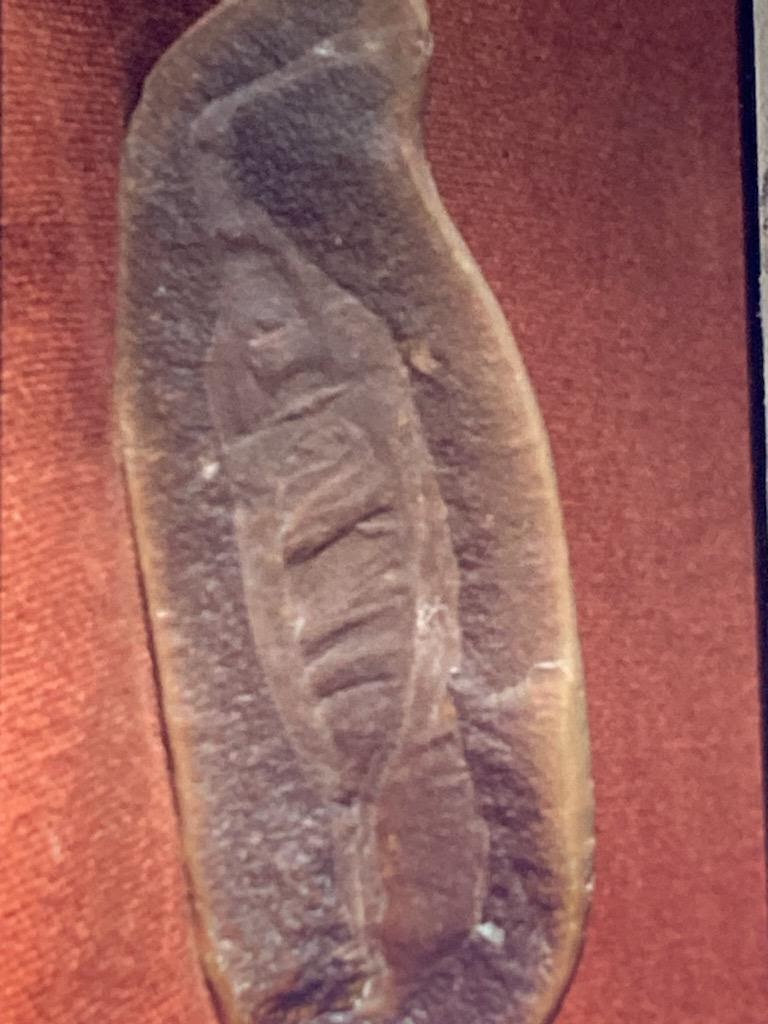
Mazon Monday #179: Mr Tully’s Tullys
Read more: Mazon Monday #179: Mr Tully’s TullysThis is Mazon Monday post #179. What’s your favorite Mazon Creek fossil? Tell us at email:esconi.info@gmail.com. The Tully Monster was designated Illinois’ State Fossil in 1989. Unfortunately, Francis Tully (yes! an ESCONI member!) didn’t live to see it as he died in 1987. While much is still uncertain, we know quite a bit more about the animal today. The following article appeared in the October 1989 issue of the newsletter. State fossil, prairie grass chosen Springfield– The “Tully Monster” became Illinois’ official state fossil! This was just one day after the “Big Bluestem” became Illinois’ official state prairie grass. Governor…
-
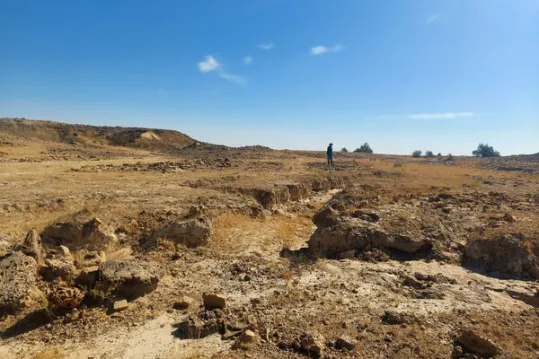
The Oldest Plant-Eating Dinosaur Has Been Found in India
Read more: The Oldest Plant-Eating Dinosaur Has Been Found in IndiaThe New York Times’ Trilobite column has a story about a new dinosaur from India. The animal, called Tharosaurus indicus, is an early member of the dicraeosaurids, which are sauropods. It lived about 167 million years ago during the Jurassic Period. The fossils were discovered in the Thar Desert, located in the northwest of India. The region contains part of the border between India and Pakistan. T. indicus represents the earliest record of both dicraeosaurids and diplodocoids. The research was published in the journal Scientific Reports. Dicraeosaurids like Tharosaurus indicus are part of a larger group called diplodocoid sauropods. These…
-
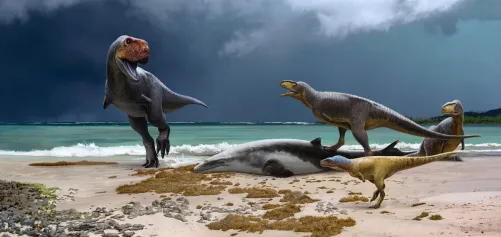
Fossils of Two New Abelisaurid Dinosaurs Uncovered in Morocco
Read more: Fossils of Two New Abelisaurid Dinosaurs Uncovered in MoroccoFossils have been found of several types of abelisaur showing the diversity of dinosaurs in Morocco at the end of the Cretaceous period. Image credit: Andrey Atuchin. SciNews has a story about the discovery of a couple new dinosaurs in Morocco. The abelisaurs lived around 66 million years ago during the Cretaceous Period. The paper was published in the journal Cretaceous Research. The two new dinosaur species lived approximately 66 million years ago and had short, bulldog snouts and very short arms. They belonged to Abelisauridae, a family of carnivorous dinosaurs that were counterparts to the tyrannosaurs of the northern hemisphere.…
-
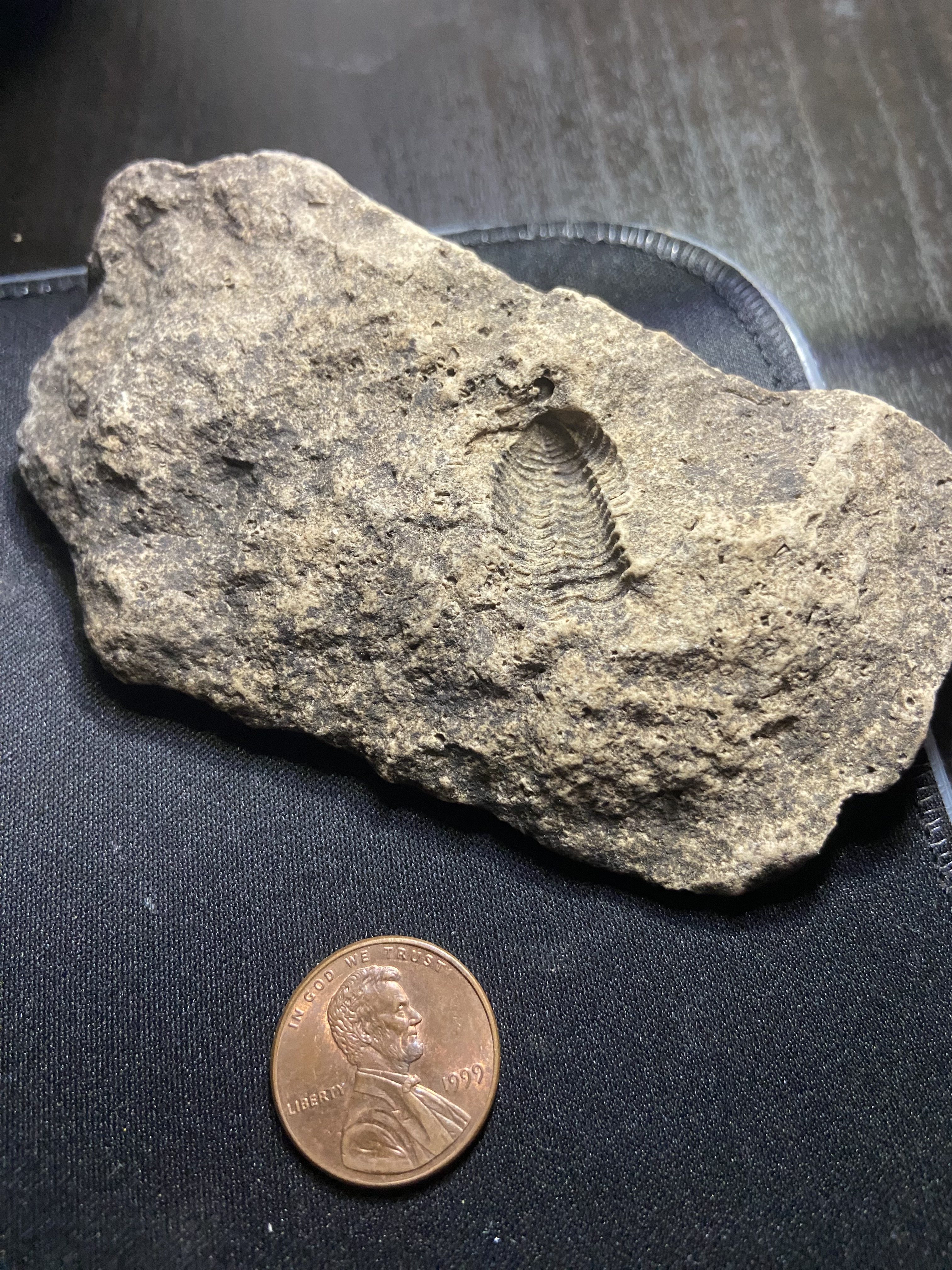
Fossil Friday #175: Calymene from Naperville
Read more: Fossil Friday #175: Calymene from NapervilleThis is the “Fossil Friday” post #175. Expect this to be a somewhat regular feature of the website. We will post any fossil pictures you send in to esconi.info@gmail.com. Please include a short description or story. Check the #FossilFriday Twitter hash tag for contributions from around the world! We received another Fossil Friday contribution from Caden McDonald a few days ago. This time he send us some very nice trilobite photos. He found these in a park in Naperville, IL, which is a typical suburb about 35 miles west of Chicago. These are Calymene celebra trilobites from the Silurian Period,…
-

Throwback Thursday #176: Maple Leaf Field Trip 1997
Read more: Throwback Thursday #176: Maple Leaf Field Trip 1997This is Throwback Thursday #176. In these, we look back into the past at ESCONI specifically and Earth Science in general. If you have any contributions, (science, pictures, stories, etc …), please send them to esconi.info@gmail.com. Thanks! Late August 1997 saw a very ambitious ESCONI Field Trip. It lasted for eight days, from August 23rd until August 31st. It started in Brechin, Ontario, Canada, went through to Niagara Falls in New York and back to Chicago. The trip was organized by Dave Bergmann, who was Field Trip Chairman for a few years in the 1990’s. He and his wife Sheila…
-

TRIP FULL: ESCONI Field Trip to Danville, IL – Saturday, September 23rd, 2023
Read more: TRIP FULL: ESCONI Field Trip to Danville, IL – Saturday, September 23rd, 2023This trip is now FULL. Danville Field Trip Rules for Sept 23, 2023 An ESCONI field trip to the Danville Shale Pile for Pennsylvanian fossils is scheduled for Sept 23, 2023 starting at 10 AM. This is on private property and there is an attendance limit of 25 people. The gate will be secured once we are in and locked when we leave. Plan on being off the hill at 3 PM to give time for specimen identification and pictures. You must register to go on this trip. See rule 6 below for instructions. This is the only way to…
-

Fountains of diamonds erupt from Earth’s center as supercontinents break up
Read more: Fountains of diamonds erupt from Earth’s center as supercontinents break upA rough diamond in a mine (Image credit: Getty Images) LiveScience has a story about the formation of diamonds. Diamonds form deep in the Earth’s crust at a depth of about 93 miles. They are brought to the surface by fast moving eruptions called kimberlites. Kimberlites travel at between 11 and 83 mph (18 to 133 km/h). They are most likely to occur during times of high tectonic activity, like the break up of Pangaea roughly about 190 million years ago. A recent paper in the journal Nature by Thomas Gernon, a professor of Earth and climate science at the University…
-

Mazon Monday #178: Investigating Mazon Creek fossil plants using computed tomography and microphotography
Read more: Mazon Monday #178: Investigating Mazon Creek fossil plants using computed tomography and microphotographyThis is Mazon Monday post #178. What’s your favorite Mazon Creek fossil? Tell us at email:esconi.info@gmail.com. Fabiany Herrera, Assistant Curator of Paleobotany at the Field Museum of Natural History, was the lead author of a new paper about Mazon Creek plant research. The paper is entitled “Investigating Mazon Creek fossil plants using computed tomography and microphotography” and was recently published in the journal Frontiers in Earth Science. The research utilized high tech imaging methods to reveal previously unseen detail in Mazon Creek Tetraphyllostrobus and Crossotheca fossil specimens. The paper is Open Access and can be read and downloaded from the…
-
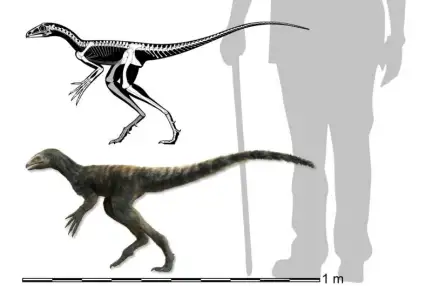
Researchers find fossilized nonflying precursor to pterosaur in Brazil
Read more: Researchers find fossilized nonflying precursor to pterosaur in BrazilPhys.org has a story about a fossil find which sheds light on pterosaur evolution. A team of paleontologists have found an ancestor of pterosaurs in a fossil deposit in Brazil. The site is near Rio Grande do Sul, Brazil and dates to about 230 million years ago in the Triassic Period. The team named a specimen Venetoraptor gassenae from a well preserved partial skeleton. The research was published in the journal Nature. The fossil revealed a small, land-dwelling, four-legged, bipedal creature—likely standing no more than 0.3 meters at the hips and likely no more than a meter long. It also…
-
PBS Eons: We Helped Make Mosquitoes A Problem
Read more: PBS Eons: We Helped Make Mosquitoes A ProblemPBS Eons has a new video on Youtube. This one is about the pesky mosquitoes. Around 6,000 years ago, in the Sahel region of Africa, a lone female mosquito buzzed through the lush, green savannah. She couldn’t know it, but the planet itself was about to change in ways that would see her descendants evolve to live very different lives. A sudden ecological shift would force them to go from living in forests and feeding on a range of animals to specializing on just one single species: us.
-
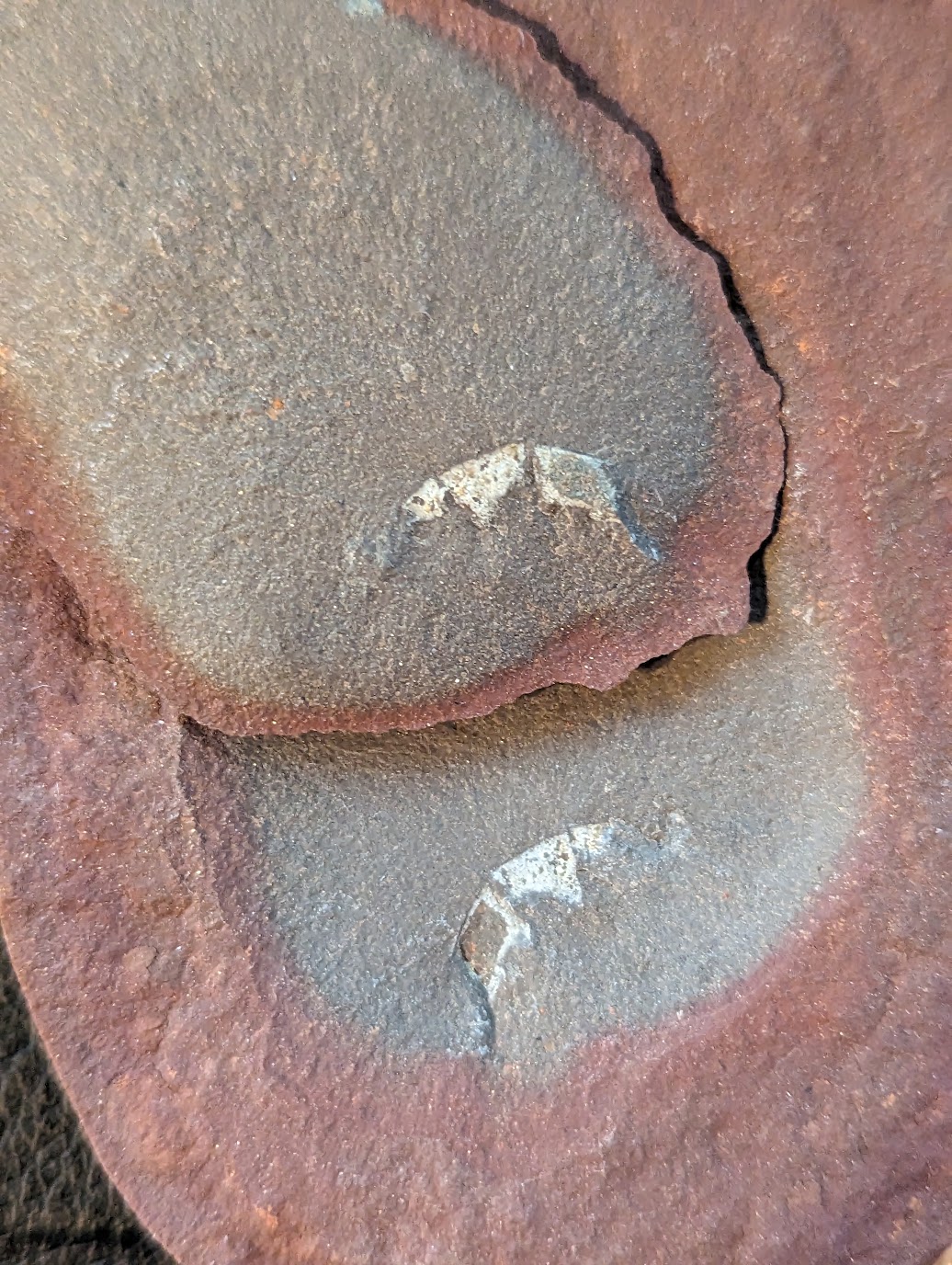
Fossil Friday #174: A Jellyfish with a Secret
Read more: Fossil Friday #174: A Jellyfish with a SecretThis is the “Fossil Friday” post #174. Expect this to be a somewhat regular feature of the website. We will post any fossil pictures you send in to esconi.info@gmail.com. Please include a short description or story. Check the #FossilFriday Twitter hash tag for contributions from around the world! —————————————————– Mazon Creek concretions come in many shapes and sizes. Quite often, the shape of a concretion is a clue to what type of fossil might be inside. The Pit 11 concretion shown below has a shape that is usually an Essexella asherae, which is a very common fossil from Pit 11. …
-
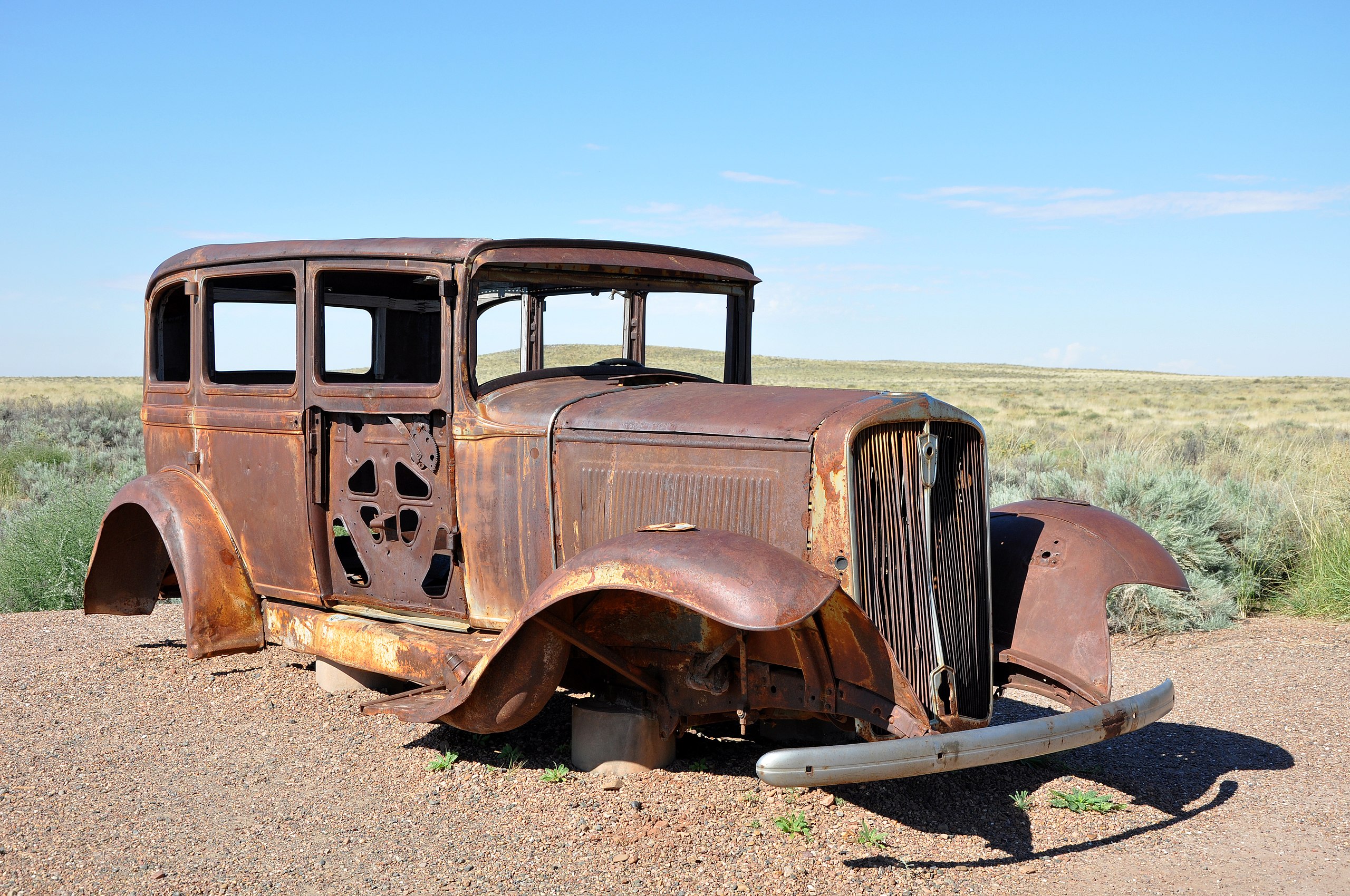
Throwback Thursday #175: Erosion… Piece By Piece
Read more: Throwback Thursday #175: Erosion… Piece By PieceThis is Throwback Thursday #175. In these, we look back into the past at ESCONI specifically and Earth Science in general. If you have any contributions, (science, pictures, stories, etc …), please send them to esconi.info@gmail.com. Thanks! The Petrified Forest National Park is a beautiful place, located in Arizona. If you get a chance to visit, you won’t be disappointed. There’s an official website for the park, with many beautiful photos and videos of both the Petrified Forest and the Painted Desert. The Tepees in Petrified Forest National Park in northeastern Arizona, United States. View is toward the northwest from the main park…
-

ESCONI Field Trip to Braceville, IL for Mazon Creek Fossils – Saturday, September 16th and Sunday September 17th, 2023
Read more: ESCONI Field Trip to Braceville, IL for Mazon Creek Fossils – Saturday, September 16th and Sunday September 17th, 2023Update: both days are FULL! Braceville Field Trip Rules for Sept 2023 The ESCONI field trips to Braceville for Mazon Creek fossils are set for Sept 16 and 17, 2023 from 9 AM to 3 PM. You can attend one or the other, but not both days. There is an attendance limit of 50 people each day. You must register to go on this trip. See rule 6 below for instructions. This is the only way to register. If you are sick, have any symptoms of Covid-19 or have recently tested positive, DO NOT COME. Meet at 9 AM at the…
-
Introducing, Sobek the Spinosaurus
Read more: Introducing, Sobek the SpinosaurusThe new Spinosaur at the Field Museum has a name… Sobek! Over the last two weeks, more than 30,000 votes were cast to choose a name for Spinosaurus. We are excited to introduce Sobek the Spinosaurus to the Field Museum! Sobek is the name of an ancient Egyptian god with the head of a crocodile, inspired by the crocodile-like jaws of the river-dwelling Spinosaurus, who was first discovered in Egypt. Sobek and SUE the T.rex will soon embark on a tour of Chicago together. Stay up to date on this dynamic duos’ adventure by following the Field’s social media channels at @fieldmuseum, or pay a visit to…

ESCONI Gem, Mineral, and Fossil Show
Most Recent Post
- Fossil of Pincer-Wielding Crawler Reveals Origins of Spiders, Scorpions and Others
 The Trilobites column over at the New York Times has a interesting story about the origin of chelicerates – spiders, scorpions, mites, horseshoe crabs, and others. Chelicerates are a diverse group of arthropods that consists of more than 120,000 known species. Member of this group are classified by having a pair of appendages called chelicerae. These appendages are adapted for various purposes like snatching prey, injecting venom, and even spinning silk.
- About ESCONI
- Around the Web
- Calendar of Events
- Code of Ethics and Conduct
- ESCONI Books for Sale
- ESCONI Gem, Mineral, and Fossil Show
- ESCONI in the News
- ESCONI Videos
- Field Trips
- Flashback Friday
- Fossil Friday
- Mazon Creek
- Mazon Monday
- Member Spotlight
- Membership Information
- Reference Material
- Throwback Thursday
- Trilobite Tuesday
Field trips require membership, but visitors are welcome at all meetings!
| Friday, April 10th | General Meeting – 8:00 PM via Zoom. Jessica Hull will present “Life in the Devonian Period, The Age of Fishes.” |
| Saturday, April 11th | Junior Study Group Meeting – 2:00 PM, in person at the College of DuPage Technical Education Center (TEC) Building – Room 1038A (Map). Katherine Howard will present on Sand and Sediment Collecting. Specifics of this meeting are available from Scott Galloway, 630-670-2591, gallowayscottf@gmail.com. |
| Saturday, April 18th | Paleontology Study Group – 7:30 PM via Zoom and in person at the College of DuPage, TEC, Room 1038B (Map). Keith Robitschek will present “Digging the Marl of the Lance Formation.” |
| No meeting this month | Mineralogy Study Group |
| No meeting this month | Junior Study Group |