
-

New Dinosaur Unearthed in Australia
Read more: New Dinosaur Unearthed in AustraliaSciNews has an article about a new dinosaur discovery in Australia. This new dinosaur lived around 110 million years ago during the Cretaceous Period. It’s a rare type of dinosaur that belongs to the group Elaphrosaurinae, which are odd ceratosaurians known from fossils from Africa, Asia, and Argentina. The fossils were discovered by Dinosaur Dreaming volunteer Jessica Parker in 2015 near Cape Otway, Victoria. All the details can be found in a paper that was published in the journal Gondwana Research. The newly-discovered dinosaur belongs to Elaphrosaurinae, an enigmatic group of gracile ceratosaurian dinosaurs known from the Late Jurassic period of Africa…
-

Trilobite Tuesday #8: Trilobite State Fossils
Read more: Trilobite Tuesday #8: Trilobite State FossilsPlease note: most of the information used here came from the State Fossil page on Fossilera. It has information on all the state fossils, including state dinosaurs and state “stones”. They have nice pictures and a brief description with links for each one. All but seven states have state fossils. There are three types of trilobite that have been honored as state fossils. Those types are listed below. Ohio State Fossil Isotelus Age: OrdovicianYear Designated: 1985 Isotelus is a genus to large Asaphid trilobite that lived during the Ordovician Period. It’s fossils are common within several formations that outcrop in Southwestern Ohio. The largest Isotelus trilobite…
-

Mazon Monday #8: Testajapyx thomasi
Read more: Mazon Monday #8: Testajapyx thomasiThis is Mazon Monday post #8. Testajapyx thomasi is the subject of this Species Spotlight, You may recognize the name of this species. It is named for ESCONI member, Tom Testa. Tom is a prolific, some might even say legendary, Mazon Creek collector. A great part of his collection resides in the Field Museum and is helping to further our knowledge of this ever interesting biota. Thanks for your invaluable contributions to science, Tom! Testajapyx thomasi is a wingless insect. It was described in October 1987, by Jarmila Kukalova-Peck from Carleton University in Ontario, Canada. Abstract A new Upper Carboniferous…
-
Spring Braceville Field Trip Canceled!
Read more: Spring Braceville Field Trip Canceled!You probably have noticed we are past the usually dates for the Spring Braceville field trip. We have been working behind the scenes to try to reschedule the trip for July or August. But the uncertainties with the shelter in place orders and the expected summer weather conditions (it can be quite hot in July and August!) have led us to cancel the Spring trip. We hope we will be in a better position in the Fall. Please stay tuned for any updates and news on upcoming meetings and field trips. Stay healthy and safe!
-
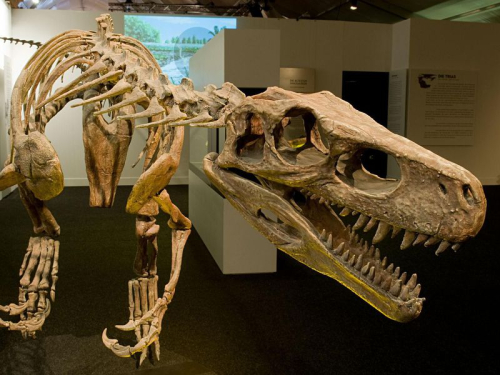
The Rise of Meat-Eating Dinosaurs Is More Complicated Than We Thought
Read more: The Rise of Meat-Eating Dinosaurs Is More Complicated Than We ThoughtSmithsonian Magazine has an interesting piece about carnivorous dinosaurs. The evolution of large meat eating dinosaurs is a long and complicated story. Dinosaurs evolved around 235 million years ago. At that time, they were lanky and small. One of the largest early meat eaters was Herrerasaursus. It was about 16 feet long and lived in Argentina during the Triassic. Paleontologists have been searching for clues as to how and when the larger dinosaurs evolved. Up until now, paleontologists thought theropods remained generally small and on the ecological sidelines from about 235 through 201 million years ago. It was only after…
-
Fossil Friday #6: Fossils From The Mazon River
Read more: Fossil Friday #6: Fossils From The Mazon RiverThis is the “Fossil Friday” post #6. Expect this to be a somewhat regular feature of the website. We will post any fossil pictures you send in to esconi.info@gmail.com. Please include a short description or story. Check the #FossilFriday Twitter hash tag for contributions from around the world! Here are various Mazon Creek fossils from an I&M Canal Corridor Mazon River trip. This is an annual trip on private land. It does cost money, but the fees go to charity. These specimens are from the 2019 trip. And, were opened using the freeze/thaw method.
-
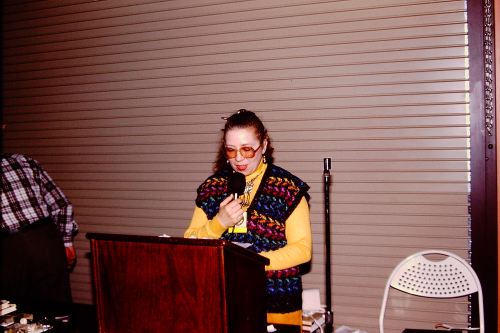
Throwback Thursday #7: Scenes From The 1990 Gem, Mineral, and Fossil Show
Read more: Throwback Thursday #7: Scenes From The 1990 Gem, Mineral, and Fossil ShowThis is Throwback Thursday #6. In these, we look back into the past at ESCONI specifically and Earth Science in general. If you have any contributions, (science, pictures, stories, etc …), please send them to esconi.info@gmail.com. Thanks! The annual gem, mineral, and fossil show has been a part of ESCONI since nearly the beginning. Here are some pictures from the 1990 show. It was held on March 3rd and 4th 1990 at the old K building of the College of Dupage. The 1990 Show Flyer President Kathy Dedina Floyd Rogers knapping Dorothy Auler Silent Auction Martha Prepp seated in the…
-

PBS Eons: How Plants Caused the First Mass Extinction
Read more: PBS Eons: How Plants Caused the First Mass ExtinctionPBS Eons has a new episode. Climate change has been a large part of all the mass extinctions. The arrival of land plants has a huge impact on the climate and was quite likely a driving event. In the middle of the Cambrian, life on land was about to get a little more crowded. And those newcomers would end up changing the world. The arrival of plants on land would make the world colder, drain much of the oxygen out of the oceans and eventually, it would help cause a massive extinction event.
-

Trilobite Tuesday #7: When Trilobites Ruled the World
Read more: Trilobite Tuesday #7: When Trilobites Ruled the WorldIt’s a few years old… March 3rd, 2014, but trilobites are even older! The New York Times has an great article called “When Trilobites Ruled the World” by Natalie Angier, who does excellent science writing on many, many subjects from geology to paleontology to genetics to neuroscience. You name it and she’s written about it. This article is all about Trilobites. What they are, when they lived, who studies them… there’s even a trilobite song! Check out the article, it’s a great diversion from the current shelter in place! “The Lament for the Passing of the Trilobites” by Nigel Hughes.…
-
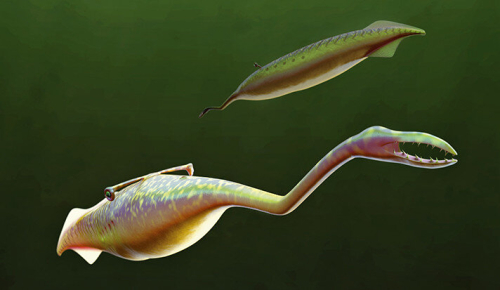
Mazon Monday #7: Ancient ‘Tully monster’ was a vertebrate, not a spineless blob, study claims
Read more: Mazon Monday #7: Ancient ‘Tully monster’ was a vertebrate, not a spineless blob, study claimsThis is Mazon Monday post #7. This is about one of the favorite Mazon animals, the Tully monster. Phys.org has an article about some new research about the Tully Monster. The Tully Monster was first discovered by Francis Tully in 1955. He was fossil hunting in Pit 11 of the old Peabody Coal Company’s strip mines near Braidwood, IL., when he came across a strange looking fossil. He brought the fossils to Eugene Richardson at the Field Museum, who had never seen anything like it. The animal was quickly dubbed “My Tully’s Monster”. In 1966, Richardson formally described it and…
-
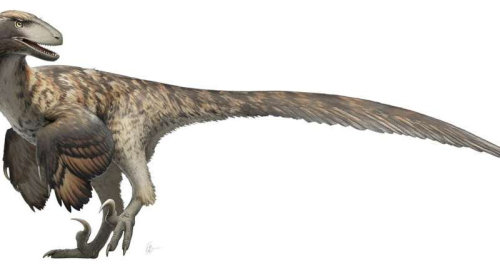
Phys.org: Jurrassic Park got it wrong: Research indicates raptors didn’t hunt in packs
Read more: Phys.org: Jurrassic Park got it wrong: Research indicates raptors didn’t hunt in packsPhys.org has a story about one the most favorite raptor dinosaurs. Raptors became popular after appearing in the 1993 blockbuster movie Jurassic Park. In that movie, where they were incorrectly called Velociraptors instead of Deinonychus antirrhopos, they are portrayed as hunting in packs similar to wolves. Because behavior doesn’t fossilize, there has been little evidence for this hunting style. This study, published in the journal Palaeogeography, Palaeoclimatology, Palaeoecology, compared the composition of teeth from young and adult specimens. Teeth are a good predictor of both what and where an animal eats. “The problem with this idea is that living dinosaurs…
-
Take a Virtual Field Trip to the Field Museum with Mayor Lori Lightfoot
Read more: Take a Virtual Field Trip to the Field Museum with Mayor Lori LightfootTake a virtual field trip to the Field Museum with Mayor Lori Lightfoot! Join Mayor Lightfoot as she explores Chicago’s renowned natural history museum. Explore Native American art and culture, learn about SUE the T. rex, and study the fascinating world of insects. Our next stop is the Field Museum. As you tour the newest exhibition, celebrate bravery and beauty with the Apsáalooke people, marvel at their war shields, and witness the power of community in action. Then, discover dinosaurs! Meet SUE the T. rex, the world’s most complete and best-preserved Tyrannosaurus rex specimen. Finally, find out why insects are all…
-
Fossil Friday #5: Esconites zelus
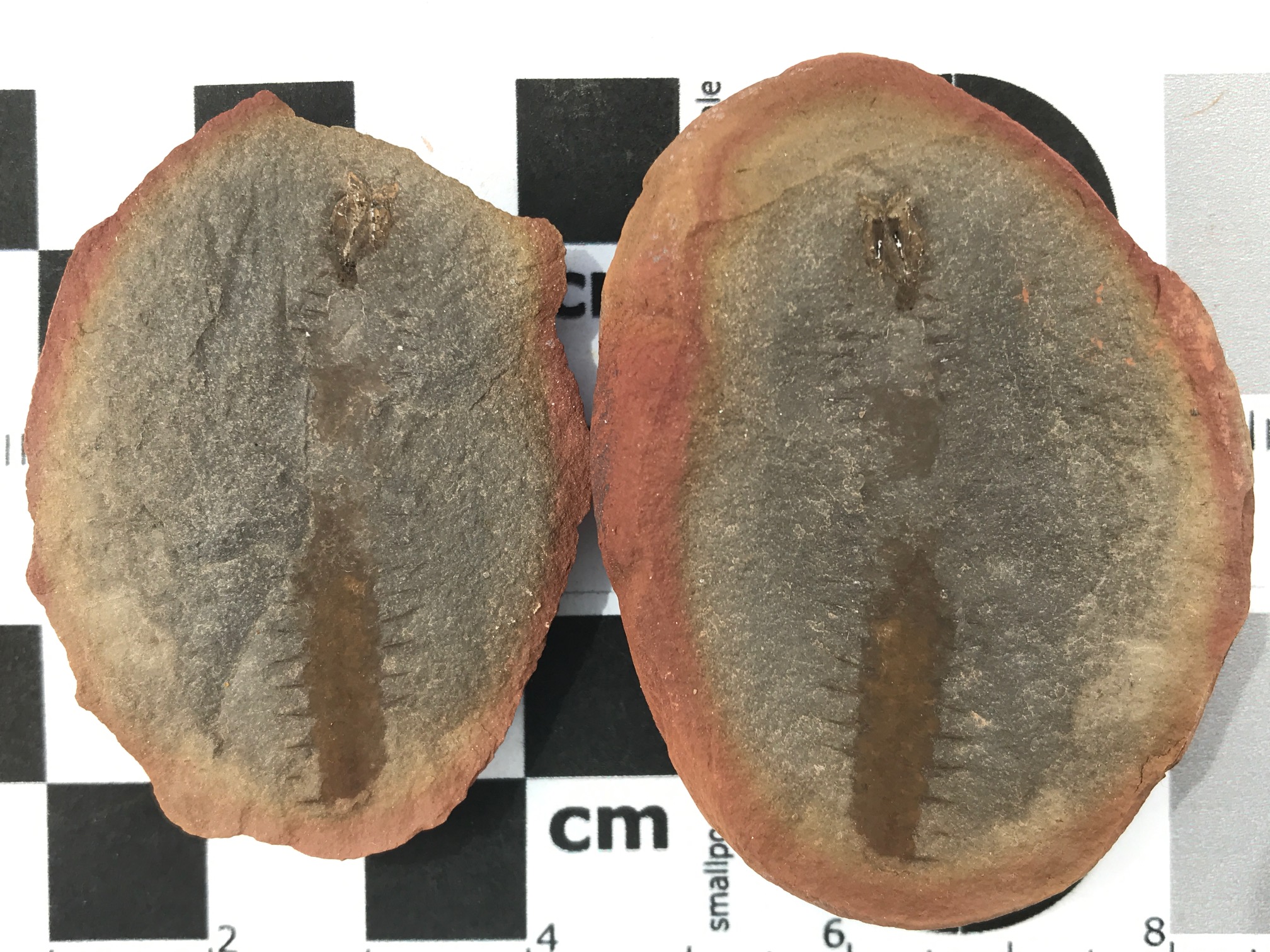
Read more: Fossil Friday #5: Esconites zelusThis is the “Fossil Friday” post #5. Expect this to be a somewhat regular feature of the website. We will post any fossil pictures you send in to esconi.info@gmail.com. Please include a short description or story. Check the #FossilFriday Twitter hash tag for contributions from around the world! For this week’s Fossil Friday, we have some pictures of a great example of Esconites zelus from ESCONI member Chris Berg. There are some interesting close ups of the body and jaws, which are very well defined! This specimen was found in Pit 11 and opened fairly recently. Chris is a firm…
-
Throwback Thursday #6: Lone Star Quarry, Oglesby, IL, in 2008
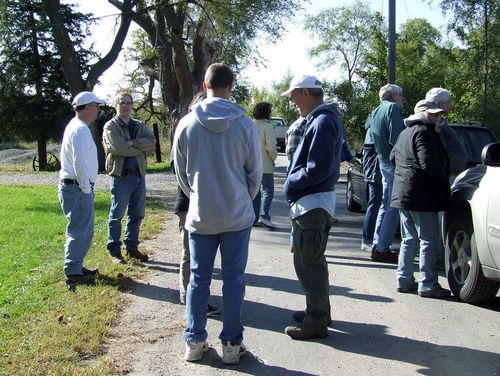
Read more: Throwback Thursday #6: Lone Star Quarry, Oglesby, IL, in 2008This is Throwback Thursday #6. In these, we look back into the past at ESCONI specifically and Earth Science in general. If you have any contributions, (science, pictures, stories, etc …), please send them to esconi.info@gmail.com. Thanks! At one time, ESCONI had a yearly field trip to the old Lone Star Quarry near Oglesby, IL. And, in some years, we had both a spring and fall field trip there. The quarry provided a very rich fossil deposit, which included brachiopods, crinoids, sponges, trilobites, cephalopods, and even shark teeth. The exposed rock layers date to the Pennsylvanian Period. The State of Illinois…
-
Brontosaurus : reinstating a prehistoric icon
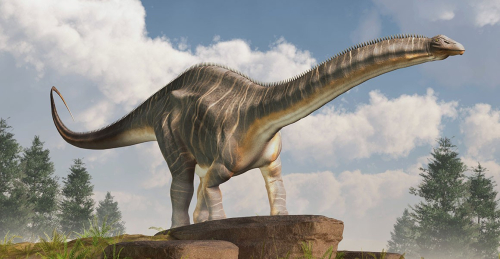
Read more: Brontosaurus : reinstating a prehistoric iconThe NHM in London has an article about the reinstatement of Brontosaurus as a valid species name. Both animals we discovered in the American west in the 1970, during a period of time referred to as the “Bone Wars” or the “Great Dinosaur Rush”. Apatosaurus ajax was named by Othniel Charles Marsh in 1877 from bones found in Colorado. He named Brontosaurus excelsus a few years later from bones discovered in Wyoming. Both were found in rocks dated to the Jurassic Period, about 156 to 145 million years ago. Brontosaurus is one of the world’s most beloved dinosaurs, unusual, perhaps, for…
-
Trilobite Tuesday #6: The Largest Trilobites #trilobite #fossils #TrilobiteTuesday
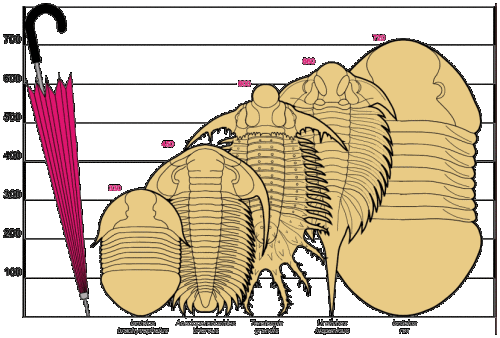
Read more: Trilobite Tuesday #6: The Largest Trilobites #trilobite #fossils #TrilobiteTuesdayIf you’re interested in the largest trilobites, have a look over at this page on “A Guide to the Orders of Trilobites” or this page at the American Museum of Natural History. The following quote is from the AMNH page. The size variance shown among trilobite species is nothing less than astonishing. Generally when one considers these long-extinct arthropods, images of small, hard-shelled creatures scurrying across ancient sea floors spring readily to mind. And for the most part, such a perception is accurate. The vast majority of the more than 25,000 scientifically recognized species that existed during the trilobites’ 270 million year…
-
Mazon Monday #6: Esconites zelus
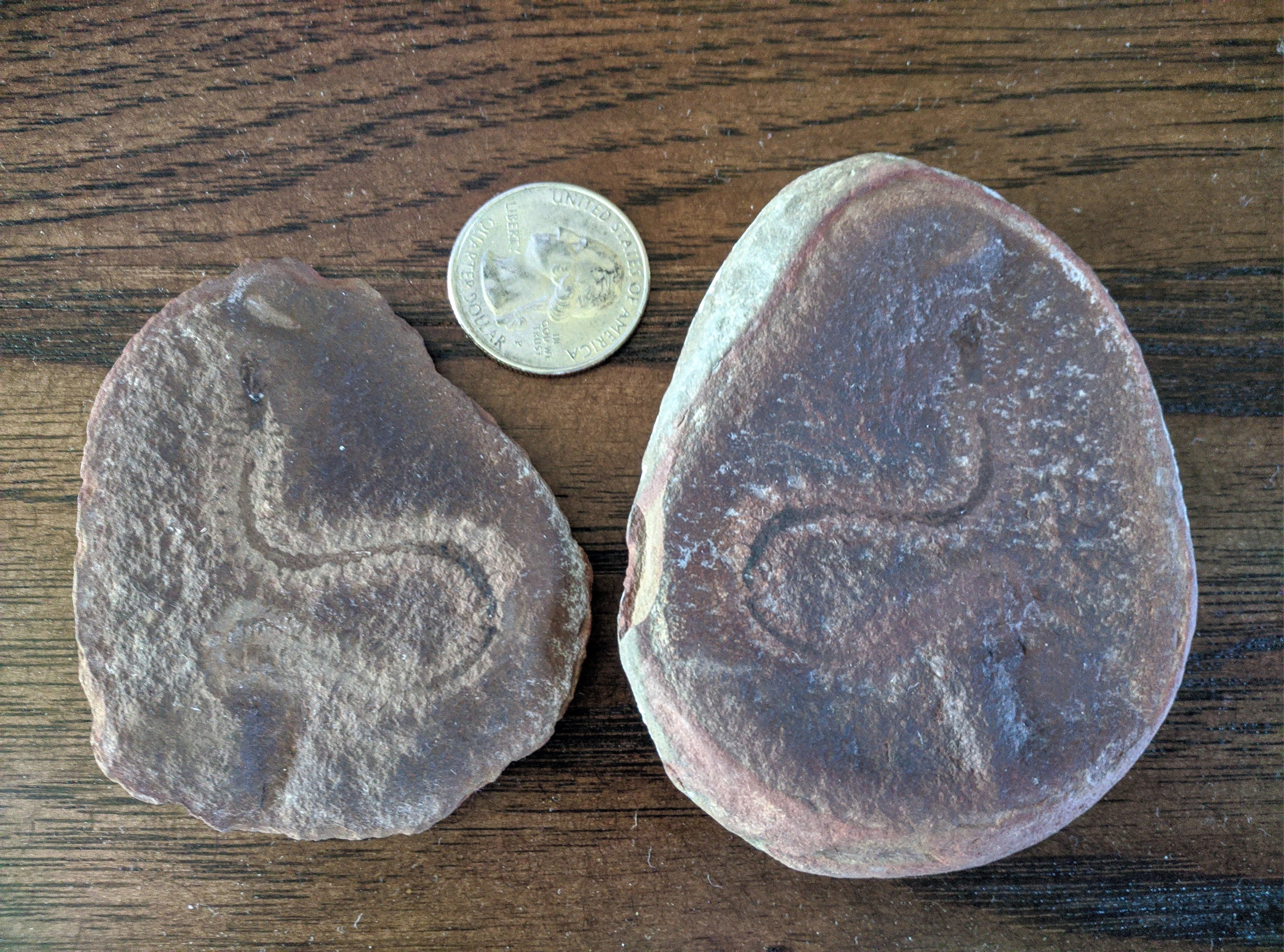
Read more: Mazon Monday #6: Esconites zelusThis is Mazon Monday post #6. A fellow member sent me some pictures of some recently opened Esconites zelus. Got interested in where and when it was first described, here are some highlights. Esconites zelus, Species Spotlight Esconites Temporal range: Carboniferous Scientific classification Kingdom: Animalia Phylum: Annelida Class: Polychaeta Order: Eunicida Family: Eunicidae Genus: †Esconites Species: †E. zelus Binomial name †Esconites zelus Thompson & Johnson 1977 Esconites zelus is a species of polychaete worm. It is part of the Mazon Creek biota, Essex fauna. It was described in 1977 in a paper by Ida Thompson and Ralph Johnson, which appeared in…
-

LiveScience: Ancient ‘crazy beast’ from Madagascar had mismatched body and teeth from ‘outer space’
Read more: LiveScience: Ancient ‘crazy beast’ from Madagascar had mismatched body and teeth from ‘outer space’LiveScience has a post about a strange mammal from Madagascar. This mammal, called Adalatherium hui, lived about 66 million years ago in what is now northwestern Madagascar. This was the very last of the Cretaceous Period and just before the K-Pg mass extinction. The new fossil is the oldest and only nearly complete specimen of an extinct group known as Gondwanatherians. Its has been described in a paper in the journal Nature. The fossil is from northwestern Madagascar and dates back 66 million years, to the end of the Cretaceous period. Madagascar was already an island at the time, having drifted…
-
PBS Eons: How the Andes Mountains Might Have Killed a Bunch of Whales
Read more: PBS Eons: How the Andes Mountains Might Have Killed a Bunch of WhalesPBS Eons has a new episode and what happened to a bunch of whales. The Andes Mountains might have some explaining to do… At a site known as Cerro Ballena or Whale Hill, there are more than 40 skeletons of marine mammals — a graveyard of ocean life dating back 6.5 million to 9 million years ago, in the Late Miocene Epoch. But the identity of the killer that they finally settled on might surprise you.
-

Fossil Friday #4: Green River Fish
Read more: Fossil Friday #4: Green River FishThis is the “Fossil Friday” post #4. Expect this to be a somewhat regular feature of the website. We will post any fossil pictures you send in to esconi.info@gmail.com. Please include a short description or story. Check the #FossilFriday Twitter hash tag for contributions from around the world! This week we visit the Green River Formation and its enormously diverse faunal and floral fossil. The Green River Formation dates to the Eocene, about 53.5 to 48.5 million years ago. The formation is composed of very fine layers, a dark layer during the growing season and a light-hue inorganic layer in…

ESCONI Gem, Mineral, and Fossil Show
Most Recent Post
- Reminder: MAPS Expo XLVII – April 24-26, 2026 in Springfield, IL
 The Mid-America Paleontology Society (MAPS) 2026 Expo XLVII is being held from April 24th to 26th, 2026 at the Joe Orr Building on the Illinois State Fairgrounds in Springfield, Illinois. The topic for the show is “Fossil Preparation and Archiving”.
- About ESCONI
- Around the Web
- Calendar of Events
- Code of Ethics and Conduct
- ESCONI Books for Sale
- ESCONI Gem, Mineral, and Fossil Show
- ESCONI in the News
- ESCONI Videos
- Field Trips
- Flashback Friday
- Fossil Friday
- Mazon Creek
- Mazon Monday
- Member Spotlight
- Membership Information
- Reference Material
- Throwback Thursday
- Trilobite Tuesday
Field trips require membership, but visitors are welcome at all meetings!
| Friday, April 10th | General Meeting – 8:00 PM via Zoom. Jessica Hull will present “Life in the Devonian Period, The Age of Fishes.” |
| Saturday, April 11th | Junior Study Group Meeting – 2:00 PM, in person at the College of DuPage Technical Education Center (TEC) Building – Room 1038A (Map). Katherine Howard will present on Sand and Sediment Collecting. Specifics of this meeting are available from Scott Galloway, 630-670-2591, gallowayscottf@gmail.com. |
| Saturday, April 18th | Paleontology Study Group – 7:30 PM via Zoom and in person at the College of DuPage, TEC, Room 1038B (Map). Keith Robitschek will present “Digging the Marl of the Lance Formation.” |
| Friday, April 24th | MAPS Expo XLVII – Springfield, IL. |
| Saturday, April 25th | MAPS Expo XLVII – Springfield, IL. |
| Sunday, April 26th | MAPS Expo XLVII – Springfield, IL. |
| No meeting this month | Mineralogy Study Group |