-
The Fossil Flowers That Rewrote the History of Life
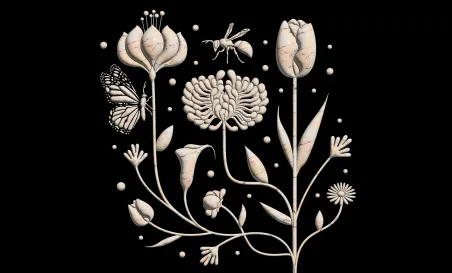
Read more: The Fossil Flowers That Rewrote the History of LifeThe New Yorker has an interesting piece about some special flower fossils. When and where did the flowering plant evolve? It’s a question that been pursued by paleobotanists for a long time. Even Charles Darwin called it the “abominable mystery” due to how flowers seems to spring fully formed in the fossil record. The centerpiece of the Swedish Museum of Natural History, in Stockholm, is probably the Fossils and Evolution hall, in which an enormous Tyrannosaurus rex skeleton seems to yawn over crowds of starstruck schoolchildren. Nearby, tourists marvel at a triceratops skull and a velociraptor model. These iconic dinosaurs…
-
60 Minutes: Earth currently experiencing a sixth mass extinction, according to scientists
Read more: 60 Minutes: Earth currently experiencing a sixth mass extinction, according to scientistsCBS News 60 Minutes recently had a gripping segment on the current state of nature and the environment and it’s not good. A mass extinction is an extinction of a large number of species in a relatively short period of time. The extinction of a species means that all individuals of that species are lost forever. There have been at least five mass extinctions in the last 500 million years of Earth’s history. The worst event is termed the “Great Dying”. It happened about 250 million years ago and it took out over 90% of all species on Earth! The most…
-

ESCONI Events January 2023
Read more: ESCONI Events January 2023Field trips require membership, but visitors are welcome at all meetings! Fri, Jan 13th ESCONI General Meeting 8:00 PM Zoom – Topic: “New evidence for large ornithomimosaurs in the Southeastern US and the biogeography of Cretaceous ostrich–mimic dinosaurs” by Thomas Cullen from Carlton University in Ottawa, Canada Zoom link Sat, Jan 14th ESCONI Junior Meeting – 7:00 PM at College of DuPage – Topic: Rock Tumblers and more! Specifics of this meeting are available from Scott Galloway, 630-670-2591, gallowayscottf@gmail.com. The meeting will be in person at the College of DuPage Tech Ed (TEC) Building, Room 1038A (Map). Sat, Jan 21st…
-
Mazon Monday #145: Anthracaris gracilis
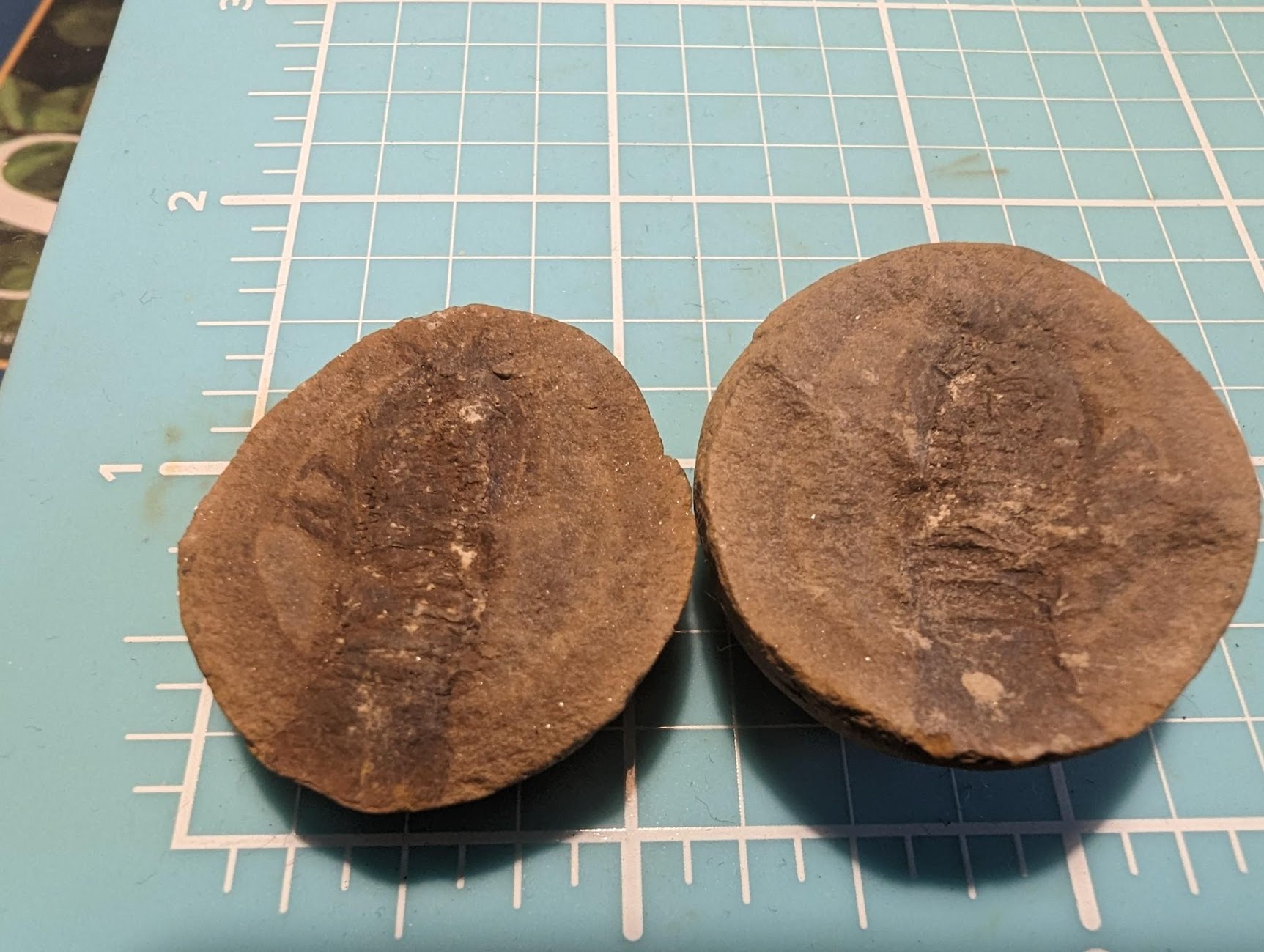
Read more: Mazon Monday #145: Anthracaris gracilisThis is Mazon Monday post #145. What’s your favorite Mazon Creek fossil? Tell us at email:esconi.info@gmail.com. Anthracaris gracilis was described by 1865 by F.B. Meek and A. H. Worthen as Anthrapalaemon gracilis. It is very similar to Mamayocaris jaskoskii. While M. jaskoskii is known from Pit 11, A. gracilis is known from the more terrestrial localities like the Mazon River. Both animals were bottom dwelling scavengers. George Langford referred to it as Anthrapalaemon gracilis. Fielding Bradford Meek and Amos Henry Worthen were both prolific in describing new species in the middle 1880’s. They collaborated on many papers. Meek worked at…
-
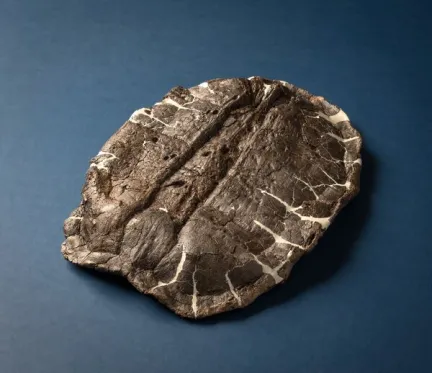
NYT: It’s Turtles All the Way Down in the Fossil Record
Read more: NYT: It’s Turtles All the Way Down in the Fossil RecordThe fossil shell of Hoplochelys, an extinct genus of aquatic turtle, one of several types of turtle shells collected from sites in Montana and Colorado.Credit…Rick Wicker/Denver Museum of Nature and Science The New York Times’ Trilobite column has an interesting article about fossil turtle shells. A paper in the journal Geosphere, used compacted fossil turtle shells to determine how deeply a fossil site was originally buried before other geologic events settled in. This seemingly obscure statistic gives researchers clues to the environmental conditions that led to the burial. The measurement as dubbed the “Turtle Compaction Index. Over millions of years,…
-

“Exceptionally” Wide and Flat-Headed – New Species of Dinosaur Discovered
Read more: “Exceptionally” Wide and Flat-Headed – New Species of Dinosaur DiscoveredSciTechDaily has a post about the discovery of a new ornithopod dinosaur. The animal, Transylvanosaurus platycephalus, lived about 70 million years ago during the Cretaceous Period. Its name means “flat-headed reptile from Transylvania”. It was discovered in Transylvania, which was part of an island archipelago during the Cretaceous. Because it was an island, many of the dinosaurs discovered there are small due to island dwarfism. The animal was described in a paper in the Journal of Vertebrate Paleontology. In the new study, paleontologists Felix Augustin from the University of Tübingen, his doctoral supervisor Zoltán Csiki-Sava from the University of Bucharest,…
-

Fossil Friday #141: Orthotarbus robustus from Mazon Creek
Read more: Fossil Friday #141: Orthotarbus robustus from Mazon CreekThis is the “Fossil Friday” post #141. Expect this to be a somewhat regular feature of the website. We will post any fossil pictures you send in to esconi.info@gmail.com. Please include a short description or story. Check the #FossilFriday Twitter hash tag for contributions from around the world! Fossil spiders are always a favorite here for Fossil Friday. Marty Houdek sent us a gorgeous Orthotarbus robustus from Pit 11. He found this guy, his first and only spider, on the tipple in 1986. He’s been collecting for a long time, so it’s hard to believe that it’s his only one! …
-
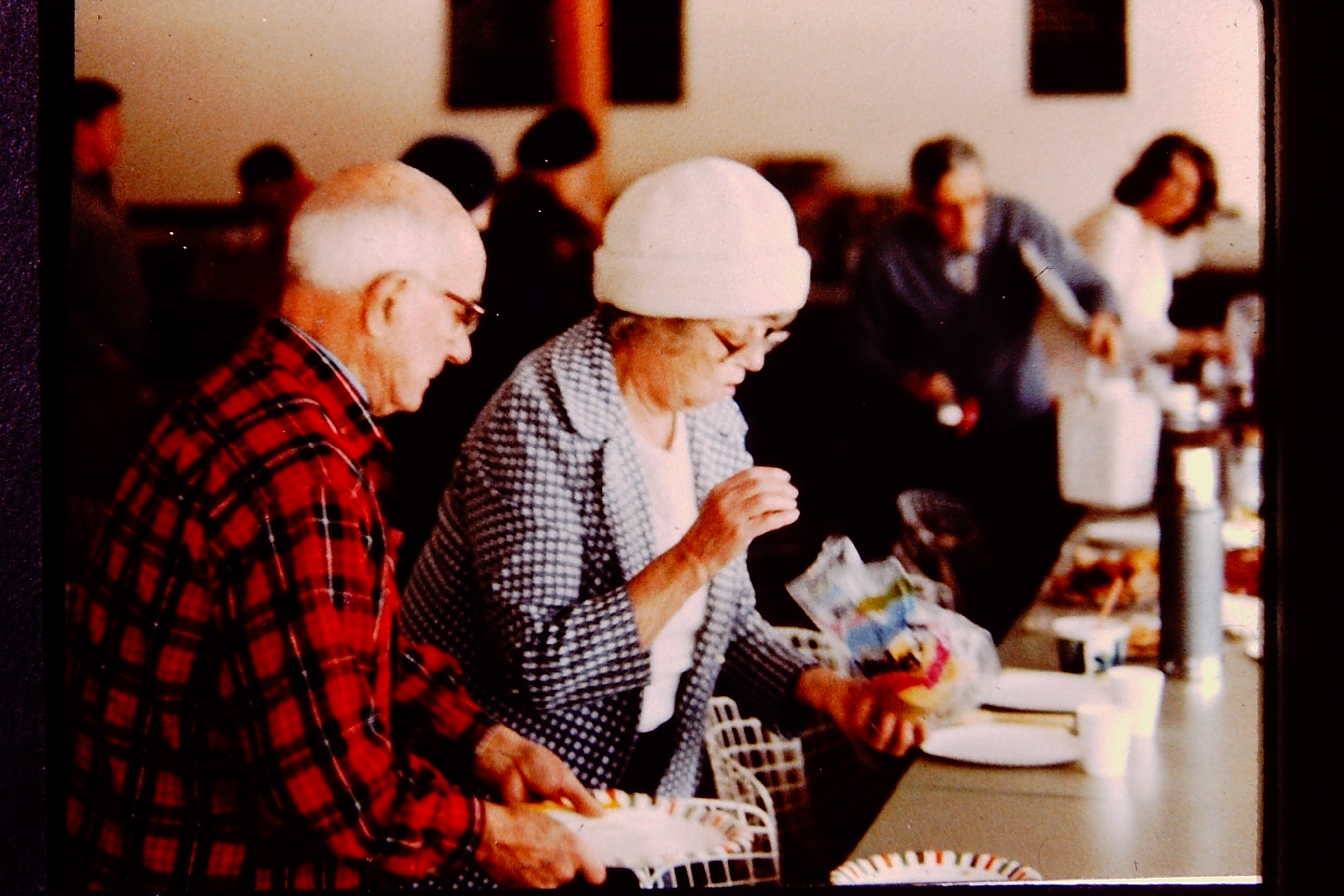
Throwback Thursday #142: Reply to Bill Allaway’s 1977 Holiday Letter
Read more: Throwback Thursday #142: Reply to Bill Allaway’s 1977 Holiday LetterThis is Throwback Thursday #141. In these, we look back into the past at ESCONI specifically and Earth Science in general. If you have any contributions, (science, pictures, stories, etc …), please send them to esconi.info@gmail.com. Thanks! Last week, we had Bill Allaway’s Holiday Letter in 1977. There was a reply, but it wasn’t published until the April 1978 edition of the newsletter. The reply highlighted some of the work done to bring ESCONI into existence. The author of the reply is Marty (Martha) Prepp. She and her husband, Jerry, were very active in ESCONI for many years. A REPLY…
-
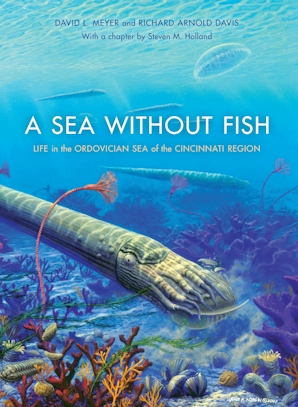
Video for ESCONI November 2022 General Meeting – “A Sea Without Fish, Ordovician Fossils of the Cincinnati Region”
Read more: Video for ESCONI November 2022 General Meeting – “A Sea Without Fish, Ordovician Fossils of the Cincinnati Region”For the November 2022 General Meeting, our speaker was Dr. David Meyer from the University of Cincinnati. The title of his talk was “A Sea Without Fish, Ordovician fossils of the Cincinnati region“. His book has the same name as his presentation. Checkout his page at the University of Cincinnati. Book Description: The region around Cincinnati, Ohio, is known throughout the world for the abundant and beautiful fossils found in limestones and shales that were deposited as sediments on the sea floor during the Ordovician Period, about 450 million years ago-some 250 million years before the dinosaurs lived. In Ordovician time, the shallow…
-

Massive graveyard of fossilized shark teeth found deep in the Indian Ocean
Read more: Massive graveyard of fossilized shark teeth found deep in the Indian OceanLiveScience has a story about the recent discovery of a massive shark tooth deposit in the Indian Ocean. In October 2022, researchers about the RV Investigator made an unexpected discovery. During a month long expedition, while trawling for fish for an deep water biodiversity survey, the trawling net pulled up hundreds of shark teeth. The find included both modern and fossilized teeth. Shark shed teeth throughout their lives. The researchers are uncertain as to why the teeth are there is such a high concentration. “It was our very last sample of the trip before heading back to Australia,” Dianne Bray(opens in…
-
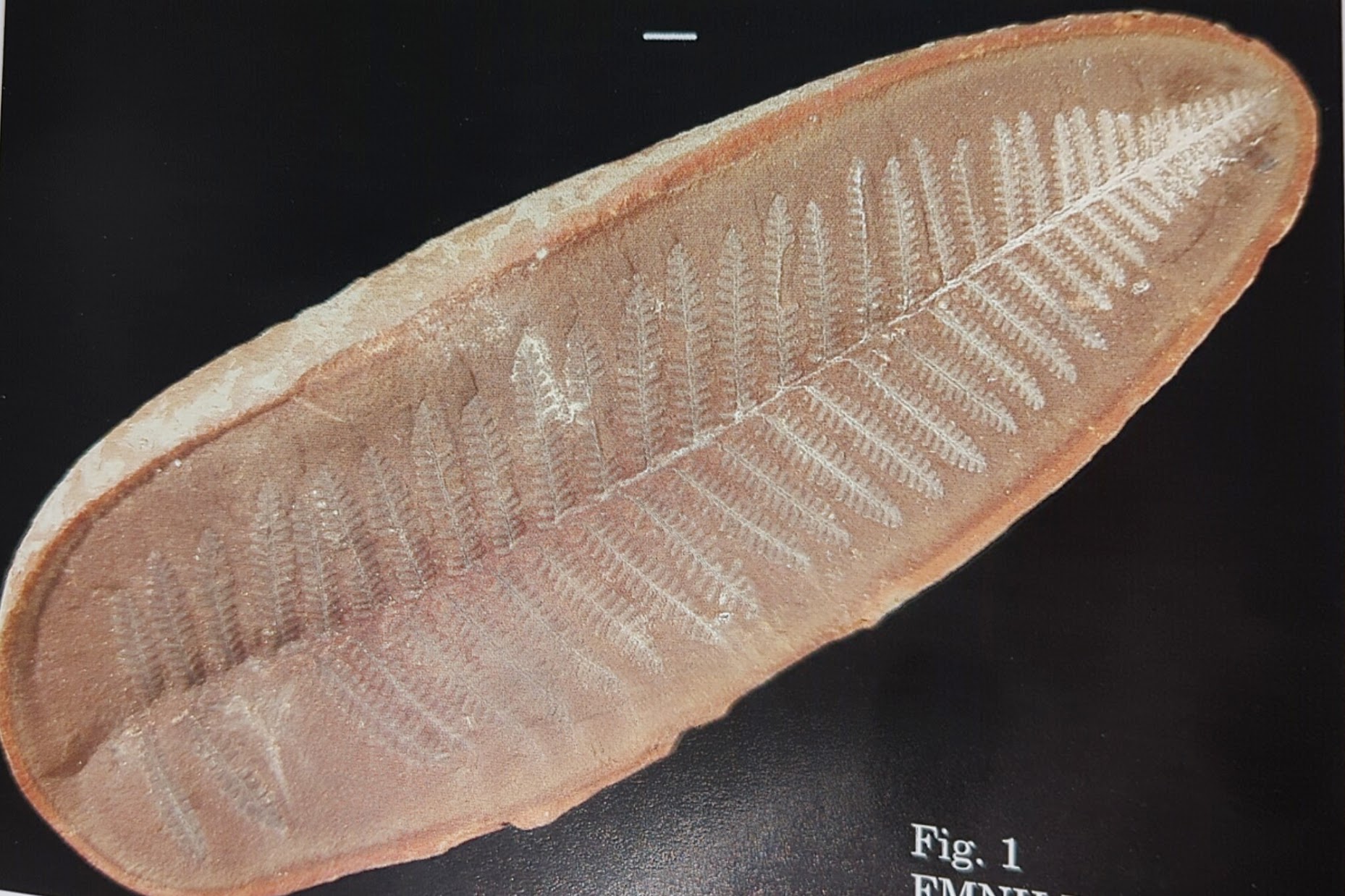
Mazon Monday #144: Pecopteris serpillifolia
Read more: Mazon Monday #144: Pecopteris serpillifoliaThis is Mazon Monday post #144. What’s your favorite Mazon Creek fossil? Tell us at email:esconi.info@gmail.com. Thanks! Pecopteris serpillifolia was described by Leo Lesquereux in 1879-1880. He was born in Fleurier, Switzerland on November 18th, 1889. Lesquereux described many of the Carboniferous plants of North America, doing surveys for the states of Pennsylvania, Kentucky, Arkansas, Indiana, and Illinois. He emigrated to the US in 1848. He is known today for his work as a paleobotanist, but also as an exemplary deaf scientist. His memoirs can be found at the National Academy of Sciences. Pecopteris serpillifolia appears on pages 124 and 125 in Jack…
-
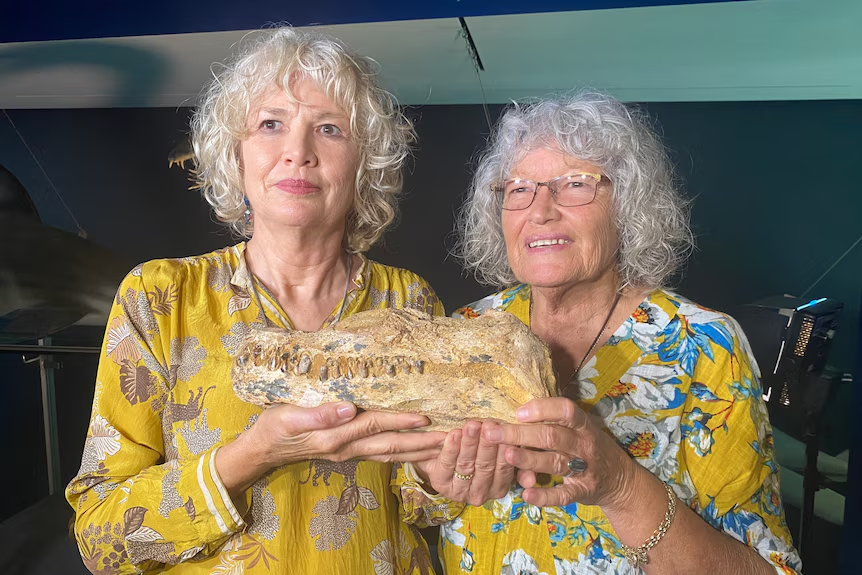
Family trio of fossil hunters behind rare discovery in outback Queensland
Read more: Family trio of fossil hunters behind rare discovery in outback QueenslandABC News in Australia has a story about a family fossil find. It seems that a couple sisters in the Australian outback have discovered a plesiosaur skull in their backyard. The animal lived about 100 million years ago. The sisters, nicknamed the “Rock Chicks”, live close to the Australian Dinosaur Trail. When sisters Cassandra Prince and Cynthia Nicholls first pulled a rock-like object from the ground of their outback cattle property, they had no clue it was a 100-million-year-old fossil. The pair, along with their cousin Sally, are the trio of fossil hunters behind the discovery of Australia’s first complete…
-
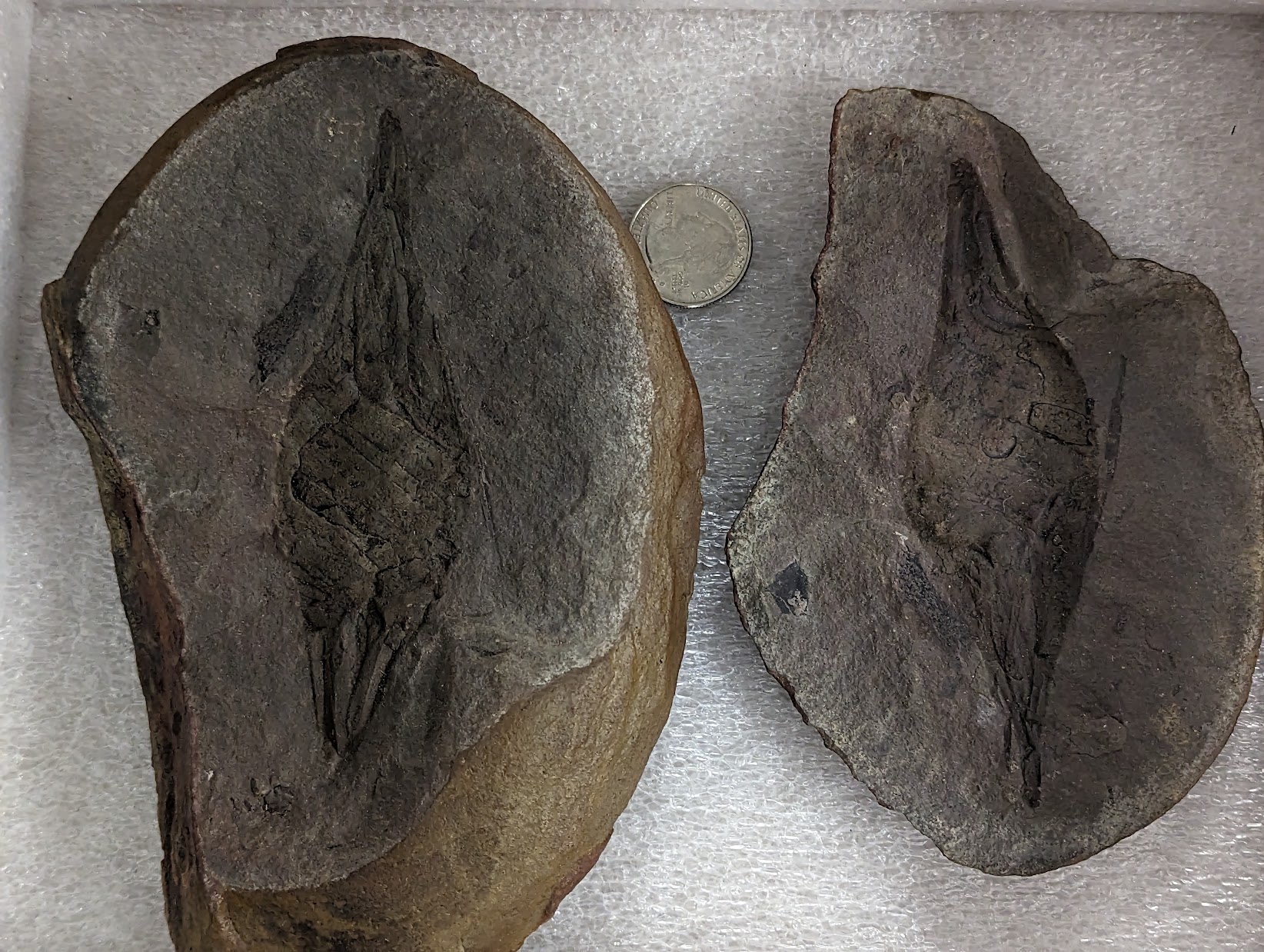
Fossil Friday #140: Palaeoxyris multiplicatum
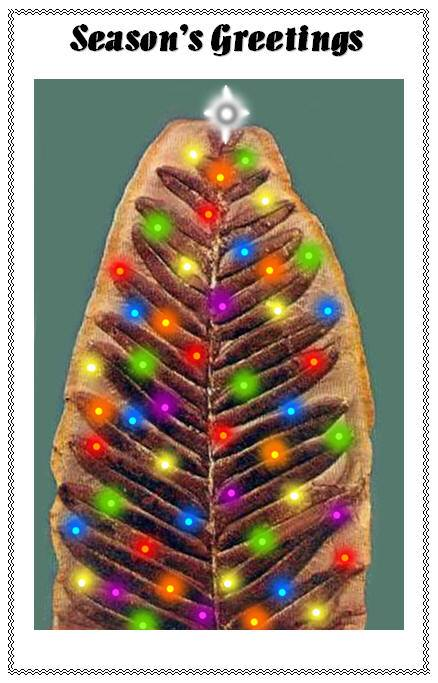
Read more: Fossil Friday #140: Palaeoxyris multiplicatumThis is the “Fossil Friday” post #140. Expect this to be a somewhat regular feature of the website. We will post any fossil pictures you send in to esconi.info@gmail.com. Please include a short description or story. Check the #FossilFriday Twitter hash tag for contributions from around the world! What says Christmas more than a fossilized shark egg case from Mazon Creek? Well, Palaeoxyris has always reminded me of the finial Christmas ornaments. A particularly large species of Palaeoxyris is P. multiplicatum. Here is a description from the Field Museum’s Palaeoxyris field guide. That guide was created by renowned Mazon Creek…
-

Throwback Thursday #141: 1977 Holiday Letter From Bill Allaway
Read more: Throwback Thursday #141: 1977 Holiday Letter From Bill AllawayThis is Throwback Thursday #141. In these, we look back into the past at ESCONI specifically and Earth Science in general. If you have any contributions, (science, pictures, stories, etc …), please send them to esconi.info@gmail.com. Thanks! This week, we look back at a holiday letter from Bill Allaway in 1977. When ESCONI was founded back in 1949, Bill was its first chairman. The first few meetings were held in his basement. He served as chairman from 1949 through 1951. He and his wife Helen moved to California in the early 1960’s, where it sounds like he had an out…
-

2022 ESCONI Holiday Lunch Photos
Read more: 2022 ESCONI Holiday Lunch PhotosHere are some photos from the ESCONI Holiday Lunch on December 10th, 2022. It was held at Warren’s Ale House in Wheaton, IL. There was a good turn out with much stimulating conversation. First the required selfie. Ugly sweaters… wait I mean beautiful sweaters! Cupcakes from Rose! Assorted photos
-
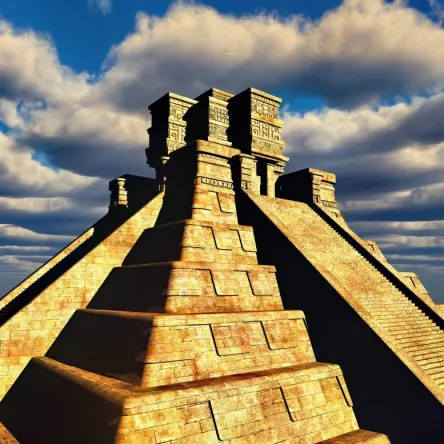
Scientists Discover an Unexpected Danger Lurking in Ancient Mayan Cities
Read more: Scientists Discover an Unexpected Danger Lurking in Ancient Mayan CitiesSciTechDaily has a story about an unexpected discovery in some Mayan ruins. It shouldn’t be surprising that pollution isn’t a modern invention. The Romans used lead extensively and maybe have suffered lead poisoning. Now, some researchers at the Australian Catholic University have discovered mercury pollution in some of the cities of the Mayan civilization in ancient Mexico. The Maya used cinnabar and mercury paints and powders for decoration. The discovery was documented in the journal Frontiers in Environmental Science. Mesoamerica’s ancient Maya cities never cease to amaze visitors. However, an unexpected danger lurks under the soil’s surface: mercury pollution. Researchers…
-

Mazon Monday #143: Mamayocaris jaskoskii
Read more: Mazon Monday #143: Mamayocaris jaskoskiiThis is Mazon Monday post #143. What’s your favorite Mazon Creek fossil? Tell us at email:esconi.info@gmail.com. Thanks! Mamayocaris jaskoskii, sometimes referred to as the “Lobster”, was described in 1974 by Frederick Schram in the paper “The Mazon Creek Caridoid Crustacea”, which appeared in Fieldiana, Volume 30, No. 2. It was named in honor of Professor B. J. Jaskoski of Loyola University of Chicago. M. jaskoskii appears on page 86 of Jack Wittry’s “The Fossil Fauna of Mazon Creek”. Mamayocaris jaskoskii Schram, 1974a Mamayocaris jaskoskii is a moderate-sized crayfish-like ani- mal, probably a scavenger or low-level carnivore, and is a member of…
-
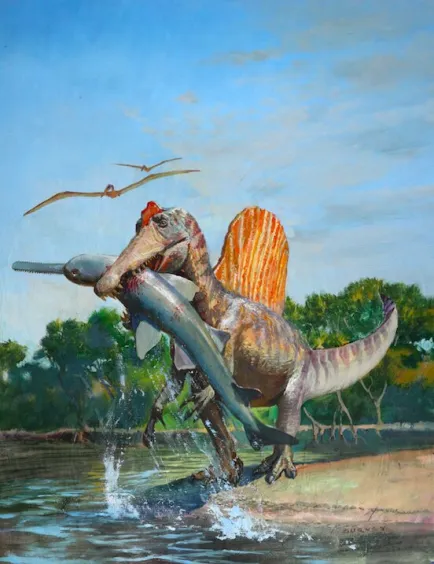
Mega-predator likely wasn’t underwater hunter, researchers argue
Read more: Mega-predator likely wasn’t underwater hunter, researchers arguePhys.org has an article about the on-going controversy on whether Spinosaurus aegyptiacus was fully aquatic. S. aegyptiacus was discovered in 1915 in Egypt by Ernst von Stromer. It lived during the Cretaceous Period about 99 to 93.5 million years ago. The original skeleton was destroyed during WW II. A new specimen was found in 2014, which was the basis of a 2014 paper published by a team led by Paul Sereno at the University of Chicago that redescribed the animal. In 2020, a team in the UK published a paper that postulated that S. aegyptiacus lived an aquatic lifestyle based…
-

PBS Eons: How Did Lucy Live and Die?
Read more: PBS Eons: How Did Lucy Live and Die?There's a new episode of PBS Eons on Youtube, The live and death of Lucy, who is the Australopithecus discovered in Ethiopia in 1974, says much about human evolution. She lived about 3.2 million years ago. Did our most famous fossil ancestor, Lucy, die by falling out of a tall tree? The answer is part of a decades-long debate over how, exactly, our ancestors transitioned from life in the trees to life on the ground.

ESCONI Gem, Mineral, and Fossil Show
Most Recent Post
- Fossil of Pincer-Wielding Crawler Reveals Origins of Spiders, Scorpions and Others
 The Trilobites column over at the New York Times has a interesting story about the origin of chelicerates – spiders, scorpions, mites, horseshoe crabs, and others. Chelicerates are a diverse group of arthropods that consists of more than 120,000 known species. Member of this group are classified by having a pair of appendages called chelicerae. These appendages are adapted for various purposes like snatching prey, injecting venom, and even spinning silk.
- About ESCONI
- Around the Web
- Calendar of Events
- Code of Ethics and Conduct
- ESCONI Books for Sale
- ESCONI Gem, Mineral, and Fossil Show
- ESCONI in the News
- ESCONI Videos
- Field Trips
- Flashback Friday
- Fossil Friday
- Mazon Creek
- Mazon Monday
- Member Spotlight
- Membership Information
- Reference Material
- Throwback Thursday
- Trilobite Tuesday
Field trips require membership, but visitors are welcome at all meetings!
| Friday, April 10th | General Meeting – 8:00 PM via Zoom. Jessica Hull will present “Life in the Devonian Period, The Age of Fishes.” |
| Saturday, April 11th | Junior Study Group Meeting – 2:00 PM, in person at the College of DuPage Technical Education Center (TEC) Building – Room 1038A (Map). Katherine Howard will present on Sand and Sediment Collecting. Specifics of this meeting are available from Scott Galloway, 630-670-2591, gallowayscottf@gmail.com. |
| Saturday, April 18th | Paleontology Study Group – 7:30 PM via Zoom and in person at the College of DuPage, TEC, Room 1038B (Map). Keith Robitschek will present “Digging the Marl of the Lance Formation.” |
| No meeting this month | Mineralogy Study Group |
| No meeting this month | Junior Study Group |