
-

PBS Eons: The Rise and Fall of the Tallest Mammal to Walk the Earth
Read more: PBS Eons: The Rise and Fall of the Tallest Mammal to Walk the EarthPBS Eons has a new episode over on Youtube. This one is about the tallest land mammal that every lived – Paraceratherium. It arose from rhino ancestors that were a lot smaller, but Paraceratherium would take a different evolutionary path. Believe it or not, it actually became so big that it probably got close to what scientists think might be the actual upper limit for a land mammal.
-
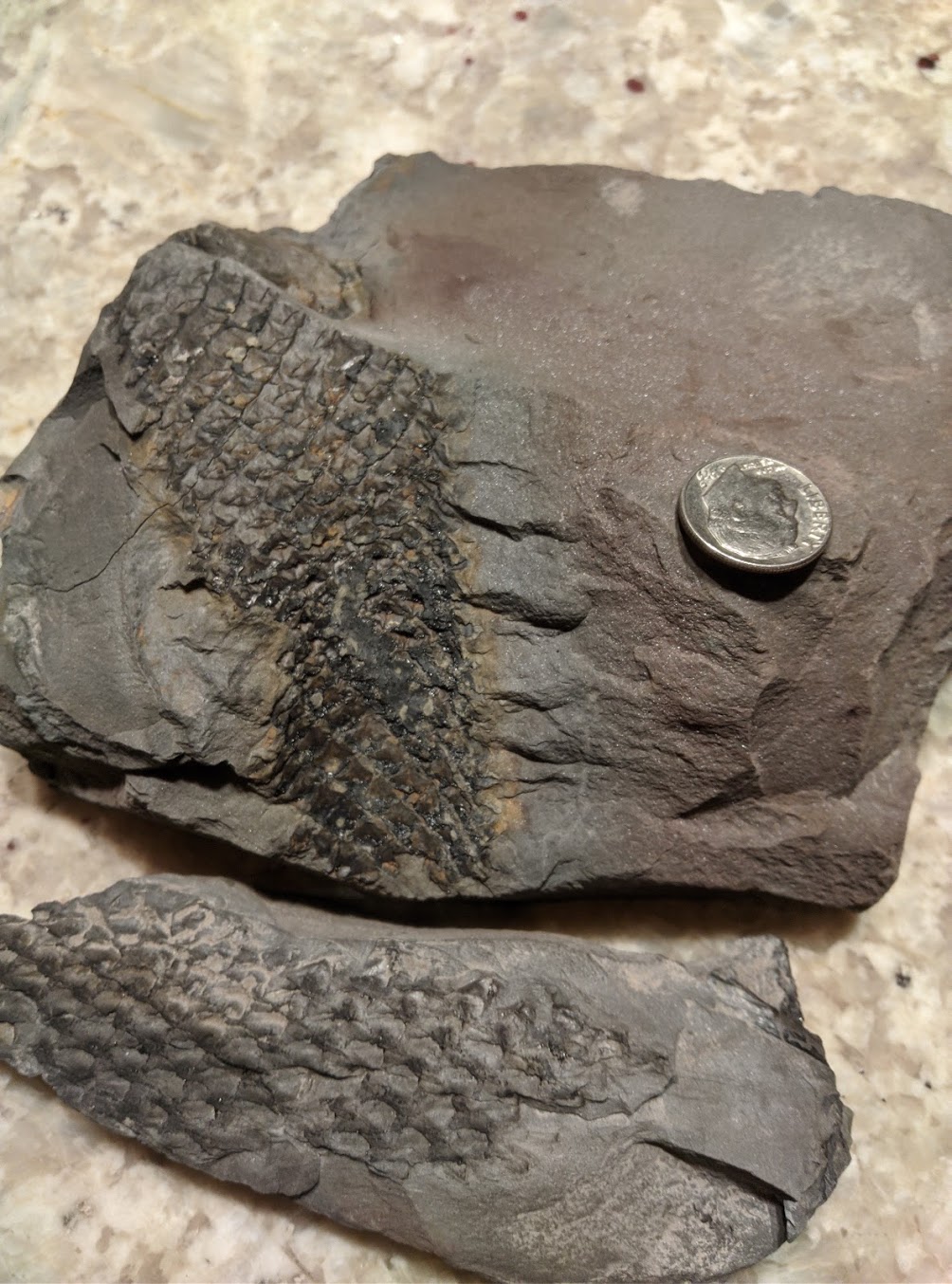
Fossil Friday #32: Lepidodendron bark from the Carboniferous of Alabama
Read more: Fossil Friday #32: Lepidodendron bark from the Carboniferous of AlabamaThis is the “Fossil Friday” post #32. Expect this to be a somewhat regular feature of the website. We will post any fossil pictures you send in to esconi.info@gmail.com. Please include a short description or story. Check the #FossilFriday Twitter hash tag for contributions from around the world! The coal age in Alabama dates back to 310–315 million years ago, an interval of geologic time which lies within what geologists call the Early Pennsylvanian period. Lepidodendron fossils are found in Mazon Creek, which is a little younger at 307 million years old. The fossils in this post are Lepidodendron bark…
-

Throwback Thursday #34: The 2010 Show
Read more: Throwback Thursday #34: The 2010 ShowThis is Throwback Thursday #34. In these, we look back into the past at ESCONI specifically and Earth Science in general. If you have any contributions, (science, pictures, stories, etc …), please send them to esconi.info@gmail.com. Thanks! Enjoy these photos from the 2010 ESCONI Gem, Mineral, and Fossil Show! The greeting crew: Irene, Karen and Eileen Sondra and Rob at their paleontology booth View of a micro-mineral from David’s booth seen from a 60-100 lighted microscope. Dave showing attendees how a micromineral looks with Bruce looking on. The ESCONI book nook crew with the auction crew behind them. Mike, an…
-
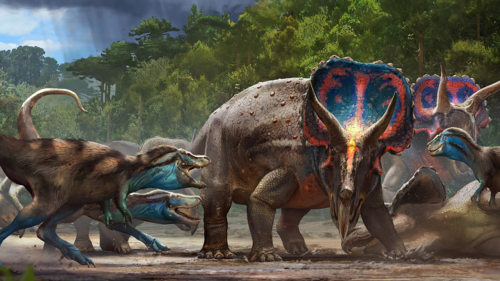
LiveScience: Cretaceous cold case of ‘dueling’ T. rex and Triceratops may finally be solved
Read more: LiveScience: Cretaceous cold case of ‘dueling’ T. rex and Triceratops may finally be solvedLiveScience has a story about the “Dueling Dinosaurs”. This extraordinary fossil specimen of two of the most complete dinosaurs skeletons ever discovered. One is a Triceratops and the other is a Tyrannosaurs rex and they may possibly be locked in 67 million year old mortal combat. These fossils are heading to North Carolina State University to undergo some extensive study. Dr. Lindsay Zanno, who has spoken to ESCONI a few times in the past, will by involved with the study of this magnificent find. The “Dueling Dinosaurs” fossils — the 67 million-year-old remains of what may be the most complete Tyrannosaurus rex and Triceratops on record, beasts that were…
-

Trilobite Tuesday #29: Why did trilobites go extinct?
Read more: Trilobite Tuesday #29: Why did trilobites go extinct?LiveScience has a piece about the extinction of the trilobites. Trilobites existed on Earth for about 270 million years from the early Cambrian until the Permian Mass Extinction. Many organisms went extinct during that time… perhaps upward of 90% of species. But, it’s still an open question that has not been completely answered. During their heyday in the Cambrian and Ordovician, their genera consisted of 10 orders. But, by the Permian, after making it through a couple mass extinctions, they had dwindled to just one family, the Proetidae. Were they out competed by other animals? Probably. But was that the…
-
Mazon Monday #34: Pit 14
Read more: Mazon Monday #34: Pit 14This is Mazon Monday post #34. What’s your favorite Mazon Creek fossil? Tell us at email:esconi.info@gmail.com. The Mazon Creek fossil deposits consists of numerous different localities. These localities are the Mazon River, which has been collected since at least the 1850’s (and probably earlier) to the shaft mines, which date to the late 1800’s and early 1900’s (Braceville is an example) to the strip mines, which began around 1910. Unfortunately, many of these localities are no longer accessible. They have been recovered for houses, golf courses, or just due to being private property. For today, we have an article about…
-
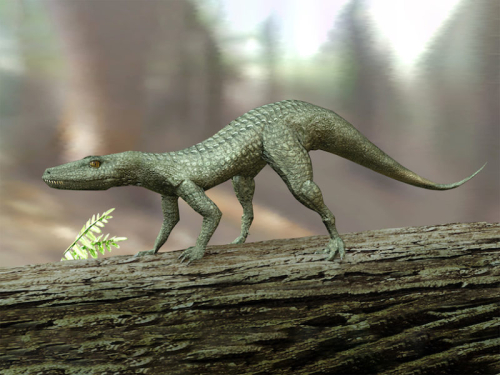
Eos: A Little-Known Mass Extinction and the “Dawn of the Modern World”
Read more: Eos: A Little-Known Mass Extinction and the “Dawn of the Modern World”Eos has a story about a little known mass extinction that led to the rise of the dinosaurs. New research published in the journal Science Advances shows that climate change driven by volcanic eruptions in western Canada brought about the dinosaurs and eventually the modern world. The event is called Carnian Pluvial Episode. It occurred 233 million years ago during the Triassic Period. The name of the event comes from the extensive rains… a million years of rain (!), that fell across the super continent of Pangaea. Massive volcanic eruptions followed by climate change, widespread extinction, and, eventually, the emergence…
-
PBS Eons: How Plankton Created A Bizarre Giant of the Seas
Read more: PBS Eons: How Plankton Created A Bizarre Giant of the SeasPBS Eons has a new episode over on Youtube. This one is about anomalocaris… a giant anomalocaris called Aegirocassis. At more than 2 meters long, Aegirocassis was not only the biggest radiodont ever, but it also may have been the biggest animal in the Early Ordovician. This bizarre marine giant may have only been possible, thanks to a major revolution among some of the tiniest organisms in the world.
-
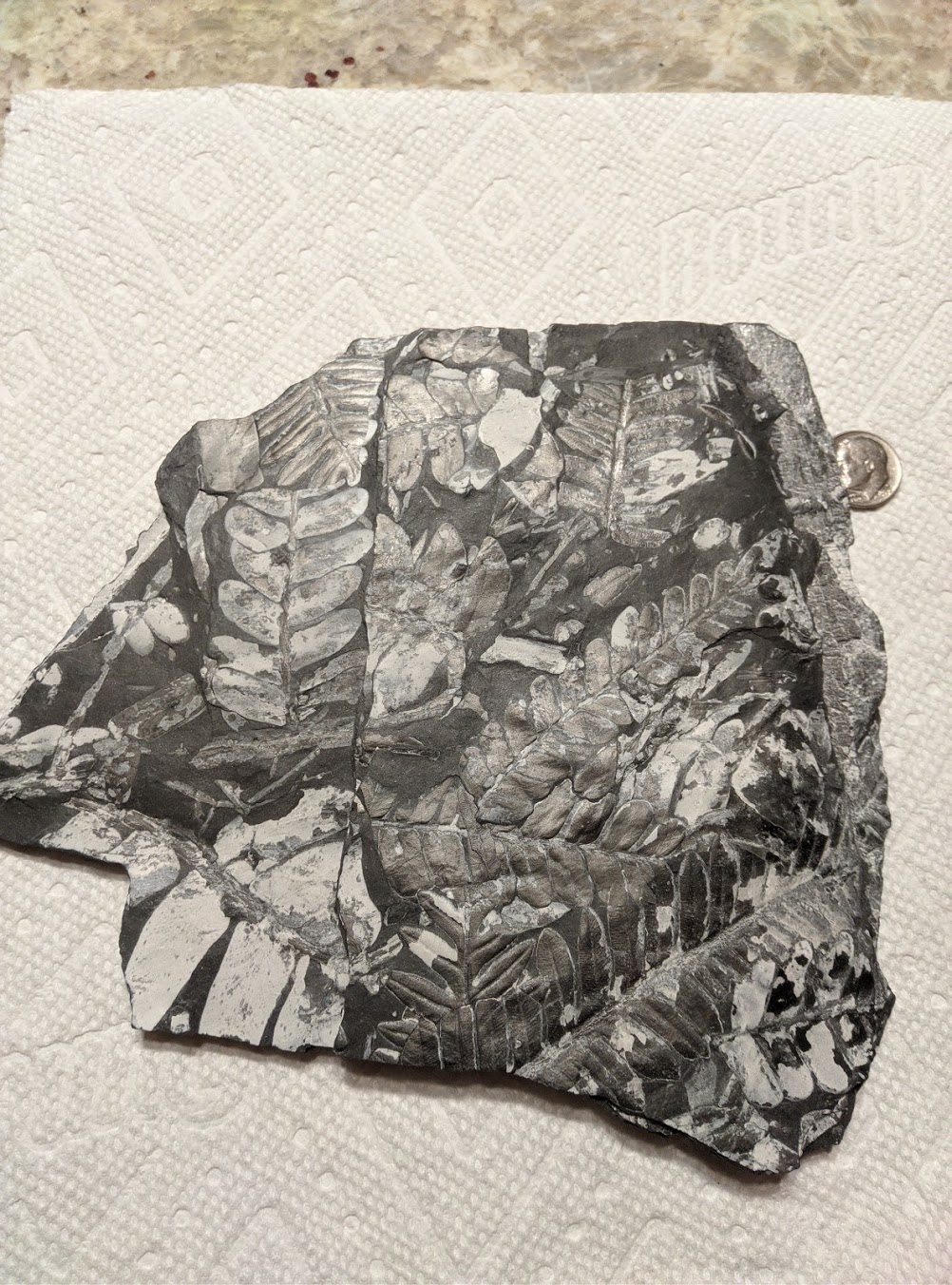
Fossil Friday #31: Ferns from St. Clair, PA
Read more: Fossil Friday #31: Ferns from St. Clair, PAThis is the “Fossil Friday” post #31. Expect this to be a somewhat regular feature of the website. We will post any fossil pictures you send in to esconi.info@gmail.com. Please include a short description or story. Check the #FossilFriday Twitter hash tag for contributions from around the world! Fossil Friday #31 highlights Pennsylvanian Period ferns from St. Clair, PA. Yes, that’s Pennsylvanian ferns from Pennsylvania! The Llewellyn Formation, from whence these ferns come, dates to 308 to 300 million years ago. Remember, the fossils of Mazon Creek date to about 307 million years, so these plants were contemporaries. It should…
-
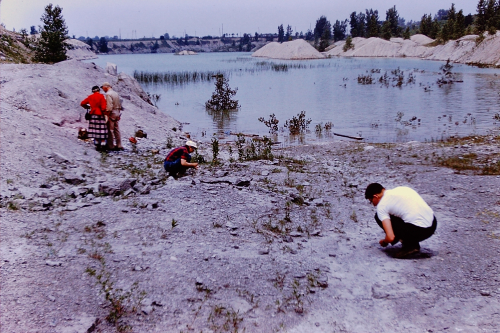
Throwback Thursday #33: Field Trip Sylvania, OH in 1959
Read more: Throwback Thursday #33: Field Trip Sylvania, OH in 1959This is Throwback Thursday #33. In these, we look back into the past at ESCONI specifically and Earth Science in general. If you have any contributions, (science, pictures, stories, etc …), please send them to esconi.info@gmail.com. Thanks! Sylvania, OH has long been a destination to collect great fossils. Back in May 2020, we did Fossil Friday #7 that featured brachiopods from Sylvania. Today, we have some photos from a June 1959 field trip to Sylvania. The trip was organized by John Ade and a bunch of ESCONI members traveled by bus on the weekend of June 6th and 7th 1959. …
-
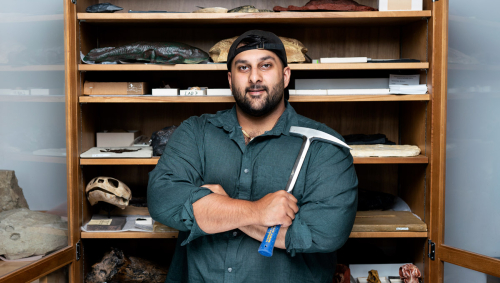
Reminder: ESCONI November 2020 General Meeting – November 13th, 2020 at 8:00 PM via Zoom – “New Tetrapod Discoveries from Mazon Creek”
Read more: Reminder: ESCONI November 2020 General Meeting – November 13th, 2020 at 8:00 PM via Zoom – “New Tetrapod Discoveries from Mazon Creek”Our speaker via Zoom in November is Dr. Arjan Mann. Arjan recently received his PhD from Carleton University in Toronto. He is transitioning to a postdoc position at Harvard. Arjan co-authored articles naming two new species of microsaurs called Diabloroter and Infernovenator. The title of his talk is “New Tetrapod Discoveries from Mazon Creek”. Zoom link Here’s a link to some information about him:https://newsroom.carleton.ca/story/filling-fossil-record/ Hell hunter and devil digger. When Arjan Mann names a species, he doesn’t mess around. As part of his PhD research into carboniferous period creatures, the Carleton Earth Sciences student identified two new species. The two species date…
-
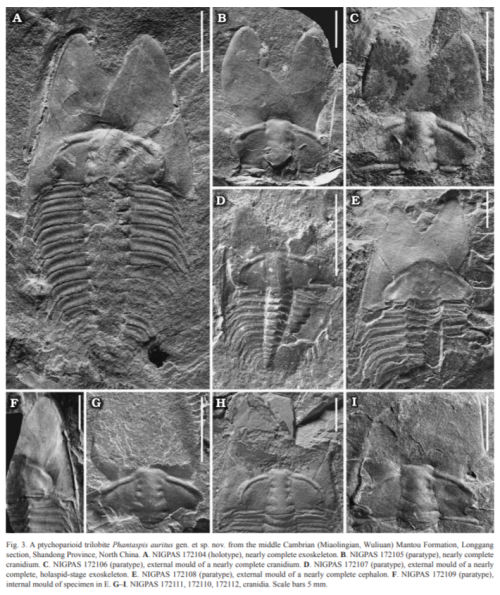
Trilobite Tuesday #28: A new middle Cambrian trilobite with a specialized cephalon from Shandong Province, North China
Read more: Trilobite Tuesday #28: A new middle Cambrian trilobite with a specialized cephalon from Shandong Province, North ChinaActa Palaeontologica Polonica has a that describes newly discovered trilobites from the Middle Cambrian of Northern China. These trilobites had a strangely lobed cephalon that suggests “rabbit ears”. Actually, the species name Phantaspis auritus comes from the Latin aurītus, having ears; in reference to the cranidium having a pair of long “ears”. Trilobites achieved their maximum generic diversity in the Cambrian, but the peak of morphological disparity of their cranidia occurred in the Middle to Late Ordovician. Early to middle Cambrian trilobites with a specialized cephalon are rare, especially among the ptychoparioids, a group of libristomates featuring the so-called “generalized” bauplan. Here…
-
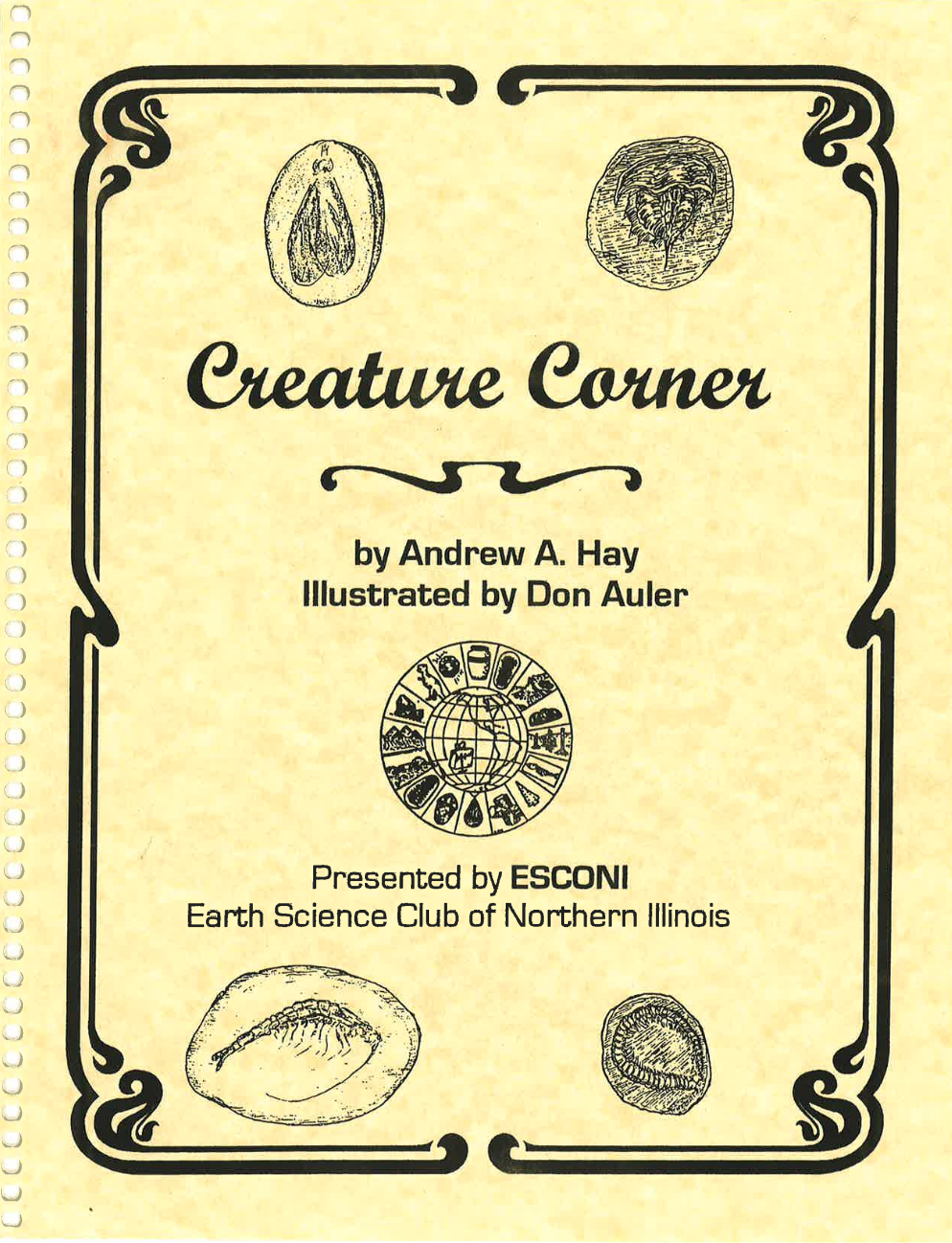
Mazon Monday #33: Creature Corner Newsletter Column and Book
Read more: Mazon Monday #33: Creature Corner Newsletter Column and BookThis is Mazon Monday post #33. What’s your favorite Mazon Creek fossil? Tell us at email:esconi.info@gmail.com. Last week, we spoke about a couple books published by ESCONI in the 1980’s – “Keys To Identify Pennsylvanian Fossil Plants of the Mazon Creek Area” in 1986 (updated in 1990) and “Keys To Identify Pennsylvanian Fossil Animals of the Mazon Creek Area” in 1989 (republished in 1999). This week we will explore a newsletter column that formed the basis of the “Keys” animal book and was eventually collected into a separate book published in 2001. The column “Creature Corner” was written by Andy…
-
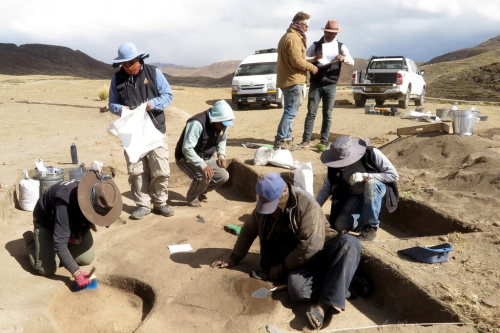
NYT: Ancient Remains in Peru Reveal Young, Female Big-Game Hunter
Read more: NYT: Ancient Remains in Peru Reveal Young, Female Big-Game HunterThe New York Times Trilobites column has a story about an ancient big game hunter… a female big game hunter. The 9,000 year old female skeleton was discovered with what archaeologists describe as a “big-game hunting kit” in the Andes highlands of Peru. This discovery is challenging the beliefs that in hunter-gatherer societies – males hunted and females gathered. The discovery is detailed in a paper in the journal Science Advances. Randy Haas, an archaeologist at the University of California, Davis, and a group of colleagues, concluded in a paper published in the journal Science Advances on Wednesday that this young woman…
-
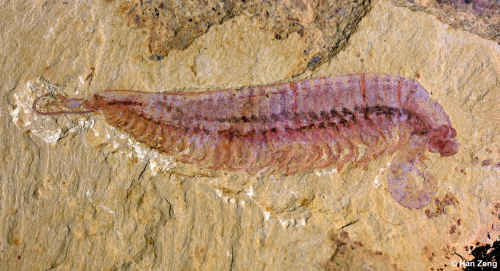
SciTechDaily: Five-Eyed 520-Million-Year-Old Fossil Reveals Arthropod Origin
Read more: SciTechDaily: Five-Eyed 520-Million-Year-Old Fossil Reveals Arthropod OriginSciTechDaily has a story about arthropod origins. Researchers from the Nanjing Institute of Geology and Palaeontology of the Chinese Academy of Sciences (NIGPAS) have revealed a new shrimp-like fossil with five eyes. The animal, called Kylinxia, lived about 520 million years ago in what is now China’s Yunnan Province. The paper describing this discovery appeared in 4 November 2020 issue of the journal Nature. The fossil species, Kylinxia, was collected from the Chengjiang fauna in southwest China’s Yunnan Province. The fauna documents the most complete early animal fossils in the Cambrian time. Prof. HUANG Diying, corresponding author for the study from…
-

Fossil Friday #30: Flexicalymene from St. Leon, IN
Read more: Fossil Friday #30: Flexicalymene from St. Leon, INThis is the “Fossil Friday” post #30. Expect this to be a somewhat regular feature of the website. We will post any fossil pictures you send in to esconi.info@gmail.com. Please include a short description or story. Check the #FossilFriday Twitter hash tag for contributions from around the world! —————————————————– Today, we have a trilobite from Indiana…. a fairly common trilobite from a legendary locality. This is a Flexicalymene meeki from St. Leon in Indiana. The locality is about a mile long road cut that has multiple benches on both sides of the road and it’s chock full of fossils. Stories…
-
Throwback Thursday #32: Field Trip to a Riverside, IL Quarry in 1959
Read more: Throwback Thursday #32: Field Trip to a Riverside, IL Quarry in 1959This is Throwback Thursday #32. In these, we look back into the past at ESCONI specifically and Earth Science in general. If you have any contributions, (science, pictures, stories, etc …), please send them to esconi.info@gmail.com. Thanks! Here are some pictures of a field trip by ESCONI juniors to a “Riverside” quarry in 1959. Unfortunately, the location for this trip was not recorded, but a little research in the newsletters of the time yielded the following announcement in the December 1959 edition of the newsletter. So, it looks like this was a field trip to the Consumers Quarry in McCook,…
-
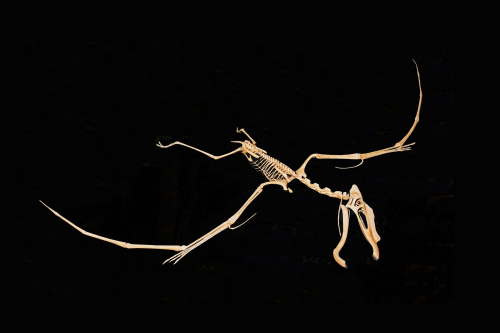
What Did Pterosaurs Eat? Look Very Closely at Their Teeth
Read more: What Did Pterosaurs Eat? Look Very Closely at Their TeethWired.com has a story about pterosaurs. Want to know what an animal eats… look at its teeth! That’s exactly what a paper published in Nature Communications did. The researcher imaged teeth of pterosaurs using a method called infinite focus microscopy. This allowed them to compare the teeth with modern animals, whose diets we know. THE PTEROSAURS HAD no way of knowing it, but they would one day become a bit of a headache for scientists. The flying reptiles lived alongside the dinosaurs between 210 million and 66 million years ago, ranging from the size of a sparrow to the height of…
-
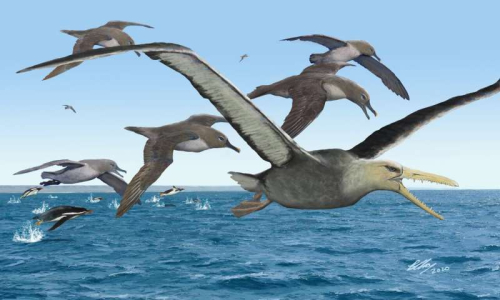
Phys.org: Antarctica yields oldest fossils of giant birds with 6.4-meter wingspans
Read more: Phys.org: Antarctica yields oldest fossils of giant birds with 6.4-meter wingspansPhys.org has an interesting story about some truly giant birds. The bird fossils, discovered in the 1980s, show that an extinct group of birds, the pelagornithids, had some large members not long after the mass extinction that killed off the dinosaurs, 65 million years ago. One specimen, which lived about 50 million years ago, had a wingspan of about 21 feet (6.4 meters). Another, which lived about 40 million years ago, is part of a jaw bone. Read all about it in a paper in the journal Scientific Reports “Our fossil discovery, with its estimate of a 5-to-6-meter wingspan—nearly 20…
-
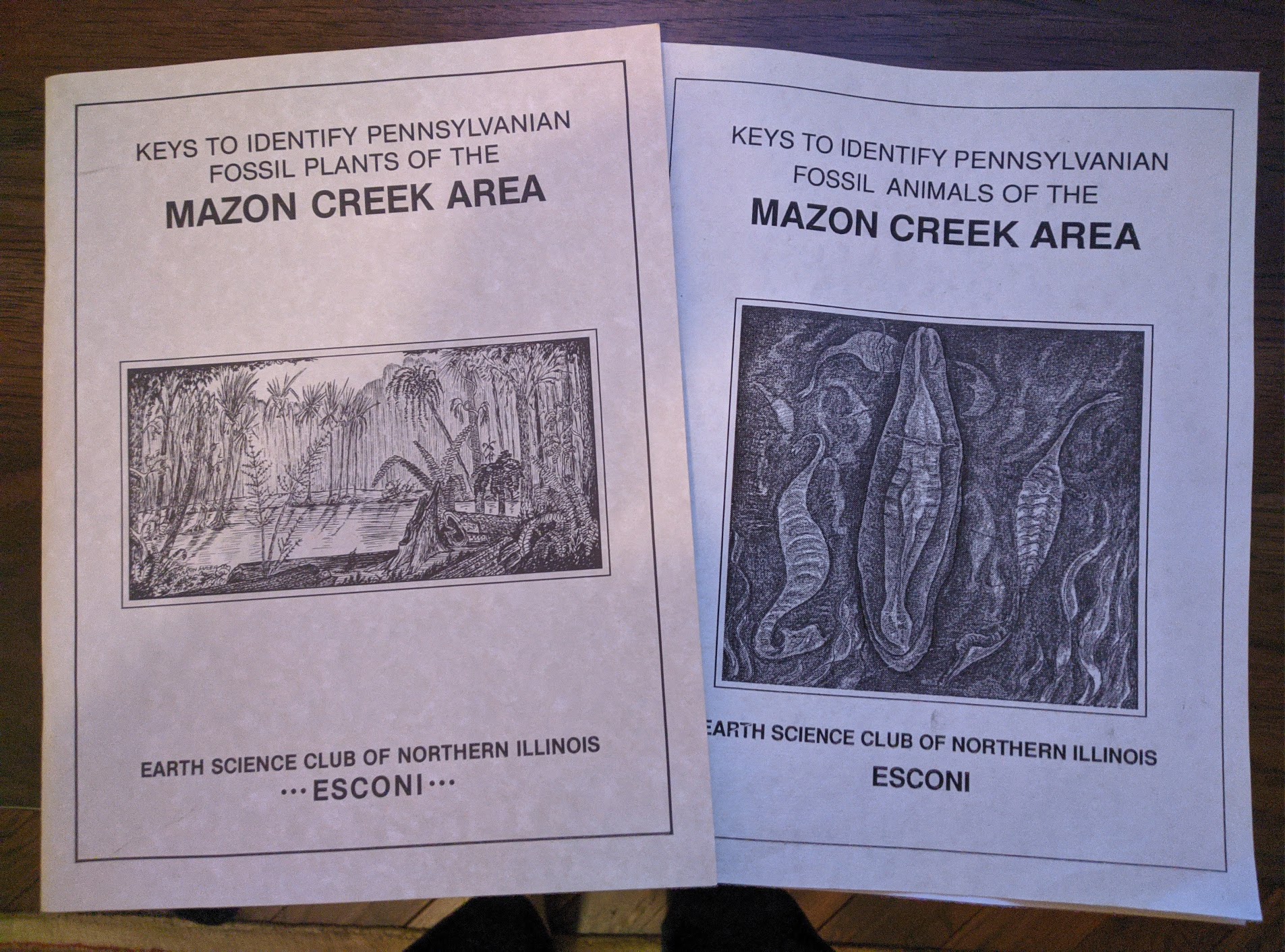
Mazon Monday #32: ESCONI books – Keys to Identify Pennsylvanian Fossil Plants and Animals
Read more: Mazon Monday #32: ESCONI books – Keys to Identify Pennsylvanian Fossil Plants and AnimalsThis is Mazon Monday post #32. What’s your favorite Mazon Creek fossil? Tell us at email:esconi.info@gmail.com. ESCONI has made numerous contributions to the science of Mazon Creek fossils over the years. Everyone knows about the George Langford books published in the late 1950s and early 1960s. Jack Wittry wrote new books that included much of the new science books starting with “The Mazon Creek Fossil Flora” in 2006 and followed by “The Mazon Creek Fossil Fauna” in 2012. Just this year, ESCONI published “A Comprehensive Guide to the Fossil Flora of Mazon Creek” also by Jack Wittry. This last book…

ESCONI Gem, Mineral, and Fossil Show
Most Recent Post
- Throwback Thursday #312: Ron Schinderle Donation
 Barb Schinderle stopped by ESCONI Show last month to drop off a donation of her late husband Ron’s fossils. Ron passed away in 2021. He was a long time ESCONI member and an avid fossil collector . He went on many ESCONI field trips. A group of us remember him fondly from our many trips to Pit 11 and Fossil Rock Campgrounds to collect Mazon Creek fossils.
- About ESCONI
- Around the Web
- Calendar of Events
- Code of Ethics and Conduct
- ESCONI Books for Sale
- ESCONI Gem, Mineral, and Fossil Show
- ESCONI in the News
- ESCONI Videos
- Field Trips
- Flashback Friday
- Fossil Friday
- Mazon Creek
- Mazon Monday
- Member Spotlight
- Membership Information
- Reference Material
- Throwback Thursday
- Trilobite Tuesday
Field trips require membership, but visitors are welcome at all meetings!
| Friday, April 10th | General Meeting – 8:00 PM via Zoom. Jessica Hull will present “Life in the Devonian Period, The Age of Fishes.” |
| Saturday, April 11th | Junior Study Group Meeting – 2:00 PM, in person at the College of DuPage Technical Education Center (TEC) Building – Room 1038A (Map). Katherine Howard will present on Sand and Sediment Collecting. Specifics of this meeting are available from Scott Galloway, 630-670-2591, gallowayscottf@gmail.com. |
| Saturday, April 18th | Paleontology Study Group – 7:30 PM via Zoom and in person at the College of DuPage, TEC, Room 1038B (Map). Keith Robitschek will present “Digging the Marl of the Lance Formation.” |
| Friday, April 24th | MAPS Expo XLVII – Springfield, IL. |
| Saturday, April 25th | MAPS Expo XLVII – Springfield, IL. |
| Sunday, April 26th | MAPS Expo XLVII – Springfield, IL. |
| No meeting this month | Mineralogy Study Group |