
-
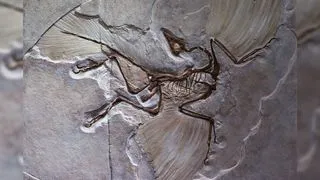
LiveScience: How do scientists figure out how old things are?
Read more: LiveScience: How do scientists figure out how old things are?LiveScience has an informative piece about how scientists measure the age of something. The article mentions radiocarbon dating for more recent organic material and uranium-thorium-lead for older objects. But, there are other radioactive substances that can also be used, such as potassium-argon. Check it out if you’ve been curious how the process works. The ability to precisely date, or identify the age of an object, can teach us when Earth formed, help reveal past climates and tell us how early humans lived. So how do scientists do it? Radiocarbon dating is the most common method by far, according to experts. This method…
-

Check Out Paleo Nerds: a Prehistoric Podcast
Read more: Check Out Paleo Nerds: a Prehistoric PodcastIf you’re looking for a new podcast to relax and forget about some of the recent crazy events… have a look at the Paleo Nerds podcast. The hosts are Ray Troll an Alaskan artist and his pal David Strassman. They are just starting their second season. Season 1 was 16 episodes with some very interesting guests, including Kirk Johnson (who did the book “Cruising the Fossil Freeway” with Ray), Jingmai O’Connor (paleontologista at the Field Museum), and Peter Ward (author of many books and expert on Mass Extinctions).
-
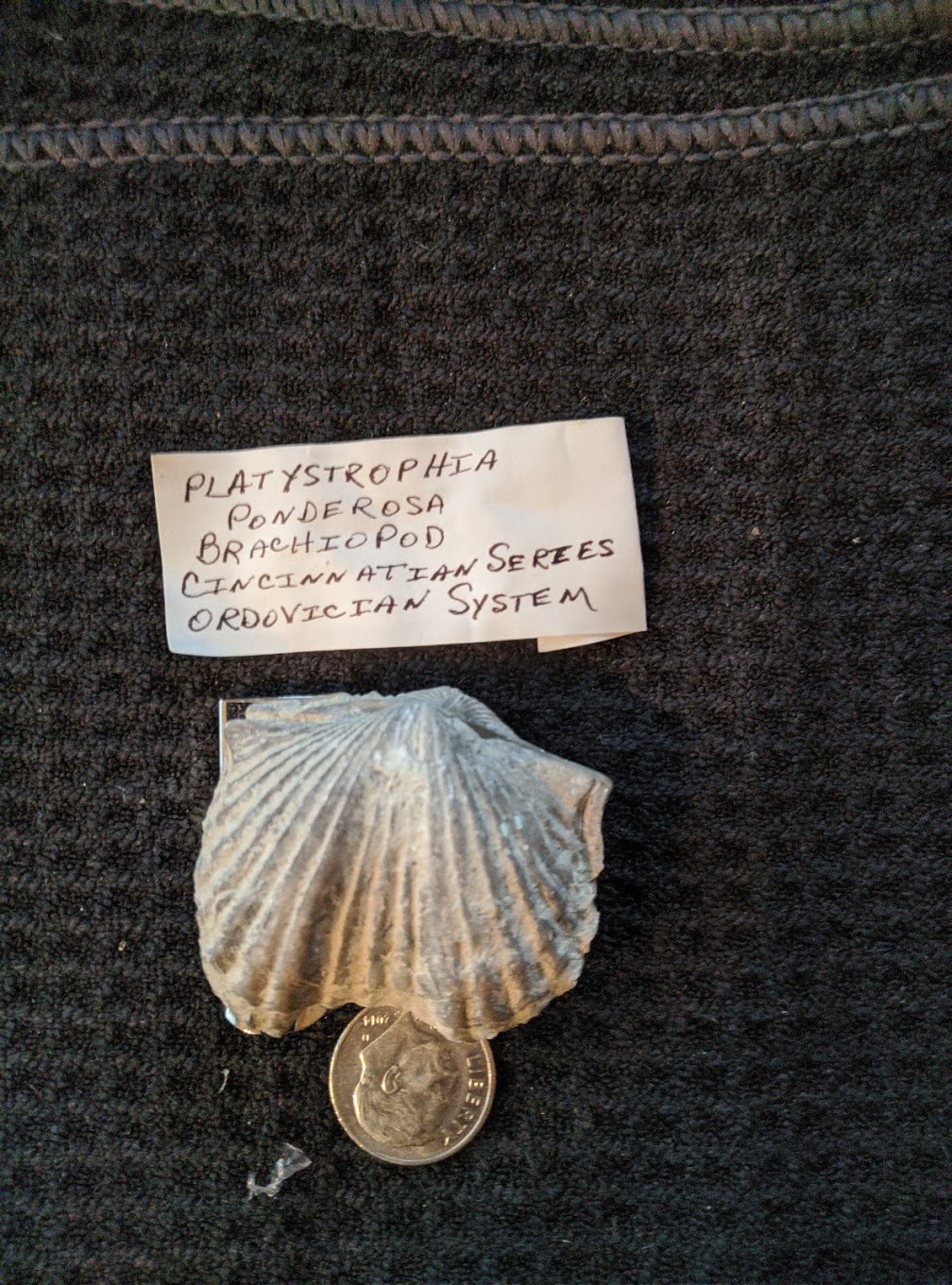
Fossil Friday #38: Vinlandostrophia ponderosa
Read more: Fossil Friday #38: Vinlandostrophia ponderosaThis is the “Fossil Friday” post #38. Expect this to be a somewhat regular feature of the website. We will post any fossil pictures you send in to esconi.info@gmail.com. Please include a short description or story. Check the #FossilFriday Twitter hash tag for contributions from around the world! For our post today, we have one of the more common brachiopods of the Cincinnatian Series of the Ordovician System, which dates to about 450 million years ago. This brachiopod is Vinlandostrophia ponderosa, the former Platystrophia ponderosa.. There are other species in the genus Vinlandostrophia, which can be seen here. Vinlandostrophia ponderosa Foerste,…
-
ESCONI January 2021 Junior Meeting – My Collection by Scott Galloway on Saturday, January 9th, 2021
Read more: ESCONI January 2021 Junior Meeting – My Collection by Scott Galloway on Saturday, January 9th, 2021“My Collection” – Scott Galloway will talk about and show his lifelong collection of rocks, minerals, fossils, native American artifacts (stone points), and even artifacts from a mining ghost town. The meeting’s activity will be “To draw your favorite specimen or two from your personal earth science collection.” Every child should be equipped with drawing and coloring supplies, paper, and a favorite rock or earth science specimen to draw a picture of. To participate please contact Scott Galloway at gallowayscottf@gmail.com
-

Throwback Thursday #40: 25 and 50 Years Ago
Read more: Throwback Thursday #40: 25 and 50 Years AgoThis is Throwback Thursday #40. In these, we look back into the past at ESCONI specifically and Earth Science in general. If you have any contributions, (science, pictures, stories, etc …), please send them to esconi.info@gmail.com. Thanks! 25 Years Ago – January 1996 50 Years Ago – January 1971
-
Reminder ESCONI January 2021 General Meeting – January 8th, 2021 at 8:00 PM via Zoom – “New discoveries at the Burgess Shale”
Read more: Reminder ESCONI January 2021 General Meeting – January 8th, 2021 at 8:00 PM via Zoom – “New discoveries at the Burgess Shale”The speaker at our January 2021 meeting via Zoom will be Dr. Jean-Bernard Caron from the University of Toronto and the Royal Ontario Museum (ROM). Dr. Caron studies the Burgess Shale, the Cambrian Explosion, and the origin of animals. The title of his program is “New discoveries at the Burgess Shale”. Join us via Zoom on Friday Night! Here’s a link to his page at ROM: https://www.rom.on.ca/en/collections-research/rom-staff/jean-bernard-caron Here’s a link to a short video on YouTube narrated by Dr. Caron about the Burgess Shale animal called Hallucigenia.
-
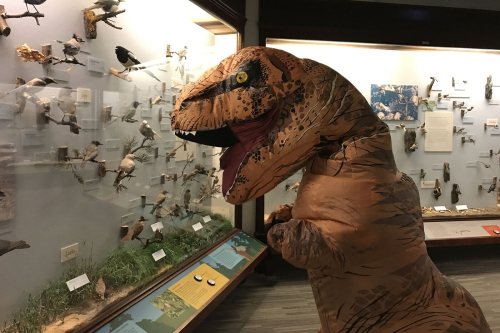
Field Museum: SUE Science Saturdays: Prehistoric Party January 23rd. 2021 10am-12pm
Read more: Field Museum: SUE Science Saturdays: Prehistoric Party January 23rd. 2021 10am-12pmThe Field Museum is having a Prehistoric Party on January 23rd, 2021 from 10:00 AM to 12:00 PM. All there details are here. Join them and help them through this tough year! And, get your paleontology fix for the New Year! Be a scientist for the day with SUE the T. rex and Field Museum experts. You and your family can explore the Field and its collections from your own home. Join us in this online event series as we chat with scientists, take an interactive brain break, and engage with activities that help you learn something new about science. Each month…
-

Mazon Monday #41: Revisiting the exceptional tetrapod fauna of Mazon Creek, Illinois
Read more: Mazon Monday #41: Revisiting the exceptional tetrapod fauna of Mazon Creek, IllinoisThis is Mazon Monday post #41. What’s your favorite Mazon Creek fossil? Tell us at email:esconi.info@gmail.com. This article is republished from the January 20201 ESCONI Newsletter. If you are a member, you will receive this newsletter January – June, July/August, and September – December during the year. Please consider joining ESCONI for $20 a year or $50 for 3 years. We have a Paypal link to make it easy. We have general meetings with a stimulating speaker from January – June and September – December. These are currently held via Zoom and will hopefully resume in person some time in…
-
Status of the 2021 ESCONI Gem, Mineral, and Fossil Show
Read more: Status of the 2021 ESCONI Gem, Mineral, and Fossil ShowThe ESCONI show is usually held in March of each year. The board evaluated the chances of being able to hold such a show on the usual weekend in March of 2021 and determined that it was very unlikely. Other possibilities were considered, such as a virtual show, and rescheduling an in person show in the fall. The board settled on moving the show to the fall of 2021 for this year only. The show will be reduced in size and duration, and will include those regular activities which are run by the club, with no dealers. The “Fall Sale”…
-

LiveScience: The 10 biggest archaeology discoveries of 2020
Read more: LiveScience: The 10 biggest archaeology discoveries of 2020LiveScience has a story about the top 10 biggest archaeology discoveries of 2020.
-

Fossil Friday #37: Rhabdoderma exiguum
Read more: Fossil Friday #37: Rhabdoderma exiguumThis is the “Fossil Friday” post #37. Expect this to be a somewhat regular feature of the website. We will post any fossil pictures you send in to esconi.info@gmail.com. Please include a short description or story. Check the #FossilFriday Twitter hash tag for contributions from around the world! This week we have an amazing fossil specimen from David Duck, who is a paleoartist. He makes life-like models of various fossil plants and animals. You might remember that Dave contributed some photos of fossils and a model of Acanthodes beecheri back in Mazon Monday #9. Now, he’s back at it with…
-
Throwback Thursday #39: Paleontological Ditty
Read more: Throwback Thursday #39: Paleontological DittyThis is Throwback Thursday #39. In these, we look back into the past at ESCONI specifically and Earth Science in general. If you have any contributions, (science, pictures, stories, etc …), please send them to esconi.info@gmail.com. Thanks! Today we have poem from the July – August 1977 edition of the ESCONI newsletter. It’s called “Paleontological Ditty” and was written by Rex Webb, who was a member of the Minnesota Mineral Club. It appeared in their newsletter “Rock Rustlers News”. From the attribution, it may have also appeared in the Ozark Earth Science News. “Paleontological Ditty” The first rockhound was a…
-
ESCONI Events January 2021
Read more: ESCONI Events January 2021Field trips require membership, but visitors are welcome at all meetings! Fri, Jan 8th ESCONI General Meeting 8:00 PM Zoom – Topic: “New discoveries at the Burgess Shale” by Dr. Jean-Bernard Caron from theUniversity of Toronto and the Royal Ontario Museum (ROM). Zoom link Sat, Jan 9th ESCONI Junior Meeting 7:00 PM Zoom – Topic: “My collection” by ESCONI member Scott Galloway. A Zoom link will be sent via email, contact Scott Galloway (gallowayscottf@gmail.com) to be included. Sat, Jan 16th ESCONI Paleontology Meeting 7:30 PM Zoom – Topic: “Giant Heteromorph Ammonites” by Professor Linda Ivany of Syracuse University. Zoom link
-
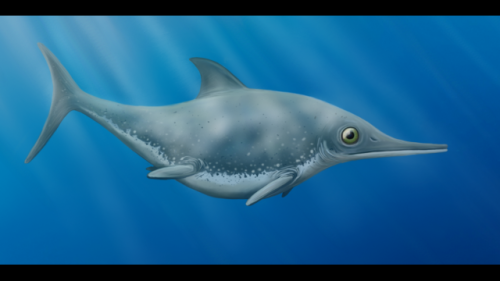
Smithsonian: Amateur Fossil Hunter Discovers New ‘Sea Dragon’ Species on British Beach
Read more: Smithsonian: Amateur Fossil Hunter Discovers New ‘Sea Dragon’ Species on British BeachSmithsonian Magazine has a story about the discovery of a new Ichthyosaur in England. The animal, called Thalassodraco etchesi “Sea Dragon”, was discovered on the beach near Dorset, England. It lived about 150 million years ago during the late Jurassic Period. The species name etchesi is for the discoverer Steve Etches. A paper published in PLOS One provides the description of the species. An amateur fossil hunter scouring an English beach discovered a new species of bug-eyed, barrel-chested marine reptile that patrolled the area’s prehistoric seas roughly 150 million years ago, reports Christa Leste-Lasserre for New Scientist. When Steve Etches…
-

Terrible Lizards Podcast Season 2
Read more: Terrible Lizards Podcast Season 2Season 2 of the Terrible Lizards podcast is up over on libsyn.com. There’s eight plus a bonus episode. It’s a good way to spend your time during these winter Covid months. Terrible lizards is a podcast about dinosaurs with Dr David Hone and Iszi Lawrence. The podcast is aimed at grown ups but it is clean, so kids can enjoy it too. And, if you didn’t listen to season 1, those episodes are available whereever you get your podcasts.
-
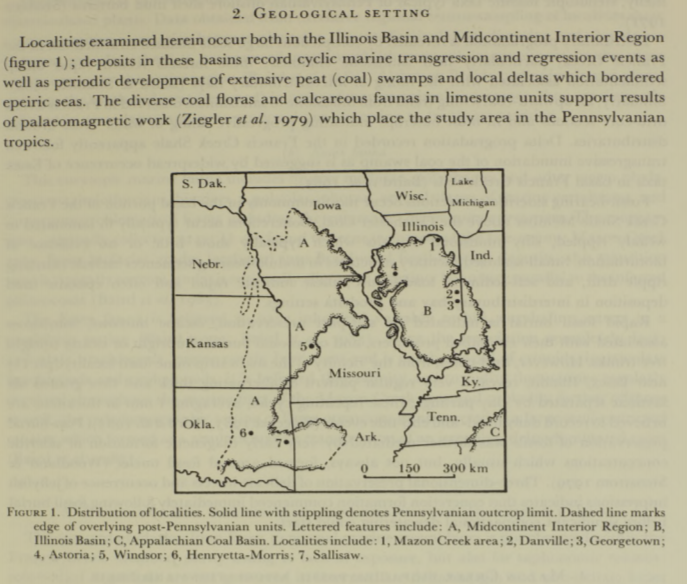
Mazon Monday #40: Mazon Creek-type fossil assemblages in the U.S. midcontinent Pennsylvanian
Read more: Mazon Monday #40: Mazon Creek-type fossil assemblages in the U.S. midcontinent PennsylvanianThis is Mazon Monday post #40. What’s your favorite Mazon Creek fossil? Tell us at email:esconi.info@gmail.com. Back in Mazon Monday #10, we posted about other siderite concretionary fossil localities from the Pennsylvanian Period. That list was worldwide. Here is an interesting paper from 1985 that discusses some of those Mazon Creek-type fossil localities in the central US. It’s curious how many there are. This map in the paper is proposing there is a certain type of coastal deposit that leads to fossil assemblages like Mazon Creek. This excerpt touches on where they believe these deposits are found. The principal aim of…
-
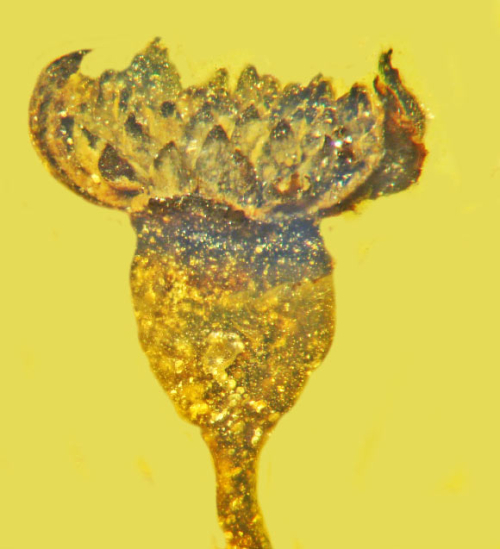
SciNews: 99-Million-Year-Old Fossil Flower Found Encased in Burmese Amber
Read more: SciNews: 99-Million-Year-Old Fossil Flower Found Encased in Burmese AmberSciNews has a story about a flower preserved in amber. The fossil flower is called Valviloculus pleristaminis. It lived about 99 miliion years ago during the Cretaceous Period in what is now Myanmar. Myanmar has amber deposits that have yielded some amazing finds, including dinosaur tails, feathers, wings, and even a skull. The discovery is described in a paper in the Journal of the Botanical Research Institute of Texas. The new fossil flower, named Valviloculus pleristaminis, belongs to the order Laurales, its closest affinities being with the families Monimiaceae and Atherospermataceae. “This isn’t quite a Christmas flower but it is a beauty, especially considering it was part of…
-

PBS Eons: The Triassic Reptile With “Two Faces”
Read more: PBS Eons: The Triassic Reptile With “Two Faces”PBS Eons has a new episode. This one is about a strange reptile called Adapodentatus “unusual teeth” from the Triassic Lagerstätte of Luoping in China. It’s one of the rare animals that changed its diet from meat to plants. Figuring out what this creature’s face actually looked like would take paleontologists years. But understanding this weird animal can help us shine a light on at least one way for ecosystems to bounce back from even the worst mass extinction.
-
Throwback Thursday #38: Merry Mazon Christmas from ESCONI
Read more: Throwback Thursday #38: Merry Mazon Christmas from ESCONIThis is Throwback Thursday #38. In these, we look back into the past at ESCONI specifically and Earth Science in general. If you have any contributions, (science, pictures, stories, etc …), please send them to esconi.info@gmail.com. Thanks! This is Synde and George Langford’s Christmas card in 1939. The picture is a view of the strip mines about 1 mile south of Wilmington, IL, at a place that was not far from where Cinder Ridge Golf Course is today. The fossil on the left was identified as Sphenophyllum emarginatum. It was originally named in 1829 by Adolphe-Theodore Brongniart, known as the…

ESCONI Gem, Mineral, and Fossil Show
Most Recent Post
- PBS Eons: The Chaotic Race to Name T. rex
 PBS Eons has a new episode. This one is about the controversial history of the name Tyrannosaurus rex.
- About ESCONI
- Around the Web
- Calendar of Events
- Code of Ethics and Conduct
- ESCONI Books for Sale
- ESCONI Gem, Mineral, and Fossil Show
- ESCONI in the News
- ESCONI Videos
- Field Trips
- Flashback Friday
- Fossil Friday
- Mazon Creek
- Mazon Monday
- Member Spotlight
- Membership Information
- Reference Material
- Throwback Thursday
- Trilobite Tuesday
Field trips require membership, but visitors are welcome at all meetings!
| Friday, April 10th | General Meeting – 8:00 PM via Zoom. Jessica Hull will present “Life in the Devonian Period, The Age of Fishes.” |
| Saturday, April 11th | Junior Study Group Meeting – 2:00 PM, in person at the College of DuPage Technical Education Center (TEC) Building – Room 1038A (Map). Katherine Howard will present on Sand and Sediment Collecting. Specifics of this meeting are available from Scott Galloway, 630-670-2591, gallowayscottf@gmail.com. |
| Saturday, April 18th | Paleontology Study Group – 7:30 PM via Zoom and in person at the College of DuPage, TEC, Room 1038B (Map). Keith Robitschek will present “Digging the Marl of the Lance Formation.” |
| No meeting this month | Mineralogy Study Group |
| No meeting this month | Junior Study Group |