
-

Netflix: “The Dinosaurs”… Coming March 6th, 2026
Read more: Netflix: “The Dinosaurs”… Coming March 6th, 2026Netflix has a new dinosaur documentary “The Dinosaurs”, which premiers on March 6th, 2026. The trailer is on Youtube. Welcome to The Dinosaurs – an epic journey into a lost world. From executive producer Steven Spielberg, Amblin Entertainment, and the award‑winning team behind Our Planet, this groundbreaking documentary series follows the rise and fall of the dinosaurs across hundreds of millions of years. Narrated by Academy Award–winner Morgan Freeman. Watch The Dinosaurs – only on Netflix, March 6. Watch on Netflix: https://www.netflix.com/title/81612720
-

PBS Eons: When Ancient Weeds Fooled Us
Read more: PBS Eons: When Ancient Weeds Fooled UsPBS Eons has a new episode. This one is about evolution of weeds. Ancient weeds began mimicking early crops again and again over the course of the agricultural revolution, as ancient farmers made similar mistakes in different places at different times.And it turns out, some of our closest plant friends today actually started out as uninvited guests that hid their true identity. From a certain evolutionary point of view, these plants tricked us into domesticating them. But this mimicry came with a dark side – along with some accidental plant friends emerged an accidental plant enemy, too.
-

ESCONI Events for February 2026
Read more: ESCONI Events for February 2026Field trips require membership, but visitors are welcome at all meetings! Friday, February 13th General Meeting – 8:00 PM via Zoom Dale Simpson will present “Diggin’ Illinois: A hands-on introduction to the fascinating archaeological record of Illinois.” Saturday, February 14th Junior Study Group – 2:00 PM, Topic “Lighted Display Tracing Rock, Mineral and Fossil Specimens” by Finn Lutz, ESCONI Member Specifics of this meeting are available from Scott Galloway, 630-670-2591, gallowayscottf@gmail.com. The meeting will be in person at the College of DuPage Technical Education Center (TEC) Building – Room 1038A (Map). Saturday, February 21st Paleontology Study Group – 7:30 PM via Zoom Arvid Aase will present “Death to…
-

Fossil Friday #303: Mounted Pecopteris notata
Read more: Fossil Friday #303: Mounted Pecopteris notataThis is the “Fossil Friday” post #303. Expect this to be a regular feature of the website. We will post fossil pictures you send in to esconi.info@gmail.com. Please include a short description or story. Check the #FossilFriday Bluesky/Twitter hash tag for contributions from around the world! Today, we have one of the rarer forms, Pecopteris notata. It’s not always present in Mazon Creek plant books, but Jack Wittry did include it in his latest flora book “A Comprehensive Guide to the Fossil Flora of Mazon Creek”. P. notata was described by Leo Lesquereux in 1858. The penultimate pinnae has a unique shape,…
-
Throwback Thursday #303: Looking Back At ESCONI For February 2026
Read more: Throwback Thursday #303: Looking Back At ESCONI For February 2026A look back at February 1956, 1976, and 2001
-

PNAS: Can paleontologists pinpoint the dawn of the dinosaurs?
Read more: PNAS: Can paleontologists pinpoint the dawn of the dinosaurs?PNAS has an interesting news feature about the origin of the dinosaurs. When and where did they first appear? Evidence points to an amimal known as Lewisuchus admixtus that lived in what is now Argentina about 236 million years ago. There’s a small, but fierce, jawbone in Argentina’s national natural science museum in Buenos Aires. It’s 6 inches long and studded with backward-curving fangs that would have hooked into flesh to rip it open—teeth not unlike those of the fearsome Komodo dragon, says paleontologist Martín Ezcurra, a researcher at the museum. But this jaw is 236 million years old. It…
-

2026 ESCONI Gem, Mineral, and Fossil Show – Preview #3: Acanthotelson stimpsoni
Read more: 2026 ESCONI Gem, Mineral, and Fossil Show – Preview #3: Acanthotelson stimpsoniThis is the preview post #3 for the 2026 ESCONI Gem, Mineral, and Fossil Show Live Auction. The ESCONI Gem, Mineral, and Fossil Show for 2026 will be held on March 21th and 22nd at the DuPage Fairgrounds in Wheaton, IL, which is the same location as last year. All details can be found here. For today, we have another of the Mazon Creek fossils for the Live Auction at the 2026 ESCONI Show. This is an absolutely beautiful Acanthotelson stimpsoni collected from Pit 11. It’s very detailed with both legs and antennae present. Acanthotelson stimpsoni is a syncarid shrimp. It’s…
-

Mazon Monday #307: Arjan Mann on Fossil Nerds
Read more: Mazon Monday #307: Arjan Mann on Fossil NerdsThis is Mazon Monday post #307. What’s your favorite Mazon Creek fossil? Tell us at email:esconi.info@gmail.com. Episode #94 of the Fossil Nerds podcast is “The Marvelous Mini-Monsters of Mazon Creek with Arjan Mann”. Arjan is the Assistant Curator of Early Tetrapods at the Field Museum. He discusses his lab’s work, various ancient fish and tetrapods, gorganopsids, and (of course!) Mazon Creek. Check it out, it’s excellent! Paleontologist Arjan Mann’s research on early vertebrates and fossil fishes is highlighted through his role at the Field Museum of Chicago, where he works with some of the most important collections in the world. Arjan’s…
-
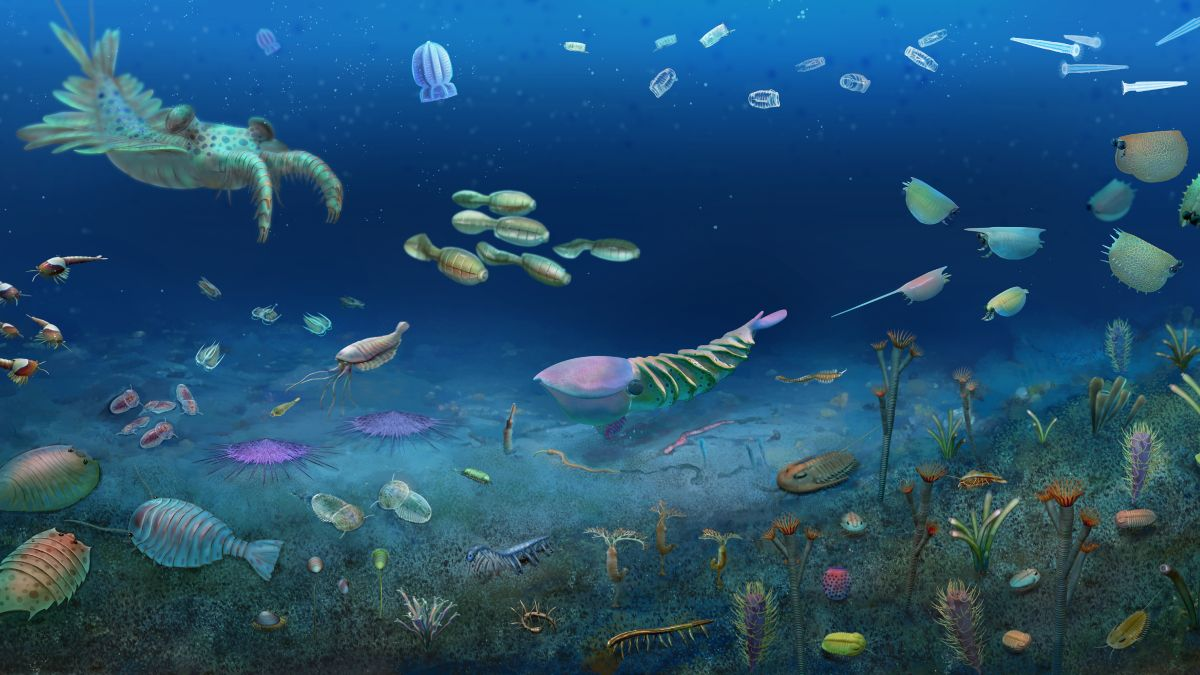
Stunning Fossil Site Reveals Life Rebounding After Major Extinction Event
Read more: Stunning Fossil Site Reveals Life Rebounding After Major Extinction EventScience Alert has a story about the discovery of a new Cambrian lagerstatte in China. The site preserves an entire ecosystem in stunning detail. There are about 40 Cambrian sites worldwide that exhibiting exquisite preservation of rarely preserved, non-mineralized soft tissue. Add this newly discovered 512 million years old fossil site in Hunan, South China, named the Huayuan biota. Currently, 153 animal species are known, those animals span 16 major groups. The species diversity and preservation is said to rival the Canada’s Burgess Shale. The research was published in the journal Nature. But it’s not just any Lagerstätte; a team led…
-
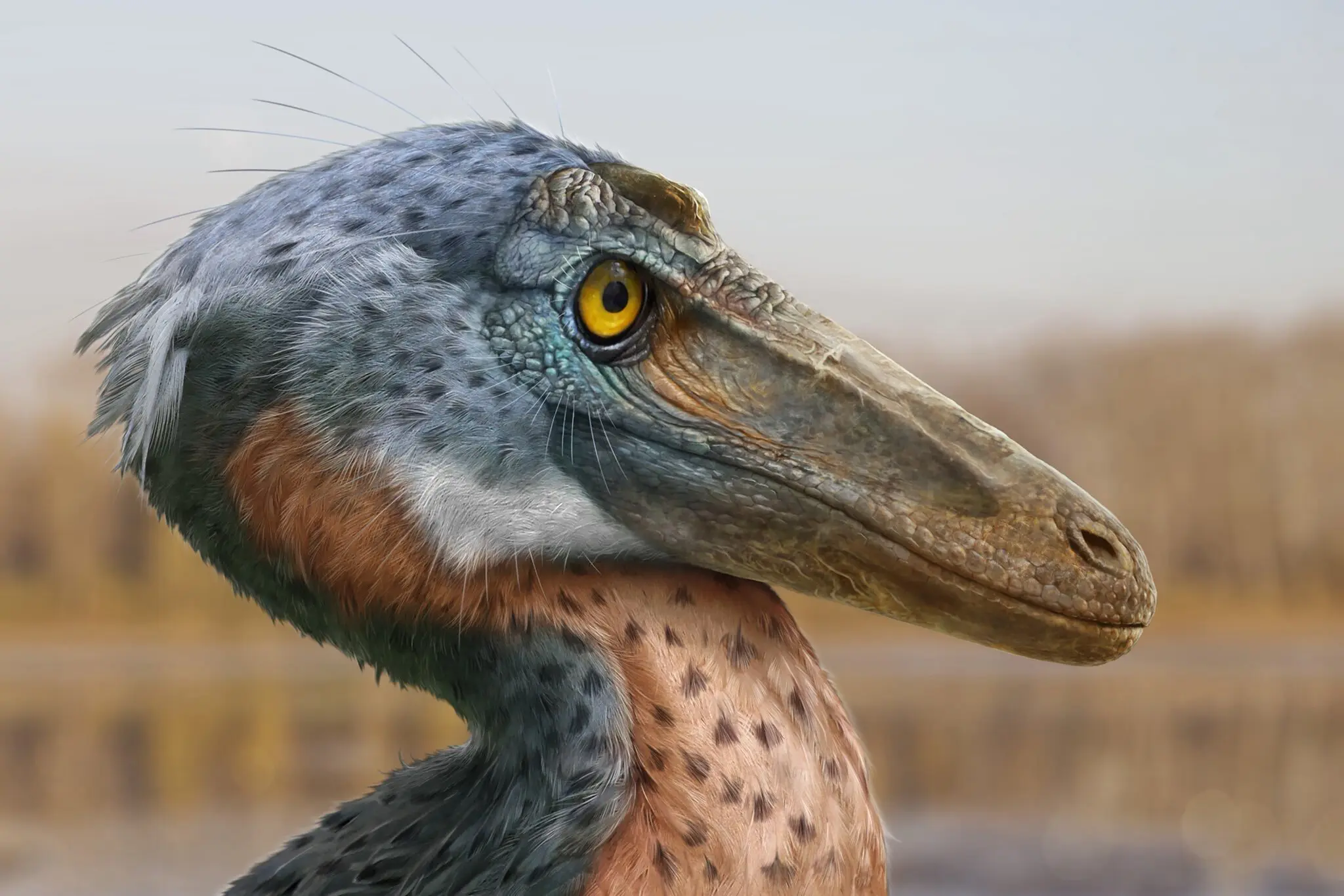
You Wouldn’t Want to Butt Heads With This Small Dinosaur
Read more: You Wouldn’t Want to Butt Heads With This Small DinosaurThe New York Times’ Trilobites column has a story about the discovery of a new dinosaur in Mexico. The animal, Xenovenator espinosai, was discovered in 2000 in the Cerro del Pueblo formation in northeastern Mexico by Martha Aguillón-Martinez. It lived about about 73 million years ago when the area was a marshy coastline. The animal’s description was published in the journal Diversity. A team of paleontologists recently described a set of thick bones on top of the dinosaur’s braincase that fused together into a knobby bump. The scientists proposed that the new dinosaur, named Xenovenator (or “strange hunter”) espinosai, used…
-

Fossil Friday #302: A Beautiful Macroneuropteris scheuchzeri from Braceville!
Read more: Fossil Friday #302: A Beautiful Macroneuropteris scheuchzeri from Braceville!This is the “Fossil Friday” post #302. Expect this to be a regular feature of the website. We will post fossil pictures you send in to esconi.info@gmail.com. Please include a short description or story. Check the #FossilFriday Bluesky/Twitter hash tag for contributions from around the world! For this week, we have a beautiful pyritized Macroneuropteris sheuchzeri (see Mazon Monday #39) from Braceville. Plant fossils are relatively rare from Braceville, as it’s a marine Mazon Creek locality (see Mazon Monday #130). This stunning specimen was sent in by long-time ESCONI member Ralph Jewell. That’s Ralph’s car next to the Braceville spoil pile…
-

Throwback Thursday #302: More Old Cars
Read more: Throwback Thursday #302: More Old CarsThis is Throwback Thursday #302. In these, we look back into the past at ESCONI specifically and Earth Science in general. If you have any contributions, (science, pictures, stories, etc …), please send them to esconi.info@gmail.com. Thanks! email:esconi.info@gmail.com. In Throwback Thursday #267, we posted field trip photos that showed old cars from the 1950s and 1960s. With the frigid weather this week and last… here’s another group of photos to get everyone thinking of spring. It’s just around a few more corners. Just think come March 1st, it will be time to get out and find some nice Mazon Creek fossils!…
-
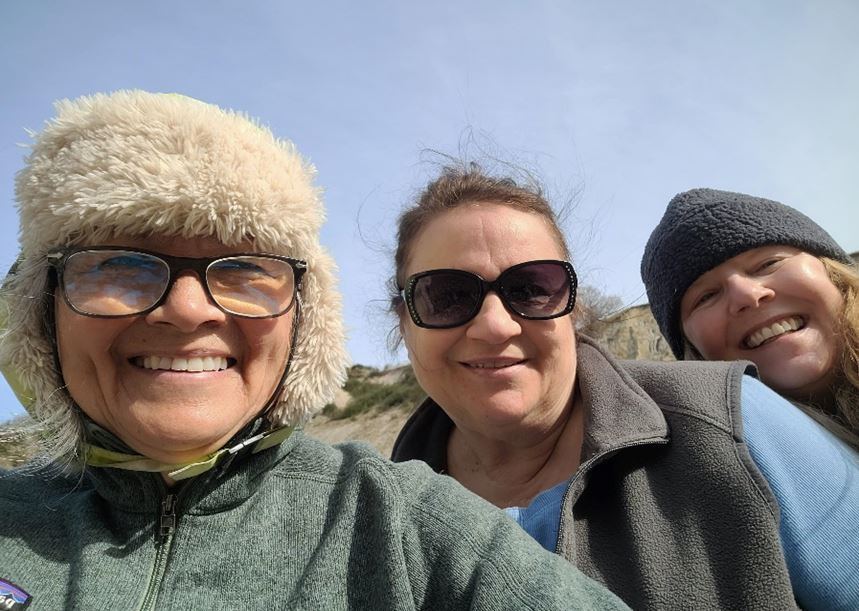
Collecting Echinoids (Sea Urchins) in North Jutland, Denmark
Read more: Collecting Echinoids (Sea Urchins) in North Jutland, DenmarkToday, we have an interesting guest post from long-time ESCONI member Marie Angkuw. Marie is part of the Lyme Regis Babes as John Catalani has named them. Marie, Rhonda Gates, Jann Bergsten, and Deborah Lovely have taken numerous trips to Europe to collect fossils. They’ve been to Lyme Regis (multiple times), Whitby, Yorkshire, and the Isle of Wight. This time it was Marie, Jann, and Rhonda on a trip to Denmark to collect echinoids! Here is their story as told by Marie. Collecting Echinoids (Sea Urchins) in North Jutland, Denmark By Marie Angkuw I don’t think there are too many…
-
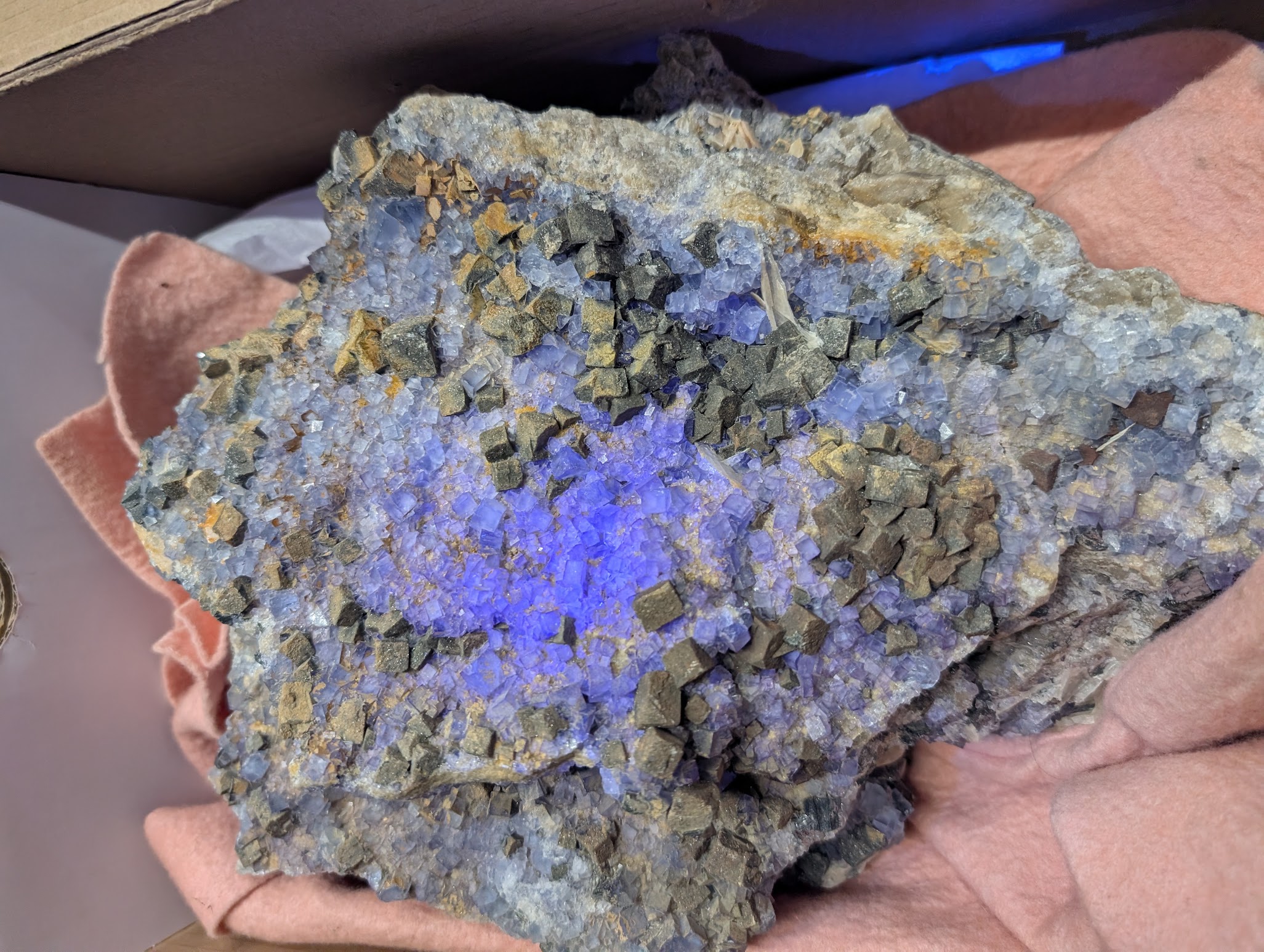
2026 ESCONI Gem, Mineral, and Fossil Show – Preview #2: Fluorite, Galena, and Barite From Bingham, NM
Read more: 2026 ESCONI Gem, Mineral, and Fossil Show – Preview #2: Fluorite, Galena, and Barite From Bingham, NMThis is the preview post #2 for the 2026 ESCONI Gem, Mineral, and Fossil Show Live Auction. The ESCONI Gem, Mineral, and Fossil Show for 2026 will be held on March 21th and 22nd at the DuPage Fairgrounds in Wheaton, IL, which is the same location as last year. All details can be found here. In addition to the Tully Monsters we posted in December, we have some absolutely beautiful mineral specimens for the 2026 ESCONI Gem, Mineral, and Fossil Show Live Auction. For this preview, we have a 20 lb. piece of Fluorite, Galena, and Barite from the Royal Flush…
-

Mazon Monday #306: Drevotella proteana
Read more: Mazon Monday #306: Drevotella proteanaThis is Mazon Monday post #306. What’s your favorite Mazon Creek fossil? Tell us at email:esconi.info@gmail.com. Drevotella proteana is believed to be a hydrozoan. It lived during the Pennsylvanian Period. Fossils of this soft-bodied animal are known only from the Mazon Creek fossil deposit, where exceptional preservation allows such delicate organisms to be recorded. Hydrozoans are cnidarians and include jelly-like forms within the subphylum Medusozoa. Drevotella proteana was formally described by Matthew Nitecki and Eugene Richardson, Jr. in the paper “A New Hydrozoan From the Pennsylvanian of Illinois,” published in Fieldiana: Geology. Abstract Drevotella proteana, a new genus and species…
-

Chicago Rocks & Minerals Society’s Annual Silent Auction, Saturday, March 14, 2026
Read more: Chicago Rocks & Minerals Society’s Annual Silent Auction, Saturday, March 14, 2026Chicago Rocks & Minerals Society’s Annual Silent Auction Saturday, March 14, 2026 6 to 9 p.m. St. Peter’s United Church of Christ 8013 Laramie Ave., Skokie, IL (Across the street from the public library on Oakton) Plus a special live auction of high-end specimens during the last half-hour! The first table closes at 6:30 p.m. Bid on minerals, fossils, crystals, geodes, gemstones, handmade jewelry, rough rock, books, magazines, and lapidary treasures galore. Families are welcome; children must be accompanied by an adult. Free admission. Free parking. For more information, contact Jeanine N. Mielecki, (312) 623-1554 or email jaynine9@aol.com or visit http://chicagorocks.org. Follow…
-

PBS: Inside the Vault Where They Keep the Dinosaur Apocalypse
Read more: PBS: Inside the Vault Where They Keep the Dinosaur ApocalypsePBS has an interesting video about the K-Pg extinction. Check it out! A giant asteroid impact ended the age of the dinosaurs 66 million years ago. How did this mass extinction play out, moment by moment? In this video we meet a geologist who has explored the asteroid crater and learn what the rocks tell us about the last days of the dinosaurs. It was pretty bad! References: https://sites.google.com/view/dinosau…
-
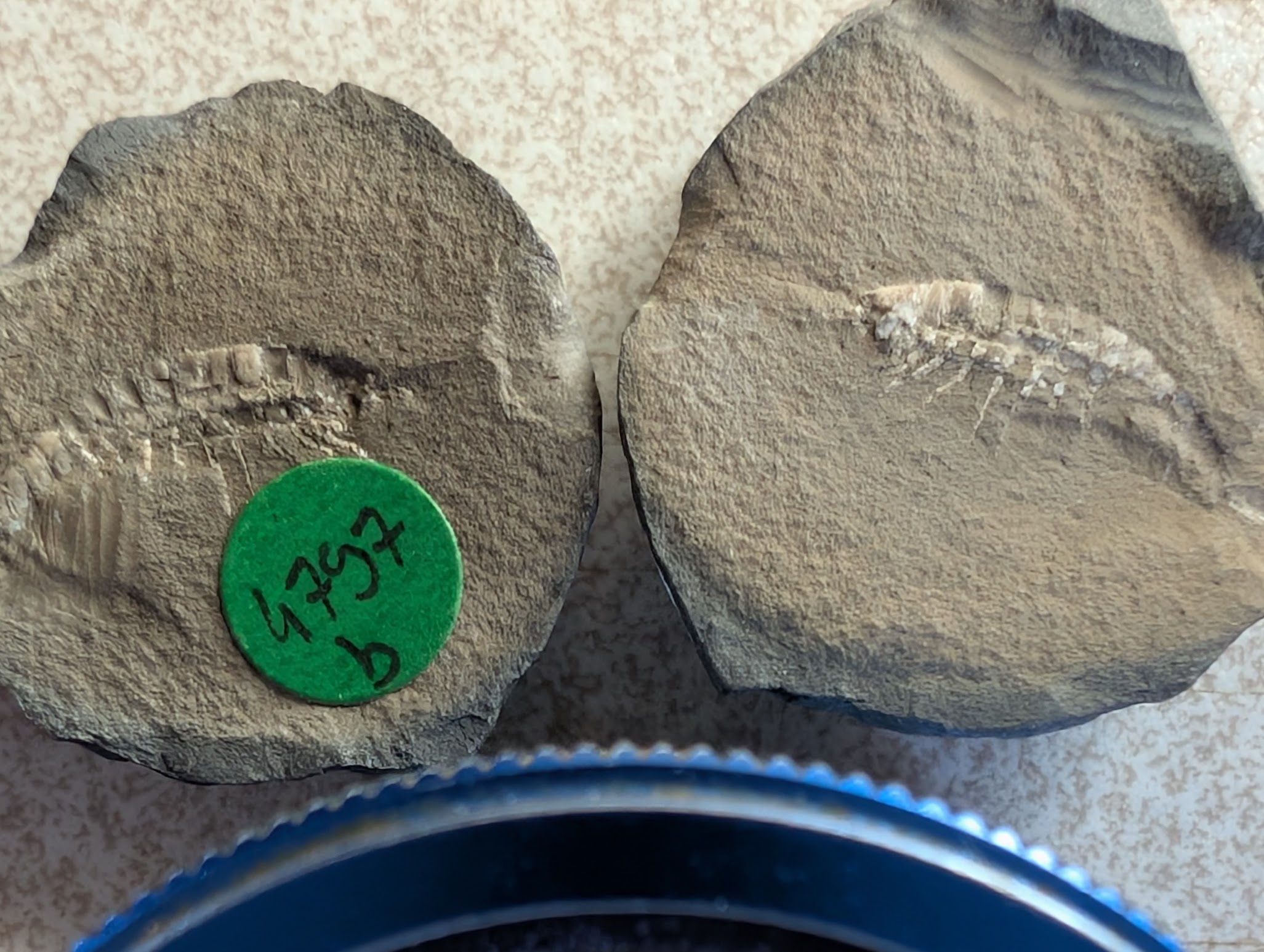
Fossil Friday #301: French Palaeocaris
Read more: Fossil Friday #301: French PalaeocarisThis is the “Fossil Friday” post #301. Expect this to be a regular feature of the website. We will post fossil pictures you send in to esconi.info@gmail.com. Please include a short description or story. Check the #FossilFriday Bluesky/Twitter hash tag for contributions from around the world! In Mazon Monday #294, we highlighted the fossil site at Montceau-les-Mines in southeastern France. This Carboniferous (Stephanian) locality dates to approximately 303–305 million years ago, making it slightly younger than Mazon Creek. While Montceau-les-Mines preserves many of the same plant and animal groups found at Mazon Creek, it stands out for its greater diversity and…
-
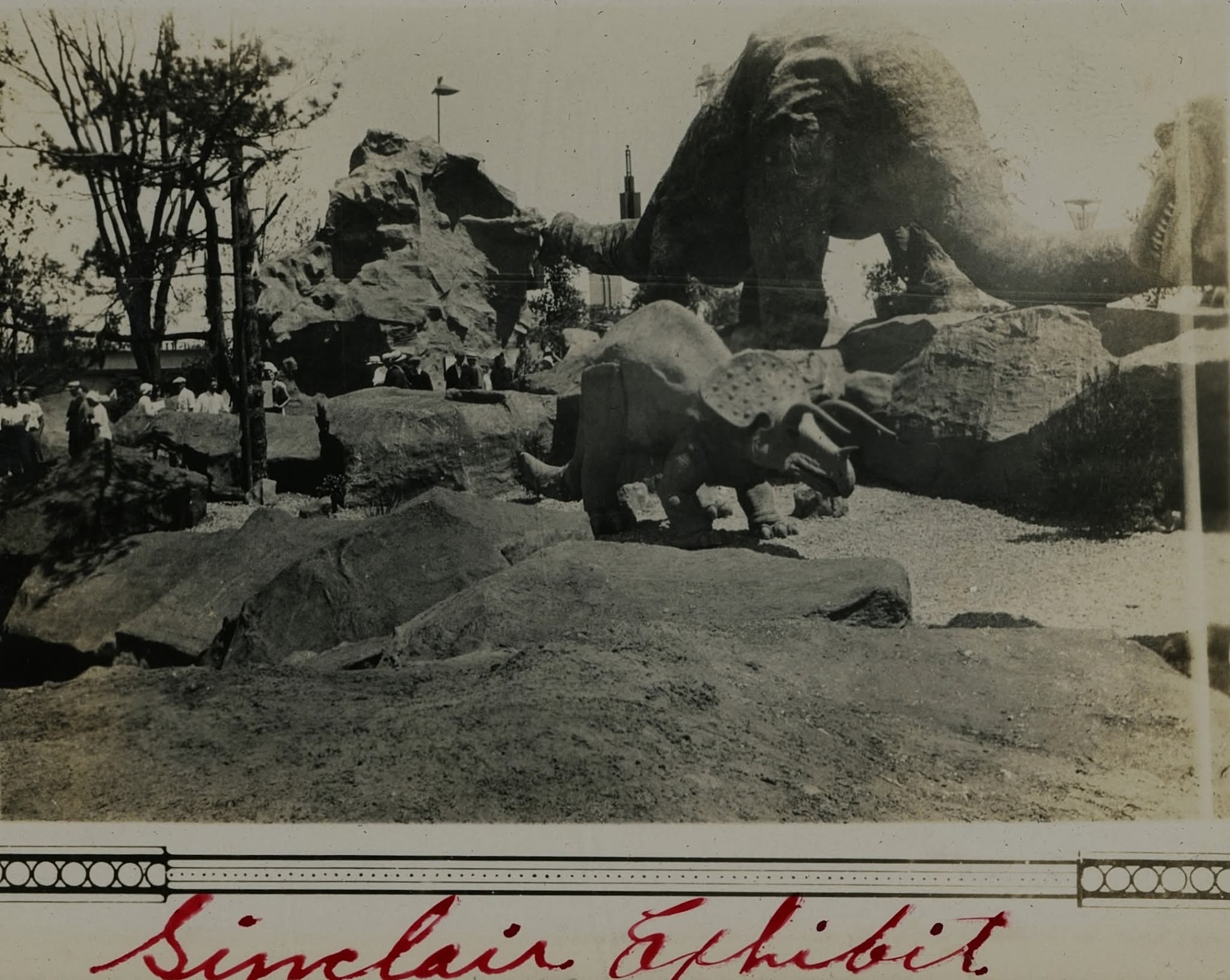
Throwback Thursday #301: Century of Progress – Sinclair Exhibit
Read more: Throwback Thursday #301: Century of Progress – Sinclair ExhibitThis is Throwback Thursday #301. In these, we look back into the past at ESCONI specifically and Earth Science in general. If you have any contributions, (science, pictures, stories, etc …), please send them to esconi.info@gmail.com. Thanks! email:esconi.info@gmail.com. Ran across an interesting post on the Original Chicago Group on Facebook last month (December 2025). In the post, Shane Egan shared some photos from the Century of Progress International Exposition, also known as the Chicago World’s Fair, held from May 27th to October 31st in 1933. Shane’s post was of photos taken between July 23rd – 25th, 1933 from a photo…
-
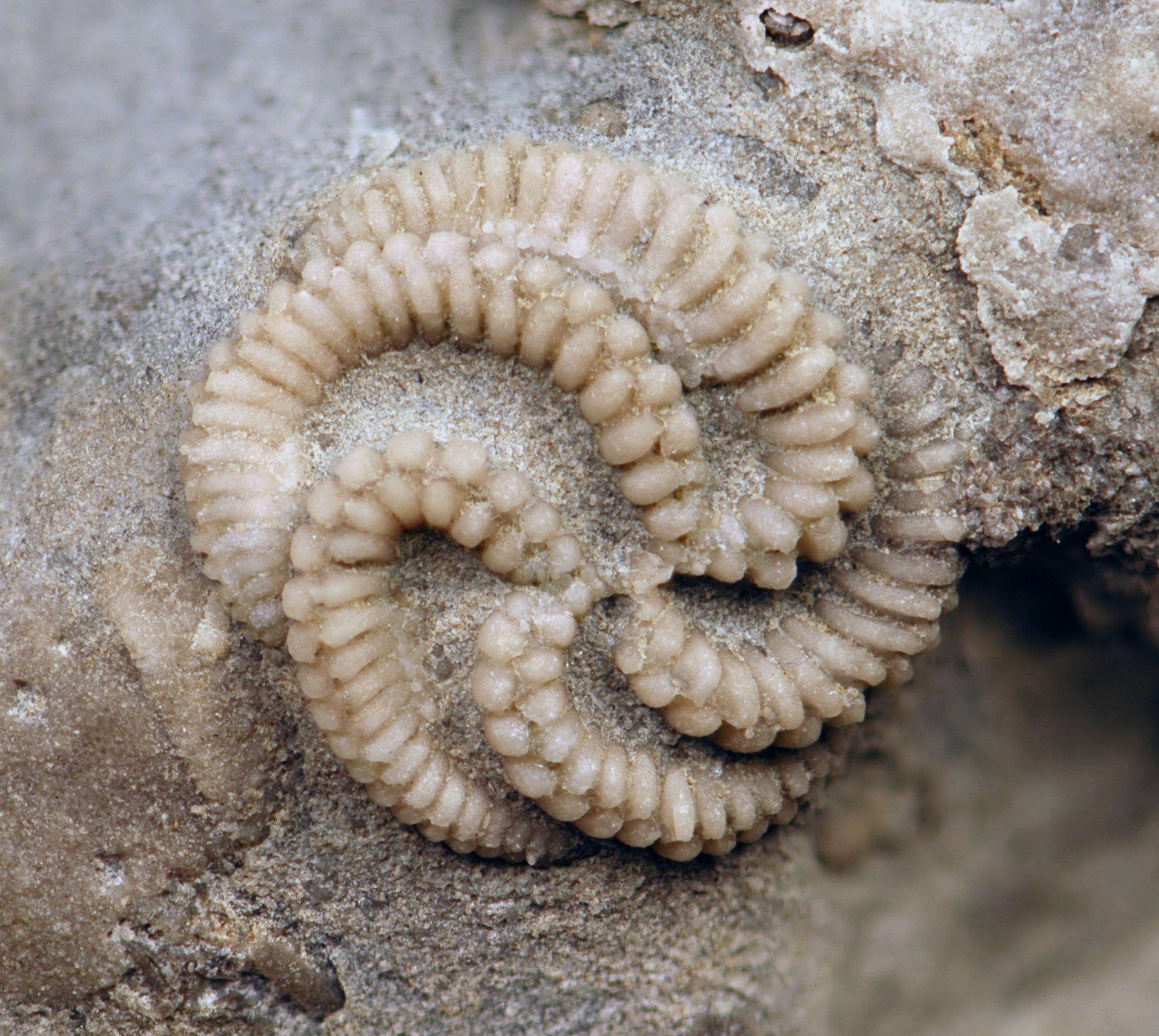
Video for ESCONI January 2026 Paleontology Meeting – “Getting Lost Can Lead to Treasure – Edrioasteroids”
Read more: Video for ESCONI January 2026 Paleontology Meeting – “Getting Lost Can Lead to Treasure – Edrioasteroids”Jack Kallmeyer President of the Dry Dredgers will present “Getting Lost Can Lead to Treasure – Edrioasteroids – What to Do When You Find Thousands”. The meeting was held on January 17th, 2026 at 7:30 PM. While growing my early collection in the Cincinnatian, one of the most desired fossils that I sought after was the Edrioasteroid. While not really rare (if you count fragmentary finds), nice complete specimens tend to be elusive. I took detailed notes and directions given at a Dry Dredgers club lecture to a site where whole specimens had been found. I missed the field trip…

ESCONI Gem, Mineral, and Fossil Show
Most Recent Post
- Throwback Thursday #312: Ron Schinderle Donation
 Barb Schinderle stopped by ESCONI Show last month to drop off a donation of her late husband Ron’s fossils. Ron passed away in 2021. He was a long time ESCONI member and an avid fossil collector . He went on many ESCONI field trips. A group of us remember him fondly from our many trips to Pit 11 and Fossil Rock Campgrounds to collect Mazon Creek fossils.
- About ESCONI
- Around the Web
- Calendar of Events
- Code of Ethics and Conduct
- ESCONI Books for Sale
- ESCONI Gem, Mineral, and Fossil Show
- ESCONI in the News
- ESCONI Videos
- Field Trips
- Flashback Friday
- Fossil Friday
- Mazon Creek
- Mazon Monday
- Member Spotlight
- Membership Information
- Reference Material
- Throwback Thursday
- Trilobite Tuesday
Field trips require membership, but visitors are welcome at all meetings!
| Friday, April 10th | General Meeting – 8:00 PM via Zoom. Jessica Hull will present “Life in the Devonian Period, The Age of Fishes.” |
| Saturday, April 11th | Junior Study Group Meeting – 2:00 PM, in person at the College of DuPage Technical Education Center (TEC) Building – Room 1038A (Map). Katherine Howard will present on Sand and Sediment Collecting. Specifics of this meeting are available from Scott Galloway, 630-670-2591, gallowayscottf@gmail.com. |
| Saturday, April 18th | Paleontology Study Group – 7:30 PM via Zoom and in person at the College of DuPage, TEC, Room 1038B (Map). Keith Robitschek will present “Digging the Marl of the Lance Formation.” |
| Friday, April 24th | MAPS Expo XLVII – Springfield, IL. |
| Saturday, April 25th | MAPS Expo XLVII – Springfield, IL. |
| Sunday, April 26th | MAPS Expo XLVII – Springfield, IL. |
| No meeting this month | Mineralogy Study Group |