
-
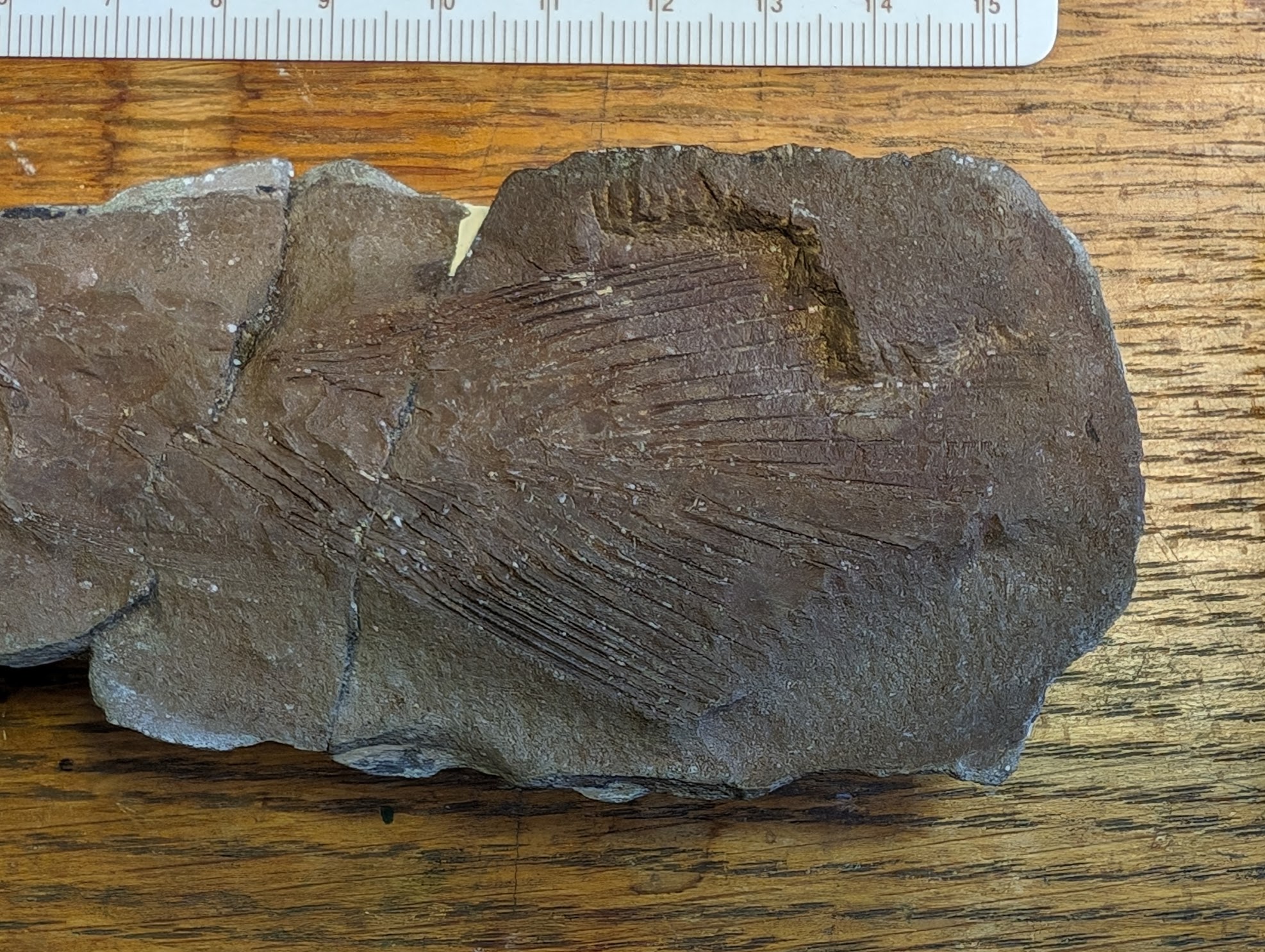
Fossil Friday #218: Rhabdoderma elegans from the Field Museum
Read more: Fossil Friday #218: Rhabdoderma elegans from the Field MuseumThis is the “Fossil Friday” post #218. Expect this to be a somewhat regular feature of the website. We will post any fossil pictures you send in to esconi.info@gmail.com. Please include a short description or story. Check the #FossilFriday Twitter hash tag for contributions from around the world! Rhabdoderma elegans was described by John Strong Newberry in 1856 as Coelacanthus elegans. Newberry (1822 – 1892) was an American physician, geologist, and paleontologist. He participated as a naturalist and a surgeon on three expeditions to explore and survey the western states during the 1850s. He served in the US Sanitary Commission…
-
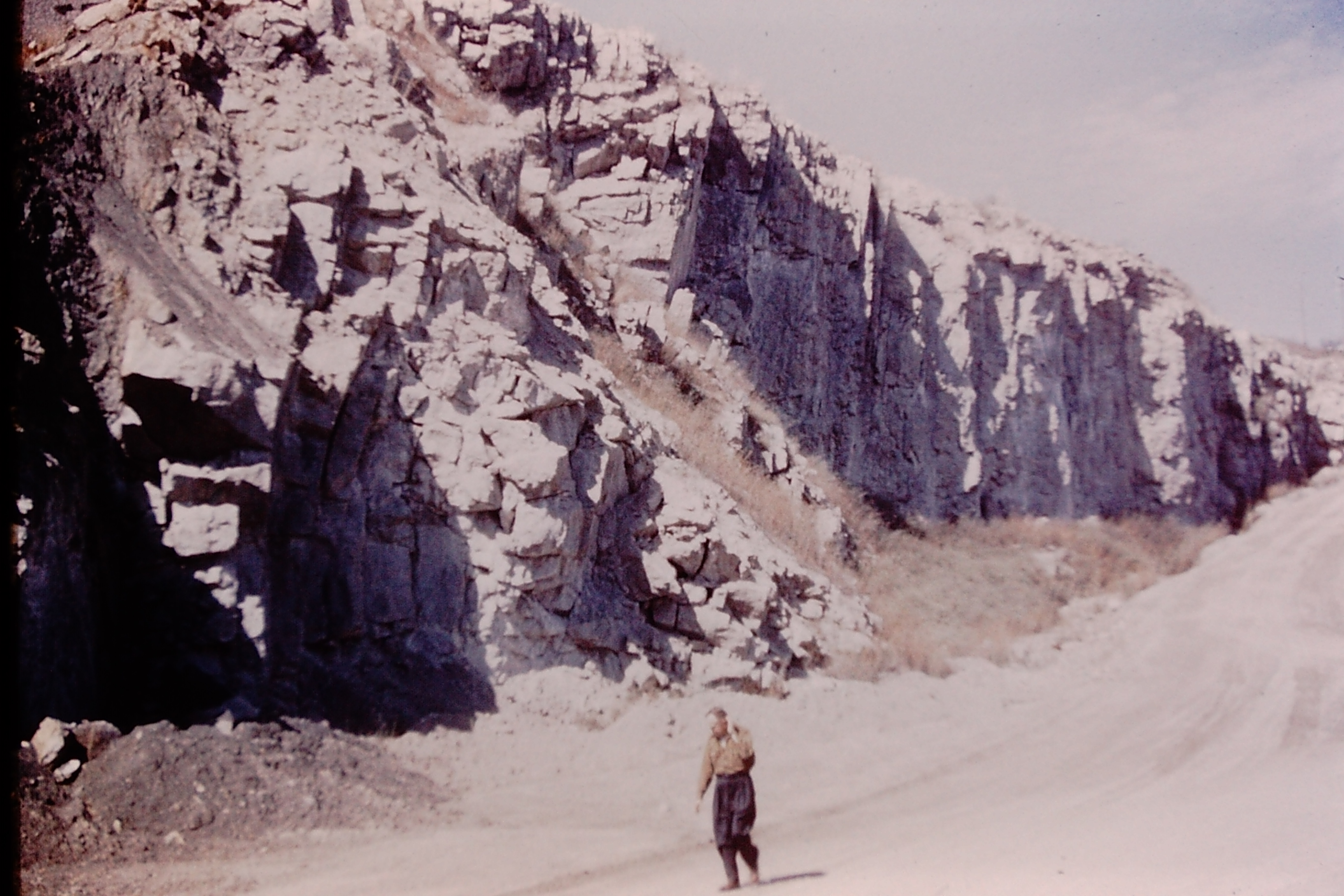
Throwback Thursday #219: Joliet Quarry Trip in June 1951
Read more: Throwback Thursday #219: Joliet Quarry Trip in June 1951This is Throwback Thursday #219. In these, we look back into the past at ESCONI specifically and Earth Science in general. If you have any contributions, (science, pictures, stories, etc …), please send them to esconi.info@gmail.com. Thanks! On June 17, 1951, ESCONI held a field trip to a quarry in Joliet, IL. As seen in the map below, the quarry was located near Nowell Park in Joliet, which has since been recovered as a lake with part used for construction trucking. Afterwards, the group went to a large gravel pit… no location was provided. A full report of the trip appeared…
-

Video for ESCONI May 2024 Paleontology Meeting – “The Upper Ordovician Platteville Formation”
Read more: Video for ESCONI May 2024 Paleontology Meeting – “The Upper Ordovician Platteville Formation”The May 2024 Paleontology Study Group meeting was held on Saturday, May 18th, 2024. John Catalani did a presentation about the Upper Ordovician Platteville Formation here in northern Illinois and southern Wisconsin. He details the name changes how it relates to the surrounding area.
-
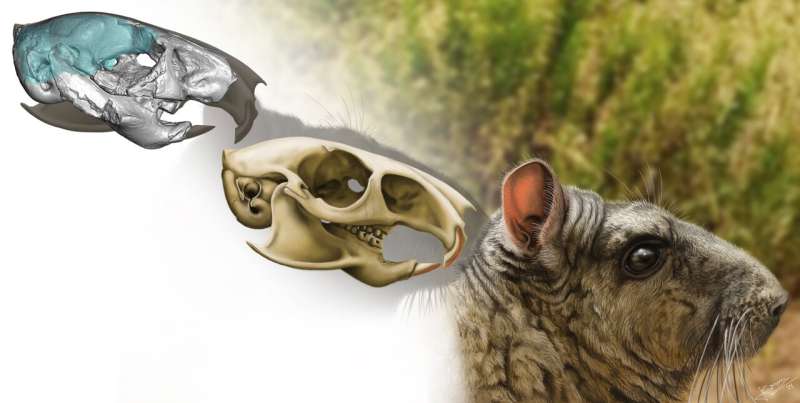
30 million-year-old cousin of chinchillas shows signs of enhanced hearing and living in groups
Read more: 30 million-year-old cousin of chinchillas shows signs of enhanced hearing and living in groupsBrain virtual endocast inside the translucent skull (left), skull reconstruction (middle) and life reconstruction (right) of the late Oligocene Incamys bolivianus (YPM VPPU 21945) from the Salla-Luribay Basin in Bolivia. Credit: Jesús Gamarra González / Institut Català de Paleontologia Miquel Crusafont. Phys.org has a story about a 30 million year old cousin of chinchillas. A study published in the journal Papers in Palaeontology found endocranial brain features that suggest Incamys bolivianus might have had enhanced auditory acuity and vocalization processing. Like modern chinchillas, this 30 million-year-old rodent may have been living in groups and using calls to communicate. The fossil…
-
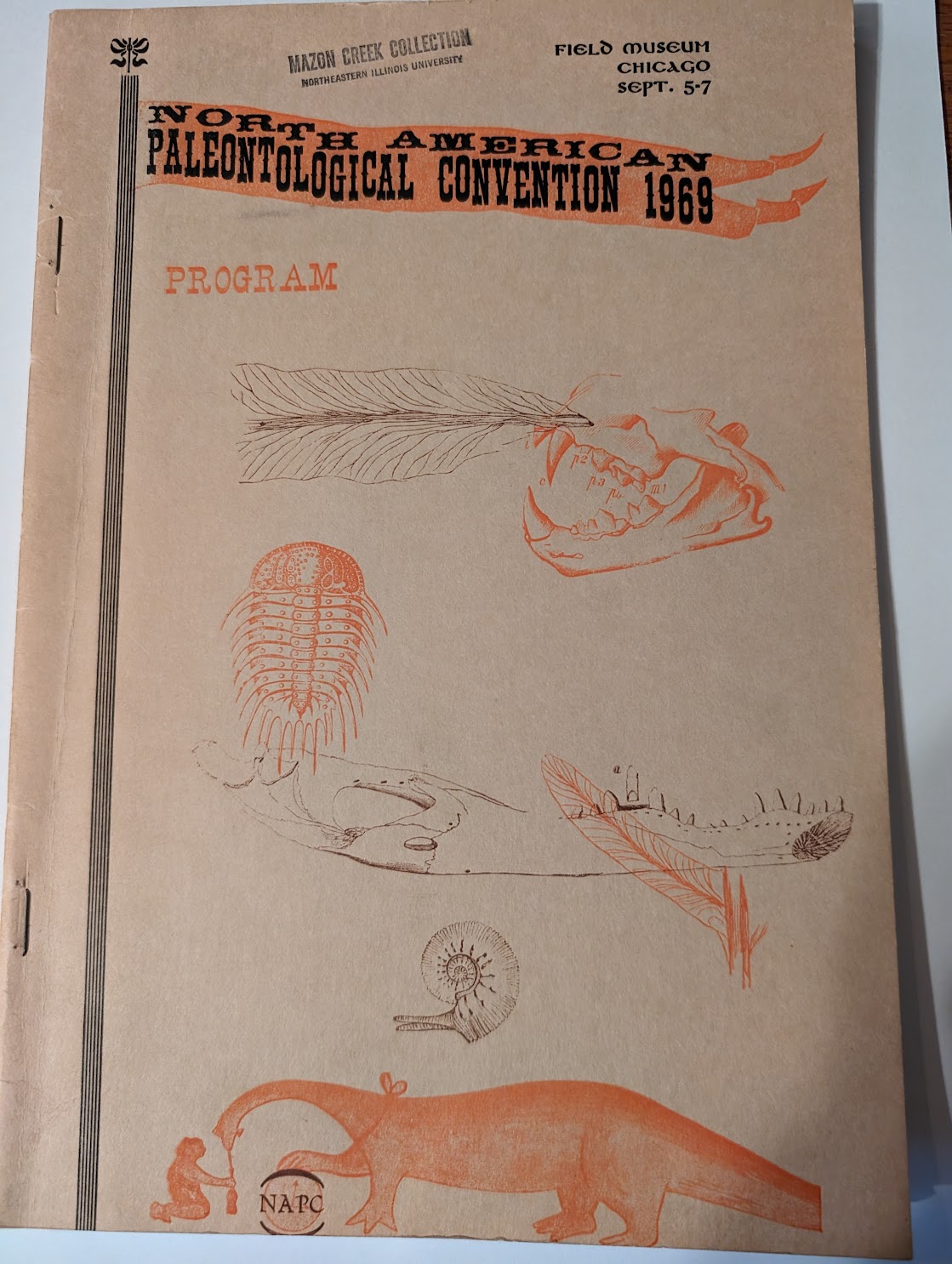
Mazon Monday #221: Mazon Creek and ESCONI at NAPC 1969
Read more: Mazon Monday #221: Mazon Creek and ESCONI at NAPC 1969This is Mazon Monday post #221. What’s your favorite Mazon Creek fossil? Tell us at email:esconi.info@gmail.com. The very first North American Paleontological Convention (NAPC) was held 55 years ago on September 5th, 6th, and 7th, 1969. The conference was hosted by the Field Museum of Natural History in Chicago, IL. ESCONI and Mazon Creek played a large role in the proceedings. ESCONI had special Mazon Creek displays that featured specimens from many members. This was a very special event and ESCONI put out the call. More than 40 members answered! This announcement appeared in the December 1968 edition of the…
-
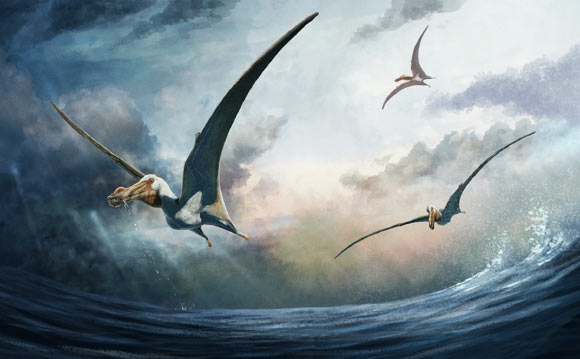
New Flying Reptile Fossils Found in Australia
Read more: New Flying Reptile Fossils Found in AustraliaLife reconstruction of Haliskia peterseni. Image credit: Gabriel N. Ugueto. SciNews has an article about the discovery of a large pterosaur in Australia. Haliskia peterseni had a wingspan of about 4.6 meters (15.1 feet). Thought to be a fearsome predator, it lived about 100 million years ago in central western Queensland. The specimen was described in a paper published in the journal Scientific Reports. The fossilized remains of Haliskia peterseni were found by Kronosaurus Korner museum curator Kevin Petersen in November 2021 in the Toolebuc Formation of the Eromanga Basin. “Haliskia peterseni is 22% complete, making it more than twice as complete as the only other…
-
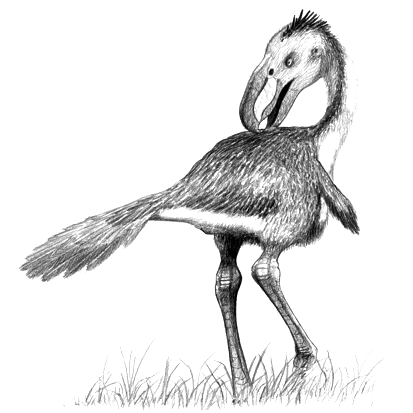
Video for ESCONI April 2024 Paleontology Meeting – “Terror Birds”
Read more: Video for ESCONI April 2024 Paleontology Meeting – “Terror Birds”The April 2024 was held on April 20th, 2024 at 7:30 via Zoom. The presenter was ESCONI member John Catalani. Abstract We begin with an explanation of the “Terror Birds” and their position in Geologic Time. The two major groups of these large cursorial birds are the Phorusrhacidae and the Gastornithidae. The first group was the longest lasting and, until the very end, lived in South America, at that time an isolated continent. With the appearance of the Panamanian Land Bridge and the Great American Biotic Interchange, the last “Terror Bird” took up residence in the, mostly, southeastern United States.…
-

Fossil Friday #217: Cordaites borassifolius
Read more: Fossil Friday #217: Cordaites borassifoliusThis is the “Fossil Friday” post #217. Expect this to be a somewhat regular feature of the website. We will post any fossil pictures you send in to esconi.info@gmail.com. Please include a short description or story. Check the #FossilFriday Twitter hash tag for contributions from around the world! —————————————————– Here is a nice Cordaites borassifolius from Pit 3. It was collected in 2023 and opened via freeze/thaw. Cordaites is an extinct genus of early gymnosperms. Cordaites probably grew to more than 100 feet tall in swampy conditions, forming forests similar to modern day mangroves. Cordaites borassifolius was named by Kaspar…
-
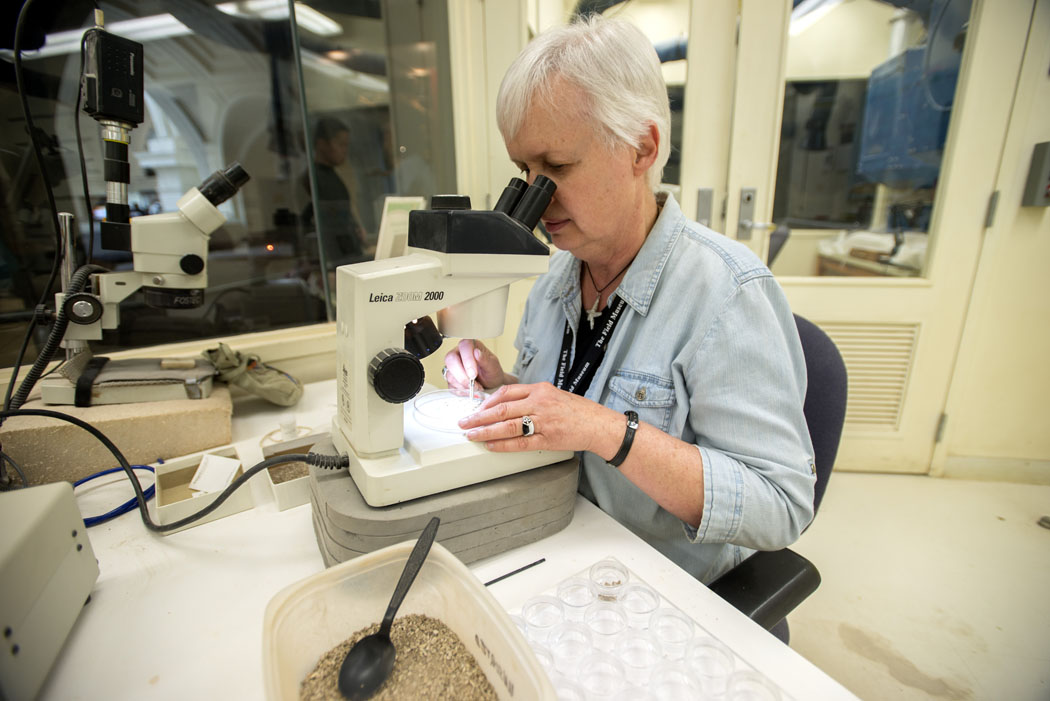
Throwback Thursday #218: Karen’s Komments
Read more: Throwback Thursday #218: Karen’s KommentsThis is Throwback Thursday #218. In these, we look back into the past at ESCONI specifically and Earth Science in general. If you have any contributions, (science, pictures, stories, etc …), please send them to esconi.info@gmail.com. Thanks! This was originally posted as Flashback Friday #16. It was part of the run up to ESCONI’s 70’s Anniversary in 2019. We are getting close to ESCONI’s 75th Anniversary later this year, so it’s time to revive a few of these posts. Notice the story below about the 11th specimen of Archaeopteryx. Karen Nordquist’s monthly column in “The Earth Science News” started as “DINO…
-

Was This Sea Creature Our Ancestor? Scientists Turn a Famous Fossil on its Head
Read more: Was This Sea Creature Our Ancestor? Scientists Turn a Famous Fossil on its HeadThe fossil of Pikaia, a creature that lived 508 million years ago and may have been a close relative of vertebrates.Credit…Mussini et al., Current Biology 2024 Carl Zimmer writes about Pikaia in his ORIGINS column in the New York Times. Discovered in 1909 by Charles Walcott in the Burgess Shale, Pikaia gracilens, which lived during the Cambrian Period, is thought to be an early ancestor of vertebrates. Now, recent research published in the journal Current Biology finds that the animal had been oriented upside down in previous studies. Further, they reaffirm that Pikaia belongs near the base of the chordate…
-

BBC: Fossil festival returns to home of Mary Anning
Read more: BBC: Fossil festival returns to home of Mary AnningThe BBC has a story about the Fossil Festival in Lyme Regis. Lyme Regis has been hosting the event since 2005. The event features talks, shows, walks, exhibitions, interactive displays as well as a film about Mary Anning. Top fossil hunters and palaeontological experts are gathering for an annual fossil festival on the Dorset Coast. The Festival Lyme Regis Fossil celebrates the geological heritage of the Jurassic Coast. It features talks, shows, walks, exhibitions, interactive displays as well as the premiere of a film about the life of pioneering palaeontologist Mary Anning. Organiser Nick Meecham said the festival had a “really…
-

Mazon Monday #220: George Langford
Read more: Mazon Monday #220: George LangfordThis is Mazon Monday post #220. What’s your favorite Mazon Creek fossil? Tell us at email:esconi.info@gmail.com. Jim Konecny wrote this piece for the June 1994 edition of the ESCONI Earth Science News. This year marks the 60th anniversary of George’s death. He was a interesting man. His contributions were many… to Mazon Creek, science, ESCONI, and society in general. To learn more, visit the George’s Basement website. That site has a wealth of information about George, his family, and many, many other things. GEORGE LANGFORD1876-1964 June 16, 1994 marks the 30th anniversary of the death of George Langford. The name George…
-
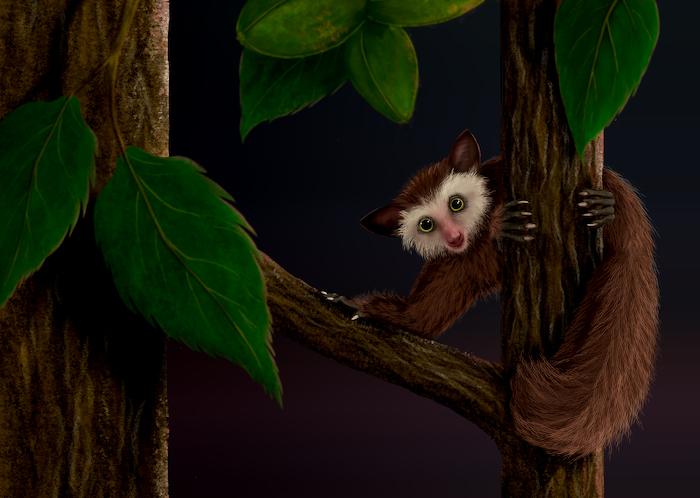
ESCONI June 2024 General Meeting – June 14th, 2024 at 8:00 PM via Zoom – “A North American fossil primate called Ekgmowechashala”
Read more: ESCONI June 2024 General Meeting – June 14th, 2024 at 8:00 PM via Zoom – “A North American fossil primate called Ekgmowechashala”The June 2024 General Meeting will be held on June 14th, 2024 via Zoom. The presentation is by Kathleen Rust of the University of Kansas. She will be speaking about Ekgmowechashala, a primate known only from the late early Oligocene of western North America. I am planning on presenting findings from my most recent publication describing a new primate species from the late Eocene of China that we named Palaeohodites and how its discovery elucidates the origin of a very funky primate species from the Oligocene of North America called Ekgmowechashala. My talk is about 30-40 mins. I will most certainly make time…
-
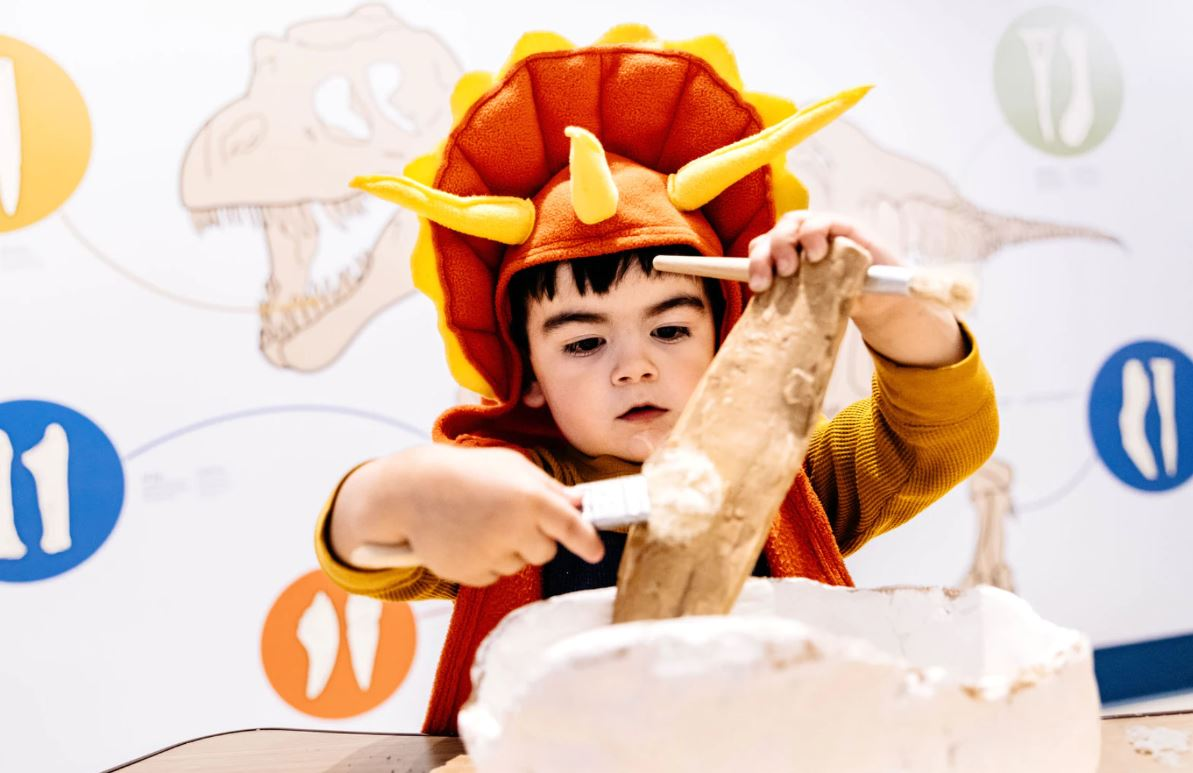
Field Museum – Dinopalooza Returns! Saturday, June 8 | 10am-2pm
Read more: Field Museum – Dinopalooza Returns! Saturday, June 8 | 10am-2pmThe Field Museum is holding Dinopalooza today from 10 AM to 2 PM. Dinopalooza is today! Join us in celebrating the newest member of our flock, the Chicago Archaeopteryx, before it takes off for the rest of the summer. Find out how our new fossil friend shows scientists where past and present collide and understand what it really means to be a dinosaur. Activities include a museum-wide scavenger hunt, a Box-o-Saurus craft, getting up close and personal with Norm the T. rex skull, life-size Archaeopteryx puppets, face painting, a photo booth, and more. Dinosaur costumes are encouraged!
-
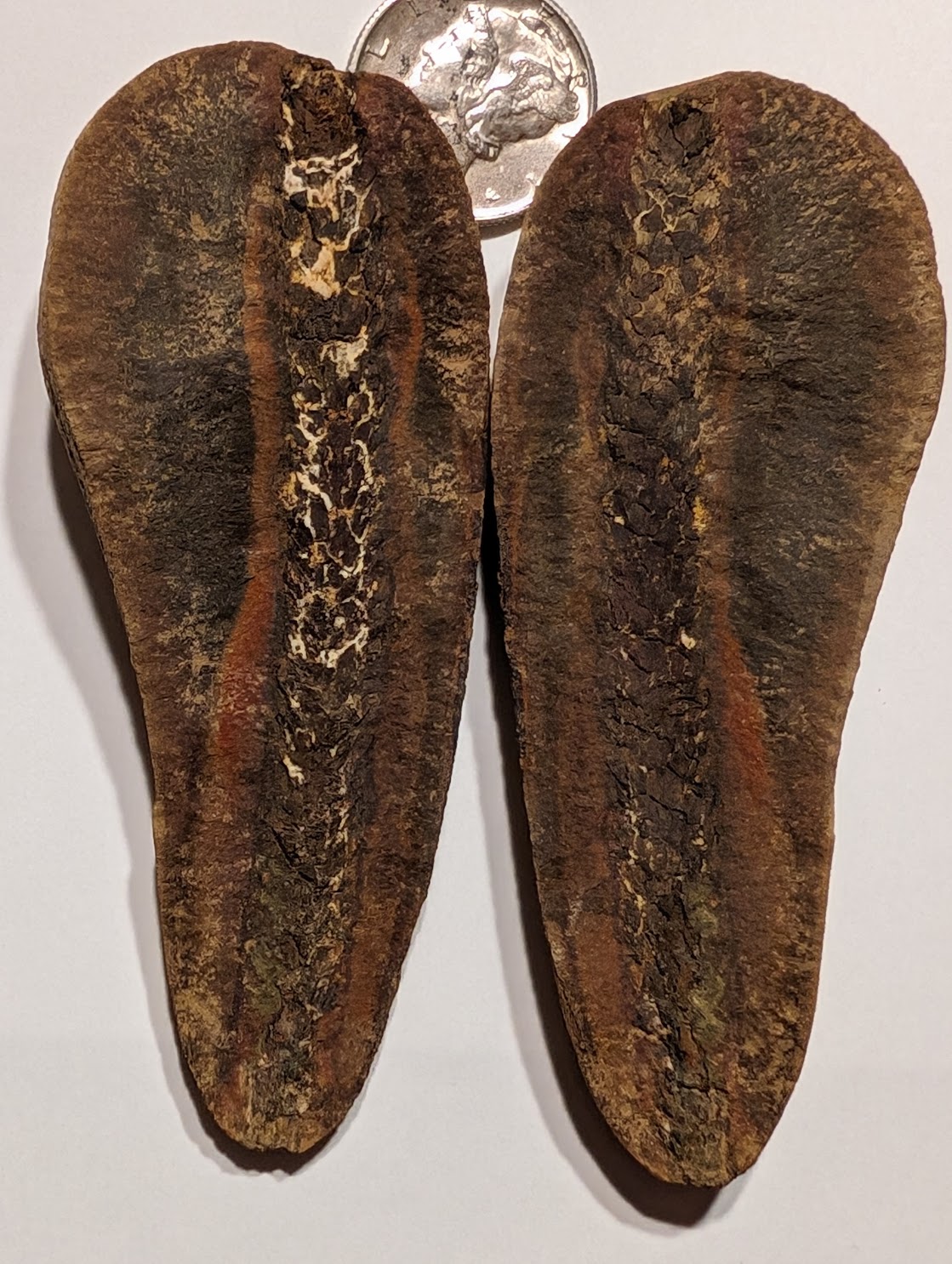
Fossil Friday #216: Lycopodites meekii
Read more: Fossil Friday #216: Lycopodites meekiiThis is the “Fossil Friday” post #216. Expect this to be a somewhat regular feature of the website. We will post any fossil pictures you send in to esconi.info@gmail.com. Please include a short description or story. Check the #FossilFriday Twitter hash tag for contributions from around the world! For this week, we have a foliaged lycophyte twig from Mazon Creek. These plant parts are called Lycopodites meekii and were described in 1870 by Leo Lesquereux. L. meekii could be the terminal branches of Bothrodendren minutifolium or a similar plant. These plants were herbaceous resembling the modern day Lycopodium, a club moss. For more…
-
Throwback Thursday #217: Looking Back at ESCONI for June 2024
Read more: Throwback Thursday #217: Looking Back at ESCONI for June 2024This is Throwback Thursday #217. In these, we look back into the past at ESCONI specifically and Earth Science in general. If you have any contributions, (science, pictures, stories, etc …), please send them to esconi.info@gmail.com. Thanks! 25 Years Ago – June 1999 50 Years Ago – June 1974 70 Years Ago – June 1954
-
ESCONI Field Trip to Rockford Gravel Pit – Sunday, June 23rd, 2024
Read more: ESCONI Field Trip to Rockford Gravel Pit – Sunday, June 23rd, 2024ESCONI Field Trip to Rockford Gravel Pit A field trip to a Rockford gravel pit is scheduled for Sunday, June 23rd, 2024. This is a shared trip with the Rockford club (RRVGMS). There is space for 15 ESCONI members. The trip will be from 9 AM to 12 noon. YOU MUST REGISTER TO GO ON THIS TRIP. See rule 6 below. The address of the gravel pit is 6230 Beltline Rd, Rockford, IL. Therese and Duane from RRVGMS will be hosting this trip. Note: This is a sand and gravel quarry, not the usual hard rock quarry in Rockford. There are fossils,…
-
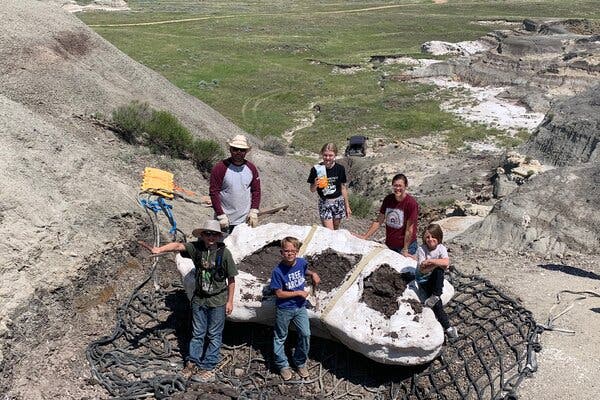
Family Discovers Rare T. Rex Fossil in North Dakota
Read more: Family Discovers Rare T. Rex Fossil in North DakotaThe site where a Tyrannosaurus rex skeleton was found in North Dakota.Credit…Denver Museum of Science and Nature The New York Times has a story about the discovery of a Tyrannosaurs rex skeleton. The fossil was found in the summer of 2022 by two boys hiking with their father and a cousin. They saw bones poking out of a rock and sent a photo to a paleontologist friend to get an identification. The animal is now referred to as “Teen Rex”. It was about a 10 foot tall dinosaur that weighted about 3,500 pounds. The find was announced by the Denver…
-
Giant ‘Giga-Goose’ Once Thundered Across Prehistoric Australia
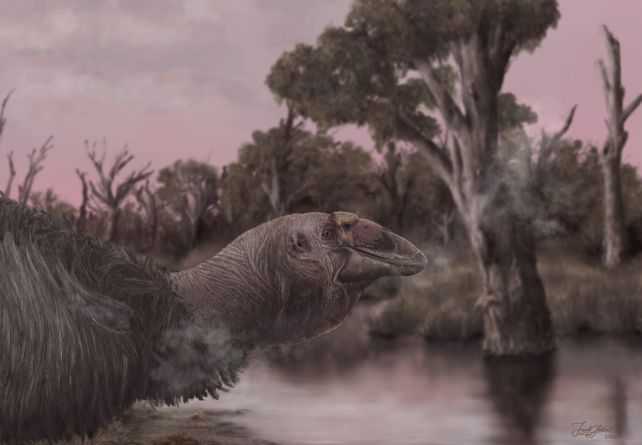
Read more: Giant ‘Giga-Goose’ Once Thundered Across Prehistoric AustraliaNature’s Science Alert has a story about a large flightless bird from Australia. Genyornis newtoni was first described in 1913. It lived around 45,000 years ago in what is now Australia. G. newtoni stood about 2.25 meters tall (7.4 feet) and weighed around 230 kilograms (510 pounds). New research published in the journal Historical Biology details a newly discovered complete skull. So now, for the first time, we’re actually getting a good look at the animal’s noggin – and what a spectacular noggin it was. The fossil reveals that Genyornis would have really stood out in a crowd, looking very different from…
-
Mazon Monday #219: Acantherpestes and Myriacantherpestes
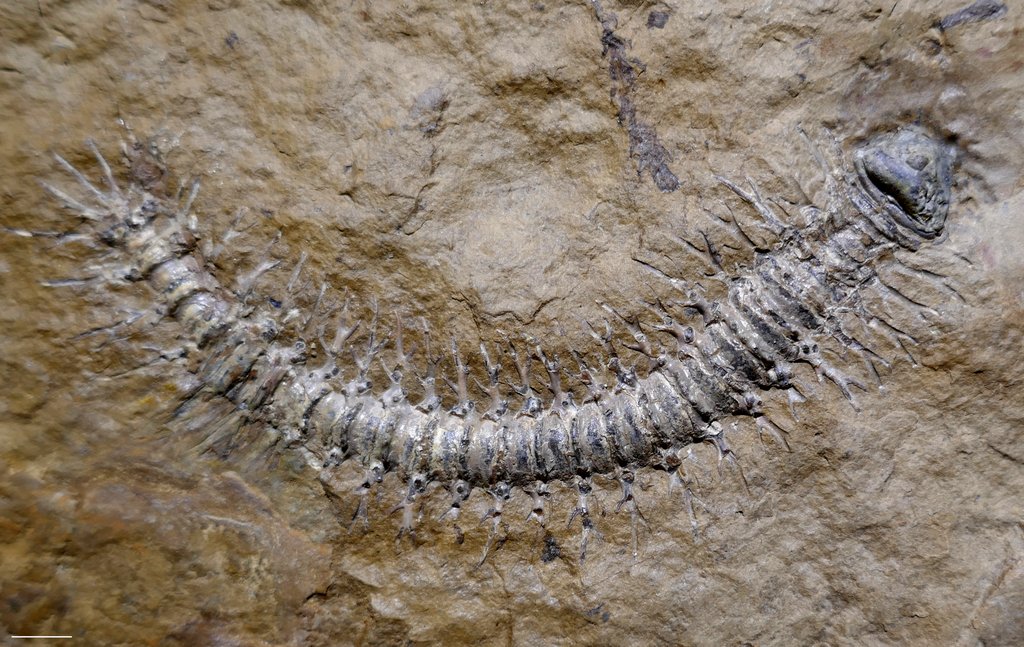
Read more: Mazon Monday #219: Acantherpestes and MyriacantherpestesThis is Mazon Monday post #219. What’s your favorite Mazon Creek fossil? Tell us at email:esconi.info@gmail.com. Last Friday (Fossil Friday #215), we highlighted a stunning millipede from the Pennsylvanian of Kansas. That’s wasn’t the first millipede from Kansas that made it to Fossil Friday, as Fossil Friday #134 was about the same genus of millipede, Myriacantherpestes. Both animals came from the same quarry in Hamilton, Kansas. The Hamilton Quarry is famous for the well preserved fossils of plants, vertebrates, and invertebrates, including large winged insects, water scorpions, and, of course, millipedes. The strata exposed at that locality date to around 295…

ESCONI Gem, Mineral, and Fossil Show
Most Recent Post
- Throwback Thursday #312: Ron Schinderle Donation
 Barb Schinderle stopped by ESCONI Show last month to drop off a donation of her late husband Ron’s fossils. Ron passed away in 2021. He was a long time ESCONI member and an avid fossil collector . He went on many ESCONI field trips. A group of us remember him fondly from our many trips to Pit 11 and Fossil Rock Campgrounds to collect Mazon Creek fossils.
- About ESCONI
- Around the Web
- Calendar of Events
- Code of Ethics and Conduct
- ESCONI Books for Sale
- ESCONI Gem, Mineral, and Fossil Show
- ESCONI in the News
- ESCONI Videos
- Field Trips
- Flashback Friday
- Fossil Friday
- Mazon Creek
- Mazon Monday
- Member Spotlight
- Membership Information
- Reference Material
- Throwback Thursday
- Trilobite Tuesday
Field trips require membership, but visitors are welcome at all meetings!
| Friday, April 10th | General Meeting – 8:00 PM via Zoom. Jessica Hull will present “Life in the Devonian Period, The Age of Fishes.” |
| Saturday, April 11th | Junior Study Group Meeting – 2:00 PM, in person at the College of DuPage Technical Education Center (TEC) Building – Room 1038A (Map). Katherine Howard will present on Sand and Sediment Collecting. Specifics of this meeting are available from Scott Galloway, 630-670-2591, gallowayscottf@gmail.com. |
| Saturday, April 18th | Paleontology Study Group – 7:30 PM via Zoom and in person at the College of DuPage, TEC, Room 1038B (Map). Keith Robitschek will present “Digging the Marl of the Lance Formation.” |
| Friday, April 24th | MAPS Expo XLVII – Springfield, IL. |
| Saturday, April 25th | MAPS Expo XLVII – Springfield, IL. |
| Sunday, April 26th | MAPS Expo XLVII – Springfield, IL. |
| No meeting this month | Mineralogy Study Group |