
-

Dinosaurs unearthed in China may have ended with a collapse, not a catastrophe
Read more: Dinosaurs unearthed in China may have ended with a collapse, not a catastropheNPS has news of an interesting new theory of how a group of dinosaurs were preserved in China. Recent research offers a new perspective on the preservation of dinosaur fossils in China’s Yixian Formation, often dubbed the “Chinese Pompeii.” Previously, the exceptional preservation of these Cretaceous-period fossils was attributed to periodic volcanic eruptions over a 90,000-year span. However, a study published in the Proceedings of the National Academy of Sciences (PNAS) challenges this view. Paul Olsen of Columbia University proposes that many of these dinosaurs perished due to the collapse of their burrows, leading to suffocation. This theory suggests that…
-

PBS Eons: What Happened To The Other Mesozoic Mammals?
Read more: PBS Eons: What Happened To The Other Mesozoic Mammals?There's a new episode of PBS Eons. This one is about the rise of modern mammals through the Cretaceous Period. In 2003, a fossil belonging to a mammaliaform was discovered in an ancient lakebed in what's now China. It was an almost complete skeleton the size of a platypus, a find that complicated the history of mammaliaforms. It painted a picture of their explosive diversification, their mysterious disappearance, and how our own ancestors might have survived thanks to a leg up from some leafy allies… *They weren't /exactly/ mammals…
-

Fossil Friday #238: Edestus heinrichi from St. David, IL
Read more: Fossil Friday #238: Edestus heinrichi from St. David, ILThis is the “Fossil Friday” post #238. Expect this to be a somewhat regular feature of the website. We will post any fossil pictures you send in to esconi.info@gmail.com. Please include a short description or story. Check the #FossilFriday Twitter hash tag for contributions from around the world! Long time ESCONI member Ralph Jewell sent us images of a very nice Edestus heinrichi shark tooth he purchased at the 2023 MAPS Show in Springfield, IL. Edestus sharks are known from the Pennsylvanian Period. The genus was established by Joseph Leidy in 1856, when he described Edestus vorax. Edestus is one of the sharks known for its strange…
-

Throwback Thursday #239: Looking Back at ESCONI for November 2024
Read more: Throwback Thursday #239: Looking Back at ESCONI for November 2024This is Throwback Thursday #239. In these, we look back into the past at ESCONI specifically and Earth Science in general. If you have any contributions, (science, pictures, stories, etc …), please send them to esconi.info@gmail.com. Thanks! 25 Years Ago – November 1999 50 Years Ago – November 1974 70 Years Ago – November 1954
-

Fossil Reveals Oldest Known Tadpole That Grew to the Size of a Hot Dog
Read more: Fossil Reveals Oldest Known Tadpole That Grew to the Size of a Hot DogThe New York Times Trilobite column has a story about what may be the largest tadpole species ever discovered. Notobatrachus, an ancient relative of modern frogs, lived around 161 million years ago in present-day Santa Cruz Province, Argentina. In 2020, a team of paleontologists from Argentina and China uncovered hundreds of adult fossils of Notobatrachus, each about the size of a bullfrog. Among these, they found a well-preserved 6-inch tadpole fossil, complete with a bony vertebral column that helped confirm it as a juvenile Notobatrachus. For full details, refer to the study published in the journal Nature. The most notable…
-
The Early Bird Got the Cicada, Then an Evolutionary Air War Started
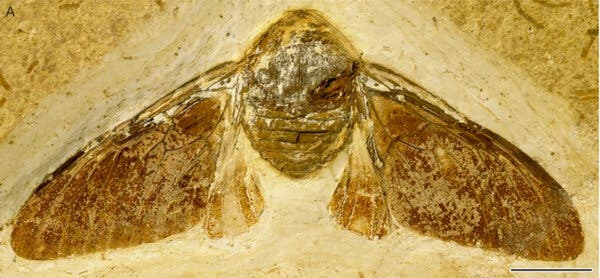
Read more: The Early Bird Got the Cicada, Then an Evolutionary Air War StartedThe New York Times has a story about the evolution of flight in cicadas. New research published in the journal Science Advances found that cicadas likely evolved sleeker and more powerful wings due to the existential threat posed by birds. The researchers, including Chunpeng Xu a scientist at the Nanjing Institute of Geology and Palaeontology in China, analyzed dozens of fossilized giant cicada wings from China, Brazil and Europe. Chunpeng Xu, a scientist at the Nanjing Institute of Geology and Palaeontology in China and the lead author of the new study, and his colleagues describe this evolutionary bout between predator…
-
Mazon Monday #241: Eucryptocaris asherorum
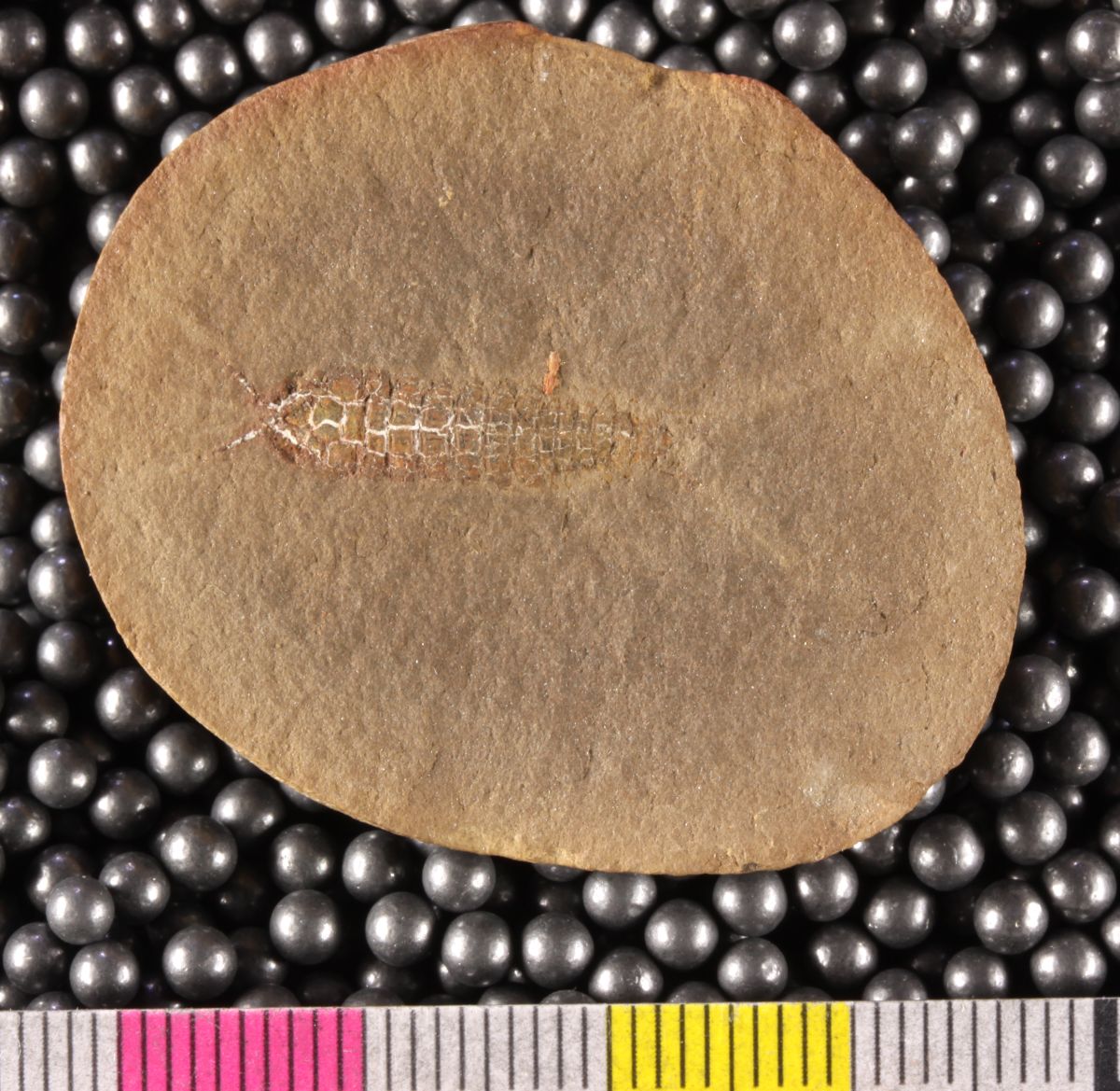
Read more: Mazon Monday #241: Eucryptocaris asherorumThis is Mazon Monday post #241. What’s your favorite Mazon Creek fossil? Tell us at email:esconi.info@gmail.com. Eucryptocaris asherorum is a species of extinct shrimp-like animals from Mazon Creek. They are members on the suborder Tanaidacea, a minor group within the class Malacostraca. Extant members of Tanaidacea are mostly marine, but a few species live in freshwater. They live in the bottom sediments, sometimes in self-built tubes. E. asherorum was described by Frederick R. Schram in “Designation of a new name and type for the Mazon Creek (Pennsylvanian, Francis Creek Shale) tanaidacean”, which was published in the Journal of Paleontology in 1989. …
-

ESCONI Events for November 2024
Read more: ESCONI Events for November 2024Field trips require membership, but visitors are welcome at all meetings! Sat, Nov 2nd ESCONI Mineralogy Study Group – Cancelled! Fri, Nov 8th ESCONI General Meeting – 8:00 PM via Zoom – Topic: “From Muldraugh to Museum: The unexpected journey of Amphoracrinus tenax“ by Gretel Monreal Zoom link Sat, Nov 9th ESCONI Junior Meeting – 6:30 PM (starts at 7:00 PM) at College of DuPage Room 1038A – Topic: “Crystallgraphic Systems” by Scott Galloway Specifics of this meeting are available from Scott Galloway, 630-670-2591, gallowayscottf@gmail.com. The meeting will be in person at the College of DuPage Technical Education Center (TEC), Room 1038A (Map). Sat,…
-
450-Million-Year-Old Fossil Arthropod Found Preserved in Fool’s Gold
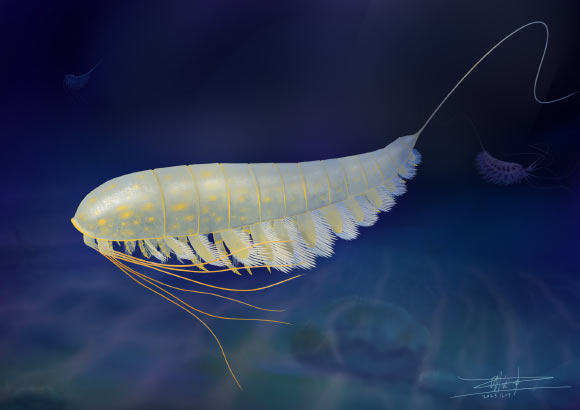
Read more: 450-Million-Year-Old Fossil Arthropod Found Preserved in Fool’s GoldSciNews has news of a new species of arthropod from the Ordovician Period. Lomankus edgecombei lived some 450 million years ago in what is now New York. This specimen was found at a fossil locality that includes the famous Beecher’s Trilobite Bed. That locality is known for equisite pyrite replacement fossils. The legs of trilobites were first seen in fossils from the site. Lomankus edgecombei was described in a paper in the journal Current Biology. Lomankus edgecombei belongs to Megacheira, an iconic group of arthropods with a large, modified leg at the front of their bodies that was used to capture prey. Megacheirans…
-
PBS Eons: Could You Survive The Ordovician Period?
Read more: PBS Eons: Could You Survive The Ordovician Period?PBS Eons has another episode. This one is about the Ordovician period… could you survive the Earth's first mass extinction? The End-Ordovician Extinction was the first of the so-called ‘Big Five’ mass extinctions in the history of life on Earth – more than 80% of species in the oceans died out. But could you survive its aftermath?
-

Fossil Friday #237: Sphenophyllym emarginatum from Indiana
Read more: Fossil Friday #237: Sphenophyllym emarginatum from IndianaThis is the “Fossil Friday” post #237. Expect this to be a somewhat regular feature of the website. We will post any fossil pictures you send in to esconi.info@gmail.com. Please include a short description or story. Check the #FossilFriday Twitter hash tag for contributions from around the world! Ths week’s Fossil Friday is a sweet little Sphenophyllym emarginatum from Indiana. This little beauty was found in the spoil piles near Terre Haute, IN. It doesn’t always show in photos, but this specimen has 3-D preservation as is seen in most Sphenophyllym.
-

Throwback Thursday #238: ESCONI 10th Anniversary Pictures
Read more: Throwback Thursday #238: ESCONI 10th Anniversary PicturesThis is Throwback Thursday #238. In these, we look back into the past at ESCONI specifically and Earth Science in general. If you have any contributions, (science, pictures, stories, etc …), please send them to esconi.info@gmail.com. Thanks! Here are some pictures from the ESCONI 10th Anniversary celebration in 1957. ESCONI Board at Pugh’s – G. Law, O. Fether, R. Bish, M. Cornwell, V. Montgomery – 1959 ESCONI Board at Pugh’s – J. Schnitzlein, Darrows, H. Knight, Hoff, Pugh – 1959 Max Hillmer, Carl Hoffman, Dorothy Ade, Jay Farr ESCONI 10th Anniversary 11-13-1959 ESCONI 10th Anniversary 11-13-1959 ESCONI 10th Anniversary –…
-
ESCONI November 2024 Mineralogy Study Group Meeting has been cancelled!
Read more: ESCONI November 2024 Mineralogy Study Group Meeting has been cancelled!The Mineralogy Study Group meeting, which was scheduled for Saturday, November 2, 2024, has been canceled. We are in the process of moving all the material from the warehouse to a new site. Due to the nature of this move, and the manpower and time required, we are making it our main focus. Thank you for your understanding. We apologize for any inconvenience. Another meeting will be scheduled at a later date.
-

PhD student finds lost city in Mexico jungle by accident
Read more: PhD student finds lost city in Mexico jungle by accidentThe BBC has a story about the accidental discovery of a huge Maya city. Luke Auld-Thomas, a PhD student at Tulane university in the US, came across a laser survey by a Mexican organisation for environmental monitoring and noticed something interesting… a lost city deep in the jungle of the Mexican state of Campeche. The cuty, referred to as Valeriana, was home to maybe 30-50,000 people at its peak from 750 to 850 AD. The research is published in the academic journal Antiquity. Valeriana has the “hallmarks of a capital city” and was second only in density of buildings to…
-

Greenland’s Mineral Frontier – Thomas Hale
Read more: Greenland’s Mineral Frontier – Thomas HaleInteresting presentation about the mineral resources of Greenland by Thomas Hale of the University of Delaware, where he is a Ph.D. student in the Department of Geography and Spatial Sciences. Thomas is also an adjunct fellow at the Center for Strategic and International Studies (CSIS). Melting ice in Greenland is exposing the country’s critical mineral resources, including rare earth elements, gold, rubies, graphite, fluorescent minerals and more. Extractive companies, governments, and billionaires are all eyeing this largely under-exploited resource potential. This presentation covers three core sections. First, the presentation provides a review of South Greenland's rich mineral resources and its…
-
Mazon Monday #240: Sphenopteris spinosa
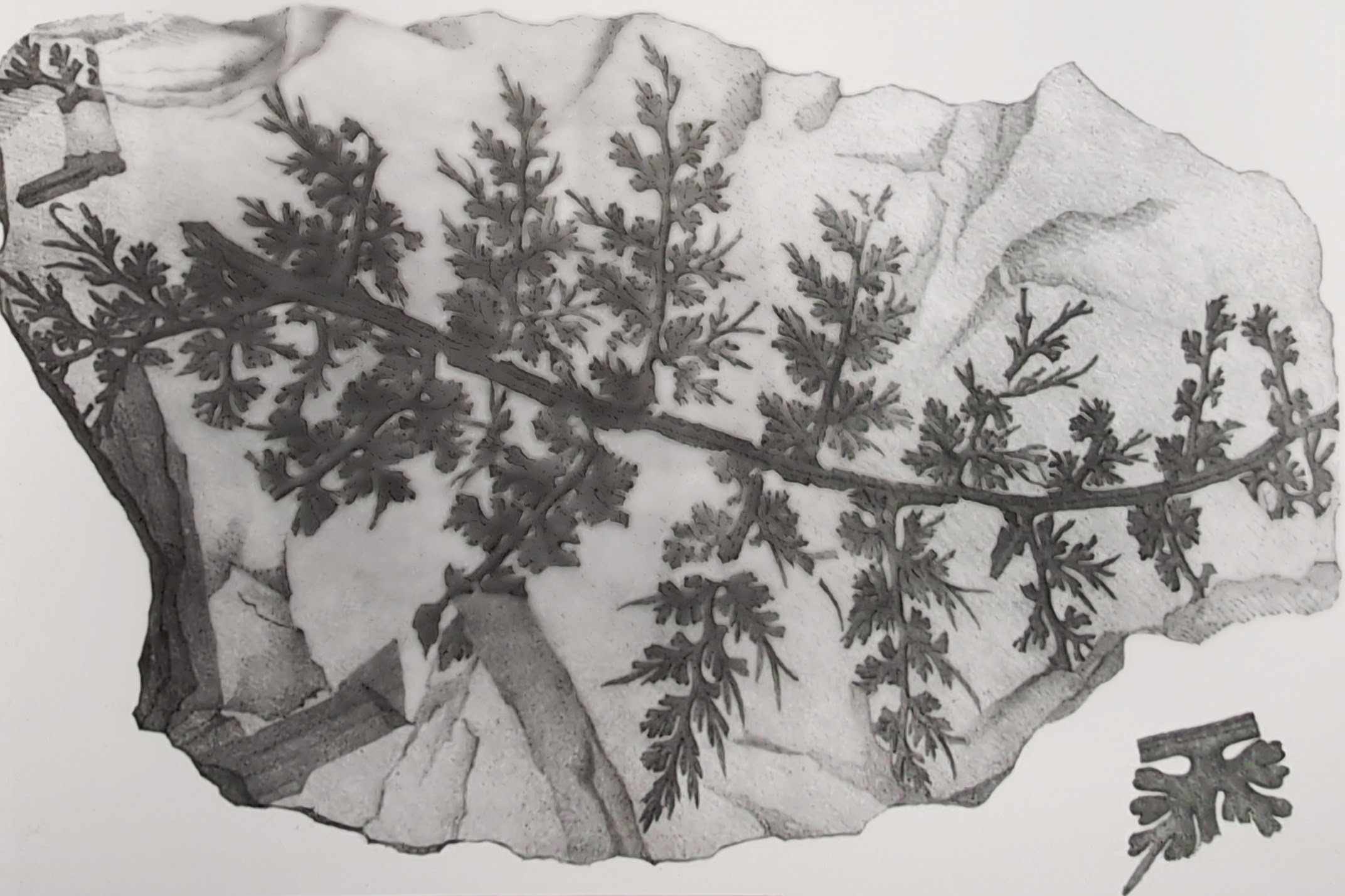
Read more: Mazon Monday #240: Sphenopteris spinosaThis is Mazon Monday post #240. What’s your favorite Mazon Creek fossil? Tell us at email:esconi.info@gmail.com. Sphenopteris is a genus of seed ferns. Seed ferns, Pteridospermatphyta, as a group have a geologic range which spanned from the late Devonian to the late Cretaceous, although a few species seem to have survivied into the Eocene. Sphenopteris was a part of the forest understory. Sphenopteris spinosa was described by Heinrich Göppert in 1841. Göppert (1800 – 1884) was a German botanist and paleontologist. He was a professor of botany and the curator of the botanical gardens in Breslau. In the 1840s, he…
-
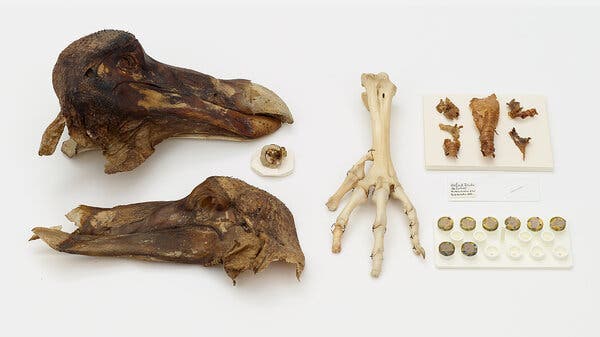
Who’s the Dodo Now? A Famously Extinct Bird, Reconsidered.
Read more: Who’s the Dodo Now? A Famously Extinct Bird, Reconsidered.The New York Times has an interesting article about the Dodo. The Dodo, Raphus cucullatus, was a flightless bird that lived on the island of Mauritius. It was about the size of a male turkey. The Dodo has long been seen as and inept animal that slid into extinction because it was too stupid to survive. It went extinct in the 1700s due to sailors finding them delicious and easy to catch when they stopped over in Mauritius. Now, a paper in the Zoological Journal of the Linnaean Society by Neil Gostling, a paleobiologist at the University of Southampton in…
-
PBS Eons: The Dinosaurs That Evolution Forgot
Read more: PBS Eons: The Dinosaurs That Evolution ForgotPBS has a new episode. This one is about the dinosaurs of the east coast of North America. North America was divided into two land masses by the Western Interior Seaway at the end of the Cretaceous about 100 to 66 million years ago. The east coast landmass is called Appalachia. Where are all the east coast dinosaurs? Why don’t we find famous species like Triceratops in Central Park? Turns out, evolution and geology came together to make the east coast into an ancient lost world of weird dinosaurs.
-
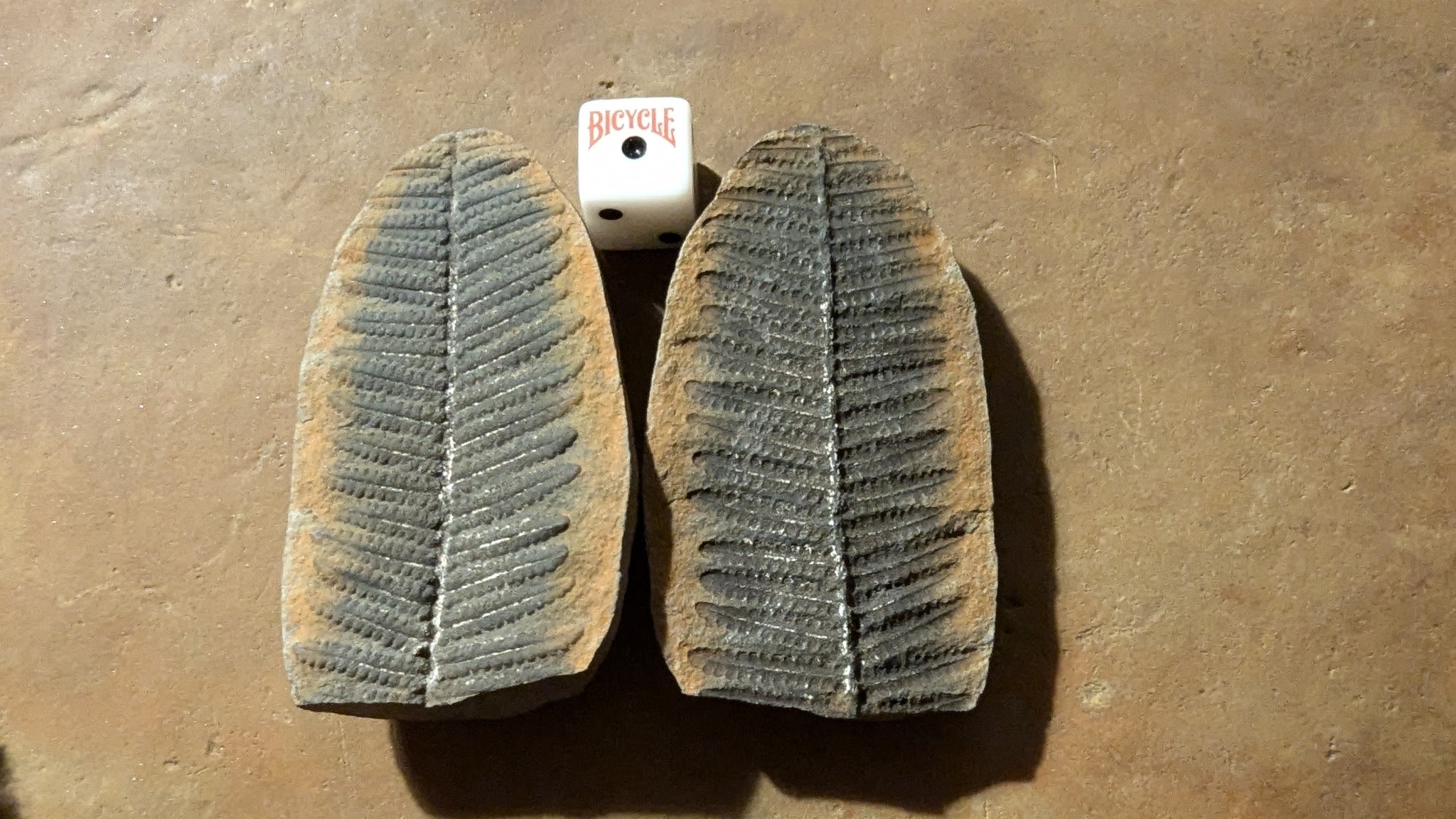
Fossil Friday #236: Cyathocarpus arborea from the Mazon Creek River
Read more: Fossil Friday #236: Cyathocarpus arborea from the Mazon Creek RiverThis is the “Fossil Friday” post #236. Expect this to be a somewhat regular feature of the website. We will post any fossil pictures you send in to esconi.info@gmail.com. Please include a short description or story. Check the #FossilFriday Twitter hash tag for contributions from around the world! We looked at Cyathocarpus arborea just a few weeks ago in Mazon Monday #236. Now, it only seems fitting that we’d feature a sweet specimen for Fossil Friday #236. It was originally named Filicites arborescens by Ernst Freiedrich, Freiherr von Schlotheim in 1820. This beautiful specimen was recently found by ESCONI member George Witaszek in…
-
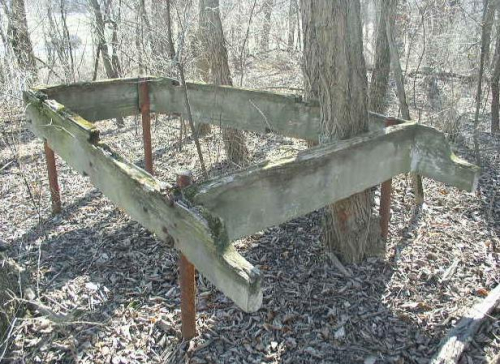
Throwback Thursday #237: Bruce Stinchcomb, Route 66, and Mazon Creek
Read more: Throwback Thursday #237: Bruce Stinchcomb, Route 66, and Mazon CreekThis is Throwback Thursday #237. In these, we look back into the past at ESCONI specifically and Earth Science in general. If you have any contributions, (science, pictures, stories, etc …), please send them to esconi.info@gmail.com. Thanks! ——————————————————————————————- US Route 66 has been termed the “Mother Road” by some as it was one of the original highways in the United States. It was commissioned on November 11, 1926 and ran from Chicago, IL to Los Angeles, CA, via Missouri, Kansas, Oklahoma, Texas, New Mexico, and Arizona. Road signs were erected the following year. One of the alignments of Route 66…

ESCONI Gem, Mineral, and Fossil Show
Most Recent Post
- Throwback Thursday #313: Who Was DuPage? How the River and County Were Named
 The BeHistoric channel on Youtube has a fascinating video about the history behind the name of the DuPage River and DuPage County.
- About ESCONI
- Around the Web
- Calendar of Events
- Code of Ethics and Conduct
- ESCONI Books for Sale
- ESCONI Gem, Mineral, and Fossil Show
- ESCONI in the News
- ESCONI Videos
- Field Trips
- Flashback Friday
- Fossil Friday
- Mazon Creek
- Mazon Monday
- Member Spotlight
- Membership Information
- Reference Material
- Throwback Thursday
- Trilobite Tuesday
Field trips require membership, but visitors are welcome at all meetings!
| Friday, April 10th | General Meeting – 8:00 PM via Zoom. Jessica Hull will present “Life in the Devonian Period, The Age of Fishes.” |
| Saturday, April 11th | Junior Study Group Meeting – 2:00 PM, in person at the College of DuPage Technical Education Center (TEC) Building – Room 1038A (Map). Katherine Howard will present on Sand and Sediment Collecting. Specifics of this meeting are available from Scott Galloway, 630-670-2591, gallowayscottf@gmail.com. |
| Saturday, April 18th | Paleontology Study Group – 7:30 PM via Zoom and in person at the College of DuPage, TEC, Room 1038B (Map). Keith Robitschek will present “Digging the Marl of the Lance Formation.” |
| Friday, April 24th | MAPS Expo XLVII – Springfield, IL. |
| Saturday, April 25th | MAPS Expo XLVII – Springfield, IL. |
| Sunday, April 26th | MAPS Expo XLVII – Springfield, IL. |
| No meeting this month | Mineralogy Study Group |