
-
Geology of Asteroid Vesta
Read more: Geology of Asteroid VestaVia ScientificComputing: NASA’s Dawn spacecraft has revealed unexpected details on the surface of the giant asteroid Vesta. New images and data highlight the diversity of Vesta’s surface and reveal unusual geologic features, some of which were never previously seen on asteroids. These results were discussed on March 21, 2012, at the Lunar and Planetary Science Conference at The Woodlands, TX…. … “Our analysis finds this bright material originates from Vesta and has undergone little change since the formation of Vesta over four billion years ago,” said Jian-Yang Li, a Dawn participating scientist at the University of Maryland, College Park. “We’re…
-
Explanation for Opisthotonus?
Read more: Explanation for Opisthotonus?Via Discover Magazine: … Paleontologists have long wondered by so many fossilized dinosaurs have their necks contorted into painful-looking positions—the phenomenon even has a name: opisthotonus. Various hypotheses have suggested the dinosaurs died in pain, or that their unusual posture is from rigor mortis. Could be, though, it’s just what floppy necks do in water, according to a recent study involving chicken carcasses…. More
-
New Archaeological Lab at McMaster University, Canada
Read more: New Archaeological Lab at McMaster University, CanadaFrom TheSpec (includes interesting video): … Thursday marked the official opening of McMaster’s Archaeological XRF Lab, or MAX Lab, for short. It’s the first research centre in Canada to use a special non-destructive technology to determine what ancient artifacts are made of. The centrepiece of the lab is a nearly $100,000 piece of equipment that uses X-rays to match an object’s chemical fingerprint to a geological sample…. more
-
Our Long Last Ancestor?
Read more: Our Long Last Ancestor?After listening to Dr. Fred Smith, Illinois State University about homo sapiens neanderthalis at Burpee Museum’s Paleofest, This new article made much more sense! Via Scientific American: First of Our Kind: Could Australopithecus sediba Be Our Long Lost Ancestor?
-
Looking Forward to Next Year’s Show
Read more: Looking Forward to Next Year’s ShowThank you to all who volunteered time to help on the show – before, during or after – all in different ways! Members’ are what makes the show possible and extraordinary!
-
2012 ESCONI Gem, Mineral and Fossil Show – March 17 & 18
Read more: 2012 ESCONI Gem, Mineral and Fossil Show – March 17 & 18Yea!!! It is time for the annual show!!! Articles in the Chicago Tribune. Come out to see new fossil and mineral finds being sold by vendors and at auction, one-of-a-kind hand-made jewelry, gorgeous and amazing mineral specimens and beads! Demonstrations of jewelry making and geode cracking and collections from private collectors as well as the Field Museum of Natural History and the Lizzadro Museum. Also, one always finds great books and magazines at the Used Book booth and beautiful plants from COD at the plant booth! Kids activities all day long both days. Kids get free geode – as…
-
Reminder: ESCONI Volunteers Needed This Weekend
Read more: Reminder: ESCONI Volunteers Needed This WeekendPlease volunteer your time to set up or take down the show – especially the end of the show! Your time will be greatly appreciated!
-
Mammals and Dinosaurs: Update
Read more: Mammals and Dinosaurs: UpdateVia Seattle Times (hat tip Floyd) New research by UW scientists says a group of mammals called “multis” flourished long before dinosaurs went extinct, contradicting previous theories about the rise of mammals… more
-
New Species of Homo Sapiens?
Read more: New Species of Homo Sapiens?From BBC via hat tip from Floyd Scientists say the specimens display features that are quite distinct from fully modern humans The remains of what may be a previously unknown human species have been identified in southern China. The bones, which represent at least five individuals, have been dated to between 11,500 and 14,500 years ago. But scientists are calling them simply the Red Deer Cave people, after one of the sites where they were unearthed. The team has told the PLoS One journal that far more detailed analysis of the fossils is required before they can be ascribed to…
-
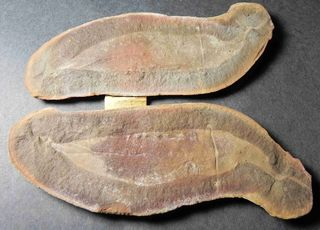
Sneak Peek of Mazon Creek Fossils To Be Auctioned
Read more: Sneak Peek of Mazon Creek Fossils To Be AuctionedTully Monster 1: Tully Monster 2: Tully Monster 3: Cockroach: Bone:
-
How Tiny Are These Horned Dinosaurs?
Read more: How Tiny Are These Horned Dinosaurs?Via IO9 – hat tip from Floyd Two pint-sized relatives of the famous Triceratops have been discovered in Alberta, giving us our best understanding yet of how these horned dinosaurs expanded into North America. The best part? Neither was much more than a meter or so long. The Cleveland Museum of Natural History is unveiling these two new species, Unescopceratops koppelhusae and Gryphoceratops morrisoni…. more Check out the illustration that goes with the news story.
-
Are You Going to Display Your Collection at This Year’s Show?
Read more: Are You Going to Display Your Collection at This Year’s Show?Want to display your collection at the show this weekend? Call John Good at 630-483-2363 to reserve a display case!
-
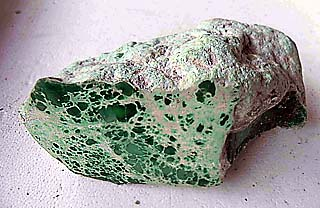
Sneak Peek Of Some of the Minerals To Be Auctioned
Read more: Sneak Peek Of Some of the Minerals To Be AuctionedMalachite: Calcite: Brochantite: Ruby: Apophylite: Fossils to be auctioned will be posted tomorrow!
-
Ask Friends and Family to the 2012 ESCONI Show
Read more: Ask Friends and Family to the 2012 ESCONI ShowWe need your help in making this the best and biggest show ever! Let your friends and family know about this family-friendly, nature-oriented and fun show! You can download the Gem Show Flyer 2012 or click here to get directions.
-
Sun Times Article on 2012 ESCONI Show
Read more: Sun Times Article on 2012 ESCONI ShowFrom the Chicago Sun Times an article about the ESCONI show this weekend: Kids seem fascinated by rocks and they’ll see plenty of them—many with surprises inside—at the Earth Science Club of Northern Illinois’ Gem-Mineral-Fossil Show, 10 a.m. to 5 p.m. Saturday, March 17, and 10 a.m. to 4 p.m. Sunday, March 18, in Building K, College of DuPage, 425 Fawell Blvd., Glen Ellyn. “We have buckets full of geodes,” said publicity chairman Donald Cronauer. “We let each kid have one.”…
-
Lyme Disease Discussion
Read more: Lyme Disease DiscussionAnyone who collects fossils and minerals outside could be bitten by a tick and be infected by Lymes disease. So it is good to keep up to date on the subject matter. This informative radio show from Diane Rehm questions as to whether chronic Lyme disease exists, how to test for it, and how to treat it are dividing doctors and confounding patients. Diane’s guests discuss why diagnosing and treating the disease remains so challenging and controversial.
-
Iridescence Found In Fossil of Microraptor Feather
Read more: Iridescence Found In Fossil of Microraptor FeatherFrom NYTimes (hat tip – Floyd): … New research by American and Chinese scientists shows that the animal had a predominantly glossy iridescent sheen in hues of black and blue, like a crow. This is the earliest known evidence of iridescent color in feathers. The animal also had a striking pair of long, narrow tail feathers, perhaps to call attention to itself in courtship. In the study, published online Thursday in the journal Science, the researchers compared the patterns of pigment-containing cells from a Microraptor fossil with those of modern birds.… more
-
Book Review: Stories in Stone
Read more: Book Review: Stories in StoneWritten by Joseph D. Kubal: Recently, I came across a book that may be of interest to all you earth science enthusiasts. It is entitled, “Stories in Stone: Travels through Urban Geology” written by David B. Williams. The book contains a myriad of tales concerning a little researched facet of traditional geology and focuses on what may be called “urban geology.” The preface of the book begins with the lines, “Most people do not think of geology when they are walking on the sidewalks of a major city. But when ever I [Williams] am in the world, whether strolling through…
-
Make History – Buy A Share in the New Book!
Read more: Make History – Buy A Share in the New Book!This is your chance to be part of history and help ESCONI publish this new revision of the Mazon Creek Fauna book by buying a $100 share. Buy as many shares at $100 each that you can. When we sell enough books, we will repay your shares (with no interest) but with our thanks. Repayment will depend on how quickly the books are sold and printing costs are recovered. Contact Irene Broede or Karen Nordquist to participate. Please make checks out to “ESCONI Associates”. Andy Jansen, ESCONI Librarian, provides this historic article (.pdf), written by ESCONI’s First Secretary, Stella Barrick, on…
-
ESCONI Newsletters 1949 – 2011
Read more: ESCONI Newsletters 1949 – 2011By Andy Jansen, ESCONI Librarian – The Earth Science Club of Northern Illinois has a long and distinguished history that began with its first meeting in November 1949. Fortunately for the Club, one of their first decisions was to document their activities with a newsletter. The first newsletter was issued January 1950, which was five pages long and made with a mimeograph. It is fascinating to read these early issues to see the Club form from a group of people interested in natural history to an organization with purpose. Few people had ready access to these early newsletters – until…

ESCONI Gem, Mineral, and Fossil Show
Most Recent Post
- PBS Terra: The Cascadia Megaquake Is Inevitable. And It Will Reshape America Forever
 PBS Terra has an interesting new video. This one covers the history, science, and future of the Cascadia Subduction Zone in the Pacific Northwest.
- About ESCONI
- Around the Web
- Calendar of Events
- Code of Ethics and Conduct
- ESCONI Books for Sale
- ESCONI Gem, Mineral, and Fossil Show
- ESCONI in the News
- ESCONI Videos
- Field Trips
- Flashback Friday
- Fossil Friday
- Mazon Creek
- Mazon Monday
- Member Spotlight
- Membership Information
- Reference Material
- Throwback Thursday
- Trilobite Tuesday
Field trips require membership, but visitors are welcome at all meetings!
| Friday, April 10th | General Meeting – 8:00 PM via Zoom. Jessica Hull will present “Life in the Devonian Period, The Age of Fishes.” |
| Saturday, April 11th | Junior Study Group Meeting – 2:00 PM, in person at the College of DuPage Technical Education Center (TEC) Building – Room 1038A (Map). Katherine Howard will present on Sand and Sediment Collecting. Specifics of this meeting are available from Scott Galloway, 630-670-2591, gallowayscottf@gmail.com. |
| Saturday, April 18th | Paleontology Study Group – 7:30 PM via Zoom and in person at the College of DuPage, TEC, Room 1038B (Map). Keith Robitschek will present “Digging the Marl of the Lance Formation.” |
| Friday, April 24th | MAPS Expo XLVII – Springfield, IL. |
| Saturday, April 25th | MAPS Expo XLVII – Springfield, IL. |
| Sunday, April 26th | MAPS Expo XLVII – Springfield, IL. |
| No meeting this month | Mineralogy Study Group |