
-

ESCONI Events February 2020
Read more: ESCONI Events February 2020Field trips require membership, but visitors are welcome at all meetings! Fri, Feb 14th ESCONI Junior Meeting, 7:00 PM College of Dupage – Tech Ed (TEC) Building, Room 1038A (Map) – Topic: “Mazon Creek Fossils” Fri, Feb 14th ESCONI General Meeting, 8:00 PM College of Dupage – Tech Ed (TEC) Building, Room 1038B (Map) – Topic: “Worked Stones and Gold of the Ancient Tayrona of Santa Marta, Colombia” by Ellen Steinberg, Ph.D Sat, Feb 15th Warehouse Work Day, 9:00 AM to 1:00 PM – see here for details. Sat, Feb 15th ESCONI Paleontology Study Group Meeting, 7:30 PM –Tech Ed (TEC)…
-

PBS Eons: The Giant Dinosaur That Was Missing a Body
Read more: PBS Eons: The Giant Dinosaur That Was Missing a BodyPBS Eons has a new video. This one is about Deinonychus, whose name means horrible hand. From end to end, its forelimbs alone measured an incredible 2.4 meters long and were tipped with big, comma-shaped claws. But other than its bizarre arms, very little material from this dinosaur had been found: no skull, no feet, almost nothing that could give experts a fuller picture of what this dinosaur actually was.
-

Remembering Clay Davis 1946 – 2020
Read more: Remembering Clay Davis 1946 – 2020Clay Davis in his “fossil room,” surrounded by Mazon Creek specimens. June 2013. Sadly, our friend and fellow fossil enthusiast, Clay Davis, passed away this January. His family will be hosting an informal luncheon in his memory on Friday, February 7th, from 1 to 3 PM at the Stone City VFW Post 2199 in Joliet, Illinois. All are welcome. If you are planning to attend or would like to reach out to his daughter, please contact Penny Fitzpatrick at (630) 294-3827. His obituary is here. The address of the venue is: Stone City VFW Post 2199 124 Stone City…
-
Roy Plotnick: What is a fossil?
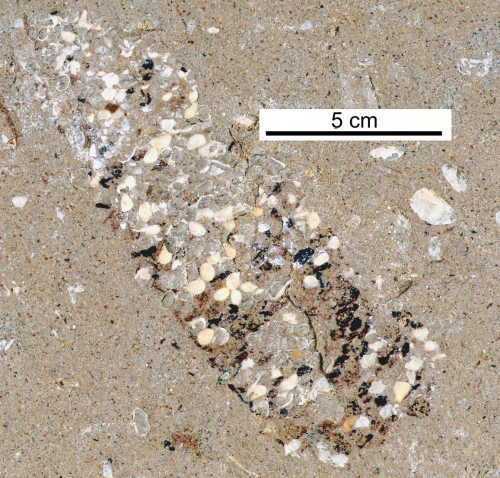
Read more: Roy Plotnick: What is a fossil?Roy Plotnick has another informative post over on Medium. This time he tackles the question “What is a fossil?”. If you aren’t following him yet, go ahead and click the Follow button. He posts regularly and his posts are very interesting, and he’ll always leave you thinking… In a Peanuts comic that had a place of honor on my dorm door, Peppermint Patty is taking an exam and is asked to: “Explain World War II.” Patty incredulously responds: “Explain World War II !?” The last panel, further explains: “Use both sides of the paper, if necessary.” I recently had a…
-
New species of Allosaurus discovered in Utah
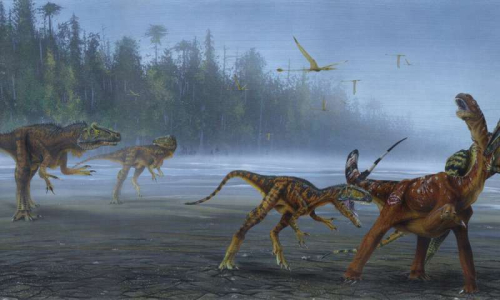
Read more: New species of Allosaurus discovered in UtahPhys.org has a story about a new Allosaurus species discovered in Utah. The first specimen of the new species of Allosaur, called Allosaurus jimmadseni, was discovered back in the early 1990s in Dinosaur National Monument in northeastern Utah. It lived between 152 and 175 million years ago, during the Jurassic Period. It differs from the original Allosaur, Allosaurus fragilis. This new species has a more narrow and shorter skull. Allosaurus jimmadseni lived about 5 million years before Allosaurus fragilis. And, would have been the top predator in its ecosystem. Find all the details in a paper published in the journal PeerJ. The…
-

Happy Birthday Jan. 26, 1884: Roy Chapman Andrews
Read more: Happy Birthday Jan. 26, 1884: Roy Chapman AndrewsPhoto from Parade of Life Through The Ages, by Charles Knight, Nat. Geo., Feb. 1942. From the American Museum of Natural History web site: Adventurer, administrator, and Museum promoter — Andrews (Jan. 26, 1884 – March 11, 1960) spent his entire career at the American Museum of Natural History, where he rose through the ranks from departmental assistant, to expedition organizer, to Museum director. He became world famous as leader of the Central Asiatic Expeditions, a series of expeditions to Mongolia that collected, among other things, dinosaur eggs. Although on these expeditions, Andrews himself found few fossils, and during his career he was not known as an…
-
LiveScience: Are Birds Dinosaurs?
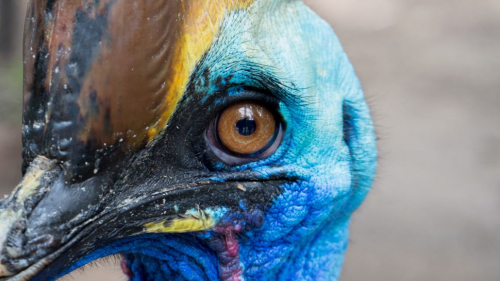
Read more: LiveScience: Are Birds Dinosaurs?LiveScience has an interesting story that explains how and why birds are dinosaurs. What do sparrows, geese and owls have in common with a velociraptor or the mighty Tyrannosaurus rex? All can trace their origins to a bipedal, mostly meat-eating group of dinosaurs called theropods (“beast-footed”) that first appeared around 231 million years ago, during the late Triassic Period. The earliest birds shared much in common with their theropod relatives, including feathers and egg-laying. However, certain traits – such as sustained, powered flight – distinguished ancient birds from other theropods, and eventually came to define modern-bird lineage (even though not all modern…
-

ESCONI Flashback Friday #37: Andy Hay Speaks at Lizzadro on Mazon Creek Plants – March 10th, 2001
Read more: ESCONI Flashback Friday #37: Andy Hay Speaks at Lizzadro on Mazon Creek Plants – March 10th, 2001As part of the celebration of ESCONI’s 70th Anniversary, here is Flashback Friday post #37. If you have pictures or stories to contribute, please send them over to esconi.info@gmail.com. Thanks! Andy Hay was a long time ESCONI member. He joined in 1976 and was a member to the very end. He wrote the Creature Corner column in the ESCONI bulletin for many years. He was heavily involved in the creation of “Keys To Identify Pennsylvanian Fossil Animals of the Mazon Creek Area”, which was first published in 1989. This was the definitive guide for a long time. He was heavily…
-
2020 IGS Post-Meeting Field Days Itinerary “Limestone and More” Saturday, April 25 – Sunday, April 26, 2020
Read more: 2020 IGS Post-Meeting Field Days Itinerary “Limestone and More” Saturday, April 25 – Sunday, April 26, 20202020 IGS Post-Meeting Field Days Itinerary “Limestone and More” Saturday, April 25 – Sunday, April 26, 2020 Overview: Limestone quarrying is a major industry in the Bedford/Bloomington, Indiana region. We will explore the area and view creations made with this versatile building and ornamental stone. The second day of the two-day trip will center around the Tibetan Mongolian Buddhist Cultural Center and its tenets and philosophy. The tour is self-pay for all meals, lodging, gas, parking fees, tolls, donations, and admissions. Stay for the entire trip or feel free to just stay an hour or two. Trip is rain or…
-

Roy Plotnick: Looking back, looking forward: Chicago and the Anthropocene
Read more: Roy Plotnick: Looking back, looking forward: Chicago and the AnthropoceneOur friend, Roy Plotnick has a new article over on Medium. This one is a summary of the changes to the natural geology of Chicago from the last ice age about 20,000 years ago until the present. As always, it’s a good read! About 20,000 years ago, where I am sitting in Chicago was covered by about a kilometer of ice. This was the height of the most recent advance of ice sheets in the Northern Hemisphere, which had begun some 80,000 years earlier. About 15,000 years ago the ice sheets began to retreat and within the next 5000 years…
-
Chicago Rocks & Minerals Society – 71st Annual Silent Auction Saturday March 14th, 2020 – Rocks, Minerals, Fossils and Lapidary
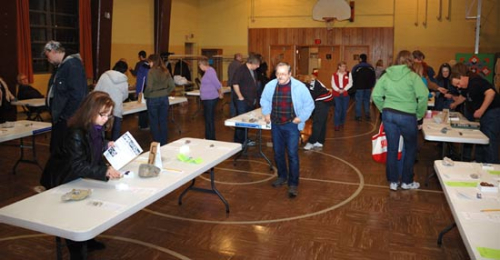
Read more: Chicago Rocks & Minerals Society – 71st Annual Silent Auction Saturday March 14th, 2020 – Rocks, Minerals, Fossils and LapidaryWe Will Rock You! Chicago Rocks & Minerals Society Hosts 71st Annual Silent Auction of Rocks, Minerals, Fossils and Lapidary Treasures Saturday, March 14, 2020 6 to 9 p.m. St. Peter’s United Church of Christ 8013 Laramie Ave., Skokie, IL (Across the street from the public library on Oakton) The first table closes at 6:30 p.m. There’s something for everyone who has rocks on their mind: minerals, fossils, crystals, geodes, gemstones, handmade jewelry, rough rock, books, magazines, and lapidary treasures galore. The variety is amazing. Families are welcome; children must be accompanied by an adult.…
-
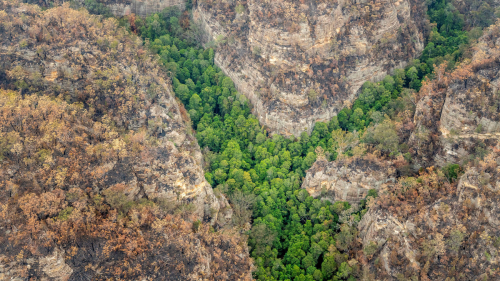
NPR: Aussie Firefighters Save World’s Only Groves Of Prehistoric Wollemi Pines
Read more: NPR: Aussie Firefighters Save World’s Only Groves Of Prehistoric Wollemi PinesNPR has a story about the state of the only natural groves of Wollemi Pines. Thought to be extinct the Wollemi Pines were “discovered” in the wilds of Australia back in 1994. It was a lifesaving mission as dramatic as any in the months-long battle against the wildfires that have torn through the Australian bush. But instead of a race to save humans or animals, a specialized team of Australian firefighters was bent on saving invaluable plant life: hidden groves of the Wollemi pine, a prehistoric tree species that has outlived the dinosaurs. Wollemia nobilis peaked in abundance 34 million to 65…
-
PBS Eons: The Neanderthals That Taught Us About Humanity
Read more: PBS Eons: The Neanderthals That Taught Us About HumanityCheckout the new episode of PBS Eons. It’s about Neanderthals and how they weren’t much different than us. Throughout the first half of the 20th century, Neandertals were thought to have been…primitive. Unintelligent, hunched-over cavemen, for lack of a better word. But the discoveries made in that Iraqi cave provided some of the earliest clues that Neanderthals actually behaved — and likely thought and felt — a lot like we do.
-
Mazon Creek Lecture on February 18th, 2020 – “Amazin’ Mazon Creek: Digging the Past in Illinois”
Read more: Mazon Creek Lecture on February 18th, 2020 – “Amazin’ Mazon Creek: Digging the Past in Illinois”“Amazin’ Mazon Creek: Digging the Past in Illinois” Presented by Ellen F. Steinberg, Ph.D. Free PowerPoint lecture for the general public Sponsored by the Geographical Society of Chicago, in partnership with the National Geographic Society Chicago Cultural Center Renaissance Court February 18, 2020 2:00-3:30 p.m. SYNOPSIS Steinberg’s presentation will concern the Mazon Creek sedimentary fossil beds found in LaSalle, Livingston, Will, Grundy, Fulton & Kankakee counties of Illinois. These fossils date to the mid-Pennsylvanian epoch of the Carboniferous period, around 307 million years ago. The quality, quantity & diversity of fossils in the area, known since the mid-19th century, make…
-
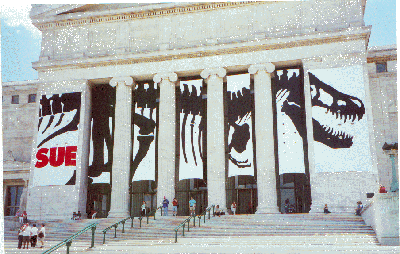
ESCONI Flashback Friday #36: SUE at the Field Museum
Read more: ESCONI Flashback Friday #36: SUE at the Field MuseumAs part of the celebration of ESCONI’s 70th Anniversary, here is Flashback Friday post #36. If you have pictures or stories to contribute, please send them over to esconi.info@gmail.com. Thanks! SUE had her Grand Opening at the Field Museum on May 17th, 2000. Here is a link to the ESCONI page to document the event. This page is from the old ESCONI website saved and accessible on web.archive.org. By the way, the links at the bottom to SUE’s original page at the fieldmuseum.org and the debut article in National Geographic also redirect to the saved copies of the original pages…
-
Rescheduled Warehouse Work Day Due to Weather – Saturday, January 25th, 2020, 9:00 – 1:00ish
Read more: Rescheduled Warehouse Work Day Due to Weather – Saturday, January 25th, 2020, 9:00 – 1:00ishIf you have some time, come join our work day at the warehouse on Saturday, January 25th, 2020 from 9:00-1:00ish. If the weather is bad, we will choose a different day and let everyone know. The warehouse address is 900 Knell in Montgomery, IL. Please meet/enter in the back of the warehouse ONLY. You will see railroad tracks along the back of the warehouse. Drive all the way to the end in the back. For more information, contact us at esconi.info@gmail.com
-
Burpee Museum: PaleoFest 2020, Friday, March 6th and Saturday, March 7th, 2020
Read more: Burpee Museum: PaleoFest 2020, Friday, March 6th and Saturday, March 7th, 2020PaleoFest 2020 will be held on Friday, March 6th and Saturday, March 7th, 2020 at the Burpee Museum in Rockford, IL. Always an interesting time. Here are all the details! Friday, March 6th: Members Only Reception 5:30pm: Members Only Reception 7:00pm: Keynote Presentation By: Dr. Larisa DeSantis, Vanderbilt University Topic: Saber-Toothed Cats Saturday, March 7th: PaleoFest Day 1 8:30am: Doors Open 9:00am: Speaker Symposium Begins 4:00pm: Speaker Symposium Ends 4:30- 6:30PM:Cocktail Mixer: LIVE MUSIC 6:30PM: Dinner Seating Evening Feature: 7:30 Keynote Lecture Keynote Speaker TBA Sun March 8th: PaleoFest Day 2 8:30am: Doors Open 9:00am: Speaker Symposium Begins 4:00pm: Speaker…
-
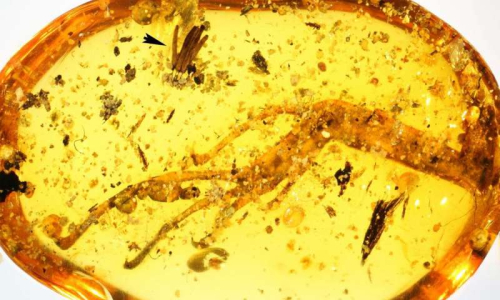
100 million years in amber: Researchers discover oldest fossilized slime mold
Read more: 100 million years in amber: Researchers discover oldest fossilized slime mold100 million-year-old amber piece with lizard leg and mycomycete (arrow). Credit: Alexander Schmidt, University of Göttingen and Scientific Reports Phys.org has a story about some very old slime. Many fossils have been found amber, including dinosaur tail feathers a few years ago. This time it’s some very old fungi. In this case, a mycomycete and it’s next to a piece of lizard leg. This is the oldest slime mold every found… they are extremely rare in the fossil record. All the details can be found in a paper published in the journal Scientific Reports. Most people associate the idea of creatures…
-
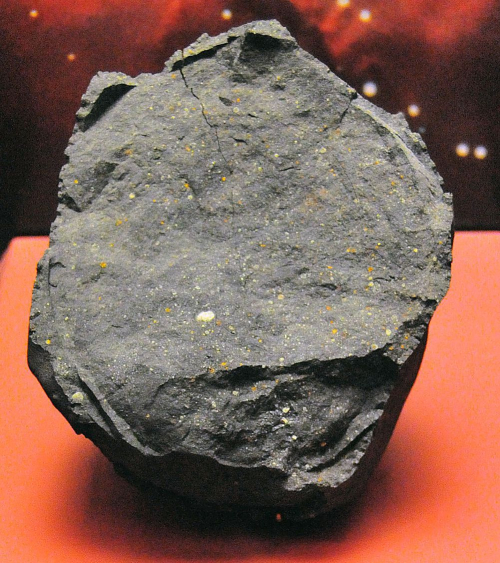
Meteorite Grains Are the Oldest Known Solid Material on Earth
Read more: Meteorite Grains Are the Oldest Known Solid Material on EarthSmithsonian Magazine has an article about some very old dust. Even if you haven’t cleaned lately, it’s highly doubtful the dust around your home is as old as the dust described in a recent paper published in the journal PNAS. The lead author is a curator of meteorites at the Field Museum in Chicago, which has a large collection of meteorites. The meteorite analyzed in this study is the famous Murchison meteorite. A little more than 50 years ago, on September 28, 1969, a meteorite crashed near the rural village of Murchison in Victoria, Australia. Witnesses saw a fireball streak through…
-

World Atlas: What Is The Difference Between Paleontology And Archeology?
Read more: World Atlas: What Is The Difference Between Paleontology And Archeology?Check out this article in the World Atlas. I hear this all the time when I mention fossil hunting… quite often they say something like “I love archeology” or “When did you get interested in archeology” or even “Where do archeologists find dinosaur bones?” Hopefully, this will clear up the concepts, paleontologists study dinosaurs and most other fossils like trilobites. It’s basically the study of ancient life before the Holocene. Archeology is the study of human artifacts and remains, going back to about 3.3 million years ago. Paleontology and archaeology are two closely related scientific fields of study. Despite having…

ESCONI Gem, Mineral, and Fossil Show
Most Recent Post
- Throwback Thursday #314: Collecting from 1954
 We are in the midst of the spring field trip season and this article by Roy Beghtol from the May 1954 edition of the ESCONI newsletter seemed appropriate.
- About ESCONI
- Around the Web
- Calendar of Events
- Code of Ethics and Conduct
- ESCONI Books for Sale
- ESCONI Gem, Mineral, and Fossil Show
- ESCONI in the News
- ESCONI Videos
- Field Trips
- Flashback Friday
- Fossil Friday
- Mazon Creek
- Mazon Monday
- Member Spotlight
- Membership Information
- Reference Material
- Throwback Thursday
- Trilobite Tuesday
Field trips require membership, but visitors are welcome at all meetings!
| Friday, April 10th | General Meeting – 8:00 PM via Zoom. Jessica Hull will present “Life in the Devonian Period, The Age of Fishes.” |
| Saturday, April 11th | Junior Study Group Meeting – 2:00 PM, in person at the College of DuPage Technical Education Center (TEC) Building – Room 1038A (Map). Katherine Howard will present on Sand and Sediment Collecting. Specifics of this meeting are available from Scott Galloway, 630-670-2591, gallowayscottf@gmail.com. |
| Saturday, April 18th | Paleontology Study Group – 7:30 PM via Zoom and in person at the College of DuPage, TEC, Room 1038B (Map). Keith Robitschek will present “Digging the Marl of the Lance Formation.” |
| Friday, April 24th | MAPS Expo XLVII – Springfield, IL. |
| Saturday, April 25th | MAPS Expo XLVII – Springfield, IL. |
| Sunday, April 26th | MAPS Expo XLVII – Springfield, IL. |
| No meeting this month | Mineralogy Study Group |