Category: Mazon Monday
-

Mazon Monday #139: Lepidocystis sp.
This is Mazon Monday post #139. What’s your favorite Mazon Creek fossil? Tell us at email:esconi.info@gmail.com. Thanks! For this week’s Mazon Monday, we have Lepidocystis sp., which is a type of spore packet associated with the cone genus Polysporia. Early Mazon Creek collectors referred to this as “cockroach egg sacs”. This is known to be false…
-

Mazon Monday #138: The Konecnys on Mazon Creek Fossil Preparation
This is Mazon Monday post #138. What’s your favorite Mazon Creek fossil? Tell us at email:esconi.info@gmail.com. Thanks! Jim and Sylvia Konecny were very active in ESCONI for many years. They held various board positions over the years with Jim serving as president in 1966. They were prolific fossil collectors, who donated a significant collection to the…
-

Mazon Monday #137: Geological Society of Marietta College Field Trip 1978
This is Mazon Monday post #137. What’s your favorite Mazon Creek fossil? Tell us at email:esconi.info@gmail.com. Thanks! The Mazon Creek area is a well known fossil collecting locality. It’s considered a lagerstatte, with soft-bodied fossil preservation of exquisite quality. It can be very challenging to collect, as public areas are rare and the ones that exist are…
-
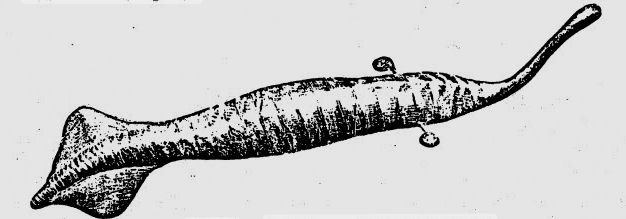
Mazon Monday #136: Is the Tully Monster Really Extinct
This is Mazon Monday post #136. What’s your favorite Mazon Creek fossil? Tell us at email:esconi.info@gmail.com. Thanks! Jim Konency wrote this article for the ESCONI newsletter back in May 1997. Jim was president of ESCONI back in the early 1960’s. Here’s a photo of him at a meeting back in the 1960’s. Jim and his wife…
-

Mazon Monday #135: McLuckie Collection Donated to the Smithsonian in 1990
This is Mazon Monday post #135. What’s your favorite Mazon Creek fossil? Tell us at email:esconi.info@gmail.com. Thanks! —————————————————– The collection of John and Lucy McLuckie, who we’ve covered a few times in Throwback Thursday #55, Throwback Thursday #104, and Flashback Friday #29, was donated to the Smithsonian’s National Museum of Natural History in Washington, D.C in…
-
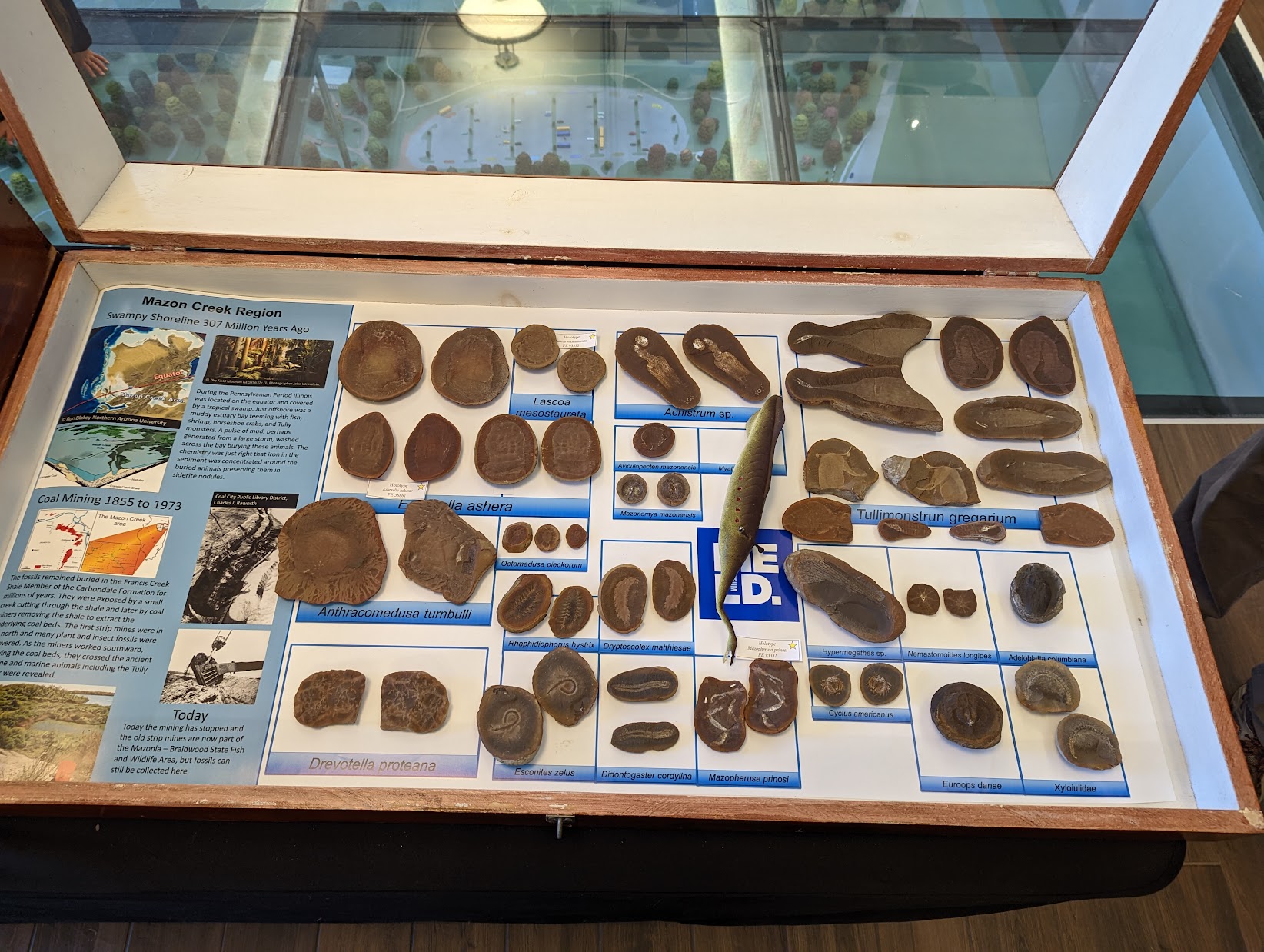
Mazon Monday #134: 2022 Mazon Creek Open House Report With Videos
This is Mazon Monday post #134. What’s your favorite Mazon Creek fossil? Tell us at email:esconi.info@gmail.com. Thanks! The 2022 Mazon Creek Open House was held on Saturday, October 15th, 2022 at Cantigny Park in Wheaton, IL. It was a rousing success! We had around 100 visitors throughout the day. There was plenty to talk about…
-
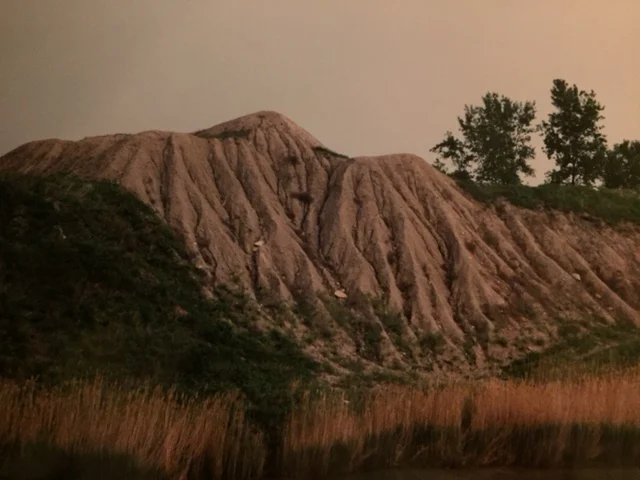
Mazon Monday #133: Mazon Creek Open House History
The Mazon Creek Open House started in the early 1985. It was an extension of the Mazon Creek Project at Eastern Illinois University. We posted about that in Mazon Monday #5.
-
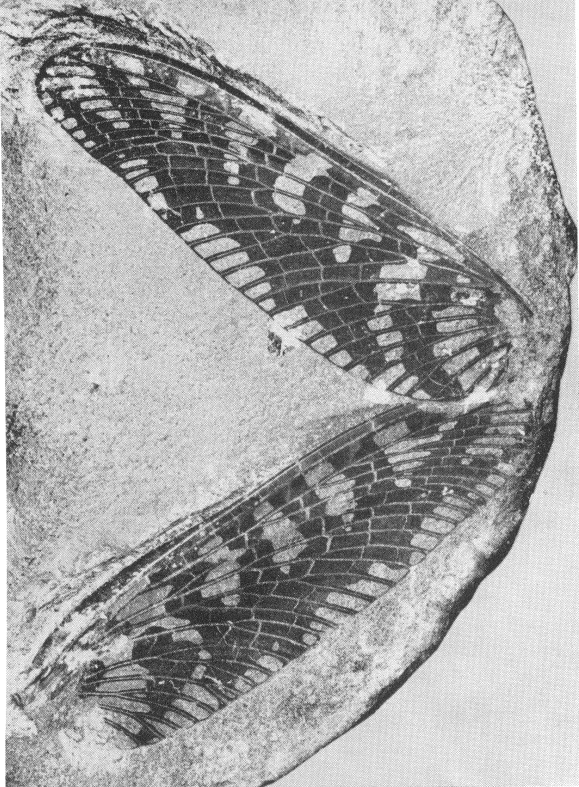
Mazon Monday #132: Homaloneura dabasinskasi
This is Mazon Monday post #132. What’s your favorite Mazon Creek fossil? Tell us at email:esconi.info@gmail.com. Homaloneura dabasinskasi was described by F. M. Carpenter in 1964. The paper “Studies on North American Carboniferous Insects. 3. Spilapterid From the Vicinity of Mazon Creek, Illinois (Palaeodictyoptera)” appeared in the Entomology Journal Psyche. Frank M. Carpenter was an…
-

Mazon Monday #131: Fall 2022 Braceville Field Trip Report
This is Mazon Monday post #131. What’s your favorite Mazon Creek fossil? Tell us at email:esconi.info@gmail.com. —————————————————– On Saturday, September 10th, 2022 and Sunday, September 11th, 2022, ESCONI hosted the Fall 2022 Braceville Field Trip. These are semi-annual field trips held each spring and fall. Here is a report by ESCONI president Keith Robitshek, Andrew…
-

Mazon Monday #130: Braceville Spoil Pile History
This is Mazon Monday post #130. What’s your favorite Mazon Creek fossil? Tell us at email:esconi.info@gmail.com. —————————————————– ESCONI has been visiting the Braceville spoil pile each year in the spring and fall for many years, but the pile has been there even longer – 130 years in total. It started existence as the spoil pile …
-
Mazon Monday #129: Pecopteris fontainei
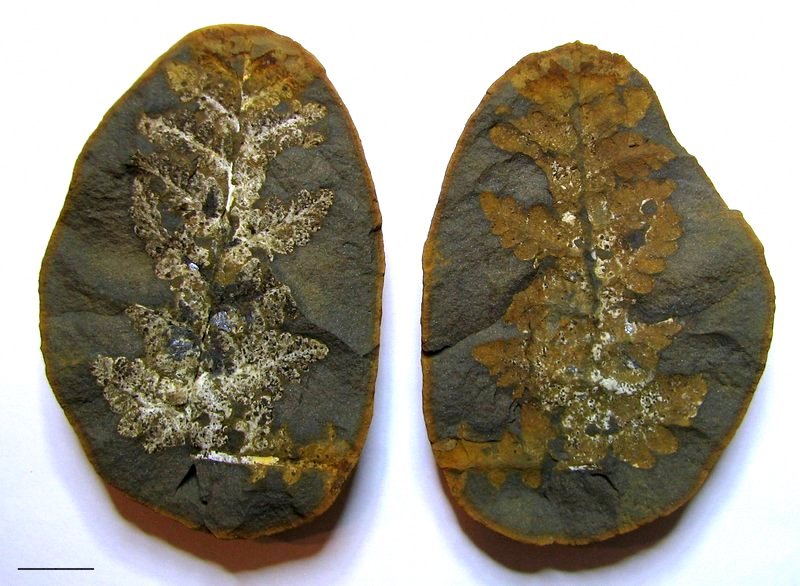
This is Mazon Monday post #129. What’s your favorite Mazon Creek fossil? Tell us at email:esconi.info@gmail.com. —————————————————– Pecopteris fontainei is a fern belonging to the clade Pteridophyta. They are vascular plants that reproduce by dispersing spores. It was classified by Leo Lesquereux in 1889. This is the sterile form. The fertile form is known as…
-
Mazon Monday #128: Biomarkers Found in Mazon Creek Coprolites
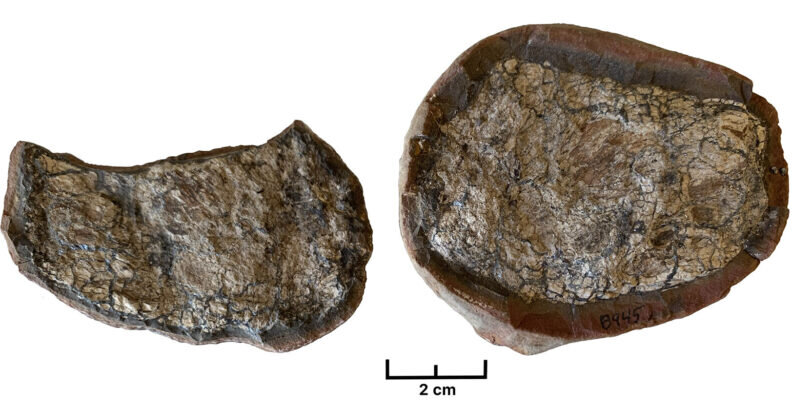
This is Mazon Monday post #128. What’s your favorite Mazon Creek fossil? Tell us at email:esconi.info@gmail.com. —————————————————– Fossils are often found in concretions, which form within sediment as a local accumulation of matter. In the case of Mazon Creek, these concretions consist of Iron Carbonate and quite often form around some central organic material. The…
-
Mazon Monday #127: The Inarticulate Brachiopods of Pit 14
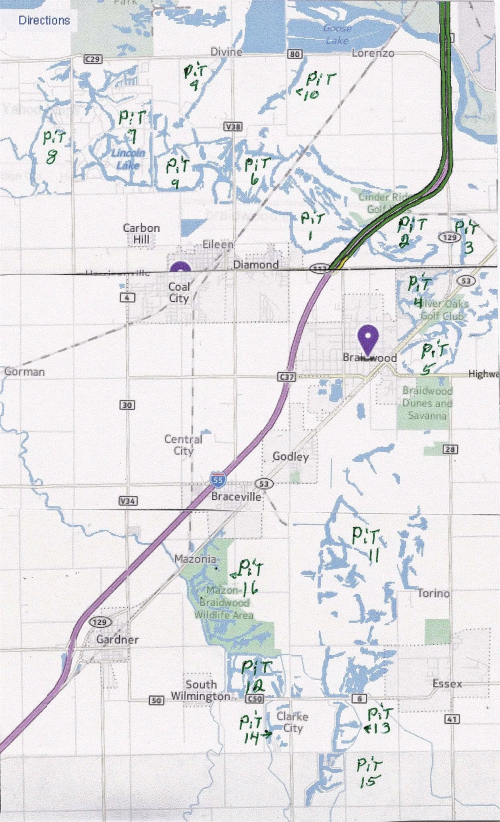
This is Mazon Monday post #127. What’s your favorite Mazon Creek fossil? Tell us at email:esconi.info@gmail.com. —————————————————– Today, we have an article called “The Inarticulate Brachiopods of Pit 14” by Earl Hoffman. This piece appeared in the July/August 1972 edition of the ESCONI newsletter “Earth Science News”. Earl was Historian and later Micro-mount study group…
-
Mazon Monday #126: Relative Abundance of Different Mazon Creek Organisms
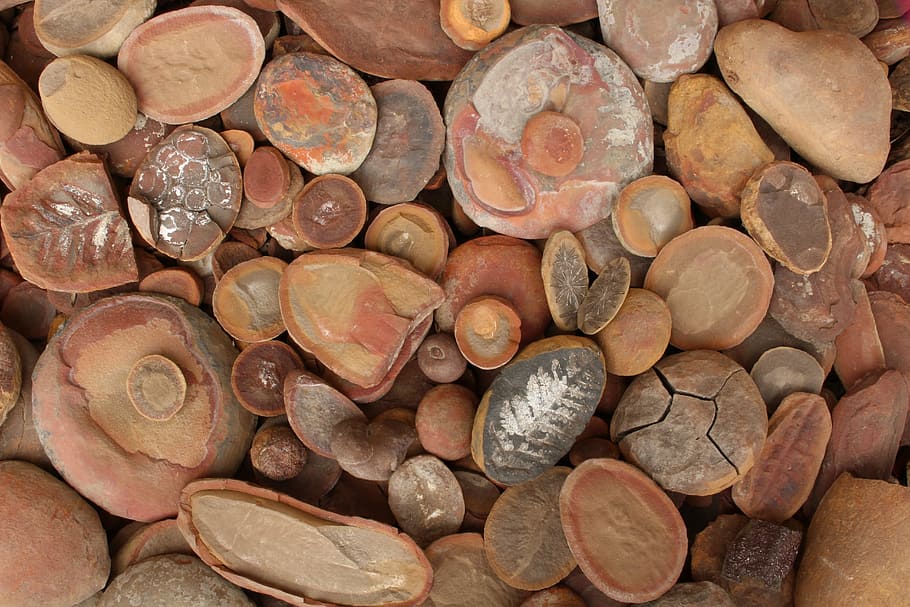
This is Mazon Monday post #126. What’s your favorite Mazon Creek fossil? Tell us at email:esconi.info@gmail.com. —————————————————– There are good shapes and bad shapes, but at the end of the day – it’s what’s in the concretion that counts. Everyone wants to know what might be in the concretion they just found. It’s pretty well known…
-
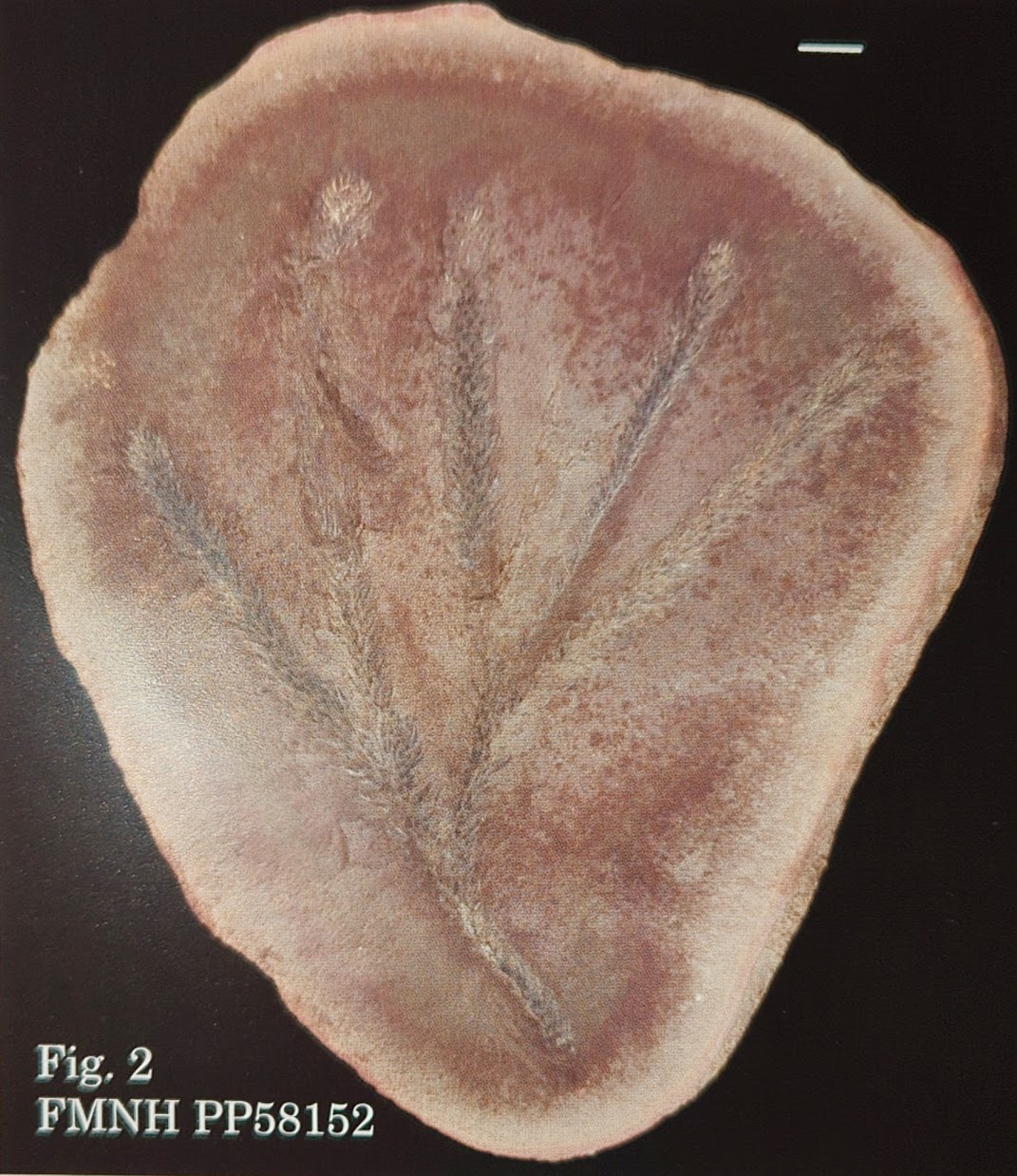
Mazon Monday #125: Lycopodites meekii
This is Mazon Monday post #125. What’s your favorite Mazon Creek fossil? Tell us at email:esconi.info@gmail.com. —————————————————– Lycopodites meekii are foliaged lycophyte twigs. They were described in 1870 by Leo Lesquereux. L. meekii is probably the terminal branches of Bothrodendren minutifolium or a similar plant. These plants were herbaceous resembling the modern day Lycopodium, a club…
-
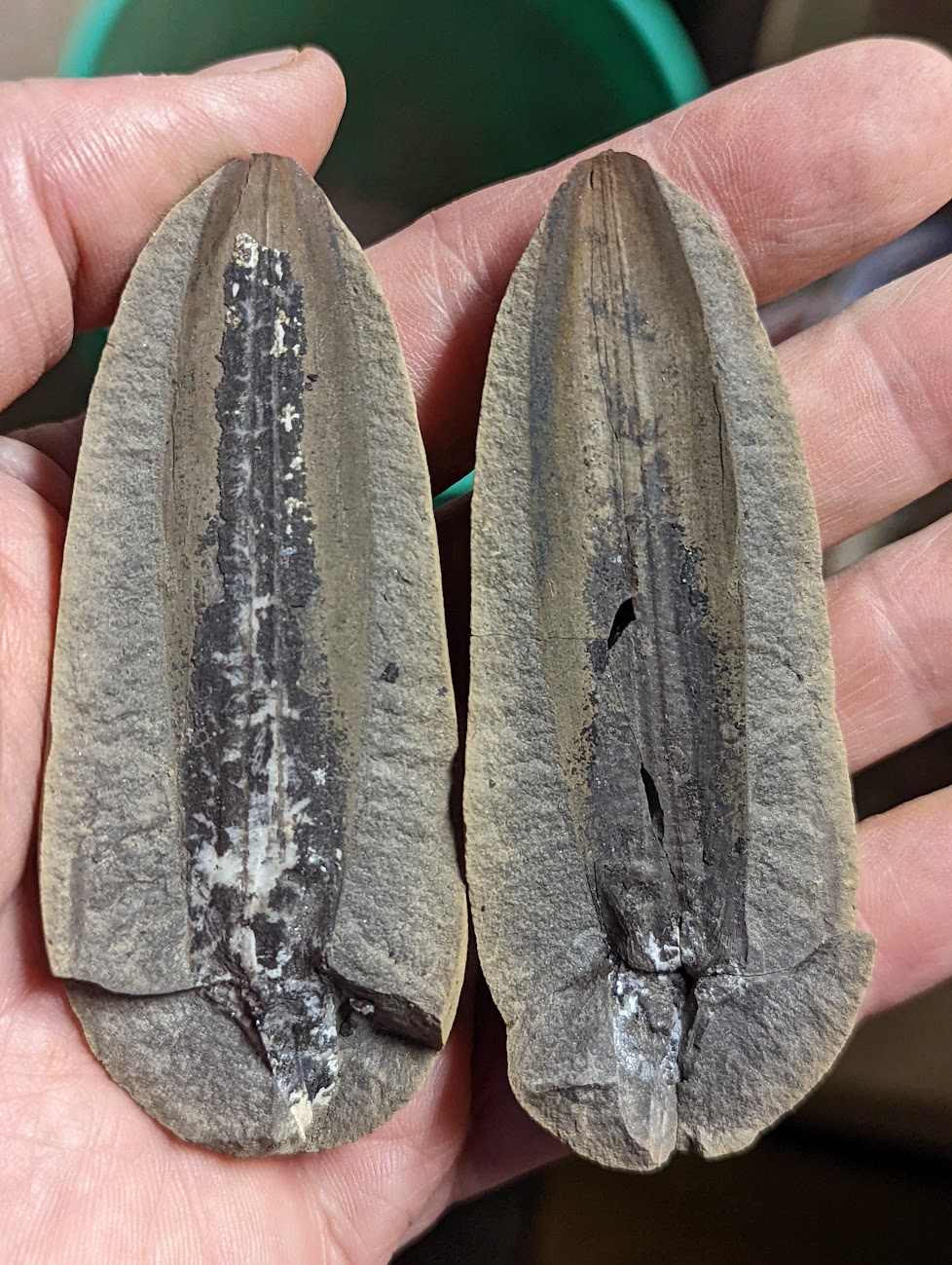
Mazon Monday #124: Lepidostrobophyllum majus
This is Mazon Monday post #124. What’s your favorite Mazon Creek fossil? Tell us at email:esconi.info@gmail.com. —————————————————– Lepidostrobophyllum majus is a cone bract. In modern plants, the woody pieces of a pine cone are the bracts. L. majus are the largest species found in the Mazon Creek biota. The cones these bracts were part of…
-
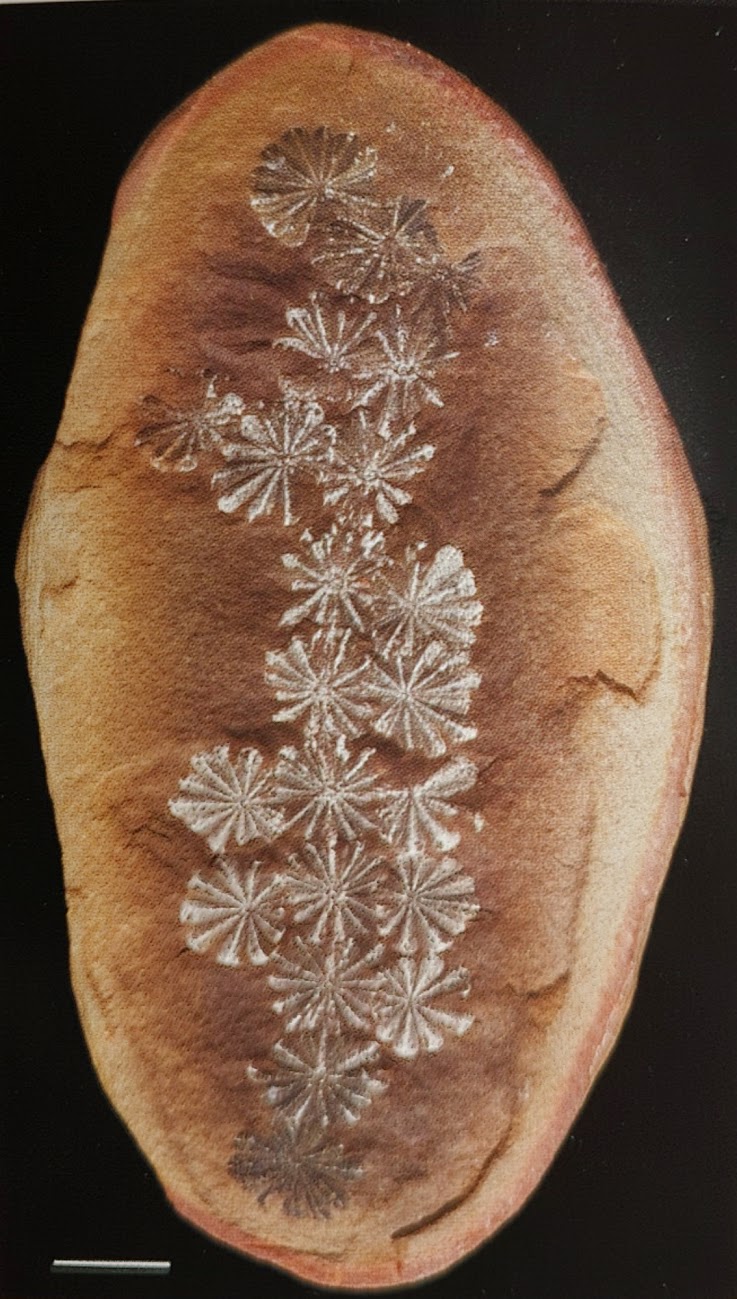
Mazon Monday #123: Annularia sphenophylloides
This is Mazon Monday post #123. What’s your favorite Mazon Creek fossil? Tell us at email:esconi.info@gmail.com. —————————————————– Annularia is the extinct form genera given to the leaves of Calamites. Annularia sphenophylloides is a smaller variety. It was described in 1837 by August von Gutbier (1798-1866), a German paleontologist who described many Carboniferous plants from deposits…
-
Mazon Monday #122: Mazon Creek Open House 2022 is October 15th, 2022
This is Mazon Monday post #122. What’s your favorite Mazon Creek fossil? Tell us at email:esconi.info@gmail.com. —————————————————– Save the date! The Mazon Creek Open House is October 15th, 2022 from 9:00 AM to 4:00 PM at Cantigny Park in Wheaton, IL. The Mazon Creek Open House is returning for 2022! If you’ve been a Mazon…
-

Mazon Monday #121: Rhaphidiophorus hystrix
This is Mazon Monday post #121. What’s your favorite Mazon Creek fossil? Tell us at email:esconi.info@gmail.com. —————————————————– Rhaphidiophorus hystrix is a polychaete worm. It was described by Ida Thompson in 1979 in the paper “Errant polychaetes (Annelida) from the Pennsylvanian Essex fauna of northern Illinois.”, which was published in the journal Palaeontographica Abteilung A Palaeozoologie-Stratigraphie.…
-

Mazon Monday #120: Lobetelson mclaughlinae
This is Mazon Monday post #120. What’s your favorite Mazon Creek fossil? Tell us at email:esconi.info@gmail.com. —————————————————– Lobetelson mclaughlinae is one of the few remaining shrimp species we haven’t looked at. It was described in 2006 by Frederick Schram, who described many of the Mazon Creek crustaceans. The description was published in the paper “Lobetelson…
-
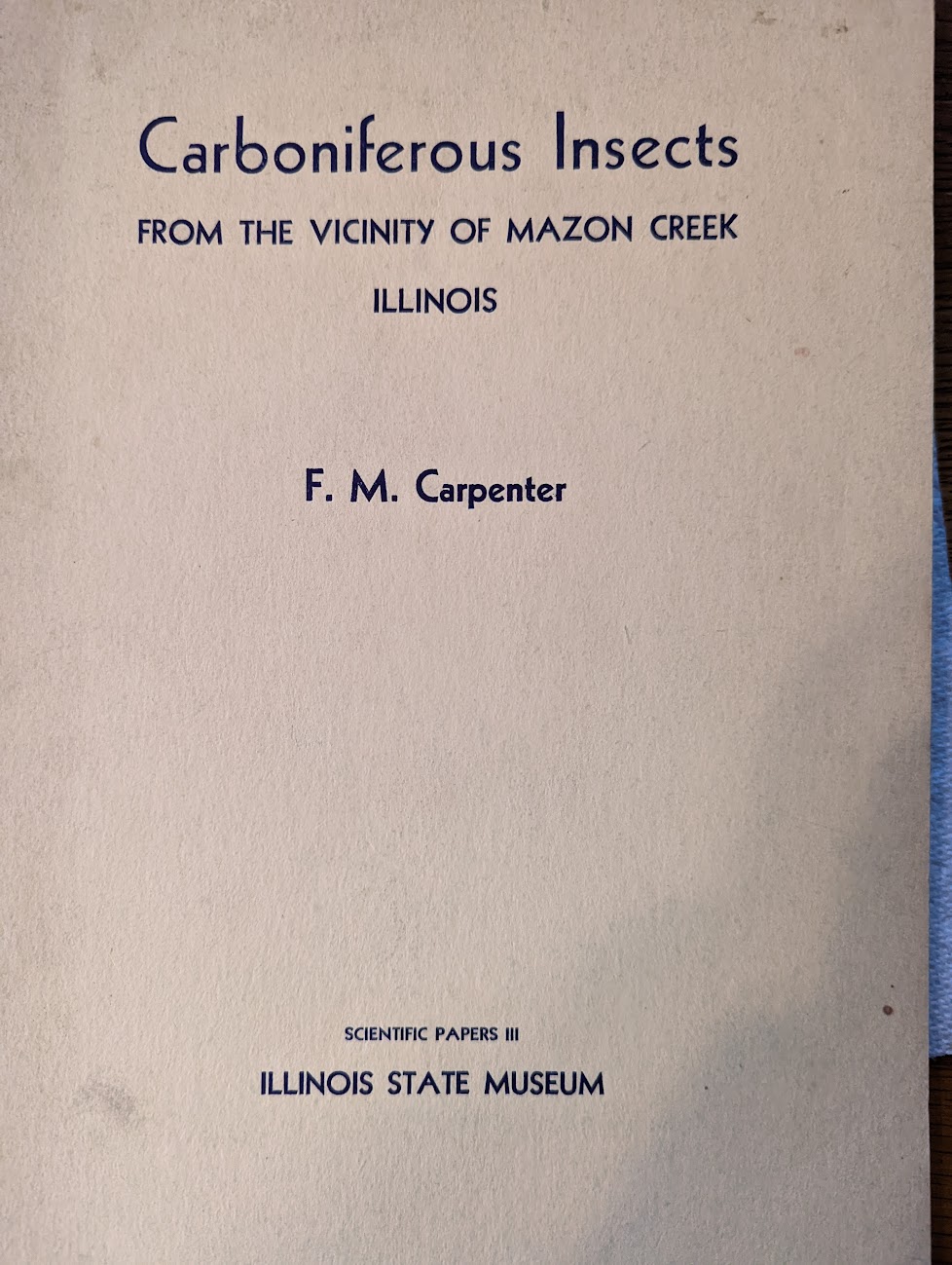
Mazon Monday #119: Carboniferous Insects
This is Mazon Monday post #119. What’s your favorite Mazon Creek fossil? Tell us at email:esconi.info@gmail.com. —————————————————– In 1943, the Illinois State Museum published the first paper in a series that would form the basis of the third volume of the Scientific Papers of the Illinois State Museum. All of the papers in that volume…
-
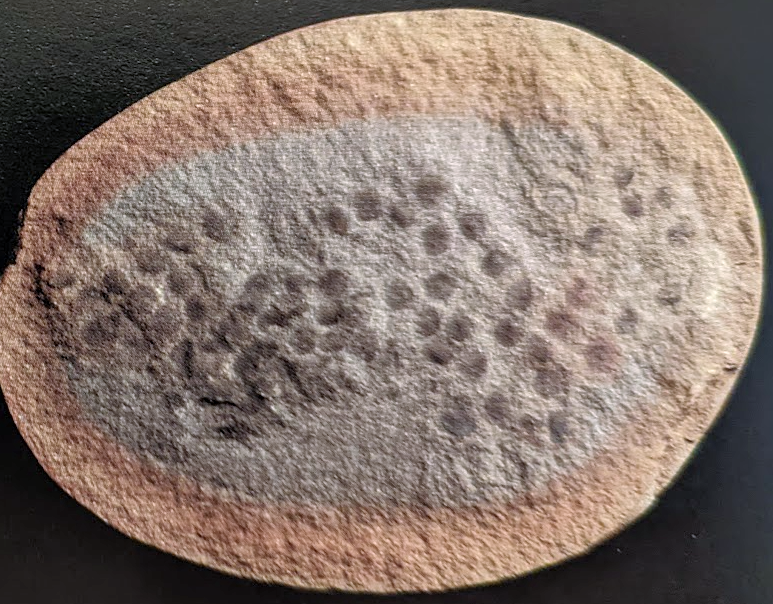
Mazon Monday #118: Mazonova helmichnus
This is Mazon Monday post #118. What’s your favorite Mazon Creek fossil? Tell us at email:esconi.info@gmail.com. —————————————————– Last Friday (Fossil Friday #114), we featured Mazonova helmichnus, which are eggs – possibly amphibian or lungfish eggs. Here’s a little more information about them. Mazonova helmichnus were classified in 1995 by Stephen Godfrey in the paper “Fossilized…
-
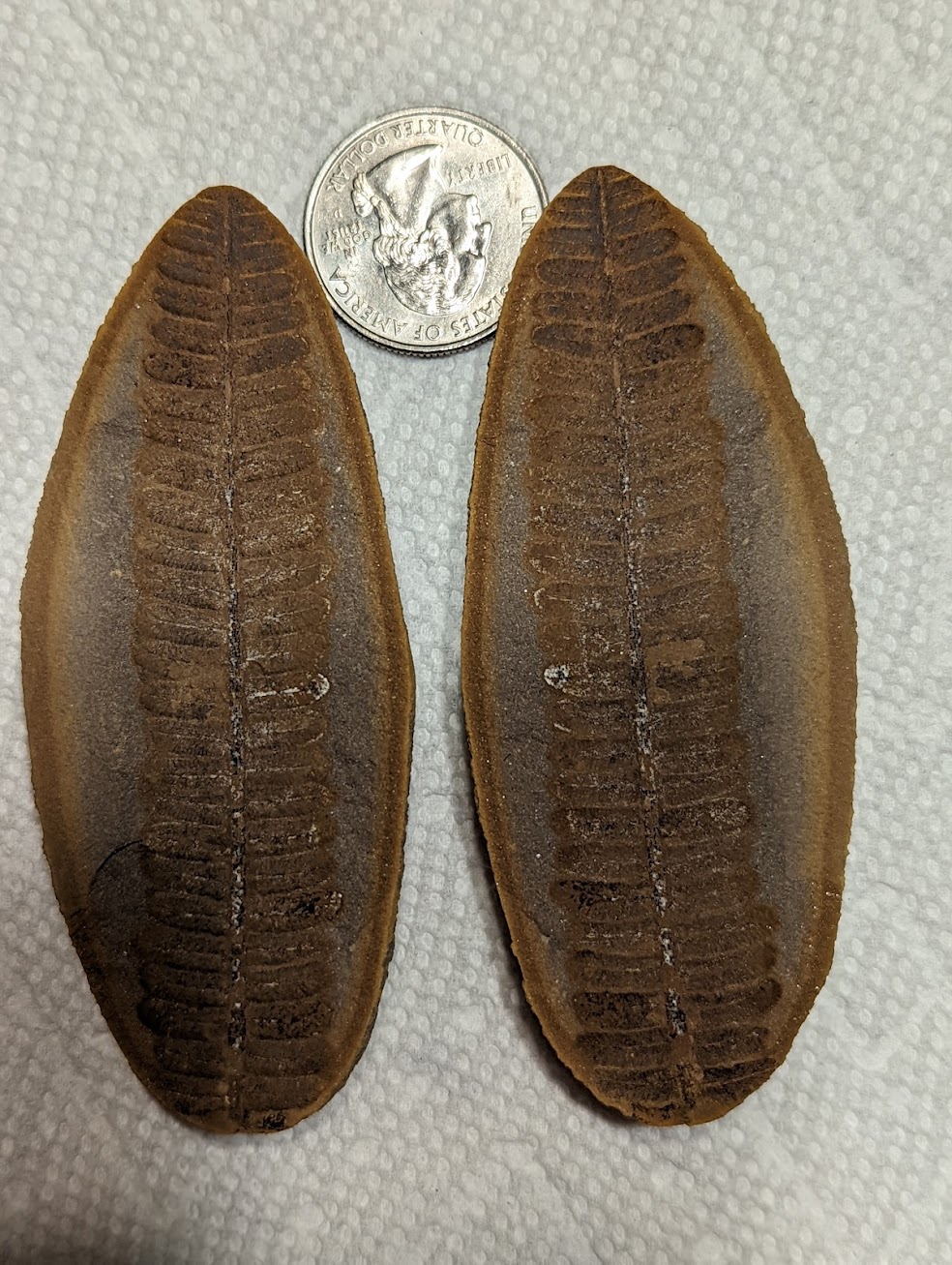
Mazon Monday #117: Crenulopteris mazoniana
This is Mazon Monday post #117. What’s your favorite Mazon Creek fossil? Tell us at email:esconi.info@gmail.com. —————————————————– Crenulopteris mazoniana is a somewhat uncommon extinct species of fern from the Mazon Creek fossil flora. It was first named by Leo Lesquereux in 1870 as Alethopteris mazoniana. As seen from its fertile form shown in a specimen…
-

Mazon Monday #116: Coprinoscolex elliogimus
This is Mazon Monday post #116. What’s your favorite Mazon Creek fossil? Tell us at email:esconi.info@gmail.com. —————————————————– Coprinoscolex elliogimus is an animal long referred to by collectors as the “Leech”. More recent research now shows it to be an echiuran, which are commonly called “spoon worms”. They are deposit feeders living in shallow water, in…
-

Mazon Monday #115: Crenulopteris acadica
This is Mazon Monday post #115. What’s your favorite Mazon Creek fossil? Tell us at email:esconi.info@gmail.com. —————————————————– Crenulopteris acadica is one of the most common flora fossils found in the Mazon Creek biota. Some of the localities seem to be absolutely full of it. The fossils can range in size from a few inches to…
-
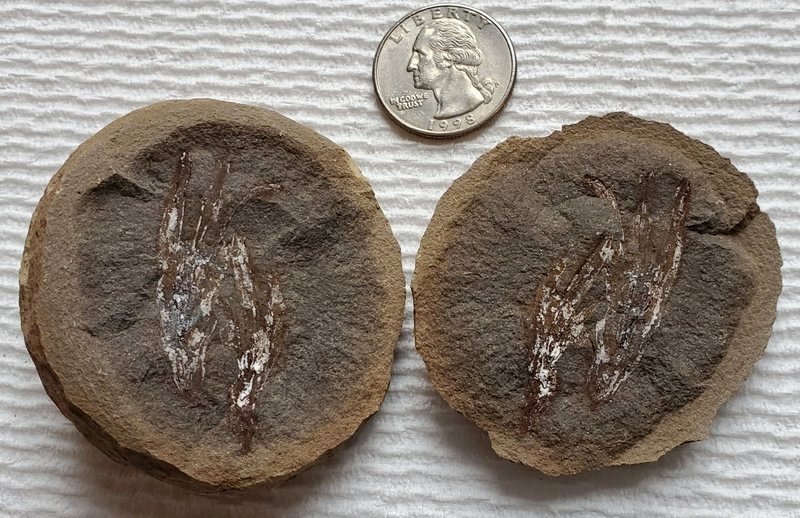
Mazon Monday #114: Codonotheca caduca
This is Mazon Monday post #114. What’s your favorite Mazon Creek fossil? Tell us at email:esconi.info@gmail.com. —————————————————– Codonotheca caduca was named by Elias Howard Sellards (1875 – 1961). He was a paleontologist, geologist, and anthropologist. The Texas State Historical Association has a nice summary of his career, which spanned almost 60 years. SELLARDS, ELIAS HOWARD (1875–1961).Elias…
-

Mazon Monday #113: Spring 2022 Braceville Field Trip Report
This is Mazon Monday post #113. What’s your favorite Mazon Creek fossil? Tell us at email:esconi.info@gmail.com. —————————————————– Braceville Field Trip (Mazon Creek) May 14th and 15th by Keith Robitschek This spring’s field trip to the Braceville spoil pile started on Saturday with a warm cloudy day with a chance of rain. We had about five…
-

Mazon Monday #112: Concretion Shape from 1952
This is Mazon Monday post #112. What’s your favorite Mazon Creek fossil? Tell us at email:esconi.info@gmail.com. Lately, we’ve been getting a bunch of questions about concretion shape, probably due to the Braceville field trip this past weekend. It’s an age old question that repeats again and again. Back in March 1952, Stevens T. Norvell, a…
-

Mazon Monday #111: Leaves and Stems with a George Langford Inscription
This is Mazon Monday post #111. What’s your favorite Mazon Creek fossil? Tell us at email:esconi.info@gmail.com. Back in Mazon Monday #51, we looked at the book “Leaves and Stems” by Raymond E. Janssen. From the time it was published in 1939 by the Illinois State Museum until George Langford’s first book was published by Esconi…
-

Mazon Monday #110: Trip Report: Danville Shale Pile April 23rd, 2022
This is Mazon Monday post #110. What’s your favorite Mazon Creek fossil? Tell us at email:esconi.info@gmail.com. Back on April 23rd, 2022, ESCONI held our 4th field trip to a shale pile just outside of Danville, IL. The trip was a huge success, although a little hot at nearly 87 degrees. We were honored by the…
