Category: Around the Web
-
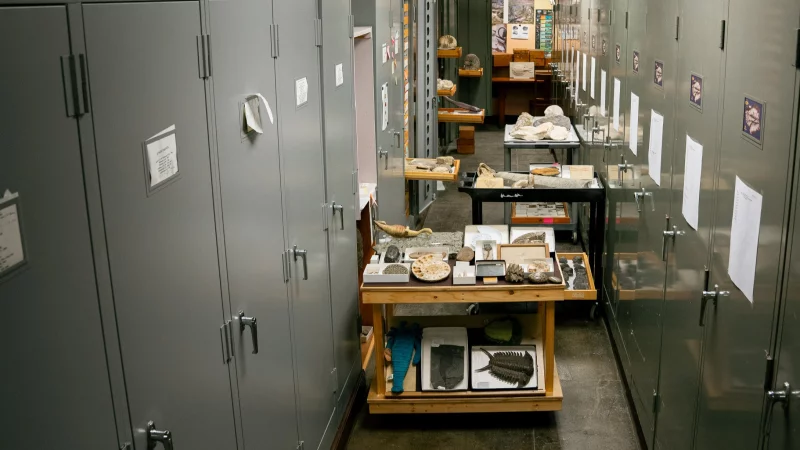
NPR Short Wave: The dinosaur secrets found in the archives of a natural history museum
NPR’s Short Wave show has an episode about dinosaurs at the Carnegie Museum of Natural History in Pittsburgh. What happens behind the scenes of a dinosaur exhibit? Short Wave host Regina Barber got to find out … by taking a trip to the Carnegie Museum of Natural History in Pittsburgh. In the museum’s basement, she talked to…
-
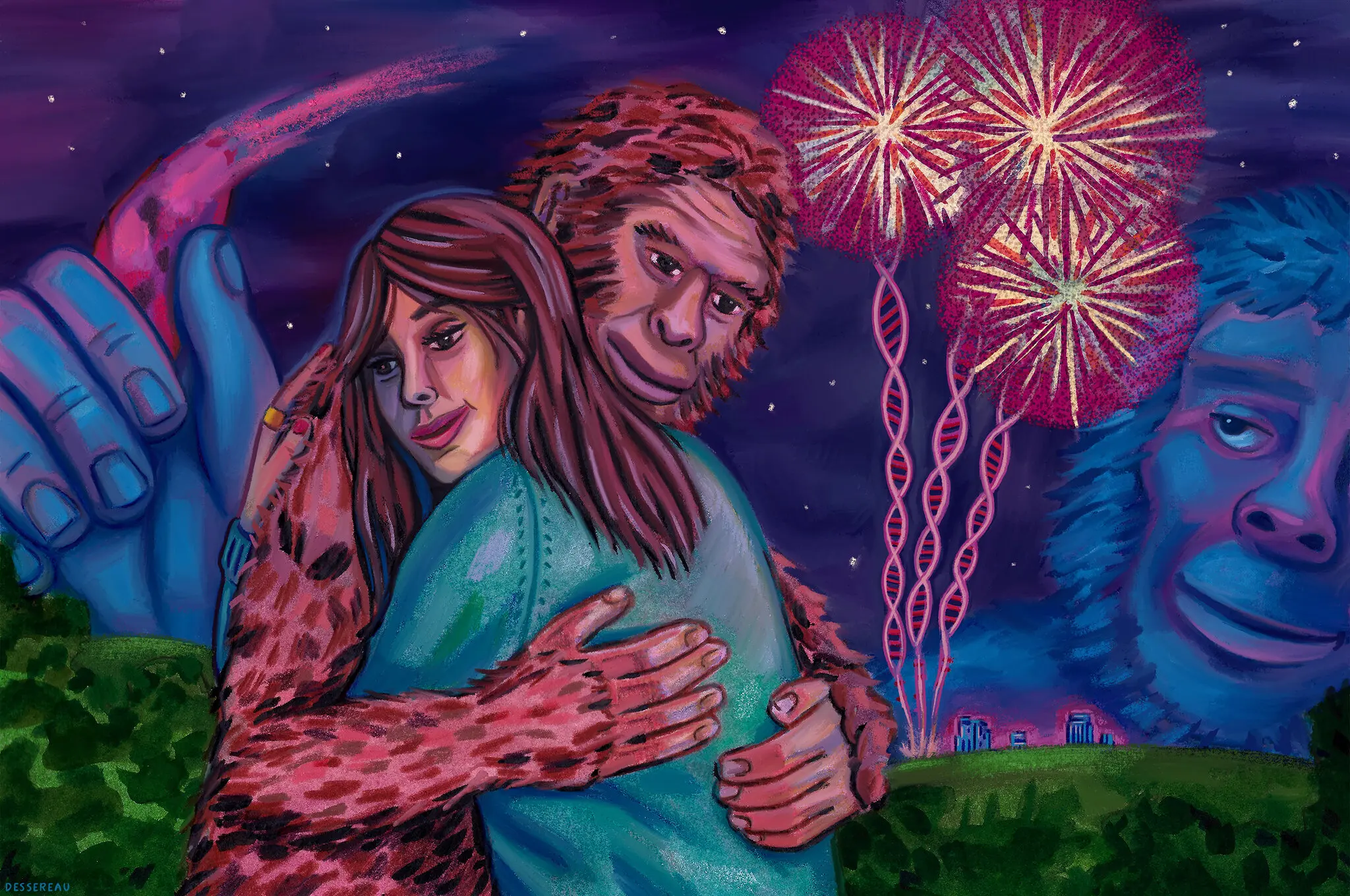
The Year in Neanderthals
The New York Times has a nice article that highlights new understanding into who the Neanderthals were. Neanderthals lived across Eurasia for hundreds of thousands of years before going extinct some 40,000 years ago. A bunch of new high profile studies were published in 2025. Barely three decades ago, these ancient hominids were still being…
-
WHY DINOSAURS? Award-Winning Dinosaur Documentary!
The award winning documentary “Why Dinosaurs” is now available on Youtube! The documentary covers quite a bit of the history and the science of paleontology. Did I mention that ESCONI’s own Rob Sula has his own segment? Oh, there’s also a great website – whydinosaurs.com. The website has extended interviews and other extras! Check it…
-
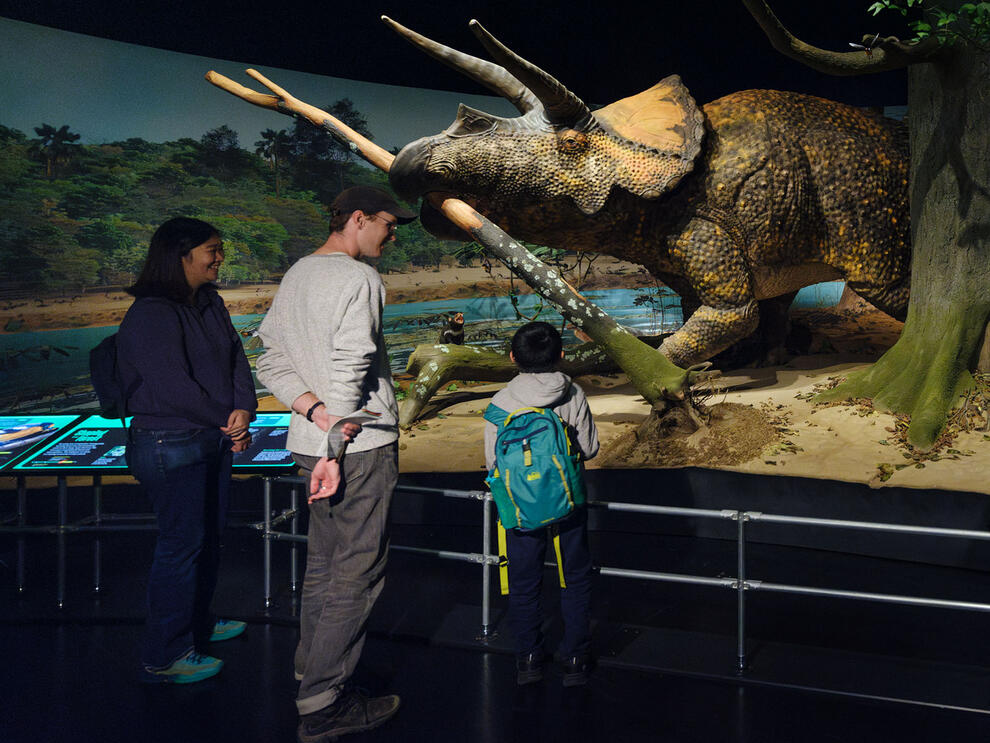
Adam Savage at the American Museum of Natural History
The AMNH has a new exhibit called “Impact: The End of the Age of Dinosaurs”. Adam Savage visited the museum just before the exhibit opened in November, There are a series of videos on Youtube. How do you come up with the physical representation of animals we know lived on Earth, when the evidence of…
-

PRI’s Wonderful Life
Here’s a followup to the New York Times’ post about the Paleontological Research Institution (PRI) and the Museum of the Earth’s financial woes… they found funding and will continue operation! By late summer, although gifts continued to arrive at roughly twice the rate of previous “normal” years, larger gifts had slowed and we were still…
-

Spinosaurus relative longer than a pickup truck stalked Thailand’s rivers 125 million years ago
LiveScience has a story about a spinosaur that lived in Thailand 125 million years ago, during the early Cretaceous Period. The animal was about 25 feet long (7-8 meters) and likely ate the fish that swam in the rivers. The new dinosaur has yet to be named and was discovered in the Sam Ran locality…
-

Ancient oceans were ruled by super predators unlike anything today
ScienceDaily has a story about the top predators of the past. Researchers from McGill University looked at Colombia’s Paja Formation, which dates to the early Cretaceous Period, some 122 million years ago. That formation preserves the ancient marine ecosystem, which had a very complex food chain, more so than the modern oceans. The paper was published…
-

Giant sea monsters lived in rivers at the end of the dinosaur age
ScienceDaily has a story about mosasaurs. It seems that giant mosasaurs didn’t just live in the oceans… they also prowled rivers. A large tooth found in a North Dakota deposit along with a Tyrannosaurus rex tooth and a jawbone from a crocodylian revealed an isotope signature consistent with a live in fresh water. See the…
-
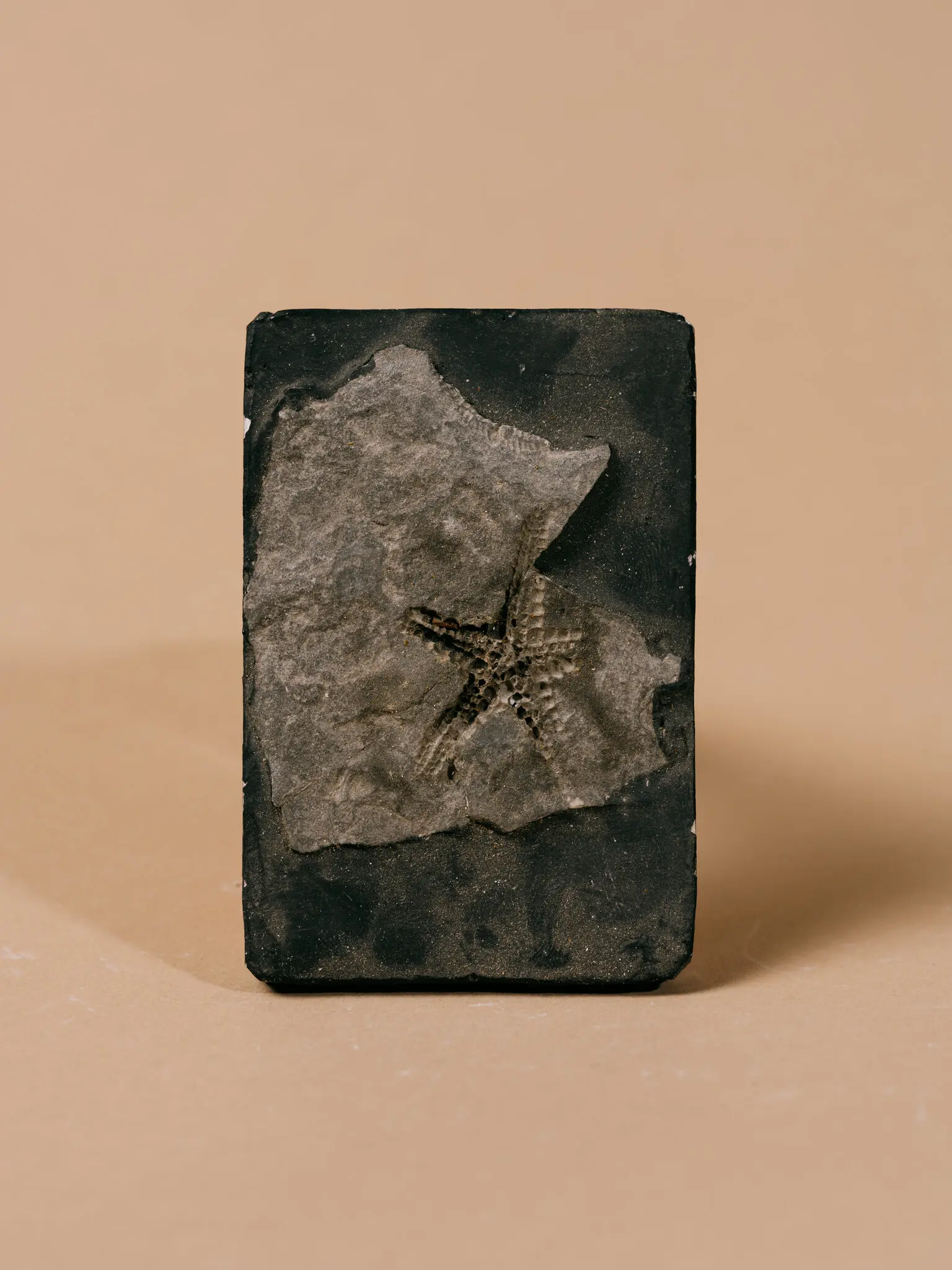
An Engine of Fossil Discovery Fights Its Own Extinction
The New York Times has a story about the financial troubles at the Museum of the Earth and the Paleontological Research Institution in Ithaca, N.Y. The institution was establish almost 100 years ago and has amassed one of the largest collections of fossils in North America. “No one has ever experienced trying to rehouse a…
-

50 Insane Geography Facts About Illinois (You Won’t Believe)
Here’s a way to educate yourself about Illinois geography. This video is from the Across the Globe channel on Youtube. Illinois isn’t just cornfields, Chicago traffic, and deep-dish pizza, it’s one of the strangest states in America, and it’s hiding some of the wildest secrets in the entire Midwest. In this video, we reveal 50…
-

“Bones Almost on Top of Each Other” – Extraordinary Dinosaur Fossil Site Discovered in the Hațeg Basin
SciTechDaily has a story about an extraordinary dinosaur fossils site in Transylvania. The Hateg Basin is famous for its dinosaur fossils. The site dates to the late Cretaceous Period, some 72 million years ago. So far, thousands of fossils have been found, including bones of amphibians, turtles, crocodiles, dinosaurs, pterosaurs, and mammals. A recent paper in…
-

PBS Eons: When a Tiny Land Bridge Triggered an Ice Age
There’s a new episode of PBS Eons. This one is about the origin of Panama and how it changed the world. On land, the Isthmus of Panama kicked off possibly the greatest natural experiment in the history of life on Earth. In the water, this narrow strip of land did something completely different: it divided.…
-

Archaeologists Find Oldest Evidence of Fire-Making
In his New York Times column, Carl Zimmer discusses evidence for the oldest usage of fire-making. A paper published in the journal Nature, reports that a group of Neanderthals used flint and pyrite to make fires about 400,000 years ago in what is now eastern England. This was something they did repeatedly over the course…
-

Possible ancient artifacts are found in a B.C. thrift shop — and archeology scholars are on the case
The Conversation has a story about a chance discovery in a thrift shop. The owner of Thrifty Boutique in Chilliwack, B.C. reached out to the archaeologists at Simon Fraser University in the spring of 2024. The owner wanted to know if some ancient artifacts had historical significance. Turns out the objects in question date to…
-

A Day at the Beach Hunting Mammoths
The New York Times has an interesting story about “citizen paleontologists” in the Netherlands. The beaches around Rotterdam’s port, the largest harbor in Europe, are loaded in Pleistocene fossils from the dredging of the North Sea floor. The beach where van den Berg was hunting, called Maasvlakte 2, is a particularly popular destination for fossil…
-
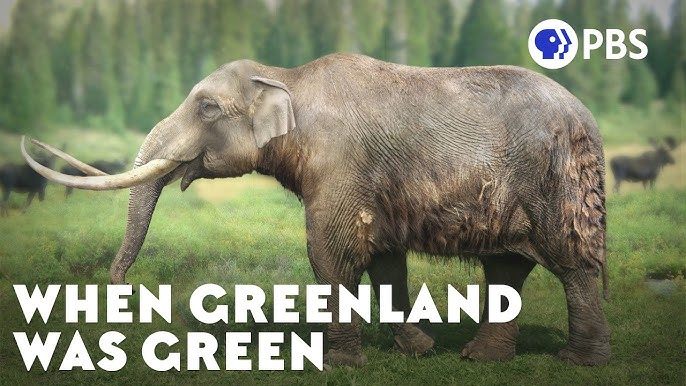
PBS Eons: What Was Greenland Like When it Was Green
PBS Eons has a new episode. This one is about 2 million year old DNA from Greenland. It made the front page of the New York Times. Ancient DNA over 2 million years old, retrieved from the frozen dirt of Greenland. It reached back further in time than many scientists used to think was even…
-
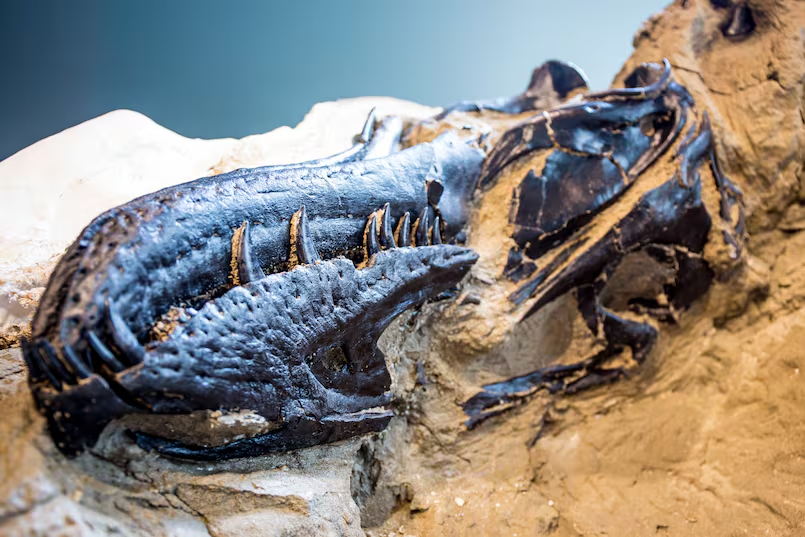
CBC Radio’s Quirks & Quarks… Smaller tyrannosaur solves decades-long debate about the T. Rex
CBC Radio’s Quirks & Quarks has a great segment about Nanotyrannus. There’s an interview with James Napoli of Stony Brook University, who was coauthor on “Nanotyrannus and Tyrannosaurus coexisted at the close of the Cretaceous”, which was published in the journal Nature. Small tyrannosaur fossils belonging to a dinosaur about half the size and a tenth…
-

This Fossil Is Rewriting the Story of How Plants Spread across the Planet
Scientific American Magazine has an interesting story about the spread of terrestrial plants during the Early Devonian Period. A paper in the journal Science Advances looked at the origin of lichens. Did they appear before or after the rise of vascular plants? Lichens, which are a composite organism resulting from a symbiotic relationship between a…
-

PBS Eons: How We Figured Out an Asteroid Killed the Dinosaurs
PBS Eons has a post about the extinction of the non-avian dinosaurs. The story of how we discovered it happened is a great example of how science works. 66 million years ago a giant space rock crashed into our planet and killed the dinosaurs. In the span of just four decades, we’ve gone from not…
-

National Geographic: New Natural History Museum Abu Dhabi features two fighting T. rexes
National Geographic has a story about the new Natural History Museum Abu Dhabi, which opened on November 22nd, 2025. The videos for the story are stunning. It huge with not one, but four sauropods on display. They have two T-rexes, which are displayed fighting. The museum also documents the natural history of the region and…
-
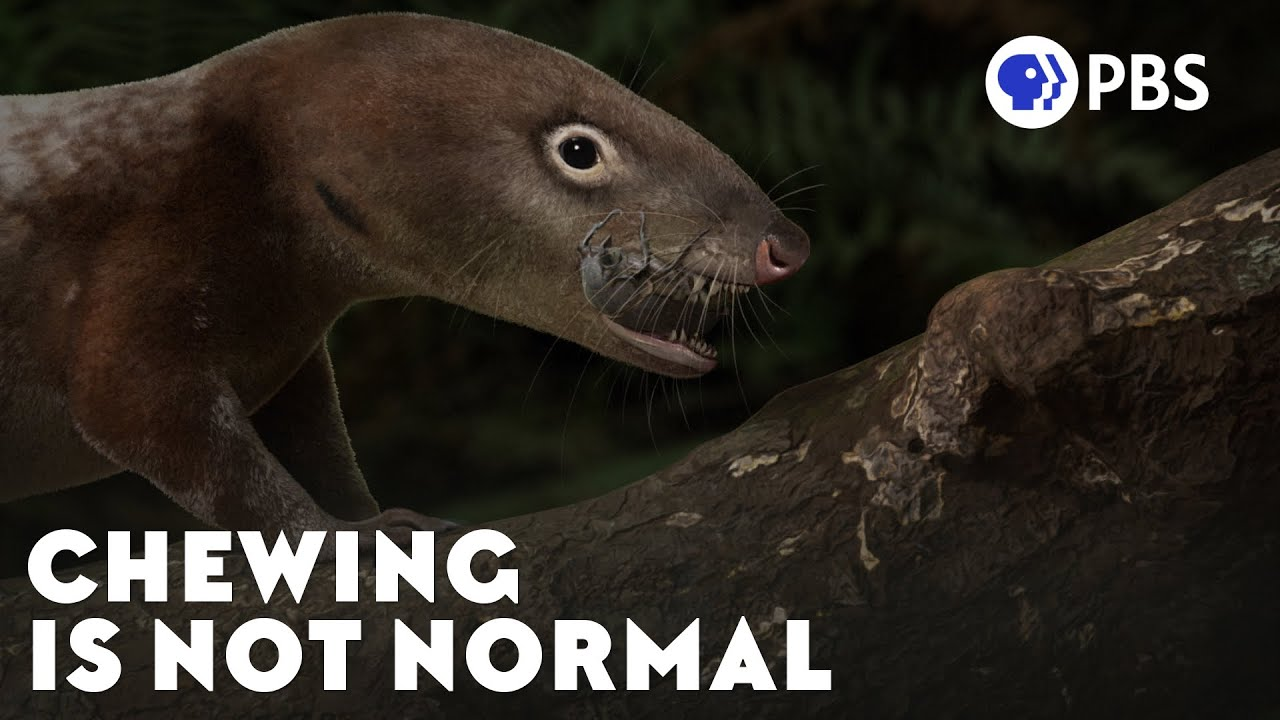
PBS Eons: How Chewing May Have Beat Extinction
There’s a new episode of PBS Eons. This one is about teeth and chewing and how they may have helped mammals survive after the K-Pg extinction. Help understand what you enjoy and what you would want to see us make more of: https://to.pbs.org/2025SurveyEons 66 million years ago, after an asteroid slammed into the Earth and…
-
Fossils of Some of the Last Dinosaurs in North America Have a Story to Tell
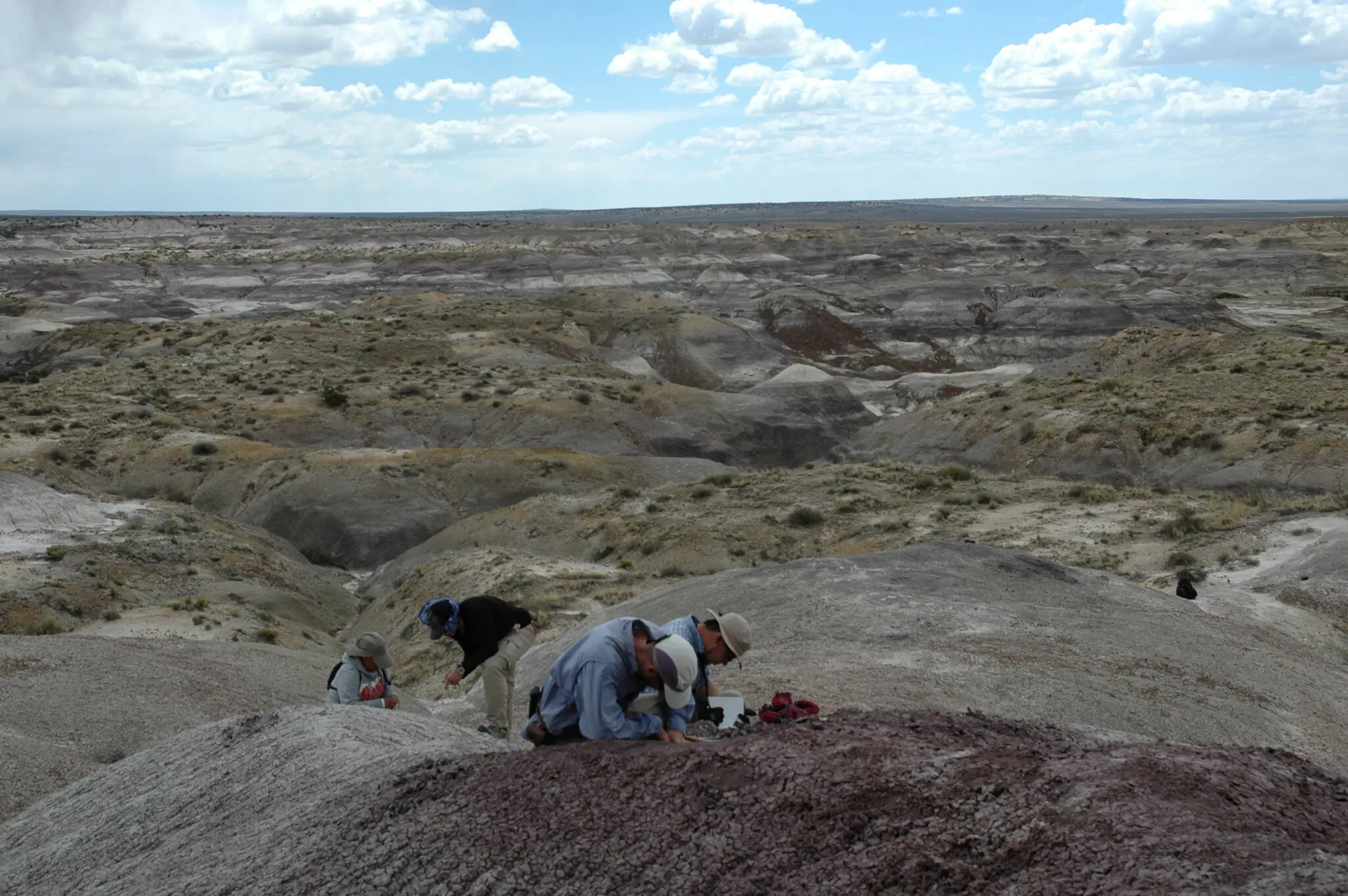
The New York Times “Trilobites” column has a story about the extinction of the non-avian dinosaurs some 66 million years ago. A long standing question about the extinction has been whether the age of dinosaurs came to a sudden end or were dinosaurs in decline when the asteroid struck the Yucatan Peninsula. The diversity of…
-
Hidden Secret in the Field Museum’s Silurian Diorama
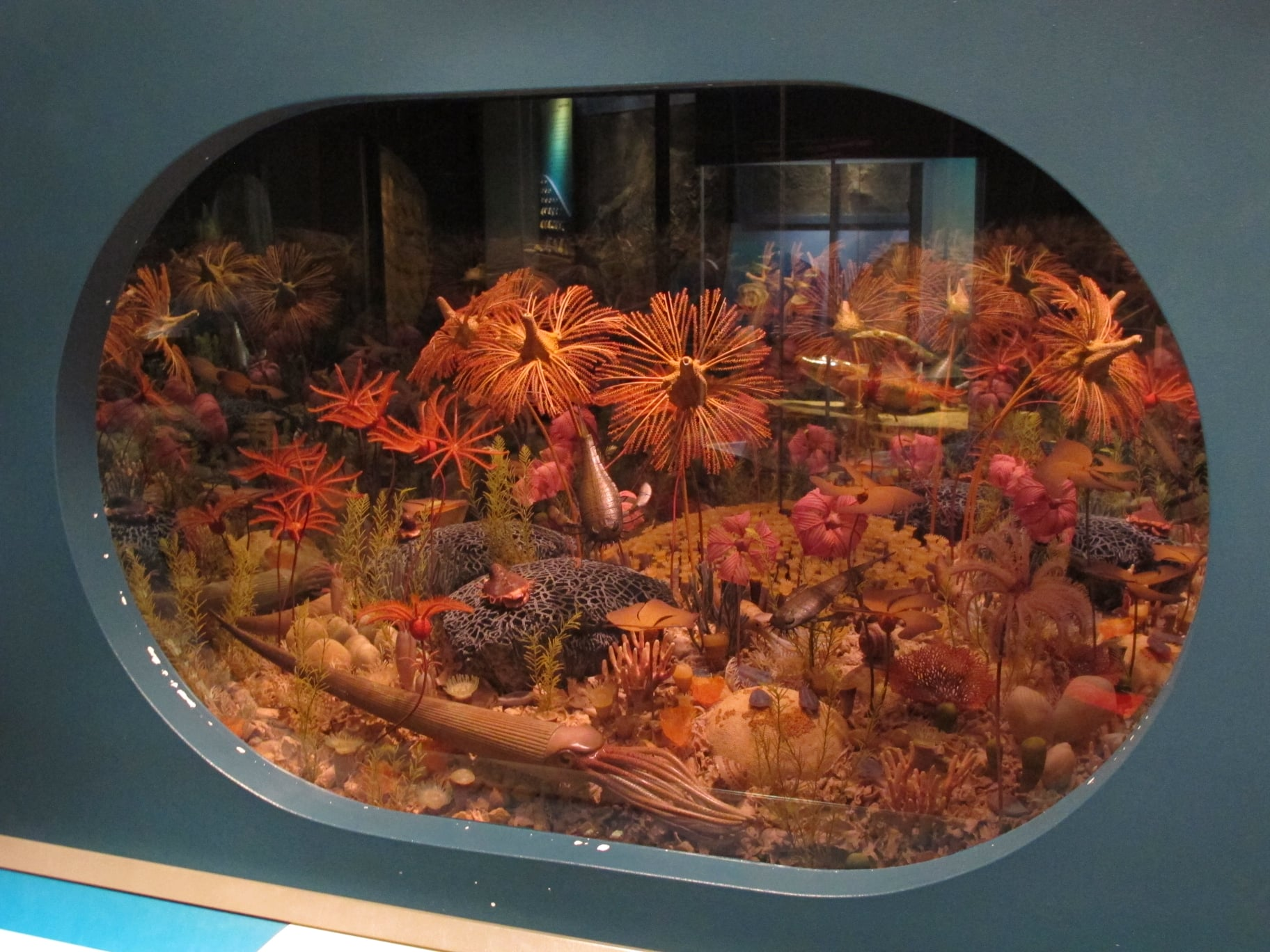
The Field Museum has a very nice Silurian marine diorama, which includes crinoids, cephalopods, corals, trilobites, and more from the Silurian period. It’s meant to represent what the Chicago area looked like during the Silurian Period. Much of the insight comes from the the fossils found in Thornton Quarry. There is a little secret with…
-

Discovery of First Fossil Hand Linked to P. Boisei Suggests the Bygone Human Relative Could Have Used Tools
Smithsonian Magazine has a story about tool use in our ancient cousins. A recent discovery of the first hand and foot bones on Paranthropus boisei has shed light on whether the species was able to use tools. The research was published in the journal Nature. “The authors make a compelling case that this individual would…
-

NPR: Scientists thought this fossil was a teen T. rex. Turns out it’s a new tyrannosaur
NPR has a story about Nanotyrannus lamcensis and why it’s a separate species from Tyrannosaurus rex. When the “Dueling Dinosaurs” fossil, which consists of two entangled dinorsaur skeletons, was discovered in 2006, it launched a quite a bit of debate as to whether the tyrannosaur was a juvenile T. rex or a new species of…
-
SciAm: Fossilized Skin on Dinosaur ‘Mummies’ Isn’t Skin at All
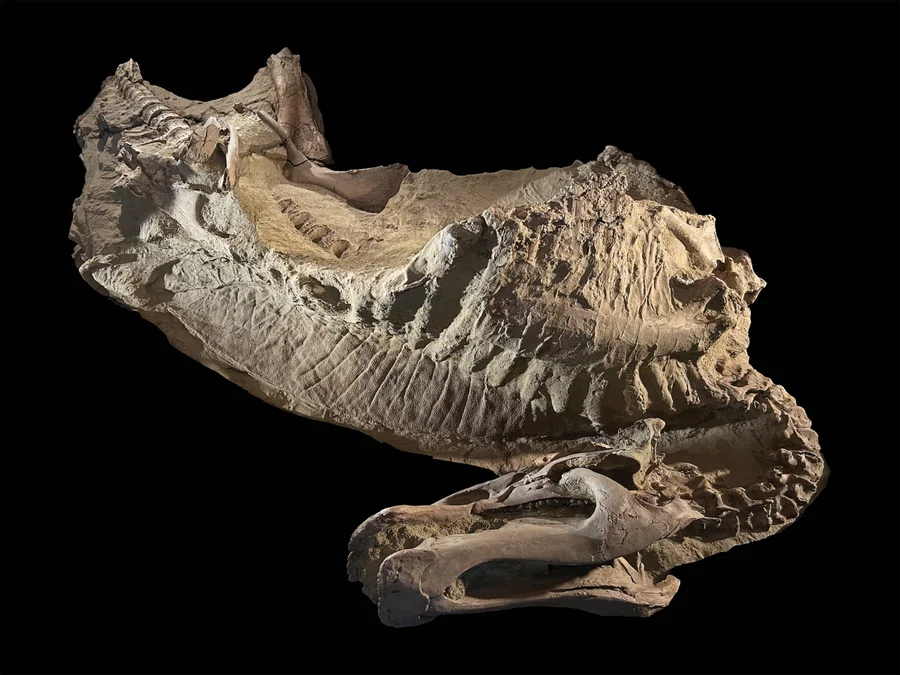
Scientific American has an interesting article about dinosaur “mummies”. In 1908, Charles Sternberg found the “first dinosaur mummy”. It was an Edmontosaurus dinosaur with what looked like fossilized flesh and skin. It was found in the sandstone rocks of the Lance Formation in eastern Wyoming. New research shows that the “skin” is actually a clay mold,…
-

WPR: A portal into underwater, prehistoric Wisconsin found in the heart of Waukesha County
Wisconsin Public Day has an article about fossils from Waukesha County, including a the oldest known leech in the fossil record. The fossil deposit is commonly referred to as the Waukesha Lagerstätte. A few years ago, researchers found the world’s oldest fossilized scorpion at the site. The Waukesha Biota, also known as the Waukesha Lagerstätte,…
-

Indigenous Americans dragged, carried or floated 5-ton tree more than 100 miles to North America’s largest city north of Mexico 900 years ago
Live Science has a fascinating story about an ancient tree, which was part of Cahokia. Cahokia was the large city north of Mexico 900 years ago, with a population of around 20,000 people. It was built on earthen mounds in the southwestern Illinois, next to the Mississippi River, between East St. Louis and Collinsville. Scientists…
-
Rare half-pink rough diamond with ‘astounding’ weight of 37.4 carats discovered in Botswana
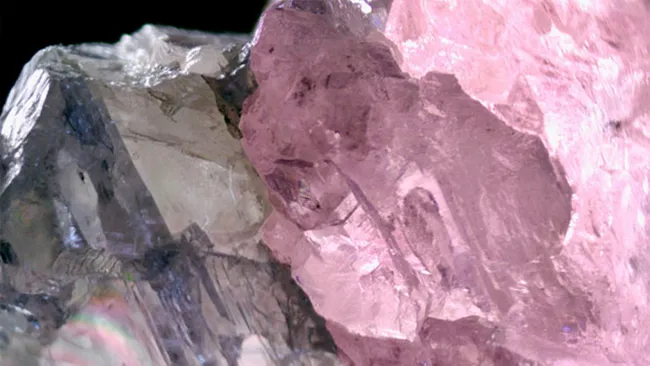
Live Science has a story about the discovery of a very large pink diamond. The diamond weighs 37.4 carats. It was discovered in Botwana and likely formed in two stages as it has two colors… pink and colorless. The pink half probably formed first, but from what scientists know about colorful diamonds, there’s a good…
-

PBS Eons: When We Left The Water (By Accident)
PBS Eons has a new episode. This one is about when tetrapods moved from the water onto land… It’s beginning to look like our success on land, and that of all tetrapods, from frogs to dogs to dinosaurs, was just a lucky side-effect of fish trying to stay fish.
