
-
Ask Smithsonian: What’s the Deepest Hole Ever Dug?
Read more: Ask Smithsonian: What’s the Deepest Hole Ever Dug?Smithsonian.com has an interesting article about the deepest hole ever dug. The target is the Earth’s mantle. The mantle makes up 40 percent or more of the whole planet. The Earth has a radius of 4000 miles. The mantle accounts for about 1800 miles of that, which compares to 3 to 25 miles thick for the crust. “If we have a better knowledge of what the mantle is and how the mantle behaves, we have better knowledge of volcanoes and earthquakes, and better knowledge of how the planet as a whole works,” said Benjamin Andrews, a research geologist and a…
-

Mummified Monk Found in 1000 Year Old Buddha Statue
Read more: Mummified Monk Found in 1000 Year Old Buddha StatueThe Daily Mail has a story of a 1000 year old Buddha statue that contains the mummified remains of a monk. After a CT scan, it was determined that the mummy was missing all of his organs. Other research found that the monk was the Buddhist master Liuquan. The mummy will go on display in Budapest at the Hungarian Natural History Museum until May 2015.
-
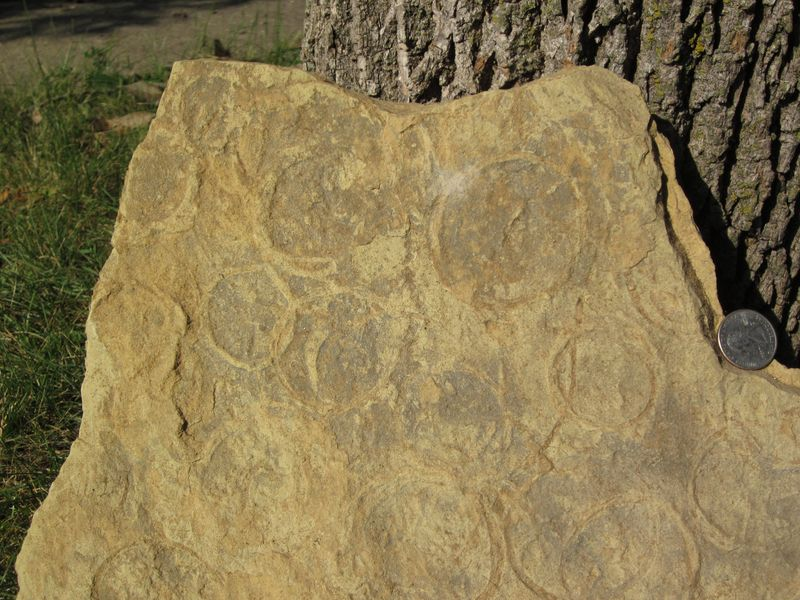
UC Riverside Offers $500 Cash Reward for Best Explanation of Fossil Rings from Wisconsin
Read more: UC Riverside Offers $500 Cash Reward for Best Explanation of Fossil Rings from WisconsinUC Riverside is offering a $500 cash reward for the best explanation of fossil rings discovered in 492 million year old rocks from Wisconsin. They are a bunch of paleontologists that want you to stretch your mind and come up with creative explanations for a real scientific problem. So, think logically, what caused these intriguing ring-line structures on the seabed so many years ago? Some of you may even have visited the quarry (in southwestern Wisconsin) where these fossils were found. The contest runs through 4 P.M. Pacific Time on March 11. You can find the rules here. Get your…
-
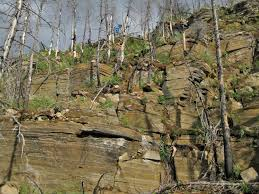
500 million years ago, this critter had a really bad day
Read more: 500 million years ago, this critter had a really bad dayThe Globe and Mail has a fantastic piece on the newest fossil discoveries of animals that lived during the “Cambian Explosion” in British Columbia. The new locality has been dubbed “Marble Canyon”. It features a slightly different assemblage of animals than what was found in the “Burgess Shale”. The exact location has been kept secret; it is known that it resides in Kootenay National Park in British Columbia, Canada. One particular fossil of Sidneyia inexpectans might give us an indication of what it felt like to be caught in an underwater mudslide. High up in the mountains of British Columbia’s…
-
Read more: untitled post 7347
Nature has an interesting story on the future of museum collections. It’s ironic that at a time when we need the collections to track Earth’s shrinking biodiversity. The collections themselves are becoming more and more endangered. For various reasons, most having to do with drops or shifts in funding. There has been a reduction in curatorial staffs and a new emphasis on molecular techniques. In addition, many museums are concentrating on education and entertainment instead of basic research. In 1758, with the publication of the encyclopaedic Systema Naturae, Carl Linnaeus attempted to classify nature — an effort that continues today at…
-
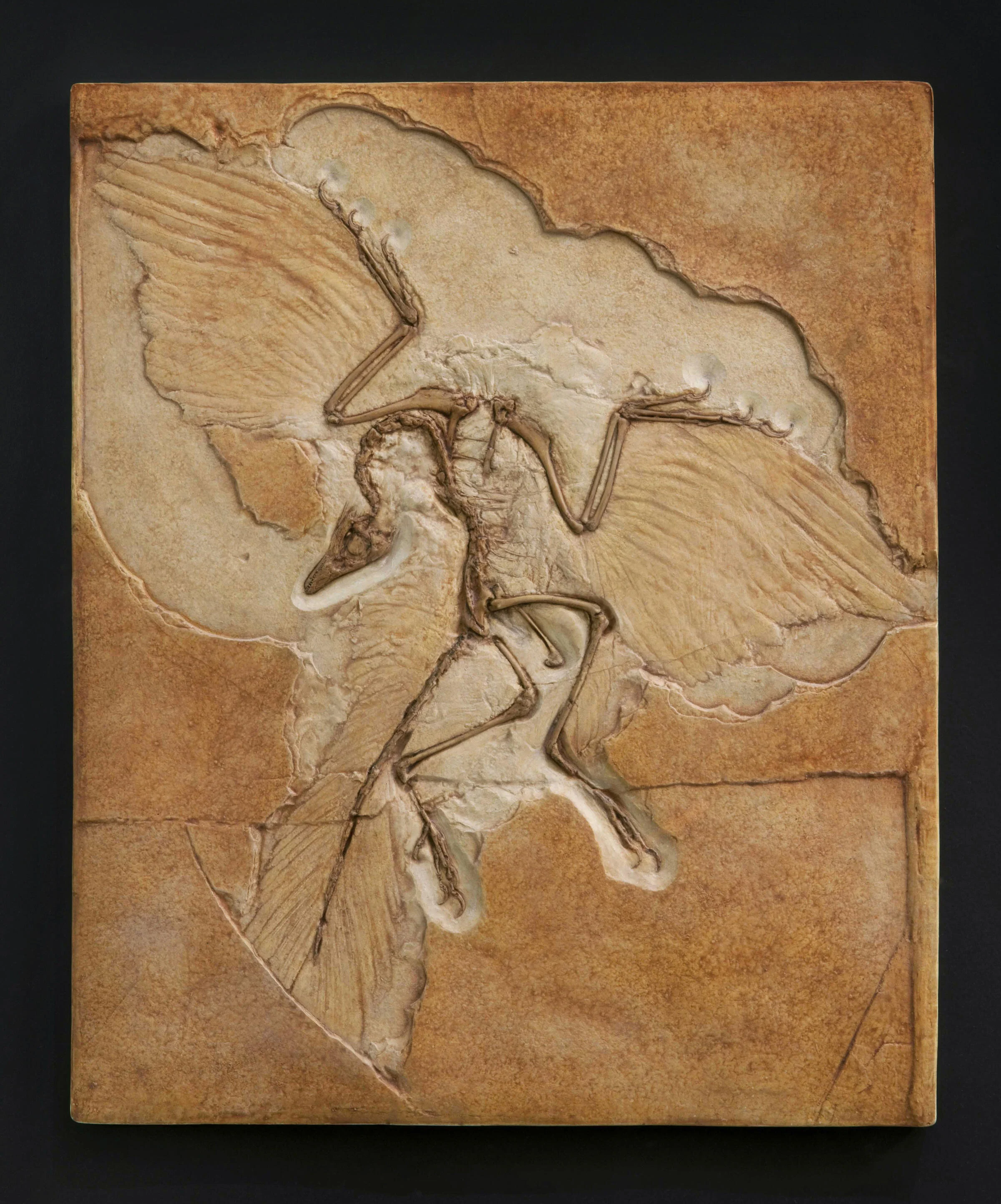
Which Came First: the Dinosaur or the Bird?
Read more: Which Came First: the Dinosaur or the Bird?Audubon poses a question, which is a riff on an age old question. What came first, the chicken… oops!, dinosaur or the bird? While the world outside paleontology (and biology) is still catching up, we all know the answer… the dinosaur! Good summary of the history of the discoveries behind this knowledge.
-
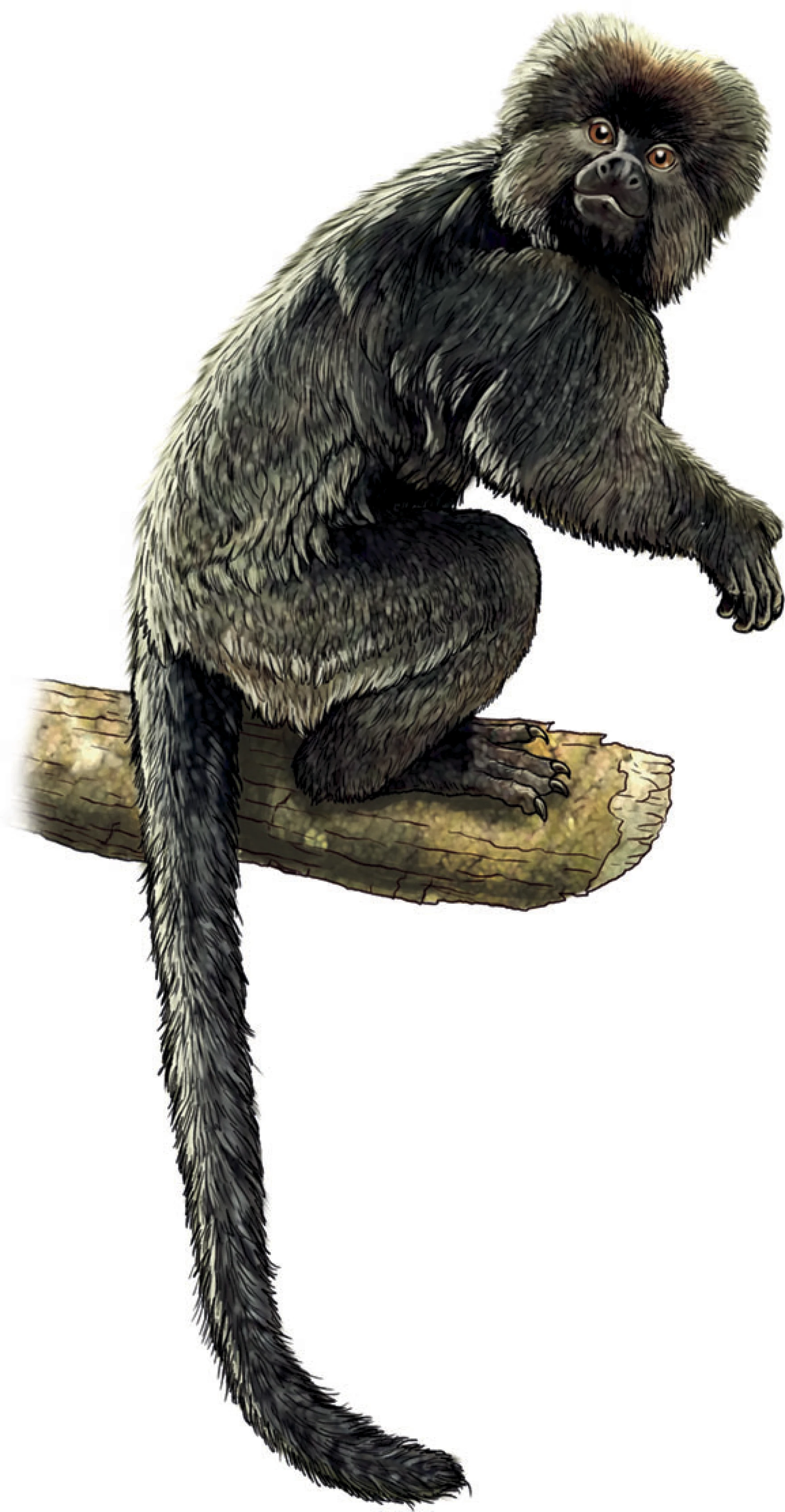
Ancient teeth may help solve a monkey mystery
Read more: Ancient teeth may help solve a monkey mysteryAccording to a recent story published in the journal Nature, monkeys have lived in South America for 36 million years. The team of researchers, from the Natural History Museum of Los Angeles County, discovered four molars in Eastern Peru. These molars have been dated to 36 million years ago, which is 10 million years older than any other known South American monkey fossil. The animal, named Perupithecus ucayaliensis, is thought to be about the size of a squirrel. This news comes despite the fact that the creatures likely didn’t originate on that continent, but rather evolved in Africa and somehow…
-

Dimetrodon, Shark Eater
Read more: Dimetrodon, Shark EaterAn illustration of a battle between Dimetrodon and Xenacanthus. CREDIT: Bob Bakker Since the 1970’s, paleontologists have argued about what Dimetrodon ate. It seems that there just wasn’t enough meat for all the terrestrial predators. Now, after 11 years of research Robert Bakker, of the Houston Museum of Natural History, thinks he knows what Dimetrodon ate. They got their fill by eating freshwater sharks. Check out the story over at livescience. During the early Permian, carnivores greatly outnumbered herbivores on land, so Dimetrodon filled its belly by hunting in shallow water. In the bone beds, Bakker and his collaborators uncovered…
-

Giant Beaver Tooth Found in Marengo, IL in McHenry County
Read more: Giant Beaver Tooth Found in Marengo, IL in McHenry CountyErich Parpart had seen nothing like it. Was it a mammoth tusk? A bone… maybe from a Tyrannosaurus rex?! It was found before Christmas (2014) by the McHenry County Conservation District maintenance worker, while walking in a field in the 3000+ acre Kishwaukee Corridor near Marengo. It has been identified as an incisor tooth from the lower jaw of a giant beaver. The giant beaver, Castoroides ohioensis, went extinct around 13000 years ago. The whole story is in the Northwest Herald. Parpart, a Wonder Lake resident who has been with the conservation district about a year, knew it wasn’t a cow…
-
Meteor Strike
Read more: Meteor StrikeToday is the second anniversary of the Chelyabinsk meteor. PBS has their NOVA episode Meteor Strike online. It gives the complete story of the event. The meteor was travelling over 40,000 mph, weighed around 13,000-14,000 tons, and measured about 20 meters in diameter. The explosion, at a height of 18 miles, had the strength of approximately 500 kilotons of TNT, which is 20-30 times larger than the atomic bomb detonated at Hiroshima. It was the largest meteor strike since the 1908 Tunguska event. The NOVA episode is very informative with discussions of meteors and what we need to do to…
-
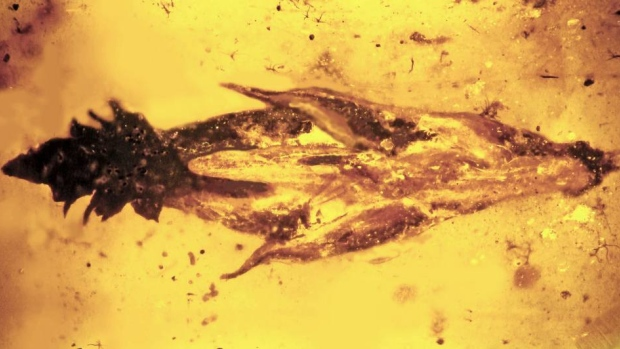
CBC Quirks & Quarks – Dinosaurs May Have Taken LSD
Read more: CBC Quirks & Quarks – Dinosaurs May Have Taken LSDA grass “spikelet” with fungus growing on it preserved in amber. (George Poinar) This week’s CBC Quirks & Quarks has a story about a grass “spikelet” encased in 100 million year old amber. The amber found in Myanmar shows the top of the “spikelet” covered in a fungus known as ergot. Due to their nature, fungi are very sparse in the fossil record. Because the ergot fungus of today is associated with the hallucinogen, lysergic acid diethylamide (LSD), Dr. George Poinar, a paleobiologist from Oregon State University, wondered if ingesting the ergot of yesteryear had any effect on dinosaurs of…
-
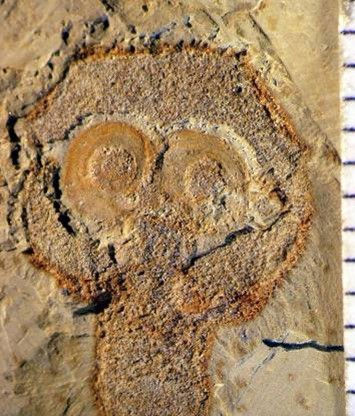
Palaeocast Episode 40: Brachiopods – Part 2
Read more: Palaeocast Episode 40: Brachiopods – Part 2Detail of the upper part of Yuganotheca showing the agglutinated valves, and the horseshoe-shaped lophophore. Scale bar in millimeters. Image credit: Zhifei Zheng Part 2 of Episode 40 is up over at Palaeocast. This time they discuss the fossil record of Brachiopods. Their evolutionary path from the Cambrian until the present.
-
What We Know About the Earliest History of Chocolate
Read more: What We Know About the Earliest History of ChocolateThere’s an interesting story about the early history of chocolate over at Smithsonian. Many people think of Belgium or Switzerland when they consider the history of chocolate, However, chocolate has it’s origins in Mesoamerica with the Olmecs of southern Mexico. It might date back as far as 1500 BC. The way they consumed chocolate would not be recognizable today. On a sunny morning in San Francisco’s Mission District, half a dozen men and women scoot around a tiny chocolate factory, wrapping bars, checking temperature settings, sorting beans. Cacao beans that have been fermented, dried, roasted, shelled, and ground tumble with…
-
Archaeology Group: Bermuda Triangle and Asiatic Echoes
Read more: Archaeology Group: Bermuda Triangle and Asiatic EchoesOn Friday Feb 20th, Eric Schmidt will be presenting on what he considers to be one of the most intriguing places on Earth, the Bermuda Triangle. While this is considered by some to be nothing more that a stretch of dangerous waters, others believe it to contain unexplainable forces that have caused the disappearance of thousands of lives, hundreds of boats and dozens of aircraft. Eric will be presenting the facts about the triangle. If you are able to make it, come with an open mind and decide for yourself. Also Dr John Ruskamp will be presenting his latest findings…
-

PBS NOVA: Bigger Than T-Rex… Spinosaurus
Read more: PBS NOVA: Bigger Than T-Rex… SpinosaurusThe Spinosaurus NOVA documentary is over on YouTube. Check it out if you missed it last fall on PBS. There are discussions on the new fossil find in Egypt and the aquatic nature of Spinosaurus, which appeared in an article in the National Geographic Magazine back in September 2014. Enjoy!
-
The Fossil Forum
Read more: The Fossil ForumHave you tried the Fossil Forum? Lots of great information on fossils of all types. There are forums on Fossil Hunting Trips, Fossil ID, Questions & Answers, and Fossil Preparation. The monthly Fossil of the Month is always amazing. Fossil Sites is a useful resource to find new places to hunt, either locally or when you are on vacation. Check it out this winter for great discussion with a bunch of good and helpful people of like mind.
-
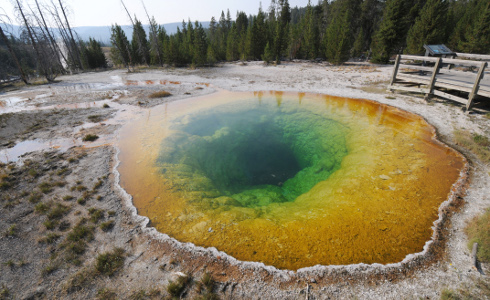
Science Friday: Picture of the Week
Read more: Science Friday: Picture of the WeekMorning Glory thermal spring, in Yellowstone National Park (photo taken in August 2012). Credit: Joseph Shaw, Montana State University Science Friday’s Picture of the Week is of the Morning Glory thermal spring, in Yellowstone National Park. It hasn’t always had the colors you see today. Scientists used biological, chemical, and optical data to construct a mathematical model of how the spring has changed over time. Tourists have been tossing coins, rocks, and other debris into it for decades. That debris has partially blocked the underground heat source and lowered the temperature. Now, the spring is home to photosynthetic microorganisms that probably…
-
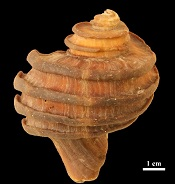
15 Million Year Old Proteins Recovered From Mollusk Shell
Read more: 15 Million Year Old Proteins Recovered From Mollusk ShellA group of scientists from the Carnegie Institution have recovered proteins from a 15 million year of gastropod shell from the Calvert Cliffs of southern Maryland. The team, which included John Nance, John Armstrong, George Cody, Marilyn Fogel, and Robert Hazen, collected fossil Ecphora shells from a popular collecting site along the shoreline of the Chesapeake Bay. The original paper was published in the inaugural issue of the Geochemical Perspectives Letters. Ecphora is known for an unusual reddish-brown shell color, making it one of the most distinctive North American mollusks of its era. This coloration is preserved in fossilized remains, unlike the…
-
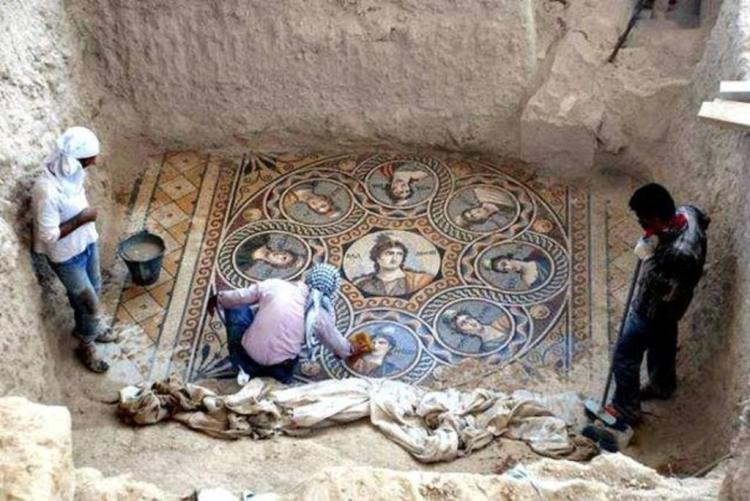
Stunning 2200-Year-Old Mosaics Discovered in Ancient Greek City
Read more: Stunning 2200-Year-Old Mosaics Discovered in Ancient Greek CityLaughing Squid has a story about some amazing ancient Greek mosaics. They were discovered in the Turkish city of Zeugma. The artwork, which dates to the 2nd century BCE, is constructed of boldly colored glass. Up until 2000, the ancient city was completely submerged underwater. There are many areas of Zeugma, once home to about 80,000 people, left to excavate. From now on, we will work on restoration and conservation. We plan to establish a temporary roof for long-term protection. We estimate that the ancient city has 2,000-3,000 houses. Twenty-five of them remain under water. Excavations will be finished in…
-
Why an Ichthyosaur Looks Like a Dolphin
Read more: Why an Ichthyosaur Looks Like a DolphinHow skull (top) and tooth (bottom) shapes group marine tetrapods together. From Kelley and Motani, 2015. Brian Switek has an interesting post on his Laelaps blog over at National Geographic. In it, he discusses a new Biology Letters study by marine tetrapod specialists Neil Kelley and Ryosuke Motani. They compared the skulls and teeth of marine tetrapods from many animals, including whales, turtles, crocodiles, seals, and even our friends the sauropterygians (plesiosaurs, pliosaurs, mosasaurs, and ichthyosaurs). What they found is that form followed function. Skull anatomy is a fairly good predictor of feeding strategy regardless of ancestry. Nice results that…

ESCONI Gem, Mineral, and Fossil Show
Most Recent Post
- Trilobite Tuesday #50: Penn Dixie: Dig With the Experts 2026 – June 13th and 14th, 2026
 The Penn Dixie Fossil Park and Nature Center are holding their annual “Dig With the Experts” event on June 13th and 14th, 2026. Details can be found be found on their website. We’ve featured a few trilobites from Penn Dixie for Fossil Friday. I went there a few years ago and had a great time. If you love trilobites, don’t miss this event!
- About ESCONI
- Around the Web
- Calendar of Events
- Code of Ethics and Conduct
- ESCONI Books for Sale
- ESCONI Gem, Mineral, and Fossil Show
- ESCONI in the News
- ESCONI Videos
- Field Trips
- Flashback Friday
- Fossil Friday
- Mazon Creek
- Mazon Monday
- Member Spotlight
- Membership Information
- Reference Material
- Throwback Thursday
- Trilobite Tuesday
Field trips require membership, but visitors are welcome at all meetings!
| Friday, May 2nd | Field Trip to Danville, IL. Details here. |
| Friday, May 8th | General Meeting – 8:00 PM via Zoom. Thomas Loebel will present “Seeing Beneath the Ground: Geophysics and Archaeological Explorations in Illinois”. |
| Saturday, May 9th | Junior Study Group Meeting – 2:00 PM, in person at the College of DuPage Technical Education Center (TEC) Building – Room 1038A (Map). “The Rock Cycle and Sedimentation” Specifics of this meeting are available from Scott Galloway, 630-670-2591, gallowayscottf@gmail.com. |
| Saturday, May 16th | Paleontology Study Group – 7:30 PM via Zoom. John Catalani will present “An Ordovician Konzentrat Lagerstätte: The Dixon Mifflin Residuum Fauna”. |
| Saturday, May 23rd | CGMA Show, Kane County Fairgrounds |
| Sunday, May 24th | CGMA Show, Kane County Fairgrounds |
| Saturday, May 30th | Field Trip to Braceville, IL. Details here. |
| Sunday, May 31st | Field Trip to Braceville, IL. Details here. |
| No meeting this month | Mineralogy Study Group |