
-
Today and tomorrow are Paleofest 2015 at the Burpee Museum in Rockford!
Read more: Today and tomorrow are Paleofest 2015 at the Burpee Museum in Rockford!Quick reminder, today and tomorrow are PaleoFest 2015 at the Burpee Museum in Rockford. There’s a long distinguished list of speakers. And, many programs for families with kids. Don’t miss it!
-
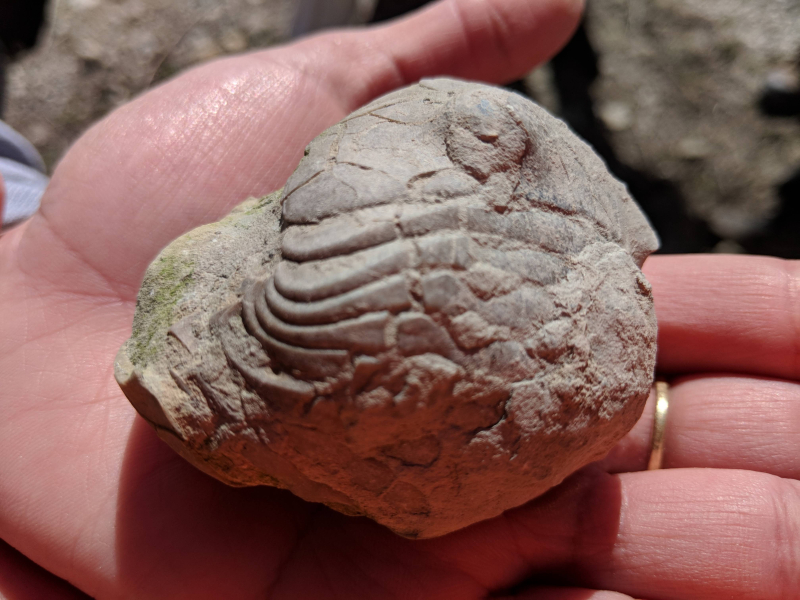
Field Trip to Vulcan Sycamore Quarry on Saturday, April 18, 2015
Read more: Field Trip to Vulcan Sycamore Quarry on Saturday, April 18, 2015A field trip to the Vulcan quarry (aka Larson) in Sycamore Illinois will be held on April 18, 2015. The trip starts at 9:30 AM and ends at 12:00 PM. The quarry is located at 15622 Barber Green Road. You must be an ESCONI member as of March 22 to attend this trip. That means you can pay your membership dues at the upcoming show, if you haven’t done so already. The rules are a little different this time, so please read them carefully. This is what was given to me by Vulcan management. 1. This trip is combined with Roy Plotnick’s class…
-

Meet Aegirocassis benmoulae, One of the Largest Arthropods Ever
Read more: Meet Aegirocassis benmoulae, One of the Largest Arthropods EverIt’s being call Frankensquid, giant lobster, man-sized swimming centipede, or just plain weird. The name is actually Aegirocassis benmoulae and it’s an anomalocaridid from the Early Ordovician Fezouata Biota of Morocco. It measured about 2 meters (7 feet) in length and was a filter feeder that used a technique similar to modern day baleen whales. Scientists spent about 500 hours preparing it’s fossil. It is one of the biggest arthropods that ever lived, and is far larger than the largest modern arthropod. Originally thought to have gone extinct in the Cambrian, anomalocaridids have been found in the Ordovician and on…
-

Crocodiles, Crocodiles, Crocodiles…
Read more: Crocodiles, Crocodiles, Crocodiles…“The modern Amazon River basin contains the world’s richest biota, but the origins of this extraordinary diversity are really poorly understood,” said John Flynn, Frick Curator of Fossil Mammals at the American Museum of Natural History and an author on the paper. “Because it’s a vast rain forest today, our exposure to rocks–and therefore, also to the fossils those rocks may preserve–is extremely limited. So anytime you get a special window like these fossilized “mega-wetland” deposits, with so many new and peculiar species, it can provide novel insights into ancient ecosystems. And what we’ve found isn’t necessarily what you would…
-
Preview: 2015 ESCONI Gem, Mineral, and Fossil Show, March 21-22, 2015
Read more: Preview: 2015 ESCONI Gem, Mineral, and Fossil Show, March 21-22, 2015The 2015 ESCONI Gem, Mineral, and Fossil Show will be held on March 21st and 22nd, 2015 at the DuPage County fairgrounds. There will be vendors, demonstrations, and both silent and live auctions. Don’t miss it, there will be fun for the whole family! Here is a sampling of the auction specimens. Amethyst Belotelson
-
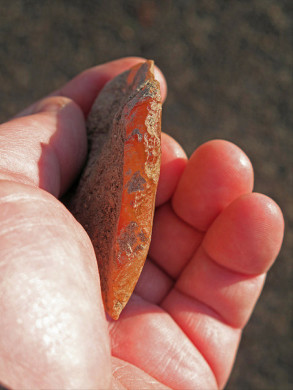
Oregon Archaeologists Discover 15,000 Year Old Knife
Read more: Oregon Archaeologists Discover 15,000 Year Old KnifeArchaeologists have discovered a 15,000 year old knife in eastern Oregon. The finding has yet to be published in a peer reviewed journal. But it the research holds up, it will add to mounting evidence that humans migrated to North America much earlier than previously thought. The discovery is a small, beautiful knife carved out of a clear orange agate. One side has a number of serrated points, like a saw. The other edge has a steep, flaked edge that could have been used to scrape hides and cut meat off of bones. “Its kind of a neat little artifact,…
-
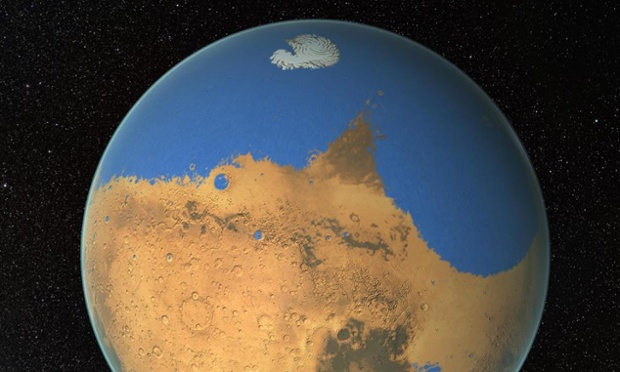
Nasa finds evidence of a vast ancient ocean on Mars
Read more: Nasa finds evidence of a vast ancient ocean on MarsAn artist’s impression of the ancient ocean on Mars, which lasted for billions of years more than was previously thought. Credits: Mars Geronimo Villanueva/Nasa It may not be Earth science (Mars science?), but it is a interesting story with interesting implications about our nearest neighbor in the Solar System. Were there oceans on Mars? Would it have been the red and blue or the blue planet? A massive ancient ocean once covered nearly half of the northern hemisphere of Mars making the planet a more promising place for alien life to have gained a foothold, Nasa scientists say. The huge body…
-

Panel calls for pardon of Peter Larson
Read more: Panel calls for pardon of Peter LarsonThe Chicago Tribune has a story about efforts to obtain a pardon for Peter Larson. Peter Larson was part of the team that discovered Sue the Tyrannosaurus rex back in 1990. South Dakota lawmakers plan to ask President Barack Obama to pardon renowned paleontologist Peter Larson, whose team discovered “Sue,” the most complete Tyrannosaurus rex fossil ever found. The Senate Judiciary Committee approved a resolution Thursday seeking a clean slate for Larson, who spent time in prison on charges unrelated to the T. rex discovery. As part of the resolution, lawmakers recognized Larson, who founded the Black Hills Institute of…
-
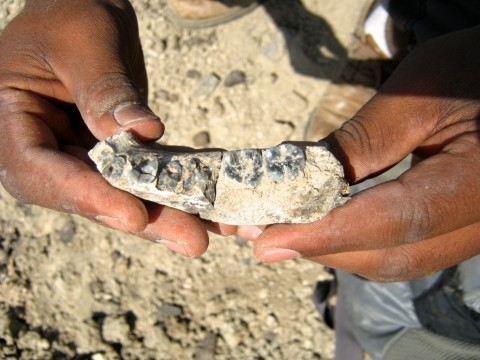
Earliest Known Fossil of the Genus Homo – 2.8 to 2.75 Million Years Old
Read more: Earliest Known Fossil of the Genus Homo – 2.8 to 2.75 Million Years OldThis is a close up view of the mandible just steps from where it was sighted by Chalachew Seyoum, ASU graduate student, who is from Ethiopia. Credit: Brian Villmoare There are quite a few stories about the new fossil find that represents the earliest known record of the genus Homo, the human genus. The fossil specimen is represented by a lower jaw with teeth. It was recently found in the Afar region of Ethiopia and dates to between 2.8 and 2.75 million years ago. Summary article in Science Daily. Related article in Science Daily. Actual journal article in Science.
-
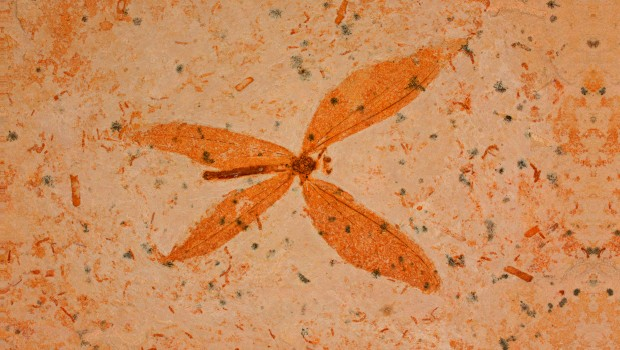
Palaeocast Episode 41a: Insects – Part 1
Read more: Palaeocast Episode 41a: Insects – Part 1The “Palaeocast” podcast has a new episode. The subject is “Insects”. Insects are arthropods, the most diverse phylum in the animal kingdom. Discussed is their fossil record – when and where they first appear. There are fossil insects as far back as the Devonian, but they are very sparse. However, by the late Carboniferous and the Permian periods, the fossil record contains a fair bit of variety. A good example is the diversity in the Mazon Creek biota.
-

Libraries of Life
Read more: Libraries of LifeEnzo Pérès-Labourdette The New York Times has an opinion piece about the importance of natural history museums and their collections. Museums have been under pressure recently with budget cutbacks, changing focus, and government regulations. That has put their collections in danger. These collections are even more important today, as the Earth undergoes an extinction event caused by human activity and human induced climate change. Many species of plants, animals, and fungi are disappearing before they can be completely catalogued. Fortunately, many of these species exist in these collections. Natural history collections are as important to modern biologists as libraries…
-
(broken link) David Attenborough on When Did Our Backbones First Appear?
Read more: (broken link) David Attenborough on When Did Our Backbones First Appear?Smithsonian has a video about when the first backbones appeared. It features David Attenborough visiting a Cambrian locality in China. The video includes interesting details on one of the first animals with a nodal cord.
-
Reminder: Burpee Museum’s PaleoFest 2015 on March 14th-15th
Read more: Reminder: Burpee Museum’s PaleoFest 2015 on March 14th-15thThe Burpee Museum is holding PaleoFest 2015 on Saturday, March 14th and Sunday, March 15th. The speaker list is long and distinguished, including Dr. Hans-Dieter Sues, Dr. Paul Sereno, Dr. Stephan Brusatte, Dr. Thomas R Holtz, Jr., Dr. Tyler Lyson, Dr. Sterling Nesbitt, and many more. The symposium focuses on the Triassic and Jurassic time periods, “The Beginning of Dinosaurs and the Origin of the Modern World.” There is a dinner on Saturday night, with a presentation by Dr. Hans-Dieter Sues. The schedule includes workshops for the whole family. Don’t miss it as it’s always a fun event!
-
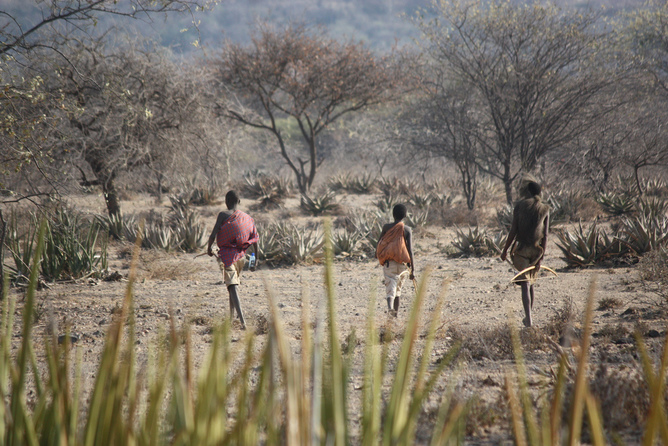
Real Paleo Diet: early hominids ate just about everything
Read more: Real Paleo Diet: early hominids ate just about everythingVery few people today live a true hunter-gatherer lifestyle – and Paleo diets likely oversimplify what would have been on the table many millennia ago. Thiery, CC BY-NC The Paleo Diet may be very trendy. However, the evidence shows us that it isn’t all it’s cracked up to be. Early hominids ate whatever was available and convenient. Eating “natural” foods and abstaining from “processed” foods may be healthy, but it’s not because our ancient cousins ate that way. We and the food we eat have changed greatly since the paleolithic age. Reconstructions of human evolution are prone to simple, overly-tidy scenarios. Our…
-

ESCONI Events March 2015
Read more: ESCONI Events March 2015Fri, Mar. 13 ESCONI No General Meeting Sat, Mar. 14 ESCONI Mineralogy Meeting 7:30 p.m. College of Dupage, – Tech Ed Building (TEC), Room 1038B (Map) – Topic: “Barite and Beryl”, by ESCONI members Fri, Mar. 20 ESCONI No Archaeology Meeting Sat, Mar. 21-22 ESCONI Gem, Mineral, and Fossil Show! – Dupage FairgroundsSaturday: 10 a.m. to 5 p.m. Sunday: 10 a.m. to 4 p.m. Sat, Mar. 21 ESCONI No Paleontology Meeting Fri, Mar. 27 St. Paul Quarry Field Trip, 8:45 am, St. Paul, IN (Map), Silurian Fossils. See details in Field Trip Post.
-
Winter Is Still Among Us!
Read more: Winter Is Still Among Us!It sure doesn’t seem like March 1st. Judging by this snow cover map, Winter is not showing any sign of ending. With Spring just weeks away, there are many fossils to be found, but most have a frosty layer of snow on top. Fear not fellow rock hounds… it will be warm soon!
-

CBC Quirks & Quarks – A Whale of a Bite
Read more: CBC Quirks & Quarks – A Whale of a BiteA Basilosaurus isis skull. The red represents muscle forces, and the blue color of the cranium shows that the skull has very low stress. (John Klausmeyer/Museum of Paleontology, University of Michigan.) This weeks Quirks & Quarks as a story about Basilosaurus. Basilosaurus was a 15 meter long whale that lived 35 million years ago, during the Eocene. Their skulls had very powerful muscles and would have provided tremendous force to both the front and back teeth. The estimate of their bite force is 15,000 N (~3500 lbs). That number approaches the force applied by some of the strongest biters amongst…
-
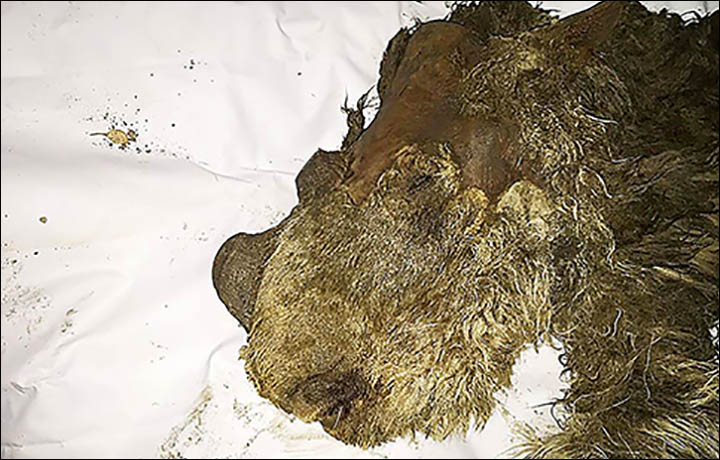
Meet Sasha – the world’s only baby woolly rhino
Read more: Meet Sasha – the world’s only baby woolly rhinoThe world’s first woolly rhinoceros has been found in Russia. The species, Coelodonta antiquitatis, is thought to have gone extinct about 10,000 years ago, with many other megafauna around the world. Currently, the remains have not been dated, but they would most likely be at least that old. Scientists hope to extract DNA from “Sasha”, as she has been named. In 2007, a frozen carcass of am adult woolly rhino was discovered in Kolyma, Yakutia. Woolly rhinos are much less studied than mammoths, as they are very rare. There is hope that Sasha can give answers as to how they…
-
Who Can Save the Grand Canyon?
Read more: Who Can Save the Grand Canyon?Smithsonian.com has a story about the effort to block the commercialization of the Grand Canyon. The proposed $500 million development would reside on the rim of one of Earth’s greatest natural treasures. When Teddy Roosevelt declared the Grand Canyon a national monument, in 1908, he famously said: “Leave it as it is. You cannot improve on it. The ages have been at work on it, and man can only mar it.” In that sense, the Escalade is a thumb in TR’s eye. Covering hundreds of acres on Navajo Reservation land, it is arguably the most intrusive development ever proposed for…
-
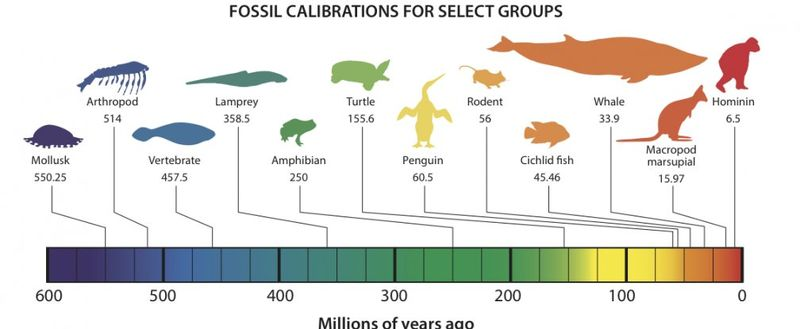
Scientists have created another open-access fossil database
Read more: Scientists have created another open-access fossil databaseScience Alert has a story of a new open-access fossil database. Known as the Fossil Calibration Database, the free, open, online resource was created by a group of 20 researchers from the Queensland University of Technology (QUT), the Indiana University, and others. The project was led by Daniel Ksepla, a science curator at the Bruce Museum in Greenwich, CT. The data will be hosted by the journal Palaeontologia Electronica. It joins other online fossil databases like the Paleobiology Database. The database brings together peer-reviewed fossil information, and it will help scientists from around the world calibrate their ‘molecular clocks’. Right…

ESCONI Gem, Mineral, and Fossil Show
Most Recent Post
- Trilobite Tuesday #50: Penn Dixie: Dig With the Experts 2026 – June 13th and 14th, 2026
 The Penn Dixie Fossil Park and Nature Center are holding their annual “Dig With the Experts” event on June 13th and 14th, 2026. Details can be found be found on their website. We’ve featured a few trilobites from Penn Dixie for Fossil Friday. I went there a few years ago and had a great time. If you love trilobites, don’t miss this event!
- About ESCONI
- Around the Web
- Calendar of Events
- Code of Ethics and Conduct
- ESCONI Books for Sale
- ESCONI Gem, Mineral, and Fossil Show
- ESCONI in the News
- ESCONI Videos
- Field Trips
- Flashback Friday
- Fossil Friday
- Mazon Creek
- Mazon Monday
- Member Spotlight
- Membership Information
- Reference Material
- Throwback Thursday
- Trilobite Tuesday
Field trips require membership, but visitors are welcome at all meetings!
| Friday, May 2nd | Field Trip to Danville, IL. Details here. |
| Friday, May 8th | General Meeting – 8:00 PM via Zoom. Thomas Loebel will present “Seeing Beneath the Ground: Geophysics and Archaeological Explorations in Illinois”. |
| Saturday, May 9th | Junior Study Group Meeting – 2:00 PM, in person at the College of DuPage Technical Education Center (TEC) Building – Room 1038A (Map). “The Rock Cycle and Sedimentation” Specifics of this meeting are available from Scott Galloway, 630-670-2591, gallowayscottf@gmail.com. |
| Saturday, May 16th | Paleontology Study Group – 7:30 PM via Zoom. John Catalani will present “An Ordovician Konzentrat Lagerstätte: The Dixon Mifflin Residuum Fauna”. |
| Saturday, May 23rd | CGMA Show, Kane County Fairgrounds |
| Sunday, May 24th | CGMA Show, Kane County Fairgrounds |
| Saturday, May 30th | Field Trip to Braceville, IL. Details here. |
| Sunday, May 31st | Field Trip to Braceville, IL. Details here. |
| No meeting this month | Mineralogy Study Group |