Tag: paleontology
-
Last Week for Rob Sula’s Exhibit: Dinosaurs: The Art & Science of Paleontology
Dinosaurs: The Art and Science of Paleontology" exhibit running through May 3 at the Aurora Public Art Commission's third floor gallery at the David L. Pierce Art and History Center in Aurora. The gallery hours are Wed. thru Friday 12 – 4. This is a enjoyable and interesting exhibit, so be sure to check it…
-
Just Announced: Art Exhibit – The Art and Science of Paleontology
Rob Sula,(who is also the ESCONI Vice President) is having an art show, Dinosaurs: The Art and Science of Paleontology, from February 22 to May 3 with the Aurora Public Art Commission, 20 East Downer Place, Aurora, Illinois 60506, Phone: (630) 256-3340, Fax: (630) 256-3349, Gallery Hours: Wednesday – Friday, Noon – 4 p.m. The…
-
Paleo Study Group This Saturday
ESCONI Paleontology Meeting 7:30 p.m. College of Dupage, – Tech Ed Building (TEC), Room Room 1038B (Map) Topic: Presentations by Tom Williams and Kathy Catalani who will speak on Fossil Finders.
-
Roy Plotnick to Speak on Experimental Paleontology This Fri
ESCONI General Meeting 8:00 p.m. College of Dupage, – Tech Ed (TEC) Building, Room 1038B (Map) Roy Plotnick, Phd, University of Illinois Chicago Geology Department, will speak on Experimental Paleontology – Paleontology is usually viewed as the antithesis of an experimental science. But in at least two areas, fossil preservation and functional morphology, there is a long…
-
Saber-tooth Cat Extinction
Vanderbilt University: (hat tip, Dave Carlson, ESCONI Discussion Group) In the period just before they went extinct, the American lions and saber-toothed cats that roamed North America in the late Pleistocene were living well off the fat of the land. That is the conclusion of the latest study of the microscopic wear patterns on the…
-
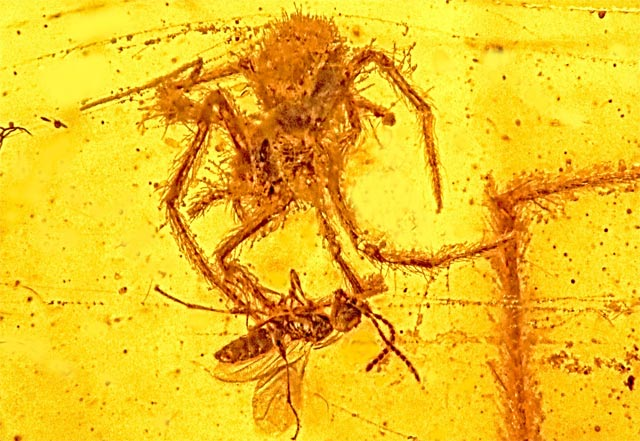
Spider Kills Wasp a 100 Million Years Ago
From Sci-News: (hat tip via Dave at ESCONI Yahoo Group) This piece of amber preserved the event in remarkable detail, an action that took place some 100 million years ago in the Hukawng Valley of Myanmar. The fossil also contains the body of a male spider in the same web. This provides the oldest evidence of…
-
Lecture This Friday 10/12/2012 – Permian Tetrapods
ESCONI General Meeting 8:00 p.m. College of Dupage, – Tech Ed (TEC) Building, Room 1038A (Map)Topic: Mike Henderson will speak on Captorhinus and friends, the lower Permian Tetrapods of the Fort Sill fissure fillings southern Oklahoma
-
Mazon Creek Field Trip
Saturday and Sunday, 9/22 and 9/23 , meet at 8:00 A.M. Saturday at the BP Amoco in Coal City. No Age Limit. Hard Hats not required. Take I-55 to Exit 236 (Coal City). Take a right onto Highway 113 (Division Street). Go west to Broadway Street and Division in Coal City. We will be collecting…
-
Field Museum’s Podcast: What the Fish?
The Field Museum has a new podcast called What the Fish? “… 2.5 million specimens don’t collect themselves! The Field Museum’s Division of Fishes houses approximately 2.5 million specimens of fish, including whole specimens in alcohol, skeletal specimens, tissue samples, and cleared and stained material. That is a lot of fishes! But the fishes did not…
-
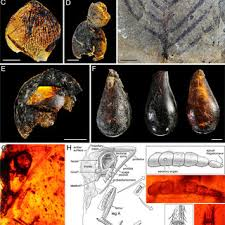
Oldest-ever bugs found preserved in amber
From Discover Magazine: (hat tip Floyd) Three tiny creatures from the Triassic period are the oldest ever to be discovered preserved in amber – about 100 million years older than any other amber arthropod ever collected…. … But even though arthropods are more than 400 million years old, until now the oldest record of the…
-
Travel and Trilobites
Nice article from Scientific American on Travel and Trilobites: …. Still today the Silurian (some 443,7-416 milion years ago) is one of the most enigmatic epochs in the history of earth; marked by glaciations at the beginning, it was at the end of this period that the landmasses, until then barren deserts, became colonized by…
-

Turtle the Size of a Small Car
Via NC State University: (hat tip Floyd) – “… A prehistoric turtle big enough to eat crocodiles has been discovered in Columbia. The turtle lived about 60-million-years ago, and was about the size of a small car. The fossils were discovered in a coal mine in northern Colombia, in 2005. And has thusly been named…
-
New Paper on Trilobites of Utah
Over at the Yahoo ESCONI discussion group, Don Baumgartner posted: “… Please find this at the below web site for a free download. This was posted a while back off the Trilobite Jam Facebook page. http://kuscholarwor ks.ku.edu/ dspace/handle/ 1808/8543…”
-
3-D Printing of Dinosaur Bones
Via ABC News (Feb 22) … For all the digging of dinosaur fossils, all the magnificent reconstructions in museums and all the research that has been devoted to them, the great beasts remain mostly a mystery to us, and paleontologist Kenneth Lacovara of Drexel University in Philadelphia says our ways of studying them have not…
-
570 Million Year Old Hint At Animal Life Origns
Via Wired: … Using a technique called x-ray tomographic microscopy, researchers captured an unprecedented level of detail in the Doushanto fossils, imaging internal and external features down to a ten-thousandth of an inch. They could even see individual nuclei within the cells, some of which were caught in the act of dividing. Interestingly, these nuclei…
-
Oldest Organism with Skeleton Found in Australia
Via PhysOrg: …Coronacollina resembles the Cambrian fossil sponge, Choia. The three raised points on the rim are evident, with a central hollow and four spicules extending from the cone rim…. the organism is between 560 million and 550 million years old, which places it in the Ediacaran period, before the explosion of life and diversification of…
-
Paleontology Blog with An Attitude
Fun and interesting paleontology blog – “Jersey Boys Hunt Dinosaurs“
-
Josh Mathews on Antarctica Paleontology
Last night, those who attened the General Meeting heard an informative and entertaining lecture about Josh Mathew’s paleontology work in Antartica. As a follow-up, here is a recently published article discussing some of what he told us about – Augustana Geology Museum welcomes two new flying reptiles. Also, of note – Augustana College invites learners of all…
-
Meeting Fri & Sat
Friday 4/13 – General Meeting – 7:30 p.m. College of Dupage, Building K, Rm161. Josh Mathews, Augustana College. He will speak on – Dinosaurs “On the Rocks”: An Exploration of Antarctic Fossils and New Discoveries & Insights from th Frozen Continent. Sat, 4/14 – Mineralogy and Micromount Study Group Meeting. 7:30 p.m. College of Dupage, Building K, Rm 161.…
-
ESCONI Field Trips, 2012
We have a few field trips coming up. To attend field trip, one needs to be a member of ESCONI, which is easy to do! The St.Paul field trip is limited to age 18 and above. However, under 18 yr members are welcome to the Schingoethe field trip and the Braceville field trip. Sun, 4/15…
-
34th Mid America Paleontology Society Show This Weekend!
Nice article about the MAPS Expo via the Canton Daily Ledger: The National MAPS Show returns to Western Illinois University-Macomb Friday-Sunday, March 30-April 1. This year’s theme is the Pennsylvanian Period. The expo, tagged the world’s largest fossil-only show, will be held in Western Hall from 8 a.m.-5p.m. Friday- Saturday, March 30-31 and from 8 a.m.-12 p.m.…
-
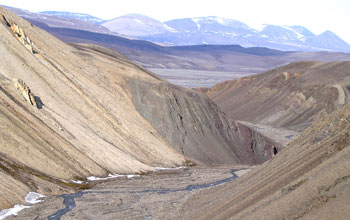
Are Mass Extinctions Always Sudden Events?
Via National Science Foundation: …The deadliest mass extinction of all took a long time to kill 90 percent of Earth’s marine life–and it killed in stages–according to a newly published report. It shows that mass extinctions need not be sudden events. Thomas Algeo, a geologist at the University of Cincinnati, and 13 colleagues have produced…
-

Oldest Dinosaurs Found: Evidence of Organized Nesting
Image: Nobu Tamura, www.palaeocritti.com Article except via The Guardian: (click link to see beautiful photograph of fossils) Oldest dinosaur nests discovered in South Africa Massospondylus nesting site – with fossilised eggs and tiny footprints – is 100m years older than any previously discovered – A dinosaur nesting site older than any discovered before suggests that the creatures…
-
Paleontology: A Dirty Job
Via geology.com from Discover: Four different video previews… Dirty Jobs: The Dino-Dig Workout. Mike asks, “Do you have what it takes?” The episode, Fossil Hunter, is scheduled to appear on January 14th, 8:00 pm, January 15th, 1:00 am, January 21st at 10:00 am on the Discovery Channel’s show Dirty Jobs. Check your local listing.
-
Call for Papers for TerQua – 2nd Annual Meeting of the Tertiary and Quaternary Paleontologic Studies Society
TerQua: The 2nd Annual Meeting of the Tertiary and Quaternaty Paleontologic Studies Society Call for Abstracts:Those wishing to submit an abstract for consideration for a presentation should email an abstract to Dr. Bruce Rothschild at Kansas University (BMR@KU.edu). Abrtracts should follow the Journal of Vetebrate Paleontology format. Abstract Deadline is March 15, 2012 Registration details…
-

Paleostudy Group National Fossil Day Event
Wow. So many people who brought in so many of their fossils! All kinds of specimens – first time prime and unknown, large and small specimens, dark and light, old and not so old… Karen Nordquist looked like she was writing down the specifics, so look for more info in the newsletter! …
-
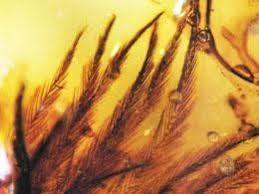
Preserved Dino Feathers found in Amber
From Science via NatureNews: The amber samples are between 70 and 85 million years old, and come from a site called Grassy Lake in western Canada that was once home to a conifer forest. The site is well known for the wide range of insects found preserved in its amber. Palaeontologist Ryan McKellar and his…
-
Events this week ending 9/18
Sat. 9/17 Paleontology Study Group. 7:30 p.m. College of Dupage, Building K, Rm 161.
-

Paleobiology Database
The Paleobiology Database seeks to provide researchers and the public with information about the entire fossil record. You can use the site to find out about fossil collections, individual plants and animals, taxonomic groups, references to publications, stratigraphic units, time scales, and time intervals. All of our data can be downloaded, including collection, occurrence, or…
-
Ancient Seas May Have Poisoned Life
Via Science News: Soon after complex animals made their first great strides onto the stage of life, the oceans brewed up a toxic chemical mix that put the brakes on evolutionary innovation, suggests a paper in the Jan. 6 Nature. The culprits? Too little oxygen and too much sulfur dissolved in coastal waters, reports a…
