Tag: extinction
-
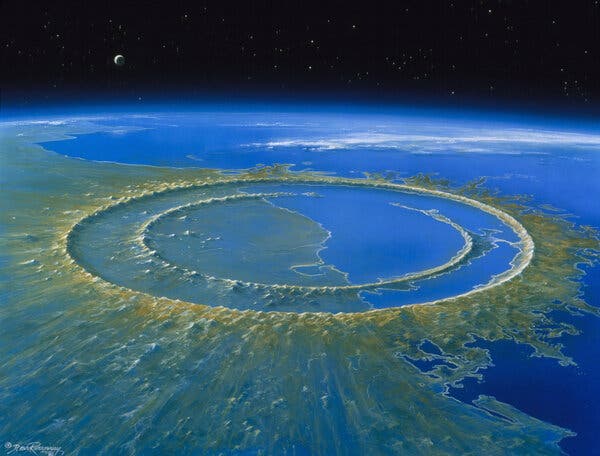
A Mysterious Crater’s Age May Add Clues to the Dinosaur Extinction
The New York Times Trilobites column has a story about a mysterious crater in Ukraine. Scientists have long questioned when the 15 mile wide Boltysh crater was formed, either before or after the Chicxulub crater in the Yucatan Peninsula, which caused the extinction of the non-avian dinosaurs at the end of the Cretaceous Period. A…
-

Throwback Thursday #57: Loch Ness Outdone: Rediscovery of the Coelacanth
This is Throwback Thursday #57. In these, we look back into the past at ESCONI specifically and Earth Science in general. If you have any contributions, (science, pictures, stories, etc …), please send them to esconi.info@gmail.com. Thanks! Youtube has many good videos. Some are regular series. One of my favorites to watch during my workout…
-

NPR: Dinosaur-Killing Impact Came From Edge Of Solar System, New Theory Suggests
NPR has a story about the extinction of the non-avian dinosaurs. New research from Harvard University proposes that a comet and not a meteor impacted in the Yucatan peninsula. The research is detailed in a paper that was published in the journal Scientific Reports. For decades, the prevailing theory about the extinction of the…
-
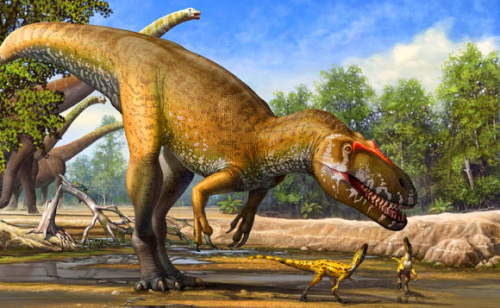
SciNews: Non-Avian Dinosaurs Were Not in Decline Prior to Their Extinction
SciNews has a story about the extinction of the dinosaurs. One long controversial point around the K-Pg mass extinction, which took out the non-avian dinosaurs about 65 million years ago, has been whether their diversity was in decline before the meteor struck in Chicxulub. This is often sited in arguments about whether the volcanic…
-

Trilobite Tuesday #29: Why did trilobites go extinct?
LiveScience has a piece about the extinction of the trilobites. Trilobites existed on Earth for about 270 million years from the early Cambrian until the Permian Mass Extinction. Many organisms went extinct during that time… perhaps upward of 90% of species. But, it’s still an open question that has not been completely answered. During their…
-
SciNews: New Research Provides Comprehensive Reconstruction of End-Permian Mass Extinction
SciNews has a story about new research that provides insights into the causes of the “Great Dying”. The End Permian Mass Extinction was the worst extinctionsin Earth’s history. It occurred about 252 million years ago. During it, about 96% of all marine species and over 70% of terrestrial species went extinct. Those percentages are for…
-
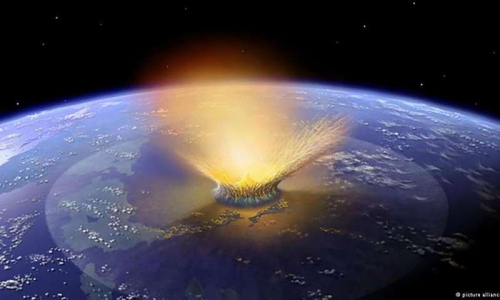
Phys.org: New evidence suggests it was matter ejected from the Chicxulub crater that led to impact winter
Phys.org has a story on new research about the extinction of the non-avian dinosaurs. Since it’s discovery 40 years ago by Walter and Luis Alvarez, this mass extinction, which occurred approximately 66 million years ago, has been a source for much research. The cause is generally thought to be the large meteor that struck the…
-
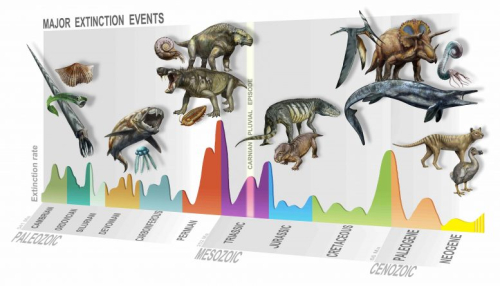
SciTechDaily: Discovery of a New Mass Extinction – Carnian Pluvial Episode – 233 Million Years Ago
SciTechDaily has a story about the identification of a new mass extinction. This one called the “Carnian Pluvial Episode”. It occurred about 233 million years ago during the Triassic Period. The cause is believed to be flood basaltic volcanic eruptions in western Canada. Some of the outcomes was the rise of the dinosaurs and the…
-
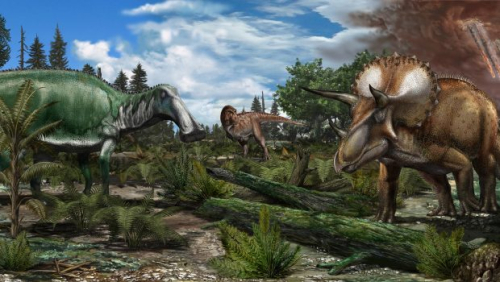
Palaeocast Episode 112: Extinction of the dinosaurs
Palaeocast has an episode on the extinction of the dinosaurs. The episode is an interview with Dr Alessandro Chiarenza about some very thorough analysis that compares the Chicxulub asteroid event with the volcanic eruptions at the Deccan Traps. The paper detailing this analysis can be found in the journal Proceedings of the National Academy of…
-

PBS Eons: How Plants Caused the First Mass Extinction
PBS Eons has a new episode. Climate change has been a large part of all the mass extinctions. The arrival of land plants has a huge impact on the climate and was quite likely a driving event. In the middle of the Cambrian, life on land was about to get a little more crowded.…
-
PBS Eons: How the Andes Mountains Might Have Killed a Bunch of Whales
PBS Eons has a new episode and what happened to a bunch of whales. The Andes Mountains might have some explaining to do… At a site known as Cerro Ballena or Whale Hill, there are more than 40 skeletons of marine mammals — a graveyard of ocean life dating back 6.5 million to 9…
-

Quanta: A Rapid End Strikes the Dinosaur Extinction Debate
Quanta Magazine has an interesting piece about the extinction of the dinosaurs. The article is an interview with Yale Paleontologist Pincelli Hull. Her principle sub-field of study is marine plankton fossils. In the interview, she discusses some new evidence that the full blame for the K-T extinction lies with the asteroid that struck the Yucatan…
-
PBS Eons: When the Rainforests Collapsed
PBS Eons has a new episode. This one is about the plants during the Carboniferous Period. That’s the same time period as Mazon Creek! This episode discusses one of just two mass extinctions of plants in the fossil record. Spoiler… Climate Change played a big role. The Carboniferous Rainforest Collapse set the stage for…
-
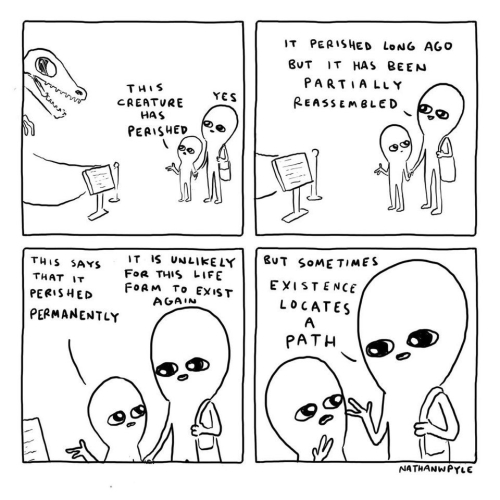
Roy Plotnick: Existence Locates a Path
Roy Plotnick has a new post over on Medium. The post is about extinction… mass extinction. We have a roll in the current and a past extinction. Time for action! Mass extinctions and their causes are topics of intense interest. Nearly forty years after the 1980 paper on the end-Cretaceous impact, significant new research on…
-
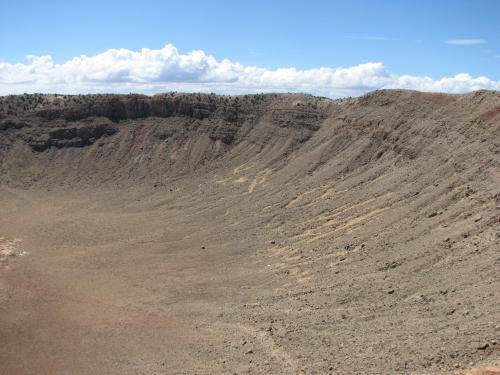
Roy Plotnick: The First Day of the Rest of Life
Roy Plotnick has a great post about of the last day of the Mesozoic Era (or the first day of the Cenozoic Era). It would have been a very bad day, indeed! On a day some sixty-six million years ago, life was Earth was suddenly and irreversibly altered. An enormous asteroid or comet struck the…
-
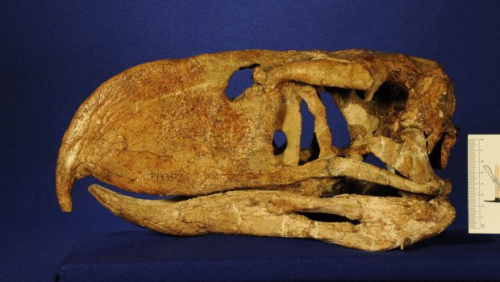
Palaeocast Episode 103: Terror birds
A new episode of Palaeocast is out. This one is about Terror birds. These are large flightless birds that evolved after the K-Pg extinction event. They originated in South America and migrated up to North America when the Isthmus of Panama formed almost 3 million years ago. Personally, I’ve always found these animals fascinating! Terror…
-
ESCONI General Meeting for October 11th, 2019 Upper Devonian Mass Extinction by Dr. James E. “Jed” Day, Professor of Geology at Illinois State University
The program at our October 11, 2019 meeting will be presented by Dr. James E. "Jed" Day, Professor of Geology at Illinois State University. The title of his talk is "Upper Devonian (Keellwasser) Mass Extinction Records from the Subtropics of North America". He will speak about the local (W. Illinois and Iowa) vertebrate microfossil and brachiopod…
-
PBS Eons: When the Synapsids Struck Back
PBS Eons has a great video about the ancestors and evolution of the mammals and the Permian Mass Extincton. Synapsids were the world’s first-ever terrestrial megafauna but the vast majority of these giants were doomed to extinction. However some lived on, keeping a low profile among the dinosaurs. And now our world is the…
-
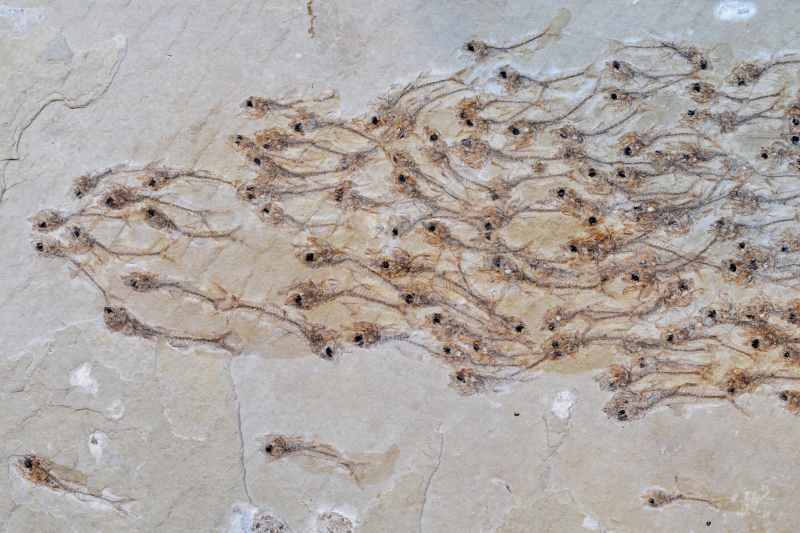
NYT: A School of Fish, Captured in a Fossil
The New York Times has a post about a fossil plate that includes a whole shoal of fish. The plate, which dates to about 50 million years ago, measures 22 inches by 15 inches. It contains a group of fish that belong to the extinct species called Erismatopterus levatus. All the details are in a…
-
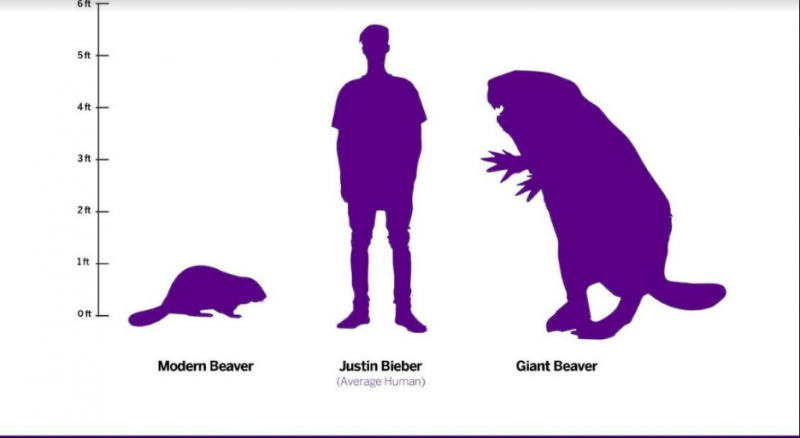
Why Did These Human-Sized Beavers Go Extinct During the Last Ice Age?
The Smithsonian.com has a post about the extinction of 7 foot tall beavers. Up until just over 10,000 years ago, large beavers weighting upwards of 220 pounds roamed a large part of North America, from Alaska and Canada to Florida. A new study, by a group of Canadian researchers, was published in the journal Scientific…
-
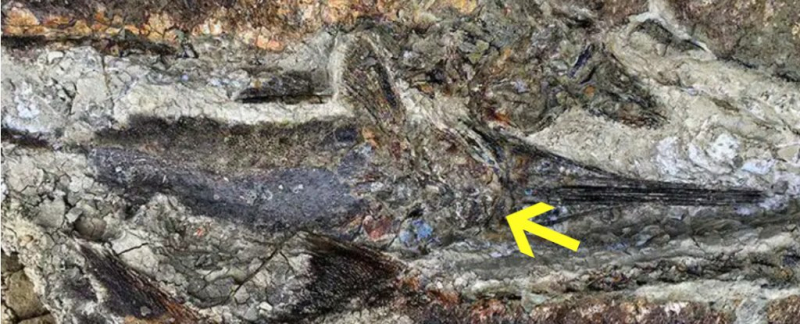
Quicks & Quarks: A catastrophe frozen in time — a new fossil site shows how the dinosaurs died
CBC Radio’s Quicks & Quarks has a segment on a newly discovered fossil deposit that reveals many clues about the asteroid that took out the dinosaurs. The site is a snapshot in time from a few hours after the impact. The North Dakota site, nicknamed Tanis after the “lost” ancient Egyptian city, lies on private…
-
PBS Eons: Why Megalodon (Definitely) Went Extinct
Check out the new episode of PBS Eons over on YouTube. It’s about Megalodon and why it really is extinct. Don’t believe what you see during Shark Week! For more than 10 million years, Megalodon was at the top of its game as the oceans’ apex predator…until 2.6 million years ago, when it went…
-

This Dino-Era Bird Was as Advanced as Modern Species. So Why Did It Disappear?
The Smithsonian has a piece about a recently rediscovered 70 million year old fossil bird from the Cretaceous Period. The specimen was originally found 25 years ago in the Kaiparowits Formation of the Grand Staircase-Escalante National Monument. It’s called Miracre eatoni, and it was about the size of a turkey vulture. It has been described…
-
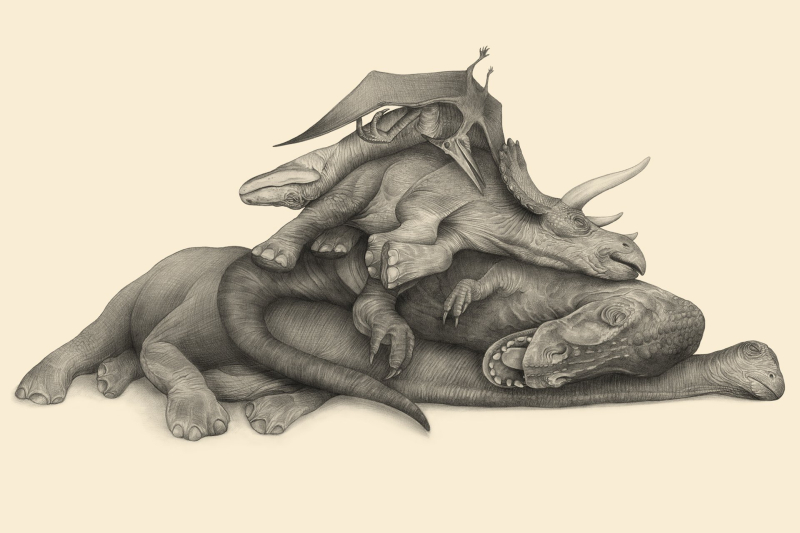
The Nastiest Feud in Science
The Atlantic has an article about Gerta Keller and her differences with the consensus view on the causes of the K-Pg mass extinction. It’s a good read, but there are some errors. Gerta’s position is that the meteor strike was just a bit player in the whole event. There are many good books on either…
-

Five New Fossil Forests Found in Antarctica
National Geographic has a story about multiple new fossil forests which were recently found in Antarctica. Back in the Permian, Antarctica was covered in prehistoric greenery. The team of scientists, which included Erik Gulbranson from the University of Wisconsin-Milwaukee, that discovered these forests were there to look for clues to what caused the Permian Mass…
-
Scientists decry Trump’s move to strip fossil treasures from Utah’s Grand Staircase monument
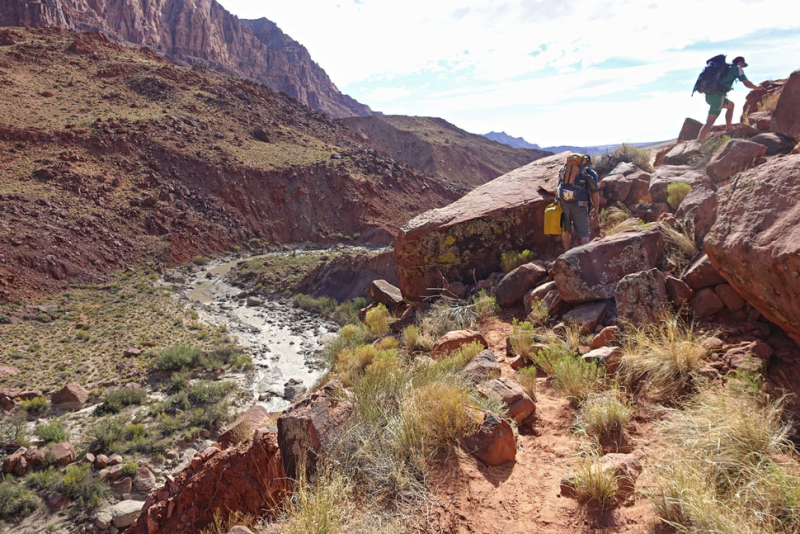
The Salt Lake Tribune has an article about the recent Presidential to free up parts of the Grand Staircase-Escalante National Monument for development. There are many concerns that this change will imperil one of the world’s richest paleontological areas. Some of the researchers are now suing in federal court to halt the move. The Grand…
-
Why Prevent Extinction? May 30 & 31, Notebaert Nature Museum
Why Prevent Extinction? Join us at the Peggy Notebaert Nature Museum on Friday, May 30, Saturday May 31, and Sunday June 1 to explore this question through a weekend conference. Keynote address on May 30 by the ever popular May Berenbaum. The Conference, May 31, also features the insights of Curt Meine, Joel Brown, Jeffery Lockwood, and Doug Taron. May…
-
Ancient Seas May Have Poisoned Life
Via Science News: Soon after complex animals made their first great strides onto the stage of life, the oceans brewed up a toxic chemical mix that put the brakes on evolutionary innovation, suggests a paper in the Jan. 6 Nature. The culprits? Too little oxygen and too much sulfur dissolved in coastal waters, reports a…

