Tag: extinction
-
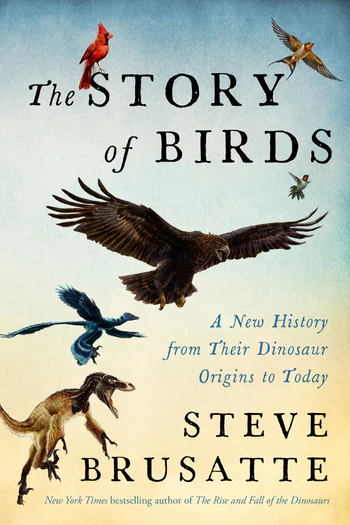
Science Quickly: The dinosaurs at your window: How birds survived the asteroid that killed all other dinosaurs
Scientific American’s “Science Quickly” had an interview with Steve Brusatte on a recent episode. Steve’s new book “The Story of Birds” is available to day April 28th, 2026.
-

PBS: Inside the Vault Where They Keep the Dinosaur Apocalypse
PBS has an interesting video about the K-Pg extinction. Check it out! A giant asteroid impact ended the age of the dinosaurs 66 million years ago. How did this mass extinction play out, moment by moment? In this video we meet a geologist who has explored the asteroid crater and learn what the rocks tell…
-
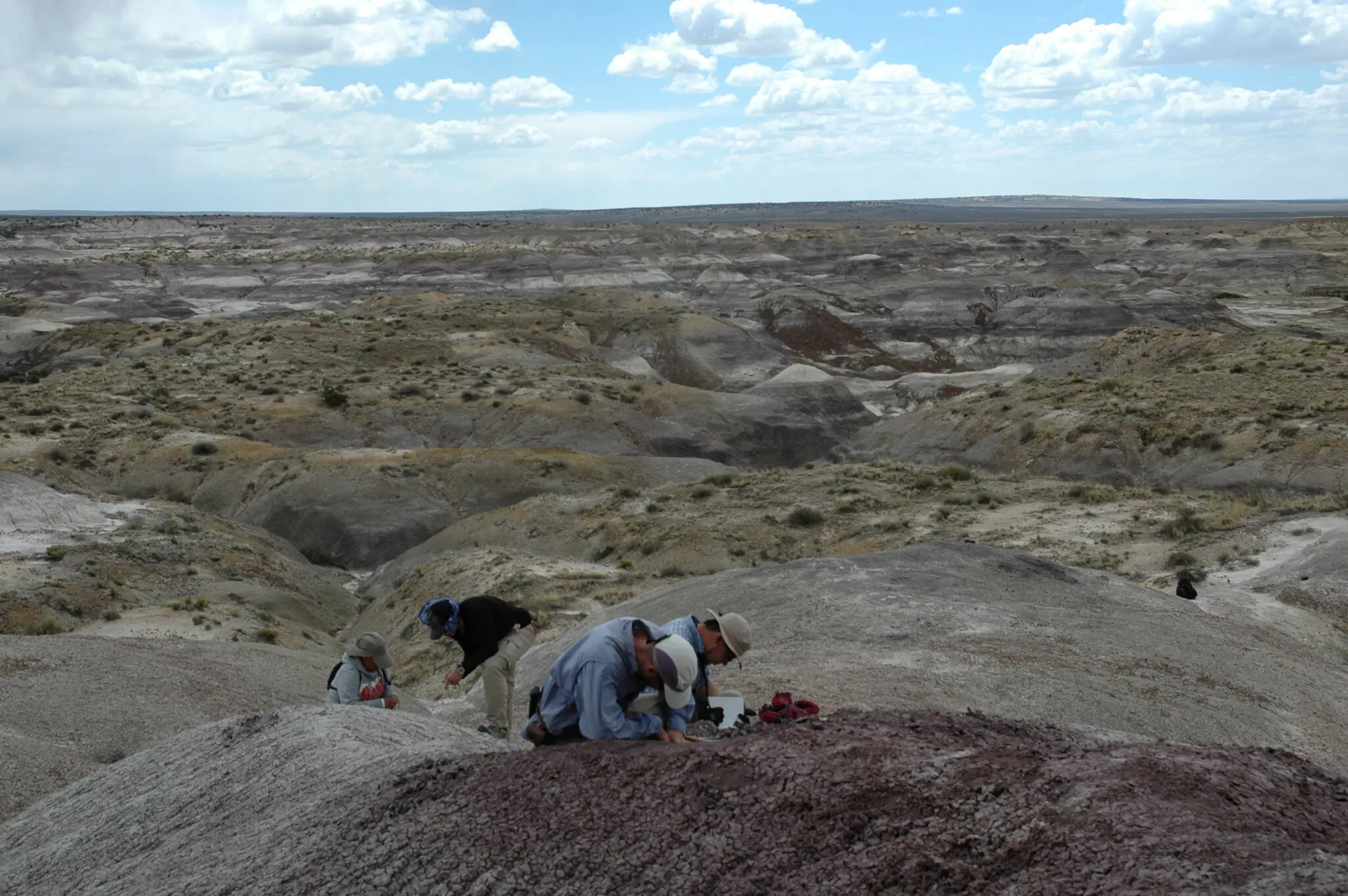
Fossils of Some of the Last Dinosaurs in North America Have a Story to Tell
The New York Times “Trilobites” column has a story about the extinction of the non-avian dinosaurs some 66 million years ago. A long standing question about the extinction has been whether the age of dinosaurs came to a sudden end or were dinosaurs in decline when the asteroid struck the Yucatan Peninsula. The diversity of…
-

PBS NOVA – Great Mammoth Mystery
PBS NOVA just published the “Great Mammoth Mystery” on Youtube. Sir David Attenborough investigates a unique site in southern England where amateur fossil hunters uncovered giant mammoth bones and evidence of Neanderthals. A team of paleontologists and archaeologists soon discover that the site preserves rare evidence of the extinct beasts and early human inhabitants of…
-
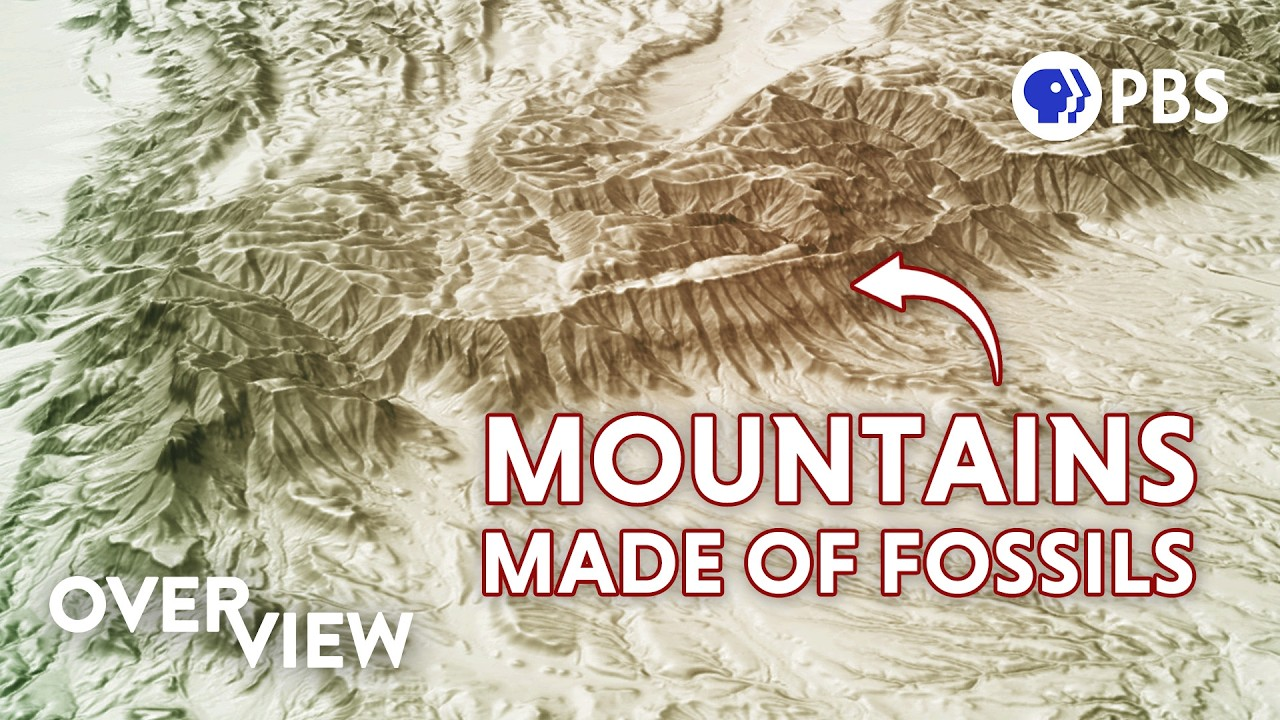
PBS Terra: Earth’s Worst Mass Extinction is Actually a Warning
PBS Terra has a new video. This one is about the Permian Mass Extinction. There is a surprising natural wonder in the middle of the vast West Texas desert: a prehistoric ocean reef built from the remains of ancient sea life. This fossil-rich landscape tells the story of Earth’s most devastating mass extinction—and can help…
-

Refuge from the worst mass extinction in Earth’s history discovered fossilized in China
Live Science has an interesting piece about refugia during the “Great Dying”. The End Permian mass extinction was Earth’s worst with an an estimated 80% of life going extinct. A new paper “Refugium amidst ruins: Unearthing the lost flora that escaped the end-Permian mass extinction” in the journal Science Advances, describes a refuge from the…
-

PBS Eons: Will We Survive The Future? (with John Green)
PBS Eons has another of their long form videos. This one is about the future… will we survive? Just because our ancestors have made it through every major period of upheaval in the Earth’s history so far doesn't mean that our survival through future changes is guaranteed. Humans have become a force of nature, but…
-
PBS Eons: Could You Survive The Messinian Salinity Crisis?
There's a new episode of PBS Eons. This one is about the "Messinian Salinity Crisis", which is the time when the Mediterranean Sea was separated from the Atlantic Ocean. In the Late Miocene Epoch, tectonic forces uplifted the Earth's crust, blocking off the Mediterranean Sea from the Atlantic Ocean. A once-thriving marine ecosystem was replaced…
-
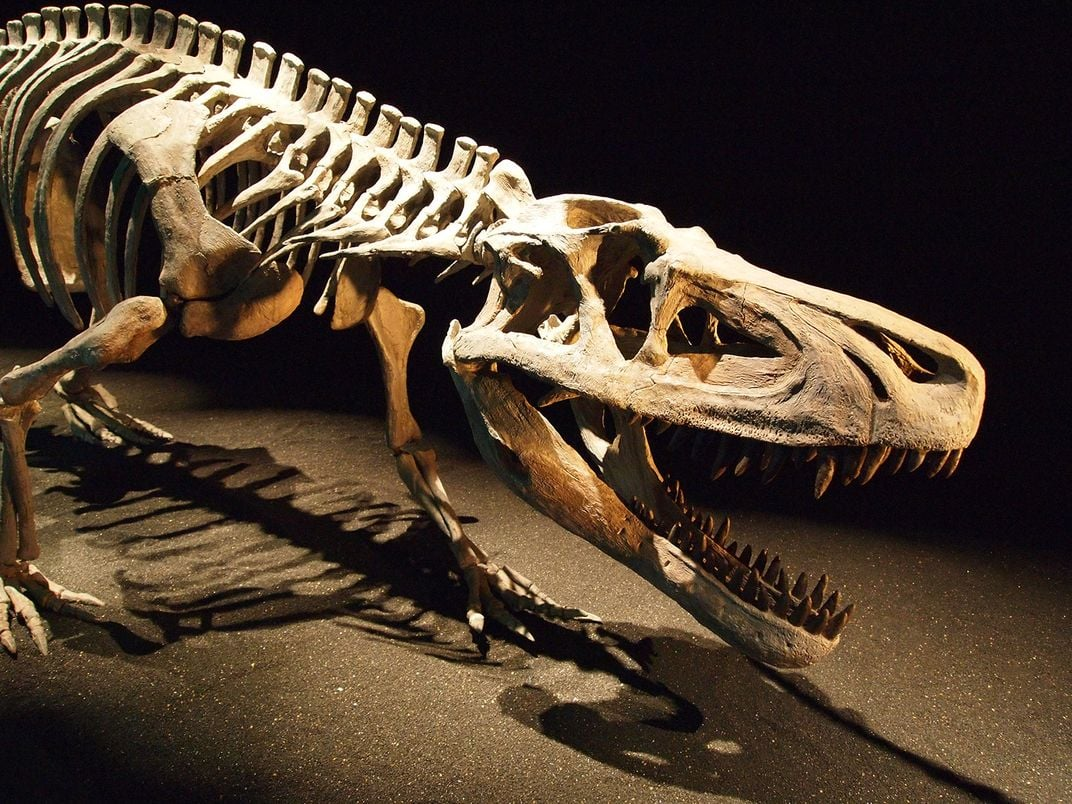
How a Mass Extinction Driven by Ancient Volcanoes Led to the Age of the Dinosaurs
Smithsonian Magazine features a story on the Triassic-Jurassic mass extinction, a pivotal event that reshaped life on Earth. The late Triassic was vastly different from the Jurassic and Cretaceous periods that followed. During this time, early dinosaurs played only minor roles, while the landscape was dominated by giant amphibians, a diverse array of crocodilian relatives—ranging…
-
PBS Eons: Could You Survive the End-Triassic?
PBS Eons has a new episode of their “Surviving Deep Time” podcast. This one is about the Triassic/Jurassic mass extinction. This is the extinction event that lines up with the break up of Pangaea. In the aftermath of the Great Dying, rapid evolutionary radiation resulted in the rise of a bunch of weird creatures in…
-
PBS Eons: Could You Survive The Great Dying?
PBS Eons has another interesting episode. This one is about the Permian Mass Extinction, which is often referred to as the "Great Dying" as more than 90% of all species went extinct during this event. The cause is thought to be massive flood basalt volcanic eruptions in what is now Siberia about 250 million years…
-

‘Closer than people think’: Woolly mammoth ‘de-extinction’ is nearing reality — and we have no idea what happens next
LiveScience has news that the de-extinction of the Woolly mammoth is nearing reality. Colossal Biosciences, a Texas-based biotechnology and genetic engineering company, is working to bring the dodo (Raphus cucullatus), the Tasmanian tiger (Thylacinus cynocephalus; also known as the thylacine) and the woolly mammoth (Mammuthus primigenius) back from extinction. The question of can has morphed into the question of should. …
-
PBS Eons: Could You Survive The Devonian Period? (with Hank Green!)
PBS Eons has a new episode. This one dsicusses whether humas could survive in the Devonian Period. By the end of the Devonian Period, the land had exploded with plant life and ancient invertebrates. There was also Tiktaalik – one of the first known vertebrates able and willing to move from the water to land.…
-

PBS Eons: The Second Time Sponges Took Over The World
PBS Eons has a new episode. This one is about the Late Ordovician mass extinction and the animals that survived it. Was Sponge Bob king? Researchers have discovered a piece of a weird, but critical, time in the deep past…a time when the first-ever mass extinction may have turned Planet Earth into Sponge World.
-
PBS Eons: The Huge Extinctions We Are Just Now Discovering
PBS Eons has a new episode. This one is about ocean extinctions during the Silurian Period. It wasn't the quiet time that was once thought. What graptolites tell us is a story of incredible changes in the ocean, of periods where the oceans became poisonous and suffocating before eventually clearing up again. They unlock extinctions…
-
PBS Eons: That Time The Ocean Lost (Almost) All Its Oxygen
PBS Eons has a new episode on Youtube. This one is about an extinction event during the Cretaceous Period and what it did to the oceans. This is the story of how our planet rescued itself from extreme conditions in the Cretaceous Period, at the cost of essentially suffocating the oceans for half-a-million years.
-

1.7 billion Tyrannosaurus rexes walked the Earth before going extinct, new study estimates
An artist’s interpretation of what Tyrannosaurus rex may have looked like. (Image credit: Shutterstock) LiveScience has a story about how many Tyrannosaurus rex individuals ever lived. Back in April 2021, a paper in the journal Science estimated that 2.5 billion T. rex had existied from 68 to 65 million years ago. Now a new paper…
-
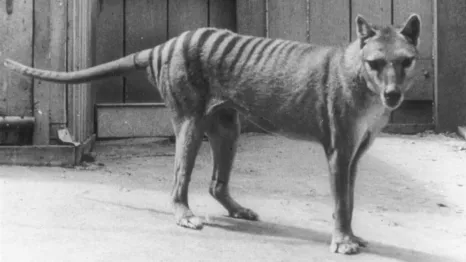
Long-extinct Tasmanian tiger may still be alive and prowling the wilderness, scientists claim
LiveScience has a story about the Tasmanian Tiger. Some scientists think that the thylacine (Thylacinus cynocephalus) survived much longer in the wild that previously thought. Thylacines were wolf-like marsupials that lived on the island of Tasmania. The last known animal died in the Hobart Zoo on September 7th, 1936. It filled an important ecological niche…
-
PBS Eons: How (Some) Plants Survived The K-Pg Extinction
PBS Eons has a new video over on Youtube. This one is about Angiosperm plants and how many of them survived the K-Pg mass extinction. Perhaps for plants in times of great stress and ecological upheaval, the more DNA the better. Thanks to Franz Anthony (https://franzanth.com) for the incredible reconstruction of plants in the aftermath…
-
PBS Eons: The Real Story Of The Dodo Bird’s (Current) Extinction
PBS Eons has a new episode. This one tells the whole story of the dodo bird. How did it evolve and how did it disappear? What’s the real story of the dodo? How did such a unique bird even evolve in the first place? And are we really responsible for its extinction?
-
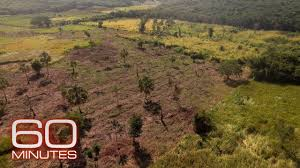
60 Minutes: Earth currently experiencing a sixth mass extinction, according to scientists
CBS News 60 Minutes recently had a gripping segment on the current state of nature and the environment and it’s not good. A mass extinction is an extinction of a large number of species in a relatively short period of time. The extinction of a species means that all individuals of that species are lost…
-

Scientists shine light on 66-million-year-old meteorite wildfire mystery
Phys.org has a story about the K-Pg mass extinction event. It’s well established science that a meteorite struck the Yucatan peninsula about 66 million years ago. An event that brought about the extinction of the non-avian dinosaurs, pterosaurs, ammonites, and many other animals that lived alongside them. There have been many theories and debates about…
-

Dinosaurs took over the planet because they could endure the cold, scientists say
LiveScience has a post about how dinosaurs came to dominate in the early Jurassic. It’s long been theorized that dinosaurs were better adapted to hot weather and so took over from their crocodillian cousins around the Triassic/Jurassic extinction event about 202 million years ago. Now, a paper in the journal Science Advances proposes that it…
-

Why don’t we have many giant animals anymore?
Live Science has an interesting post about the size of extant animals. There were larger animals on Earth in the past. There are theories, but the actual reason is complex and may involve multiple factors. Mammals. being endothermic, may be limited in how large they can get due to energy needs. Prehistoric giants used to…
-
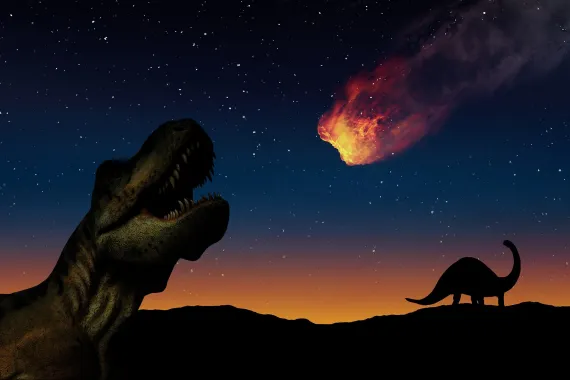
How the dinosaur extinction changed plant evolution
Phys.org has a story about plant evolution after the K-Pg mass extinction. Mass extinction always have irreversible effects on the evolution of life on Earth. The end Cretaceous extinction took out about 75% of species, including non-avian dinosaurs, pterosaurs, ammonites, and other countless others. The Plant Kingdom isn’t always discussed, but it suffered heavy losses,…
-

Tanis: Fossil of dinosaur killed in asteroid strike found, scientists claim
Artwork: The thinking is that a water surge buried all the creatures at Tanis The BBC has an article about a fossil site that preserves a snapshot of what may have been the last day of the non-avian dinosaurs. Nicknamed Tanis and located in North Dakota, the site has fossils of exquisite detail that are…
-
PBS Eons: Sharks nearly went extinct 19 million years ago
PBS Eons has a new #shorts episode. This one is about a time when sharks almost went extinct about 19 million years ago. There used to be SO MANY sharks…where did they go? References: https://www.science.org/doi/10.1126/s…
-
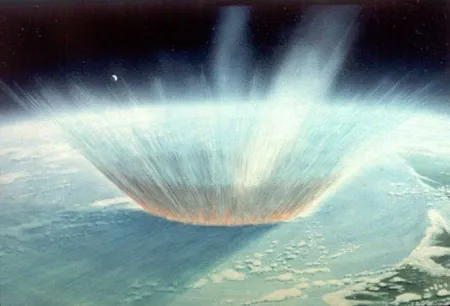
CBC Quirks and Quarks: Darkness doomed the dinosaurs
The CBC Radio show/Podcast Quirks and Quarks has a segment entitled “Darkness doomed the dinosaurs — the extinction asteroid turned out the lights on Earth”. They speak with Peter Roopnarine from the California Academy of Sciences about the after effects of the meteor strike that took out the non-avian dinosaurs at the end of the Cretaceous.…
-
PBS Eons: How a Mass Extinction Event Created the Amazon
There’s a new episode of PBS Eons over on Youtube. This one is about the mass extinction event at the end of the Cretaceous and how it helped to create the Amazon rain forest. The Amazon rainforest of South America is a paradise for flowering plants. But long ago, the landscape that we now…
-
ScienceMag: Giant tsunami from dino-killing asteroid impact revealed in fossilized ‘megaripples’
Science Magazine has a piece about some “megaripples” found in central Louisiana. These fossilized trace fossils are thought to be from the tsunami caused by the meteor which brought about the KPg mass extinction at the end of the Cretaceous Period about 66 million years ago. A new paper in the journal Earth and Planetary…

