Tag: Cambrian
-

Trilobite Tuesday #32: They Put the Bite in Trilobite
The New York Times Trilobites column has an article about predatory trilobites. While we have learned much about trilobites over the many years of study, there are some aspects of their life that we still don’t know. Those unknowns are mostly associated with soft parts like the guts and delicate parts like the legs and…
-

ESCONI January 2021 General Meeting – January 8th, 2021 at 8:00 PM via Zoom – “New discoveries at the Burgess Shale”
The speaker at our January 2021 meeting via Zoom will be Dr. Jean-Bernard Caron from the University of Toronto and the Royal Ontario Museum (ROM). Dr. Caron studies the Burgess Shale, the Cambrian Explosion, and the origin of animals. The title of his program is “New discoveries at the Burgess Shale”. Here’s a link to…
-

Trilobite Tuesday #29: Why did trilobites go extinct?
LiveScience has a piece about the extinction of the trilobites. Trilobites existed on Earth for about 270 million years from the early Cambrian until the Permian Mass Extinction. Many organisms went extinct during that time… perhaps upward of 90% of species. But, it’s still an open question that has not been completely answered. During their…
-
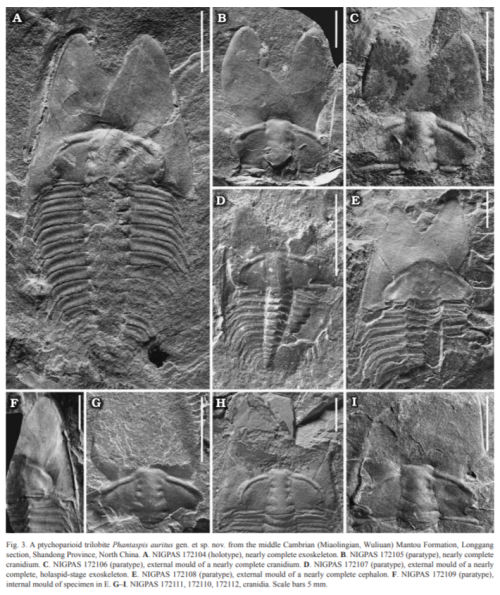
Trilobite Tuesday #28: A new middle Cambrian trilobite with a specialized cephalon from Shandong Province, North China
Acta Palaeontologica Polonica has a that describes newly discovered trilobites from the Middle Cambrian of Northern China. These trilobites had a strangely lobed cephalon that suggests “rabbit ears”. Actually, the species name Phantaspis auritus comes from the Latin aurītus, having ears; in reference to the cranidium having a pair of long “ears”. Trilobites achieved their maximum generic…
-
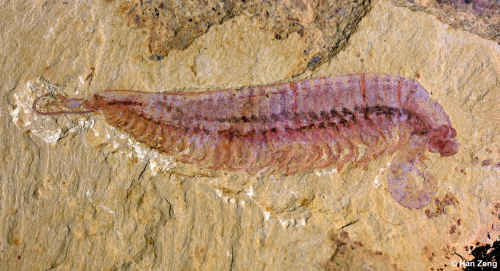
SciTechDaily: Five-Eyed 520-Million-Year-Old Fossil Reveals Arthropod Origin
SciTechDaily has a story about arthropod origins. Researchers from the Nanjing Institute of Geology and Palaeontology of the Chinese Academy of Sciences (NIGPAS) have revealed a new shrimp-like fossil with five eyes. The animal, called Kylinxia, lived about 520 million years ago in what is now China’s Yunnan Province. The paper describing this discovery appeared…
-

Fossil Friday #26: Elrathia kingii from the Cambrian of Utah
This is the “Fossil Friday” post #26. Expect this to be a somewhat regular feature of the website. We will post any fossil pictures you send in to esconi.info@gmail.com. Please include a short description or story. Check the #FossilFriday Twitter hash tag for contributions from around the world! Here is an Elrathia kingii trilobite. It…
-
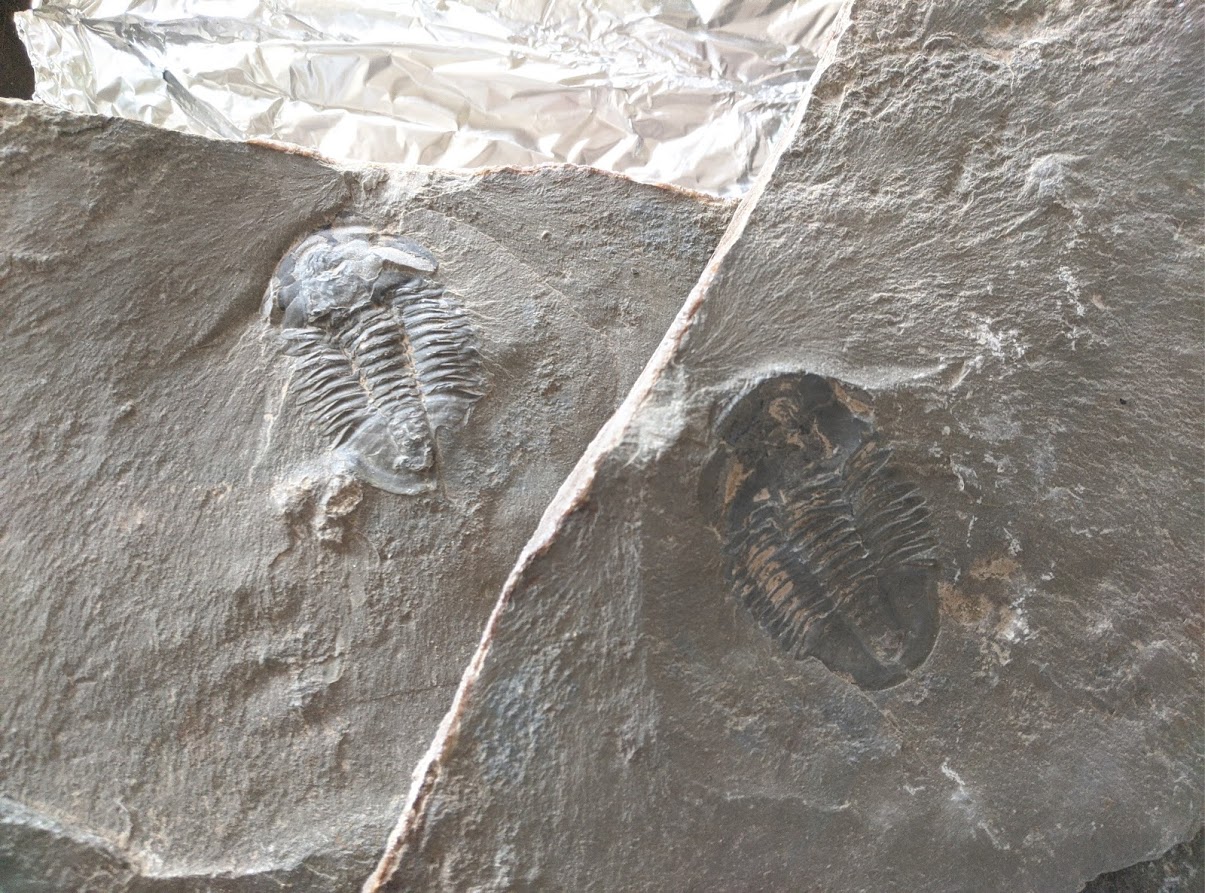
Fossil Friday #25: Asaphicus wheeleri from the Cambrian of Utah
This is the “Fossil Friday” post #25. Expect this to be a somewhat regular feature of the website. We will post any fossil pictures you send in to esconi.info@gmail.com. Please include a short description or story. Check the #FossilFriday Twitter hash tag for contributions from around the world! —————————————————– Here is an Asaphiscus wheeleri trilobite…
-
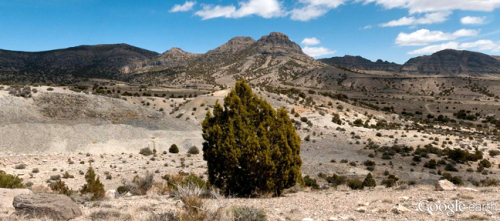
Trilobite Tuesday #24: Fossils In Millard County, Utah by Rich Holm
While doing some research during my recent trip to Utah, I ran across a very interesting page on the fossils of Millard County, Utah. It’s a great report of a couple field trips in this area of Utah. We stayed in Delta, Utah, which is a great place to stay to explore this area. The…
-
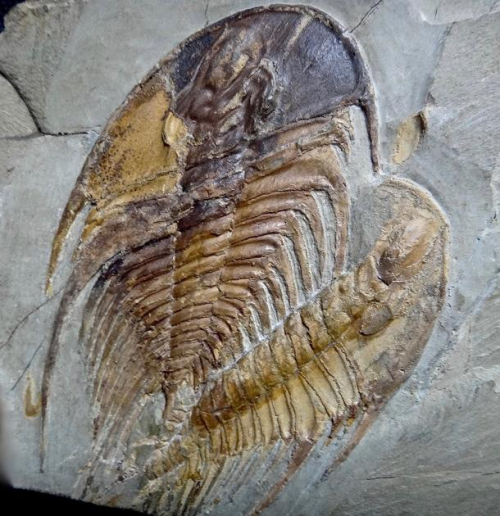
Trilobite Tuesday #23: AMNH: Trilobites on Land
It’s been generally accepted that trilobites were marine animals, living only in the ocean. However, there are some specimens that might hint that some of them crawled out of the sea. The American Museum of Natural History (in New York) has a page about this. Here is a paper from Nature that also proposes that…
-
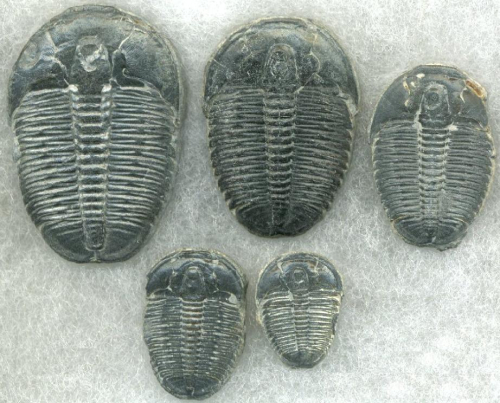
Trilobite Tuesday #22: Trilobites of the Wheeler Shale, Utah
Trilobites.info has a page about the trilobites of the Wheeler Shale in Utah. The Wheeler Shale dates to the Middle Cambrian, about 505 million years ago. The formation is known for a diverse group of soft bodied animals, many of which are the same taxa found in the Burgess Shale (508 million years ago). It…
-
Trilobite Tuesday #20: The Trilobite Papers
The Trilobite Paper website has pdfs of the “Trilobite Papers 20” newsletters from August 2018 to February 2020. The newsletter is Fred Sundberg’s “reboot” of Rolf Ludvingsen’s international journal for and by trilobite paleontologists. The issues are published about every six months and are filled with everything trilobite. Rolf Ludvingsen was a paleontologist and author,…
-
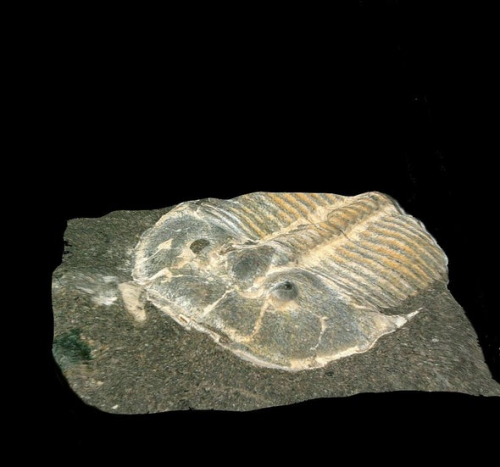
Trilobite Tuesday #19: A 429-Million-Year-Old Trilobite Had Eyes like Those of Modern Bees
Scientific American has a story about trilobite eyes. In a 429 million year old fossil trilobite fossil, scientists from the University of Edinburgh in Scotland got a glimpse at how the world looked to these ancient animals. A remarkably preserved specimen of Aulacopleura koninckii showed that these animals had eyes that were about as good…
-

Trilobite Tuesday #18: Early trilobites had stomachs
Phys.org has a story about some interesting details of trilobite digestion. A paper, published in 2017 in the journal PLOS ONE, revealed that trilobites had a stomach structure about 20 million years earlier than what had been known. The exceptionally preserved specimens of Palaeolenus lantenoisi used in the study lived about 514 million years ago during the Cambrian. They are…
-
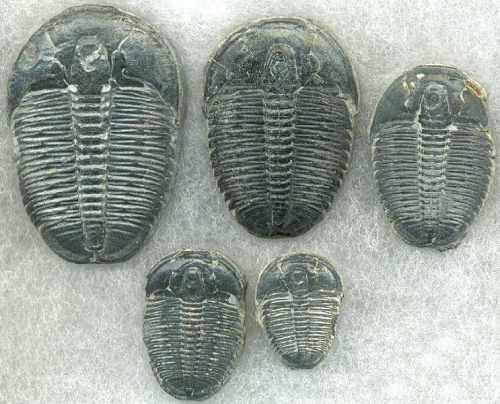
Trilobite Tuesday #17: The Cambrian Creatures That Grew Up Over the Course of 28 Bodies
Atlas Obscura has a story about Elrathia kingii. E. kingii is a very common trilobite found in the Cambrian rocks of Utah. This article is a great summary on how they lived and most importantly… how they grew. WITH ANY LUCK, HUMANS CHANGE a lot over the course of our time on Earth. As we grow…
-
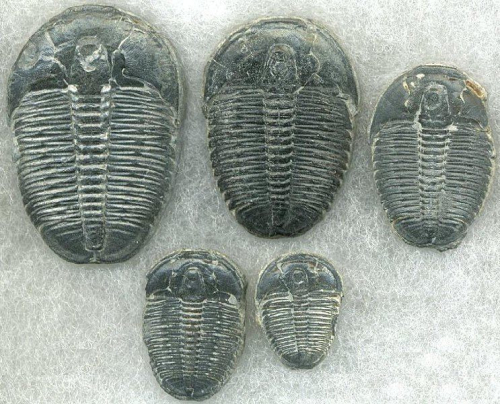
Trilobite Tuesday #17: The Cambrian Creatures That Grew Up Over the Course of 28 Bodies
Atlas Obscura has a story about Elrathia kingii. E. kingii is a very common trilobite found in the Cambrian rocks of Utah. This article is a great summary on how they lived and most importantly… how they grew. WITH ANY LUCK, HUMANS CHANGE a lot over the course of our time on Earth. As we grow…
-
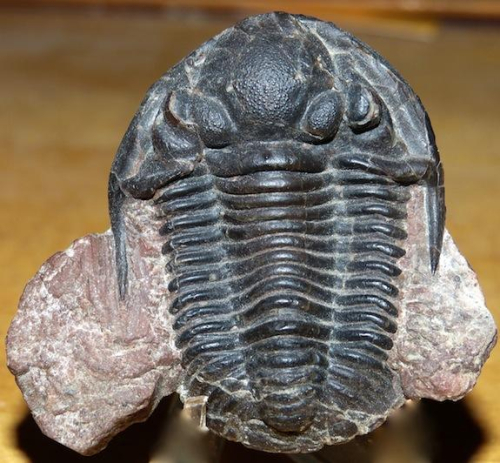
Trilobite Tuesday #15: The Last of the Trilobites
Both the American Museum of Natural History and Trilobites.info have pages on “The Last Trilobites”. By the end of the Permian, trilobites had existed for nearly 300 million years. That stretch of time spread from the lower Cambrian to the mass extinction events at the end of the Permian. Their highest diversity was during the…
-

Trilobite Tuesday #14: AMNH The First Trilobites
Trilobites were a very successful group of arthropods that existed on Earth from the early to middle Cambrian to the Permian mass extinction events. That’s a span of about 275 million years. By the end, there were just a few species left and the Permian extinction swept them away along with more than 90% of…
-

Trilobite Tuesday #13: Trilobite Conga Line
Clues to animal behavior are very rare in the fossil record. However, a Moroccan fossil of 22 small trilobites might provide some of the earliest evidence. These trilobites lived about 480 million years ago. And, their lineup might be a display of complex social behavior long before it was expected. The details appear in a…
-

Trilobite Tuesday #10: Trilobite Spines
The American Museum of Natural History has a great trilobite website with information and pictures that do a thorough job describing trilobites. Today, we are going to highlight the Trilobite Spines page. From the very beginning of their history up to the end, armor was a big component of trilobite anatomy. First, they had a calcium…
-

PBS Eons: How Plants Caused the First Mass Extinction
PBS Eons has a new episode. Climate change has been a large part of all the mass extinctions. The arrival of land plants has a huge impact on the climate and was quite likely a driving event. In the middle of the Cambrian, life on land was about to get a little more crowded.…
-

Happy 110th Birthday, Burgess Shale!
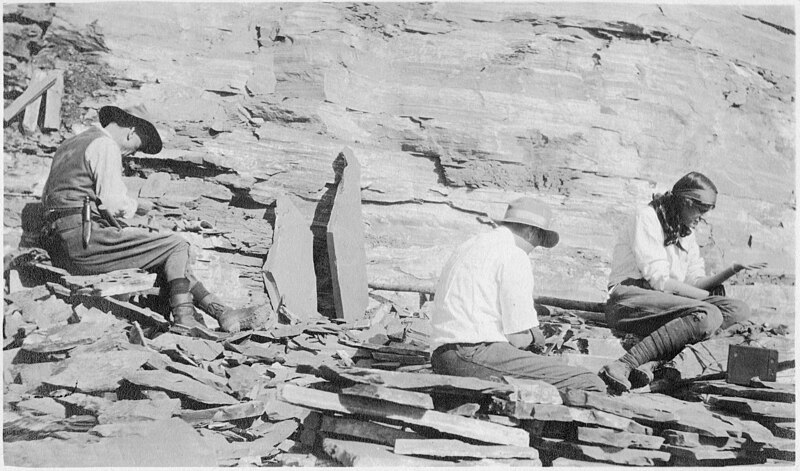
Charles Doolittle Walcott discovered the Burgess Shale on August 30th, 1909. At the time, Walcott was head of the Smithsonian Institution in Washington, DC. He came to Mount Stephen, British Columbia, which is in Yoho National Park, in 1907, because of reports of “stone bugs” reported by railway workers, surveyors, and others. In 1909, while…
-
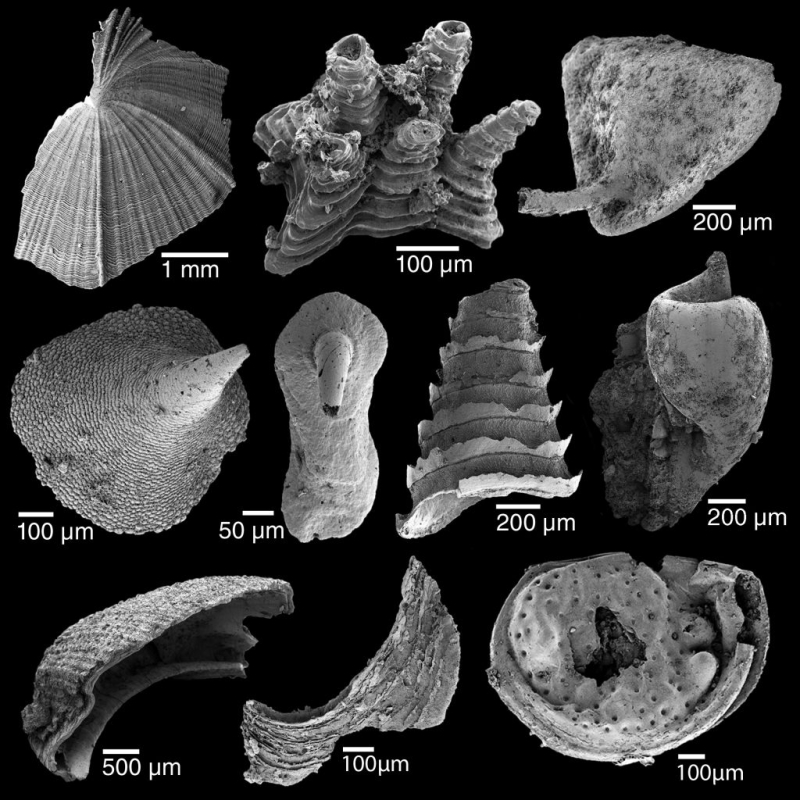
Palaecast Episode 102: Small Shelly Fossils
There’s a new episode of the Palaeocast podcast. This one is about the strange “Small Shelly Fossils” that are found at the base of the Cambrian. Between the weird and wonderful rangeomorphs of the Ediacaran Period and the world-famous palaeocommunities of the Burgess Shale, the ‘Early Cambrian’ is host to a ‘waste basket’ of fossils…
-
Happy Birthday, Burgess Shale – Discovered August 30th, 1909
The Burgess Shale was discovered 109 years ago today by Charles Doolittle Wolcott. The deposit dates to about 508 million years ago. Currently located high in the mountains of British Columbia, Canada, in life, it was located near the equator. It’s one of the most important fossil localities ever discovered, as it opened our eyes…
-
Nope, octopuses probably didn’t come from outer space!
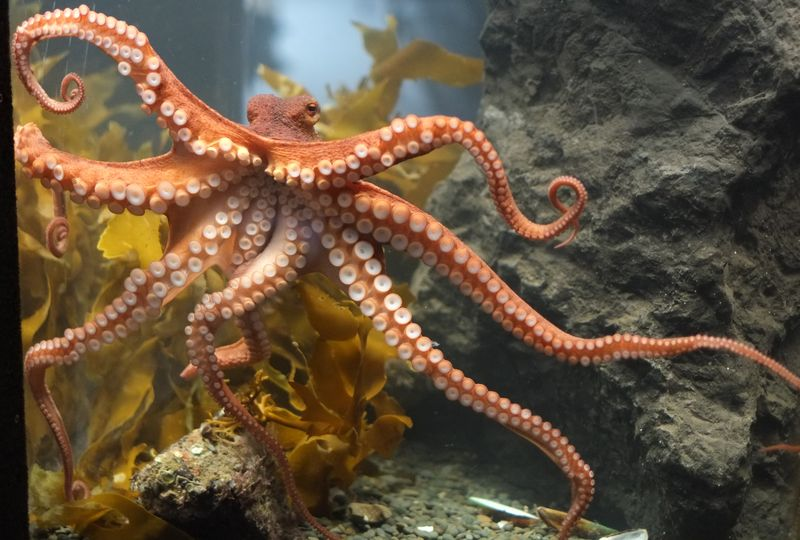
ZME Science has a great post about the online controversy about the Octopus genome. Cephalopods are not aliens and the author Mihai Andrei does a great job explaining why. The new study, penned by over 30 researchers, essentially rehashes the theory of panspermia — the idea that life on Earth emerged in outer space, hitching…
-
CBC: Ancient spider cousin had 5 sets of jaws for crushing its prey
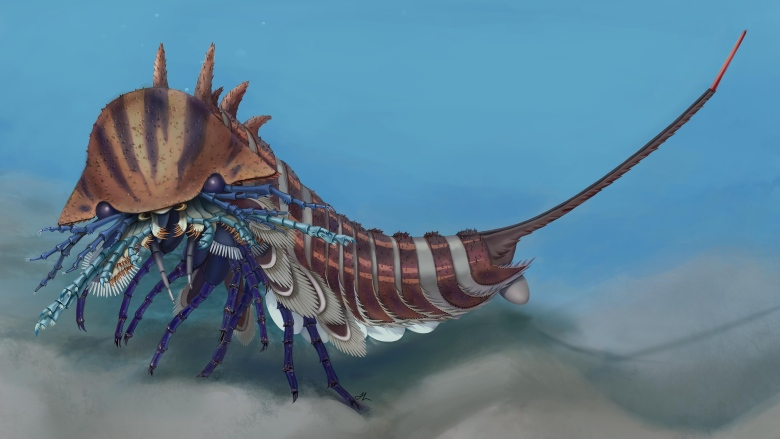
Artistic reconstruction of Habelia optata on the Cambrian seafloor. Habelia is thought to have been an active predator, eating small animals with hard carapaces, such as trilobites. (Joanna Liang/Royal Ontario Museum) CBC has an article with new information about a Cambrian predator. The animal, Habelia optata, lived about 508 million years ago. It now appears…
-

ABC: ‘Shale ale’ beer filtered through fossils the latest craze in Australia’s booming craft brewing industry
ABC in Australia has an intriguing story about the latest beer craze in Australia. Shale ale is from Kangaroo Island, which is famous for Cambrian Era fossil lagerstatten. Emu Bay is the famous fossil locality. The beer was created to celebrate the discoveries on the island. Kangaroo Island brewer Mike Holden is set to release…
-
500 million years ago, this critter had a really bad day
The Globe and Mail has a fantastic piece on the newest fossil discoveries of animals that lived during the “Cambian Explosion” in British Columbia. The new locality has been dubbed “Marble Canyon”. It features a slightly different assemblage of animals than what was found in the “Burgess Shale”. The exact location has been kept secret;…
-
Oldest Organism with Skeleton Found in Australia
Via PhysOrg: …Coronacollina resembles the Cambrian fossil sponge, Choia. The three raised points on the rim are evident, with a central hollow and four spicules extending from the cone rim…. the organism is between 560 million and 550 million years old, which places it in the Ediacaran period, before the explosion of life and diversification of…
-

Obituary for Harry Whittington
Via Telegraph: Professor Harry Whittington, who died on June 20 aged 94, was the former Woodwardian Professor of Geology at Cambridge and the world’s leading authority on fossil trilobites; in later life he led painstaking research which revealed a “Cambrian explosion” and raised disturbing questions about the processes of evolution….
