-
What Everyone Should Know: Science Stage
Read more: What Everyone Should Know: Science StageSciencestage.com offers science television – many good videos all in one place. Here is a video of Paul Sereno talking about digging up dinosaurs.
-

Archaeology Meeting: Saturday, 10/24, Migration Theory by Betsy Rogers
Read more: Archaeology Meeting: Saturday, 10/24, Migration Theory by Betsy RogersArchaeology Meeting, Saturday, 10/24, 7:30 pm, College of Dupage, Building K, Rm 131, “Migration Theory – East Coast of North America” by Betsy Rogers.
-
Everything You Need to Know About Collecting Rocks
Read more: Everything You Need to Know About Collecting RocksUSGS offers this publication on collecting rocks… interesting!
-
The Secrets of the Middle Ear
Read more: The Secrets of the Middle EarVia NYTimes: ….In the current issue of the journal Science, paleontologists report on the fossilized remains of a newly discovered mammal from the Mesozoic era, some 123 million years ago. The snouty, 3-ounce, chipmunk-size animal, named Maotherium asiaticus, lived in what is now northeastern China and darted around the feet of the dominant dinosaur overlords, as mammals had been doing for some 100 million years. What makes this proto-Alvin noteworthy are its ears: the crisply preserved fossil indicates that Maotherium’s middle ears were of a middling sort, half mammal and half reptile. Given the timing of the fossil, and evidence…
-
10 Most Fascinating Rock Formations
Read more: 10 Most Fascinating Rock Formations10 of the most interesting rock formations….
-
Reports on 2009 GSA Meeting
Read more: Reports on 2009 GSA MeetingHere is a list of websites that plan to report on the 2009 Geological Society of America’s meeting, October 18-21.
-
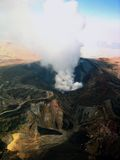
When Yellowstone Explodes
Read more: When Yellowstone ExplodesGorgeous graphics explain the Yellowstone supervolcano from National Geographic. And from the Discovery Channel an informative slide show of past supervolcanoes. Image of Aso, Japan: cybernezumi
-
-
Awesome Way to See Earth
Read more: Awesome Way to See EarthFlash Earth. From Neave.com who has all sorts of other interesting non earth science sites.
-
True or Not? Floating Stones in Ocean
Read more: True or Not? Floating Stones in OceanInteresting report on stones floating in ocean before volcano eruption. Hat tip: Joe Kubal
-
New Theories on Midwest Banded Rocks
Read more: New Theories on Midwest Banded RocksVia R&D: A study appearing today (Oct. 11) as an advance online publication in Nature Geoscience offers a new picture of how these colorful bands developed and what they reveal about the composition of the early ocean floor, seawater, and atmosphere during the evolution of the Earth. Previous hypotheses about band formation involved seasonal fluctuations, temperature shifts, or periodic blooms of microorganisms, all of which left many open questions about how BIFs dominated the global marine landscape for two billion years and why they abruptly disappeared 1.7 billion years ago. With Yifeng Wang of Sandia National Laboratories, Enrique Merino of…
-
Missing Link Found in China
Read more: Missing Link Found in ChinaVia PhysOrg: … An international group of researchers from the University of Leicester (UK), and the Geological Institute, Beijing (China) have identified a new type of flying reptile – providing the first clear evidence of an unusual and controversial type of evolution. Pterosaurs, flying reptiles, also known as pterodactyls, dominated the skies in the Mesozoic Era, the age of dinosaurs, 220-65 million years ago. Scientists have long recognized two different groups of pterosaurs: primitive long-tailed forms and their descendants, advanced short-tailed pterosaurs some of which reached gigantic size… Scientific American article on same.
-
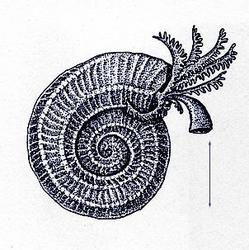
Paleontology Meeting, Saturday 10/17, Mazon Creek Worms
Read more: Paleontology Meeting, Saturday 10/17, Mazon Creek WormsPaleontology Meeting, Saturday, 10/17, 7:30 pm, Show and Tell and doing more photography for Mazon Creek Fauna book – Mazon Creek Worms. College of Dupage, Building K – Rm 131. Graphic: Illinois State Museum database.
-
Amateurs Find Biggest Dinasaur Footprints
Read more: Amateurs Find Biggest Dinasaur FootprintsVia the Telegraph An “exceptional” collection of the biggest dinosaur footprints ever recorded has been found by two amateur enthusiasts on an expedition near France’s Jura mountains, palaeontologists said today. Imprints measuring up to 2 metres (6ft 6in) in diameter and stretching over a vast area of land have been uncovered near the village of Plagne, 30 miles west of Geneva, according to the National Centre of Scientific Research.
-
The Great Dying
Read more: The Great DyingVia National Geographic: Massive volcanic eruptions wiped out the world’s forests about 250 million years ago, leaving the planet teeming with wood-eating fungi, according to a new study…
-
Bacteria Develops Gold
Read more: Bacteria Develops GoldVia New Scientist: Australian scientists have found that the bacterium Cupriavidus metallidurans catalyses the biomineralisation of gold by transforming toxic gold compounds to their metallic form using active cellular mechanism. According to Frank Reith, leader of the research and working at the University of Adelaide, “A number of years ago we discovered that the metal-resistant bacterium Cupriavidus metallidurans occurred on gold grains from two sites in Australia… This is the first direct evidence that bacteria are actively involved in the cycling of rare and precious metals, such as gold. These results open the doors to the production of biosensors. “The…
-
Micro photo of dinosaur bone
Read more: Micro photo of dinosaur boneNikon MicroPhotography Finalists: Check out the dinosaur bone by Norm Barker, Department of Pathology, Johns Hopkins University, School of Medicine, Baltimore, Maryland, United States, Dinosaur bone, Jurassic period (15X), Reflected light from fiber optic.
-
Chicago Police Assist Field Museum
Read more: Chicago Police Assist Field MuseumVia Suntimes: … Police will bring a portable laser surface scanner used to create digital images of crime scenes to the museum this Saturday [Oct. 10] The scanner, which weighs about 70 pounds, will take images from six different locations.The public will be able to watch as the scan takes place, because the process is safe to observe…
-
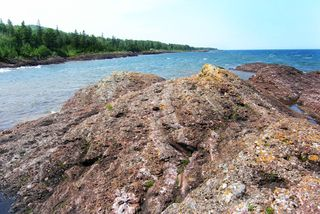
Mineralogy Meeting, Sat. 10/10, Upper Pennisula Minerals
Read more: Mineralogy Meeting, Sat. 10/10, Upper Pennisula MineralsMineralogy Meeting, 7:30 pm, College of Dupage, Building K – Rm 131. The subject will be Macromineralogy of the Upper Pennisula – focus on the Copper Country. Bring your favorite specimens!

ESCONI Gem, Mineral, and Fossil Show
Most Recent Post
- ESCONI April 2026 Paleontology Meeting via Zoom and in-person – “Digging the Marl of the Lance Formation”
 The April 2026 Paleontology Study Group Meeting will feature Keith Robitschek and his presentation “Digging the Marl of the Lance Formation”. You can attend in-person at the College of DuPage, TEC, Room 1038B (Map). The meeting will also be available via Zoom.
- About ESCONI
- Around the Web
- Calendar of Events
- Code of Ethics and Conduct
- ESCONI Books for Sale
- ESCONI Gem, Mineral, and Fossil Show
- ESCONI in the News
- ESCONI Videos
- Field Trips
- Flashback Friday
- Fossil Friday
- Mazon Creek
- Mazon Monday
- Member Spotlight
- Membership Information
- Reference Material
- Throwback Thursday
- Trilobite Tuesday
Field trips require membership, but visitors are welcome at all meetings!
| Friday, April 10th | General Meeting – 8:00 PM via Zoom. Jessica Hull will present “Life in the Devonian Period, The Age of Fishes.” |
| Saturday, April 11th | Junior Study Group Meeting – 2:00 PM, in person at the College of DuPage Technical Education Center (TEC) Building – Room 1038A (Map). Katherine Howard will present on Sand and Sediment Collecting. Specifics of this meeting are available from Scott Galloway, 630-670-2591, gallowayscottf@gmail.com. |
| Saturday, April 18th | Paleontology Study Group – 7:30 PM via Zoom and in person at the College of DuPage, TEC, Room 1038B (Map). Keith Robitschek will present “Digging the Marl of the Lance Formation.” |
| Friday, April 24th | MAPS Expo XLVII – Springfield, IL. |
| Saturday, April 25th | MAPS Expo XLVII – Springfield, IL. |
| Sunday, April 26th | MAPS Expo XLVII – Springfield, IL. |
| No meeting this month | Mineralogy Study Group |

