
-
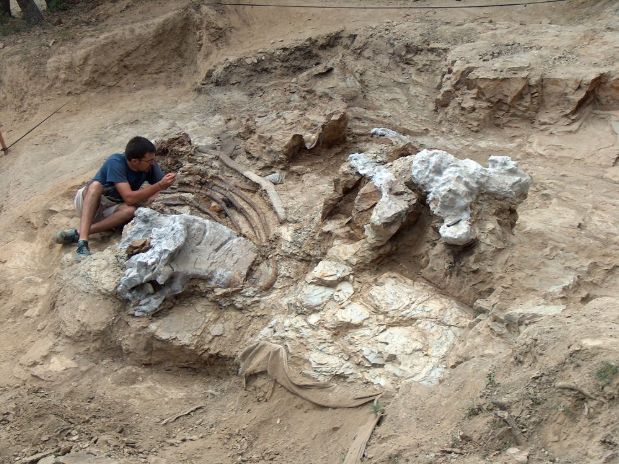
New ‘Giant’ Species of Long-Necked Dinosaur Discovered in Spain
Read more: New ‘Giant’ Species of Long-Necked Dinosaur Discovered in SpainSmithsonian Magazine has a story about the discovery of a new sauropod dinosaur. The dinosaur, Garumbatitan morellensis, lived about 122 million years ago, which is the Cretaceous Period. The specimen was found near Morella in eastern Spain, which is part of the species name. The new animal was described in the journal Zoological Journal of the Linnean Society. A team of Spanish and Portuguese paleontologists uncovered G. morellensis’ remains while working at the Sant Antoni de la Vespa fossil site between 2005 and 2008. The region, which is located near the city of Morella in eastern Spain, has produced numerous dinosaur fossils.…
-
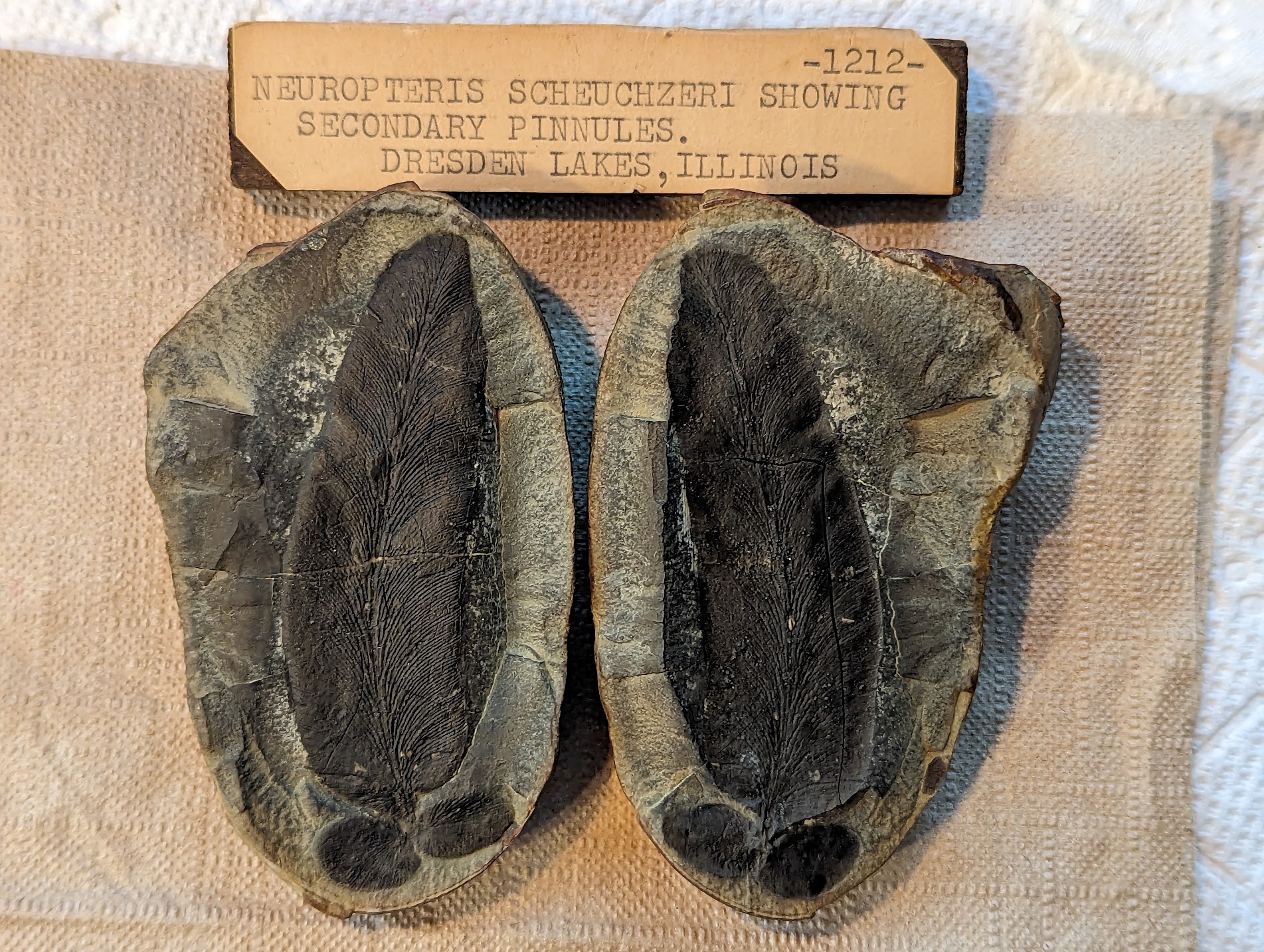
Fossil Friday #181: Macroneuropteris scheuchzeri
Read more: Fossil Friday #181: Macroneuropteris scheuchzeriThis is the “Fossil Friday” post #181. Expect this to be a somewhat regular feature of the website. We will post any fossil pictures you send in to esconi.info@gmail.com. Please include a short description or story. Check the #FossilFriday Twitter hash tag for contributions from around the world! This week, we have a rather nice Macroneuropteris scheuchzeri, which is a seed fern from Mazon Creek. It comes from the Wilbert Rath collection. He was an active ESCONI member during the 1950’s and 1960’s. This fossil was collected from the Dresden Lakes locality. Dresden Lakes was known for large size and…
-

Throwback Thursday #182: Looking Back At ESCONI for October 2023
Read more: Throwback Thursday #182: Looking Back At ESCONI for October 2023This is Throwback Thursday #182. In these, we look back into the past at ESCONI specifically and Earth Science in general. If you have any contributions, (science, pictures, stories, etc …), please send them to esconi.info@gmail.com. Thanks! 25 Years Ago – October 1998 50 Years Ago – October 1973 70 Years Ago – October 1953
-

Wonderful Early Silurian Life
Read more: Wonderful Early Silurian LifeSci-News has a story about interesting new fossils from Wisconsin. The Waukesha Biota, a Silurian lagerstatten located near Milwaukee, dates to about 437 million years ago. The deposit preserves an ancient tidal lagoon. The fossils are found in a fine-grained mudstone known as the Brandon Bridge Formation. The locality and its fauna are described in a paper in the journal Geology Today. Microbial mats (cyanobacteria), algae, sponges, conulariids (possibly related to jellyfish), graptolites, worms (polychaetes and palaeoscolecids), an orthocone nautiloid, a rare conodont animal (only the second complete example of this lamprey-like animal in the world) and a lobopodian also occur. A…
-

ESCONI Events October 2023
Read more: ESCONI Events October 2023Field trips require membership, but visitors are welcome at all meetings! Fri, Oct 13th ESCONI General Meeting 8:00 PM – Topic: “Microfossils to Mosasaurs: a Journey Through the University of Iowa Paleontology Repository” by Tiffany Adrain, University of Iowa Paleontology Repository Collections Manager Zoom link Sat, Oct 14th ESCONI Junior Meeting – 6:30 PM at College of DuPage – Topic: “Mineral Identification” Specifics of this meeting are available from Scott Galloway, 630-670-2591, gallowayscottf@gmail.com. The meeting will be in person at the College of DuPage Tech Ed (TEC) Building, Room 1038A (Map). Sat, Oct 14th ESCONI Mazon Creek Fossil Day –…
-
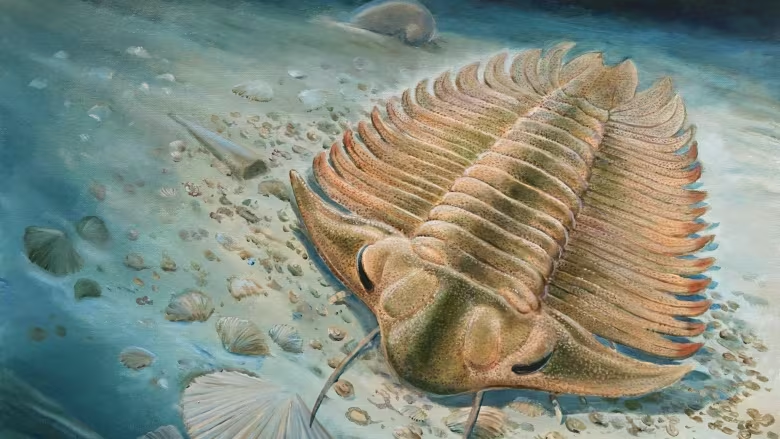
Trilobite Tuesday #46: Trilobite’s last meal
Read more: Trilobite Tuesday #46: Trilobite’s last mealCBC Radio’s Quirks and Quarks show has a segment about a trilobite’s last meal. The trilobite specimen, Bohemolichas incola, was found in a 465 million year old (Ordovician Period) shale deposit. A 465 million year old trilobite fossil with remarkably preserved gut contents reveals for the first time what these extinct arthropods ate. Per Ahlberg, a paleontologist at Uppsala University in Sweden found hundreds of shell fragments from a variety of animals crushed up in the digestive tract. The research suggests this three centimetre long trilobite ate indiscriminately as it moved along the sea floor. His study was published in Nature. More…
-
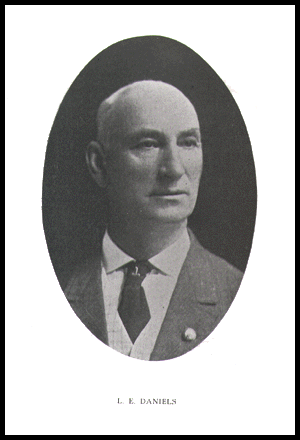
Mazon Monday #184: Historic Collectors – L.E. Daniels
Read more: Mazon Monday #184: Historic Collectors – L.E. DanielsThis is Mazon Monday post #184. What’s your favorite Mazon Creek fossil? Tell us at email:esconi.info@gmail.com. Lorenzo Eugene Daniels was a Farmer, Sheriff of Grundy County, IL, Assistant State Geologist, Indiana, and an Amateur Conchologist. He was born in Mazon, Illinois on March 4th 1852. In the scientific literature of the time, he is referred to as L.E. Daniels. He was a prolific fossil collector with a keen interest in midwestern mollusks. Upon his death in Chicago in 1918, his huge collection of land and freshwater shells was purchased by Bryant Walker of Detroit for the Museum of Zoology at…
-
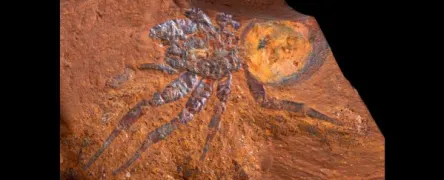
Fossil of a ‘Giant’ Trapdoor Spider Found in Australia, And Just Look at It!
Read more: Fossil of a ‘Giant’ Trapdoor Spider Found in Australia, And Just Look at It!Science Alert has a story about a spider fossil from Australia. This new species of spider, Megamonodontium mccluskyi, dates to the Miocene, which lasted from 11 to 16 million years ago. The fossil was found in a locality called McGraths Flat located in a grassland in New South Wales. McGraths Flat is classified as a Lagerstätte due to the exceptional fossil preservation known from the area. The fossil spider was described in the journal Zoological Journal of the Linnean Society. “Only four spider fossils have ever been found throughout the whole continent, which has made it difficult for scientists to…
-

PBS Eons: You’re Living On An Ant Planet
Read more: PBS Eons: You’re Living On An Ant PlanetPBS Eons has a new episode over on Youtube. We are all living on an ant world…. How did ants take over the world? Well, it looks like they didn’t achieve world domination all by themselves. They may have just been riding the wave of a totally different evolutionary explosion.
-
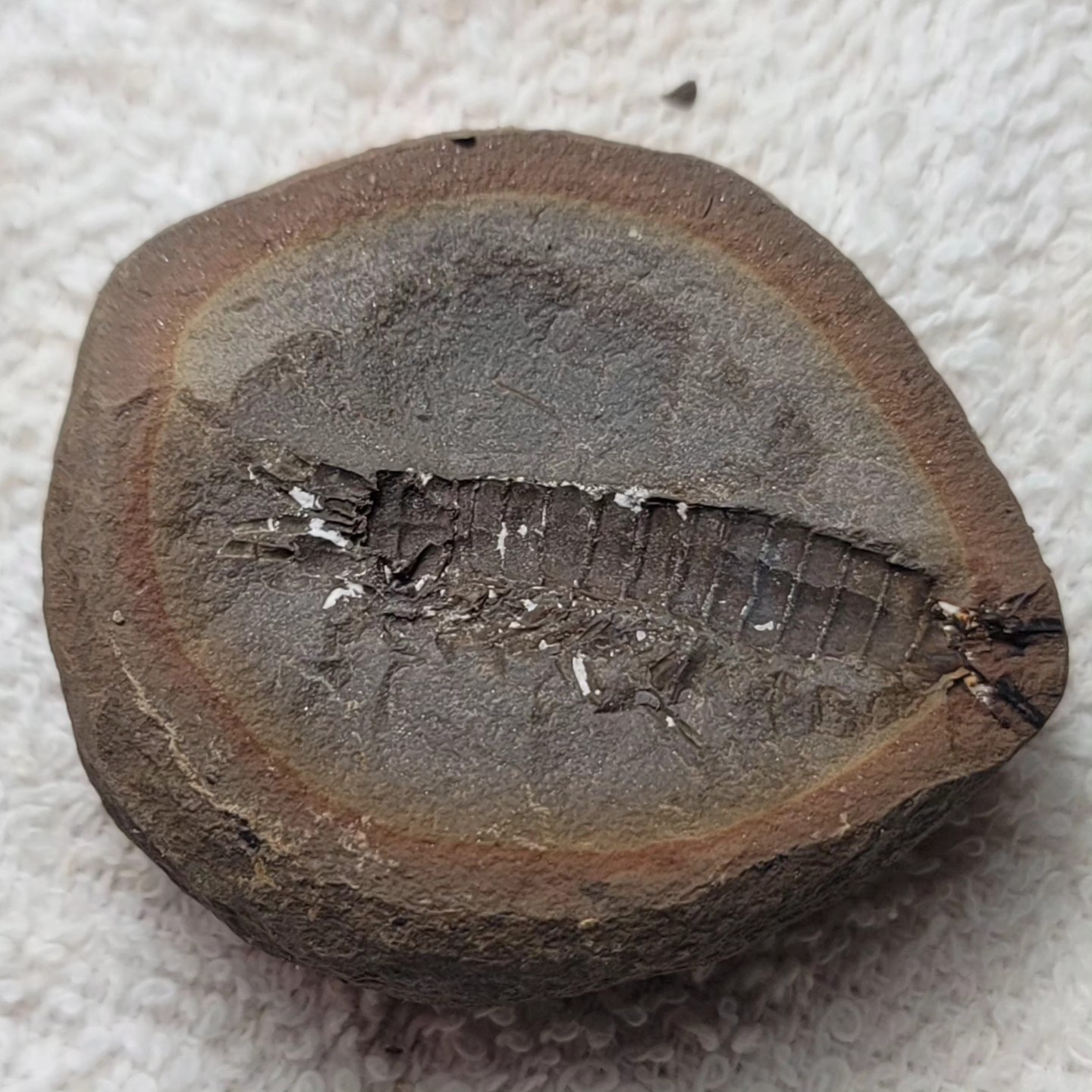
Fossil Friday #180: Acanthotelson stimpsoni
Read more: Fossil Friday #180: Acanthotelson stimpsoniThis is the “Fossil Friday” post #180. Expect this to be a somewhat regular feature of the website. We will post any fossil pictures you send in to esconi.info@gmail.com. Please include a short description or story. Check the #FossilFriday Twitter hash tag for contributions from around the world! This week’s fossil is a sweet little Acanthotelson stimpsoni from ESCONI member Jake Fill. It’s fairly fresh, having just recently opened. Acanthotelson stimpsoni was described by Fielding Bradford Meek and Amos Henry Worthen way back in 1865. It was named for William Stimpson, who worked at the Smithsonian Institution and was later…
-
ESCONI Field Trip to Vulcan Manteno Quarry on Saturday, October 28th, 2023 from 9:00 AM to 12:00 PM
Read more: ESCONI Field Trip to Vulcan Manteno Quarry on Saturday, October 28th, 2023 from 9:00 AM to 12:00 PMThis trip is full! A waiting list is being kept. There will be an ESCONI Field Trip to the Vulcan Manteno Quarry on Saturday October 28, 2023 from 9 AM to 12 noon. We last visited this location in 2018. The rock there is Silurian dolomite. The quarry is located at 6141 Highway 50, Manteno, Illinois. The rules are shown below: You should be able to find this quarry by searching on “6141 IL 50 Manteno” in Google. That will provide a map and satellite view. If there is a need to cancel (like for weather) I will send out…
-
Throwback Thursday #181: Science News from September 1970
Read more: Throwback Thursday #181: Science News from September 1970This is Throwback Thursday #181. In these, we look back into the past at ESCONI specifically and Earth Science in general. If you have any contributions, (science, pictures, stories, etc …), please send them to esconi.info@gmail.com. Thanks! Here are a few science stories from the newsletter for September 1970. All the stories were submitted by ESCONI members. DOWNSTATE ILLINOIS–by Diane Dare GALLATIN COUNTY: The Old Slave House, or Hickory Hill Mansion, was owned by one of the men who became wealthy operating government- owned salt works. The house was built in 1834 nine miles west of Shawneetown in Gallatin County.…
-
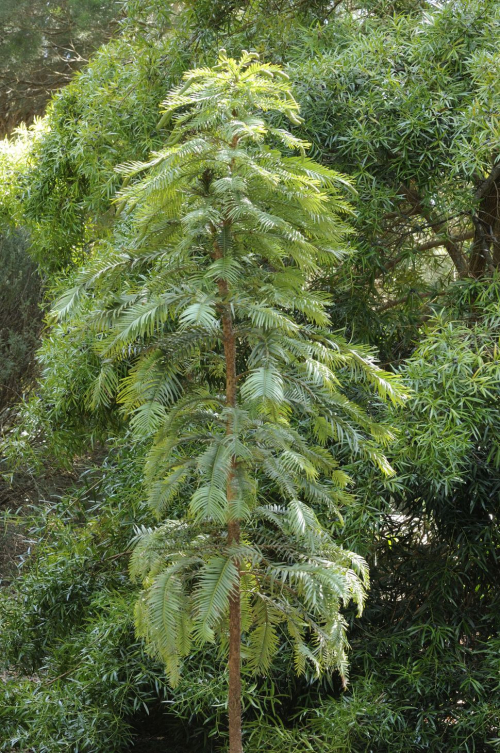
Mystery of ‘living fossil’ tree frozen in time for 66 million years finally solved
Read more: Mystery of ‘living fossil’ tree frozen in time for 66 million years finally solvedLive Science has a story about the Wollemi pine. Thought extinct, the Wollemi pine was “rediscovered” in 1994 by some hikers near Sydney, Australia. Wollemia nobilis is pretty much unchanged since the Cretaceous Peiod. A group of scientists from Australia, the US, and Italy have recently published the plant’s genome. The genome gives insight into both its evolution and unique reproduction, which is mostly through self cloning. The pine has 26 chromosomes — containing a staggering 12.2 billion base pairs. In comparison, humans have only around 3 billion base pairs. Despite the size of their genome, Wollemi pines are extremely low in…
-
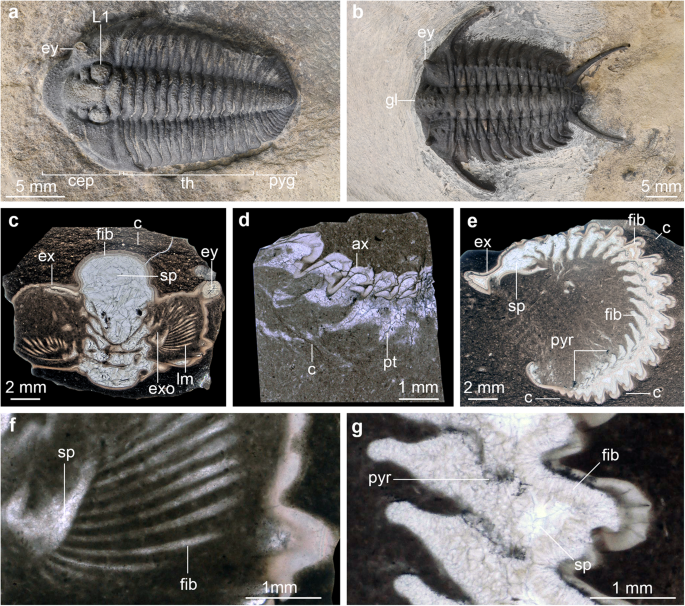
Trilobite Tuesday #45: Taphonomy of non-biomineralized trilobite tissues preserved as calcite casts from the Ordovician Walcott-Rust Quarry, USA
Read more: Trilobite Tuesday #45: Taphonomy of non-biomineralized trilobite tissues preserved as calcite casts from the Ordovician Walcott-Rust Quarry, USANature’s journal communication Earth & environment has a paper about the preservation of trilobites in the Wolcott-Rust quarry. The Walcott-Rust quarry was discovered by Charles Wolcott in the 1870’s. It dates to the Ordovician Period and yielded the first known trilobite appendages. This paper details research into the mechanism of the delicate, three dimensional preservation. Abstract Trilobites with appendages from the Rust Formation of New York State were discovered in the 1870s and represent one of the earliest known cases of exceptional preservation of non-biomineralized tissues. The Rust Formation trilobites feature three-dimensionally preserved walking legs and delicate respiratory lamellae, but…
-
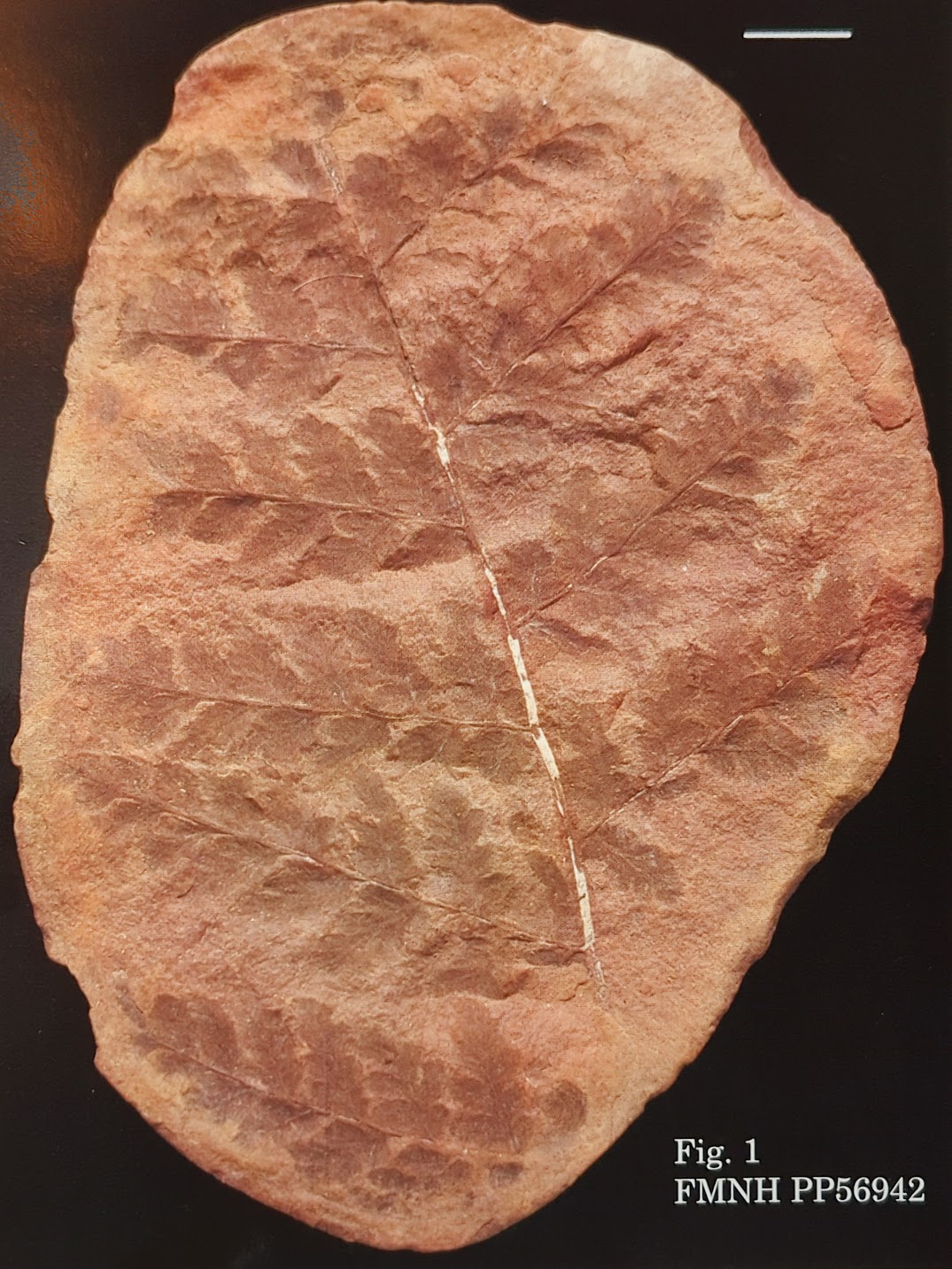
Mazon Monday #183: Sphenopteris plicata
Read more: Mazon Monday #183: Sphenopteris plicataThis is Mazon Monday post #183. What’s your favorite Mazon Creek fossil? Tell us at email:esconi.info@gmail.com. Sphenopteris plicata was described by Leo Lesquereux in 1858. Lesquereux (1806 – 1889) described much of the North American Carboniferous flora in the mid 1800’s as a consultant to various US state geological surveys. His book “Atlas to the Coal Flora of Pennsylvania and the Carboniferous Formation throughout the United States” written from 1879 to 1884 was the standard reference for the Carboniferous flora in the US for many years. From George’s Basement Sphenopteris plicata was appeared on page 148 of Jack Wittry’s “A…
-

Giant Cave of Prehistoric Art Has Been Hidden Since The Stone Age
Read more: Giant Cave of Prehistoric Art Has Been Hidden Since The Stone AgeScience Alert has a story about the discovery of cave art in Spain. The art is dated to about 24,000 years old. It was found on the walls of a cave at the Cova Dones site near Spain’s Mediterranean coast. The cave has been known by locals for many years, but the art was somehow overlooked. There are pictures of at least 19 wild animals. The paintings were studied by researchers from the University of Zaragoza and University of Alicante in Spain. The research was published in the journal Antiquity. Located at a site called Cova Dones near Spain’s Mediterranean…
-
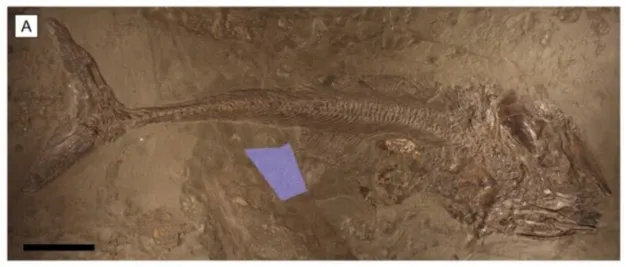
Fish’s big mistake preserved an unusual fossil for us
Read more: Fish’s big mistake preserved an unusual fossil for usArs Technica has a story about an interesting fish fossil. A fossil fish, Pachycormus macropterus, from Germany shows that even fish sometimes bite off more than they can eat… This particular fish fossil has a fossilized ammonite in its belly. The fossil was found in the Fischer Quarry in Zell unter Aichelberg, Germany and dates to the Jurassic Period, more than 170 million years ago. See more detail in a paper published in the journal Gelological Magazine. “This work is part of a larger project studying the evolution and palaeoecology of fishes from the Early Jurassic of Germany,” Maxwell explained.…
-

Fossil Friday #179: Reticulopteris munsterii
Read more: Fossil Friday #179: Reticulopteris munsteriiThis is the “Fossil Friday” post #179. Expect this to be a somewhat regular feature of the website. We will post any fossil pictures you send in to esconi.info@gmail.com. Please include a short description or story. Check the #FossilFriday Twitter hash tag for contributions from around the world! We have a Pit 3 Reticulopteris munsterii for your enjoyment today. This concretion was collected last year. It opened this summer after a few months in freeze/thaw. R. munsterii is uncommon in the Mazon Creek fossil deposit, R. munsterii is a seed fern, which is an extinct group of fern-like plant, which…
-

Throwback Thursday #180: Field Museum Photo Archives
Read more: Throwback Thursday #180: Field Museum Photo ArchivesThis is Throwback Thursday #180. In these, we look back into the past at ESCONI specifically and Earth Science in general. If you have any contributions, (science, pictures, stories, etc …), please send them to esconi.info@gmail.com. Thanks! ——————————————————————————————- More photos from the Field Museum Photo Archive on Tumblr. This time views in/of/from the museum back in the day… Here is a great photo of the Museum Campus in 1926. No Shedd Aquarium or Adler Planetarium yet. Look at how tiny Soldier Field is. © The Field Museum, GN82988, Photographer Kauffman and Fabray Company. Field Museum exterior aerial view showing Soldier…
-

Earth’s biggest cache of pink diamonds formed in the breakup of the 1st supercontinent ‘Nuna’
Read more: Earth’s biggest cache of pink diamonds formed in the breakup of the 1st supercontinent ‘Nuna’Live Science has a post about Australian diamonds. Western Australia is the source of 90% of the worlds pink diamonds. They are found in the Argyle formation, which formed about 1.3 billion (yes, billion) years ago. A paper in the journal Nature details the origin of these diamonds. While other diamonds derive their color from impurities, the color in pink diamonds comes from deformation of the crystal structure. Now, new research suggests that the strange color and strange geology likely come from a similar origin, the plate tectonics of the planet some 1.3 billion years ago. Recent studies from other researchers suggest…

ESCONI Gem, Mineral, and Fossil Show
Most Recent Post
- PBS Eons: The Chaotic Race to Name T. rex
 PBS Eons has a new episode. This one is about the controversial history of the name Tyrannosaurus rex.
- About ESCONI
- Around the Web
- Calendar of Events
- Code of Ethics and Conduct
- ESCONI Books for Sale
- ESCONI Gem, Mineral, and Fossil Show
- ESCONI in the News
- ESCONI Videos
- Field Trips
- Flashback Friday
- Fossil Friday
- Mazon Creek
- Mazon Monday
- Member Spotlight
- Membership Information
- Reference Material
- Throwback Thursday
- Trilobite Tuesday
Field trips require membership, but visitors are welcome at all meetings!
| Friday, April 10th | General Meeting – 8:00 PM via Zoom. Jessica Hull will present “Life in the Devonian Period, The Age of Fishes.” |
| Saturday, April 11th | Junior Study Group Meeting – 2:00 PM, in person at the College of DuPage Technical Education Center (TEC) Building – Room 1038A (Map). Katherine Howard will present on Sand and Sediment Collecting. Specifics of this meeting are available from Scott Galloway, 630-670-2591, gallowayscottf@gmail.com. |
| Saturday, April 18th | Paleontology Study Group – 7:30 PM via Zoom and in person at the College of DuPage, TEC, Room 1038B (Map). Keith Robitschek will present “Digging the Marl of the Lance Formation.” |
| No meeting this month | Mineralogy Study Group |
| No meeting this month | Junior Study Group |