
-
ESCONI December 2023 General Meeting – Friday, December 8th, 2023 at 8:00 PM via Zoom – “Ancient Forest Pests: Plant-Insect Interactions in the Fossil Record”
Read more: ESCONI December 2023 General Meeting – Friday, December 8th, 2023 at 8:00 PM via Zoom – “Ancient Forest Pests: Plant-Insect Interactions in the Fossil Record”The December 8, 2023 General Meeting presentation will be held via Zoom: Michael Donovan, Collections Manager, Paleobotany at the Field Museum will present “Ancient Forest Pests: Plant-Insect Interactions in the Fossil Record”. Description: Plants and insects are the most diverse multicellular organisms on Earth, and their abundant interactions are fundamental components of ecosystems on land. Plant-feeding insects are highly sensitive to environmental disturbances, including past extinction events and climate change. In this talk, I will discuss my research examining how major environmental changes affected ancient insect and plant biodiversity and biogeography, and how those changes have shaped modern ecosystems. Join…
-
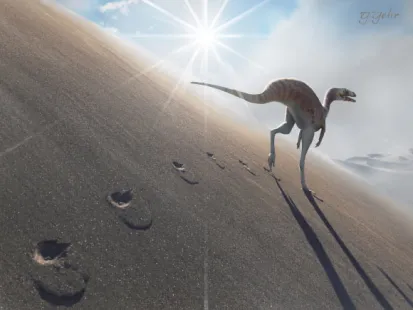
135-Million-Year-Old Footprints Reveal New Dinosaur Species
Read more: 135-Million-Year-Old Footprints Reveal New Dinosaur SpeciesSciNews has a story about a new dinosaur species. The animal, Farlowichnus rapidus, lived about 135 million years ago during the Cretaceous Period. The name Farlowichnus was selected to honor Professor James Farlow, a paleontologist and ichnologist at Purdue University in Indiana. Footprints were found in the Botucatu Formation just outside Sao Paulo, Brazil. The research was published in the journal Cretaceous Research. r. Leonardi and co-authors discovered numerous footprints of the new theropod dinosaur in the Botucatu Formation near Sao Paulo, Brazil. “The sandstones of the Botucatu Formation originally covered a surface estimated in at least 1.3 million km2, the largest…
-

Mazon Monday #193: A reappraisal of Nemavermes mackeei from the Mazon Creek fossil site expands Carboniferous cyclostome diversity
Read more: Mazon Monday #193: A reappraisal of Nemavermes mackeei from the Mazon Creek fossil site expands Carboniferous cyclostome diversityThis is Mazon Monday post #193. What’s your favorite Mazon Creek fossil? Tell us at email:esconi.info@gmail.com. The Mazon Creek fossil family has a new member… Squirmarius testai. It was described in the paper “A reappraisal of Nemavermes mackeei from the Mazon Creek fossil site expands Carboniferous cyclostome diversity“. The paper’s lead author is Victoria McCoy, who you’ll remember from her work on Tullymonstrum gregarium. S. testai was named for Tom Testa, long time, prolific Mazon Creek collector. Tom has a few other species named for him – Testajapyx thomasi and Testaneura testai, both insects. Jack Witty, Hamed Sadabadi, and Paul…
-
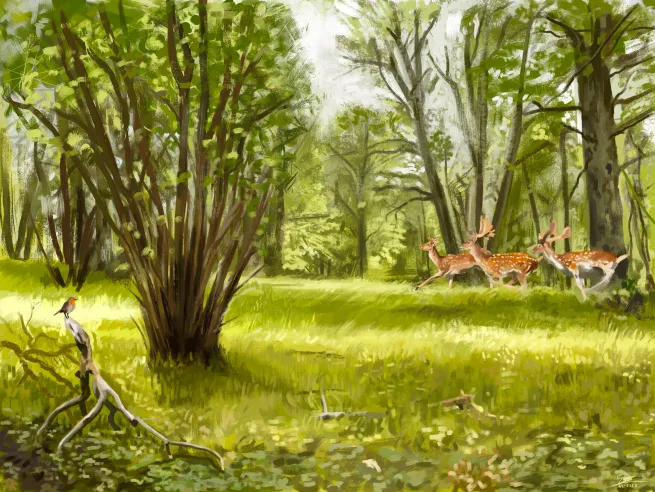
New study shows ancient Europe was not all forest, half was covered in grassland
Read more: New study shows ancient Europe was not all forest, half was covered in grasslandPalaeoartistic reconstructions of Last Interglacial landscapes in the European temperate forest biome, consistent with our pollen-based estimates of vegetation structure. Credit: Brennan Stokkermans Phys.org has a story about ancient Europe. A recent paper in the journal Science Advances looked at pollen samples from various sites across Europe to determine the distribution of plants during the last inter-glacial period about 116,000 to 129,000 years ago. The researchers from Europe and Canada found that Europe was a temperate forest intermixed with open grasslands. This time interval is before the arrival of modern humans about 40,000 years ago, but Neanderthals were present in…
-
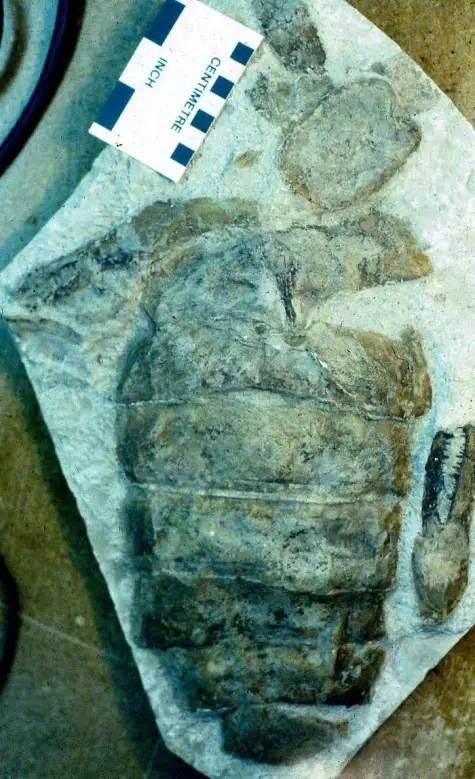
Paleontology Is Far More Than New Fossil Discoveries: Understanding the ancient past is critical to responding to challenges we face in the future
Read more: Paleontology Is Far More Than New Fossil Discoveries: Understanding the ancient past is critical to responding to challenges we face in the futureRoy Plotnick has a new article over on Medium. It details the importance of Paleontology in the pantheon of science. Paleontology isn’t just fossils and dinosaurs…. it’s critical science needed to understand how the planet has and is changing. In this time of climate change, the knowledge it provides is vital to understanding of where we are and where we’re headed. The focus on fossils, of course, has many potential positive benefits for paleontology. Dinosaurs and other ancient organisms captivate the public, as attested to by films and television shows, such as Prehistoric Planet. The Jurassic Park and Meg franchises would not exist without paleontologists first…
-

Reminder: ESCONI Holiday Party December 2nd, 2023, 12:00 PM at Warren’s Ale House in Wheaton, IL
Read more: Reminder: ESCONI Holiday Party December 2nd, 2023, 12:00 PM at Warren’s Ale House in Wheaton, ILDo you have a better (uglier!?!) Holiday sweater? If you think you do, come out and show it off! The ESCONI Holiday Party for 2023 is planned for December 2 at Warren’s Ale House, 51 Town Square Wheaton, IL. That’s the same place as last year. We will be ordering off the menu. They have a good selection. We hope to see you there! Please RSVP by Thursday, November 30 (do not reserve through the restaurant) to Board Member Katherine Howard – Email: Katherinehoward@live.com Please provide your name and how many will be attending so we have an approximate count.…
-

Fossil Friday #189: Alethopteris serlii
Read more: Fossil Friday #189: Alethopteris serliiThis is the “Fossil Friday” post #189. Expect this to be a somewhat regular feature of the website. We will post any fossil pictures you send in to esconi.info@gmail.com. Please include a short description or story. Check the #FossilFriday Twitter hash tag for contributions from around the world! For this week, we have a beautiful Alethopteris serlii. A. serlii is a seed fern, which are an extinct group of plants that disappeared at the end of the Cretaceous Period. See Mazon Monday #57 for more information. This particular specimen was collected in Pit 1 on July 4th, 1969 by Jim…
-
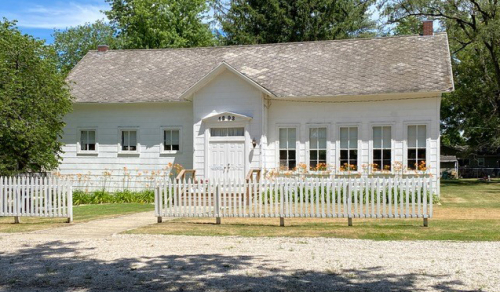
Throwback Thursday #190: Carbon Hill School Museum
Read more: Throwback Thursday #190: Carbon Hill School MuseumThis is Throwback Thursday #190. In these, we look back into the past at ESCONI specifically and Earth Science in general. If you have any contributions, (science, pictures, stories, etc …), please send them to esconi.info@gmail.com. Thanks! We recently stopped by the Carbon Hill School Museum in Carbon Hill, IL. Michele Micetich, the curator, was a key partner with ESCONI for the Mazon Creek Fossil Day back in mid-October. She has many historical artifacts and displays to document the history of the area. This includes coal mining and Mazon Creek fossils. It’s an interesting place to visit. There is an…
-
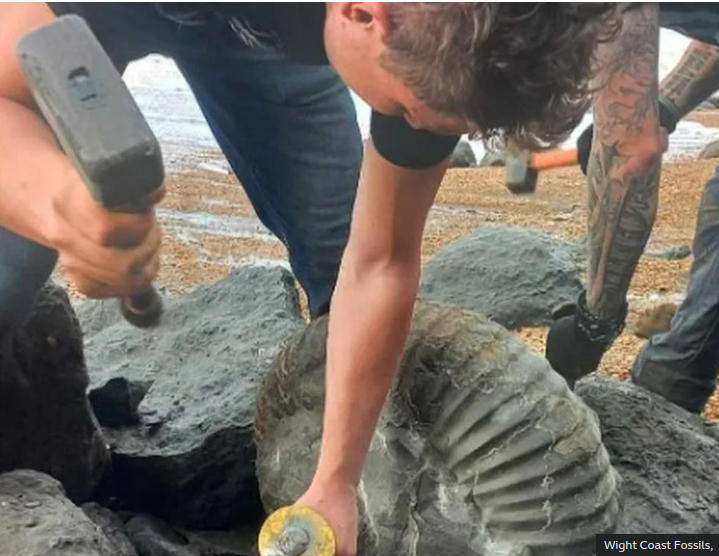
Isle of Wight: Enormous fossil ammonite dug out from boulder
Read more: Isle of Wight: Enormous fossil ammonite dug out from boulderThe BBC has a story about the discovery of an enormous ammonite.
-

Video for ESCONI Paleontology Meeting November 2023 – A Snapshot in Time: The Jurassic Lagerstätte of the Solnhofen Archipelago, Germany”
Read more: Video for ESCONI Paleontology Meeting November 2023 – A Snapshot in Time: The Jurassic Lagerstätte of the Solnhofen Archipelago, Germany”The presentation at the November 2023 Paleontology Meeting was given by Bruce and Rene Lauer. The title of the talk was “A Snapshot in Time: The Jurassic Lagerstätte of the Solnhofen Archipelago, Germany”. Bruce and Rene Lauer are founders and administrators of the Lauer Foundation for Paleontology, Science, and Education. The Lauer Foundation for Paleontology, Science and Education (PSE) is passionate about promoting the cooperation and collaboration between scientists, individuals and commercial fossil collectors for the advancement of science. The Lauer Foundation PSE is an active operating foundation and the Foundation’s collections are curated using museum standards including the Specify Software, collection management system, and…
-
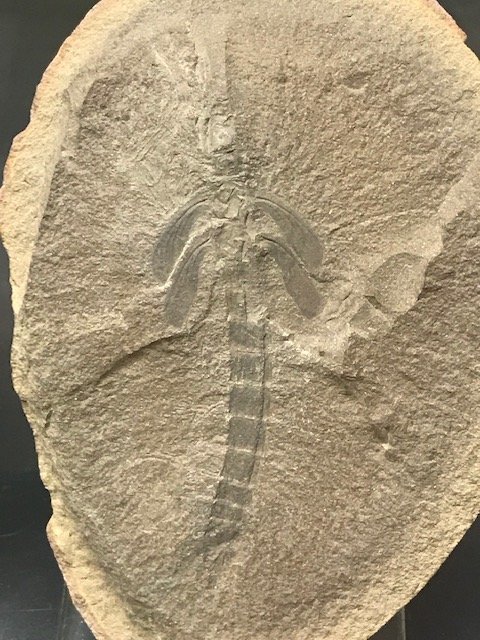
Mazon Monday #192: Mischoptera douglassi
Read more: Mazon Monday #192: Mischoptera douglassiThis is Mazon Monday post #192. What’s your favorite Mazon Creek fossil? Tell us at email:esconi.info@gmail.com. Mischoptera douglassi is a winged fossil insect from the Pennsylvanian Period. It belongs to Superorder Palaeodictyopteroidea and Order Megascoptera. The first specimen was found by Lincoln Douglass in Pit 6 of the Northern Illinois Coal Company. Lincoln, was the father of Dave Douglass. In September 1973, Dave founded the “Down to Earth Rock Shop” in Evanston, IL. The holotype specimen of M. douglassi is on display in the basement museum. Eugene Richardson called it “one of the most important fossil insects ever found” due…
-
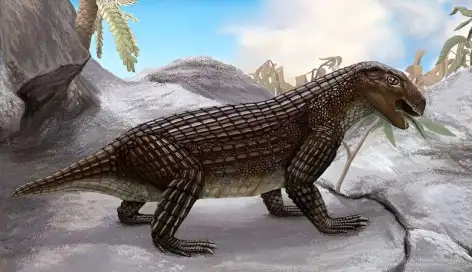
Unraveling the surprisingly complex history of crocodiles
Read more: Unraveling the surprisingly complex history of crocodilesSome ancient crocodiles, like Simosuchus, were doing things vastly different to surviving species, such as eating plants. Credit: Smokeybjb/Wikimedia Commons Phys.org has a story about the history of crocodiles. There are 28 species of living crocodiles, but this represents a small fraction of the the many types that have lived in the past. The ancestors of modern crocodilians likely appeared in North America up to 145 million years ago during the late Jurassic Period. Two recent papers touch on the history of crocodiles. A paper in the journal Royal Society Open Science looks at the ability for crocodiles to tolerate…
-

PBS Eons: The Huge Extinctions We Are Just Now Discovering
Read more: PBS Eons: The Huge Extinctions We Are Just Now DiscoveringPBS Eons has a new episode. This one is about ocean extinctions during the Silurian Period. It wasn't the quiet time that was once thought. What graptolites tell us is a story of incredible changes in the ocean, of periods where the oceans became poisonous and suffocating before eventually clearing up again. They unlock extinctions and recoveries that scientists didn't see. And, most of all, they show us how unpredictable the Silurian period really could be.
-

ESCONI Events December 2023
Read more: ESCONI Events December 2023Field trips require membership, but visitors are welcome at all meetings! Fri, Dec 2nd ESCONI Holiday Lunch 12:00 PM – Warren’s Ale House in Wheaton, IL See Details Fri, Dec 8th ESCONI General Meeting 8:00 PM – Topic: “Ancient Forest Pests: Plant-Insect Interactions in the Fossil Record” by Michael Donovan, Collections Manager, Paleobotany, Field Museum of Natural History Zoom link Sat, Dec 9th ESCONI Junior Meeting – 6:30 PM at College of DuPage – Topic: “Rock Id and Sylvania Fossil Slabs” Specifics of this meeting are available from Scott Galloway, 630-670-2591, gallowayscottf@gmail.com. The meeting will be in person at the…
-
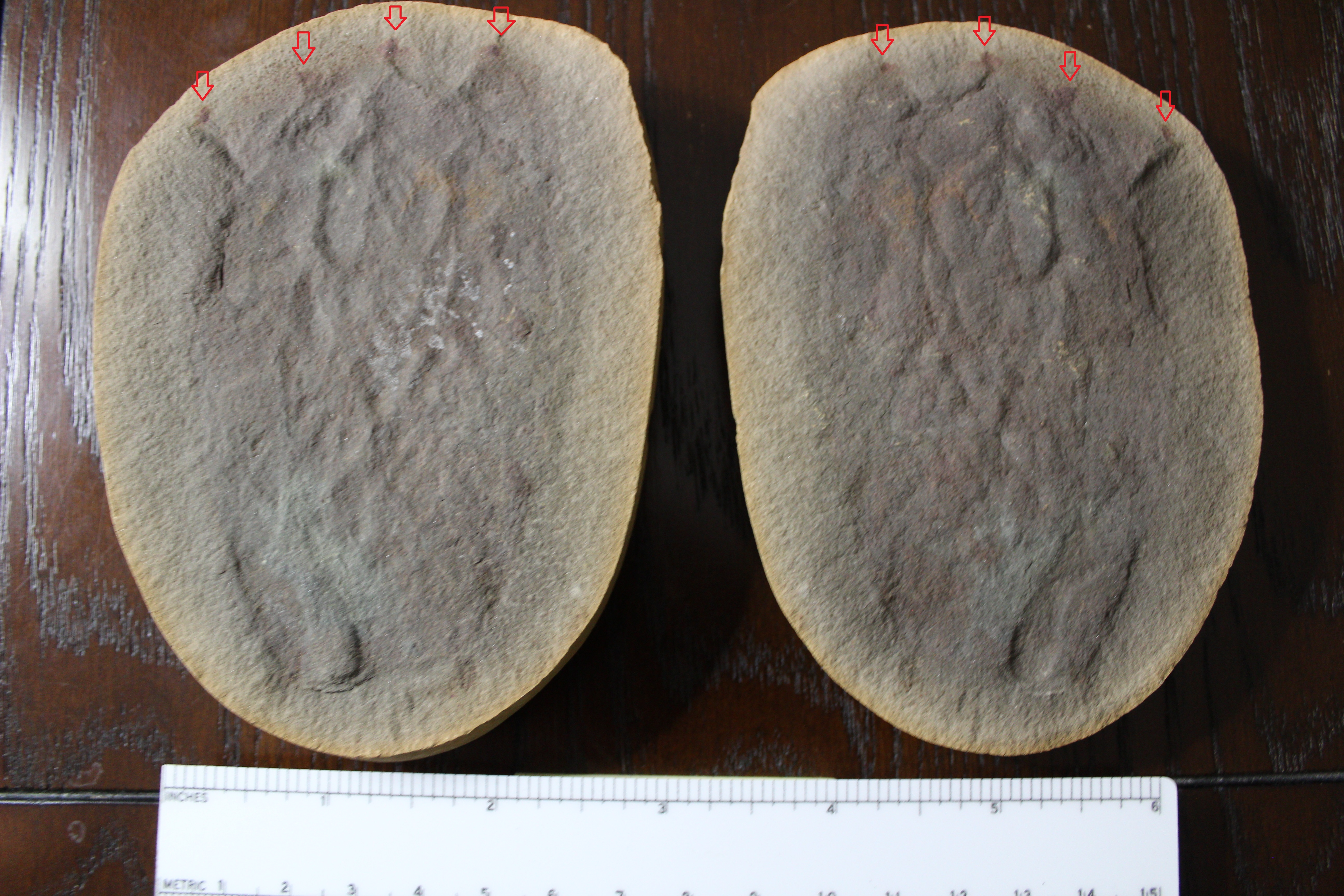
Fossil Friday #188: Essexella asherae
Read more: Fossil Friday #188: Essexella asheraeThis is the “Fossil Friday” post #188. Expect this to be a somewhat regular feature of the website. We will post any fossil pictures you send in to esconi.info@gmail.com. Please include a short description or story. Check the #FossilFriday Twitter hash tag for contributions from around the world! In the marine areas of the Mazon Creek fossil deposit, it’s very common to find blobs in opened concretions. Often these are left in the field in the search for rarer, more “interesting” fossils. There’s even a poem “Ode to a Blob” (written by Rob Sula in 2002) to pay homage to…
-
Throwback Thursday #189: Happy Thanksgiving!
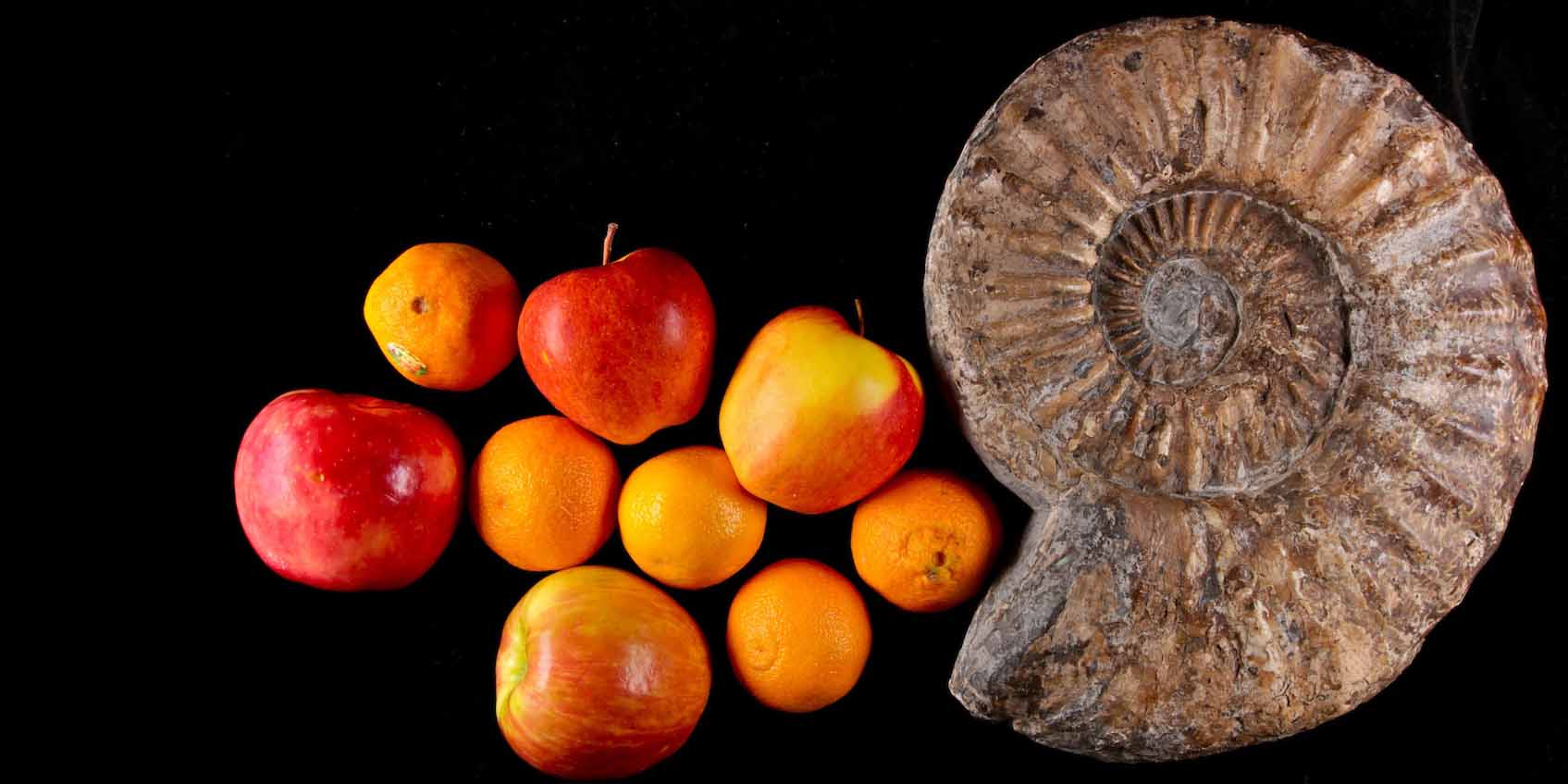
Read more: Throwback Thursday #189: Happy Thanksgiving!This is Throwback Thursday #189. In these, we look back into the past at ESCONI specifically and Earth Science in general. If you have any contributions, (science, pictures, stories, etc …), please send them to esconi.info@gmail.com. Thanks! Ok, this is a throwback of a Throwback Thursday for those of you that didn’t see it the first time. Paul Mayer, collection manager of fossil invertebrates at the Field Museum, did a post on ammonites and Thanksgiving back in 2016. We posted it back in Throwback Thursday #86. Happy Thanksgiving! For this Thanksgiving Edition of Throwback Thursday, we are only going back…
-

Video for ESCONI October 2023 General Meeting – “Microfossils to Mosasaurs: A Journey Through the University of Iowa Paleontology Repository”
Read more: Video for ESCONI October 2023 General Meeting – “Microfossils to Mosasaurs: A Journey Through the University of Iowa Paleontology Repository”Here is the video for the October 2023 General Meeting. The speaker was Tiffany Adrain, who works as the Paleontology Repository Collections Manager at the University of Iowa. The topic of her presentation was “Microfossils to Mosasaurs: A Journey Through the University of Iowa Paleontology Repository”.
-

ESCONI Holiday Party December 2nd, 2023, 12:00 PM at Warren’s Ale House in Wheaton, IL
Read more: ESCONI Holiday Party December 2nd, 2023, 12:00 PM at Warren’s Ale House in Wheaton, ILDo you have a better (uglier!?!) Holiday sweater? If you think you do, come out and show it off! The ESCONI Holiday Party for 2023 is planned for December 2 at Warren’s Ale House, 51 Town Square Wheaton, IL. That’s the same place as last year. We will be ordering off the menu. They have a good selection. We hope to see you there! Please RSVP by Thursday, November 30 (do not reserve through the restaurant) to Board Member Katherine Howard – Email: Katherinehoward@live.com Please provide your name and how many will be attending so we have an approximate count.…
-

Mazon Monday #191: Ilyodes inopinata
Read more: Mazon Monday #191: Ilyodes inopinataThis is Mazon Monday post #191. What’s your favorite Mazon Creek fossil? Tell us at email:esconi.info@gmail.com. Velvet worms, also known as Onychophora, are a phylum of terrestrial invertebates. They are soft-bodied, with many short thick legs, and a velvety body. Modern day examples live in tropical environments. They are very rare in the fossil record and appear unchanged since the Cambrian. Some researchers believe they might be the missing link between annelid worms and arthropods. The one Mazon Creek species of Onychophora was described by Ida Thompson and Douglas S. Jones in 1980 in the paper “A Possible Onychophoran from…
-
Fossil Reveals Ancient Seafloor Communities
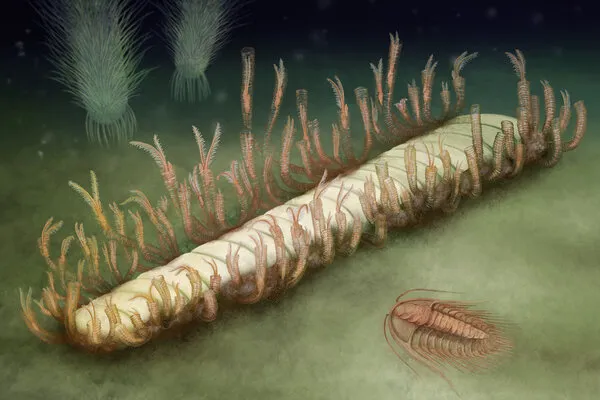
Read more: Fossil Reveals Ancient Seafloor CommunitiesAn artist’s reconstruction of the tube-like animals attached to the dead phragmocone..Credit…Franz Anthony The New York Times Trilobites column has a story about some very old ocean floor communities. Research published recently in the journal Communications Biology looked at a 480-million-year-old cephalopod from Morocco that was posthumously converted into a condominium. It’s the earliest known example of the recycling of biological material on the ocean floor. The fossil arrived at Harvard in 2019, amid a collection of legally imported invertebrate fossils from the Fezouata Shale, a formation full of exquisitely preserved Ordovician fossils from the Atlas Mountains of Morocco. The…

ESCONI Gem, Mineral, and Fossil Show
Most Recent Post
- ESCONI April 2026 General Meeting via Zoom – “Life in the Devonian Period, The Age of Fishes”
 The April 2026 General Meeting will be held on April 10th, 2026 at 8:00 via Zoom. At the meeting, Jessica Hull will present “Life in the Devonian Period, The Age of Fishes.” The Devonian Period was a crucial moment in the history of life. In this presentation, Jessica Hull will bring fossils to life by describing how they would have lived based on the most up to date research. Dunkleosteus fans won’t want to miss this!
- About ESCONI
- Around the Web
- Calendar of Events
- Code of Ethics and Conduct
- ESCONI Books for Sale
- ESCONI Gem, Mineral, and Fossil Show
- ESCONI in the News
- ESCONI Videos
- Field Trips
- Flashback Friday
- Fossil Friday
- Mazon Creek
- Mazon Monday
- Member Spotlight
- Membership Information
- Reference Material
- Throwback Thursday
- Trilobite Tuesday
Field trips require membership, but visitors are welcome at all meetings!
| Friday, April 10th | General Meeting – 8:00 PM via Zoom. Jessica Hull will present “Life in the Devonian Period, The Age of Fishes.” |
| Saturday, April 11th | Junior Study Group Meeting – 2:00 PM, in person at the College of DuPage Technical Education Center (TEC) Building – Room 1038A (Map). Katherine Howard will present on Sand and Sediment Collecting. Specifics of this meeting are available from Scott Galloway, 630-670-2591, gallowayscottf@gmail.com. |
| Saturday, April 18th | Paleontology Study Group – 7:30 PM via Zoom and in person at the College of DuPage, TEC, Room 1038B (Map). Keith Robitschek will present “Digging the Marl of the Lance Formation.” |
| Friday, April 24th | MAPS Expo XLVII – Springfield, IL. |
| Saturday, April 25th | MAPS Expo XLVII – Springfield, IL. |
| Sunday, April 26th | MAPS Expo XLVII – Springfield, IL. |
| No meeting this month | Mineralogy Study Group |