
-
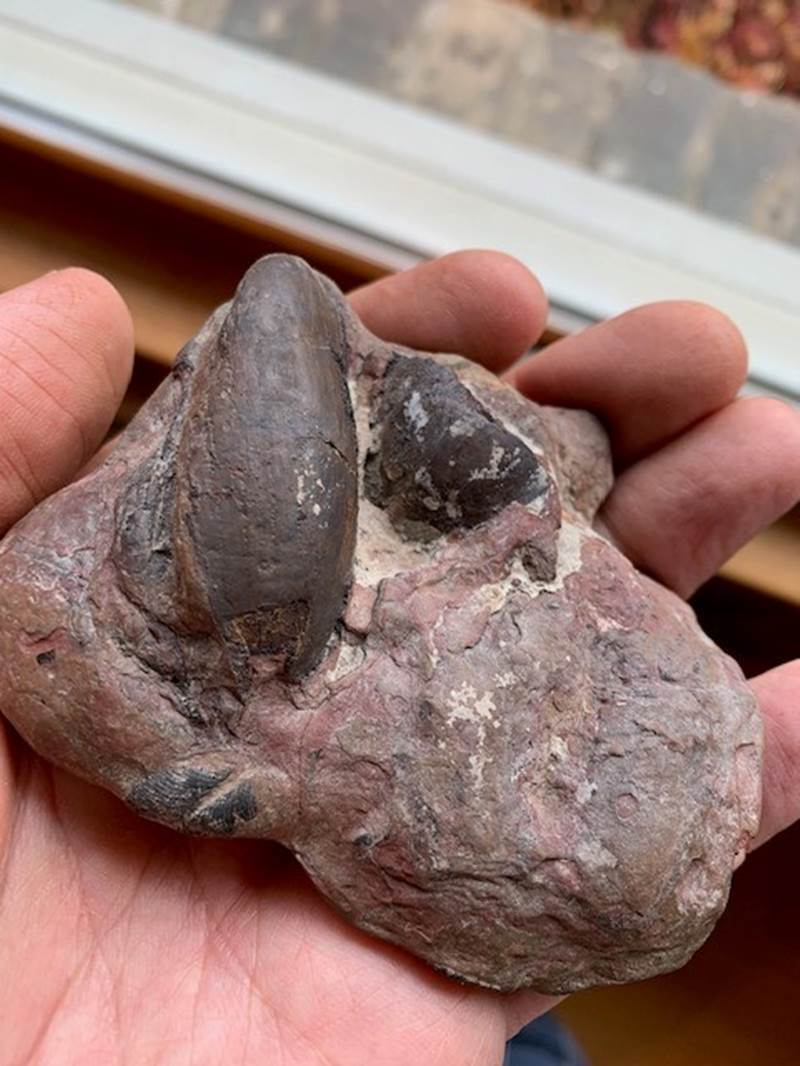
Fossil Friday #88: Trigonocarpus seeds
Read more: Fossil Friday #88: Trigonocarpus seedsThis is the “Fossil Friday” post #88. Expect this to be a somewhat regular feature of the website. We will post any fossil pictures you send in to esconi.info@gmail.com. Please include a short description or story. Check the #FossilFriday Twitter hash tag for contributions from around the world! Back in Mazon Monday #67, we took a look at Trigonocarpus seeds, which are the seed part of an extinct order of plant called Medullosales. The common name is seed fern. The order includes Mazon Creek species like Alethopteris, Odontopteris, Laveiniopteris, Neuropteris, and Macroneuropteris. Back in Fossil Friday #62, we highlighted an exquisite specimen from ESCONI…
-
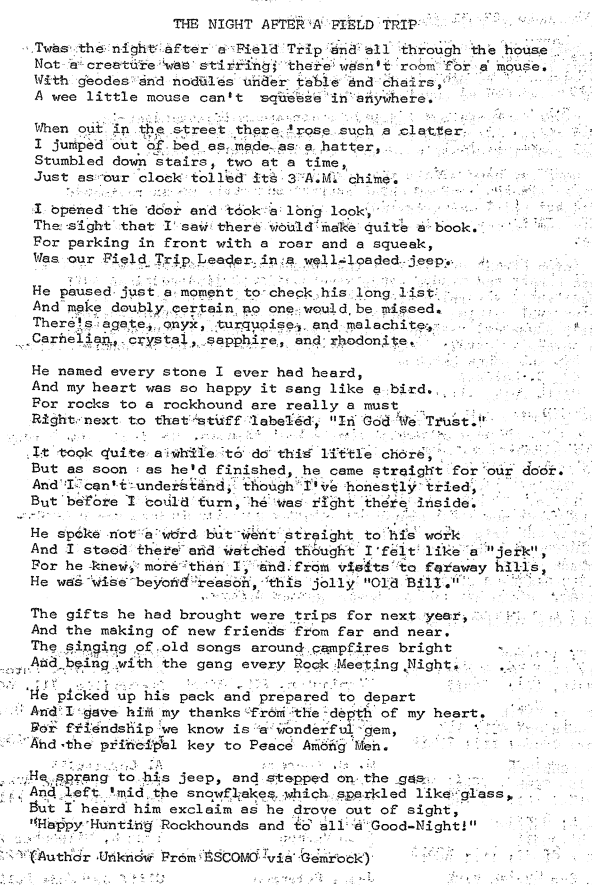
Throwback Thursday #90: The Night After a Field Trip
Read more: Throwback Thursday #90: The Night After a Field TripThis is Throwback Thursday #90. In these, we look back into the past at ESCONI specifically and Earth Science in general. If you have any contributions, (science, pictures, stories, etc …), please send them to esconi.info@gmail.com. Thanks! We have a real nice holiday themed post for today. It’s a poem called “The Night After a Field Trip” from the December 1970 newsletter. Unfortunately, no details are available on the attribution… who were ESCOMO and Gemrock? Was Gemrock a club newsletter? If you know, please tell us at esconi.info@gmail.com. We all hope you are enjoying the holiday season and resting up…
-
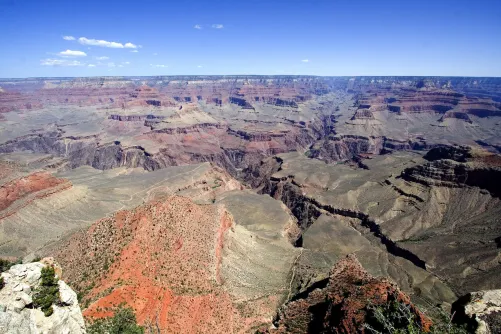
One of Geology’s Great Mysteries May Actually Be Many Smaller Mysteries
Read more: One of Geology’s Great Mysteries May Actually Be Many Smaller MysteriesAtlas Obscura has a story about the The Great Unconformity. In geology, an unconformity is a break in the sequence of time in a continuous rock record. There is usually a large gap of missing rock layers at the contact point between a much older layer and a younger one. It’s caused by a period of erosion or a pause in sediment accumulation. The Great Unconformity is a sequence of many missing rock layers in the early Cambrian Period about 540 million years ago. It’s cause has stumped geologists all over the world as the gaps is pretty much worldwide. …
-

PBS Eons: When Pterosaurs Walked
Read more: PBS Eons: When Pterosaurs WalkedPBS Eons has a new episode. This one is about pterosaurs and how they lived… when they were on the ground. If you know one thing about pterosaurs, it’s that they’re flyers. And while pterosaurs may be well-known for their domination of the skies in the Mesozoic Era, they didn’t live their entire lives in the air. So how did we figure this out? And what were they like when they finally came down?
-

Mazon Monday #91: Macroneuropteris macrophylla
Read more: Mazon Monday #91: Macroneuropteris macrophyllaThis is Mazon Monday post #91. What’s your favorite Mazon Creek fossil? Tell us at email:esconi.info@gmail.com. Today, we have a seed fern species called Macroneuopteris macrophylla. It was named Neuropteris macrophylla in 1831 by Alexander Brongniart, a French chemist, mineralogist, geologist, paleontologist, and zoologist. It was mistakenly renamed as Neuropteris clarksoni by Leo Lesquereux in 1879. It seems that Lesquereux just missed the older name. N. clarksoni was carried forward by both Adolf Noe and George Langford. With the name fixed by Robert Cookall in 1959. Epidermal research led by Christopher Cleal in 1990 reclassified Neuropteris species into four genera,…
-

Mammoth and Horse DNA Left in Freezer Rewrite Ice Age Extinctions
Read more: Mammoth and Horse DNA Left in Freezer Rewrite Ice Age ExtinctionsSmithsonian Magazine has a story about research that shows that woolly mammoths and other Ice Age animals survived up to about 5,000 years ago instead of the accepted 13,000 years. Frozen permafrost samples collected about 10 years ago were analyzed and they revealed DNA of wooly mammoths, wild horses, and steppe bison. The research was published in the journal Nature Communications. Most DNA samples are taken from materials like bone or hair, but soils also contain also genetic residue that animals leave behind as they move through an environment, according to Gizmodo’s Isaac Schultz. The soil samples sat in a freezer…
-
PBS Eons: The Fossil Record In Your Mouth
Read more: PBS Eons: The Fossil Record In Your MouthPBS Eons has a new episode. This one is about fossils in your mouth! Ever have your teeth cleaned? The hardened residue scraped off your teeth at the dentist is called your dental calculus, and your dental calculus is the only part of your body that actually fossilizes while you’re alive! And scientists have figured out how to study & trace the evolutionary history of these microbes over tens of millions of years.
-
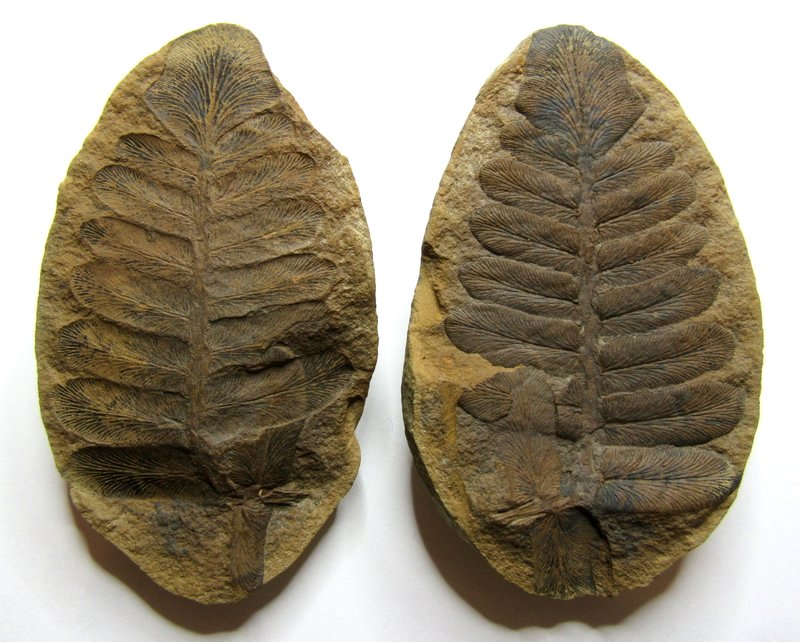
Fossil Friday #87: Neuropteris vermicularis from Knob Noster
Read more: Fossil Friday #87: Neuropteris vermicularis from Knob NosterThis is the “Fossil Friday” post #87. Expect this to be a somewhat regular feature of the website. We will post any fossil pictures you send in to esconi.info@gmail.com. Please include a short description or story. Check the #FossilFriday Twitter hash tag for contributions from around the world! We’ve got a Pennsylvanian seed fern for today’s fossil. You might guess that means another Mazon Creek fossil, but that would be wrong. This species of seed fern, Neuropteris vermicularis, is known from Mazon Creek, but this particular specimen comes from a fossil deposit in Knob Noster, Missouri. The Knob Noster locality…
-
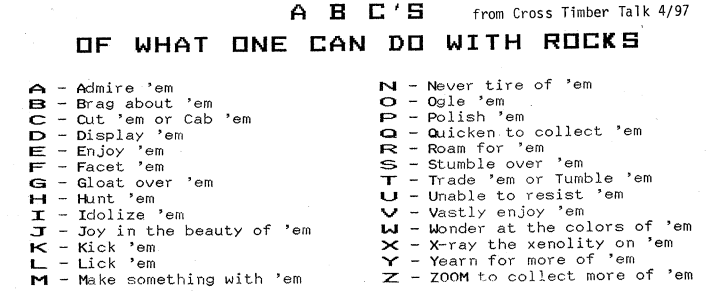
Throwback Thursday #89: A B C’s Of What One Can Do With Rocks
Read more: Throwback Thursday #89: A B C’s Of What One Can Do With RocksThis is Throwback Thursday #89. In these, we look back into the past at ESCONI specifically and Earth Science in general. If you have any contributions, (science, pictures, stories, etc …), please send them to esconi.info@gmail.com. Thanks! This week we have sort of a poem, but at least a list about what else… rocks! This list piece appeared in the September 1997 issue of the newsletter. The attribution is to “Cross Timber Talk 4/97”. Unfortunately, there doesn’t seem to be much about that phrase on the internet. Only reference that seemed relevant was to a column in “Jewelry Making Gems…
-

Roy Plotnick: I found a fossil!! (or did I?)
Read more: Roy Plotnick: I found a fossil!! (or did I?)Roy Plotnick has a new post over on Medium. In this one, he gives some great tips for those occasions when you’re out on a walk and find a rock and hope it’s a fossil. You are walking along a creek bed when you see an oddly shaped and colored rock. You pick it up and think “this must be a fossil!” So, you immediately take a few fuzzy photos, email them to a professional paleontologist whose name you found online, and ask them to identify it. Maybe they will also tell how old it is and if it is worth…
-

Never-before-seen ammonite muscles revealed in 3D from Jurassic fossil
Read more: Never-before-seen ammonite muscles revealed in 3D from Jurassic fossilPhys.org has a story about an amazing ammonite fossil. The 165 million year old fossil has revealed never-before-seen soft body detail in an ammonite. It was found about 20 years ago in Gloucestershire, UK. Researchers at Cardiff University and Imperial College London, who published their study in the journal Geology, found evidence of muscles and organs by using 3D imaging. The findings add insight into how ammonites lived and are evidence that coleoids, the sub-group of animals containing squid, octopuses, and cuttlefish, might be evolutionarily closer to ammonites than previously thought. Study co-author Dr. Alan Spencer, from Imperial’s Department of…
-

Mazon Monday #90: Video for ESCONI December 2021 General Meeting – “The Life and Death of the Herrin Peat Swamp – Whys, Whens, and Hows”
Read more: Mazon Monday #90: Video for ESCONI December 2021 General Meeting – “The Life and Death of the Herrin Peat Swamp – Whys, Whens, and Hows”This is Mazon Monday post #90. What’s your favorite Mazon Creek fossil? Tell us at esconi.info@gmail.com. For December 2021, the presentation by Scott Elrick provided context for the Danville, IL spoil pile fossils. Scott also discussed coal formation in Illinois during the Pennsylvanian. Additionally, he mentioned where the Colchester #2 Coal, associated with Mazon Creek, fits into the paleo-environment of the Pennsylvanian. The speaker at our December 3, 2021 meeting was Scott Elrick, Head of the Coal, Bedrock and Industrial Minerals Section of ISGS. The topic of his talk via Zoom was paleoecology of the Herrin Coal roof shales including…
-
PBS Eons: Why the Paleo Diet Couldn’t Save the Neanderthals
Read more: PBS Eons: Why the Paleo Diet Couldn’t Save the NeanderthalsPBS Eons has a new episode. This one is about Neanderthals and their diet and how it ultimately affected their fate. These relatives of ours lived in Eurasia for more than 300,000 years. They were expert toolmakers, using materials like stone, wood, and animal bone. They were also skilled hunters and foragers, and may even have created cave art. So what caused the decline and disappearance of their population? Well, in a way… it could’ve been us. But maybe not in the way you might’ve heard.
-
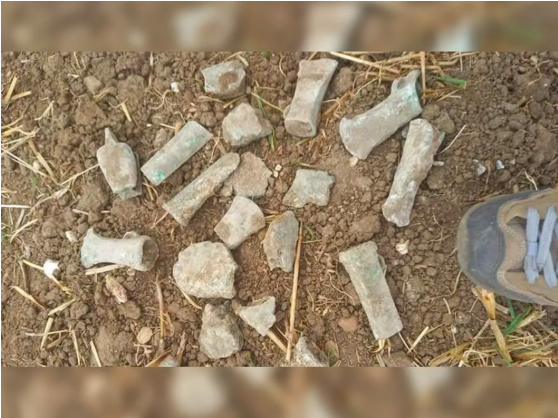
British Teenager Discovers Rare Bronze Age Ax Hoard
Read more: British Teenager Discovers Rare Bronze Age Ax HoardThe Cool Finds column blog at Smithsonian Magazine has a story about the discovery of Bronze Age axes. Milly Hardwick, a 13-year-old from Suffolk, stumbled onto a cache of 65 artifacts dated to around 1300 B.C.E, while on a metal detecting outing. Milly Hardwick was searching for buried treasure in a field in Hertfordshire, England, when her metal detector pinged. The 13-year-old’s father, Colin, joked that she’d found an ax. He was partially right: Hardwick had, in fact, stumbled onto a trove of 65 Bronze Age axes and artifacts dated to around 1300 B.C.E. “I was shocked,” the teenager, who…
-
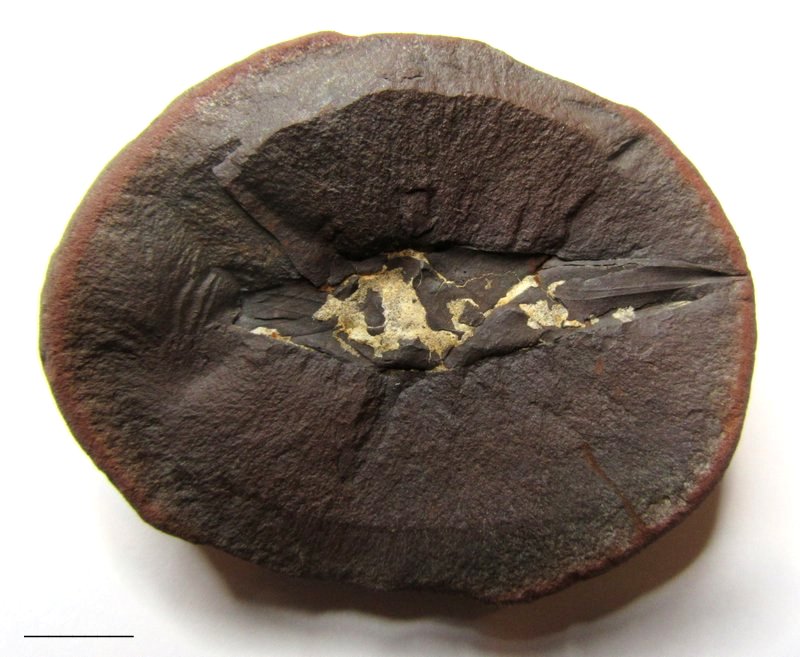
Fossil Friday #86: Mazon Creek Shark Egg Case
Read more: Fossil Friday #86: Mazon Creek Shark Egg CaseThis is the “Fossil Friday” post #86. Expect this to be a somewhat regular feature of the website. We will post any fossil pictures you send in to esconi.info@gmail.com. Please include a short description or story. Check the #FossilFriday Twitter hash tag for contributions from around the world! There are a few species of shark egg cases known from Mazon Creek. Today, we have a somewhat common, but no less beautiful specimen of Palaeoxyris prendelli. Remember, that is common for a Mazon Creek shark egg case fossil. In general, shark egg cases are very rare in the fossil record. P. prendelli…
-

Throwback Thursday #88: Looking Back at ESCONI for December 2021
Read more: Throwback Thursday #88: Looking Back at ESCONI for December 2021This is Throwback Thursday #88. In these, we look back into the past at ESCONI specifically and Earth Science in general. If you have any contributions, (science, pictures, stories, etc …), please send them to esconi.info@gmail.com. Thanks! 25 Years Ago – December 1996 50 Years Ago – December 1971 70 Years Ago – December 1951
-

Facial reconstruction shows powerful Bronze Age woman’s serene expression and huge earrings
Read more: Facial reconstruction shows powerful Bronze Age woman’s serene expression and huge earringsLive Science has a story about some facial reconstruction performed on a Bronze Age woman’s skull. Researchers in Spain, discovered the remains of the woman in 2014. She was buried with lavish jewelry – including a diadem, beaded necklaces, silver-crafted rings, bracelets, spiral hairpieces and earplugs with spirals, as well as a silver-rimmed drinking pot and silver-handled awl, a tool used to piece textiles. The find was described in the journal Antiquity earlier this year. A “powerful, maybe even frightening” woman buried with a silver diadem in Bronze Age Spain now has a virtually reconstructed face that shows her wearing…
-
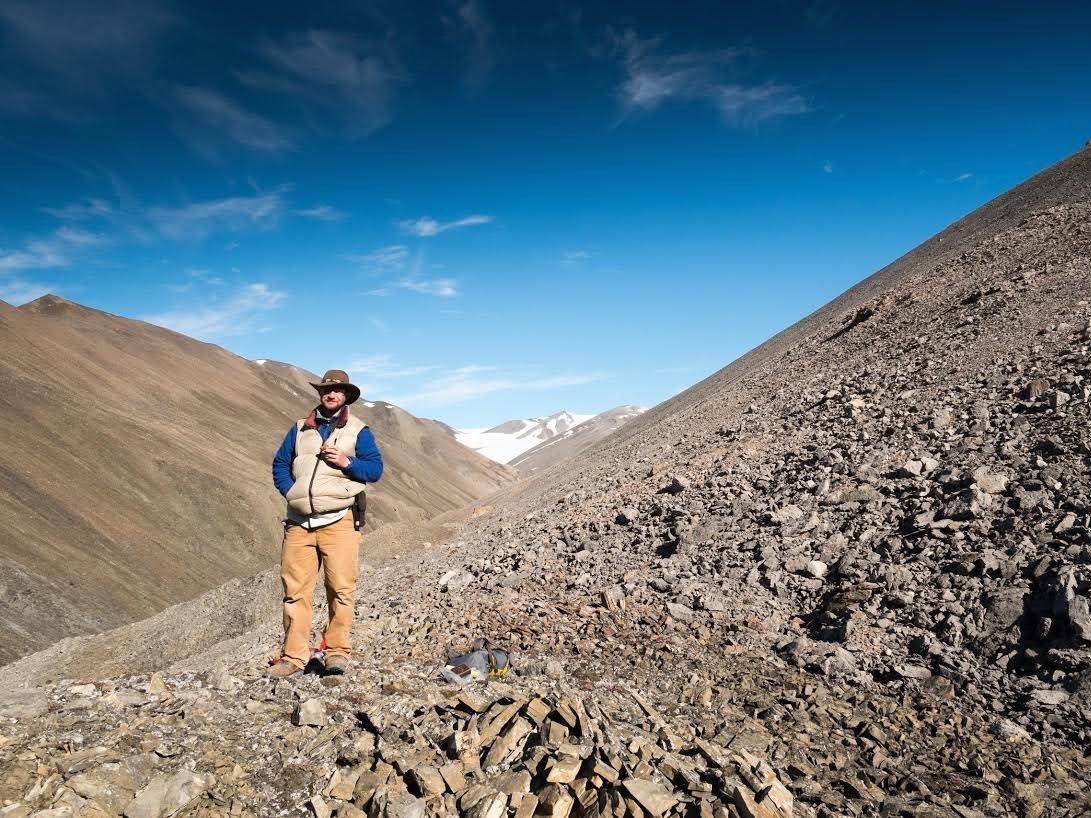
Video for ESCONI September 2021 General Meeting – “Exploring evolutionary patterns and processes in trilobites”
Read more: Video for ESCONI September 2021 General Meeting – “Exploring evolutionary patterns and processes in trilobites”The speaker at our September 10th general meeting was Dr. Mark Webster from the Department of Geophysical Sciences at the University of Chicago. The topic was Cambrian trilobites. Here’s a link to his page at the university: https://geosci.uchicago.edu/people/mark-webster/
-
Mazon Monday #89: Jeletzkya douglassae
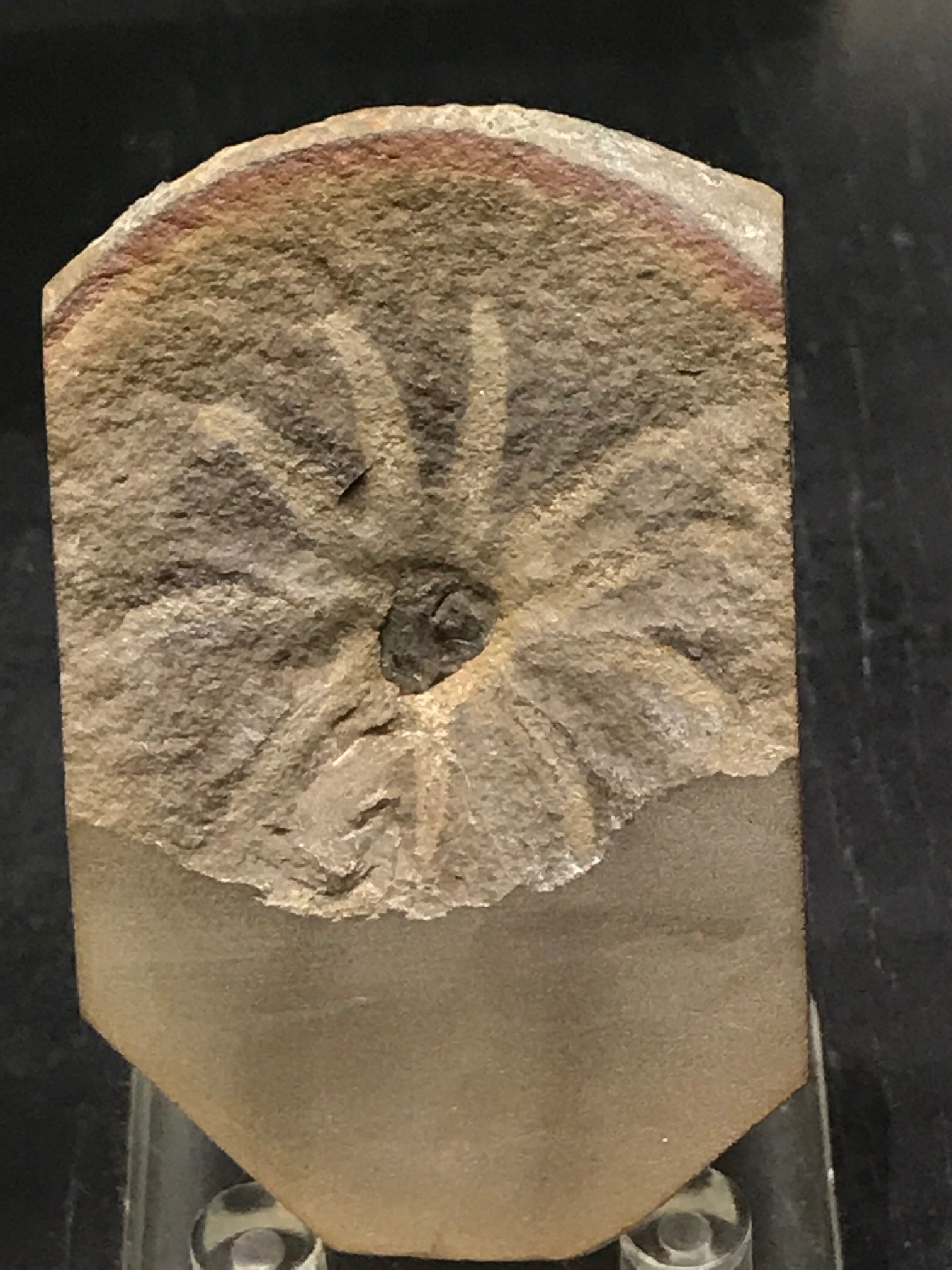
Read more: Mazon Monday #89: Jeletzkya douglassaeThis is Mazon Monday post #89. What’s your favorite Mazon Creek fossil? Tell us at email:esconi.info@gmail.com. Of all the millions (yes, millions!) of Mazon concretions that have opened over the years, only two specimens of Jeletzkya douglassae are known. That might make it the rarest of species in the Mazon Creek biota. It’s considered to be a squid. Talk about soft bodied animals… its only hard parts are the radula and the pen. For as rare as it is, it has a Wikipedia page! It was described in 1968 by Ralph Gordon Johnson and Eugene S. Richardson, Jr. The description…
-

Found in a Candy Tin: One of the First Coins Struck in Colonial North America
Read more: Found in a Candy Tin: One of the First Coins Struck in Colonial North AmericaThe Cool Finds column at Smithsonian Magazine has a story about a remarkable find. A one shilling coin minted in 1652 by the Massachusetts Bay Colony was found in a candy tin. One of 40 known to exist, it was sold at auction for $351,912. A silver coin minted in colonial Boston in 1652 has sold for $351,912. The one shilling coin is one of just 40 of its kind known to survive today, the Associated Press (AP) reports. “I am not surprised at the amount of interest this exceptional coin attracted,” says James Morton, a coin specialist with London-based auction house Morton and Eden, in a statement. “The…

ESCONI Gem, Mineral, and Fossil Show
Most Recent Post
- Fossil of Pincer-Wielding Crawler Reveals Origins of Spiders, Scorpions and Others
 The Trilobites column over at the New York Times has a interesting story about the origin of chelicerates – spiders, scorpions, mites, horseshoe crabs, and others. Chelicerates are a diverse group of arthropods that consists of more than 120,000 known species. Member of this group are classified by having a pair of appendages called chelicerae. These appendages are adapted for various purposes like snatching prey, injecting venom, and even spinning silk.
- About ESCONI
- Around the Web
- Calendar of Events
- Code of Ethics and Conduct
- ESCONI Books for Sale
- ESCONI Gem, Mineral, and Fossil Show
- ESCONI in the News
- ESCONI Videos
- Field Trips
- Flashback Friday
- Fossil Friday
- Mazon Creek
- Mazon Monday
- Member Spotlight
- Membership Information
- Reference Material
- Throwback Thursday
- Trilobite Tuesday
Field trips require membership, but visitors are welcome at all meetings!
| Friday, April 10th | General Meeting – 8:00 PM via Zoom. Jessica Hull will present “Life in the Devonian Period, The Age of Fishes.” |
| Saturday, April 11th | Junior Study Group Meeting – 2:00 PM, in person at the College of DuPage Technical Education Center (TEC) Building – Room 1038A (Map). Katherine Howard will present on Sand and Sediment Collecting. Specifics of this meeting are available from Scott Galloway, 630-670-2591, gallowayscottf@gmail.com. |
| Saturday, April 18th | Paleontology Study Group – 7:30 PM via Zoom and in person at the College of DuPage, TEC, Room 1038B (Map). Keith Robitschek will present “Digging the Marl of the Lance Formation.” |
| No meeting this month | Mineralogy Study Group |
| No meeting this month | Junior Study Group |