
-
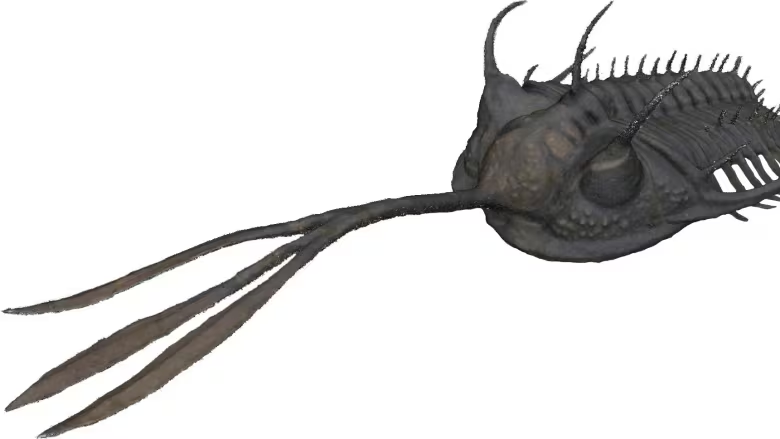
Trilobite Tuesday #43: Ancient sea creature sported a big fork on its head to toss away the competition, study suggests
Read more: Trilobite Tuesday #43: Ancient sea creature sported a big fork on its head to toss away the competition, study suggestsCBC Radio’s Quirks and Quarks had a recent segment about trilobites. New research published in the journal Proceedings of the National Academy of Sciences suggests a use for the large forks that some trilobites grew on their heads. A species of ancient trilobites grew big forks on their heads to fight their opponents and impress potential mates, in what scientists say could be the earliest known example of ritualized combat. A new study published in the Proceedings of the National Academy of Sciences suggests that one trilobite species used a strange appendage on its head for sexual selection — and most likely for fighting other male trilobites. …
-
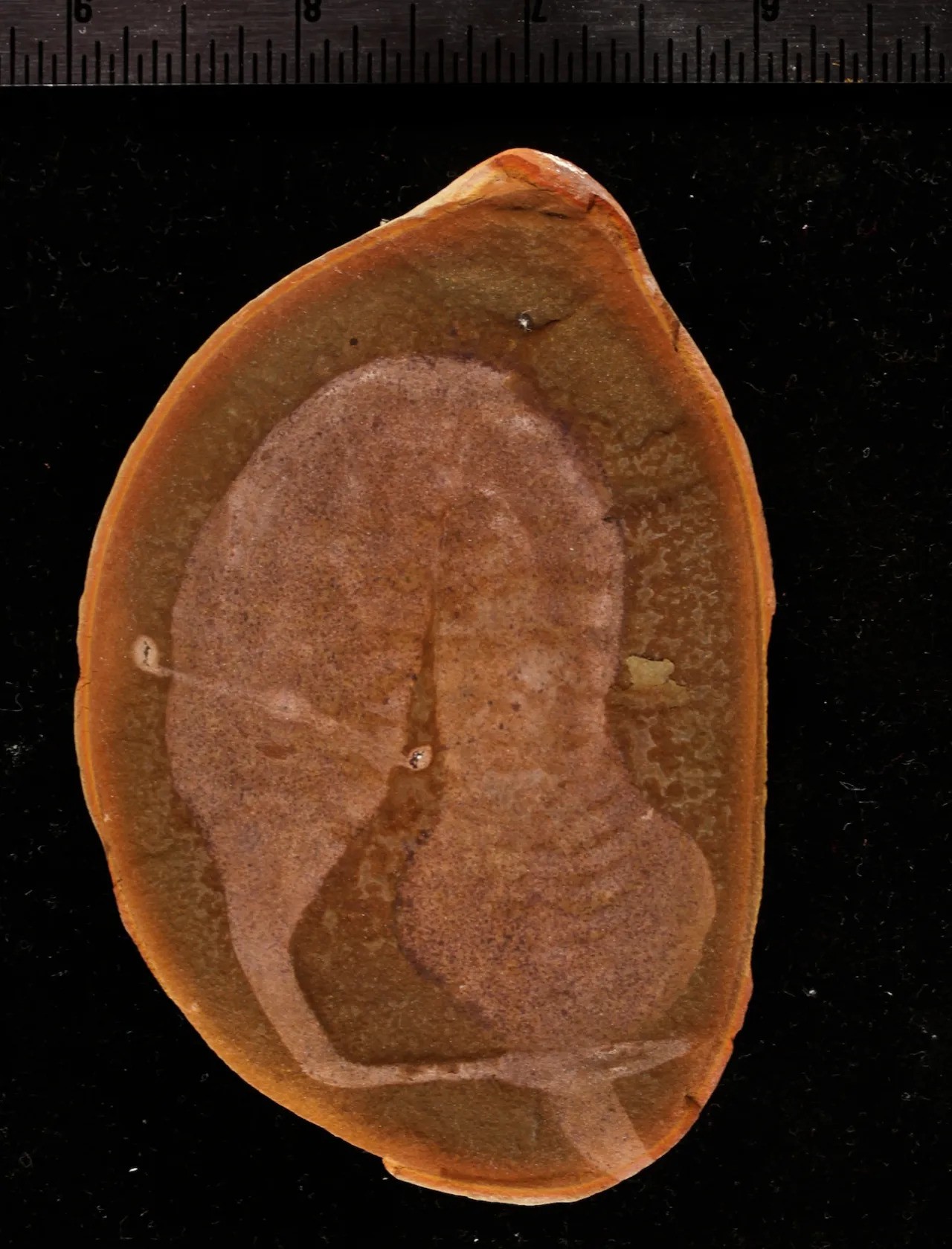
Mazon Monday #148: Tully Monster on PBS Eons
Read more: Mazon Monday #148: Tully Monster on PBS EonsThis is Mazon Monday post #148. What’s your favorite Mazon Creek fossil? Tell us at email:esconi.info@gmail.com. PBS Eons has a nice short video on Facebook about the Tully Monster, which is the State Fossil of Illinois. Note: you do not need to have a Facebook account to watch the embedded video.
-

PBS Eons: When Our Culture Changed Our DNA
Read more: PBS Eons: When Our Culture Changed Our DNAPBS Eons has a new episode on Youtube. This one is about the complex mix of culture, biology, and evolution. Thanks to our ability to develop and share complex learned behaviors across generations – a thing we sometimes call culture – we have become the ultimate niche builders.
-
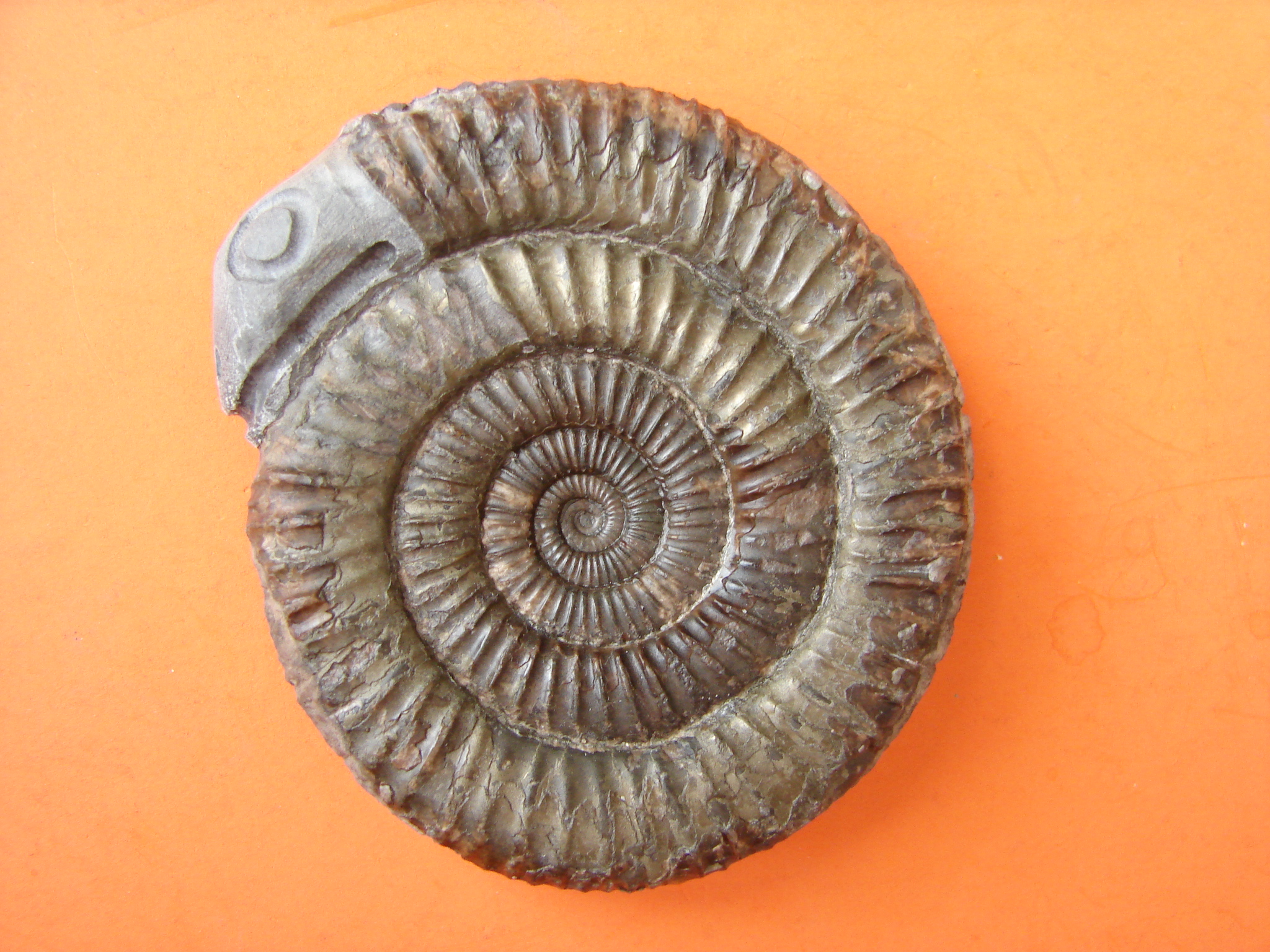
Fossil Friday #144: Snakestone from England
Read more: Fossil Friday #144: Snakestone from EnglandThis is the “Fossil Friday” post #144. Expect this to be a somewhat regular feature of the website. We will post any fossil pictures you send in to esconi.info@gmail.com. Please include a short description or story. Check the #FossilFriday Twitter hash tag for contributions from around the world! Ammonites are extinct cephalopods molluscs, related to modern day squids and octopuses. They lived during the Mesozoic Era between about 200 to 66 million years ago. For the most part, they went extinct during the mass extinction event at the end of the Cretaceous Period. A few species did survive in to…
-
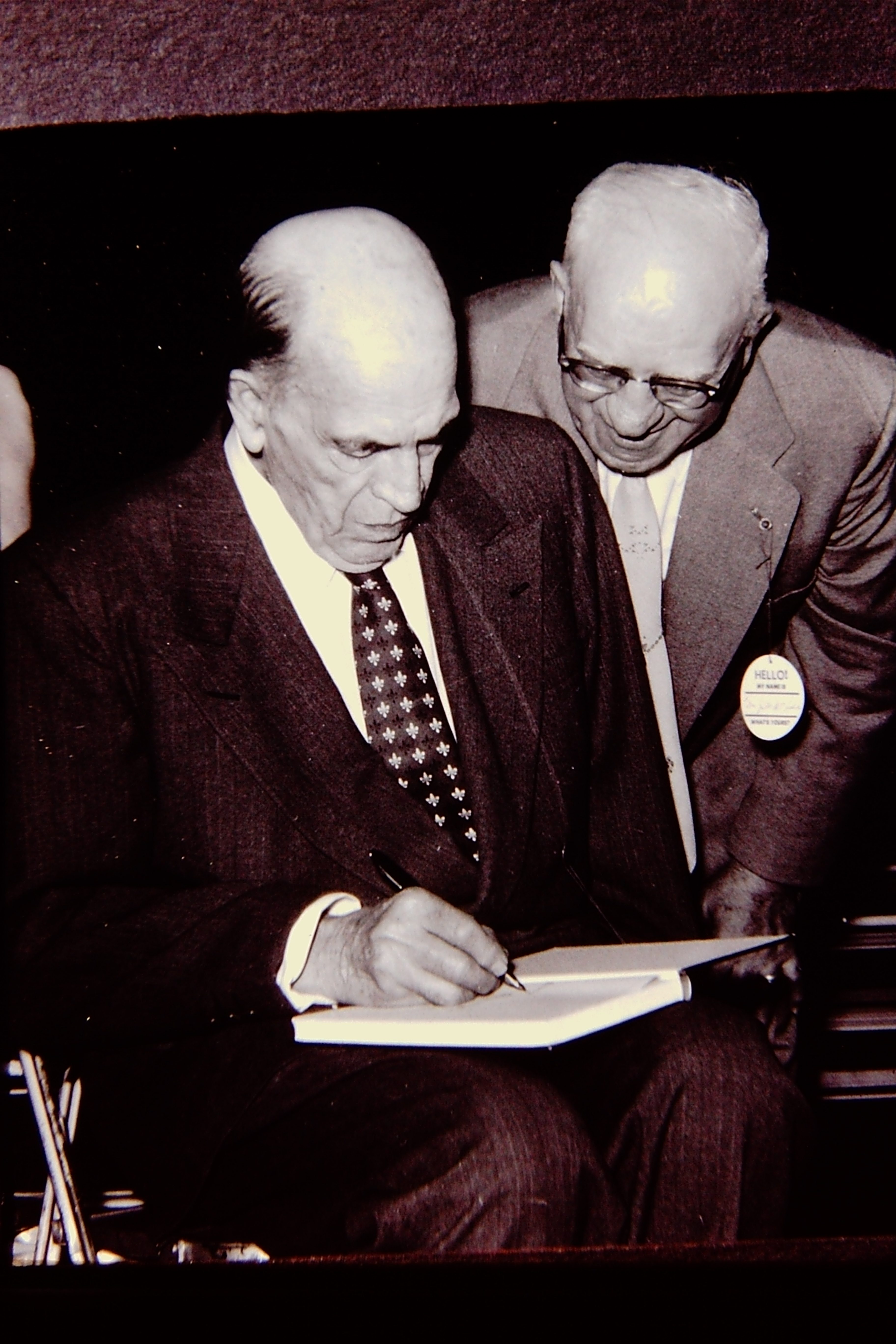
Throwback Thursday #145: Langford Book Ad from 1963
Read more: Throwback Thursday #145: Langford Book Ad from 1963This is Throwback Thursday #145. In these, we look back into the past at ESCONI specifically and Earth Science in general. If you have any contributions, (science, pictures, stories, etc …), please send them to esconi.info@gmail.com. Thanks! ESCONI Associates published both of George Langford’s books. The first in 1958 and the second in 1963. Langford worked on a third book, which was published by ESCONI in the early 2000’s. Here is an ad for the first two books. This ad ran in the ESCONI newsletters in 1963. $16 for a set of original Langford books! Ran across this interesting photo……
-
ESCONI Paleontology Meeting Saturday, January 21st, 2023 at 7:30 PM Zoom – “The Devonian Period”
Read more: ESCONI Paleontology Meeting Saturday, January 21st, 2023 at 7:30 PM Zoom – “The Devonian Period”Palaeogeographic map of the Late Devonian world, based on ref.77. The location of Steinbruch Schmidt(1), the Siljan impact crater (S), the Viluy Traps (V), and the Kola, Vyatka, and Pripyat–Dniepr–Donets rift systems (K-V-PDD) are indicated. The ESCONI Paleontology Sttudy Group Meeting will be held on Saturday, January 21st, 2023 at 7:30 PM via Zoom. The topic is “The Devonian Period”. The presentation will be given by ESCONI member and Field Trip Chairman John Catalani. Esconi Host is inviting you to a scheduled Zoom meeting. Topic: Paleo Meeting, The Devonian PeriodTime: Jan 21, 2023 07:30 PM Central Time (US and Canada)…
-
2023 ESCONI Gem, Mineral, and Fossil Show – Preview #1!
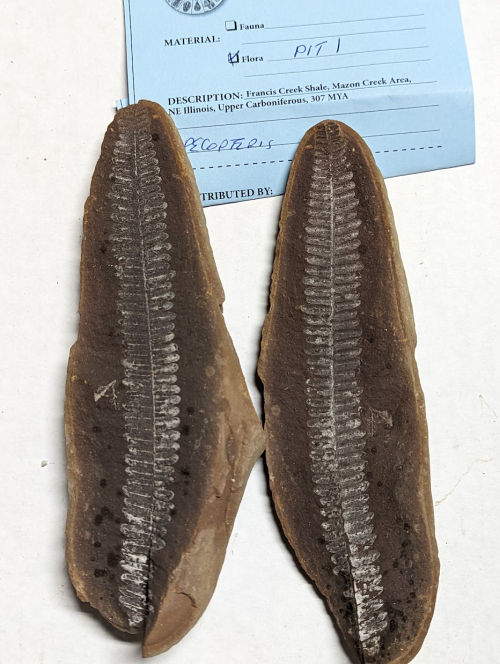
Read more: 2023 ESCONI Gem, Mineral, and Fossil Show – Preview #1!This is the preview post #1 for the 2023 ESCONI Gem, Mineral, and Fossil Show Live Auction. The ESCONI Gem, Mineral, and Fossil Show for 2023 will be held on March 18th and 19th at the DuPage Fairgrounds in Wheaton, IL, which is the same location as last year. All details can be found here. This is our first preview for the 2023 ESCONI Gem, Mineral, and Fossil Show. Expect quite a few more! This is a Crenulopteris mazoniana fern fossil from Pit 1. It was collected back in 1963 at the Miner’s Club in Diamond, IL. It’s a good…
-

Mazon Monday #147: You Say MAY-zahn, I Say Muh-ZAHN
Read more: Mazon Monday #147: You Say MAY-zahn, I Say Muh-ZAHNThis is Mazon Monday post #147. What’s your favorite Mazon Creek fossil? Tell us at email:esconi.info@gmail.com. Back in the summer of 2022, we received an email from Danita Brandt, Associate Professor in the Department of Earth and Environmental Sciences at Michigan State University. She was interested in doing some research into the pronunciation of “Mazon” as in Mazon Creek fossils and from association even Mazon Monday. Hello, Rich, I see from the ESCONI website that you are the general contact as well as recently being Club Historian. I’m hoping you can help connect me to ESCONI members (especially “old-timers”) who…
-
New biography of famous palaeontologist Mary Anning unearthed from University of Bristol archives
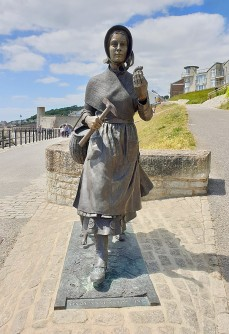
Read more: New biography of famous palaeontologist Mary Anning unearthed from University of Bristol archivesNewswise has a story about a new biography of Marry Anning. Mary Anning (1799-1947) live in Lyme Regis, England. She is famous for the fossil specimens she discovered in the eroding Jurassic cliffs in southern England. Some of those specimens were spectactular… including pterosaurs, ichthyosaurs, and countless ammonites. The biography was written during the last ten years of her life. It had been known for a long time, but this is the first time it has been made publicly available. The biography is available in the Lyell Collection of the Geological Society. A short biography of pioneering scientist Mary Anning,…
-
PBS Eons: These Creatures Were Darwin’s Greatest Enemy
Read more: PBS Eons: These Creatures Were Darwin’s Greatest EnemyPBS Eons has a new episode on Youtube. This one covers one of Darwins "favorite" animals. They may not look like much, but beneath that shell lies an evolutionary mystery – one that stumped the biggest names in natural history for over a hundred years.
-
Fossil Friday #143: Astreptoscolex anasillosus
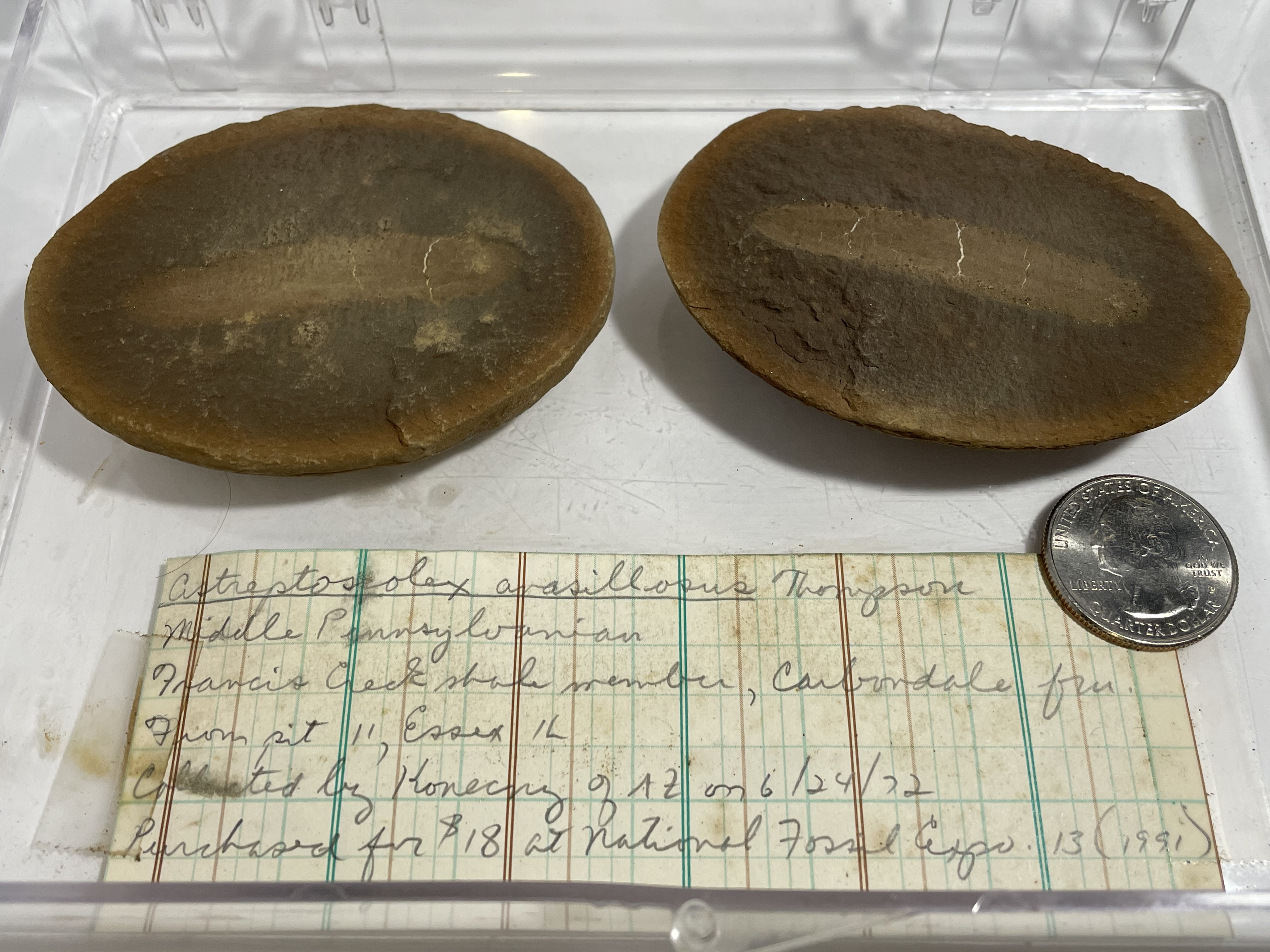
Read more: Fossil Friday #143: Astreptoscolex anasillosusThis is the “Fossil Friday” post #143. Expect this to be a somewhat regular feature of the website. We will post any fossil pictures you send in to esconi.info@gmail.com. Please include a short description or story. Check the #FossilFriday Twitter hash tag for contributions from around the world! Long time ESCONI members B. J. and Mike Kukulka sent us a very special Mazon Creek worm fossil a few weeks ago. It’s a specimen they purchased in November 2022 at the Madison Gem and Mineral Show in Madison, WI. The animal, Astreptoscolex anasillosus, was the subject of Mazon Monday #146. It…
-
Throwback Thursday #144 – Geology Class Fall 1953
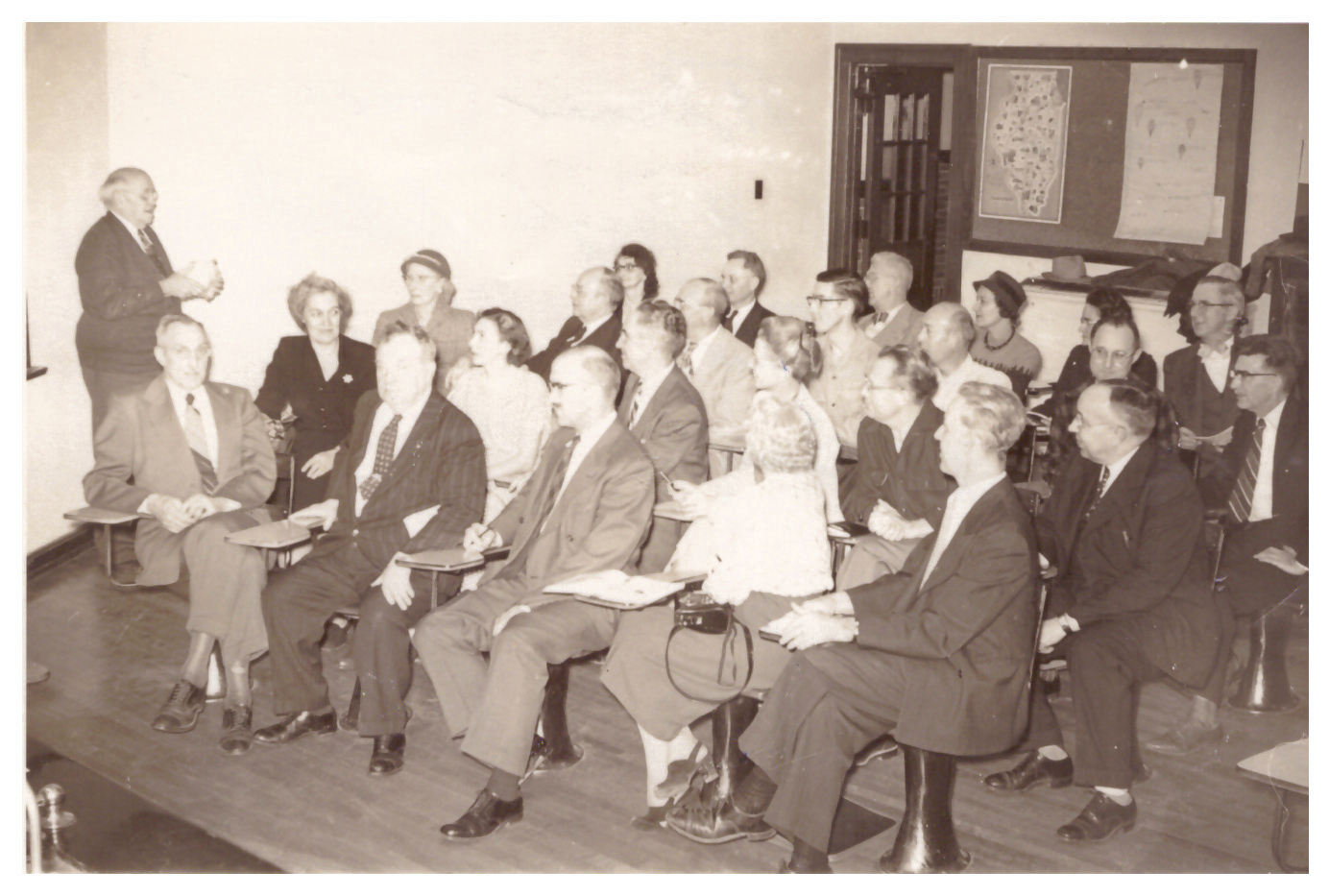
Read more: Throwback Thursday #144 – Geology Class Fall 1953This is Throwback Thursday #144. In these, we look back into the past at ESCONI specifically and Earth Science in general. If you have any contributions, (science, pictures, stories, etc …), please send them to esconi.info@gmail.com. Thanks! Back in 1953, ESCONI put on a evening school class in Geology at Downers Grove High School during the latter part of September. Dr. Frank Fleener from Joliet, IL taught Mineralogy and Professor Clarence Smith of Aurora College taught Geology. Here is the announcement in the July/August 1953 newsletter. EVENING SCHOOL It may be a little early to remind you of this, but…
-
ESCONI January 2023 General Meeting – January 13th, 2023 at 8:00 PM via Zoom – “New Evidence for Cretaceous Ornithomimosaurs (dinosaurs) from Mississippi”
Read more: ESCONI January 2023 General Meeting – January 13th, 2023 at 8:00 PM via Zoom – “New Evidence for Cretaceous Ornithomimosaurs (dinosaurs) from Mississippi”The speaker at our meeting (via Zoom) on the evening of January 13, 2023 will be Dr. Thomas Cullen. He is currently a postdoc at Carleton University in Ottawa, Ontario. The topic of his talk will be new evidence for Cretaceous ornithomimosaurs (dinosaurs) from Mississippi. Here is a link to the article on this material, published in October 2022. It is open access: https://journals.plos.org/plosone/article?id=10.1371/journal.pone.0266648 Abstract Reconstructing the evolution, diversity, and paleobiogeography of North America’s Late Cretaceous dinosaur assemblages require spatiotemporally contiguous data; however, there remains a spatial and temporal disparity in dinosaur data on the continent. The rarity of vertebrate-bearing…
-

ESCONI 2023 Gem, Mineral, and Fossil Show! March 18th and 19th, 2023
Read more: ESCONI 2023 Gem, Mineral, and Fossil Show! March 18th and 19th, 2023Earth Science Club of Northern Illinois ESCONI 2023 Gem, Mineral and Fossil Show March 18th and 19th Dealers, Demonstrators, Displays, Live and Silent Auctions,Book Sales, Kid’s Korner, Geode Splitting Free Parking! Free Admission! DuPage County Fairgrounds2015 Manchester Rd.Wheaton, IllinoisSaturday 10 AM to 5 PMSunday 10 AM to 4 PMwww.esconi.org Download Show Poster 2023
-

Mazon Monday #146: Astreptoscolex anasillosus
Read more: Mazon Monday #146: Astreptoscolex anasillosusThis is Mazon Monday post #146. What’s your favorite Mazon Creek fossil? Tell us at email:esconi.info@gmail.com. Astreptoscolex anasillosus was an annelid (Greek, annulatus “annulated” or “ringed) worm. It was described by Ida Thompson in 1979 in her paper “Errant polychaetes (Annelida) from the Pennsylvanian Essex fauna of northern Illinois” in Palaeontographica Abteilung A. Thompson described quite a few of the Mazon Creek polychaete worms from 1977 – 1979. ABSTRACT The Essex Fauna is the marine phase of the Maxon Creek beds; soft-bodied animals, including the polychaetes, are preserved as whole-body fossils in siderite concretions within the Francis Creek Shale. Descriptions…
-
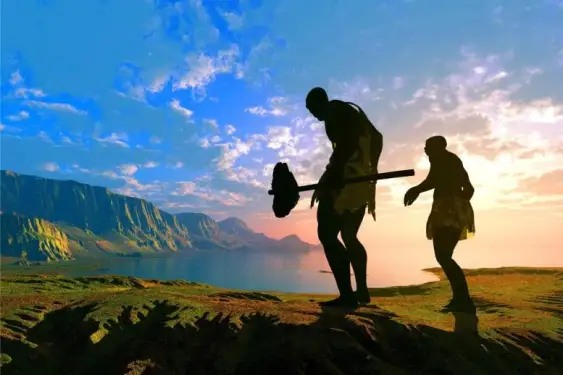
Prehistoric Surprise: Ancient Footprints Reveal the Presence of Man in Spain 200,000 Years Earlier Than Thought
Read more: Prehistoric Surprise: Ancient Footprints Reveal the Presence of Man in Spain 200,000 Years Earlier Than ThoughtSciTechDaily has a story about the discovery of some very old footprints. The footprints were found in Spain in 2020. They were thought to date to about 106,000 year old ago and to probably be of Neanderthal origin. Now, Jorge Rivera, a researcher and technician from the University of Seville’s GRS Radioisotopes department has found that the footprints are really about 200,000 years older… some 300,000 years old. A paper in the journal Scientific Reports details the discovery. At first, they were thought to be Neanderthals, but that is now in doubt. The main hypothesis among the scientists is that they…
-
PBS Eons: The Extinct Human Species Found In Remote Cave Chambers
Read more: PBS Eons: The Extinct Human Species Found In Remote Cave ChambersThere's a new episode of PBS Eons over on Youtube. This one is about human evolution… the discovery of Homo naledi in a cave in Africa back in 2013. Deep in the Rising Star Cave system lies a mystery of paleoanthropology: a chamber filled with the bones of Homo naledi.
-

Fossil Friday #142: Anthracaris gracilis
Read more: Fossil Friday #142: Anthracaris gracilisThis is the “Fossil Friday” post #142. Expect this to be a somewhat regular feature of the website. We will post any fossil pictures you send in to esconi.info@gmail.com. Please include a short description or story. Check the #FossilFriday Twitter hash tag for contributions from around the world! Anthracaris gracilis is an extinct species of shrimp from the Mazon Creek fossil deposit, which is about 307 million years old. It was probably a bottom-dwelling scavenger. Mazon Monday #145 has more details. For this week’s Fossil Friday, we have a very nice specimen from ESCONI member George Witaszek. He found it…
-
Throwback Thursday #143: Looking Back at ESCONI for January 2023
Read more: Throwback Thursday #143: Looking Back at ESCONI for January 2023This is Throwback Thursday #143. In these, we look back into the past at ESCONI specifically and Earth Science in general. If you have any contributions, (science, pictures, stories, etc …), please send them to esconi.info@gmail.com. Thanks! 25 Years Ago – January 1998 50 Years Ago – January 1973 70 Years Ago – January 1953
-
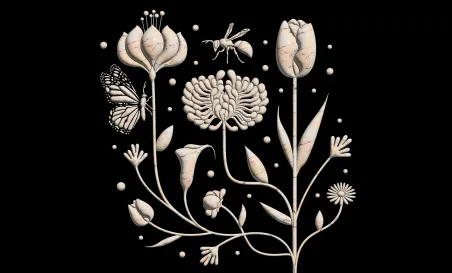
The Fossil Flowers That Rewrote the History of Life
Read more: The Fossil Flowers That Rewrote the History of LifeThe New Yorker has an interesting piece about some special flower fossils. When and where did the flowering plant evolve? It’s a question that been pursued by paleobotanists for a long time. Even Charles Darwin called it the “abominable mystery” due to how flowers seems to spring fully formed in the fossil record. The centerpiece of the Swedish Museum of Natural History, in Stockholm, is probably the Fossils and Evolution hall, in which an enormous Tyrannosaurus rex skeleton seems to yawn over crowds of starstruck schoolchildren. Nearby, tourists marvel at a triceratops skull and a velociraptor model. These iconic dinosaurs…

ESCONI Gem, Mineral, and Fossil Show
Most Recent Post
- PBS Eons: The Chaotic Race to Name T. rex
 PBS Eons has a new episode. This one is about the controversial history of the name Tyrannosaurus rex.
- About ESCONI
- Around the Web
- Calendar of Events
- Code of Ethics and Conduct
- ESCONI Books for Sale
- ESCONI Gem, Mineral, and Fossil Show
- ESCONI in the News
- ESCONI Videos
- Field Trips
- Flashback Friday
- Fossil Friday
- Mazon Creek
- Mazon Monday
- Member Spotlight
- Membership Information
- Reference Material
- Throwback Thursday
- Trilobite Tuesday
Field trips require membership, but visitors are welcome at all meetings!
| Friday, April 10th | General Meeting – 8:00 PM via Zoom. Jessica Hull will present “Life in the Devonian Period, The Age of Fishes.” |
| Saturday, April 11th | Junior Study Group Meeting – 2:00 PM, in person at the College of DuPage Technical Education Center (TEC) Building – Room 1038A (Map). Katherine Howard will present on Sand and Sediment Collecting. Specifics of this meeting are available from Scott Galloway, 630-670-2591, gallowayscottf@gmail.com. |
| Saturday, April 18th | Paleontology Study Group – 7:30 PM via Zoom and in person at the College of DuPage, TEC, Room 1038B (Map). Keith Robitschek will present “Digging the Marl of the Lance Formation.” |
| No meeting this month | Mineralogy Study Group |
| No meeting this month | Junior Study Group |