
-
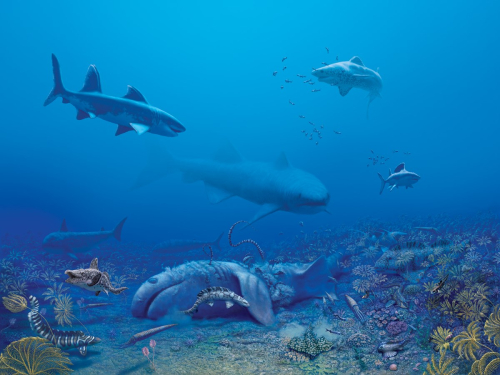
NPS.gov: Sharks, Fossils, and Caves: Secrets Revealed at Mammoth Cave
Read more: NPS.gov: Sharks, Fossils, and Caves: Secrets Revealed at Mammoth CaveNPS.gov has a story about some remarkable new fossil discoveries in Mammoth Cave in Kentucky. The fossils date to the Mississippian Period about 325 million years ago and reveal a very diverse shark fauna. There are 40 species of shark, which includes six new species. The painting above and new information are being presented as part of National Fossil Day 2020. A team of paleontologists, cave specialists, and park rangers at Mammoth Cave National Park have discovered a trove of fossil treasures that has yielded one of the most diverse Mississippian shark faunas in North America. At least 40 different…
-

PBS Eons: How Ankylosaurs Got Their Clubs
Read more: PBS Eons: How Ankylosaurs Got Their ClubsPBS Eons has a new episode. This one is about Ankylosaurs and how they got their clubs. While clubs are practically synonymous with ankylosaurs, we’ve only started to get to the bottom of how they worked and how this unusual anatomy developed in the first place.
-
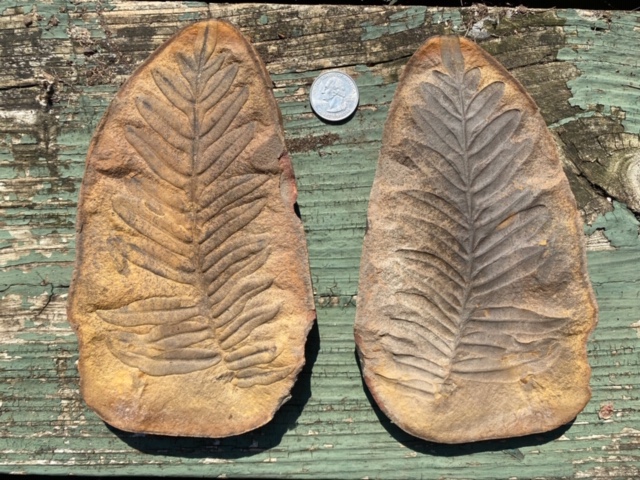
Fossil Friday #27: Alethopteris serlii from the Mazon River
Read more: Fossil Friday #27: Alethopteris serlii from the Mazon RiverThis is the “Fossil Friday” post #27. Expect this to be a somewhat regular feature of the website. We will post any fossil pictures you send in to esconi.info@gmail.com. Please include a short description or story. Check the #FossilFriday Twitter hash tag for contributions from around the world! Maybe it’s the size or the 3 dimensional preservation, but this is at least the second Alethopteris serlii specimen that has made it onto Fossil Friday. This awesome fossil was found by Brandon Bergsten at the I&M Canal Corridor Mazon River Fossil Trip back in August 2020. It only took a few…
-
Throwback Thursday #29: Best Fossil 2015
Read more: Throwback Thursday #29: Best Fossil 2015This is Throwback Thursday #29. In these, we look back into the past at ESCONI specifically and Earth Science in general. If you have any contributions, (science, pictures, stories, etc …), please send them to esconi.info@gmail.com. Thanks! For a few years, the Paleontology Study Group held a Best Fossil contest for National Fossil Day. The first one was back in 2015. We had some awesome specimens. Here are some photo highlights from that day. Wow! Having fun in person! Nice Mazon Creek fern… Crenulopteris. An amazing crinoid! An enrolled Isotelus and another Crenulopteris. An unbelievable shark egg case! Look closely,…
-
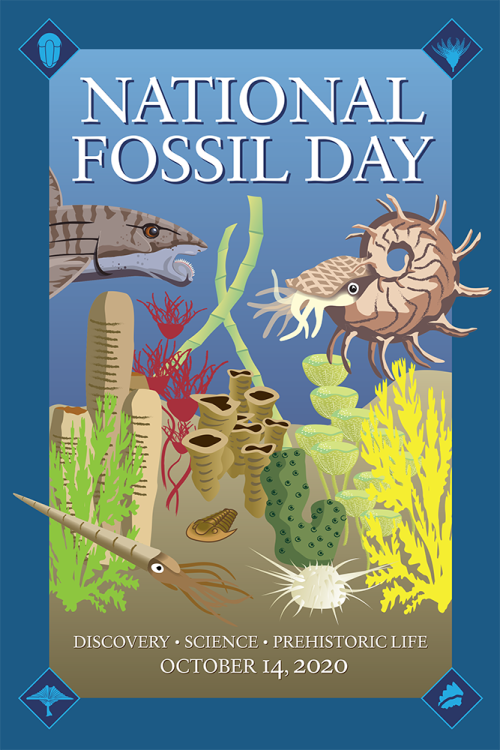
Happy National Fossil Day 2020!!!
Read more: Happy National Fossil Day 2020!!!Happy National Fossil Day 2020!!! National Fossil Day is run by the National Park Service as part of Earth Science Week. Details for NFD are here, while you can find more about Earth Science Week here. During 2020 we celebrate the 11th Anniversary of National Fossil Day! Join paleontologists, educators, and students in fossil-related events and activities across the country in parks, classrooms, and online during National Fossil Day. National Fossil Day is an annual celebration held to highlight the scientific and educational value of paleontology and the importance of preserving fossils for future generations.
-

Video: ESCONI General Meeting, June 2020 – “Dino-Sores: Injury and Behavior in Cretaceous Dinosaurs”
Read more: Video: ESCONI General Meeting, June 2020 – “Dino-Sores: Injury and Behavior in Cretaceous Dinosaurs”We are pleased to present to you the video of our first zoom general meeting. It was held on June 12th, 2020. We had a remote speaker. He was Dr. Joe Peterson from the University of Wisconsin – Oshkosh. Joe earned a BS Geology at SIU-C and an MS/PhD Geology from NIU. Since, then, he worked and volunteered at Burpee for many years. The title of his program is “Dino-Sores: Injury and Behavior in Cretaceous Dinosaurs”.
-
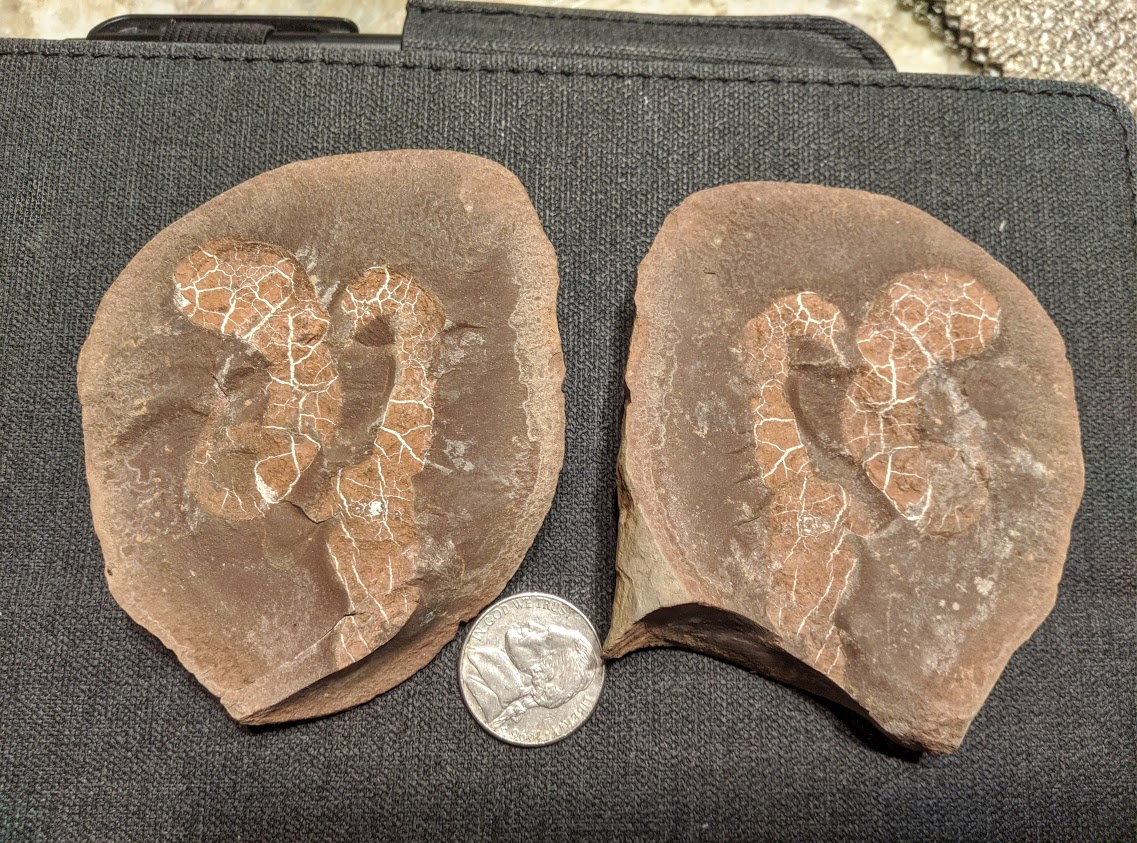
Mazon Monday #29: Achistrum sp. (Holothurians)
Read more: Mazon Monday #29: Achistrum sp. (Holothurians)This is Mazon Monday post #29. What’s your favorite Mazon Creek fossil? Tell us at email:esconi.info@gmail.com. This week’s “Mazon Monday” is a species (or class) spotlight on the Holothurians otherwise known as Sea Cucumbers. They belong to the phylum Echinodemata, which includes starfish, sea urchins, sand dollars, and seal lilies. Current feeling is there were two species of holothurian in Mazon Creek. The most common, and maybe only, one is called Achistrum sp. There’s a nice page about Sea Cucumbers over on wikipedia. Sea cucumbers are echinoderms from the class Holothuroidea. They are marine animals with a leathery skin and an elongated body containing a single, branched gonad.…
-
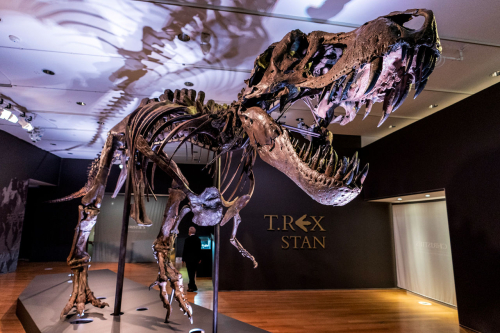
Stan the T. rex just became the most expensive fossil ever sold
Read more: Stan the T. rex just became the most expensive fossil ever soldLiveScience has a story about the sale of Stan the T-rex on October 6th, 2020. Stan sold for $32 million and set a new record for the sale of a fossil. SUE the T-rex, which went on sale back in 1997, had the previous record as it sold for $8.36 million. Many paleontologists are dismayed that Stan sold for so much to an unknown buyer, especially now that many scientific institutions don’t have the money to purchase such fossils and keep them in the public domain. However, unlike other dinosaur specimens, Stan had no choice but to go to the auction block,…
-
PBS Eons: How Plants Became Carnivores
Read more: PBS Eons: How Plants Became CarnivoresThere’s a new episode of PBS Eons on Youtube. This one is about how carnivorous plants evolved. Go check out Overview on PBS Terra: https://www.youtube.com/watch?v=NHMZw… Deep Look’s episode on Sundews! https://youtu.be/D4kBrsyWhS4 How and why does botanical carnivory keep evolving? It turns out that when any of the basic things that most plants need aren’t there, some plants can adapt in unexpected ways to make sure they thrive.
-

Fossil Friday #26: Elrathia kingii from the Cambrian of Utah
Read more: Fossil Friday #26: Elrathia kingii from the Cambrian of UtahThis is the “Fossil Friday” post #26. Expect this to be a somewhat regular feature of the website. We will post any fossil pictures you send in to esconi.info@gmail.com. Please include a short description or story. Check the #FossilFriday Twitter hash tag for contributions from around the world! Here is an Elrathia kingii trilobite. It was collected from A New Dig, Inc. near Delta, Utah, in September 2020. The amimals lived in the middle Cambrian, about 507 million years ago. These trilobites are found in extremely high concentrations in the Wheeler Shale in the area of the Wheeler amphitheater. If…
-
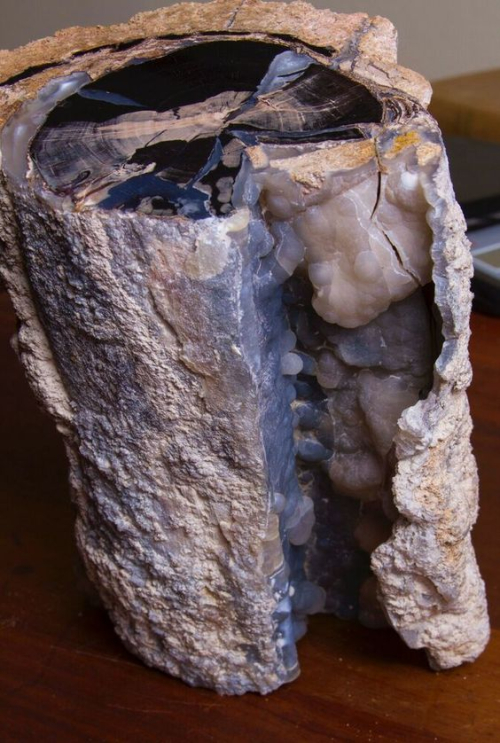
Reminder with Zoom Link: ESCONI October 2020 General Meeting – October 9th, 2020, at 8:00 PM via Zoom – “The Blue Forest of Ancient Lake Gosiute”
Read more: Reminder with Zoom Link: ESCONI October 2020 General Meeting – October 9th, 2020, at 8:00 PM via Zoom – “The Blue Forest of Ancient Lake Gosiute”The speaker is Mike Viney. Mike is a Teacher in Residence at Colorado State University and a long-time collector and researcher into petrified wood. The title of his talk is “The Blue Forest of Ancient Lake Gosiute: Sweetwater County, Wyoming”. The Blue Forest is a famous source of petrified wood known for its blue chalcedony. Lake Gosiute was one of the lakes in the Green River region during the Eocene. Zoom link. Here’s a link to Mike’s web page called “The Virtual Petrified Wood Museum” http://petrifiedwoodmuseum.org/ The Digging Science Youtube channel has a great video of collecting petrified wood in…
-
Throwback Thursday #28: Photos of Braidwood Coal Mining 1960
Read more: Throwback Thursday #28: Photos of Braidwood Coal Mining 1960This is Throwback Thursday #28. In these, we look back into the past at ESCONI specifically and Earth Science in general. If you have any contributions, (science, pictures, stories, etc …), please send them to esconi.info@gmail.com. Thanks! Here are a few photos of the Braidwood coal mines in 1960. Some very large drag lines and and cranes were used to remove the coal.
-

NatGeo: This small dinosaur had a marvelous sense of touch, detailed fossils reveal
Read more: NatGeo: This small dinosaur had a marvelous sense of touch, detailed fossils revealNational Geographic has a story about Juravenator starki. This animal lived about 150 million years ago, during the Jurassic Period, in what is now Germany. A new paper, in the journal Current Biology, proposes that it might have used sensory scales on its tail to sense fish when it foraged at night. A CHICKEN-SIZE DINOSAUR that lived in what is now Germany about 150 million years ago might have used sensory scales on its tail as it foraged for fish at night. These sensory organs, remarkably similar to those found on a crocodile, likely helped the animal suss out its environment as it waded across the…
-
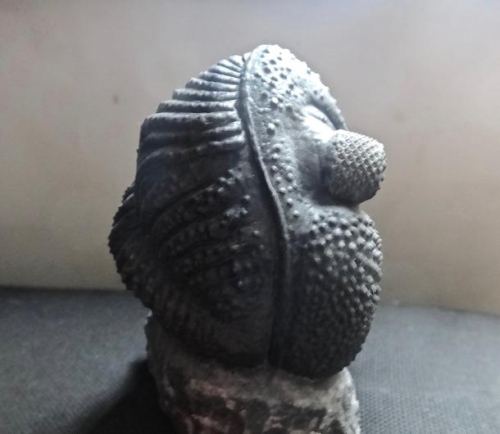
Trilobite Tuesday #26: Trilobite Enrollment
Read more: Trilobite Tuesday #26: Trilobite EnrollmentAs we’ve said previously, the AMNH has an awesome Trilobite website. Today, we want to highlight the one about Trilobite Enrollment. It is generally accepted that trilobites enrolled to protect themselves from predators and other potentially other events in the surrounding environment. This page has a good discussion about the history and the usefulness of enrollment. There is a story that has become part of trilobite folklore. It tells of how back in the early 1970s, a Berber tribesman living on the edge of Morocco’s Sahara Desert was walking near the mountains that encircled his home. As he was strolling…
-

Mazon Monday #28: Cyclus americanus
Read more: Mazon Monday #28: Cyclus americanusThis is Mazon Monday post #28. What’s your favorite Mazon Creek fossil? Tell us at email:esconi.info@gmail.com. Today, we have a species spotlight on Cyclus americanus. It’s one of my favorite Mazon Creek animals. Cycloids form an order of fossil arthropods that lived from the Carboniferous to the Cretaceous periods. Here is the text from the Creature Corner column, which was published in March 1987. Here is the text from book “The Mazon Creek Fossil Fauna” by Jack Wittry. Cycloids are an extinct group which wan first discovered in Europe in 1835 and assigned to the trilobites. Originally described from European…
-

National Geographic goes big on dinosaurs — and big on Yale paleontology
Read more: National Geographic goes big on dinosaurs — and big on Yale paleontologyYaleNews has a story about the latest issue of National Geographic. The cover has a Deinonychus, discovered in the 1960 by Yale paleotologist John Ostrom. This web page on the National Geographic site has links to numerous stories about recent dinosaur discoveries. It includes the lead story in this issue of the magazine… “Reimagining Dinosaurs“. The latest cover of National Geographic magazine features a Yale discovery that stretches back … oh, about 115 million years. Deinonychus, a Cretaceous Period raptor that Yale paleontologist John Ostrom identified in the 1960s, peers at readers with a menacing eye while guarding a nest…
-
PBS Eons: The First and Last North American Primates
Read more: PBS Eons: The First and Last North American PrimatesThere’s a new episode of PBS Eons. Did you know that primates actually evolved in North America? All the details here! Early primates not only lived in North America — our primate family tree actually originated here! So what happened to those early relatives of ours?
-

ESCONI Events October 2020
Read more: ESCONI Events October 2020Field trips require membership, but visitors are welcome at all meetings! Fri, Oct 9th ESCONI General Meeting 8:00 PM Zoom – Topic: "The Blue Forest of Ancient Lake Gosiute: Sweetwater County, Wyoming” by Mike Viney from Colorado State University. Zoom link Sat, Oct 10th ESCONI Junior Meeting 7:00 PM Zoom – Topic: "Does your child like space and fossils?" Zoom link Your child only needs to have a butter knife and some play doh or clay for the hands on portion. There will be something for kids ages 6 to 17 years old to enjoy at this junior meeting. Sat,…
-
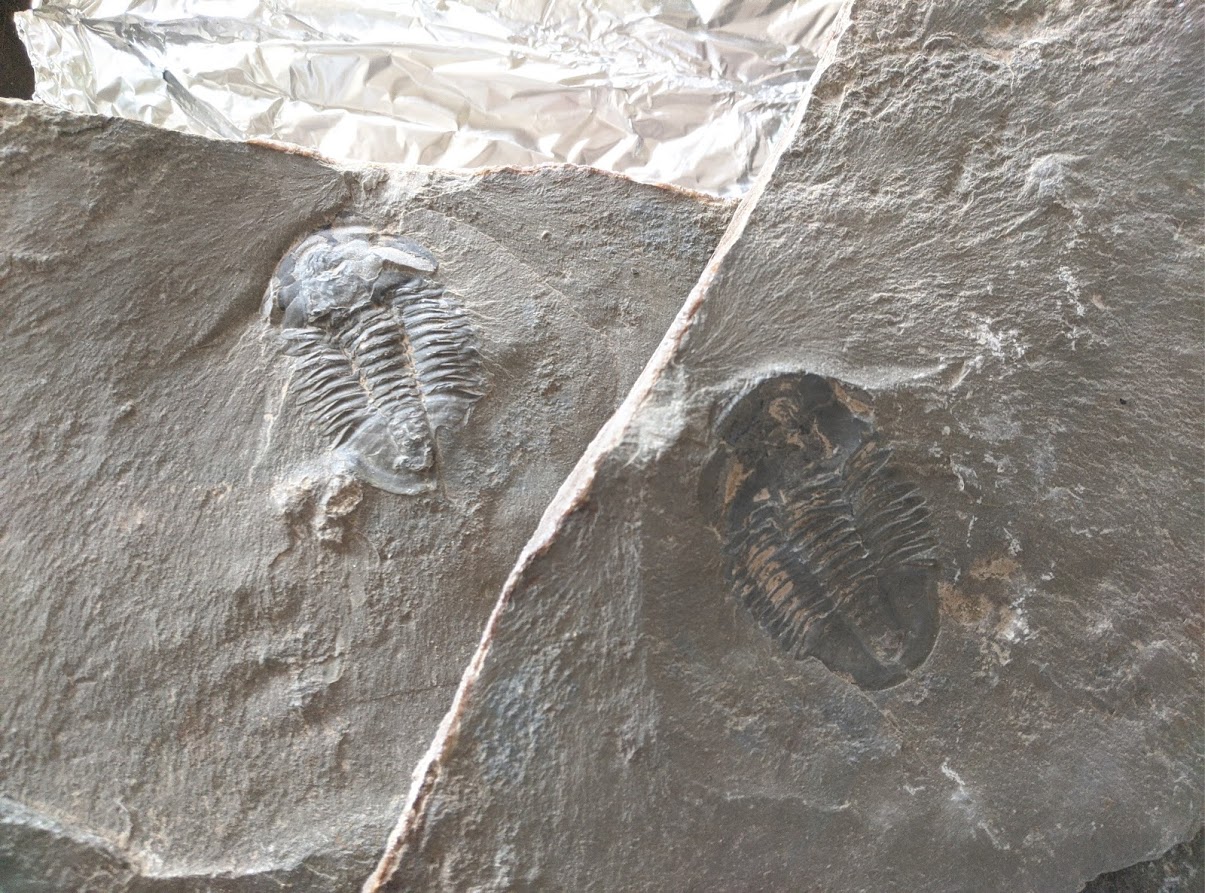
Fossil Friday #25: Asaphicus wheeleri from the Cambrian of Utah
Read more: Fossil Friday #25: Asaphicus wheeleri from the Cambrian of UtahThis is the “Fossil Friday” post #25. Expect this to be a somewhat regular feature of the website. We will post any fossil pictures you send in to esconi.info@gmail.com. Please include a short description or story. Check the #FossilFriday Twitter hash tag for contributions from around the world! —————————————————– Here is an Asaphiscus wheeleri trilobite from the Wheeler Shale in Utah. The Wheeler Shale is a very fossiliferous shale in the Great Basin in Utah. It’s about 507 million years old, which is very close to the age (508 million years) of the Burgess Shale in British Columbia, Canada. Both…
-
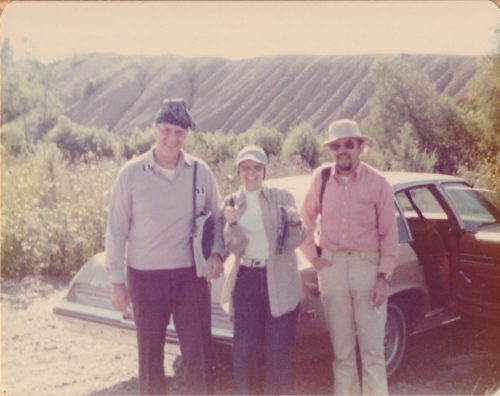
Throwback Thursday #27: Field Trip to Morris for Mazon Creek Fossils September 1976
Read more: Throwback Thursday #27: Field Trip to Morris for Mazon Creek Fossils September 1976This is Throwback Thursday #27. In these, we look back into the past at ESCONI specifically and Earth Science in general. If you have any contributions, (science, pictures, stories, etc …), please send them to esconi.info@gmail.com. Thanks! Here is a selection of photos from a field trip to Morris, IL to collect Mazon Creek fossils. There were numerous localities around Morris for collecting fossils. Unfortunately, there aren’t any details as to where these photos were taken. We can only dream of the treasures that were found that day!

ESCONI Gem, Mineral, and Fossil Show
Most Recent Post
- Mazon Monday #317: Pohlsepia Revisited — Not an Octopus After All
 A new paper “Synchrotron data reveal nautiloid characters inPohlsepia mazonensis, refuting a Palaeozoic origin for octobrachians” in the journal Proceedings of the Royal Society B Biological Sciences refutes the classification of Pohlsepia mazonensis as an octopus and reclassifies it as a soft-bodied nautiloid as Paleocadmus pohli.
- About ESCONI
- Around the Web
- Calendar of Events
- Code of Ethics and Conduct
- ESCONI Books for Sale
- ESCONI Gem, Mineral, and Fossil Show
- ESCONI in the News
- ESCONI Videos
- Field Trips
- Flashback Friday
- Fossil Friday
- Mazon Creek
- Mazon Monday
- Member Spotlight
- Membership Information
- Reference Material
- Throwback Thursday
- Trilobite Tuesday
Field trips require membership, but visitors are welcome at all meetings!
| Friday, April 10th | General Meeting – 8:00 PM via Zoom. Jessica Hull will present “Life in the Devonian Period, The Age of Fishes.” |
| Saturday, April 11th | Junior Study Group Meeting – 2:00 PM, in person at the College of DuPage Technical Education Center (TEC) Building – Room 1038A (Map). Katherine Howard will present on Sand and Sediment Collecting. Specifics of this meeting are available from Scott Galloway, 630-670-2591, gallowayscottf@gmail.com. |
| Saturday, April 18th | Paleontology Study Group – 7:30 PM via Zoom and in person at the College of DuPage, TEC, Room 1038B (Map). Keith Robitschek will present “Digging the Marl of the Lance Formation.” |
| Friday, April 24th | MAPS Expo XLVII – Springfield, IL. |
| Saturday, April 25th | MAPS Expo XLVII – Springfield, IL. |
| Sunday, April 26th | MAPS Expo XLVII – Springfield, IL. |
| No meeting this month | Mineralogy Study Group |