
-
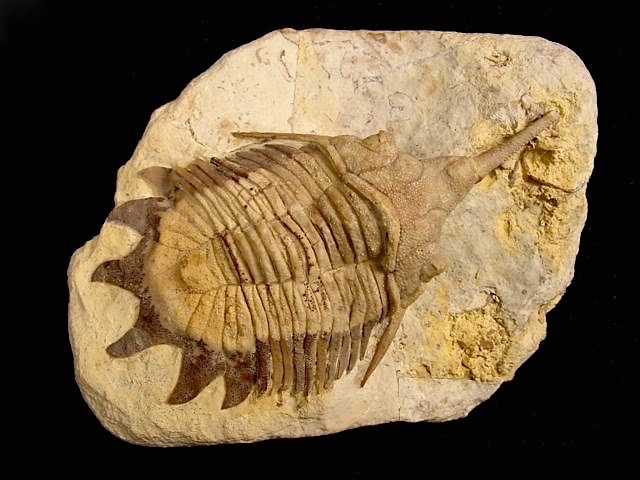
American Museum of Natural History: Trilobite of the Week
Read more: American Museum of Natural History: Trilobite of the WeekThe American Museum of Natural History has a new page on their website. The “Trilobite of the Week” for this week is Probolichas of the Ordovician of the Bromide Formation of Oklahoma in the USA. Check back each week for something new…
-
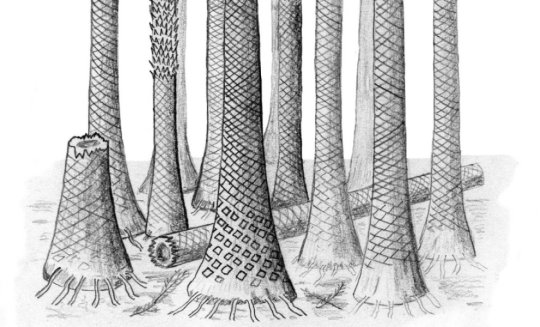
Ancient fossil forest unearthed in Arctic Norway
Read more: Ancient fossil forest unearthed in Arctic NorwayReconstructed drawing of fossil forest in Svalbard. Credit: Image courtesy of Cardiff University ScienceDaily has a post about a Devonian forest discovered in Norway. The fossil forest was found in Svalbard, a Norwegian archipelago in the Arctic Ocean. It dates to the late Devonian Period, 380 million years ago. At that time, Svalbard was at the equator. This find gives scientists insight into the climate change that occurred at this time, which might be a cause to the Devonian mass extinction events. The fossil forests, with tree stumps preserved in place, were found in Svalbard, a Norwegian archipelago situated in…
-
ESCONI ANNUAL HOLIDAY PARTY 2015
Read more: ESCONI ANNUAL HOLIDAY PARTY 2015It is time to celebrate the holiday season with our annual ESCONI get together. FRIDAY, DECEMBER 4th, 2015 5:30 to 7:30 pm Cozymel’s Restaurant 311 East Loop Road Wheaton, IL 60189 wheaton@cozymels.com (630) 871-1030 PLEASE NOTE: The Holiday party will be at Cozymel’s in Wheaton on Butterfield just east of Naperville Rd. Party attendees will order off the menu and separate checks will be provided. Be prepared to pay with CASH! We will continue our tradition of a Secret Santa gift exchange. This grab bag is optional. If you do want to participate, please make sure that…
-
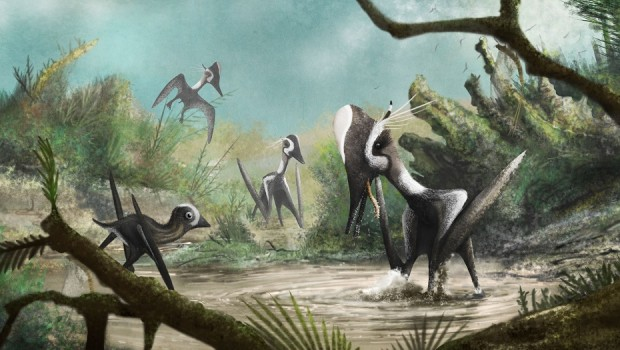
Palaeocast Episode 55: Pterosaurs!
Read more: Palaeocast Episode 55: Pterosaurs!Palaeocast has a new episode up. It’s called Pterosaurs. There is quite a bit of information on their evolution, anatomy, and even behaviour. A previous episode covered the aerodynamics of their flight. Enjoy! Pterosaurs were the first vertebrates to achieve powered flight, and lived in the skies above the dinosaurs during the Mesozoic. They’re often mistakenly identified as dinosaurs, but are in fact a separate, closely related group. This group has recently undergone a revival, with more research on pterosaurs happening now than ever before. Where are they found? How diverse was this group? How did they evolve?
-
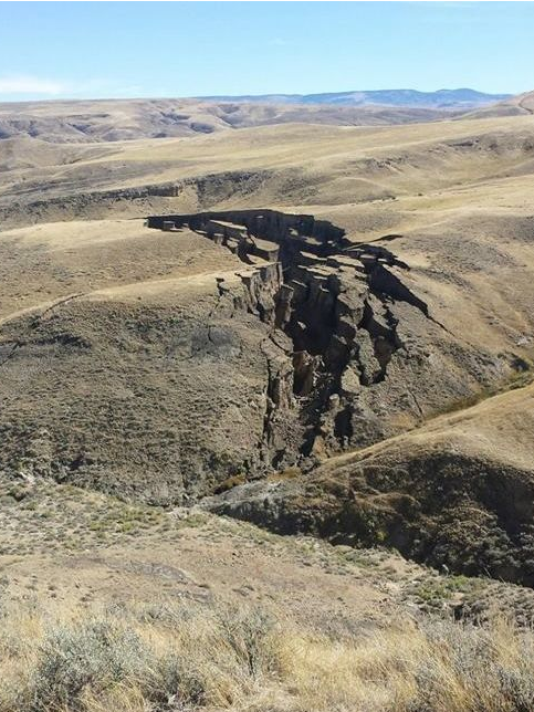
Found: A 2,250 Foot Long Crack in Wyoming
Read more: Found: A 2,250 Foot Long Crack in WyomingIn early October 2015, a hunter was out walking the foothills of the Bighorn Mountains in northern Wyoming. He discovered a small crack in the countryside. A few weeks later, when someone else had a chance to check it out, it had grown to nearly a half a mile long (2250 feet) and 150 feet wide. Geologists from the Wyoming State Geologic Survey attribute it to a landslide caused by groundwater erosion. CBS News has more information.
-
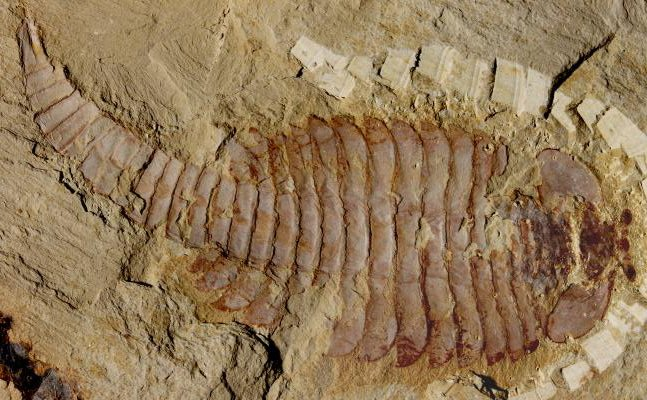
How to Fossilize a Brain
Read more: How to Fossilize a BrainSmithsonian’s blog has a post about fossilized brains. The brains belonged to a Cambrian arthropod called Fuxianhuia protensa from the famous Chenjiang fossil beds in south western China. The paper appeared in the journal Cell Current Biology. Interestingly, this study was a follow up to a paper that appeared in Nature in October of 2012. In that instance, a single specimen of Fuxianhuia with preserved brain and optic nerves was described. At that time, the preservation was thought to be implausibly rare. However, the new paper details seven more specimens with similar preservation. The complexity of these preserved brains, similar…
-
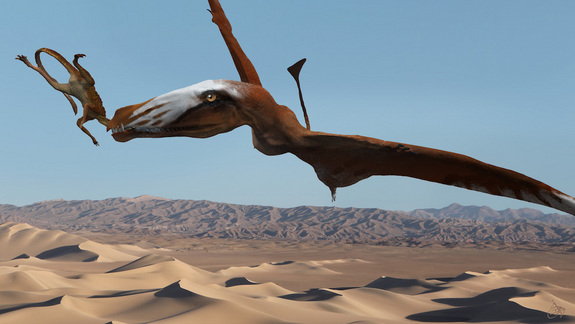
CBC Quirks & Quarks – A Ptoothy Pterosaur With Fangs
Read more: CBC Quirks & Quarks – A Ptoothy Pterosaur With FangsAn artist’s interpretation of the newfangled pterosaur snacking on a primitive crocodylomorph known as a sphenosuchian.Credit: Josh Cotton CBC Radio’s Quirks & Quarks has a segment on a new Triassic pterosaur. The pterosaur has yet to be named. It was found in north eastern Utah, not far from Dinosaur National Monument. It dates to the Late Triassic, about 210 million years ago. Pterosaurs are rare in the fossil record, so this is a significant find. A little more than 200 million years ago, a four-fanged pterosaur flew over the vast desert of Triassic Utah snagging other reptiles with its toothy…
-
Change for November Minerology Study Group Meeting
Read more: Change for November Minerology Study Group MeetingJeff Anderson has cancelled his November presentation. The study group will be watching videos from the Tuscon shows.
-

ESCONI Events November 2015
Read more: ESCONI Events November 2015Fri, Nov 13 ESCONI General Meeting 8:00 p.m. College of Dupage – Tech Ed (TEC) Building, Room 1038B (Map) – Topic: “Early Angiosperm Evolution” by Patrick S. Herendeen of the Chicago Botanical Garden Sat, Nov 14 ESCONI Mineralogy Meeting 7:30 p.m. College of Dupage – Tech Ed (TEC) Building, Room 1038B (Map) – Topic: “Tuscon Show Videos” Sat, Nov 21 ESCONI Paleontology Study Group Meeting, 7:30 p.m. College of Dupage – Tech Ed (TEC) Building, Room 1038B (Map) – Topic:“Receptaculites (Sunflower Coral)” by Tom Williams ESCONI Archaeology Study Group Meeting, 7:30 p.m. College of Dupage – Tech Ed (TEC) Building, Room 1038B…
-
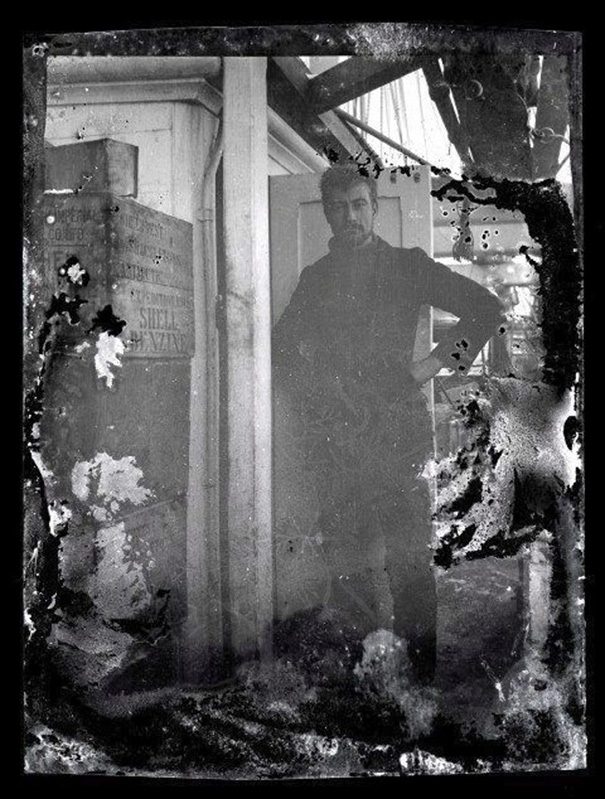
100-Year-Old Box of Negatives Discovered Frozen In Block of Antarctica’s Ice
Read more: 100-Year-Old Box of Negatives Discovered Frozen In Block of Antarctica’s IceBored Panda has a post about 100 year old negatives that were discovered frozen in Antarctica. The negatives were discovered in a box during restoration work of an exploration hut, which was carried out by the Conservators of the New Zealand Antarctic Heritage Trust. The box contained 22 never before seen cellulose nitrate negatives that were probably left in Captain Scott’s hut by Ernest Shackleton’s 1914-1917 Ross Sea Party. The photos can be seen on the Antarctic Heritage Trust’s website.
-

New species of ostrich-like dinosaur discovered in Mexico
Read more: New species of ostrich-like dinosaur discovered in MexicoLaelaps has a post about an new ornithomimid dinosaur that was found in Mexico. Dubbed Tototlmimus packardensis, Mexico’s “bird mimic”, the animal lived about 72 million years ago. It was similar in size to Gallimimus, which could measure 2 m tall at the hip and 8 m long. Currently, it is known from pieces of its feet and hand bones. The original paper appeared in the journal Cretaceous Research. North America has been a dinosaur hotspot for a century and a half. The Bone Wars of the 19th century, the Second Jurassic Dinosaur Rush of the early 20th, and the continuing…
-

Greenland Is Melting Away
Read more: Greenland Is Melting AwayThe New York Times has a neat interactive story about the melting ice of Greenland. If all of Greenland’s ice melts, the world’s oceans could rise about 20 feet. That would be devastating to say the least. It’s hard to be a climate skeptic when you see this happening. Check it out for a sobering view of climate change in action. If this keeps up, it really will be “green land” in the future… ON THE GREENLAND ICE SHEET — The midnight sun still gleamed at 1 a.m. across the brilliant expanse of the Greenland ice sheet. Brandon Overstreet, a…
-
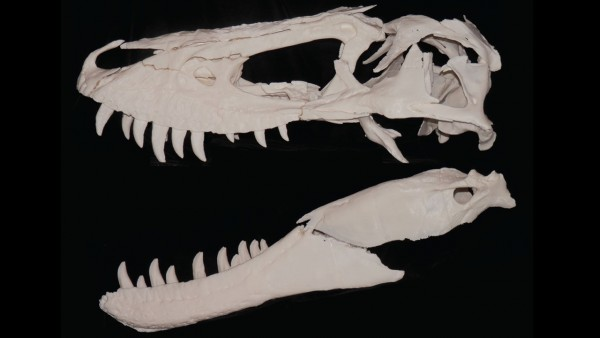
Top predator wannabe is just another T. rex
Read more: Top predator wannabe is just another T. rexThomas D. Carr. Study of this 3D reconstruction of the dinosaur called “Jane” indicates it is Tyrannosaurus rex and not a close but smaller cousin. ScienceMagazine has a story about a new study which shows that Nanotyrannus was just a juvenile Tyrannosaurus rex. The study, which was presented at the Society of Vertebrate Paleontology in Dallas, was led by Thomas Carr, a paleontologist at Carthage College in Kenosha, Wisconsin. Not everyone agrees. Bob Bakker still thinks that Nanotyrannus was a separate species. Get all the details over at sciencemag.org. In Dallas, Carr presented a new analysis of Jane’s skull and skeleton,…
-
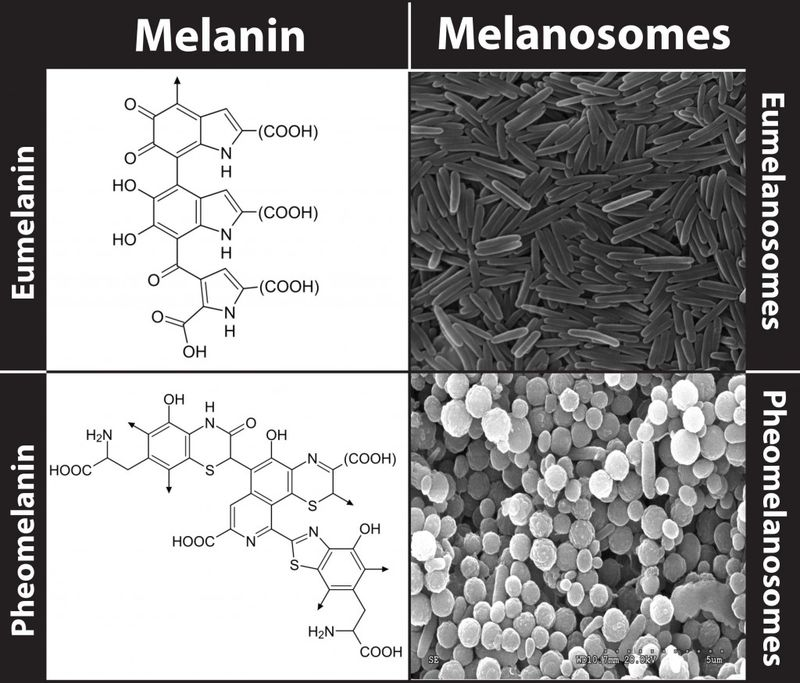
Palaeocast Episode 52: Melanin
Read more: Palaeocast Episode 52: MelaninMelanin is a pigment that has a distinct atomic structure. There are two types: eumelanin and pheomelanin. Eumelanin is found in black, dark brown, grey and blonde integuments, while pheomelanin is found in red integuments. Melanosomes are the organelles that contain melanin and there is a correlation between the shape of the melanosome and the type of melanin inside. (Melanin structure images : Roland Mattern – Roland1952. Licensed under Public Domain via Commons). Palaeocast Episode 52 is on melanin in fossils. Specifically, the chemical and structural preservation of melanin in a fossil mammal. Caitlin Colleary, a graduate student at the University…
-
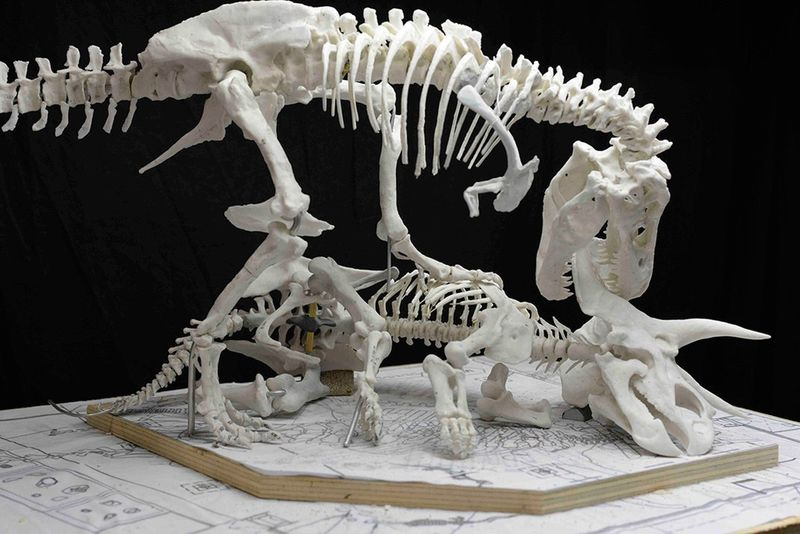
When T. Rex Meets Triceratops in the New Dino Hall, It Will Be a Violent Affair
Read more: When T. Rex Meets Triceratops in the New Dino Hall, It Will Be a Violent AffairBrian Switek has an interesting post over at Smithonian.com. In it, he describes the new dinosaur display in the Natural History Museum. The renovated dinosaur and fossil hall is slated to reopen in 2019. One of the main scenes will feature a Tyrannosaurus rex and an Triceratops locked in grim pose. Most museum-bound dinosaurs are reconstructed standing still or in mid-stride, isolated from each other in the cavernous space of exhibition galleries. But in the Smithsonian’s new dinosaur hall, designed and approved by museum experts including Matthew Carrano, curator of dinosaurs, the Triceratops and Tyrannosaurus will have a much closer connection.…
-
Happy National Fossil Day!
Read more: Happy National Fossil Day!Today is National Fossil Day! The day was created by the National Park Service to promote public awareness and stewardship of fossils. The official website has some events for Illinois, which includes ESCONI’s own “Best Fossil Contest” to be held this Saturday, October 17, 2015. Come out and enjoy the fun!
-
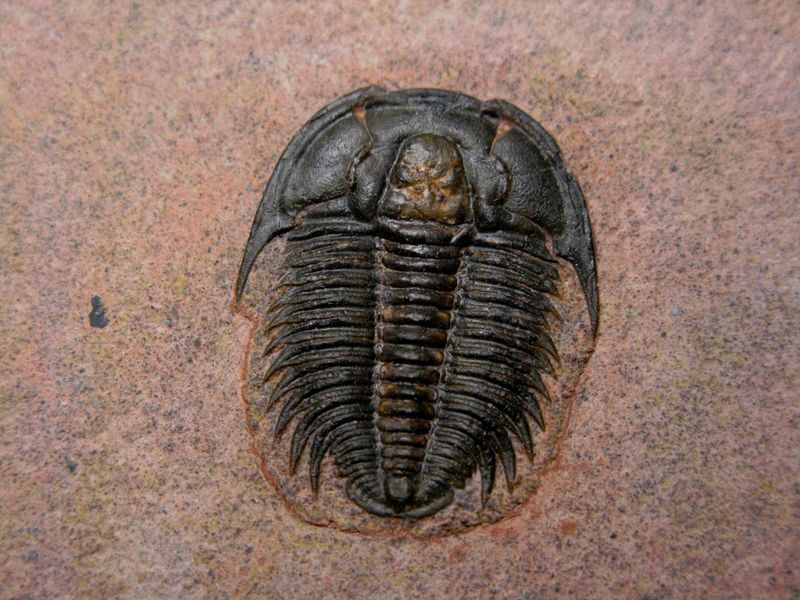
10 Terrific Facts About Trilobites
Read more: 10 Terrific Facts About TrilobitesMental Floss has a post about trilobites. Trilobites were arthropods. they existed on earth from the lower Cambrian to the Permian mass extinction, that’s about 300 million years. Over 20,000 species have been described. And more new ones are added to the list every year. Ohio (Isotelus), Wisconsin (Calymene celebra), and Pennsylvannia (Phacops rana) have trilobites designated as their state fossil. They are one of the most common favorites and are collected by many. If you go to the right place, you can collect them yourself… For more information visit www.trilobites.info.
-
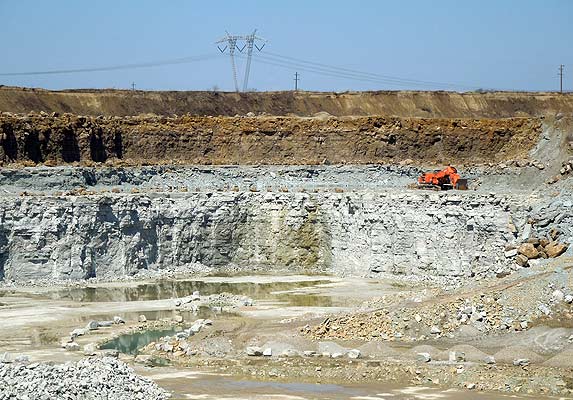
Field Trip: St. Paul, IN on October 23, 2015
Read more: Field Trip: St. Paul, IN on October 23, 2015The ESCONI club will have a members only field trip to the St. Paul Quarry on October 23, 2015. We will meet at the quarry office at 8:45 am (Eastern Time) to sign waivers and enter the quarry at approx. 9:00 am. The following requirements must be met: 1. Paid member of ESCONI by or on October 17, 2015. 2. At least 18 years of age (quarry rules) 3. Hard hat to be worn at all times in the quarry. 4. Hard, sturdy shoes required–no open toed sandals, tennis, or street shoes will be allowed. 5. Long pants will be required,…
-

Tiny ancient fossil from Spain shows birds flew over the heads of dinosaurs
Read more: Tiny ancient fossil from Spain shows birds flew over the heads of dinosaursScienceDaily has a piece 125 million year old birds. The new discovery from central Spain is an exceptionally preserved wing from a bird that flew over the heads of dinosaurs during the Cretaceous. Besides the bones, the wing fossil preserves details of the complex network of muscles that allow modern birds to control their flight. The source paper appeared in Nature’s Scientific Reports. An international team of Spanish paleontologists and NHM’s Director of the Dinosaur Institute, Dr. Luis M. Chiappe, studied the exceptionally preserved wing of a 125-million-year-old bird from central Spain. Beyond the bones preserved in the fossil, the tiny…
-
ESCONI Events October 2015
Read more: ESCONI Events October 2015Fri, Oct 9 ESCONI General Meeting 8:00 p.m. College of Dupage – Tech Ed (TEC) Building, Room 1038B (Map) – Topic: “Field Collecting and Preparation Techniques” by Connie Vanbeek of the Field Museum Sat, Oct 10 Field Trip – State Street Quarry in Rockford, IL, See this link for details. Sat, Oct 10 ESCONI Mineralogy Meeting 7:30 p.m. College of Dupage – Tech Ed (TEC) Building, Room 1038B (Map) – Topic: “Rubies and Sapphires” Fri, Oct16 ESCONI Archaeology Study Group Meeting, ESCONI Archaeology Study Group Meeting, To be announced Sat, Oct 17 ESCONI Paleontology Study Group Meeting, 7:30 p.m. College of Dupage – Tech…

ESCONI Gem, Mineral, and Fossil Show
Most Recent Post
- PBS Eons: When the Earth Had Supermountains
 PBS Eons has a new episode. This one is about some truly giant mountains and the evolutionary changes they drove.
- About ESCONI
- Around the Web
- Calendar of Events
- Code of Ethics and Conduct
- ESCONI Books for Sale
- ESCONI Gem, Mineral, and Fossil Show
- ESCONI in the News
- ESCONI Videos
- Field Trips
- Flashback Friday
- Fossil Friday
- Mazon Creek
- Mazon Monday
- Member Spotlight
- Membership Information
- Reference Material
- Throwback Thursday
- Trilobite Tuesday
Field trips require membership, but visitors are welcome at all meetings!
| Friday, April 10th | General Meeting – 8:00 PM via Zoom. Jessica Hull will present “Life in the Devonian Period, The Age of Fishes.” |
| Saturday, April 11th | Junior Study Group Meeting – 2:00 PM, in person at the College of DuPage Technical Education Center (TEC) Building – Room 1038A (Map). Katherine Howard will present on Sand and Sediment Collecting. Specifics of this meeting are available from Scott Galloway, 630-670-2591, gallowayscottf@gmail.com. |
| Saturday, April 18th | Paleontology Study Group – 7:30 PM via Zoom and in person at the College of DuPage, TEC, Room 1038B (Map). Keith Robitschek will present “Digging the Marl of the Lance Formation.” |
| Friday, April 24th | MAPS Expo XLVII – Springfield, IL. |
| Saturday, April 25th | MAPS Expo XLVII – Springfield, IL. |
| Sunday, April 26th | MAPS Expo XLVII – Springfield, IL. |
| No meeting this month | Mineralogy Study Group |