
-
Thoughts on SVP
Read more: Thoughts on SVPFrom Smithsonian.org: By the last day, my brain ached with details of flying Microraptor, bounding crocodiles, marsupial bone microstructure and dozens of other topics. When my friends at the conference asked “What did you like best?” after the technical sessions finally concluded, I was only capable of grunts and indelicate gestures. I’ve had a day to settle down and process what I saw. And I know this–at SVP, dinosaurs rule. This isn’t to say that the conference is all about the Mesozoic celebrities. I saw many excellent talks on prehistoric fish, mammals, amphibians and other forms of ancient life. But,…
-
Salton Butte California Volcanoes
Read more: Salton Butte California VolcanoesVia Discovery.com hat tip to Dave Carlson over at the ESCONI Yahoo Discussion Group The buttes last erupted between 940 and 0 B.C., not 30,000 years ago, as previously thought, a new study detailed online Oct. 15 in the journal Geology reports. The new age — which makes these some of California’s youngest volcanoes — pushes the volcanic quintuplets into active status. The California Volcano Observatory, launched in February by the U.S. Geological Survey (USGS), already lists the area as a high threat for future blasts.
-
Tyrannosaurus Rex Dining Habits
Read more: Tyrannosaurus Rex Dining HabitsFrom PhysOrg: Paleontologist Denver Fowler has told a group of attendees at the Society of Vertebrate Paleontology’s annual meeting that he, along with colleagues from the Museum of the Rockies, has uncovered evidence that suggests Tyrannosaurus Rex pulled the head off Triceratops victims to allow access to nutritious neck meat. Read more at: http://phys.org/news/2012-10-life-death-triceratops-fossilized-tooth.html#jCp
-
Coelacanth – Reidus hilli
Read more: Coelacanth – Reidus hilliVia National Geographic: One of the world’s oldest types of fish, coelacanths (pronounced SEE-la-kanths) are primitive, slow-moving fish that had been thought extinct until an individual was found off Africa in 1938. There are now over 40 known coelacanth species. The two that live today are called living fossils because they have remained virtually unchanged for 320 million years. The newfound coelacanth has been dubbed Reidus hilli in honor of its discoverer Robert Reid, an artist who found the fish’s fossilized skull near his home in Forth Worth, Texas, in the late 1980s….
-
ESCONI Holiday Party – Friday, 12/7
Read more: ESCONI Holiday Party – Friday, 12/7ESCONI Winter Holiday Dinner & General Meeting Friday, December 7, 2012 ANNUAL HOLIDAY PARTY – 5:30 to 7:30 pmGreek Islands Restaurant300 E. 22nd St., Lombard IL 60148www.greekislands.net – (630) 932-4545 PLEASE NOTE: The Holiday party will be a Dutch Treat . . . that is, we will be ordering off the menu and you will pay your own check. Be prepared to pay with CASH! We will continue our tradition of a Secret Santa gift exchange. This grab bag is optional. If you would like to attend the Holiday Party, please RSVP by December 5th to Rob Sula (630) 236-9695 e-mail: sulasaurus@comcast.net. MEETING & LECTURE –…
-
A Geologist’s Report on Gold in Mexico
Read more: A Geologist’s Report on Gold in MexicoFrom the Bullion Vault: MILLIONS of years ago tectonic events created significant gold and silver mineralization in the Guerrero Gold Belt in Mexico. Today, two gold companies have reported 16 Moz of gold there, and other discoveries are sure to follow. In this interview with The Gold Report, Merrill McHenry, an independent analyst and geologist, explains the region’s geology and prospect potential. The Gold Report: Merrill, speaking as a geologist, what makes the Guerrero Gold Belt in Mexico so highly prospective for gold and silver mineralization? Merrill McHenry: Two words: plate tectonics. Two tectonic events in that area of sufficient…
-

ESCONI Events for November, 2012
Read more: ESCONI Events for November, 2012Sat. 11/17 Lizzadro Museum of Lapidary Art – “Lapidary Day” – Demonstrations by artists from West Suburban Lapidary Club – beading, silversmithing,cabochon cutting, wire wrapping, faceting, hands-on activities and free jewelry cleaning. Sat. 11/17 ESCONI Paleontology Meeting 7:30 p.m. College of Dupage, – Tech Ed Building (TEC), Room 1038A (Map) Topic: John Catalani will discuss Archaeopteryx, the first known fossil bird. Sat. 11/17 Field Museum, 1 pm, Leakey Lecture: Human Biogeography with Dr. Alexander Harcourt. Free with admission; register online or (312) 665-7500 to reserve your seat. Sat. 11/17 Elgin Public Museum , 11 am to 4 pm, Good Deals for Good Deeds: Jewelry…
-
Oldest Prehistoric Site Found in Europe
Read more: Oldest Prehistoric Site Found in EuropeFrom the Bankok Post: Archaeologists in eastern Bulgaria say they have unearthed the oldest prehistoric town ever found in Europe, along with an ancient salt production site that gives a strong clue about why massive riches were discovered in the region….
-
ESCONI Paleo Field Trip, November 2, 2012
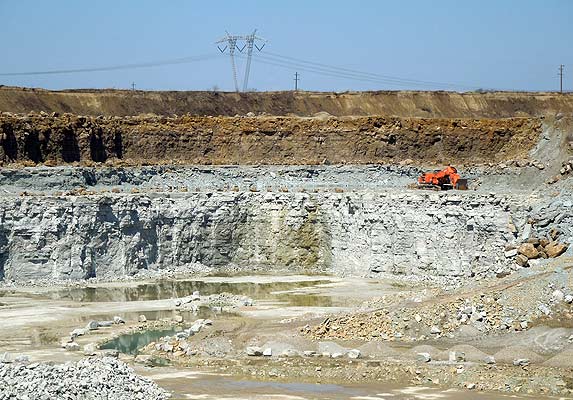
Read more: ESCONI Paleo Field Trip, November 2, 2012Fossil Field Trip, St. Paul, Indiana – Sign up by sending an e-mail to John Catalini at Fossilnautiloid@aol.com. Indiana state law that no one under 18 is allowed in quarries. Also, need to be a member of ESCONI. Limit of 20 people to trip. After signing up, on the day of the trip, we will meet at the quarry office by 8:45 am (7:45 am Chicago time). Normal safety equipment is needed – hard hat, protective boots, eye protection. To get to the office take I65 south around Indianapolis to 174. Exit and Exit 123 go south to Michigan Av.…
-
National Fossil Day: Where to Find Fossils
Read more: National Fossil Day: Where to Find FossilsFrom University of California Museum of Paleontology: In celebration of National Fossil Day (October 17, 2012), an event first organized by the National Parks Service (NPS) two years ago, we would like to call your attention to a feature on The Paleontology Portal website: “Fossils in US National Parks.” First announced in January of this year (see the January 2012 UCMP News), the module’s interactive map enables one to see all the parks where fossils are present and to find out what fossils (along with their geologic ages) are in any particular park. Improvements in the module’s “searchability” have been…
-
Spider Kills Wasp a 100 Million Years Ago
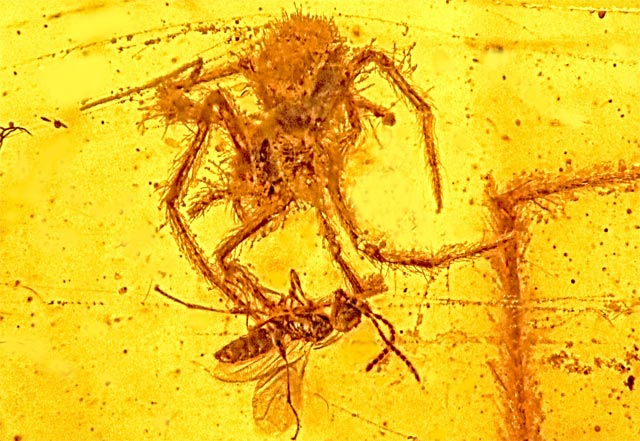
Read more: Spider Kills Wasp a 100 Million Years AgoFrom Sci-News: (hat tip via Dave at ESCONI Yahoo Group) This piece of amber preserved the event in remarkable detail, an action that took place some 100 million years ago in the Hukawng Valley of Myanmar. The fossil also contains the body of a male spider in the same web. This provides the oldest evidence of social behavior in spiders, which still exists in some species but is fairly rare. Most spiders have solitary, often cannibalistic lives, and males will not hesitate to attack immature species in the same web. “This juvenile spider was going to make a meal out of…
-
Chinese Sculpture From Meteorite
Read more: Chinese Sculpture From MeteoriteFrom Wiley via geology.com: The Chinga meteorite fell near the border of what is now Siberia and Mongolia at least 10,000 years ago. Researchers have recently linked a 10.6 kilogram sculpture to the meteorite through geochemical testing and to a culture of the eleventh century located in the fall area through ethnological analysis. Interesting even if you think it is somewhat speculative.
-
Lecture This Friday 10/12/2012 – Permian Tetrapods
Read more: Lecture This Friday 10/12/2012 – Permian TetrapodsESCONI General Meeting 8:00 p.m. College of Dupage, – Tech Ed (TEC) Building, Room 1038A (Map)Topic: Mike Henderson will speak on Captorhinus and friends, the lower Permian Tetrapods of the Fort Sill fissure fillings southern Oklahoma
-

National Fossil Day – Oct. 17!
Read more: National Fossil Day – Oct. 17!ESCONI will be celebrating National Fossil Day at the Paleontology Study Group meeting on Saturday, October 20. 7:30 p.m. College of Dupage, – Tech Ed Building (TEC), Room 1038A. Dave Carlson will be giving a presentation on “Soft Tissue Preservation in Fossils”. Members will be bringing fossils for display with free samples for guests. Free. All ages welcome!
-
Talk by Alan Hodgkinson On Gemstone Identification
Read more: Talk by Alan Hodgkinson On Gemstone IdentificationHat tip D. Lovely! October 15, 2012 6:00 pm Jewelers Center 18th Fl. 5 So. Wabash Ave. Chicago, Illinois Today, often sophisticated equipment is needed in the identification of gemstones and diamonds. One of the most underused and misused pieces of equipment is the polariscope. In this enlightening presentation, renowned Scottish gemologist, Alan Hodgkinson, will demonstrate “Pushing the Polariscope” for ease of determining optic figures, identifying gemstones, distinguishing spectrums, and determining diamond type. Learn to use the polariscope in ways GIA did not teach you. RSVP Today to: Heidi Harders Email Heidi click here $40.00 includes light dinner…
-
I See Dead People
Read more: I See Dead PeopleFrom TED Video Blogs: Bioarcheology is a fairly new field — a subset of anthropology which combines biological anthropology and archeology. It’s the use of biological techniques to look at archeological human skeletons. What bioarcheology does is help recreate lives by examining human remains for clues to what they ate, what they did for work, what illnesses they may have had, what traumas they suffered, how tall they were, whether they were a man or a woman, and their age. .
-
Writeup About the June Archaeology Field Trip
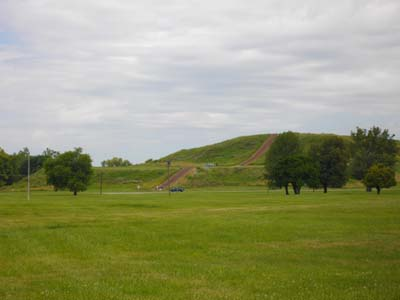
Read more: Writeup About the June Archaeology Field TripArchaeology June Field Trip On June 2nd and 3rd, we had an Archaeology field trip to see Cahokia Mounds, the Museum of Westward Expansion, the Saint Louis Arch, and the Lewis and Clark Memorial State Park. Cahokia Mounds offers a World-Class Interpretive Center with museum exhibit galleries, an orientation show theater, a museum shop and a courtyard for educational programs. Outdoors you’ll find self-guided tours, guided tours, trails and Monks Mound, the largest earthwork in North America. After viewing the orientation video in the Interpretive Center, we walked around looking at exhibits which explained how the people lived and what…
-
Arctic sea ice reaches lowest extent
Read more: Arctic sea ice reaches lowest extentArctic ice lowest since record keeping started.
-
Methane Beneath Antarctic
Read more: Methane Beneath AntarcticVia University of California Santa Cruz:: (hat tip Geology.com) … “It is easy to forget that before 35 million years ago, when the current period of Antarctic glaciations started, this continent was teeming with life,” Tulaczyk said. “Some of the organic material produced by this life became trapped in sediments, which then were cut off from the rest of the world when the ice sheet grew. Our modeling shows that over millions of years, microbes may have turned this old organic carbon into methane.”
-
New Finds in Burgess Shale in Canada
Read more: New Finds in Burgess Shale in CanadaVia The Star.com: Jean-Bernard Caron, curator of invertebrate paleontology at the Royal Ontario Museum, spent seven weeks this summer leading a team on an exploration of the Burgess Shale sites in Yoho National Park in British Columbia. The best-known site is the Walcott Quarry, where there was a major discovery of well-preserved, soft-bodied fossils in 1909. The team found a new site in Kootenay National Park, at a location Caron isn’t ready to reveal yet, with “very rich fossil deposits” from new and existing species. It could be comparable to the original site, said Caron.

ESCONI Gem, Mineral, and Fossil Show
Most Recent Post
- Fossil Friday #322: Macroneuropteris scheuchzeri from Dresden
 For this week’s Fossil Friday, we have a very nice Macroneuropteris scheuchzeri (see Mazon Monday #39). Macroneuropteris scheuchzeri is a fairly common seed fern, which is found in many Carboniferous fossil deposits. In some Mazon Creek localities like the Mazon River, it’s a dominant component of the flora. It was called Neuropteris scheuchzeri until 1977, when the classification was changed by Robert Gastaldo after extensive studies on European examples that looked at its frond architecture and cuticle.
- About ESCONI
- Around the Web
- Calendar of Events
- Code of Ethics and Conduct
- ESCONI Books for Sale
- ESCONI Gem, Mineral, and Fossil Show
- ESCONI in the News
- ESCONI Videos
- Field Trips
- Flashback Friday
- Fossil Friday
- Mazon Creek
- Mazon Monday
- Member Spotlight
- Membership Information
- Reference Material
- Throwback Thursday
- Trilobite Tuesday
Field trips require membership, but visitors are welcome at all meetings!
| Friday, June 12th | General Meeting – 8:00 PM via Zoom. Adrienne Stroup of The Field Museum will present “At the Intersection of Art and Science: Outreach in Natural History Museums”. |
| Saturday, June 20th | Paleontology Study Group – 7:30 PM via Zoom. Lincoln Shoemaker will present “Factors controlling the distribution of Late Ordovician – Silurian crinoids.” |
| No meeting this month | Junior Study Group Meeting |
| No meeting this month | Mineralogy Study Group |