
-
Fossil Gorge, uncovered 30 years ago, preserves a 375 million-year-old ocean floor in eastern Iowa
Read more: Fossil Gorge, uncovered 30 years ago, preserves a 375 million-year-old ocean floor in eastern IowaLittle Village Magazine has a story about Fossil Gorge in Corralville, Iowa. Fossil Gorge is a fossil locality about four hours from Chicago in central Iowa. The deposit dates to the Devonian Period about 375 million years ago… that’s more than 300 million years before the non-avian dinosaurs go extinct at the end of the Cretaceous Period. The site features many Paleozoic favorites like trilobites, crinoids, brachiopods, and cephalopods. It was uncovered by large floods in 1993 and has been preserved for research and education. If you are looking for a place to see fossils this summer, give this place…
-
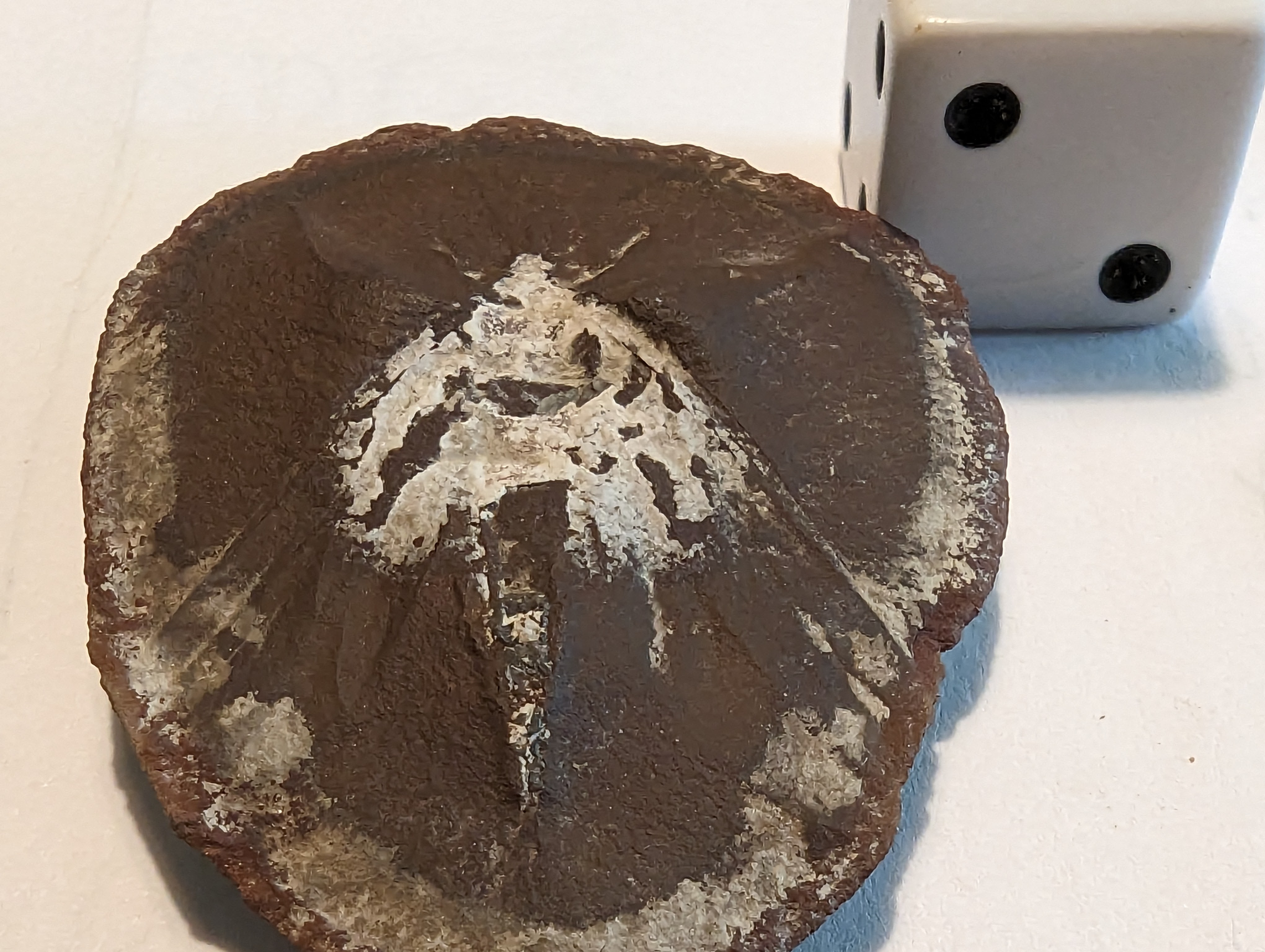
Fossil Friday #165: “Take ALL Fragments Home With You!!!”
Read more: Fossil Friday #165: “Take ALL Fragments Home With You!!!”This is the “Fossil Friday” post #165. Expect this to be a somewhat regular feature of the website. We will post any fossil pictures you send in to esconi.info@gmail.com. Please include a short description or story. Check the #FossilFriday Twitter hash tag for contributions from around the world! Another Fossil Friday, another Miamia bronsoni… insect fossils are seemingly falling from the sky… err.. rising from the Earth. This beautiful specimen comes from ESCONI member George Witaszak. George let us know that he found this gorgeous fossil at home, while cleaning up his finds for the day. He’s been collecting for…
-
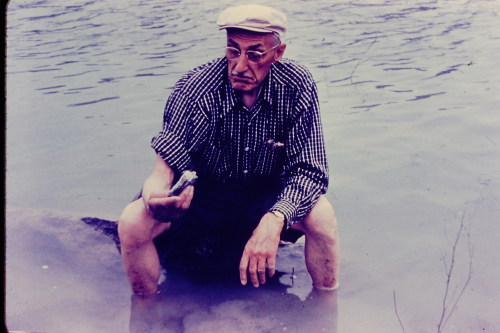
Throwback Thursday #166: Spring – Illinois
Read more: Throwback Thursday #166: Spring – IllinoisThis is Throwback Thursday #166. In these, we look back into the past at ESCONI specifically and Earth Science in general. If you have any contributions, (science, pictures, stories, etc …), please send them to esconi.info@gmail.com. Thanks! Bill Kelly and his wife Wylma were active in ESCONI for many years. Both of them wrote articles for the newsletter. Today, we have an article by Bill entitled “Spring – Illinois”. This article appeared in the May 1963 edition of the newsletter, but the content is still very relative today. Bill mentions the 1945 Geologic map of Illinois, which can be found…
-

Aussie Farmers Unleash Dinosaur Rush as Fossil Findings Rewrite History
Read more: Aussie Farmers Unleash Dinosaur Rush as Fossil Findings Rewrite HistoryThe New York Times has a story about dinosaurs in Australia. For a long time, dinosaur fossils were strangely rare in Australia. Now, with discoveries near Winston, Australia, dinosaur bone is seemingly everywhere! It took a moment to spot the fragment, initially: fist-size and unnaturally smooth, nestled between shrubs teeming with burrs in an endless expanse of arid plains. But after the first, the others were easier to pick out, gleaming dirty white against the red earth and run through with a honeycomb texture. Dinosaur bones. “They’re bloody everywhere,” marveled Matt Herne, curator of the Australian Age of Dinosaurs Museum. About an hour’s…
-
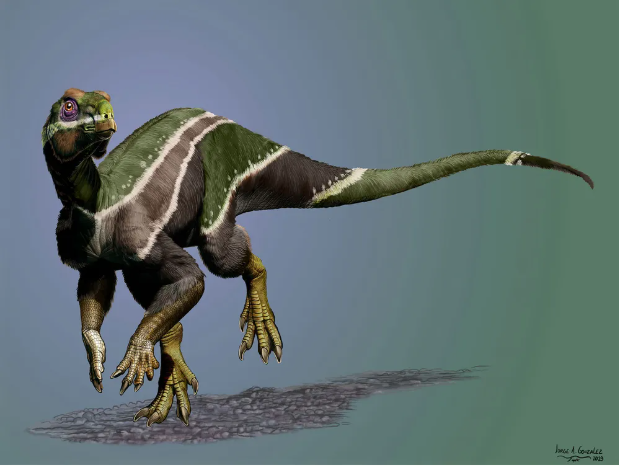
New Beaked Dinosaur Species Found in Utah
Read more: New Beaked Dinosaur Species Found in UtahSmithsonian Magazine has a story about a newly discovered dinosaur. The beaked dinosaur is called Iani smithi after the Roman god Ianus and paleontologist Joshua Aaron Smith. It lived about 99 million years ago in Utah and adds detail to a fossil gap in the middle Cretaceous. The animal was described by North Carolina Museum of Natural Sciences paleontologist Lindsay Zanno and her colleagues. Lindsay spoke to ESCONI a few times while she worked at the Field Museum. At a glance, the dinosaur might seem somewhat plain. Iani lacks any horns, plates, spikes or other outstanding features that we often associate with dinosaurs.…
-
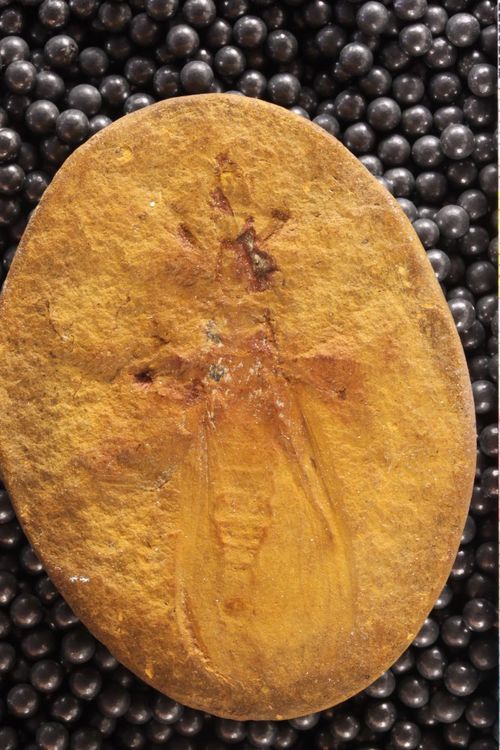
Mazon Monday #168: Miamia bronsoni
Read more: Mazon Monday #168: Miamia bronsoniThis is Mazon Monday post #168. What’s your favorite Mazon Creek fossil? Tell us at email:esconi.info@gmail.com. Insects are some of the most highly sought after Mazon Creek fossils. While very common in the modern world, insects are very rare in the fossil record. Mazon Creek has played a vital part in the understanding of insect evolution as it has produced more evidence than most other deposits. At one time, there were nearly 150 species belonging to 30 families and 102 genera known from the concretions of the Francis Creek Shale. That number as come down a little as more fossils…
-

1.7 billion Tyrannosaurus rexes walked the Earth before going extinct, new study estimates
Read more: 1.7 billion Tyrannosaurus rexes walked the Earth before going extinct, new study estimatesAn artist’s interpretation of what Tyrannosaurus rex may have looked like. (Image credit: Shutterstock) LiveScience has a story about how many Tyrannosaurus rex individuals ever lived. Back in April 2021, a paper in the journal Science estimated that 2.5 billion T. rex had existied from 68 to 65 million years ago. Now a new paper by Eva Griebeler, an evolutionary ecologist at the Johannes Gutenberg University of Mainz in Germany, had adjusted that number down by 8 billion to 1.7 billion. She published her analysis in the journal Palaeontology recently. Both models estimate that each T. rex generation included about…
-
Dino Fest at the Field Museum – Saturday, June 10, 2023 11am-3pm
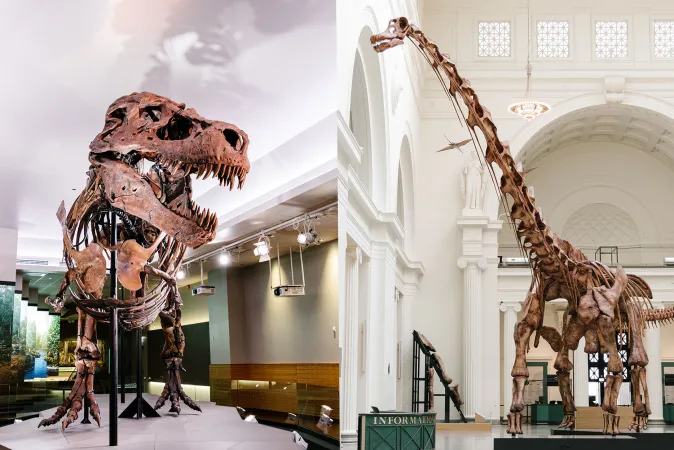
Read more: Dino Fest at the Field Museum – Saturday, June 10, 2023 11am-3pmThe Field Museum is holding “Dino Fest” on Saturday, June 10, 2023 from 11am – 3pm. There are many activities planned! Dino Fest is the official start of summer at the Field Museum, not only to welcome our newest dinosaur friend hailing all the way from the Cretaceous but also to celebrate SUE the T. rex, Máximo the Titanosaur, and all the other dinos that make the Field so special. The event will feature dinosaur trivia games, a poetry station, a book fair, and presentations from the Field’s dinosaur curator Jingmai O’Connor, PhD, and paleoartist Ted Rechlin as they share fun…
-

Fossil Friday #164: A Miamia bronsoni with a story…
Read more: Fossil Friday #164: A Miamia bronsoni with a story…This is the “Fossil Friday” post #164. Expect this to be a somewhat regular feature of the website. We will post any fossil pictures you send in to esconi.info@gmail.com. Please include a short description or story. Check the #FossilFriday Twitter hash tag for contributions from around the world! Or… “A Mazon Creek Story 39 Years in the Making”. Long time ESCONI member Ralph Jewell has quite the Mazon Creek insect and (if possible) an even better story of how he came to possess it. He posted the whole story over on the Fossil Forum. Here is an excerpt, head over…
-
Throwback Thursday #165: Summer Collecting Poem
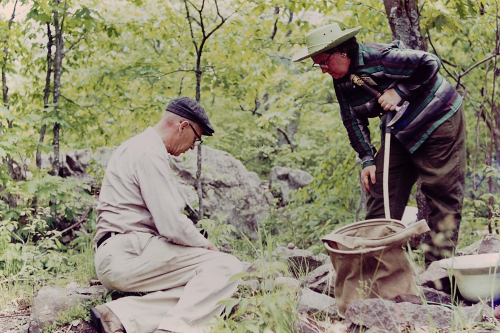
Read more: Throwback Thursday #165: Summer Collecting PoemThis is Throwback Thursday #165. In these, we look back into the past at ESCONI specifically and Earth Science in general. If you have any contributions, (science, pictures, stories, etc …), please send them to esconi.info@gmail.com. Thanks! Howard and Olive Knight were early members of ESCONI. They were both very active members for many years. This was back when clubs like ESCONI provided a social network for people with like interests. In Throwback Thursday #95, we posted a newsletter article from 1968 called “Who Were Howard and Olive Knight?”. It discussed some of their many contributions and accomplishments up until…
-

Newly described species of dome-headed dinosaur may have sported bristly headgear
Read more: Newly described species of dome-headed dinosaur may have sported bristly headgearPhys.org has a story about a pachycephalosaur with interesting headgear. A newly described species of pachycephalosaur called Platytholus clemensi, who lived around 68 million years ago, seems to sport a bristly head ornament made of keratin. The animal was described in a paper in the Journal of Vertebrate Paleontology. The new species is based on a partial pachycephalosaur skull, including its bowling-ball shaped dome, that was unearthed in 2011 in the Hell Creek Formation in Montana, which are layers of Upper Cretaceous rock from which paleontologists have collected dinosaur fossils for decades. Based on CT scans and microscopic analyses of slices through the fossilized…
-
ESCONI June 2023 General Meeting – June 9th, 2023 at 8:00 PM via Zoom – “Using geophysics to capture Earth burps and other processes during flow through karst conduits”
Read more: ESCONI June 2023 General Meeting – June 9th, 2023 at 8:00 PM via Zoom – “Using geophysics to capture Earth burps and other processes during flow through karst conduits”The topic for the ESCONI June 2023 General Meeting is “Using geophysics to capture Earth burps and other processes during flow through karst conduits”. Our speaker is Andrew Luhmann Assistant Professor of Geology in the Department of Earth and Environmental Science, Wheaton College, in Wheaton, IL. Karst aquifers are important water resources that are susceptible to contamination from land surface activities. Traditional monitoring strategies rely on spring and well sampling to learn about these flow systems, but we are using geophysics to understand the karst aquifer architecture, including the conduits where much of the flow occurs through these systems as…
-
Mazon Monday #167: Phlegethontia longissima
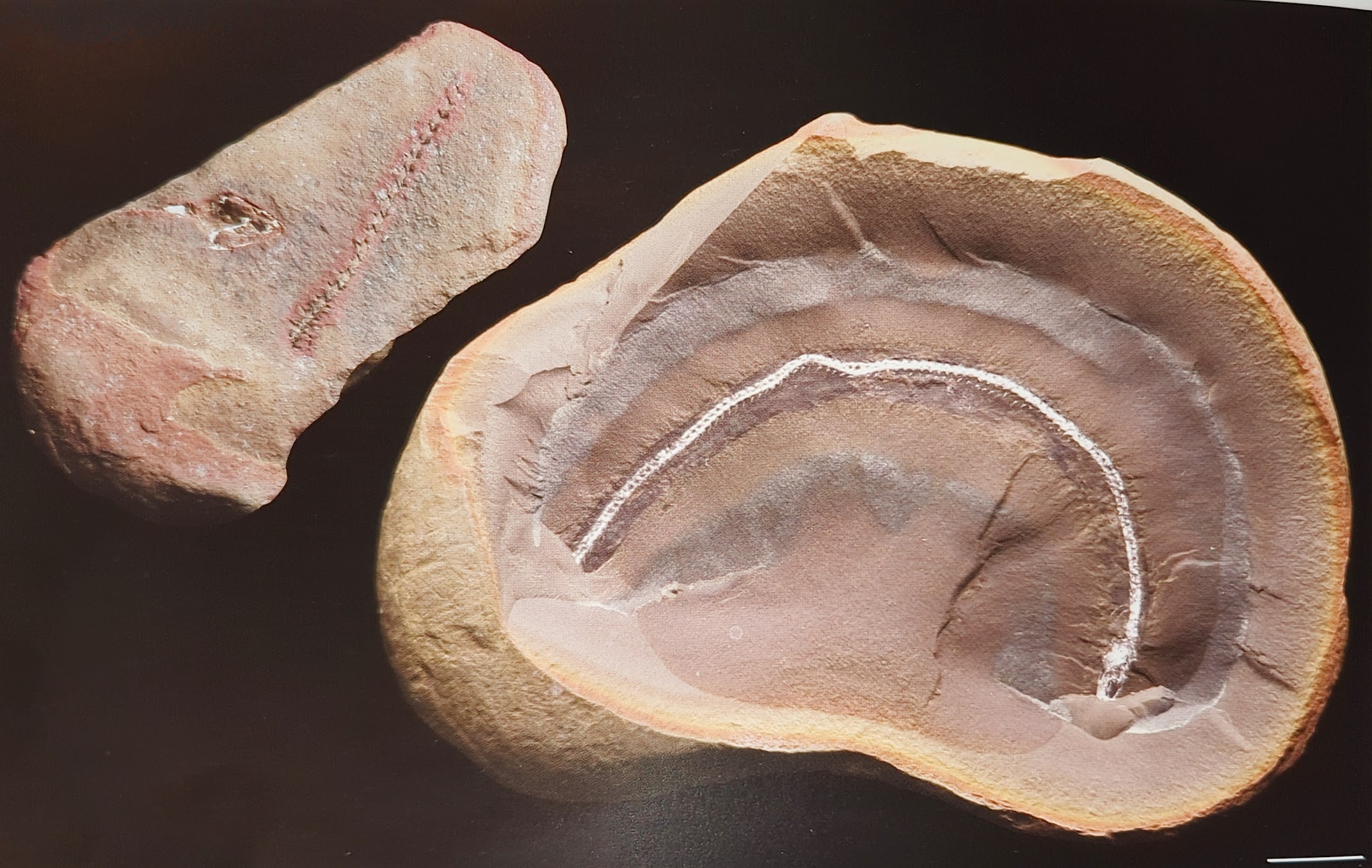
Read more: Mazon Monday #167: Phlegethontia longissimaThis is Mazon Monday post #167. What’s your favorite Mazon Creek fossil? Tell us at email:esconi.info@gmail.com. Phlegethontia longissima is a leg-less animal, often incorrectly called an amphibian. It is a vertebrate, which is classified as an aistopod from the Carboniferous and Permian periods. It has been found in Europe and North America. As with any Mazon Creek vertebrate, it is very rare. Some even consider it one of the Holy Grail fossils of Mazon Creek. P. longissima is referred to as Phlegethontia mazonense and Aornerpeton mazonense in older literature, but those names are now classified as synonyms. It was first…
-
10 Best Far Side Comics About Dinosaurs
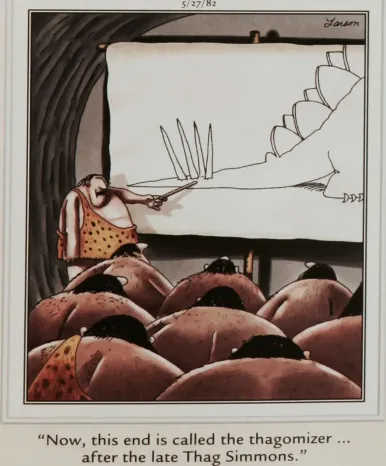
Read more: 10 Best Far Side Comics About DinosaursScreenRant has a post about some Far Side comic strips that feature dinosaurs. My favorite (and theirs) features the “Thagomizer”. Apparently, there wasn’t a name for the spikes on a Stegosaur’s tail at the time. It’s now the preferred name by paleontologists “in the know”. Gary Larson loved to feature dinosaurs in his Far Side comic strips. Whether creating absurd backstories for the dinos or placing them in modern, traditional settings, the dinosaur Far Side comics are some of the strip’s fan favorites. While many are familiar with the iconic Thagomizer comic, there is a slew of dinosaur Far Side strips that tend to go under…
-
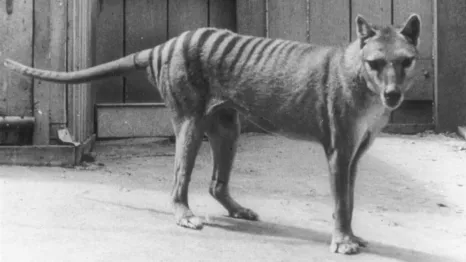
Long-extinct Tasmanian tiger may still be alive and prowling the wilderness, scientists claim
Read more: Long-extinct Tasmanian tiger may still be alive and prowling the wilderness, scientists claimLiveScience has a story about the Tasmanian Tiger. Some scientists think that the thylacine (Thylacinus cynocephalus) survived much longer in the wild that previously thought. Thylacines were wolf-like marsupials that lived on the island of Tasmania. The last known animal died in the Hobart Zoo on September 7th, 1936. It filled an important ecological niche as the apex predator on Tasmania. There has much talk of “de-extinction” and the thylacine is considered a prime candidate by some. But now, scientists say thylacines probably survived in the wild until the 1980s, with a “small chance” they could still be hiding somewhere…
-
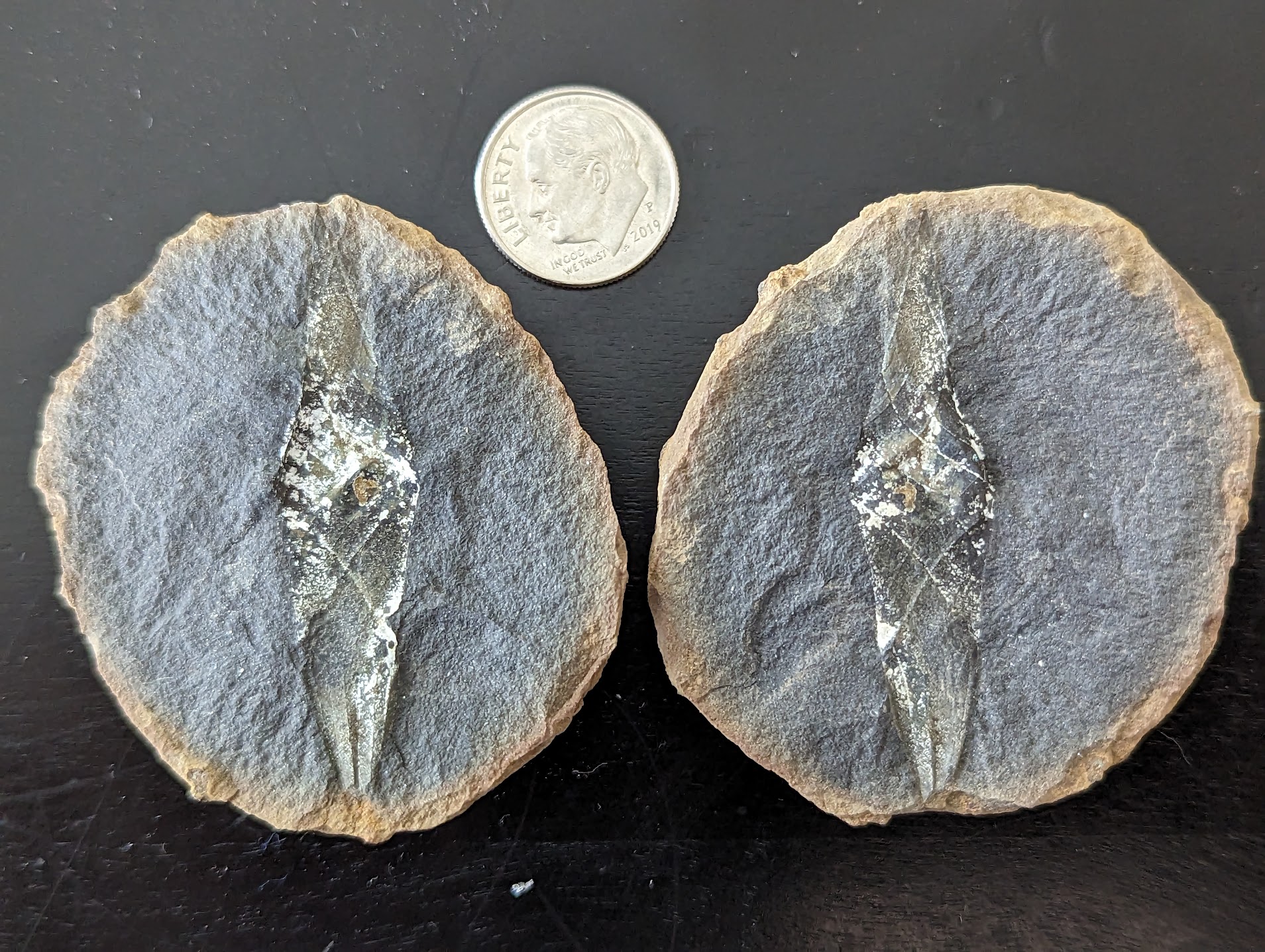
Fossil Friday #163: Mazon Creek Shark Egg Case
Read more: Fossil Friday #163: Mazon Creek Shark Egg CaseThis is the “Fossil Friday” post #163. Expect this to be a somewhat regular feature of the website. We will post any fossil pictures you send in to esconi.info@gmail.com. Please include a short description or story. Check the #FossilFriday Twitter hash tag for contributions from around the world! We have another Mazon Creek fossil today. There are a few species of shark egg cases known from Mazon Creek. Palaeoxyris prendelli is the most common species. P. prendelli was described by Leo Lesquereux in 1870 from fossils found in Lancashire, England. Lesquereux was a Swiss born bryologist and a pioneer in American…
-
Throwback Thursday #164: Looking Back At ESCONI for June 2023
Read more: Throwback Thursday #164: Looking Back At ESCONI for June 2023This is Throwback Thursday #164. In these, we look back into the past at ESCONI specifically and Earth Science in general. If you have any contributions, (science, pictures, stories, etc …), please send them to esconi.info@gmail.com. Thanks! 25 Years Ago – June 1998 50 Years Ago – June 1973 70 Years Ago – June 1953
-

ESCONI Events June 2023
Read more: ESCONI Events June 2023Field trips require membership, but visitors are welcome at all meetings! Fri, June 9th ESCONI General Meeting 8:00 PM – Topic: “Using geophysics to capture Earth burps and other processes during flow through karst conduits” by Andrew Luhmann, Department of Earth and Environmental Science, Wheaton College Zoom link Sat, June 10th ESCONI Junior Meeting – 6:30 PM at College of DuPage – Topic: Lystrosaurus Specifics of this meeting are available from Scott Galloway, 630-670-2591, gallowayscottf@gmail.com. The meeting will be in person at the College of DuPage Tech Ed (TEC) Building, Room 1038A (Map). ESCONI Paleontology Meeting No meeting… see…
-

Field Museum: Spinosaurus is arriving on June 2!
Read more: Field Museum: Spinosaurus is arriving on June 2!Just in case you didn’t hear, the Field Museum is getting a new dinosaur on June 2nd…. It’s a spinosaurus! Witness the unveiling of Spinosaurus as it prowls overhead at the Field Museum. Stretching 46 feet long, this fearsome fossil is one of the largest carnivorous dinosaurs ever discovered, even longer than SUE the T. rex. Learn how this semi-aquatic predator hunted and swam through the water. This fish-eating dinosaur lived during the Cretaceous Period, about 95 million years ago. Spinosaurus swam in rivers thanks to its crocodile-shaped body and paddle-like tail. Plan your visit to catch Spinosaurus, the only skeleton on display anywhere outside of Asia,…
-

The World’s Newest National Park Protects 550-Million-Year-Old Fossils
Read more: The World’s Newest National Park Protects 550-Million-Year-Old FossilsSmithsonian Magazine has an article about the world’s newest national park in the world. Nilpena Ediacara National Park in South Australia opened to the public in on Thursday, April 27th, 2023. It’s a huge area, 148,000 acres. In 1946, Reg Sprigg found the fossil bed that housed fossils that would later be referred to as the Ediacaran biota. These strange lifeforms lived around 550 million years ago. The state government is currently working to get the Flinders Ranges area designated as a Unesco World Heritage site. “This is a journey 550 million years in the making, a region that has…

ESCONI Gem, Mineral, and Fossil Show
Most Recent Post
- ESCONI April 2026 General Meeting via Zoom – “Life in the Devonian Period, The Age of Fishes”
 The April 2026 General Meeting will be held on April 10th, 2026 at 8:00 via Zoom. At the meeting, Jessica Hull will present “Life in the Devonian Period, The Age of Fishes.” The Devonian Period was a crucial moment in the history of life. In this presentation, Jessica Hull will bring fossils to life by describing how they would have lived based on the most up to date research. Dunkleosteus fans won’t want to miss this!
- About ESCONI
- Around the Web
- Calendar of Events
- Code of Ethics and Conduct
- ESCONI Books for Sale
- ESCONI Gem, Mineral, and Fossil Show
- ESCONI in the News
- ESCONI Videos
- Field Trips
- Flashback Friday
- Fossil Friday
- Mazon Creek
- Mazon Monday
- Member Spotlight
- Membership Information
- Reference Material
- Throwback Thursday
- Trilobite Tuesday
Field trips require membership, but visitors are welcome at all meetings!
| Friday, April 10th | General Meeting – 8:00 PM via Zoom. Jessica Hull will present “Life in the Devonian Period, The Age of Fishes.” |
| Saturday, April 11th | Junior Study Group Meeting – 2:00 PM, in person at the College of DuPage Technical Education Center (TEC) Building – Room 1038A (Map). Katherine Howard will present on Sand and Sediment Collecting. Specifics of this meeting are available from Scott Galloway, 630-670-2591, gallowayscottf@gmail.com. |
| Saturday, April 18th | Paleontology Study Group – 7:30 PM via Zoom and in person at the College of DuPage, TEC, Room 1038B (Map). Keith Robitschek will present “Digging the Marl of the Lance Formation.” |
| Friday, April 24th | MAPS Expo XLVII – Springfield, IL. |
| Saturday, April 25th | MAPS Expo XLVII – Springfield, IL. |
| Sunday, April 26th | MAPS Expo XLVII – Springfield, IL. |
| No meeting this month | Mineralogy Study Group |