
-
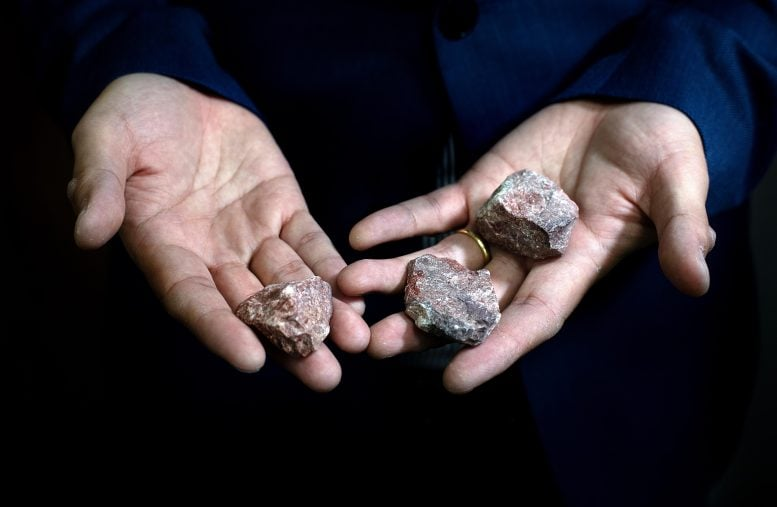
The “Dolomite Problem” – Scientists Resolve 200-Year-Old Geology Mystery
Read more: The “Dolomite Problem” – Scientists Resolve 200-Year-Old Geology MysterySciTechDaily has a story about dolomite. Researchers at the University of Michigan have published new research that solves the “Dolomite Problem”. The paper “Dissolution enables dolomite crystal growth near ambient conditions” appeared in the journal Science. Until now, scientists have been unsuccessful creating dolomite in the laboratory. Understanding this process should allow for the creation of new high tech materials. For two centuries, scientists have failed to grow a common mineral in the laboratory under the conditions believed to have formed it naturally. Now, a team of researchers from the University of Michigan and Hokkaido University in Sapporo, Japan have finally pulled it off,…
-

New research shows ‘juvenile’ T. rex fossils are a distinct species of small tyrannosaur
Read more: New research shows ‘juvenile’ T. rex fossils are a distinct species of small tyrannosaurPhys.org has an article about Nanotyrannus lancensis. A paper in the journal Fossil Studies proposes that N. lancensis is a distinct species of tyrannosaur and not a juvenile T. rex. The first skull of Nanotyrannus was found in Montana in 1942, but for decades, paleontologists have gone back and forth on whether it was a separate species, or simply a juvenile of the much larger T. rex. Dr. Nick Longrich, from the Milner Centre for Evolution at the University of Bath, and Dr. Evan Saitta, from the University of Chicago, have re-analyzed the fossils, looking at growth rings, the anatomy of…
-

Fossil Friday #194: Asterophyllites equisetiformis from Indiana
Read more: Fossil Friday #194: Asterophyllites equisetiformis from IndianaThis is the “Fossil Friday” post #194. Expect this to be a somewhat regular feature of the website. We will post any fossil pictures you send in to esconi.info@gmail.com. Please include a short description or story. Check the #FossilFriday Twitter hash tag for contributions from around the world! Today, we have a nice Asterophyllites equisetiformis from the Pennsylvanian deposits near Terre Haute, Indiana. The concretions is that area come from the Dugger Formation, which sits atop the Springfield coal member. The Dugger Formation is the uppermost formation in the Carbondale Group. The coal member of the Dugger Formation has been…
-
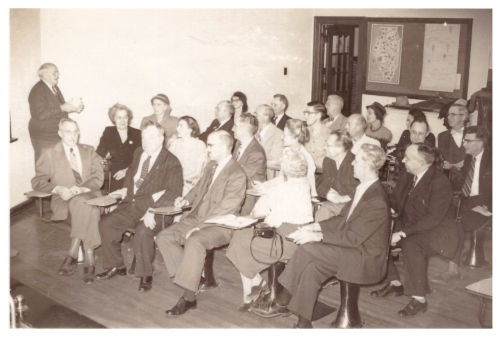
Throwback Thursday #195: Looking Back At ESCONI for January 2024
Read more: Throwback Thursday #195: Looking Back At ESCONI for January 2024This is Throwback Thursday #195. In these, we look back into the past at ESCONI specifically and Earth Science in general. If you have any contributions, (science, pictures, stories, etc …), please send them to esconi.info@gmail.com. Thanks! Geology Class 1953 at Downers Grove High School 25 Years Ago – January 1999 50 Years Ago – January 1974 70 Years Ago – January 1954
-
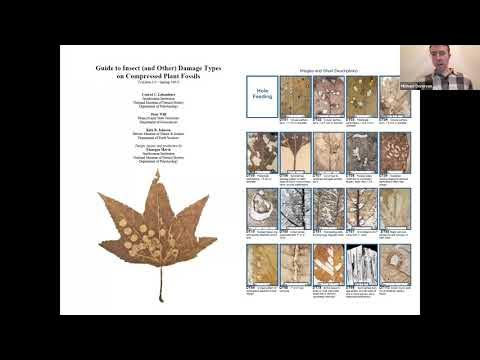
Video for ESCONI December 2023 General Meeting – “Ancient Forest Pests: Plant-Insect Interactions in the Fossil Record”
Read more: Video for ESCONI December 2023 General Meeting – “Ancient Forest Pests: Plant-Insect Interactions in the Fossil Record”The December 8, 2023 General Meeting presentation was held via Zoom. It was presented by Michael Donovan, Collections Manager, Paleobotany at the Field Museum will present “Ancient Forest Pests: Plant-Insect Interactions in the Fossil Record”. Plants and insects are the most diverse multicellular organisms on Earth, and their abundant interactions are fundamental components of ecosystems on land. Plant-feeding insects are highly sensitive to environmental disturbances, including past extinction events and climate change. In this talk, I will discuss my research examining how major environmental changes affected ancient insect and plant biodiversity and biogeography, and how those changes have shaped modern…
-

Shark Teeth from the Bond Formation in northern Illinois
Read more: Shark Teeth from the Bond Formation in northern IllinoisThe journal Kentiana has a paper about fossil shark teeth from the Bond Formation in northern Illinois. The title of the paper is “First records of the chondrichthyans Heslerodus and Ossianodus from the Upper Pennsylvanian LaSalle Limestone (Bond Formation) of northern Illinois”. Kentiana is an open access journal associated with the Center for Paleontology, the Illinois Natural History and State Geological surveys, and academic departments at the University of Illinois at Urbana-Champaign.
-

ESCONI Events January 2024
Read more: ESCONI Events January 2024Field trips require membership, but visitors are welcome at all meetings! Fri, Jan 12th ESCONI General Meeting 8:00 PM – Topic: “The Age of Fishes” by Matt Friedman, Professor/Director Museum of Paleontology, University of Michigan Department of Earth and Environmental Sciences Zoom link Sat, Jan 13th ESCONI Junior Meeting – 6:30 PM at College of DuPage – Topic: “The earth’s processes, including the rock cycle” — Canceled — Sat, Jan 20th ESCONI Paleontology Study Group 7:30 PM – Topic: “Publishing a New Fossil Find: Our Journey in Cyclocystoids (Echinodermata)” by ESCONI member Asa Kaplan and Terry Frank of Missouri Fossil…
-
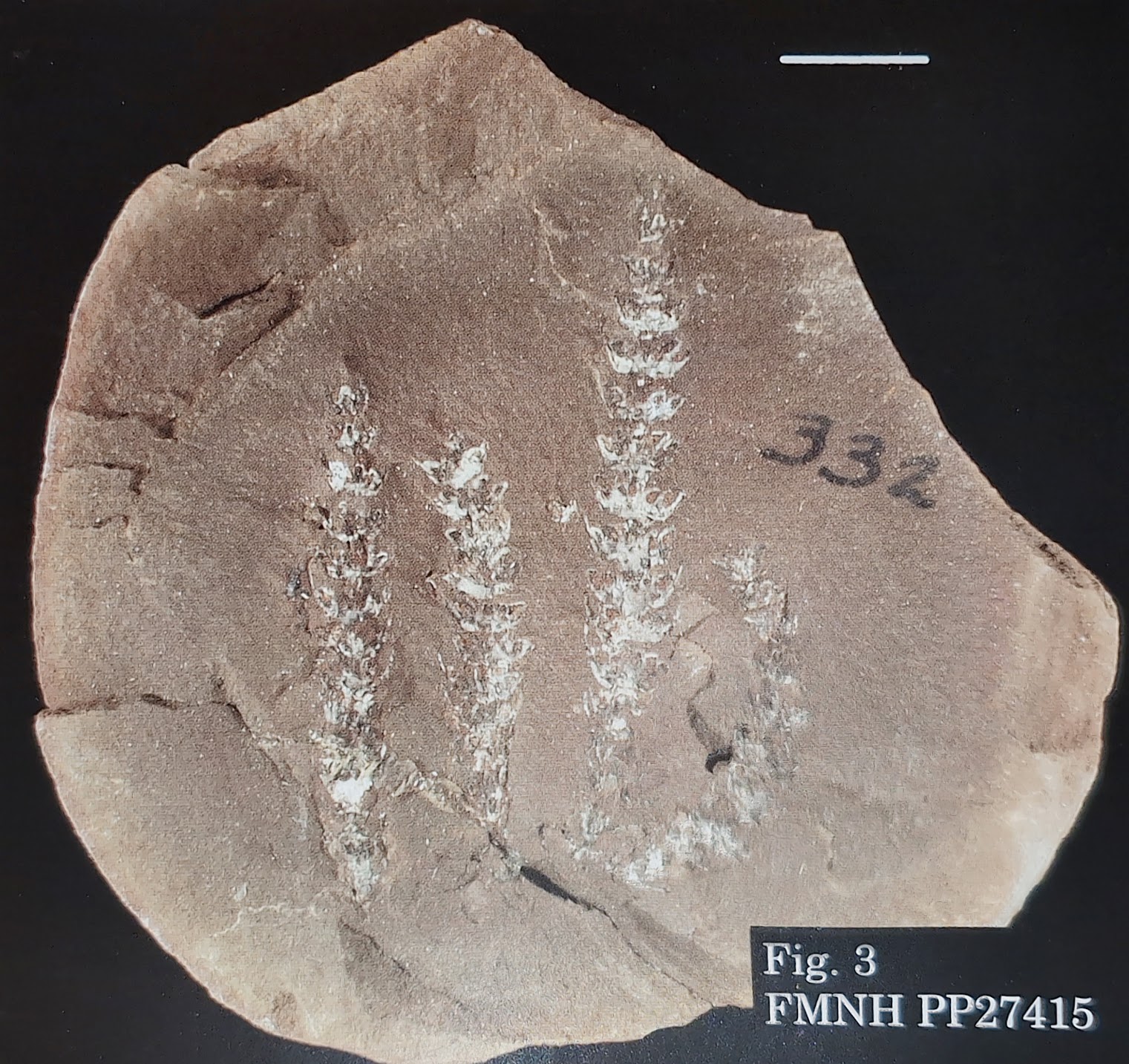
Mazon Monday #197: Palaeostachya
Read more: Mazon Monday #197: PalaeostachyaThis is Mazon Monday post #197. What’s your favorite Mazon Creek fossil? Tell us at email:esconi.info@gmail.com. Palaeostachya sp. is a cone from a Calamites plant. It is very similar to Calamostachys (Mazon Monday #99), which are also cones from Calamites. Identification between the two can be difficult as the attachment point of the sporangiophores is often obscured. The genus Palaeostachya was originally erected by Frederick Ernest Weiss (1865-1953) an Anglo-German botanist. He also described Calamostachys. While primarily a botanist, he worked extensively with coal-balls and published quite a few paleobotanical papers during his career at Owens College (later Victoria University…
-

New Herbivorous Dinosaur Species Identified in Canada
Read more: New Herbivorous Dinosaur Species Identified in CanadaSciNews has a post about a new dinosaur from Canada. Gremlin slobodorum lived about 77 million years ago during the late Cretaceous Period. It’s a leptoceratopsid, which is a hornless dinosaur related to Triceratops. The animal lived what is now southern Alberta, Canada. The dinosaur was described in “A new Late Cretaceous leptoceratopsid (Dinosauria: Ceratopsia) from the Oldman Formation (Campanian) of Alberta, Canada”, which was published in “Windows into Sauropsid and Synapsid Evolution“. These dinosaurs differed from Triceratops and other ceratopsids in lacking horns on its face and only having a small frill extending from behind its head. “Unlike the better known…
-

1.1 Billion Objects and Counting: Inside the Effort to Tally Natural History Specimens Around the Globe
Read more: 1.1 Billion Objects and Counting: Inside the Effort to Tally Natural History Specimens Around the GlobeSmithsonian Magazine has an interesting article about the effort to count the world’s museum collections. With more than 148 million specimens and objects ranging from pocket-sized shrews and glimmering crystals to petrified tree trunks and giant squid, the National Museum of Natural History holds a sprawling account of how Earth has changed over the past 4.5 billion years. According to Kirk Johnson, the museum’s Sant Director, many of these specimens help researchers forecast the planet’s uncertain future. “We’re seeing rapid change in the natural world and these collections are the only place to see certain aspects of nature,” Johnson said. Because the collections…
-

Fossil Friday #193: Dunbarella sp. From Danville
Read more: Fossil Friday #193: Dunbarella sp. From DanvilleThis is the “Fossil Friday” post #193. Expect this to be a somewhat regular feature of the website. We will post any fossil pictures you send in to esconi.info@gmail.com. Please include a short description or story. Check the #FossilFriday Twitter hash tag for contributions from around the world! I’m not sure how tasty scallops from the Pennsylvanian were…. but this plate of Dunbarella sp. from the Danville spoil pile is absolutely stunning. The Danville spoil pile exposes the Herrin No. 6 coal, which is about 2.5 million years younger (~305 million years ago) than the Colchester No. 2 coal of…
-
Throwback Thursday #194: Rockhound Terms
Read more: Throwback Thursday #194: Rockhound TermsThis is Throwback Thursday #194. In these, we look back into the past at ESCONI specifically and Earth Science in general. If you have any contributions, (science, pictures, stories, etc …), please send them to esconi.info@gmail.com. Thanks! This “Glossary of Rockhound Terms” appeared in the September 1993 newsletter. The Rocket City Rocks & Gems refers to the Huntsville Gem & Mineral Society (HGMS). The club hails from Huntsville, Alabama and is alive and well in 2023. They were founded in 1961 with 15 members. The 2023 Fall Gem, Jewelry, and Mineral show was held on October 6th-8th, 2023. Their moto…
-
Could dinosaurs be the reason humans can’t live for 200 years?
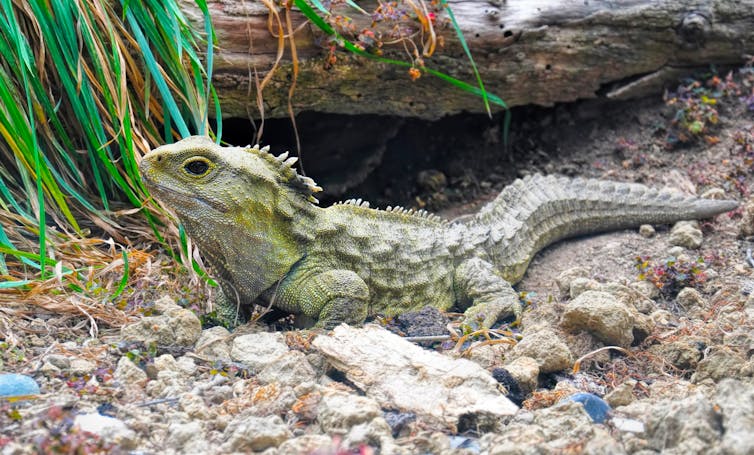
Read more: Could dinosaurs be the reason humans can’t live for 200 years?The Conversation has an interesting post about the evolution of mammals. Did being small during the time of dinosaurs lead to limitations on how long mammals live? Mollusks, reptiles, and Greenland Sharks have been found to live 100’s of years. Actually, many animals don’t age and continue to grow throughout their lifetimes. All human beings age. It is part of our biology and limits our lifespan to slightly over 120 years. Not all animals experience ageing during their lives. Some animals’ bodies do not gradually degenerate as they get older the way our bodies do. But for humans once they reach about age 30…
-

Trilobite Tuesday #48: Rare museum specimen reveals new insights into how trilobites curled themselves into a ball
Read more: Trilobite Tuesday #48: Rare museum specimen reveals new insights into how trilobites curled themselves into a ballPhys.org has a story that shed light how trilobites evolved the ability to enroll their bodies for protection against predators. A team of researchers from Harvard examined a museum specimen that had preserved sternites, where were plates that lined the stomach of trilobites. Using micro-CT scans, the researchers could see how the plates slid past one another a then lock into place. The locking mechanism provided a tight and save rollup. The whole procedure is similar to modern day animals, such as armadillos and pill bugs, that can enroll their bodies. Details can be found in the paper “Convergent evolution…
-

Mazon Monday #196: 1939 Season’s Greetings from the Langfords!
Read more: Mazon Monday #196: 1939 Season’s Greetings from the Langfords!This is Mazon Monday post #196. What’s your favorite Mazon Creek fossil? Tell us at email:esconi.info@gmail.com. George Langford, Sr. (1876-1964) was a prolific collector of Mazon Creek fossils. He collected and then sold or donated multiple collections of Mazon Creek fossils. The fossils he collected in various museums around the country including Illinois State Museum and the Denver Museum of Natural History. In 1947, he donated his bulk of his collection to the Field Museum of Natural History, then called the Chicago Natural History Museum, and joined it as curator of fossil plants. His grandson, George III, created a website…
-

Mysterious fruit found to be the oldest known fossils of the Frankincense and Myrrh family
Read more: Mysterious fruit found to be the oldest known fossils of the Frankincense and Myrrh familyPhys.org has a story about the identification of some Indian plant fossils as ancestors of the Frankincense and Myrrh family. The fossils were discovered in an Indian village in the early 1970’s. Recently. researchers at the Florida Museum of Natural History performed CT scans on these fossils. The scans revealed pyrenes. Pyrenes are woody dispersal pods that proved protection to seeds… modern day examples include the hard stones at the cores of cherries, peaches, dates, and pistachios. Only a few plant families produce pyrenes and even less arrange groups of five in the shape of a pentagram. By process of…
-

PBS Eons: Why Only Earth Has Fire
Read more: PBS Eons: Why Only Earth Has FirePBS Eons has a new episode. This one is about the evolution of our planet’s atmosphere and how life makes fire possible. To get fire, which exists only on Earth, it took billions of years of photosynthesis – which means fire can’t exist without life. And fire and life have been shaping each other ever since.
-
Fossil Friday #192: Palaeoxyris lewisi
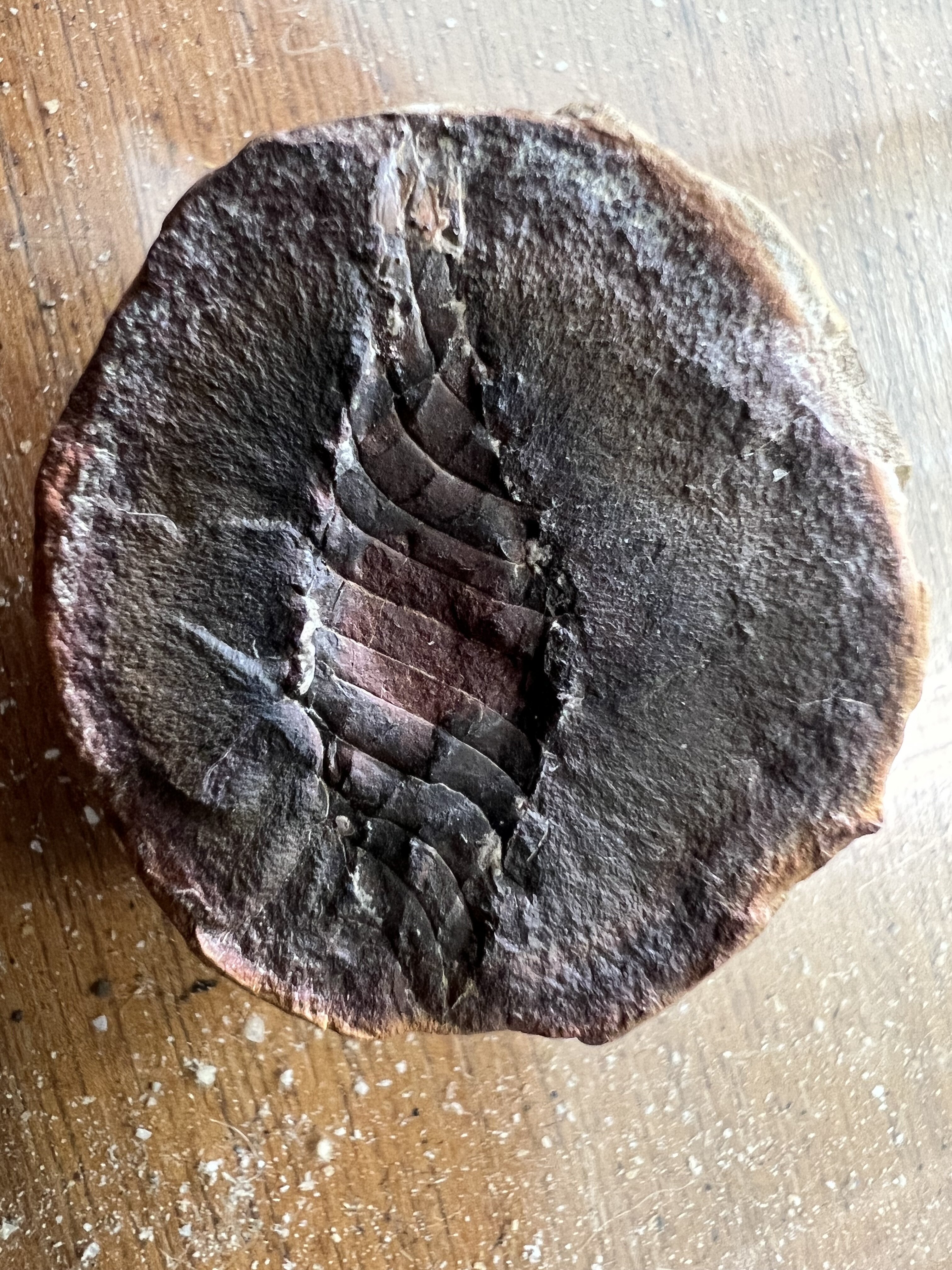
Read more: Fossil Friday #192: Palaeoxyris lewisiThis is the “Fossil Friday” post #192. Expect this to be a somewhat regular feature of the website. We will post any fossil pictures you send in to esconi.info@gmail.com. Please include a short description or story. Check the #FossilFriday Twitter hash tag for contributions from around the world! Shark egg cases are back on the menu for this week’s Fossil Friday. You might remember from earlier this week, that Mazon Monday #195 featured at a rare species of egg case – Vetacapsula cooperi. A year ago in Fossil Friday #140, we looked at some very large and detailed Palaeoxyris multiplicatum…
-
Throwback Thursday #193: Poem “Coal Age”
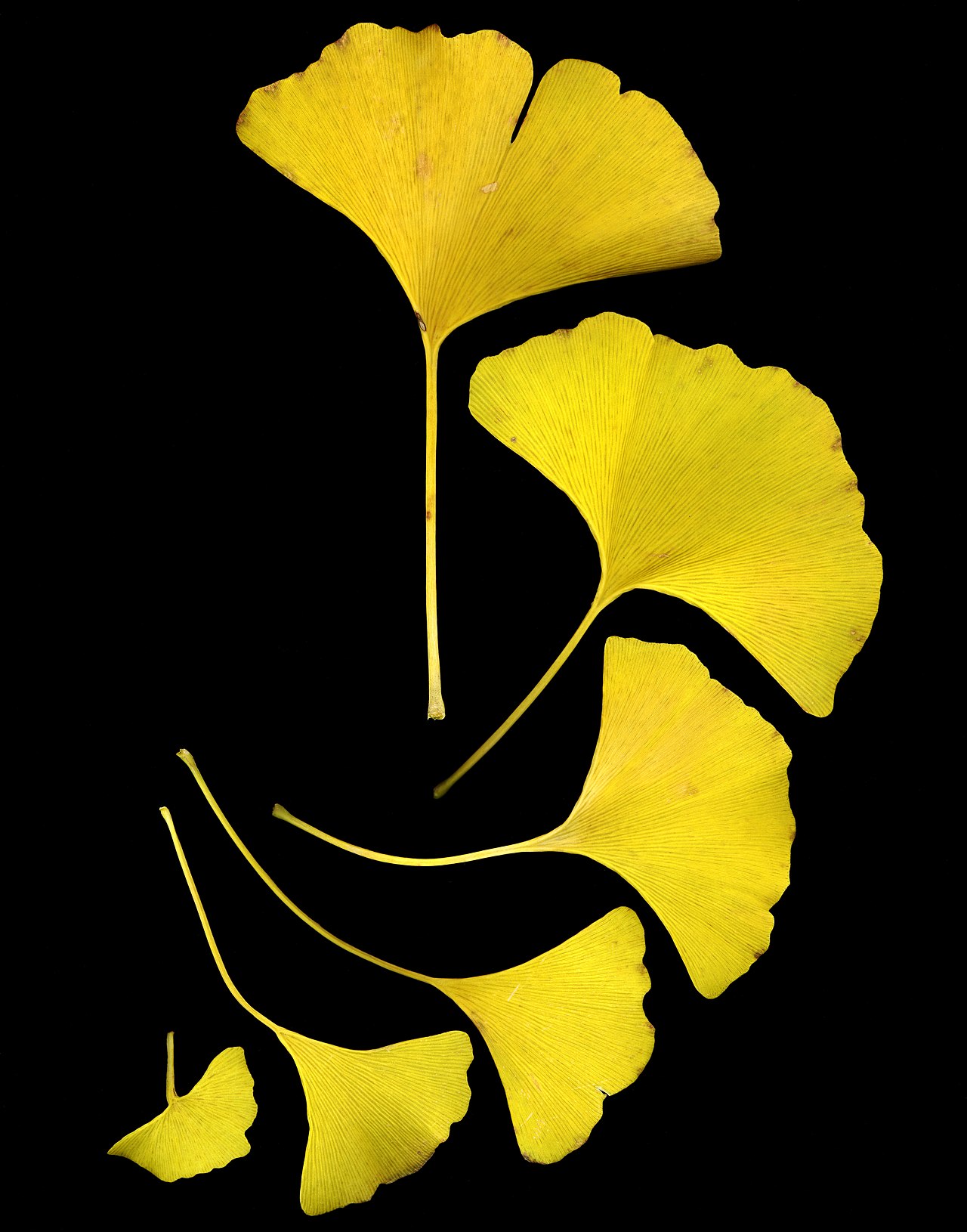
Read more: Throwback Thursday #193: Poem “Coal Age”This is Throwback Thursday #193. In these, we look back into the past at ESCONI specifically and Earth Science in general. If you have any contributions, (science, pictures, stories, etc …), please send them to esconi.info@gmail.com. Thanks! Today, we step back to a little poem called “Coal Age”, which appeared in the February 1950 edition of the newsletter. The poem is attributed to Anon., so unfortunately we don’t know who wrote it. The subject of the poem is the ginkgo tree… a truly ancient line. Ginkgo biloba is a gymnosperm. They are the last living species of the order Ginkgoales. …
-
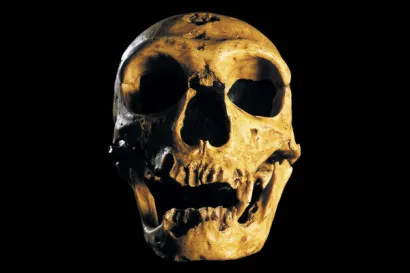
Morning Person? You Might Have Neanderthal Genes to Thank
Read more: Morning Person? You Might Have Neanderthal Genes to ThankJavier Trueba/MSF, via Science Source Carl Zimmer has an interesting article about genetics over on his Origins column at the New York Times. A recent paper in the journal Genome Biology and Evolution derails generic research that suggests some of our circadian traits might come from Neanderthal genes. Modern humans and the ancient humans that became Neanderthals diverged about 700,000 years ago, when a group of humans migrated north into Europe. Those humans later split into two groups with the Neanderthals in the west and the Denisovans in the east. About 400,000 years ago, the population split in two. The…

ESCONI Gem, Mineral, and Fossil Show
Most Recent Post
- Mazon Monday #318: Eusphenopteris neuropteroides
 Eusphenopteris neuropteroides is an extinct seed fern species that is relatively uncommon, though it is primarily known from the terrestrial deposits of Mazon Creek. It was originally described as Pseudopecopteris anceps by Leo Lesquereux, but its classification has shifted over time as its relationships to other taxa became better understood. Over the years, it has been reassigned among several genera, including Sphenopteris and Mariopteris, before being placed in its current genus.
- About ESCONI
- Around the Web
- Calendar of Events
- Code of Ethics and Conduct
- ESCONI Books for Sale
- ESCONI Gem, Mineral, and Fossil Show
- ESCONI in the News
- ESCONI Videos
- Field Trips
- Flashback Friday
- Fossil Friday
- Mazon Creek
- Mazon Monday
- Member Spotlight
- Membership Information
- Reference Material
- Throwback Thursday
- Trilobite Tuesday
Field trips require membership, but visitors are welcome at all meetings!
| Friday, April 10th | General Meeting – 8:00 PM via Zoom. Jessica Hull will present “Life in the Devonian Period, The Age of Fishes.” |
| Saturday, April 11th | Junior Study Group Meeting – 2:00 PM, in person at the College of DuPage Technical Education Center (TEC) Building – Room 1038A (Map). Katherine Howard will present on Sand and Sediment Collecting. Specifics of this meeting are available from Scott Galloway, 630-670-2591, gallowayscottf@gmail.com. |
| Saturday, April 18th | Paleontology Study Group – 7:30 PM via Zoom and in person at the College of DuPage, TEC, Room 1038B (Map). Keith Robitschek will present “Digging the Marl of the Lance Formation.” |
| Friday, April 24th | MAPS Expo XLVII – Springfield, IL. |
| Saturday, April 25th | MAPS Expo XLVII – Springfield, IL. |
| Sunday, April 26th | MAPS Expo XLVII – Springfield, IL. |
| No meeting this month | Mineralogy Study Group |