
-

ESCONI Field Trip to Braceville, IL for Mazon Creek Fossils – Saturday, May 4th and Sunday May 5th, 2024
Read more: ESCONI Field Trip to Braceville, IL for Mazon Creek Fossils – Saturday, May 4th and Sunday May 5th, 2024Both days are full! We do have a waiting list. Braceville Field Trip RulesMay 2024 The ESCONI field trips to Braceville for Mazon Creek fossils are set for May 4 and 5, 2024 from 9 AM to 3 PM. You can attend one or the other, but not both days. There is an attendance limit of 50 people each day. You must register to go on this trip. See rule 6 below for instructions. This is the only way to register. If you are sick, have any symptoms of Covid-19 or have recently tested positive, DO NOT COME. Meet at…
-

Throwback Thursday #208: Looking Back At ESCONI For April 2024
Read more: Throwback Thursday #208: Looking Back At ESCONI For April 2024This is Throwback Thursday #208. In these, we look back into the past at ESCONI specifically and Earth Science in general. If you have any contributions, (science, pictures, stories, etc …), please send them to esconi.info@gmail.com. Thanks! 25 Years Ago – April 1999 50 Years Ago – April 1974 70 Years Ago – April 1954
-
The Eclipse Was So Nice, They’re Doing It Twice
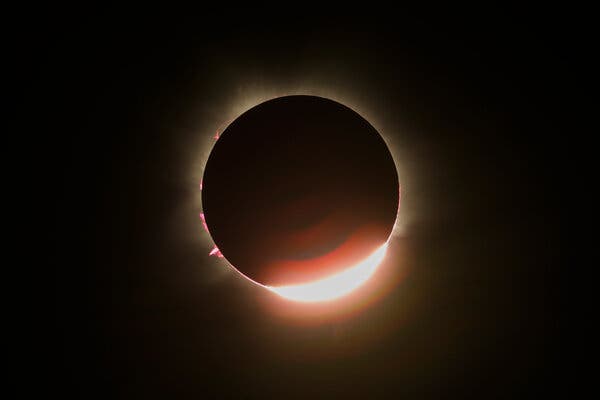
Read more: The Eclipse Was So Nice, They’re Doing It TwiceUnless you’ve been living under a rock or perhaps in a cave, you’re probably heard about the upcoming total solar eclipse on April 8th, 2024. The New York Times has a nice and informative story about the event. Here is the Chicagoland area, we are at around the 90% band. That’s pretty significant. Hopefully, the weather will work out and we’ll have a nice view. Be safe and use eclipse glasses to protect your eyesight! That started to change as August 2017 got closer. Carbondale, which planned for that eclipse for three years, welcomed around 14,000 people. Clouds obstructed much…
-

Courtship cut short for termites trapped in 38 million-year-old amber fossil
Read more: Courtship cut short for termites trapped in 38 million-year-old amber fossilLiveScience has a story about insect fossils in amber. Discovered in a Russian mine, two mating termites in amber preserves behavior that is rarely seen in the fossil record. The amber dates to the Eocene about 38 million years ago. The fossil was purchased by A Czech scientist in an online fossil shop. The specimen was described in the journal PNAS. In this case, the fossil was Eocene Baltic amber from a mine in Yantarny, Kaliningrad, which is part of Russia. Bubbles in the amber obscured the posterior part of the termites’ abdomens, so the team used a 3D imaging…
-
Mazon Monday #210: Alethopteris gibsonii
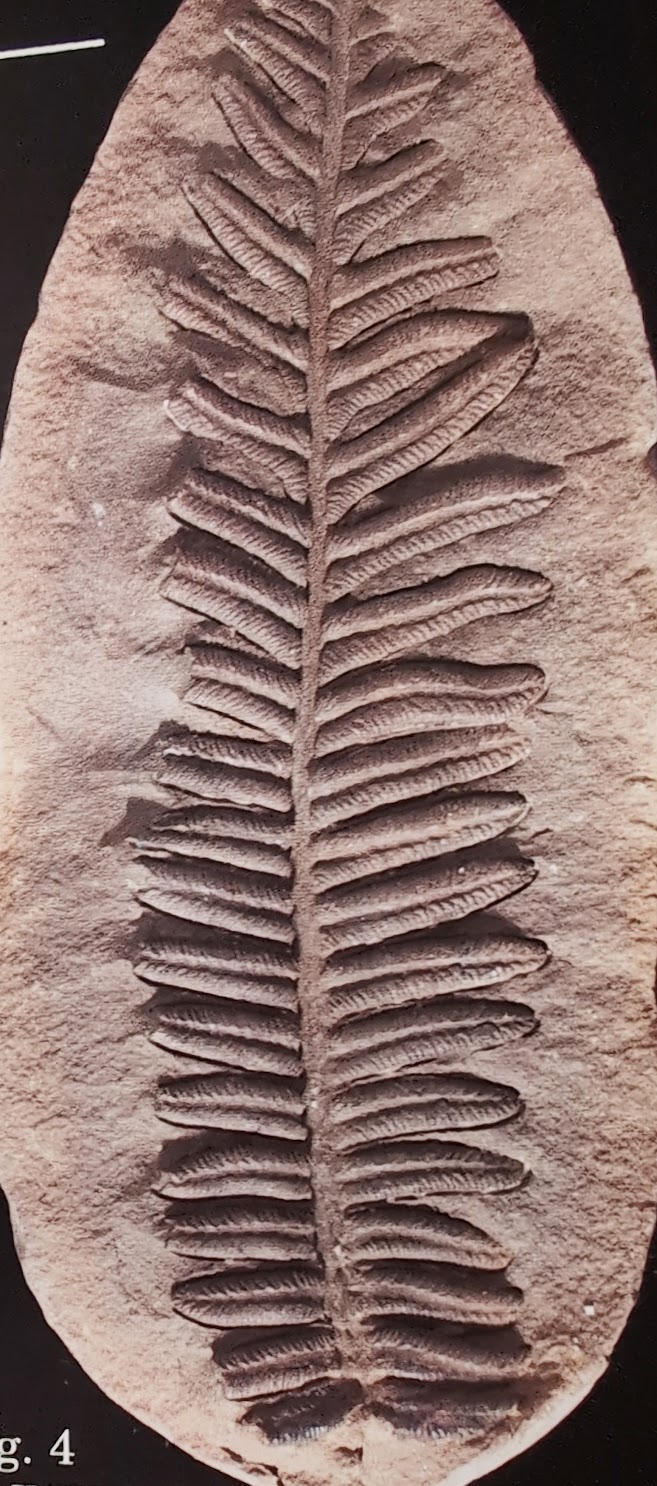
Read more: Mazon Monday #210: Alethopteris gibsoniiThis is Mazon Monday post #210. What’s your favorite Mazon Creek fossil? Tell us at email:esconi.info@gmail.com. Alethopteris gibbsonii is an extinct seed-fern from the Pennsylvanian Period. It is not as common as its sister taxa Alethopteris serlii and Alethopteris sullivantii. It was named by Leo Lesquereux (1806-1889) in 1870. Lesquereux was a Swiss-born bryologist and a pioneer of American paleobotany. Lesquereux is credited with naming the Mazon Creek fossil deposit in his 1870 report “Report on the Fossil Plants of Illinois”, where he referred to the Mazon River as Mazon Creek. “Mazon Creek” appears 104 times in the report, while “Mazon…
-

ESCONI Events April 2024
Read more: ESCONI Events April 2024Field trips require membership, but visitors are welcome at all meetings! Fri, Apr 12th ESCONI General Meeting 8:00 PM – Topic: “Ice age mammals from the frozen North” by Yukon Paleontologist Grant Zazula Zoom link Sat, Apr 13th ESCONI Junior Meeting – 6:30 PM at College of DuPage – Topic: Mazon Creek fauna (animals) Specifics of this meeting are available from Scott Galloway, 630-670-2591, gallowayscottf@gmail.com. The meeting will be in person at the College of DuPage Tech Ed (TEC) Building, Room 1038A (Map). Sat, Apr 20th ESCONI Paleontology Study Group 7:30 PM – Topic: “Terror Birds” by ESCONI member John Catalani…
-
A Swimming Dinosaur? Maybe Not, Study Says
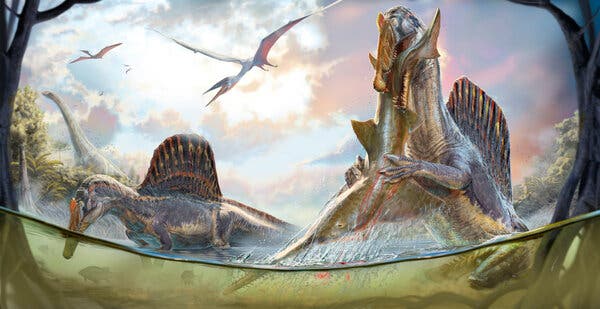
Read more: A Swimming Dinosaur? Maybe Not, Study SaysThe New York Times has an interesting article about Spinosaurus. Was Spinosaurus a swimming dinosaur? That question is controversial in the world of dinosaur paleontologists. A new paper recently published in the journal Nature extends the discussion. The new research led by Nathan Myhrvold, a former chief technology officer at Microsoft and an amateur paleontologist and Paul Sereno, a paleontologist at the University of Chicago addresses previous research that found dense bones predicted which animals lived their life in water. Spinosaurus has very dense bones. In 2022, researchers led by Matteo Fabbri, now a postdoctoral researcher at the University of Chicago,…
-

PBS Eons: How Long Have We Been Caring For Each Other?
Read more: PBS Eons: How Long Have We Been Caring For Each Other?PBS Eons has another interesting video. This one is about the development of medical care. When did practicing medicine – in its varied, complex forms (from sharing medicinal plants to the earliest surgeries) – become something that we actually started doing? While it’s a hard question to answer, it’s possible that our tendency to heal one another might have been with us for even longer than we’ve been human.
-
Fossil Friday #206: Cyclus americanus
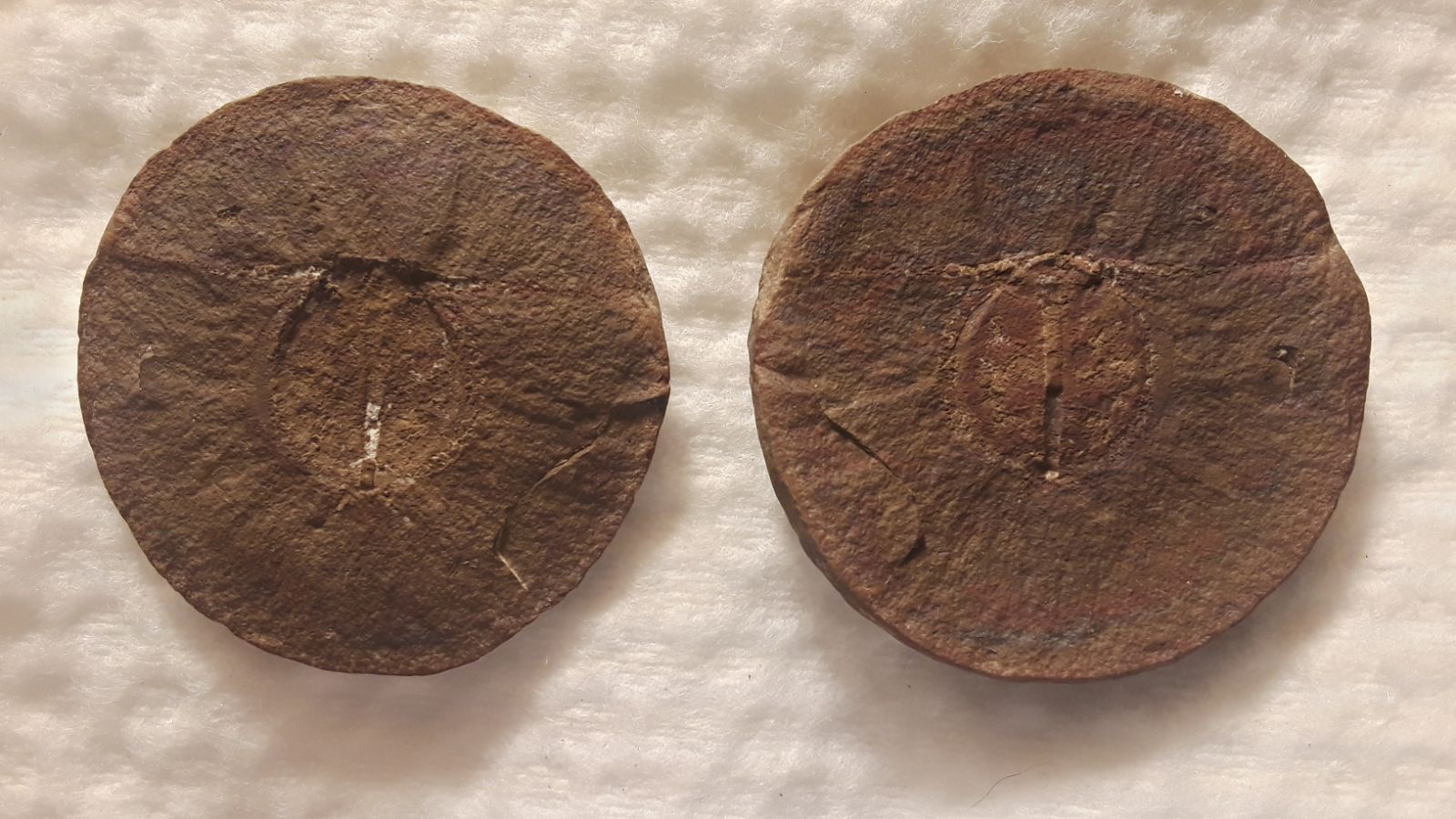
Read more: Fossil Friday #206: Cyclus americanusThis is the “Fossil Friday” post #206. Expect this to be a somewhat regular feature of the website. We will post any fossil pictures you send in to esconi.info@gmail.com. Please include a short description or story. Check the #FossilFriday Twitter hash tag for contributions from around the world! We have a large well-preserved Cyclus americanus from Mazon Creek for our Fossil Friday post this week. It’s one of my favorites. Cycloids are an extinct order of arthropods that lived from the Carboniferous to the Cretaceous periods. The genus Cyclus was originally described as a trilobite by John Phillips in 1836. …
-

Throwback Thursday #207: Diamonds and Gold Poem
Read more: Throwback Thursday #207: Diamonds and Gold PoemThis is Throwback Thursday #207. In these, we look back into the past at ESCONI specifically and Earth Science in general. If you have any contributions, (science, pictures, stories, etc …), please send them to esconi.info@gmail.com. Thanks! For this week, we have poem entitled “Diamonds and Gold” from the March 1971 newsletter. The poem comes from Elizabeth Martin — Rocky News, via Cedar Valley Gems. Cedar Valley might be a reference to Cedar Valley in Iowa. There is a club called the Cedar Valley Rocks & Minerals Society…. maybe related. Diamonds and Gold Some people search for diamondsSome people search…
-

Trip Full: ESCONI Field Trip to Danville Shale Pile Fossils – Saturday, April 27th, 2024
Read more: Trip Full: ESCONI Field Trip to Danville Shale Pile Fossils – Saturday, April 27th, 2024This trip is now full. Danville Field Trip Rules for April 27, 2024 An ESCONI field trip to the Danville Shale Pile for Pennsylvanian fossils is scheduled for April 27, 2024 starting at 10 AM. This is on private property and there is an attendance limit of 25 people. The gate will be secured once we are in and locked when we leave. Plan on being off the hill at 3 PM to give time for specimen identification and pictures. You must register to go on this trip. See rule 6 below for instructions. This is the only way to…
-
390 million-year-old fossilized forest is the oldest ever discovered
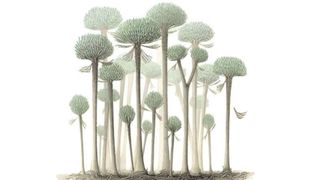
Read more: 390 million-year-old fossilized forest is the oldest ever discoveredLiveScience has a story about the discovery of a very old fossil forest. Found in southwestern England, this ancient forest dates to around 390 million years ago, during the Devonian Period. That makes it the oldest known fossil forest, about 4 million years older than the Gilboa fossil forest in New York. A description of the find was published in the Journal of the Geological Society. “Why it’s important — broadly — is it ticks the boxes of being the oldest fossil forest,” Davies, a professor in the Department of Earth Sciences at the University of Cambridge in the U.K., told…
-
Mazon Monday #209: Walter’s Spider
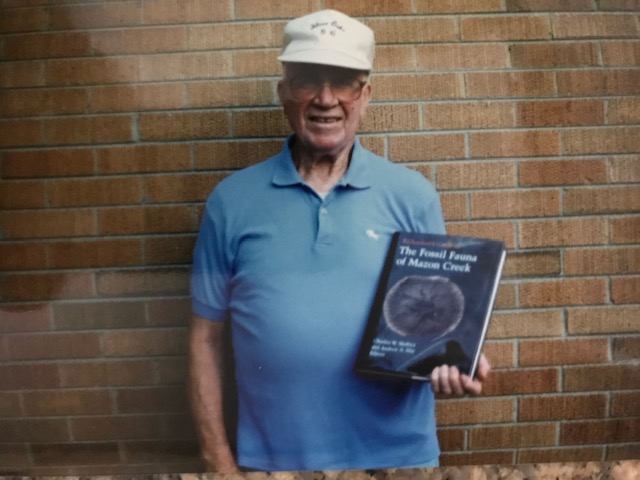
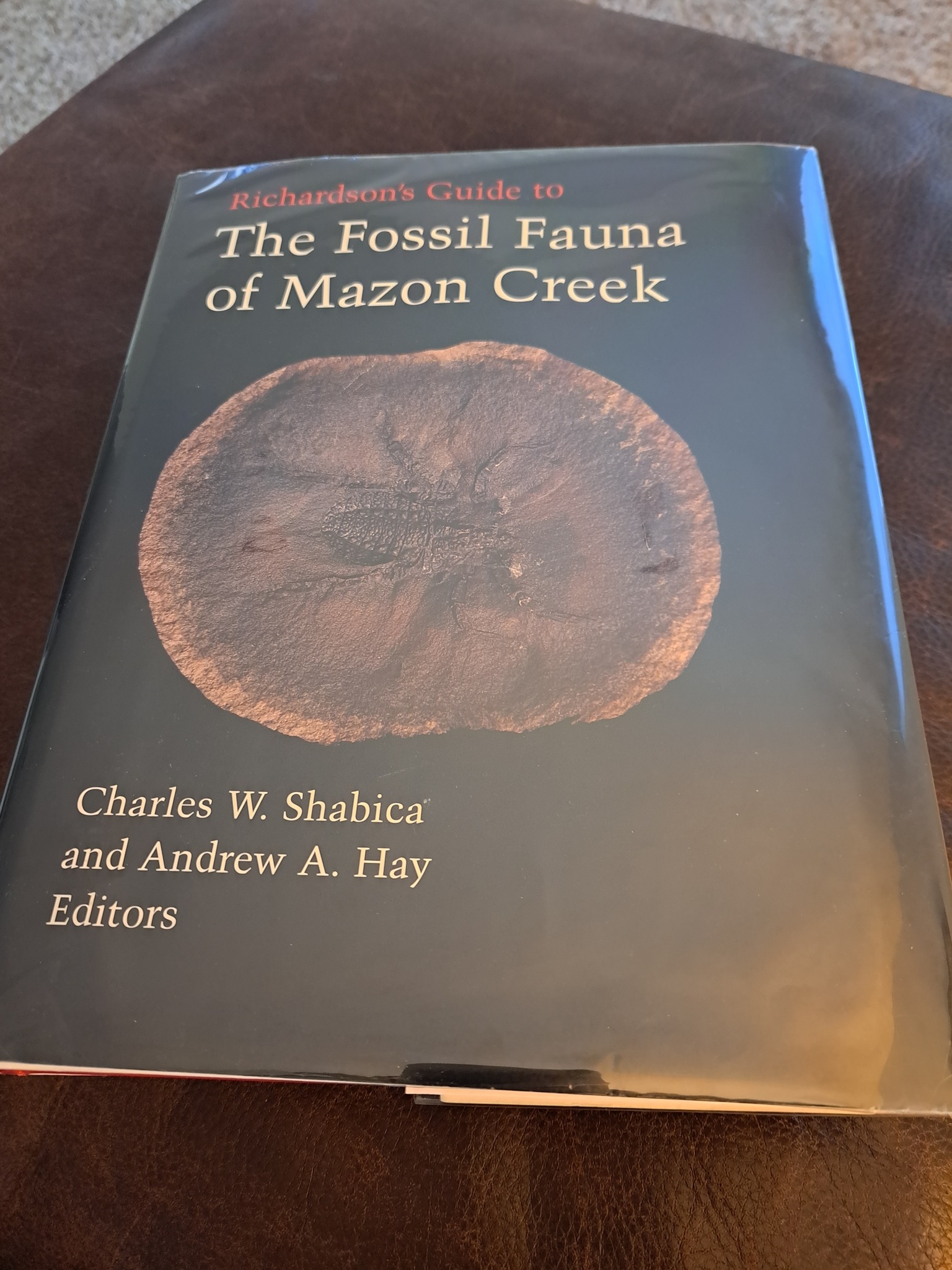
Read more: Mazon Monday #209: Walter’s SpiderThis is Mazon Monday post #209. What’s your favorite Mazon Creek fossil? Tell us at email:esconi.info@gmail.com. Today, we have another post about the “Richardson’s Guide to the Fossil Fauna of Mazon Creek”. This one addresses the amazing spider on the book’s jacket. That beautiful specimen was generously donated to the Mazon Creek Project by Rita and Walter Lietz. The fossil was referred to as “Walter’s Spider” for many years by their friends and fellow collectors. Both Rita and Walter were very generous with their fossils. They made numerous donations to the Mazon Creek Project and other academic institutions and were…
-

Newly Discovered Fossil from the Smithsonian’s Collection Named After Kermit the Frog
Read more: Newly Discovered Fossil from the Smithsonian’s Collection Named After Kermit the FrogSmithsonian Magazine has an article about a new species named for the Muppet character Kermit the Frog. Kermitops gratus lived during the early Permian in what is now Texas, about 280 million years ago. The paper’s authors Calvin So, Arjan Mann, and Jason Pardo describe the new species as a pro-amphibian. The skull fossil was part of a large collection found during an expedition in 1984, which was led by Smithsonian paleontologist Nicholas Hotton. The paper was published in the Zoological Journal of the Linnean Society. Kermitops was originally collected in 1984 during an expedition in Texas by Smithsonian paleontologist Nicholas…
-
PBS Eons: How Snake Venom Sparked An Evolutionary Arms Race
Read more: PBS Eons: How Snake Venom Sparked An Evolutionary Arms RacePBS Eons has a new episode over on Youtube. This one is about the co-evolution of venomous snakes and the rest of the animal kingdom. For some, the rise and spread of venomous elapids was just another challenge to adapt to. For others, it was a catastrophe of almost apocalyptic proportions. And we humans are no exception, because it seems that when elapids slithered onto the ecological scene, not even our ancestors were safe…
-
Fossil Friday #205: Bifurcated Asterophylites from Indiana
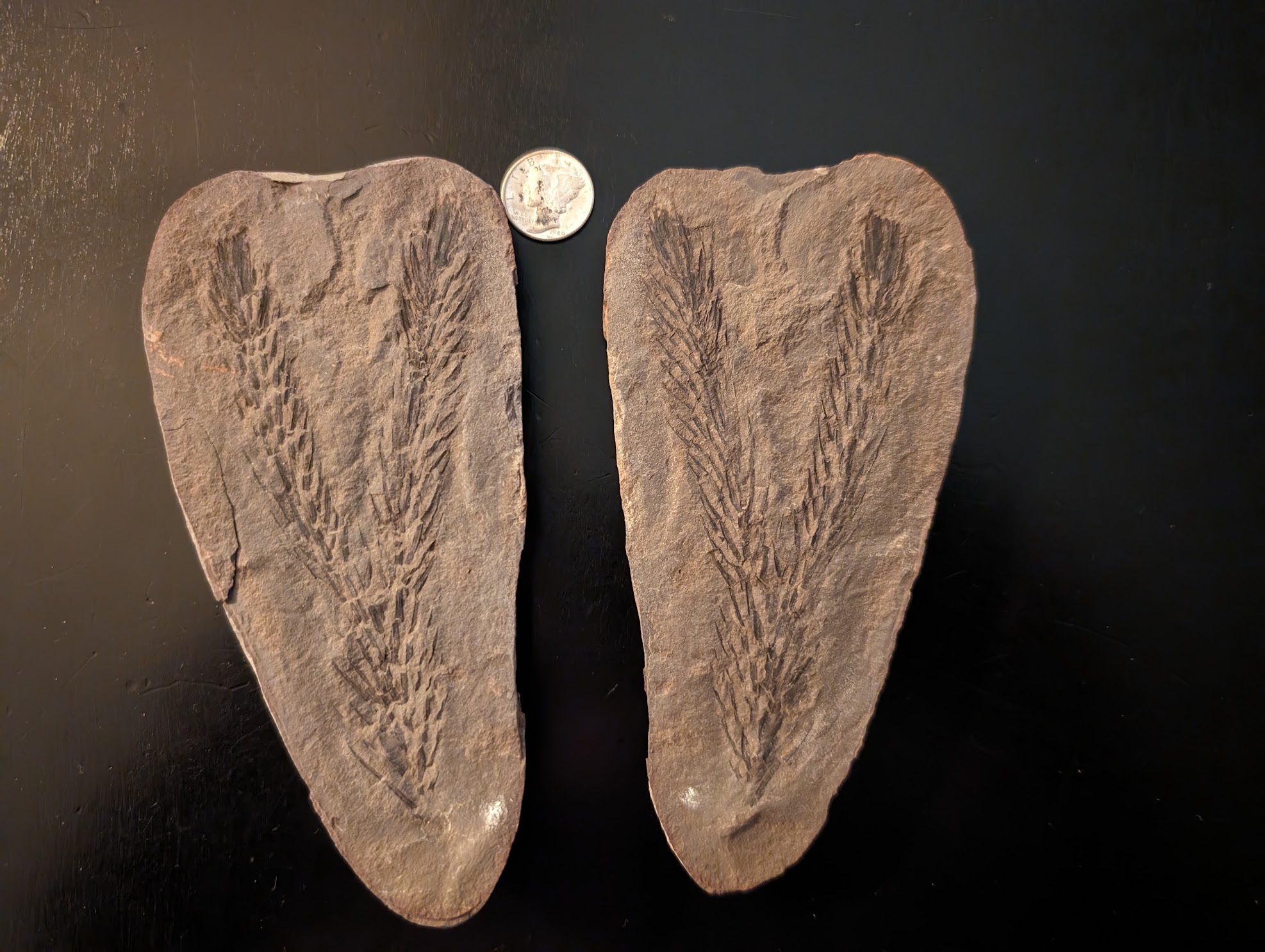
Read more: Fossil Friday #205: Bifurcated Asterophylites from IndianaThis is the “Fossil Friday” post #205. Expect this to be a somewhat regular feature of the website. We will post any fossil pictures you send in to esconi.info@gmail.com. Please include a short description or story. Check the #FossilFriday Twitter hash tag for contributions from around the world! —————————————————– Asterophyllites equisetiformis is a part of the Calamites plant (to learn more see Mazon Monday #103). An extinct species of horsetail that lived during the Pennsylvanian Period. A. equisetiformis is the terminal end of the Calamites foliage. Our Fossil Friday specimen was found in the fossil deposits near Terre Haute, Indiana,…
-

Throwback Thursday #206: Field Museum’s Apatosaurus
Read more: Throwback Thursday #206: Field Museum’s ApatosaurusThis is Throwback Thursday #206. In these, we look back into the past at ESCONI specifically and Earth Science in general. If you have any contributions, (science, pictures, stories, etc …), please send them to esconi.info@gmail.com. Thanks! If you visit the Field Museum of Natural History in Chicago, chances are you’ll venture up to the Evolving Planet exhibit. A large Apatosaurus skeleton stands tall in Dinosaur Hall. The bones (or at least the back half) were discovered near Fruita, Colorado in 1901 by Elmer Riggs (1869-1963). Riggs was the Field Museum’s “dinosaur hunter” from 1898 until the 1930’s. He discovered…
-
New Spinosaurid Dinosaur Species Identified in Spain
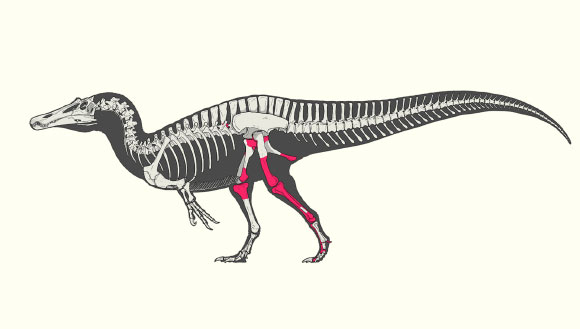
Read more: New Spinosaurid Dinosaur Species Identified in SpainSciNews has a story about the discovery of a new dinosaur species. Riojavenatrix lacustris, a spinosaur, was discovered in Spain. It lived about 120 million years ago during the Cretaceous Period. The animal was 7-8 meters long and weight about 1.5 tons. R. lacustris was found by paleontologist Erik Isasmendi and his colleagues at the University of the Basque Country. The description was published in a paper in the journal Zoological Journal of the Linnean Society. The fossilized bones from Riojavenatrix lacustris were collected from the Enciso Group of the Cameros Basin in La Rioja, Spain. “Along with Riojavenatrix lacustris, five spinosaurids have…
-
2024 ESCONI Gem, Mineral, and Fossil Show – Wrap Up!
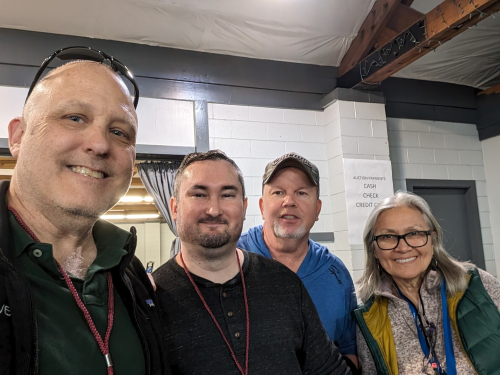
Read more: 2024 ESCONI Gem, Mineral, and Fossil Show – Wrap Up!Here are a few scenes from Sunday, day 2…. Well that’s a wrap on the 2024 ESCONI Gem, Mineral, and Fossil Show! We had an awesome weekend and hope you made it out and had a good time too! Here are a few scenes from Sunday, day 2…. Friendly faces all weekend… Ralph showing off the color in a piece of calcite The last auction… a nice piece of fluorite! Cracking Geodes! Rich and Peggy Rock of Rock’s Rocks relaxing for a few minutes towards the end of the show… Southwest Treasures is a annual favorite at our show Grab…
-
Mazon Monday #208: A Very Special Book
Read more: Mazon Monday #208: A Very Special BookThis is Mazon Monday post #208. What’s your favorite Mazon Creek fossil? Tell us at email:esconi.info@gmail.com. —————————————————– We ran across another great post over on Facebook by Steve Pavelsky in the “Illinois Mazon Creek, and Carboniferous Fossils of the World” group. If you’re on Facebook and a fan of Mazon Creek, this is one of a couple fun and interesting groups to follow. We’ll let Steve tell his story… Here’s a strange coincidence and one of the things I often enjoy about falling down rabbit holes when researching random stuff on FB groups….. Back in late January when researching a…

ESCONI Gem, Mineral, and Fossil Show
Most Recent Post
- Early Triassic Cyclidan Crustacean Had Powerful Jaws
 Sci-News has an article about a distinctive, but enigmatic, group of arthropods called Cyclidans. Cyclidans appeared during the Carboniferous and hung around until the Late Cretaceous.
- About ESCONI
- Around the Web
- Calendar of Events
- Code of Ethics and Conduct
- ESCONI Books for Sale
- ESCONI Gem, Mineral, and Fossil Show
- ESCONI in the News
- ESCONI Videos
- Field Trips
- Flashback Friday
- Fossil Friday
- Mazon Creek
- Mazon Monday
- Member Spotlight
- Membership Information
- Reference Material
- Throwback Thursday
- Trilobite Tuesday
Field trips require membership, but visitors are welcome at all meetings!
| Friday, April 10th | General Meeting – 8:00 PM via Zoom. Jessica Hull will present “Life in the Devonian Period, The Age of Fishes.” |
| Saturday, April 11th | Junior Study Group Meeting – 2:00 PM, in person at the College of DuPage Technical Education Center (TEC) Building – Room 1038A (Map). Katherine Howard will present on Sand and Sediment Collecting. Specifics of this meeting are available from Scott Galloway, 630-670-2591, gallowayscottf@gmail.com. |
| Saturday, April 18th | Paleontology Study Group – 7:30 PM via Zoom and in person at the College of DuPage, TEC, Room 1038B (Map). Keith Robitschek will present “Digging the Marl of the Lance Formation.” |
| Friday, April 24th | MAPS Expo XLVII – Springfield, IL. |
| Saturday, April 25th | MAPS Expo XLVII – Springfield, IL. |
| Sunday, April 26th | MAPS Expo XLVII – Springfield, IL. |
| No meeting this month | Mineralogy Study Group |