
-
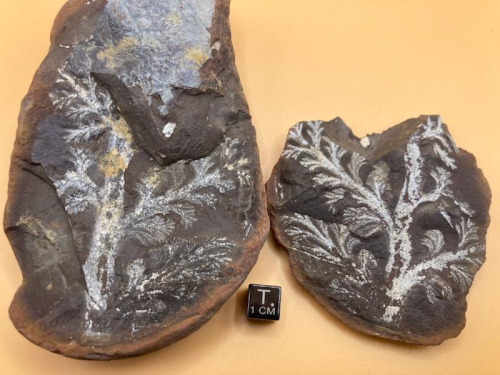
Mazon Monday #266: Rhacophyllum cornutum
Read more: Mazon Monday #266: Rhacophyllum cornutumThis is Mazon Monday post #266. What’s your favorite Mazon Creek fossil? Tell us at email:esconi.info@gmail.com. Rhacophyllum cornutum was described by Leo Lesquereux in 1879. Lesquereux was a Swiss-born bryologist and a pioneer of American paleobotany. Lesquereux is credited with naming the Mazon Creek fossil deposit in his 1870 report “Report on the Fossil Plants of Illinois”. R. cornutum is relatively rare plant species in the Mazon Creek fossil biota, although it is known from various other Pennsylvanian Period fossil locations in North America and Europe. It is characterized by it’s “Y” shaped stalks and rounded, blunt lobes at the…
-

Jurassic Sea Monster Resurfaces: Rare Fossil Unveils Secrets of Plesiosaur Evolution
Read more: Jurassic Sea Monster Resurfaces: Rare Fossil Unveils Secrets of Plesiosaur EvolutionSciTechDaily has a story about the discovery of a new plesiosaur in Gernany. The fossil specimen is a remarkably preserved Plesiopterys wildi from Holzmaden’s Posidonienschiefer Formation. It sheds light on the diversity of plesiosaurs during the early Jurassic Period about 180 million years ago. The research was published in the journal PeerJ Life and Environment. Discovered in the Lower Jurassic Posidonienschiefer Formation near Holzmaden, the fossil, designated MH 7, is one of the most complete articulated plesiosaur skeletons ever found in the area. While ichthyosaurs and marine crocodile relatives are more commonly uncovered in this formation, plesiosaurs are much rarer.…
-

Video for ESCONI Paleontology Meeting April 2025 – “A New Cincinnatian Crinoid Species: Discovery, Research, Publication and Working with the Pros”
Read more: Video for ESCONI Paleontology Meeting April 2025 – “A New Cincinnatian Crinoid Species: Discovery, Research, Publication and Working with the Pros”The April 2025 Paleontology Group Meeting was held on April 19th, 2025. It was a Zoom presentation by Jack Kallmeyer titled “A New Cincinnatian Crinoid Species: Discovery, Research, Publication and Working with the Pros”. Jack’s program will not be a tedious review of the features of the new species of crinoid that he discovered. Rather, he will weave through the fascinating and sometimes humorous narrative that was years in development. It will feature the many people who influenced him or assisted along the way and, of course, the significant features that make this crinoid unique. In doing so, he will…
-
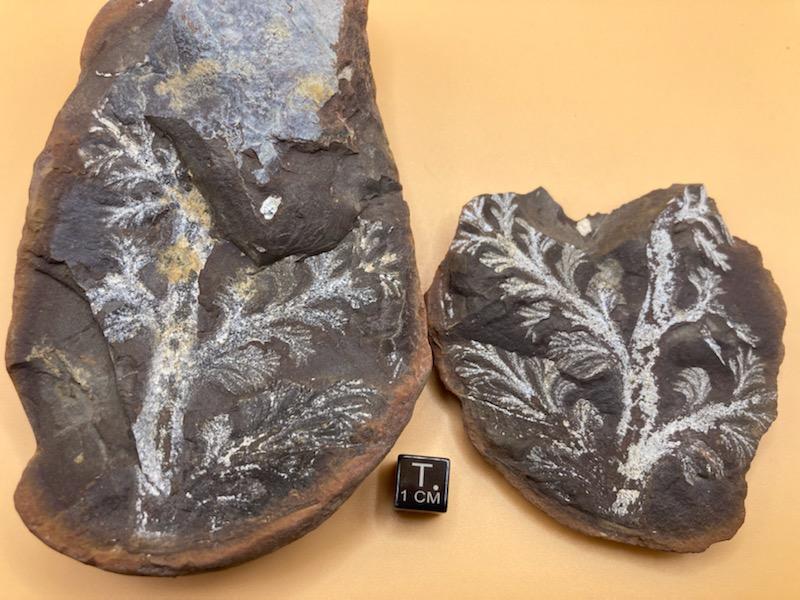
Fossil Friday #262: Rhacophyllum cornutum
Read more: Fossil Friday #262: Rhacophyllum cornutumThis is the “Fossil Friday” post #262. Expect this to be a somewhat regular feature of the website. We will post any fossil pictures you send in to esconi.info@gmail.com. Please include a short description or story. Check the #FossilFriday Twitter hash tag for contributions from around the world! —————————————————– Rhacophyllum cornutum is a rare Mazon Creek plant. It was described in 1866 by Leo Lesquereux. The classification is problematic. It has been found in fossil deposits across Illinois, Missouri, Indiana, Pennsylvanian, and New Hampshire. For more information about Rhacophyllum in general, see Mazon Monday #170. Long-time member Ralph Jewell shared…
-

Throwback Thursday #262: Time for Spring Cleaning at the Field Museum
Read more: Throwback Thursday #262: Time for Spring Cleaning at the Field MuseumThis is Throwback Thursday #262. In these, we look back into the past at ESCONI specifically and Earth Science in general. If you have any contributions, (science, pictures, stories, etc …), please send them to esconi.info@gmail.com. Thanks! The Field Museum had a recent post about Spring Cleaning over on LinkedIn. 🪶 Feather dusting Akeley’s Fighting Elephants, 1940s 🦷 Doing Daspletosaurus dental work, 1950s 🪥 Touching up Tsavo Lions, 1980s🧹 Polishing the penguin and puffin case, 1990s
-

Video for ESCONI General Meeting April 2025 – “Geological Framework of Indiana”
Read more: Video for ESCONI General Meeting April 2025 – “Geological Framework of Indiana”The April 2025 General Meeting was held via Zoom on April 11th, 2025. Our speaker was Todd Thompson. Todd is the Director and State Geologist of Indiana. His presentation will give an overview of the geology of Indiana, focusing on structures, stratigraphy, and paleogeography through time.
-
MAPS EXPO 2025 – May 9th-11th, 2025 in Springfield, IL
Read more: MAPS EXPO 2025 – May 9th-11th, 2025 in Springfield, ILEXPO 2025 May 9th-11th, 2025 Hours: 9am-5pm Fri, 8am-5pm Sat, 8am-3pm Sun The Orr Building on the Illinois State Fairgrounds in Springfield, IL. The theme for the EXPO Digest 2025 is Extinctions Download 2025 Flier EXPO 2025 Informational Newsletter
-
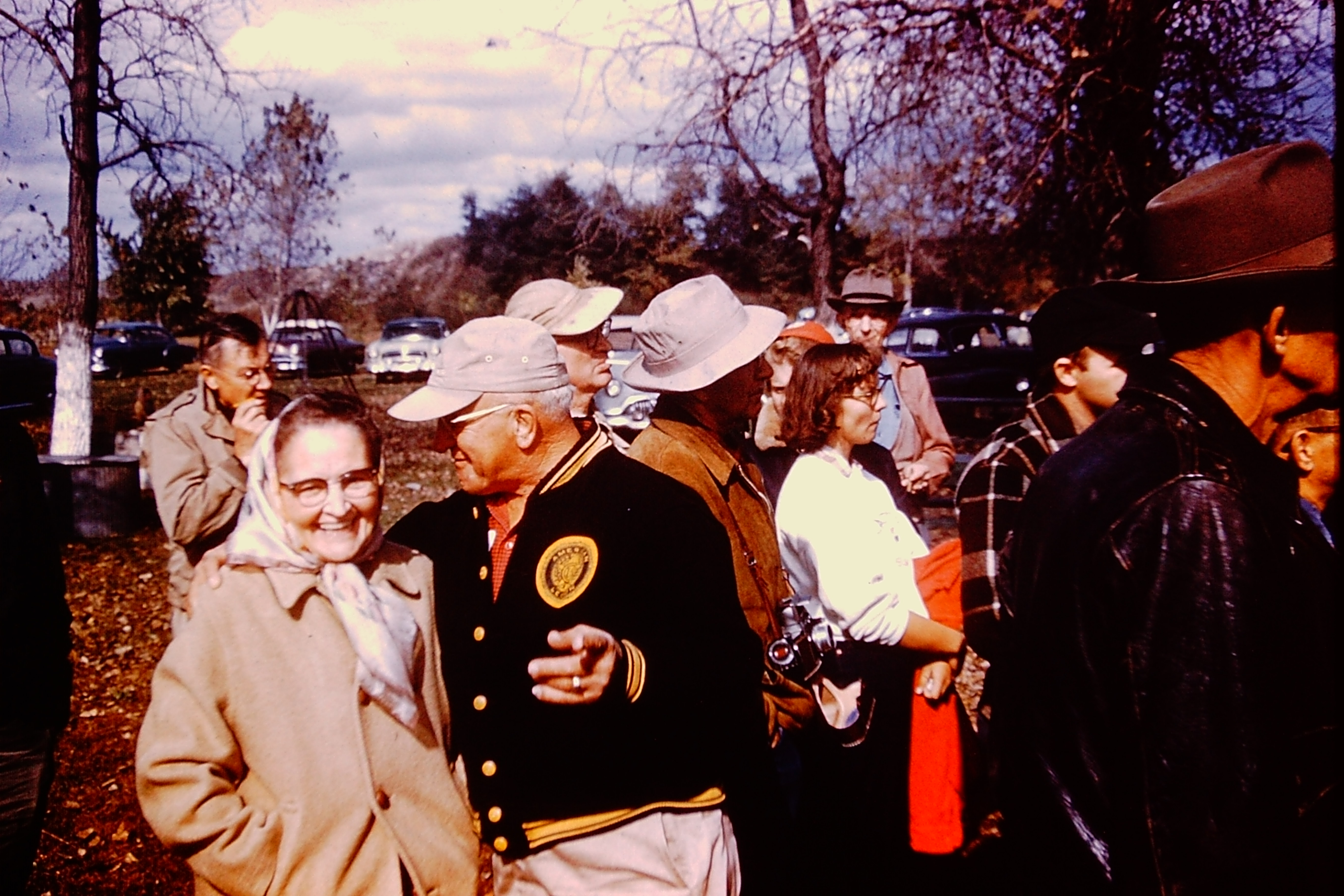
Mazon Monday #265: Historic Collectors – John and Lucy McLuckie
Read more: Mazon Monday #265: Historic Collectors – John and Lucy McLuckieThis is Mazon Monday post #265. What’s your favorite Mazon Creek fossil? Tell us at email:esconi.info@gmail.com. John McLuckie, a prominent figure in the history of Mazon Creek fossil collecting and an early member of ESCONI, was well known—along with his wife Lucy—for their extraordinary fossil collection. The two are pictured together on the left in the photo above. The photo was taken at the 1959 All-Clubs trip to Braidwood. During the 1950s and early 1960s, they hosted numerous fossil collecting trips to Braidwood for ESCONI and other rock clubs. We have a post about the 1959 trip here. John and…
-
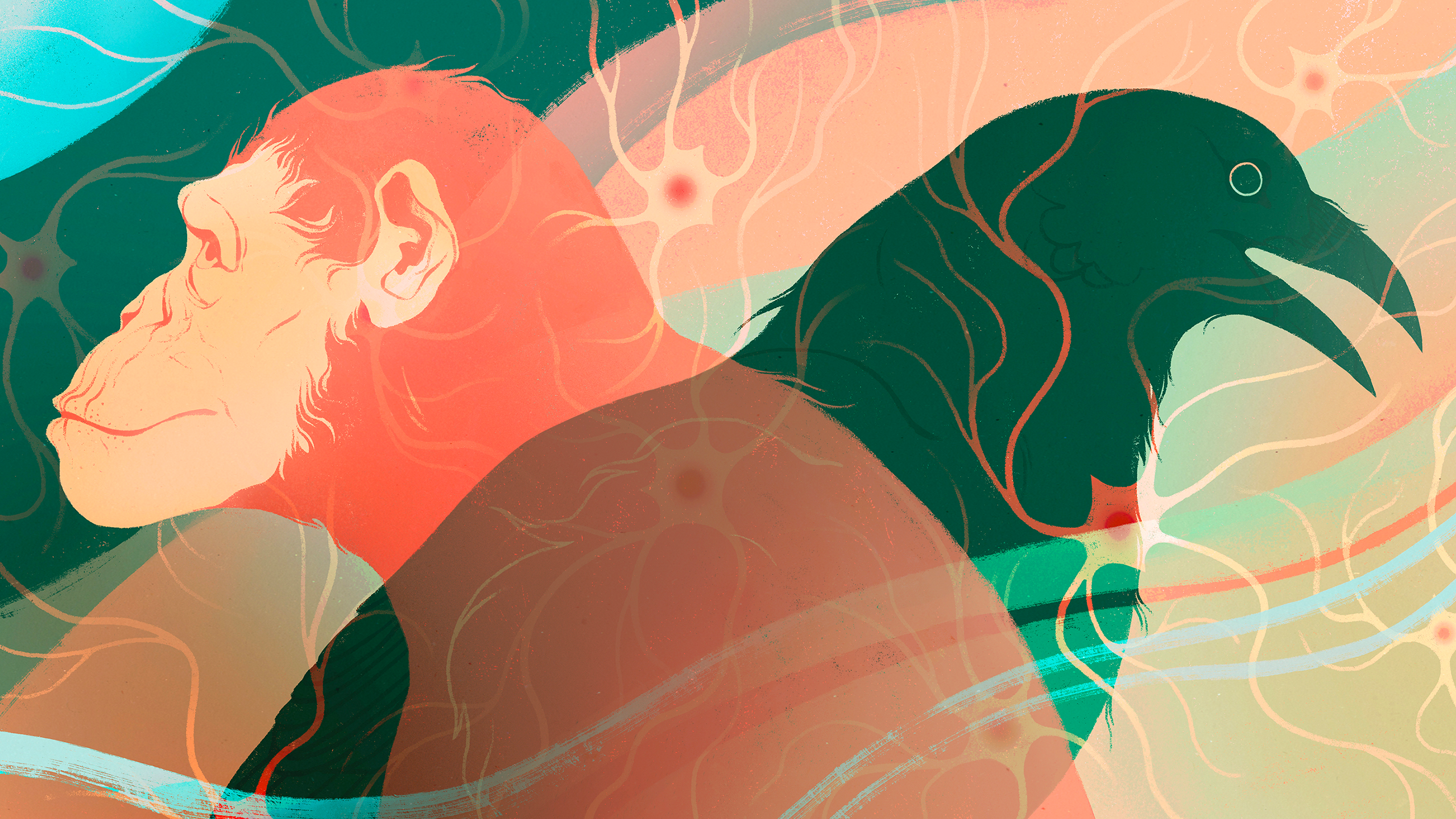
Intelligence Evolved at Least Twice in Vertebrate Animals
Read more: Intelligence Evolved at Least Twice in Vertebrate AnimalsQuanta Magazine has an interesting piece about the evolution of intelligence. A variety of nonhuman species display intelligent behavior and advanced cognitive abilities. When did it evolve? Were the basic neural pathways inherited from a common ancestor or did it evolve separately in a case of convergent evolution? A series of studies published in the journal Science provide evidence that birds evolved intelligence independently. Humans tend to put our own intelligence on a pedestal. Our brains can do math, employ logic, explore abstractions and think critically. But we can’t claim a monopoly on thought. Among a variety of nonhuman species…
-
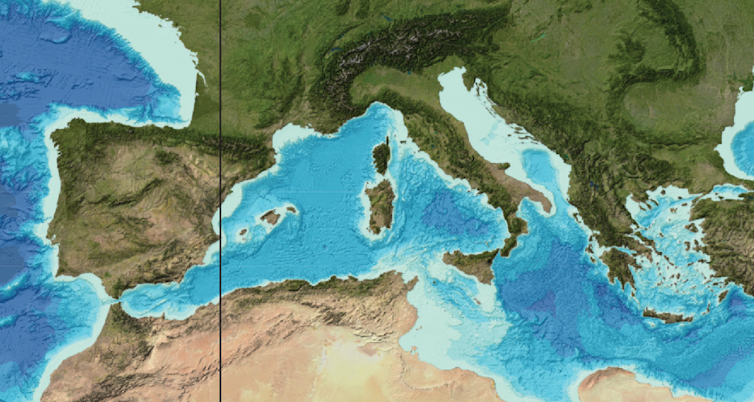
The largest flood in Earth’s history burst through Gibraltar and Sicily and refilled the entire Mediterranean in just a few years
Read more: The largest flood in Earth’s history burst through Gibraltar and Sicily and refilled the entire Mediterranean in just a few yearsThe Conversation has an article about the mother of all floods… the flooding of the Mediterranean about 5 million years ago. The Atlantic Ocean seeped it’s way through Strait of Gibraltar, which was blocked by the movement of tectonic plates. This caused the Mediterranean Sea to dry up and led to the formation of large salt deposits – kilometers thick in some places. The Med was, at the time, a largely dry and salty basin, but so much water poured in that it filled up in just a couple of years – maybe even just a few months. At its…
-

Fossil Friday #261: Crossotheca boulayi
Read more: Fossil Friday #261: Crossotheca boulayiThis is the “Fossil Friday” post #261. Expect this to be a somewhat regular feature of the website. We will post any fossil pictures you send in to esconi.info@gmail.com. Please include a short description or story. Check the #FossilFriday Twitter hash tag for contributions from around the world! —————————————————– We have one of the rarer Mazon Creek seed ferns for this week’s Fossil Friday. This is Crossotheca boulayi, which we featured for Mazon Monday #264. Crossotheca boulayi was described by Charles Rene Zeiller in 1886. This specimen was collected from Pit 3 and opened via freeze/thaw in January 2025.
-
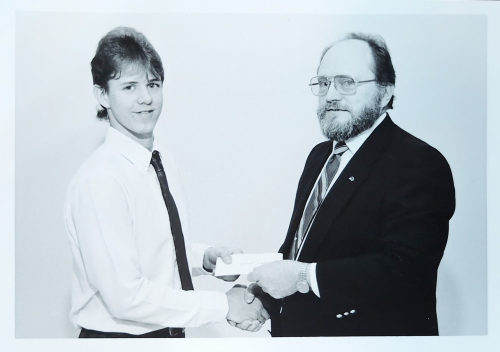
Throwback Thursday #261: Roger Bohn
Read more: Throwback Thursday #261: Roger BohnThis is Throwback Thursday #261. In these, we look back into the past at ESCONI specifically and Earth Science in general. If you have any contributions, (science, pictures, stories, etc …), please send them to esconi.info@gmail.com. Thanks! We are saddened to share that Roger Bohn (1932–2024) passed away in October 2024. Roger served as ESCONI’s 1st Vice President in 1991. He joined in 1985 and remained a member until 2011. Beyond his involvement with ESCONI, he volunteered as a docent at the Field Museum, where his favorites included the SUE and Evolving Planet exhibits. He was also a member of…
-

ESCONI Field Trip to Braceville, IL for Mazon Creek Fossils – Saturday, May 17th and Sunday, May 18th, 2025
Read more: ESCONI Field Trip to Braceville, IL for Mazon Creek Fossils – Saturday, May 17th and Sunday, May 18th, 2025This trip is full. We do have a waiting list. Braceville Field Trip Rules for May 2025 The ESCONI field trips to Braceville for Mazon Creek fossils are set for May 17 and 18, 2025 from 9 AM to 3 PM. You can attend one or the other, but not both days. There is an attendance limit of 50 people each day. You must register to go on this trip. See rule 6 below for instructions. This is the only way to register. If you are sick, have any symptoms of Covid-19 or have recently tested positive, DO NOT COME. Meet…
-
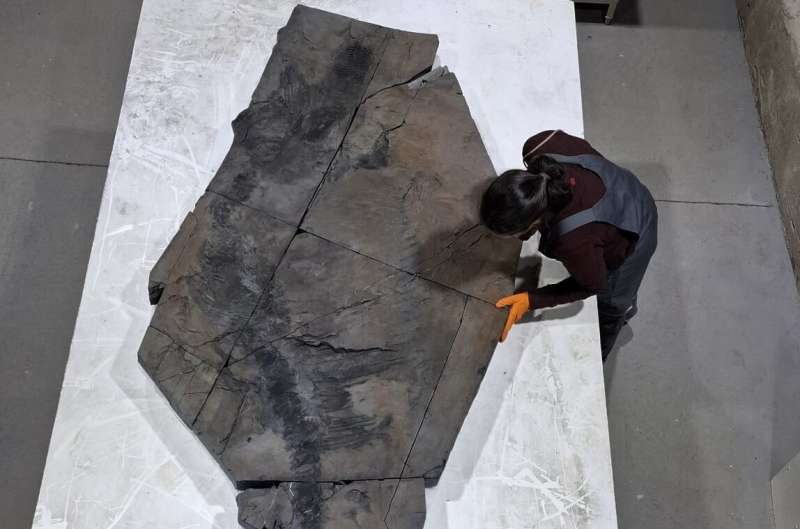
Scientists shed light on life and times of ‘Fiona’ the pregnant ichthyosaur
Read more: Scientists shed light on life and times of ‘Fiona’ the pregnant ichthyosaurPhys.org has a story about Fiona, the pregnant ichthyosaur. Fiona lived about 131 million years ago during the early Cretaceous Period. Her remains were discovered a few years ago in a glacian ice field in Patagona. Her story was published in a paper in the Journal of Vertebrate Paleontology. Fiona is the only fully preserved and excavated pregnant ichthyosaur from Chile, and is the only known pregnant ichthyosaur from the Hauterivian, a time period during the Early Cretaceous. Her remains, which are complete and largely intact, provide a detailed look into the anatomy of ichthyosaurs, an apex marine predator that…
-
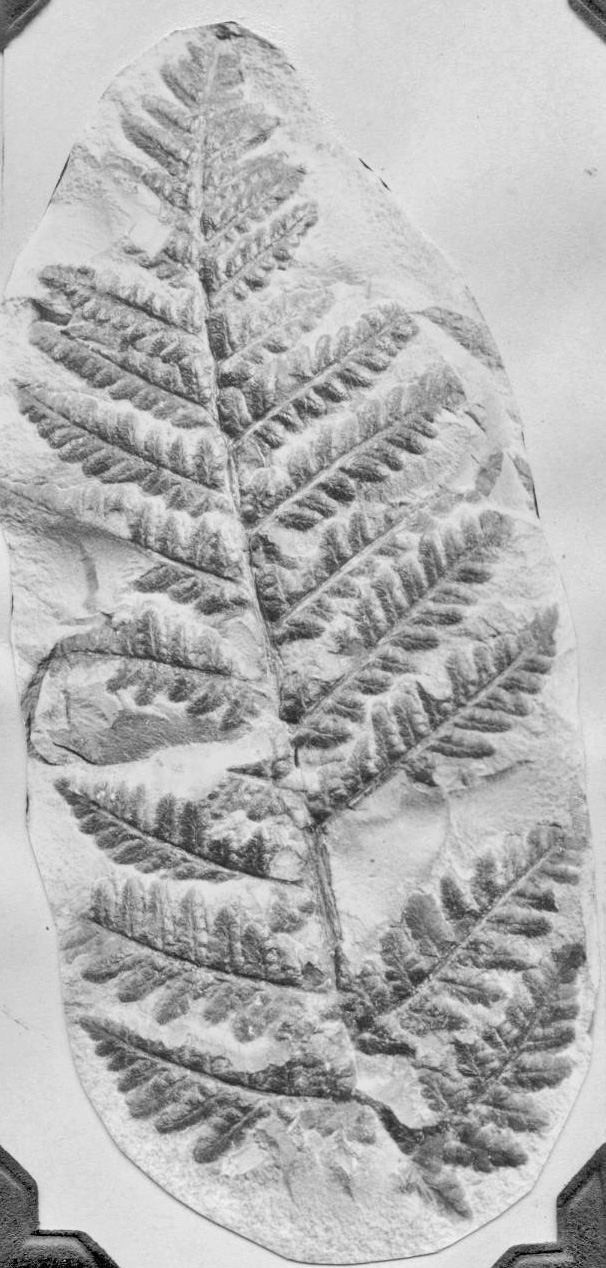
Mazon Monday #264: Crossotheca boulayi
Read more: Mazon Monday #264: Crossotheca boulayiThis is Mazon Monday post #264. What’s your favorite Mazon Creek fossil? Tell us at email:esconi.info@gmail.com. Crossotheca boulayi is one of the rarer seed ferns in the Mazon Creek fossil biota. It was first described as Alethopteris hymenophylloides by Leo Lesquereux in 1870. The name was changed to Crossotheca boulayi by Charles Rene Zeiller (1847-1915). Zeiller was French paleontologist, geologist, and mining engineer. He is known particularily for his work on the Carboniferous plants of France and Algeria. JSTOR has a nice memorial of his life, published in 1916. Crossotheca boulayi appears on page 156 of Jack Wittry’s “A Comprehesive…
-
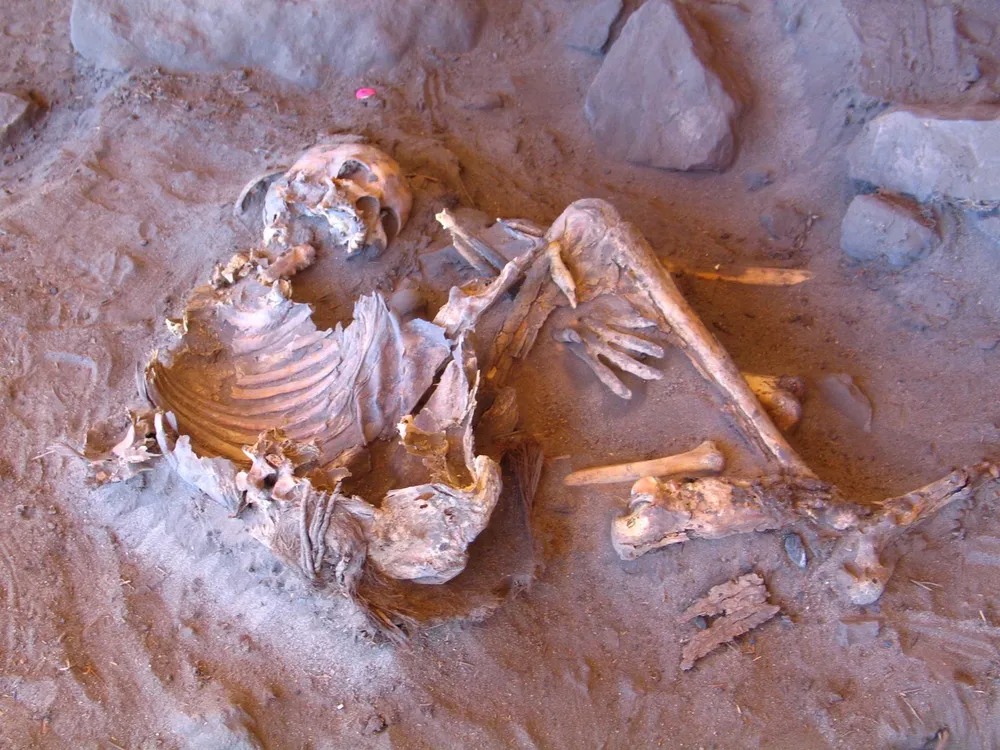
7,000-Year-Old Skeletons From the ‘Green Sahara’ Reveal a Mysterious Human Lineage
Read more: 7,000-Year-Old Skeletons From the ‘Green Sahara’ Reveal a Mysterious Human LineageSmithsonian Magazine has a story about two mysterious skeletons found in Libya. As recent as 5,000 year ago, the area of the Sahara desert was a lush and green landscape with lakes and rivers. The land sustained a diverse variety of animals. It shouldn’t be surprising that humans were also lived there. Recently, 15 human skeletons, including 2 mummified women, were found in a rock shelter in southwesterm Libya. According to a study published in the journal Nature, they were largely genetically distinct. The individuals who lived in the green Sahara showed “no significant genetic influence from sub-Saharan populations to…
-

PBS Eons: Pandas in North America?
Read more: PBS Eons: Pandas in North America?PBS Eons has a new video. Pandas in America?!? How? How did a relative of the red panda end up in North America? What can this tell us about how long ago – and how many times – North America was connected to Europe and Asia?
-
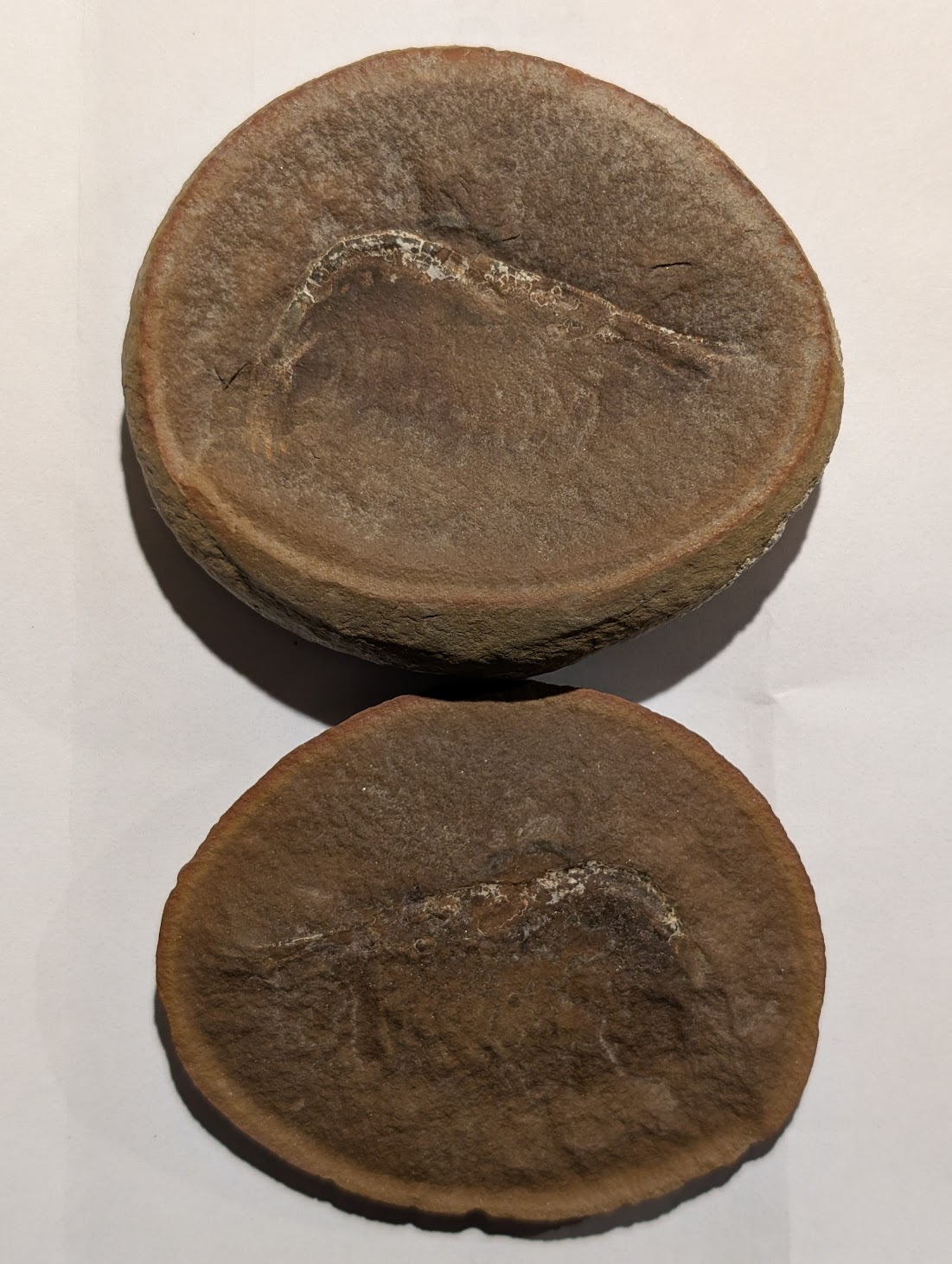
Fossil Friday #260: Lobatelson mclaughlinae
Read more: Fossil Friday #260: Lobatelson mclaughlinaeThis is the “Fossil Friday” post #260. Expect this to be a somewhat regular feature of the website. We will post any fossil pictures you send in to esconi.info@gmail.com. Please include a short description or story. Check the #FossilFriday Twitter hash tag for contributions from around the world! —————————————————– Today, we have a very nice Pit 11 Lobetelson mclaughlinae from Pit 11. This fossil shrimp was collected on June 29th, 1978 by Walter Lietz. Walter collected with many people over the years, including his wife Rita, Francis Tully, George Agazzi, Bob Ulaszek, Ralph Jewell, and Marty Houdek. Ralph refers to Walter…
-

Throwback Thursday #260: New Museum Los Gatos (NUMU)
Read more: Throwback Thursday #260: New Museum Los Gatos (NUMU)This is Throwback Thursday #260. In these, we look back into the past at ESCONI specifically and Earth Science in general. If you have any contributions, (science, pictures, stories, etc …), please send them to esconi.info@gmail.com. Thanks! email:esconi.info@gmail.com. William (Bill) Allaway was one of the founding members of ESCONI in 1949. And actually, the first few meetings were held at his home and a group of Western Electric engineers and scientists discussed the formation of a Earth Science oriented club to educate both adults and children. The effort was a resounding success. Bill and Helen moved west to the Los…
-
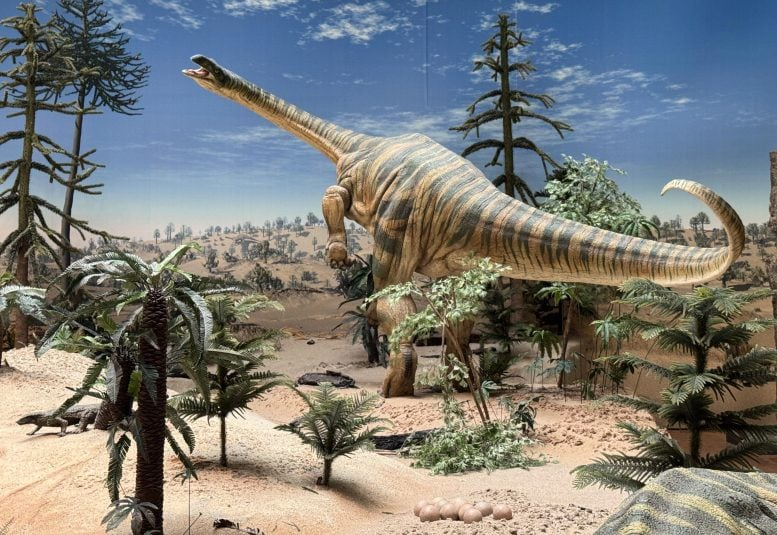
252-Million-Year-Old Fossils Reveal Secrets of Triassic Life
Read more: 252-Million-Year-Old Fossils Reveal Secrets of Triassic LifeSciTechDaily has an article about a new survey of the Triassic fossils from Germany. Researchers found interesting correlations between fossil animals and their associated palaeoenvironments with implications for modern day consequences of climate change and biodiversity loss. The study “Triassic terrestrial tetrapod faunas of the Central European Basin, their stratigraphical distribution, and their palaeoenvironments” was published in the journal Earth-Science Reviews.

ESCONI Gem, Mineral, and Fossil Show
Most Recent Post
- ESCONI at the Coal City Library!
 On June 4, ESCONI was at the Coal City Library to kick off summer with exhibits of fossils, geodes, and… Read more: ESCONI at the Coal City Library!
- About ESCONI
- Around the Web
- Calendar of Events
- Code of Ethics and Conduct
- ESCONI Books for Sale
- ESCONI Gem, Mineral, and Fossil Show
- ESCONI in the News
- ESCONI Videos
- Field Trips
- Flashback Friday
- Fossil Friday
- Mazon Creek
- Mazon Monday
- Member Spotlight
- Membership Information
- Reference Material
- Throwback Thursday
- Trilobite Tuesday
Field trips require membership, but visitors are welcome at all meetings!
| Friday, June 12th | General Meeting – 8:00 PM via Zoom. Adrienne Stroup of The Field Museum will present “At the Intersection of Art and Science: Outreach in Natural History Museums”. |
| Saturday, June 20th | Paleontology Study Group – 7:30 PM via Zoom. Lincoln Shoemaker will present “Factors controlling the distribution of Late Ordovician – Silurian crinoids.” |
| No meeting this month | Junior Study Group Meeting |
| No meeting this month | Mineralogy Study Group |