-

PBS Eons: Did These Giant Sloths Poop Themselves to Death?
Read more: PBS Eons: Did These Giant Sloths Poop Themselves to Death?PBS Eons has a new episode. This one is about a mysterious giant sloth bone bed in Euador. There is asphalt present… was it a trap? Check out Animal IQ: https://youtu.be/Ft9nFhEjGiE At Tanque Loma, at least 22 giant ground sloths in the genus Eremotherium met their end. Of the five hypotheses that researchers proposed for what killed the sloths, the best supported one right now is that they died surrounded by their own poop.
-
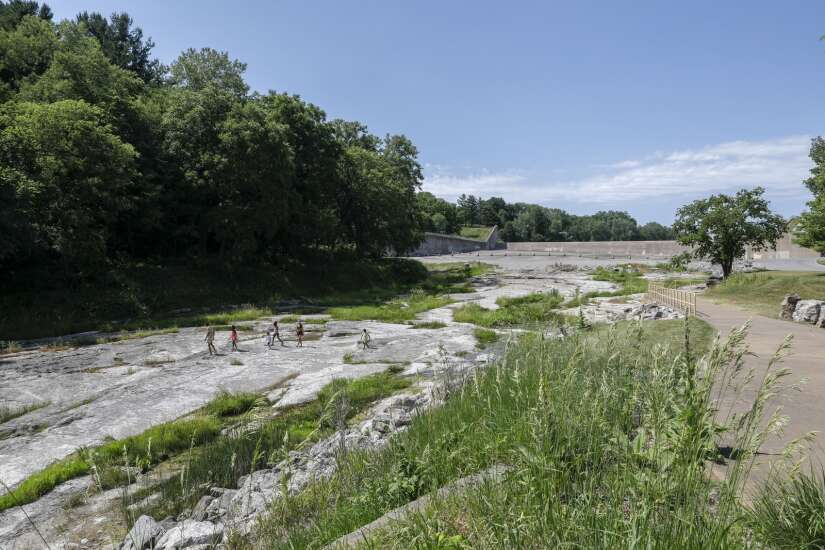
A Day Away: Coralville Lake’s Devonian Fossil Gorge a trip back in time
Read more: A Day Away: Coralville Lake’s Devonian Fossil Gorge a trip back in timeThe Gazette of Cedar Rapids, IA has a story about the Devonian Fossil Gorge in Coralville, IA. It’s just off I-80 in the heart of Iowa… great for a rest stop on your summer vacation. We posted a story from TheTravel about the same place a few weeks ago. It would be a nice place for a weekend trip to get out of the house and take in the wonder of the natural world. IOWA CITY — Some 375 million years ago, Iowa was under water. The temperatures were hot, and brightly colored corals and huge fish moved through the…
-
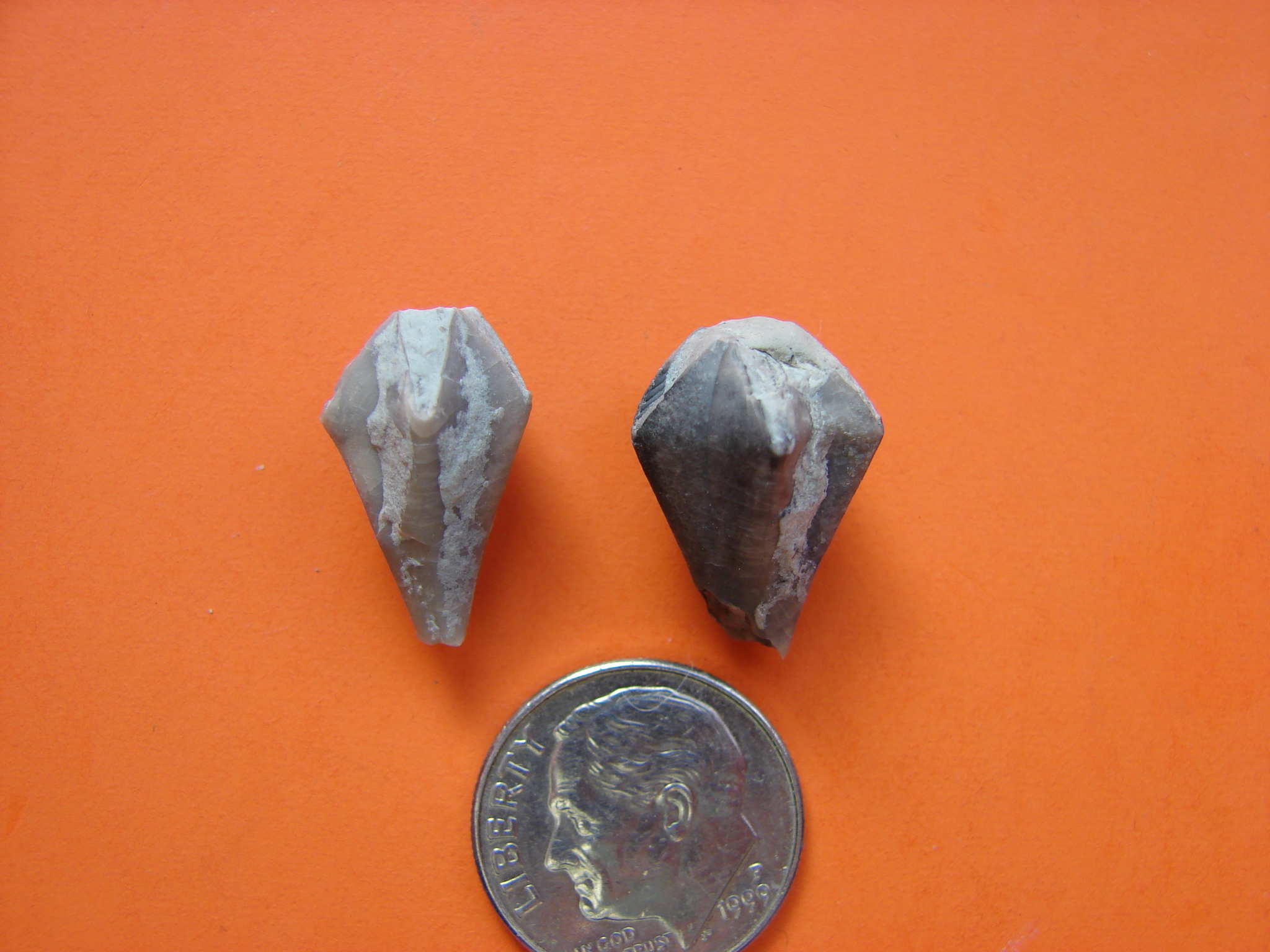
Fossil Friday #65: Waldron Shale Echinoderms
Read more: Fossil Friday #65: Waldron Shale EchinodermsThis is the “Fossil Friday” post #65. Expect this to be a somewhat regular feature of the website. We will post any fossil pictures you send in to esconi.info@gmail.com. Please include a short description or story. Check the #FossilFriday Twitter hash tag for contributions from around the world! This Friday we have some beautiful echinoderms from the Waldron shale in south central Indiana, with some additional exposures in Kentucky. These amazing specimens are part of the collection of long time ESCONI member and Paleontology Study Group leader John Cataloni. John is also very active with the Mid-American Paleontology Society (MAPS). …
-

Throwback Thursday #67: Looking Back at ESCONI July August 2021
Read more: Throwback Thursday #67: Looking Back at ESCONI July August 2021This is Throwback Thursday #67. In these, we look back into the past at ESCONI specifically and Earth Science in general. If you have any contributions, (science, pictures, stories, etc …), please send them to esconi.info@gmail.com. Thanks! 25 Years Ago – July/August 1996 50 Years Ago – July/August 1971
-
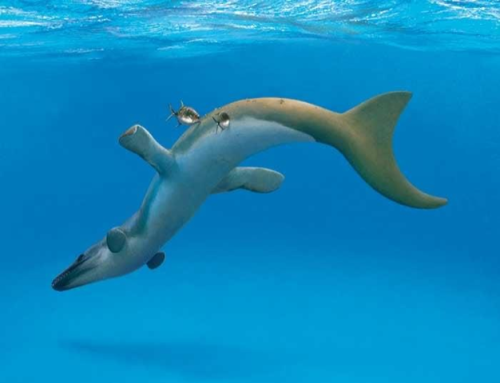
Lauer Foundation: The integument of pelagic crocodylomorphs
Read more: Lauer Foundation: The integument of pelagic crocodylomorphsFrom the ESCONI Members in the News Department: The Lauer Foundation has announced that they have published their first paper. It’s titled “The integument of pelagic crocodylomorphs” and is a detailed description of Metriorhynchidae integrument (skin) and how that group shows adaptations to a highly pelagic lifestyle. It was published in the journal Palaeoelectonica in July 2021. The authors include Frederik Spindler, Helmut Tischlinger, Matthias Mäuser. and Rene Lauer! Congratulations to ESCONI members Bruce and Rene! ABSTRACT Metriorhynchidae are the only archosaurs that show adaptations to a highly pelagic lifestyle. This morphology is paralleled by ichthyosaurs and plesiosaurs, which share…
-

Wadi al-Hitan (Valley of the Whales)
Read more: Wadi al-Hitan (Valley of the Whales)Atlas Obscura has a post and podcast about the Valley of the Whales. The Valley of the Whales is a place in Egypt that is just overflowing with whale bones. Its discovery in 1902 provided valuable information about the evolution of the whales. Few sites in the world speak of an evolutionary tale as rich and captivating as that of Wadi al-Hitan, Egypt’s “Whale Valley.” There, amid a wind-sculpted landscape of sand and rocks, lies a large collection of the most unexpected of animal remains—whale fossils. To be exact, the scattered bones belong to a long-extinct suborder of whales known…
-

Mazon Monday #68: Dryptoscolex matthiesae
Read more: Mazon Monday #68: Dryptoscolex matthiesaeThis is Mazon Monday post #68. What’s your favorite Mazon Creek fossil? Tell us at email:esconi.info@gmail.com. Dryptoscolex matthiesae is an annelid worm, which are part of class Polychaeta. It is known informally as the “Rat Worm”. Ida Thompson described D. matthiesae in 1979 in the paper “Errant polychaetes (Annelida) from the Pennsylvanian Essex Fauna of Northern Illinois”, which was published in the journal Palaeontographica. That paper included descriptions of multiple Mazon Creek Polychaetes taxa, including Fossundecima konecniorum, Didontogaster cordylina, Rutellifrons wolfforum and Pieckonia helenae. Additionally, Ida Thompson was the main author of “The Audubon Society Field Guide: North American Fossils”. The…
-

Longest known continuous record of the Paleozoic discovered in Yukon wilderness
Read more: Longest known continuous record of the Paleozoic discovered in Yukon wildernessPhys.org has a story about ocean conditions in the early to mid Paleozoic Era. Using a newly discovered contiguous geologic record of the Paleozoic Era discovered in Canada’s Yukon, research, detailed in a recent paper in Science Advances, shows that the low oxygen ocean conditions of the Paleozoic lasted into the Devonian period, which is much longer than previously thought. The research was aided by the newly discovered geologic sequence, which extends from the upper Cambrian to the mid Devonian, which makes it the longest known contiguous Paleozoic sequence. Hundreds of millions of years ago, in the middle of what…
-
Park Ranger Stumbles Upon Treasure Trove of Several-Million-Year-Old Fossils in Northern California
Read more: Park Ranger Stumbles Upon Treasure Trove of Several-Million-Year-Old Fossils in Northern CaliforniaSmithsonian Magazine has a story about the discovery of some Miocene fossils in the Sierra Nevada Mountains in California. The eight million year old fossils were discovered by Park ranger and naturalist Greg Francek while patrolling the Mokelumne River Watershed. The treasure trove consists of petrified wood, a mastodon skull, a rhino skeleton, a giant tortoise, and much more. In the foothills of the Sierra Nevada Mountains in California, paleontologists have uncovered a collection of fossils, including an eight-million-year-old mastodon skull with both tusks intact, a rhino skeleton, a giant tortoise, 600 petrified trees, and many more specimens. Dating back…
-

Fossil Friday #64: Cyclopteris orbicularis
Read more: Fossil Friday #64: Cyclopteris orbicularisThis is the “Fossil Friday” post #64. Expect this to be a somewhat regular feature of the website. We will post any fossil pictures you send in to esconi.info@gmail.com. Please include a short description or story. Check the #FossilFriday Twitter hash tag for contributions from around the world! Today we have a nice Cyclopteris orbicularis from the Mazon River. This was collected a few years ago during one of the I&M Canal Corridor Fossil Trips. Cyclopteris is associated with the mid-story seed ferns. For more information, check out “A Comprehensive Guide to the Fossil Flora of Mazon Creek” or have…
-
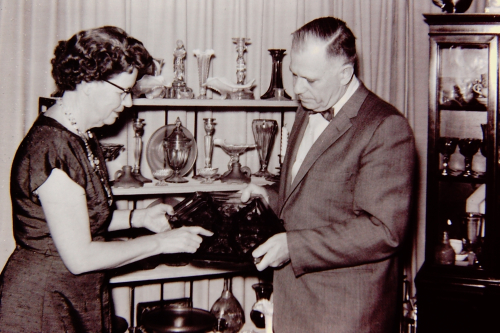
Throwback Thursday #66: It’s In the Bag
Read more: Throwback Thursday #66: It’s In the BagThis is Throwback Thursday #66. In these, we look back into the past at ESCONI specifically and Earth Science in general. If you have any contributions, (science, pictures, stories, etc …), please send them to esconi.info@gmail.com. Thanks! Here’s a little poem from the May 1958 edition of the ESCONI newsletter. It’s called “It’s In the Bag” and was written by Donnafred Hoff. Her husband, Wilbur “Doc” Hoff, was Vice President of ESCONI in 1958. He was President in 1959. We have a photo of them in April 1958. IT’S IN THE BAG Come on and buy a litter bag!Oh, it…
-
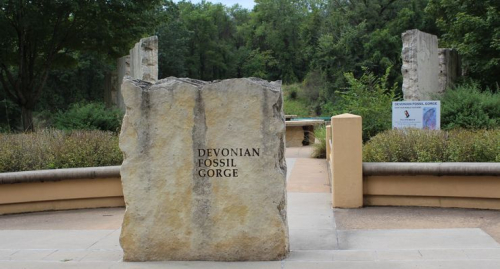
This Fossil Field In Iowa Reveals A Prehistoric Landscape That’s 375 Million Years Old
Read more: This Fossil Field In Iowa Reveals A Prehistoric Landscape That’s 375 Million Years OldTheTravel.com has a story about the Devonian Fossil Gorge in Coralville, IA. If you are traveling through Iowa this summer, stop at the Devonian Fossil Gorge just outside Iowa City, IA. There’s a place to rest and stretch your legs, have lunch, and explore the Devonian fossils uncovered by a flood back in 1993. Just outside of Iowa City, Iowa, the Devonian Fossil Gorge is a seventh heaven for fossil lovers and families. Fascinated kids jump from rock to rock, exploring the strange textures of the sea creatures immortalized in limestone. Tadpoles and little frogs mesmerize children. For anyone passing through on…
-
Volunteers with Metal Detectors Needed
Read more: Volunteers with Metal Detectors NeededOn September 1, 1961, TWA Flight 529 crashed on the Willowbrook/Clarendon Hills border. Seventy-three passengers and five crew members were killed. The cause was deemed to be a mechanical failure leading to a loss of aircraft control. The debris field stretched 200 feet by 1,100 feet. Now a museum exhibit and a possible memorial are being developed to honor the victims of the crash. We are seeking volunteers with metal detectors to comb the old debris field to see if any artifacts still can be found. If you are interested in contributing your time to this historical project, please contact Professor…
-

ESCONI Field Trip to Starved Rock Clay Pit, July 24, 2021
Read more: ESCONI Field Trip to Starved Rock Clay Pit, July 24, 2021There will be a field trip to the Starved Rock Clay Pit on Saturday, July 24, 2021 from 8 AM to noon. The trip is shared with the Lincoln Orbit Earth Science Society (LOESS) of Springfield. The clay pit is located just south of Starved Rock State Park. Other than the glacial overburden, everything at the clay pit is Pennsylvanian. From top down the layers are: Mecca Quarry Shale – Black shale, hard.Francis Creek Shale – Mudstone from deltaic depositsColchester No. 2 coalUnderclay – paleosol where the plants that made up the coal were rooted This location produces pyrite balls,…
-
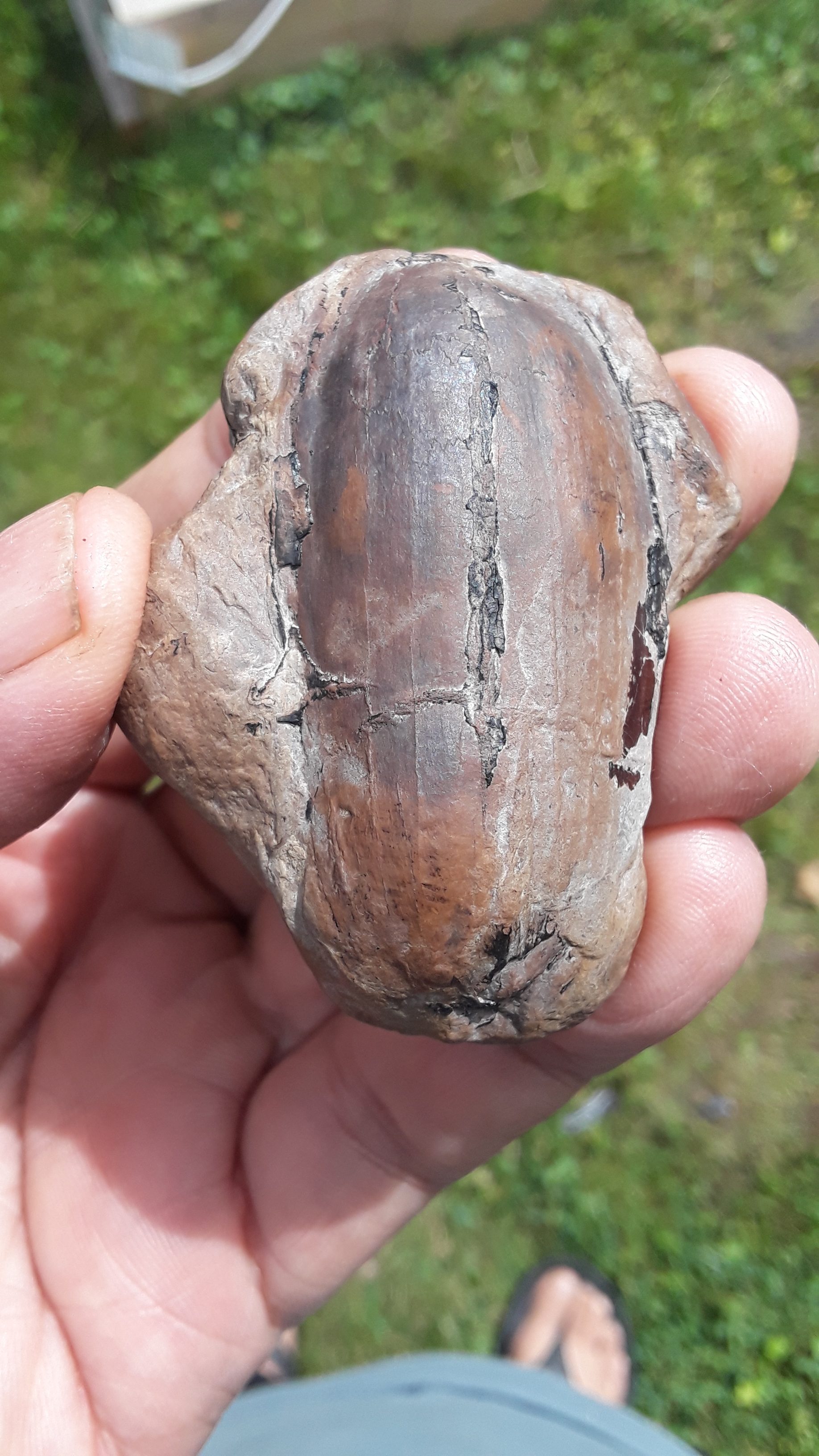
Mazon Monday #67: Trigonocarpus sp.
Read more: Mazon Monday #67: Trigonocarpus sp.This is Mazon Monday post #67. What’s your favorite Mazon Creek fossil? Tell us at email:esconi.info@gmail.com. Trigonocarpus sp. was described in 1825, by Alexandre Brongniart, who was a French chemist, mineralogist, geologist, paleontologist, and zoologist back in the early 1800’s. It is the seed part of an extinct order of plants called Medullosales. In the Mazon Creek literature, they are commonly referred to as “Seed Ferns” and include some of the more recognizable species from the deposit. This group includes Alethopteris, Odontopteris, Laveiniopteris, Neuropteris, and Macroneuropteris. Wikipedia has a passage describing the seeds of this group. Ovules in different medullosalean…
-
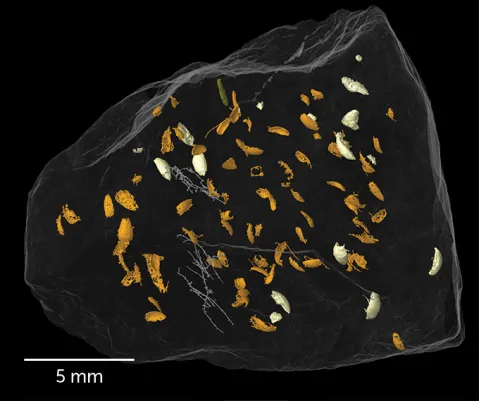
This ancient beetle is the first new species discovered in fossilized poop
Read more: This ancient beetle is the first new species discovered in fossilized poopSciencemag,com has a story about a new beetle species, Triamyxa coprolithica, discovered in a coprolite. The fossil dates to about 230 million years ago. Coprolites, which are fossilized dung, can be used to study what plants were eaten by herbivores back when the dung was deposited. Previously, fossilized bone and phytoliths, which are microscopic silica structures made by some plants, have been found in coprolites, but this is the first time insect parts have been discovered. Details can be found in a recent paper published in the journal Current Biology. Beetles are everywhere—and new members of Earth’s most diverse group…
-

Fossil Friday #63: Paleocaris typus
Read more: Fossil Friday #63: Paleocaris typusThis is the “Fossil Friday” post #63. Expect this to be a somewhat regular feature of the website. We will post any fossil pictures you send in to esconi.info@gmail.com. Please include a short description or story. Check the #FossilFriday Twitter hash tag for contributions from around the world! Back in Mazon Monday #65, we highlighted Paleocaris typus. Today, we have a specimen from Pit 11. This fossil was found in March 2021 and opened via freeze/thaw in May 2021. It was collected by ESCONI member Rich Holm. If you look close, you’ll see the diagnostic telson, which indicates this to…
-
Throwback Thursday #65: Rockhound’s Plight
Read more: Throwback Thursday #65: Rockhound’s PlightThis is Throwback Thursday #65. In these, we look back into the past at ESCONI specifically and Earth Science in general. If you have any contributions, (science, pictures, stories, etc …), please send them to esconi.info@gmail.com. Thanks! ——————————————————————————————- This week, we have two poems from the July/August 1964 issue of the newsletter. The first is called the “Rockhound’s Plight” and comes from a husband lamenting complaints from his wife. The second is the wife’s answer. These were originally published in the Des Moines Treasure Chest and were written by Leona Leonard. Unfortunately, no details could be found for an Des…
-
Photos from the ESCONI Field Trip to Belvidere Quarry – June 26th, 2021
Read more: Photos from the ESCONI Field Trip to Belvidere Quarry – June 26th, 2021ESCONI held a field trip to a Belvidere, IL quarry on June 26th, 2021. Some of the finds were Hormotoma snails, nautiloids, and trilobites. Here are some photos from ESCONI member Therese Cushing. Thanks, Therese!

ESCONI Gem, Mineral, and Fossil Show
Most Recent Post
- ESCONI April 2026 Paleontology Meeting via Zoom and in-person – “Digging the Marl of the Lance Formation”
 The April 2026 Paleontology Study Group Meeting will feature Keith Robitschek and his presentation “Digging the Marl of the Lance Formation”. You can attend in-person at the College of DuPage, TEC, Room 1038B (Map). The meeting will also be available via Zoom.
- About ESCONI
- Around the Web
- Calendar of Events
- Code of Ethics and Conduct
- ESCONI Books for Sale
- ESCONI Gem, Mineral, and Fossil Show
- ESCONI in the News
- ESCONI Videos
- Field Trips
- Flashback Friday
- Fossil Friday
- Mazon Creek
- Mazon Monday
- Member Spotlight
- Membership Information
- Reference Material
- Throwback Thursday
- Trilobite Tuesday
Field trips require membership, but visitors are welcome at all meetings!
| Friday, April 10th | General Meeting – 8:00 PM via Zoom. Jessica Hull will present “Life in the Devonian Period, The Age of Fishes.” |
| Saturday, April 11th | Junior Study Group Meeting – 2:00 PM, in person at the College of DuPage Technical Education Center (TEC) Building – Room 1038A (Map). Katherine Howard will present on Sand and Sediment Collecting. Specifics of this meeting are available from Scott Galloway, 630-670-2591, gallowayscottf@gmail.com. |
| Saturday, April 18th | Paleontology Study Group – 7:30 PM via Zoom and in person at the College of DuPage, TEC, Room 1038B (Map). Keith Robitschek will present “Digging the Marl of the Lance Formation.” |
| Friday, April 24th | MAPS Expo XLVII – Springfield, IL. |
| Saturday, April 25th | MAPS Expo XLVII – Springfield, IL. |
| Sunday, April 26th | MAPS Expo XLVII – Springfield, IL. |
| No meeting this month | Mineralogy Study Group |

