
-
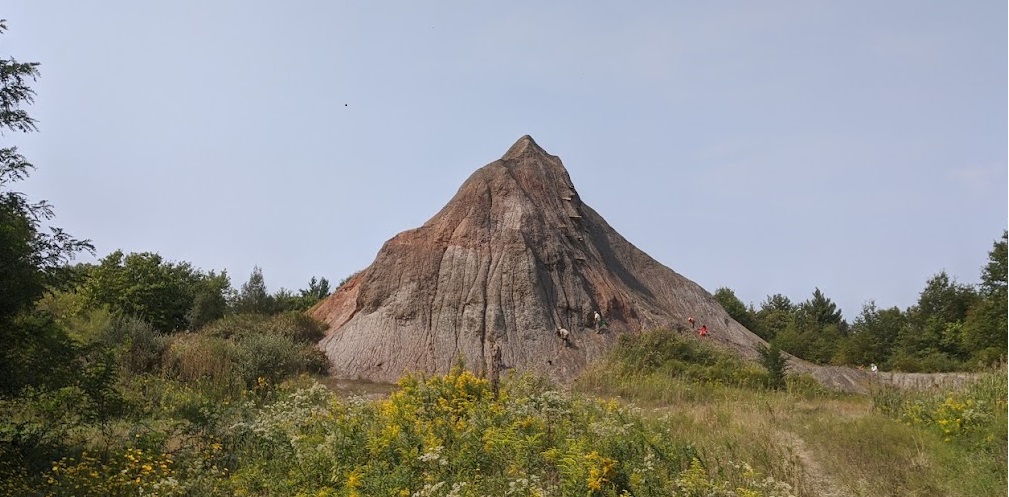
Mazon Monday #79: Braceville Field Trip (Mazon Creek) Report
Read more: Mazon Monday #79: Braceville Field Trip (Mazon Creek) ReportThis is Mazon Monday post #79. What’s your favorite Mazon Creek fossil? Tell us at email:esconi.info@gmail.com. Here is the field trip report for the Braceville Fall Field Trip, written by ESCONI President Keith Robitschek. The September field trips to the Braceville spoil pile started with Saturday and Sunday being mostly sunny and rather warm for a late summer day. We had 43 participants Saturday and 45 Sunday, braving what would become very hot days. In fact, this was the hottest Braceville outing we have experienced in recent memory. Both days the temperature exceeded 90 degrees. Luckily two canopies were ported…
-

Why did the Maya civilization collapse?
Read more: Why did the Maya civilization collapse?Live Science has a story about the Maya and what may have caused the collapse of their society about 1000 years ago. Usually a mix of environmental and political problems are sited as the reason for the collapse. There were severe droughts between 800 CE and 1000 CE. However, collapse may be a bad description as not all Mayan cities declined at the same time. Even during European contact, some Mayan cities were flourishing. The Maya have lived in Central America and the Yucatán Peninsula since at least 1800 B.C. and flourished in the region for thousands of years. According…
-

PBS Eons: How a Supervolcano Ignited an Evolutionary Debate
Read more: PBS Eons: How a Supervolcano Ignited an Evolutionary DebatePBS Eons has a new episode about the eruption of the supervolcano Toba. About 74,000 years ago, ancient humans, in Africa, suffered an evolutionary bottleneck. It seems Toba erupted at around the same time, was it the cause? The research is not clear. The Toba supervolcano was the biggest explosive eruption of the last 2.5 million years. And humans were around to see it, or at least feel its effects! But what were those effects?
-

Fossil Friday #75: Mazon Creek Eurypterid
Read more: Fossil Friday #75: Mazon Creek EurypteridThis is the “Fossil Friday” post #75. Expect this to be a somewhat regular feature of the website. We will post any fossil pictures you send in to esconi.info@gmail.com. Please include a short description or story. Check the #FossilFriday Twitter hash tag for contributions from around the world! We have a repeat contributor this week and this specimen is another rare Mazon Creek animal. Commonly known as sea scorpions, when you think of eurypterids, you probably think of the giants of the Silurian and Devonian periods, which are typically found in and around western New York and Ontario. But, Mazon…
-
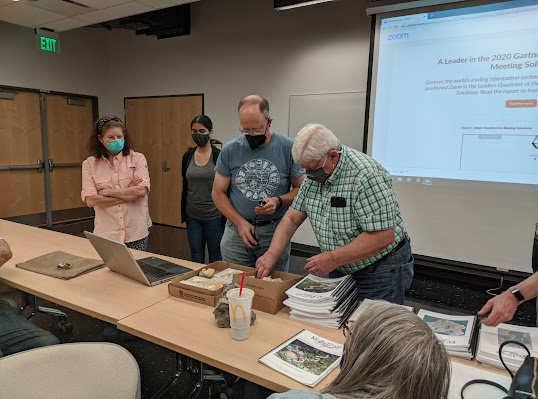
Throwback Thursday #77: Brag Night!
Read more: Throwback Thursday #77: Brag Night!This is Throwback Thursday #77. In these, we look back into the past at ESCONI specifically and Earth Science in general. If you have any contributions, (science, pictures, stories, etc …), please send them to esconi.info@gmail.com. Thanks! Last Saturday, we had “Show and Tell” at the September Paleontology Study Group meeting. We met both in person at the College of Dupage and on Zoom. It was great to get together and see old friends and meet some new ones. Traditionally, the September meetings have been “Show and Tell”, but in the old days they called it “Brag Night. It was…
-
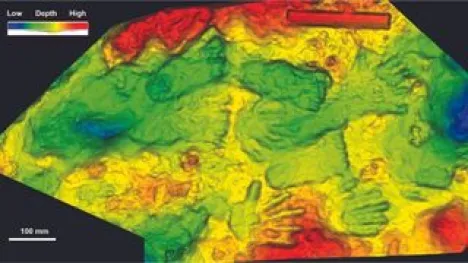
Kids’ fossilized handprints may be some of the world’s oldest art
Read more: Kids’ fossilized handprints may be some of the world’s oldest artLiveScience has an article about what may be the oldest art ever found. 200,000 years ago on a high plateau, children squished their hands and feet into a sticky mud floor of a cave. In a paper published in the journal Science Bulletin, the authors argue this should be considered “parietal” art, which is art that cannot be moved. The cave is in what is now modern day Tibet. Study author David Zhang, a professor of geography at Guangzhou University in China, first spotted the five handprints and five footprints on an expedition to a fossil hot spring at Quesang, located more than…
-
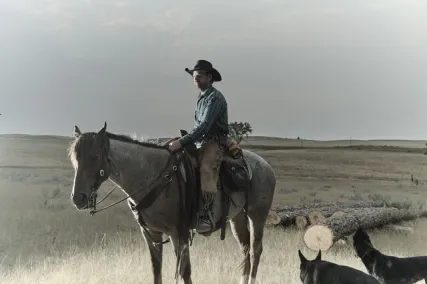
Dinosaur Cowboys Are Hunting for the Next $32 Million T. Rex
Read more: Dinosaur Cowboys Are Hunting for the Next $32 Million T. RexBloomberg has a story about the Dinosaur Cowboy. Known for discovering the “Dueling Dinosaurs”, Clayton Phipps is a rancher and an amateur paleontologist. The story does a great job describing the controversy around the commercial exploitation of fossils, mainly dinosaurs. On a sunny, 99-degree day in northern Montana, Clayton Phipps grabs a backpack and heads for a small trench, maybe a foot deep. He drops to his knees, his auburn hair flared out beneath his black Stetson, then opens his pack, removes a knife that looks best suited to cutting steak, and gets to work. He picks through gray sand,…
-
Mazon Monday #78: Amynilyspes wortheni
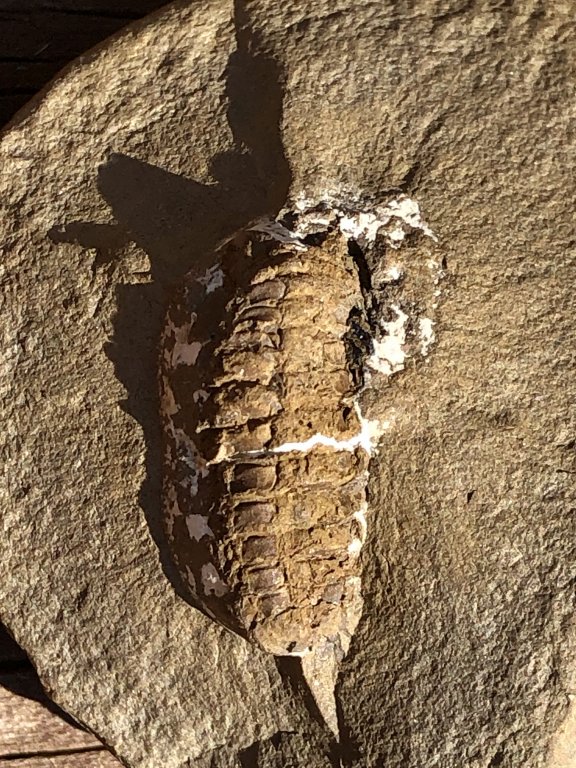
Read more: Mazon Monday #78: Amynilyspes wortheniThis is Mazon Monday post #78. What’s your favorite Mazon Creek fossil? Tell us at email:esconi.info@gmail.com. Today, we are having a look at Amynilyspes wortheni, an extinct species of pill millipede. A. wortheni was described by Samuel Hubbard Scudder in 1882, a giant in the field of fossil insects and other arthropods during the 1800’s. The description of the species appeared in the paper S. H. Scudder. 1882. Archipolypoda, a subordinal type of spined myriapods from the Carboniferous formation. Memoirs of the Boston Society of Natural History 3:143-182. The animal is named for Amos Henry Worthen, who was a paleontologist and geologist…
-
What We’ve Discovered About the ‘Tyrant Lizard King’ Since the Nation’s T. rex Was Unearthed
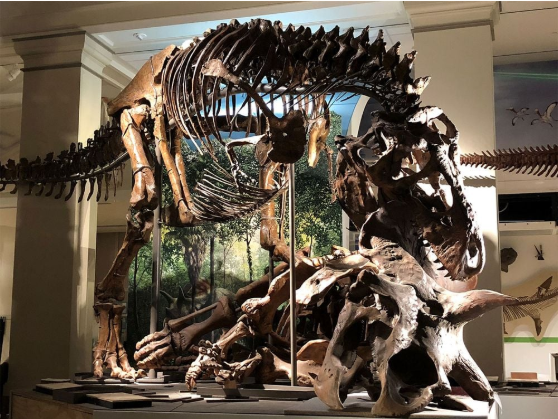
Read more: What We’ve Discovered About the ‘Tyrant Lizard King’ Since the Nation’s T. rex Was UnearthedSmithsonian Magazine has a post about Tyrannosaurus rex. To date, about 50 T. rexes have been found, quite a few of those have been fragmentary. The Nation’s T. rex was discovered in 1988 in Montana by local rancher Kathy Wankel. It is often referred to as the “Wankel Rex”. Since then, we have learned so much about T. rex. This story discusses those findings. Back when the first T. rex skeleton was found, scientists didn’t know its age very precisely. They didn’t have the necessary technology to date fossil rocks so old. And with so few specimens to study, it was impossible…
-
PBS Eons: How Pollination Got Going Twice
Read more: PBS Eons: How Pollination Got Going TwicePBS Eons has a new episode on Youtube. This one is about how pollination by insects evolved twice. The world of the Jurassic was a lot like ours – similar interactions between plants and insects were happening, but the players have changed over time. Because it looks like pollination by insects actually got going twice.
-
Reminder: ESCONI September 2021 Paleontology Meeting – September 18th, 2021 at 7:30 PM – “Show and Tell”
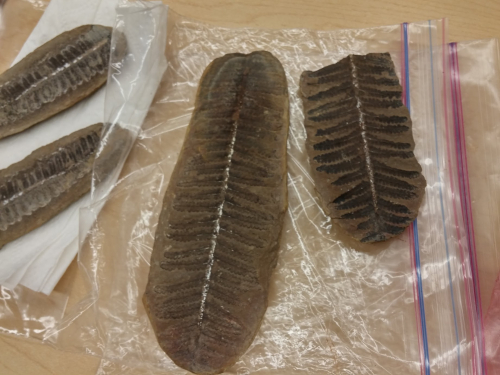
Read more: Reminder: ESCONI September 2021 Paleontology Meeting – September 18th, 2021 at 7:30 PM – “Show and Tell”WE ARE BACK AT COLLEGE OF DuPAGE!!! The September 2021 Paleontology Meeting will be held at the College of Dupage in room 1038B of the Tech Ed (TEC) Building (Map). We will also provide a Zoom link for those that can’t attend in person. The topic of the meeting is “Show and Tell”. The “Show and Tell” theme has been a tradition for the first meeting back after the summer hiatus. But, in the past, it was called “Brag Night” So, bring your fossils and tell us some fish… i mean fossil stories! There will be knowledgeable people that might…
-
Fossil Friday #74: Belotelson magister
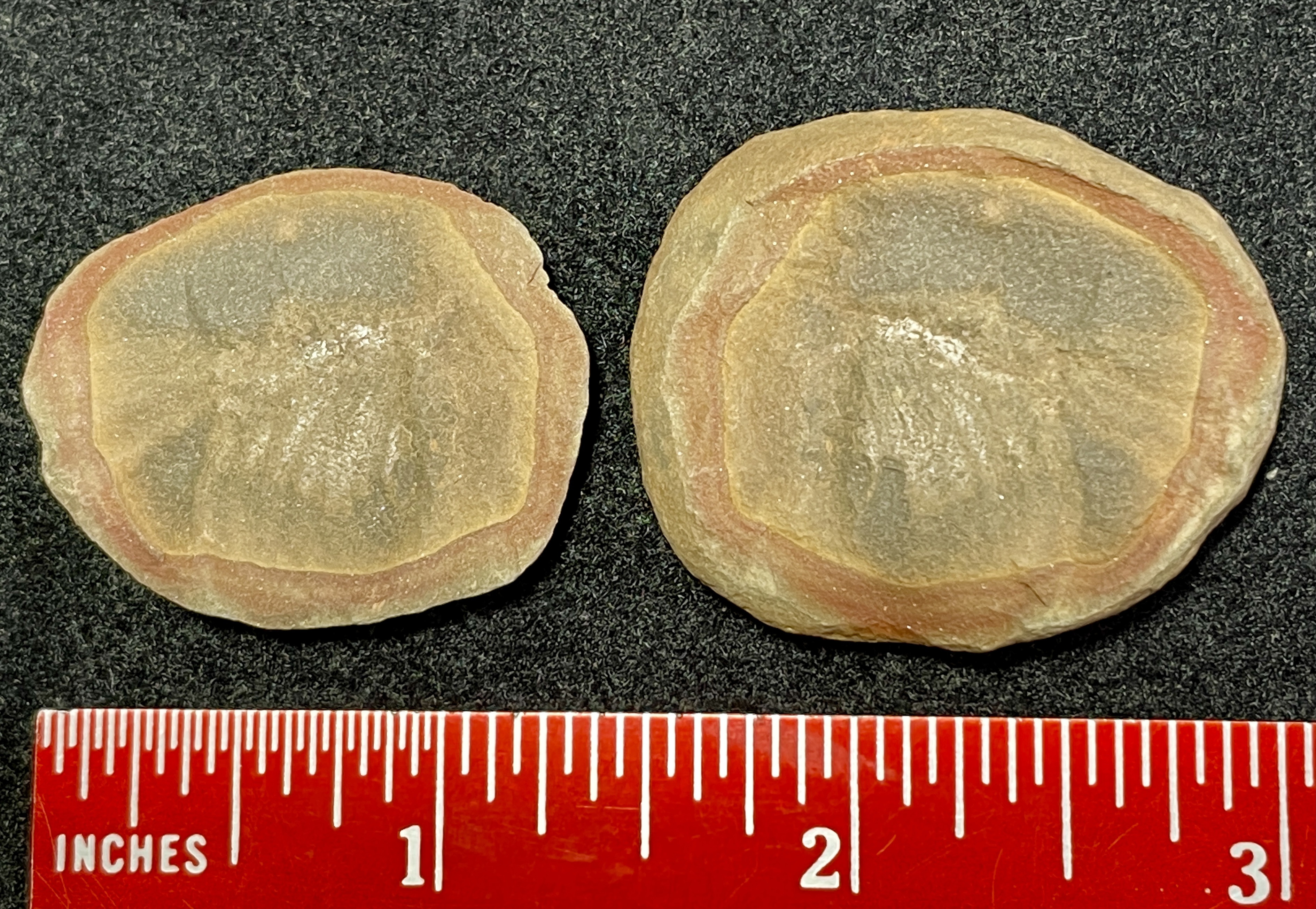
Read more: Fossil Friday #74: Belotelson magisterThis is the “Fossil Friday” post #74. Expect this to be a somewhat regular feature of the website. We will post any fossil pictures you send in to esconi.info@gmail.com. Please include a short description or story. Check the #FossilFriday Twitter hash tag for contributions from around the world! Today, we have both a nice fossil and a nice story. The fossil specimen is a Belotelson magister shrimp molt. It was found by ESCONI member Sue Dibblee in Pit 11 this past spring. I had a very nice conversation about Mazon Creek fossils with her and her husband Steven during the…
-
Throwback Thursday #76: Rock Hounds
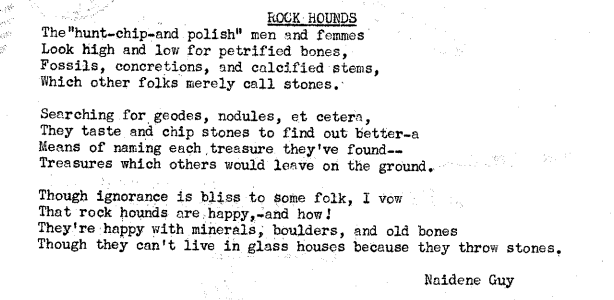
Read more: Throwback Thursday #76: Rock HoundsThis is Throwback Thursday #76. In these, we look back into the past at ESCONI specifically and Earth Science in general. If you have any contributions, (science, pictures, stories, etc …), please send them to esconi.info@gmail.com. Thanks! Poems were very popular in the ESCONI newsletters of the 1950’s and 1960’s. It’s hard to say if the popularity was a product of the times or just an interest of the newsletter editors. Maybe a clue is the number of poems credited to the newsletters of other clubs. It’s not surprising that rock hounds are a common theme in these poems. This…
-
Carnotaurus Had Scaly Skin with No Feathers, Paleontologists Say
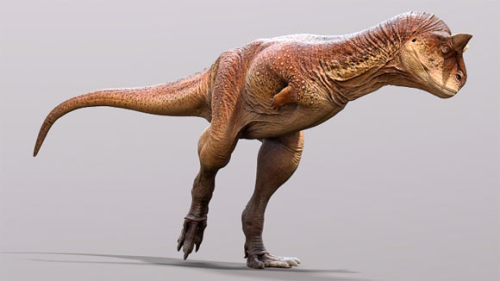
Read more: Carnotaurus Had Scaly Skin with No Feathers, Paleontologists SaySciNews has an article about a reexamined dinosaur discovery in Argentina. Carnotaurus sastrei, a name that means “meat eating bull”, is a dinosaur that lived in what is now Argentina during the late Cretaceous period about 70 to 72 million years ago. A specimen, which was discovered in 1984 by famed Argentine paleontologist Jose Bonaparte, was recently redescribed in a paper that appeared in the journal Cretaceous Research. In the paper, the researchers, Dr. Christophe Hendrickx from the Unidad Ejecutora Lillo and Dr. Phil Bell from the University of New England, examined skin impressions that were preserved from the shoulders,…
-
A New Company With a Wild Mission: Bring Back the Woolly Mammoth
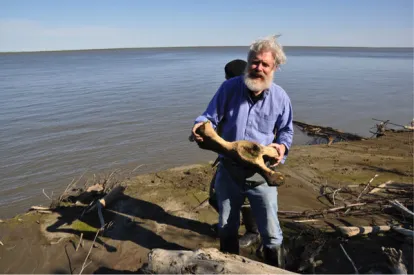
Read more: A New Company With a Wild Mission: Bring Back the Woolly MammothThe New York Times has a story about a company that wants to bring back the Woolly Mammoth. The resurrection of extinct species has been discussed for a while now. And now a company named Colossal has raised $15 million dollars in funding to bring the Woolly Mammoth back to Siberia. A team of scientists and entrepreneurs announced on Monday that they have started a new company to genetically resurrect the woolly mammoth. The company, named Colossal, aims to place thousands of these magnificent beasts back on the Siberian tundra, thousands of years after they went extinct. “This is a major…
-
Mazon Monday #77: Care and Feeding of Your Mazon Creek Concretions
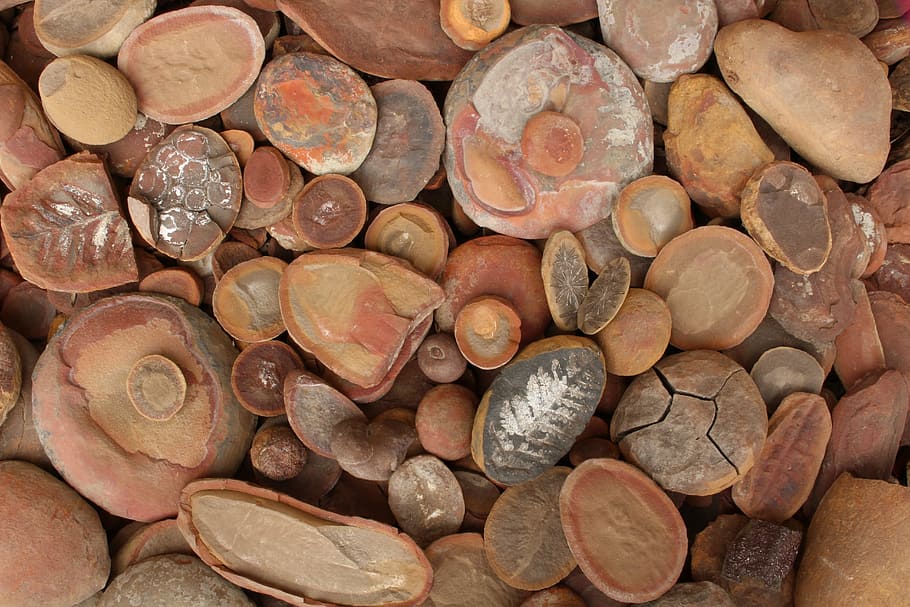
Read more: Mazon Monday #77: Care and Feeding of Your Mazon Creek ConcretionsThis is Mazon Monday post #77. What’s your favorite Mazon Creek fossil? Tell us at email:esconi.info@gmail.com. —————————————————– Today, we have a repost of Mazon Monday #27 – “Care and Feeding of Your Mazon Creek Concretions”. We are posting it to help the new members and collectors we met on the Braceville spoil pile this past weekend. We had many interesting discussions with interesting people that were curious about collecting Mazon Creek fossils. We hope all of the attendees had as much fun as we did! Good luck with your concretions! Let’s know if you find something interesting! We will post…
-

ESCONI September 2021 Paleontology Meeting – September 18th, 2021 at 7:30 PM – “Show and Tell”
Read more: ESCONI September 2021 Paleontology Meeting – September 18th, 2021 at 7:30 PM – “Show and Tell”The September 2021 Paleontology Meeting will be held at the College of Dupage in room 1038B of the Tech Ed (TEC) Building (Map). We will also provide a Zoom link for those that can’t attend in person. The topic of the meeting is “Show and Tell”. The “Show and Tell” theme has been a tradition for the first meeting back after the summer hiatus. But, in the past, it was called “Brag Night” So, bring your fossils and tell us some fish… i mean fossil stories! There will be knowledgeable people that might be able to identify what you found.…
-

A Huge, Unknown Cambrian Bug Fossil Has Been Found in The Eerie Burgess Shale
Read more: A Huge, Unknown Cambrian Bug Fossil Has Been Found in The Eerie Burgess ShaleScience Alert has a story about a new arthropod discovered in the Burgess Shale. The Burgess Shale is a fossil deposit located in British Columbia which gives visibility into the explosion of life during the Cambrian Period more that 500 million years ago. This new animal, Titanokorys gainesi, was more than a foot long, which was large for the time period. A paper in the journal Royal Society Open Science describes this new research. Titanokorys gainesi, newly discovered in the Burgess Shale fossil formation, would have been a Cambrian colossus, measuring a gobsmacking estimated half a meter (1.64 feet) in…
-

Fossil Friday #73: Mazon Creek Pill Millipede
Read more: Fossil Friday #73: Mazon Creek Pill MillipedeThis is the “Fossil Friday” post #73. Expect this to be a somewhat regular feature of the website. We will post any fossil pictures you send in to esconi.info@gmail.com. Please include a short description or story. Check the #FossilFriday Twitter hash tag for contributions from around the world! Mazon Creek is back this week and this time we have a millipede. This animal is referred to as a pill bug or a pill millipede. I’m using pill millipede this time, because that makes our contributor a double repeat. Connor Puritz sent us some photos of a specimen of the millipede…
-

Throwback Thursday #75: Looking Back at ESCONI September 2021
Read more: Throwback Thursday #75: Looking Back at ESCONI September 2021This is Throwback Thursday #75. In these, we look back into the past at ESCONI specifically and Earth Science in general. If you have any contributions, (science, pictures, stories, etc …), please send them to esconi.info@gmail.com. Thanks! 25 Years Ago – September 1996 50 Years Ago – September 1971

ESCONI Gem, Mineral, and Fossil Show
Most Recent Post
- Throwback Thursday #312: Ron Schinderle Donation
 Barb Schinderle stopped by ESCONI Show last month to drop off a donation of her late husband Ron’s fossils. Ron passed away in 2021. He was a long time ESCONI member and an avid fossil collector . He went on many ESCONI field trips. A group of us remember him fondly from our many trips to Pit 11 and Fossil Rock Campgrounds to collect Mazon Creek fossils.
- About ESCONI
- Around the Web
- Calendar of Events
- Code of Ethics and Conduct
- ESCONI Books for Sale
- ESCONI Gem, Mineral, and Fossil Show
- ESCONI in the News
- ESCONI Videos
- Field Trips
- Flashback Friday
- Fossil Friday
- Mazon Creek
- Mazon Monday
- Member Spotlight
- Membership Information
- Reference Material
- Throwback Thursday
- Trilobite Tuesday
Field trips require membership, but visitors are welcome at all meetings!
| Friday, April 10th | General Meeting – 8:00 PM via Zoom. Jessica Hull will present “Life in the Devonian Period, The Age of Fishes.” |
| Saturday, April 11th | Junior Study Group Meeting – 2:00 PM, in person at the College of DuPage Technical Education Center (TEC) Building – Room 1038A (Map). Katherine Howard will present on Sand and Sediment Collecting. Specifics of this meeting are available from Scott Galloway, 630-670-2591, gallowayscottf@gmail.com. |
| Saturday, April 18th | Paleontology Study Group – 7:30 PM via Zoom and in person at the College of DuPage, TEC, Room 1038B (Map). Keith Robitschek will present “Digging the Marl of the Lance Formation.” |
| Friday, April 24th | MAPS Expo XLVII – Springfield, IL. |
| Saturday, April 25th | MAPS Expo XLVII – Springfield, IL. |
| Sunday, April 26th | MAPS Expo XLVII – Springfield, IL. |
| No meeting this month | Mineralogy Study Group |