
-

ESCONI Field Trip to the Napoleon Quarry in Napoleon, IN – for Ordovician/Silurian Fossils – Saturday, October 26th, 2024
Read more: ESCONI Field Trip to the Napoleon Quarry in Napoleon, IN – for Ordovician/Silurian Fossils – Saturday, October 26th, 2024Cystoid from a field trip to Napoleon – from a University of Kentucky website. There will be a field trip for ESCONI members on Saturday, October 26, 2024, to the quarry just east of Napoleon, Indiana. We need to meet, no exceptions, at the quarry entrance at 8:30 a.m. EDT. We have the chance to collect Silurian (Osgood Member of the Salamonie Dolomite–digging may be required) and possibly Ordovician rocks. This quarry is located southeast of Indianapolis, IN. Consider the distance when making your plans. Rules are as follows: To register for this field trip, send John Catalani an email with…
-

PBS Eons: When Earth “Ate” a Planet
Read more: PBS Eons: When Earth “Ate” a PlanetThere's a new episode of PBS Eons. This one is about the origin of our moon. Where did our unique moon come from? It turns out that lunar rocks brought back by Apollo astronauts are a clue, pointing to the origin of our closest cosmic companion, an origin even stranger than you might imagine…
-

Fossil Friday #232: Knob Noster Fossils
Read more: Fossil Friday #232: Knob Noster FossilsThis is the “Fossil Friday” post #232. Expect this to be a somewhat regular feature of the website. We will post any fossil pictures you send in to esconi.info@gmail.com. Please include a short description or story. Check the #FossilFriday Twitter hash tag for contributions from around the world! Knob Noster is a fossil deposit contemporaneous with Mazon Creek, which dates to about 308 million years ago. Currently, the Knob Noster locality is thought to have be located across a large bay from the Mazon Creek locality. Both were just south of the equator in the tropical Pennsylvanian seas. The red…
-
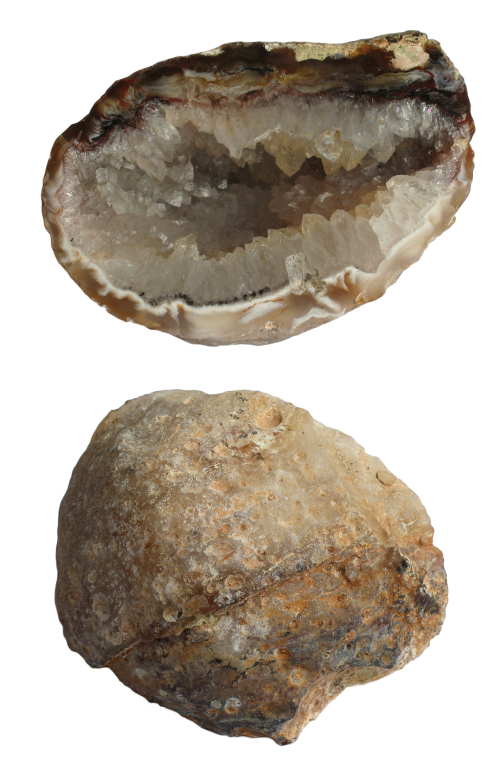
Throwback Thursday #233: Origin of Geodes
Read more: Throwback Thursday #233: Origin of GeodesThis is Throwback Thursday #233. In these, we look back into the past at ESCONI specifically and Earth Science in general. If you have any contributions, (science, pictures, stories, etc …), please send them to esconi.info@gmail.com. Thanks! ESCONI held a geode field trip to Vickers Geodes in Hamilton, IL in August 2024. The area around Hamilton, IL, and Keokuk, IA, is home to several sites where geode collectiing is popular. Throwback Thursday #14 looked back at past ESCONI geode field trips to the area. But what exactly is a geode, and how do they form? Below is an excerpt from the…
-

Earth Had a Ring 466 Million Years Ago, Study Says
Read more: Earth Had a Ring 466 Million Years Ago, Study SaysThe New York Times has a nice review of a study published in the journal Science Direct that postulates the Earth had a ring during the Ordovician Period, some 466 million years ago. There are numerous (21!) impact craters that date to the period. At the time, Earth was an island world, with life being mostly marine. Scientists have long speculated about the origin of the Ordovician meteor event, when Earth was bombarded by space rocks at an unusually high rate, producing dozens of craters and sediments packed with meteorites. Previous research implicated a large asteroid that broke apart in the main…
-

NPR: Paleontologist Ken Lacovara and the fifth extinction that killed the dinosaurs
Read more: NPR: Paleontologist Ken Lacovara and the fifth extinction that killed the dinosaursNPR’s Ted Radio Hour has a video segment with paleontologist Ken Lacovara speaking on the extinction event at the end of the Cretaceous Period. That event took out the non-avian dinosaurs and led to the rise of the mammals. Paleontologist Ken Lacovara is founder of a new museum and fossil park in New Jersey where visitors can see how dinosaurs lived 66 million years ago before an asteroid wiped out 75% of life on earth. About Ken Lacovara Paleontologist Kenneth Lacovara is the founder and director of the Edelman Fossil Park and Museum in Mantua Township, New Jersey. He discovered the remains…
-

Mazon Monday #235: Desden Lakes Field Trip June 1976
Read more: Mazon Monday #235: Desden Lakes Field Trip June 1976This is Mazon Monday post #235. What’s your favorite Mazon Creek fossil? Tell us at email:esconi.info@gmail.com. Dresden Lakes was productive Mazon Creek fossil locality just east of Morris, IL. It was known for large concretions with detailed fossils in dark colors, grays and blacks. Unfortunately, the dark colors can be hard to photograph. Large concretions generally means large fossils. Plants were very common as it was a terrestrial deposit. However, interesting animals, including fish and xxx, were found there. We’ve sold a few specimens from Dresden at ESCONI shows. The photos below came from Kathy Dedina, who was president of…
-

Paleontologists find omnivorous ancestor of the giant panda, revealing it was not always just a bamboo eater
Read more: Paleontologists find omnivorous ancestor of the giant panda, revealing it was not always just a bamboo eaterPhys.org has a nice summary of a new paper in the journal Papers in Palaeontology and Geobios, which sheds light on the ancestry of the giant panda. The fossils were found at the Hammerschmiede clay pit, a fossil site in southern Germany that dates to about 11.5 million years ago. Fossil teeth of Kretzoiarctos beatrix, which is thought to be the oldest ancestor of the modern giant panda, are found a this locatity. Researchers looked at the macro- and micromorphology of these teeth and found clues to the dietary habits of these animals. At the macro level, the form of the teeth…
-
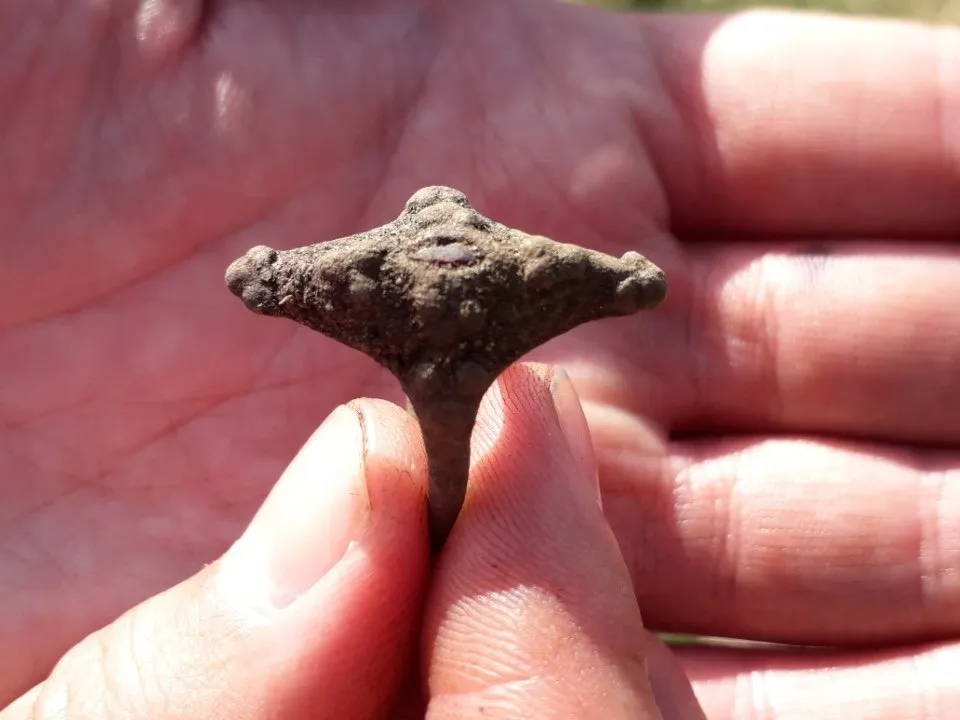
Volunteer Discovers 1,000-Year-Old Ring on the Last Day of an Excavation in Scotland
Read more: Volunteer Discovers 1,000-Year-Old Ring on the Last Day of an Excavation in ScotlandSmithsonian Magazine’s “Smart News” has a piece on the discovery of a 1,000-year-old ring in Scotland. The ring was found by a volunteer on an archaeology dig led by a researcher at the University of Aberdeen. The ring is believed to have belonged to the Picts, a group of people that lived parts of present-day northeastern and eastern Scotland during the early part of the Middle Ages. The Picts were called the “Painted People” because they decorated their skin using body paint (or possibly tattooing). “I was just clearing the floor of a building, and at first I saw a…
-

Fossil Friday #231: Classic Essexella asherae
Read more: Fossil Friday #231: Classic Essexella asheraeThis is the “Fossil Friday” post #231. Expect this to be a somewhat regular feature of the website. We will post any fossil pictures you send in to esconi.info@gmail.com. Please include a short description or story. Check the #FossilFriday Twitter hash tag for contributions from around the world! Ah, the Blob! Did you see Mazon Monday #227 a few weeks ago?… That post was called “Ode to a Blob”. Essexella asherae is a classic Mazon Creek fossil. It was described in 1979 and named for Helen Asher, a prolific Mazon Creek collector (see Fossil Friday #158). Helen was known to…
-

ESCONI September 2024 Paleontology Study Group Meeting – September 21st, 2024 – “Show and Tell”
Read more: ESCONI September 2024 Paleontology Study Group Meeting – September 21st, 2024 – “Show and Tell”Day/Date: SATURDAY, SEPTEMBER 21, 2024 Time: 7:30PM Location: In-person at College of DuPage: Technical Education Center (TEC) Building – Room 1038B Map. Presented by: John Catalani Bring your fossil specimens that you have collected over the summer season this year, or some other time, to the in-person meeting. These fossils could have been collected on ESCONI Field Trips or individually. You do not have to have all specimens identified ahead of time. Bring your specimens in, with the location where they were collected, and probably one or another member can help identify them. Paleontology is a field science and, as most of…
-
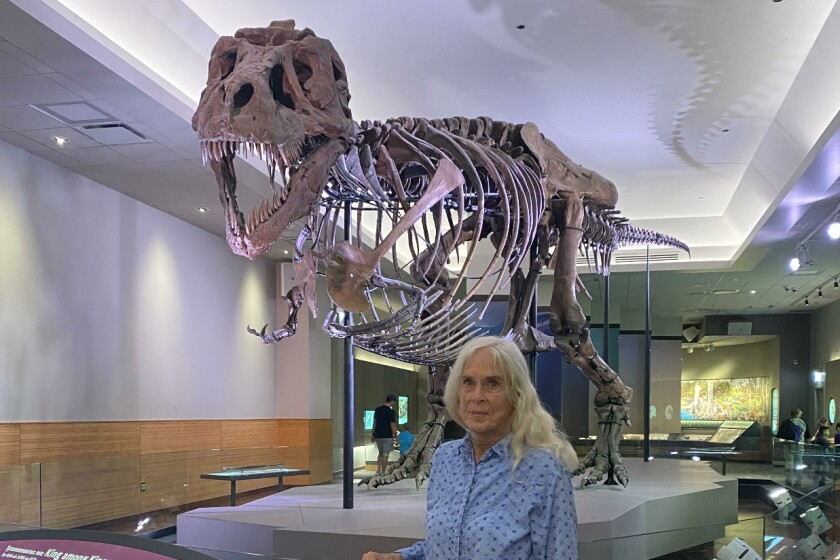
Throwback Thursday #232: Sue visits SUE
Read more: Throwback Thursday #232: Sue visits SUEThis is Throwback Thursday #232. In these, we look back into the past at ESCONI specifically and Earth Science in general. If you have any contributions, (science, pictures, stories, etc …), please send them to esconi.info@gmail.com. Thanks! So, Sue Hendrickson had a secret visit with her beloved namesake SUE the T. rex in July. The Sneed had an article in the Sun Times in July. Have a look on one of the archive sites, if you can’t read it. Before we get nasty letters, Sue is an archaeologist, not a paleontologist. That caption is not a mistake or misunderstanding of…
-
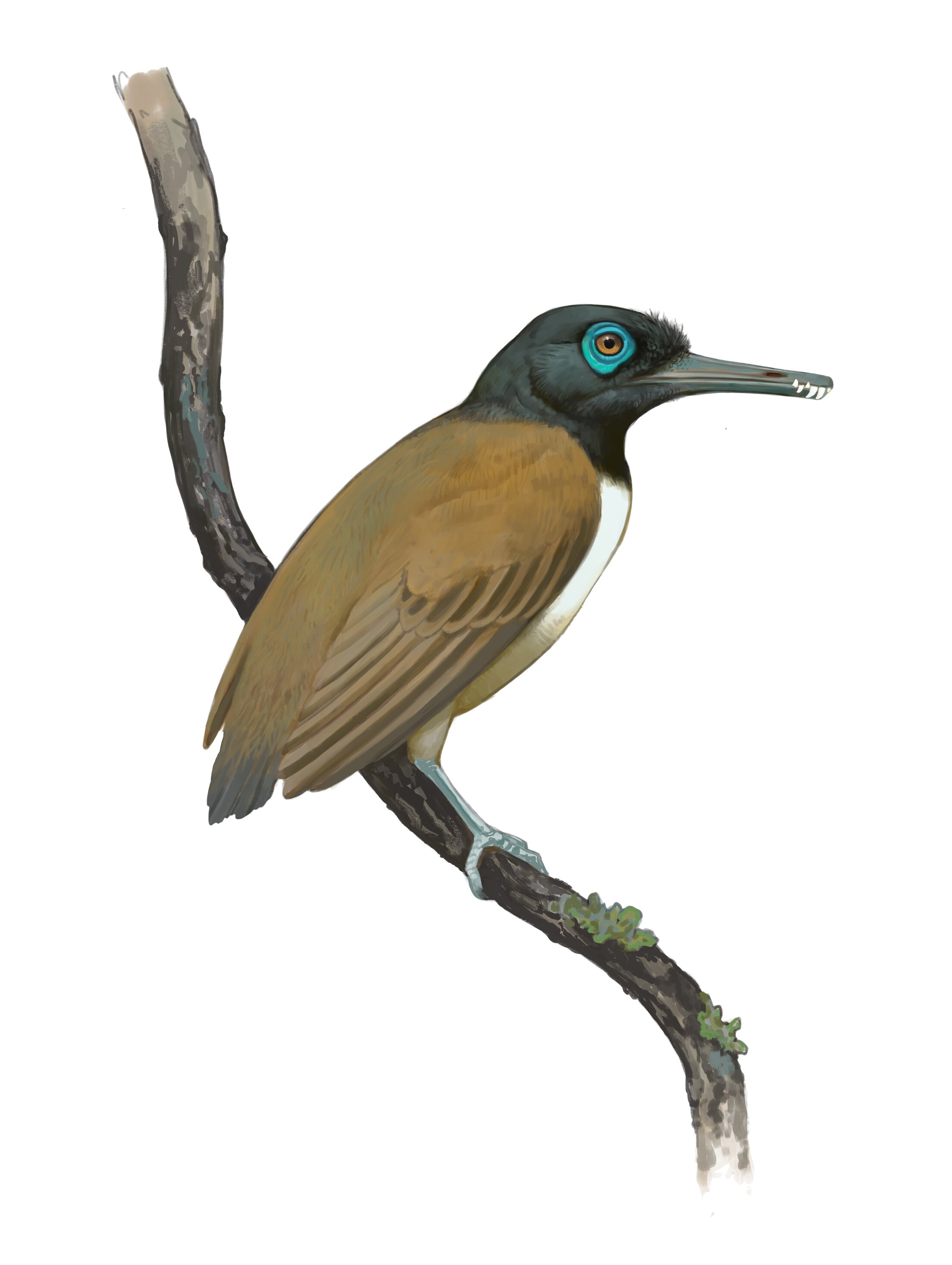
Paleontologists discover fossil birds with teeth had seeds in their stomachs, indicating that they ate fruit
Read more: Paleontologists discover fossil birds with teeth had seeds in their stomachs, indicating that they ate fruitPhys.org has a piece about birds with teeth. As rare as hen’s teeth is only a phrase for modern times… back in the Mezozoic – sometimes referred to as the “Age of Reptiles”, many birds had teeth. Longipteryx chaoyangensis is the subject of a new paper in the journal Current Biology. L. chaoyangensis lived during the early Cretaceous Period about 120 million years ago. Researchers at the Field Museum of Natural History in Chicago, IL, found fossilized seed in the stomach of a specimen of L. chaoyangensis. This discovery calls into question the hypothesis that toothed birds ate only fish…
-
ESCONI Mazon Creek Fossil Day – October 12th, 2024 in Coal City
Read more: ESCONI Mazon Creek Fossil Day – October 12th, 2024 in Coal CityESCONI will be holding the 2024 Mazon Creek Fossil Day on October 12th, 2024 from 10 AM to 3 PM at the Coal City Public Library. Please come out and bring your Mazon Creek fossils. There will displays of Mazon Creek fossils and knowledgeable people who can identify your fossils. Coal City Public Library85 N. Garfield St.Coal City, ILMain Meeting Room Lecture on Mazon Creek Fossils 1 PM Come on out for another great and informative day!
-

Mazon Monday #234: Braceville Field Trip Report for Fall 2024
Read more: Mazon Monday #234: Braceville Field Trip Report for Fall 2024This is Mazon Monday post #234. What’s your favorite Mazon Creek fossil? Tell us at email:esconi.info@gmail.com. ESCONI hosted the Fall 2024 edition of the Braceville Field Trip over the weekend of September 7th and 8th. The primary focus of the event was searching for Mazon Creek fossils and concretions. The site, commonly referred to as “Worm Hill,” is known for its variety of marine fossils, including worms, jellyfish, sea anemones, and clams, with marine worm fossils being particularly common. The weather was perfect for both days of the event, with temperatures in the mid-70s and clear skies, completely free of…
-
120-Million-Year-Old Footprints of Polar Dinosaurs Discovered in Australia
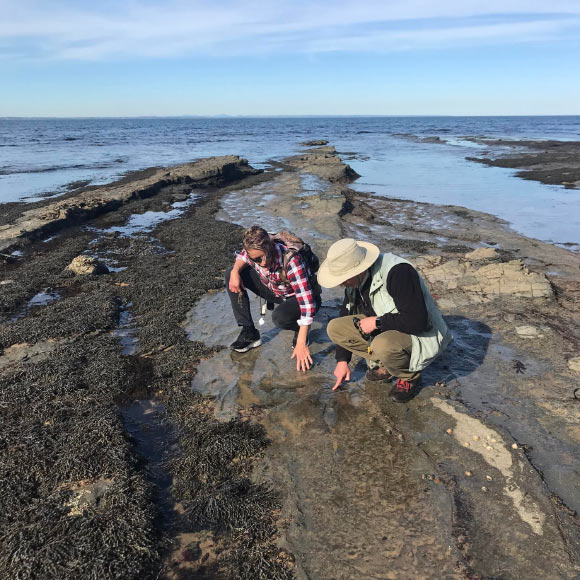
Read more: 120-Million-Year-Old Footprints of Polar Dinosaurs Discovered in AustraliaSciNews has a story about the discovery of dinosaur footprints in Australia. The footprints date back 120 million years, which corresponds with the early Cretaceous Period. At that time, Australia was still connected to Antarctica. The footprints were found in the Wonthaggi Formation south of Melbourne, Australia. They were made by a medium to large theropod and a small ornithopod. “These numerous tracks are the best evidence yet that these former polar environments supported large carnivores,” said Emory University’s Professor Anthony Martin. “The large theropods would likely have fed on prey such as smaller dinosaurs, fish and turtles.” “The hip height…
-
PBS Eons: How the Elephant got its Trunk
Read more: PBS Eons: How the Elephant got its TrunkThere’s a new episode PBS Eons. This one is about the evolution of a flexible trunk in elephants. Long-jawed proboscideans were doing pretty well for themselves. That is, until they were all rapidly replaced with proboscideans with long, flexible trunks instead: mammoths, mastodons, and our modern elephants. What suddenly made long jaws such a liability? Well, it looks like we can thank a changing climate for the evolution of the elephant’s trunk.
-
Fossil Friday #230: Trilobites from Penn Dixie
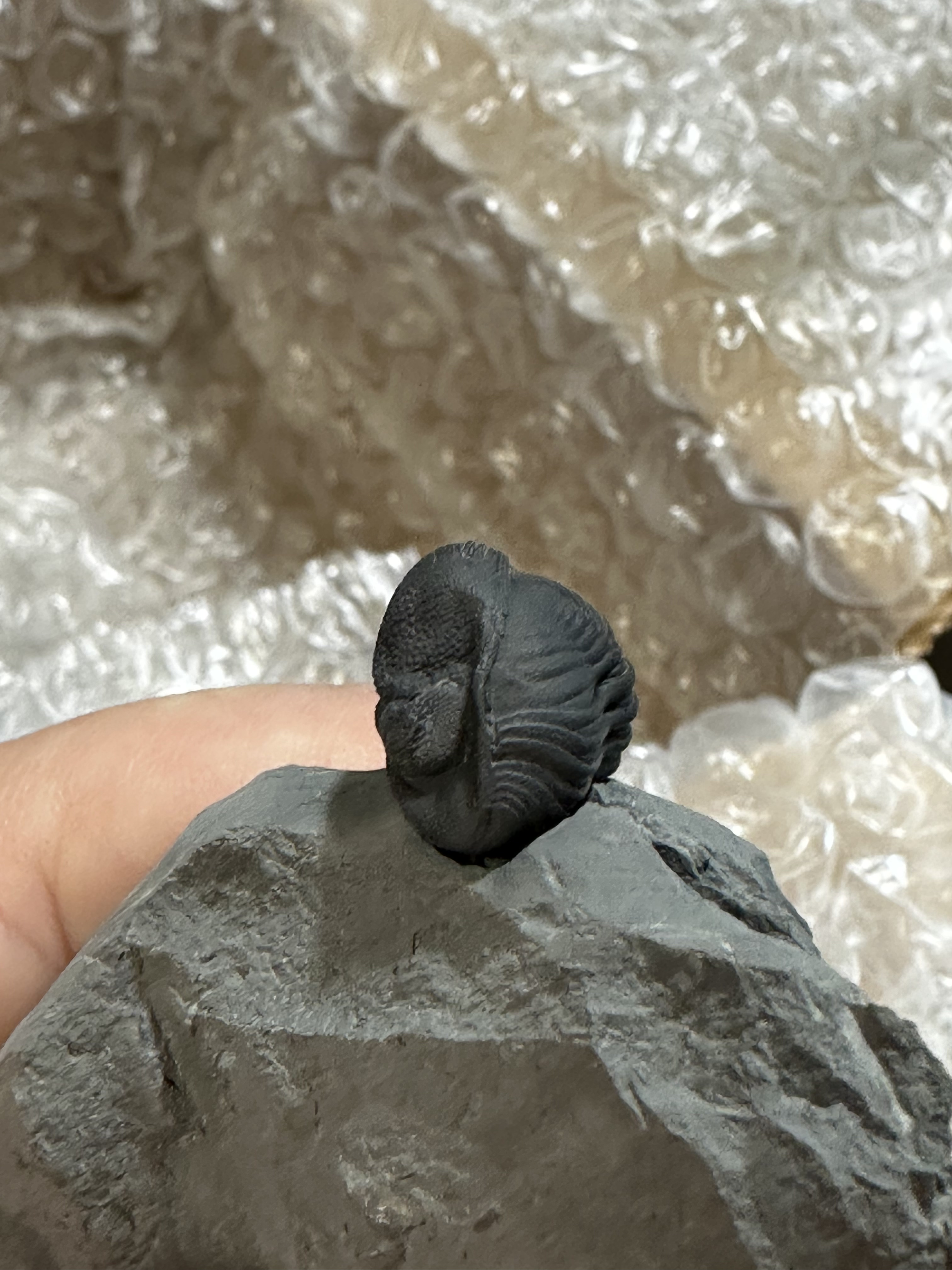
Read more: Fossil Friday #230: Trilobites from Penn DixieThis is the “Fossil Friday” post #230. Expect this to be a somewhat regular feature of the website. We will post any fossil pictures you send in to esconi.info@gmail.com. Please include a short description or story. Check the #FossilFriday Twitter hash tag for contributions from around the world! Penn Dixie is on most fossil collectors’ bucket lists. I experienced the “Digging With the Experts” event last year and had a great time. I would definitely recommend. You will find nice trilobites (enrolled and prone), horn corals, and brachiopods galore, along with the occasional rare cephalopods and crinoids. Trilobites can be…
-
Throwback Thursday #231: September 1969 Field Trip – Sylvania Ohio on Labor Day Weekend
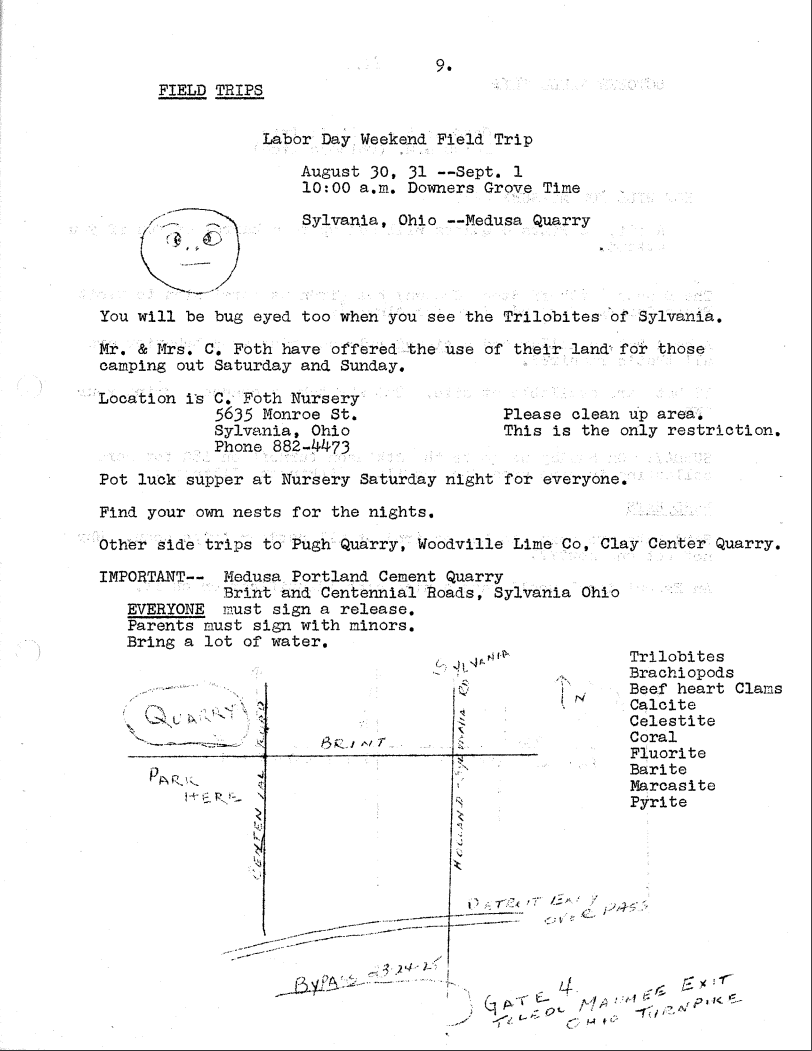
Read more: Throwback Thursday #231: September 1969 Field Trip – Sylvania Ohio on Labor Day WeekendThis is Throwback Thursday #231. In these, we look back into the past at ESCONI specifically and Earth Science in general. If you have any contributions, (science, pictures, stories, etc …), please send them to esconi.info@gmail.com. Thanks! Here is a poem about a September 1969 Field Trip to Sylvania, OH. It was written by Bill and Virginia Popp and appeared in the November 1969 (20th Anniversary) Issue of the ESCONI Newsletter. They were given Meritorious Service Awards in 1973. Virginia was President in 1981 and 1982, 1st Vice President in 1979 and 1980, 2nd Vice President in 1977 and 1978,…
-
Miners Unearth a Mummified Woolly Rhino in Siberia, With an Intact Horn and Soft Tissue
Read more: Miners Unearth a Mummified Woolly Rhino in Siberia, With an Intact Horn and Soft TissueSmithsonian Magazine has an article about the discovery of a mummified woolly rhinoceros in Siberia. The animal was found by gold miners earlier this summer in a quarry in the rural Oymyakonsky District of Russia. It’s very well preserved with soft tissue and a complete horn. Some scientists have speculated that ancient DNA might even be present. At 6 feet tall and 16 feet long, woolly rhinos were imposing plant-eaters during the Ice Age. Today, rhinos have one or two horns, depending on the species—the prehistoric rhinoceros had two, and its front horn sometimes grew more than three feet long. Images of…

ESCONI Gem, Mineral, and Fossil Show
Most Recent Post
- PBS Terra: The Cascadia Megaquake Is Inevitable. And It Will Reshape America Forever
 PBS Terra has an interesting new video. This one covers the history, science, and future of the Cascadia Subduction Zone in the Pacific Northwest.
- About ESCONI
- Around the Web
- Calendar of Events
- Code of Ethics and Conduct
- ESCONI Books for Sale
- ESCONI Gem, Mineral, and Fossil Show
- ESCONI in the News
- ESCONI Videos
- Field Trips
- Flashback Friday
- Fossil Friday
- Mazon Creek
- Mazon Monday
- Member Spotlight
- Membership Information
- Reference Material
- Throwback Thursday
- Trilobite Tuesday
Field trips require membership, but visitors are welcome at all meetings!
| Friday, April 10th | General Meeting – 8:00 PM via Zoom. Jessica Hull will present “Life in the Devonian Period, The Age of Fishes.” |
| Saturday, April 11th | Junior Study Group Meeting – 2:00 PM, in person at the College of DuPage Technical Education Center (TEC) Building – Room 1038A (Map). Katherine Howard will present on Sand and Sediment Collecting. Specifics of this meeting are available from Scott Galloway, 630-670-2591, gallowayscottf@gmail.com. |
| Saturday, April 18th | Paleontology Study Group – 7:30 PM via Zoom and in person at the College of DuPage, TEC, Room 1038B (Map). Keith Robitschek will present “Digging the Marl of the Lance Formation.” |
| Friday, April 24th | MAPS Expo XLVII – Springfield, IL. |
| Saturday, April 25th | MAPS Expo XLVII – Springfield, IL. |
| Sunday, April 26th | MAPS Expo XLVII – Springfield, IL. |
| No meeting this month | Mineralogy Study Group |