
-
Indian Mound Hike Planned for September
Read more: Indian Mound Hike Planned for SeptemberWinfield Mounds Hike 10:00 am – 11:30 am Join a naturalist-led hike to the only known prehistoric American Indian mounds in DuPage County. Ages 12 and up; under 18 with an adult. Free. Registration begins Sept. 10. Call (630) 942-6200.
-
Spectacular Dinosaur Finds in China
Read more: Spectacular Dinosaur Finds in ChinaVia Newsweek: … The trove of fossils at Zhucheng is probably the largest single deposit of dinosaur bones in the world. And it’s just the latest in a string of spectacular discoveries by the 42-year-old Xu, who’s arguably helped uncover more important finds than any other dinosaur hunter on the planet. “I am quite certain that Xu Xing has described more new kinds of dinosaurs than anyone in the history of dinosaur paleontology,” says Peter Dodson, professor of paleontology at the University of Pennsylvania and coeditor of the book The Dinosauria…
-
Mesozoic Paleontology News
Read more: Mesozoic Paleontology NewsFound a new blob, Love in the Time of Chasmosaurs, that includes a list of news.
-
Archaeology Combines with Astrophysics
Read more: Archaeology Combines with AstrophysicsVia PhsyOrg: Lucy Fortson, an astrophysicist and Associate Professor in the College of Science and Engineering at the University of Minnesota is part of a collaboration called Ancientlives which has received a grant to apply the analysis tools of astrophysics to help decipher a collection of ancient Egyptian papyri… Using an interface first developed for the Zooniverse collaboration to allow the general public to identify the shapes of galaxies, volunteers will be able to click on places where they think a letter might be. This data should train the algorithms to improve their ability to translate the texts.
-
Archaeopteryx Not Oldest Bird
Read more: Archaeopteryx Not Oldest BirdFrom MSNBC via geology.com: The newfound fossil of a 155 million-year-old feathered dinosaur has led scientists to claim that Archaeopteryx, the species long held forth as the “oldest bird,” is no bird at all. Chinese researchers made the claim in Thursday’s issue of the journal Nature, and an outside expert says the study “is likely to rock the paleontological community for years to come.” Ohio University paleontologist Lawrence Witmer noted that the latest research, focusing on a fossil species dubbed Xiaotingia zhengi, comes 150 years after the discovery of Archaeopteryx, which marked a milestone in the study of the origin of birds. “It’s…
-
Argonne Lab Increases Knowledge of Rock Porosity
Read more: Argonne Lab Increases Knowledge of Rock PorosityVia PhysOrg: New information about how most of the Earth’s crust formed has been uncovered by investigators who utilized the Advanced Photon Source (APS) at Argonne National Laboratory to obtain unprecedented, three-dimensional x-ray images of melted rock. Their results, published in the journal Science, offer a more sophisticated picture of rock porosity and a resolution of the discrepancy between permeability and melt velocity.
-

National Fossil Day Art And Photography Contest
Read more: National Fossil Day Art And Photography ContestThe National Fossil Day partners are sponsoring an art and photography contest to celebrate the second annual National Fossil Day. National Fossil Day is scheduled for Wednesday, October 12, 2011, during Earth Science Week. The theme for this contest is “Fossils in My Backyard.” The age groups are 5-8, 9-13, 14-18, and an adult group, which includes people 19 and older. The winning artworks and photographs will appear on the National Fossil Day website starting on or after October 12th, 2011. All submissions must be postmarked by October 5, 2011
-
Videos from Scientific American
Read more: Videos from Scientific AmericanScientific American’s web site offers interesting videos – example of interview with illustrator of Dinosaur Death Trap, how to create meteor crater sites in your kitchen, interview with the director of Cave of Dreams …
-

Paleobiology Database
Read more: Paleobiology DatabaseThe Paleobiology Database seeks to provide researchers and the public with information about the entire fossil record. You can use the site to find out about fossil collections, individual plants and animals, taxonomic groups, references to publications, stratigraphic units, time scales, and time intervals. All of our data can be downloaded, including collection, occurrence, or specimen records, taxonomic names and opinions, measurements of specimens, and Neptune occurrences. Tools on the site also let you generate paleomaps, data summary tables, lists of common taxa, first appearances, diversity curves, ecological statistics, time scale confidence intervals, stratigraphic confidence intervals, and (just for fun)…
-
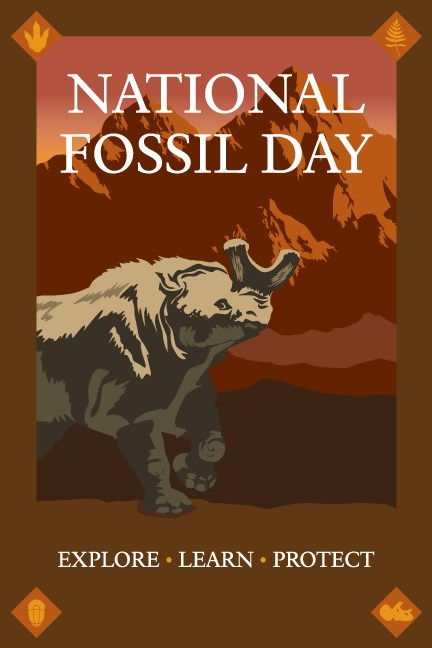
National Fossil Day, Wed. Oct. 12
Read more: National Fossil Day, Wed. Oct. 12ESCONI web site received this request for our involvement in creating a local event of our choosing for National Fossil Day from Eva Lyon, the National Fossil Day coordinator. Since the day is Wednesday, October 12, and coming up soon, I wanted to see if anyone was interested in this idea. While I could have waited till the General Meeting or the Board Meeting to bring up, by then it would have been almost too late for organizing some activity. So adding this post to the Yahoo ESCONI Gropu Discussion Board.Thoughts? Anyone interested in doing?
-
Exoskeleton Remnants Found in Paleozoic Fossils
Read more: Exoskeleton Remnants Found in Paleozoic FossilsVia Science Daily – Surprising new research shows that, contrary to conventional belief, remains of chitin-protein complex — structural materials containing protein and polysaccharide — are present in abundance in fossils of arthropods from the Paleozoic era. Previously the oldest molecular signature of chitin-protein complex was discovered in 25-million-year-old Cenozoic fossils and remnants of structural protein have also been discovered in 80 million-year-old Mesozoic fossils…
-
Arkansas Banning Injection Wells?
Read more: Arkansas Banning Injection Wells?Via geology.com : Hundreds of earthquakes have occurred near the communities of Greenbrier and Guy, Arkansas. The earthquakes started to occur when wastewater from Fayetteville Shale drilling operations was injected into deep rock formations and their frequency immediately declined when injection activities were halted. Now the state is considering a ban on injection wells in that area….
-
Events in August, 2011
Read more: Events in August, 2011August 26–28—South Bend, IN. Michiana Gem and Mineral Society’s 48th Annual Jewelry, Gem, and Mineral Show and Sale, St. Joseph Cnty. 4-H Fairgrounds, Esther Singer Bldg., 5177 S. Ironwood Rd. Info.—Marie Crull, 574/272-7209, or crullb2@sbcglobal.net, or sauktown.com/Michiana. Friday, August 26 – ESCONI Board Meeting. 7:30 p.m. NOTE! ROOM CHANGE! College of Dupage, Student Resource Center, Room 1450A – (find in the back of the cafeteria!) Sat., August 27 “Fossil Collecting Field Trip” Lizzadro Museum of Lapidary Art, Ages 8 yrs. to Adult, 9:00 a.m. to 3:00 p.m., Fee: $43.00 per person, Museum Members $38.00, Reservations Required,(630) 833-1616 Sat, Sun? August…
-
Ancient Source of Earth’s Biggest Eruptions Found
Read more: Ancient Source of Earth’s Biggest Eruptions FoundFrom the ESCONI Yahoo Group, Dave Carlson posts: Ancient Source of Earth’s Biggest Eruptions Found See http://news. discovery. com/earth/ ancient-earth- volcanoes- 110728.html Dave Researchers believe that several of the largest volcanic eruptions in Earth’s history were fueled by magma from a primitive reservoir in the mantle that has remained unchanged for 4.5 billion years, a remnant of the material that formed the early Earth…
-
USGS Free Textbook on Hydrology
Read more: USGS Free Textbook on HydrologyVia Geology.com from USGS: To learn about basic ground water concepts you can download and print a free copy of USGS Water Supply Paper 2220, Basic Ground-Water Hydrology by Ralph Heath. This is a large .pdf file but worth the download wait. A great free textbook for a college course.
-
Ancient Seas May Have Poisoned Life
Read more: Ancient Seas May Have Poisoned LifeVia Science News: Soon after complex animals made their first great strides onto the stage of life, the oceans brewed up a toxic chemical mix that put the brakes on evolutionary innovation, suggests a paper in the Jan. 6 Nature. The culprits? Too little oxygen and too much sulfur dissolved in coastal waters, reports a team led by geochemist Benjamin Gill of Harvard University. Ancient creatures such as trilobites and brachiopods could not cope with the changes, and many of them went extinct. The “remarkable” new data are the first to link a changing ocean environment to some of the…
-
-
Burrowing Protoceratops?
Read more: Burrowing Protoceratops?Via David Hone’s Archosaur Musings blog: … it looks rather like this animal was buried and tried, and failed, to get out. The formation is apparently made up of aeolian (wind deposited) sediments, so this is not something that drowned or was buried in a river channel etc., but was trapped in a sandstorm, collapsing sand dune or something similar. The head is up and the body down, implying that it survived long enough to try and make an escape but never succeeded. There are, apparently (I’ve not seen them) a number of specimens like this in other collections, and…
-
How does one measure eggshell thickness in dinosaurs?
Read more: How does one measure eggshell thickness in dinosaurs?Interesting article from Scientific American about their expedition findings.
-
Peru Fossils Attract Collectors and Others
Read more: Peru Fossils Attract Collectors and OthersVia NYTIMES: … But to the bone hunters who stalk the Ocucaje Desert each day, the punishing winds here have exposed a medley of life and evolution: a prehistoric graveyard where sea monsters came to rest 40 million years ago. These parched lands, once washed over by the sea, guard one of the most coveted troves of marine fossils known to paleontology…

ESCONI Gem, Mineral, and Fossil Show
Most Recent Post
- Throwback Thursday #312: Ron Schinderle Donation
 Barb Schinderle stopped by ESCONI Show last month to drop off a donation of her late husband Ron’s fossils. Ron passed away in 2021. He was a long time ESCONI member and an avid fossil collector . He went on many ESCONI field trips. A group of us remember him fondly from our many trips to Pit 11 and Fossil Rock Campgrounds to collect Mazon Creek fossils.
- About ESCONI
- Around the Web
- Calendar of Events
- Code of Ethics and Conduct
- ESCONI Books for Sale
- ESCONI Gem, Mineral, and Fossil Show
- ESCONI in the News
- ESCONI Videos
- Field Trips
- Flashback Friday
- Fossil Friday
- Mazon Creek
- Mazon Monday
- Member Spotlight
- Membership Information
- Reference Material
- Throwback Thursday
- Trilobite Tuesday
Field trips require membership, but visitors are welcome at all meetings!
| Friday, April 10th | General Meeting – 8:00 PM via Zoom. Jessica Hull will present “Life in the Devonian Period, The Age of Fishes.” |
| Saturday, April 11th | Junior Study Group Meeting – 2:00 PM, in person at the College of DuPage Technical Education Center (TEC) Building – Room 1038A (Map). Katherine Howard will present on Sand and Sediment Collecting. Specifics of this meeting are available from Scott Galloway, 630-670-2591, gallowayscottf@gmail.com. |
| Saturday, April 18th | Paleontology Study Group – 7:30 PM via Zoom and in person at the College of DuPage, TEC, Room 1038B (Map). Keith Robitschek will present “Digging the Marl of the Lance Formation.” |
| Friday, April 24th | MAPS Expo XLVII – Springfield, IL. |
| Saturday, April 25th | MAPS Expo XLVII – Springfield, IL. |
| Sunday, April 26th | MAPS Expo XLVII – Springfield, IL. |
| No meeting this month | Mineralogy Study Group |