
-
Google Doodle Honors Geologist Today
Read more: Google Doodle Honors Geologist TodayVia the Times of India: … search giant Google posted the year’s first Doodle, marking the 374th birth anniversary of the world famous Danish geologist Nicolas Steno, also known as the father of Geology. Steno is also known for his valuable contribution in the field of anatomy. Today’s Doodle, which spells out the name of the search engine, appears in the form of earth strata with fossils in various bottom layers and a green crust. On clicking the Doodle, users land on the search results page for Nicolas Steno. Born in Copenhagen to a goldsmith family, Steno left the place…
-
Age of Colorado River
Read more: Age of Colorado RiverVia geology.com from Arizona Geology Magazine: Arizona’s Grand Canyon reveals an enormous sequence of rocks that represent more than a third of the 4.5-billion-year age of the Earth. The canyon itself, however, is quite young in comparison, with most or all canyon incision occurring over the past 5 million years according to most interpretations. Careful investigative work has refined this age determination, as reported in this brief article….
-

Fossil LB1 Update Video
Read more: Fossil LB1 Update VideoVia Past Horizons Archaeology TV: The Mystery of the Hobbit. Ian Tattersall, paleoanthropologist and curator at the American Museum of Natural History, describes the discovery of fossil LB1 – 12/6/11
-
Leo Lesquereux 1879 Book
Read more: Leo Lesquereux 1879 BookGeorge Langford III writes about the Lesquereux book on Mazon Creek fossils and provides a digitized and cleaned up version of the original book.
-
Free Day at Adler Planetarium, Monday 1/9
Read more: Free Day at Adler Planetarium, Monday 1/9Free day at Adler Planetarium tomorrow.
-
Field Trip: March 3, 2012: Ancient “Elephants” Marathon
Read more: Field Trip: March 3, 2012: Ancient “Elephants” MarathonCome join us on Saturday, March 3, 2012 for a field trip as we explore many of the ancient elephants (a.k.a., mammoths and mastodons) that have been excavated and preserved around DuPage County. Jack MacRae, Naturalist, Forest Preserve District of DuPage County will lead us on the day-long excursion and field experience. This is a field trip to supplement Mr. MacRae’s January, 2012 ESCONI general meeting presentation and should bring additional insights into the area’s glacial and post-glacial past. We will meet at 9:00 a.m. for our first stop, Fullersburg Woods Nature Education Center, 3609 Spring Road (off of York…
-
Mineral Shows in 2012
Read more: Mineral Shows in 2012The website, The Vug, lists minerals shows for the year.
-
Call for Papers for TerQua – 2nd Annual Meeting of the Tertiary and Quaternary Paleontologic Studies Society
Read more: Call for Papers for TerQua – 2nd Annual Meeting of the Tertiary and Quaternary Paleontologic Studies SocietyTerQua: The 2nd Annual Meeting of the Tertiary and Quaternaty Paleontologic Studies Society Call for Abstracts:Those wishing to submit an abstract for consideration for a presentation should email an abstract to Dr. Bruce Rothschild at Kansas University (BMR@KU.edu). Abrtracts should follow the Journal of Vetebrate Paleontology format. Abstract Deadline is March 15, 2012 Registration details can be found on their website – http://www.wix.com/societycenozresearch/terqua-2012.
-

Events in January
Read more: Events in JanuaryFri. 1/27 – ESCONI Board Meeting, 7:30 p.m. College of Dupage, Building K, Rm 161 Sat. 1/28 – ESCONI Archaeology Study Group Meeting, 7:30 p.m. College of Dupage, Building K, Rm 161. Group discussion on, What’s New on the Technological Front in Archeology Research.
-
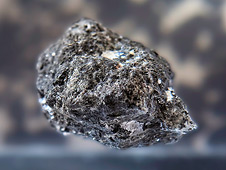
Rocks From Moon in Australia Contain Tranquillityite
Read more: Rocks From Moon in Australia Contain TranquillityiteVia Science: A mineral previously known only from moon rocks and lunar meteorites has now been found on Earth. Researchers discovered the substance—dubbed tranquillityite after the Sea of Tranquility, where Apollo 11 astronauts landed on the Moon in July 1969— at six sites in Western Australia. The mineral occurs only in minuscule amounts and has no economic value, but scientists say it could be used for age-dating the rocks in which it occurs. Photograph: “This Moon Rock, from Apollo 14, visited three classes at Wadena-Deer Creek, a K-12 school in Minnesota, where Debra’s brother David teaches. Credit: NASA/Sean Smith
-
Meteorite In Russia Is a Quasicrystal
Read more: Meteorite In Russia Is a QuasicrystalVia PhysOrg: a simple rock found in a remote part of Russia. That simple rock, which has been identified as a quasicrystal, is, according to team who has been doing research on it, as they report in PNAS, most likely part of a meteorite that came from a time not long after the birth of our solar system….
-
Most Memorable Geologic Event You Experienced
Read more: Most Memorable Geologic Event You ExperiencedThe blog, Accretionary Wedge, is calling for posts about your most memorable or signifcant geologic event that you have directly experienced –
-
Fossil of Sauropod in Antarctica
Read more: Fossil of Sauropod in AntarcticaVia Christian Science Monitor: Fossil remains of sauropods – dinosaurs with long necks and tails, weighing up to 100 tons – have been found on every continent but one. Now, scientists report unearthing the first evidence of these animals in Antarctica, the last holdout. The Argentine research team is reporting the discovery of a single vertebra and links it to a group of sauropods known as titanosaurs, hefty plant-eaters that were said to dominate the ranks of herbivores during their heyday between 90 million and 65 million years ago….The find, previewed at the Society of Vertebrate Paleontology‘s annual meeting in…
-
2011 in Paleontology
Read more: 2011 in PaleontologyThe Smithsonian blog has posted a great article about the 2011 in paleontology. google-site-verification: google59dc93f74453c3c5.html
-
Dinos on Christmas Trees
Read more: Dinos on Christmas TreesCheck out all the dinosaur ornaments on Christmas trees!
-
Cutting Stone
Read more: Cutting StoneFound this personal short description of cutting stone for lapidary.
-
Fracking and Quakes
Read more: Fracking and QuakesFrom Wall Street Journal: The company leading efforts to unlock the U.K.’s potentially vast shale-gas reserves suffered a setback Wednesday after a report found it was “highly probable” a controversial production technique caused two small earthquake tremors in the country earlier this year. The report, which was financed by U.K. energy company Cuadrilla Resources Ltd., pointed to “strong evidence” that the two minor earthquakes and 48 weaker seismic events resulted from Cuadrilla’s pumping drilling fluids used in hydraulic fracturing, or “fracking.” At the same time, the report said the events were the result of a “rare combination of geological factors.”…
-
Ferropericlase
Read more: FerropericlaseVia ScienceDaily: The crushing pressures and intense temperatures in Earth’s deep interior squeeze atoms and electrons so closely together that they interact very differently. With depth materials change. New experiments and supercomputer computations have revealed that iron oxide undergoes a new kind of transition under deep Earth conditions. Iron oxide, FeO, is a component of the second most abundant mineral at Earth’s lower mantle, ferropericlase….
-
Killer Claws
Read more: Killer ClawsVia Science Daily: New research from Montana State University’s Museum of the Rockies has revealed how dinosaurs like Velociraptor and Deinonychus used their famous killer claws, leading to a new hypothesis on the evolution of flight in birds…
-
Saber Toothed Chicken
Read more: Saber Toothed ChickenBoingBoing on the history of birds and dinosaurs: …The connection between dinosaurs and birds, while kind of flipping obvious once somebody points it out, was not much discussed among laypeople until I was in my teens. (That would be the 1990s, FYI.) But, among scientists, the idea of a dinosaur-bird relationship is nothing new. In fact, Thomas Henry Huxley was making that connection back in the 1860s…

ESCONI Gem, Mineral, and Fossil Show
Most Recent Post
- Throwback Thursday #312: Ron Schinderle Donation
 Barb Schinderle stopped by ESCONI Show last month to drop off a donation of her late husband Ron’s fossils. Ron passed away in 2021. He was a long time ESCONI member and an avid fossil collector . He went on many ESCONI field trips. A group of us remember him fondly from our many trips to Pit 11 and Fossil Rock Campgrounds to collect Mazon Creek fossils.
- About ESCONI
- Around the Web
- Calendar of Events
- Code of Ethics and Conduct
- ESCONI Books for Sale
- ESCONI Gem, Mineral, and Fossil Show
- ESCONI in the News
- ESCONI Videos
- Field Trips
- Flashback Friday
- Fossil Friday
- Mazon Creek
- Mazon Monday
- Member Spotlight
- Membership Information
- Reference Material
- Throwback Thursday
- Trilobite Tuesday
Field trips require membership, but visitors are welcome at all meetings!
| Friday, April 10th | General Meeting – 8:00 PM via Zoom. Jessica Hull will present “Life in the Devonian Period, The Age of Fishes.” |
| Saturday, April 11th | Junior Study Group Meeting – 2:00 PM, in person at the College of DuPage Technical Education Center (TEC) Building – Room 1038A (Map). Katherine Howard will present on Sand and Sediment Collecting. Specifics of this meeting are available from Scott Galloway, 630-670-2591, gallowayscottf@gmail.com. |
| Saturday, April 18th | Paleontology Study Group – 7:30 PM via Zoom and in person at the College of DuPage, TEC, Room 1038B (Map). Keith Robitschek will present “Digging the Marl of the Lance Formation.” |
| Friday, April 24th | MAPS Expo XLVII – Springfield, IL. |
| Saturday, April 25th | MAPS Expo XLVII – Springfield, IL. |
| Sunday, April 26th | MAPS Expo XLVII – Springfield, IL. |
| No meeting this month | Mineralogy Study Group |