
-
Oldest Artwork
Read more: Oldest ArtworkVia The Guardian: – (hat tip Floyd) An archaeologist says he has found the oldest piece of rock art in Australia and one of the oldest in the world: an Aboriginal work created 28,000 years ago in an outback cave. The dating of one of the thousands of images in the Northern Territory rock shelter, known as Nawarla Gabarnmang, will be published in the next edition of the Journal of Archaeological Science. The archaeologist Bryce Barker, from the University of Southern Queensland, said he found the rock in June last year but had only recently had it dated at the…
-
Rocks and Archaeo Items For Sale at Estate Sale
Read more: Rocks and Archaeo Items For Sale at Estate SaleFrom the estate sale company, “… many wonderful rock, mineral, and fossil specimens. You can go to estatesales.net and see more pictures. Many of the ones I took as well as other estate pictures will be refreshed this week. The house has a mold problem, so mold-sensitve shoppers beware. Thank you for getting the word out there. Your members WILL NOT BE DISAPPOINTED! Sincerely, Karen…” 6/21 – 6/24 – click here for more information and photos
-
Birth and History of Dolomites
Read more: Birth and History of DolomitesVia Scientific American: “The surface of the earth is far more beautiful and far more intricate than any lifeless world. Our planet is graced by life and one quality that sets life apart is it’s complexity.”Carl Sagan in “Cosmos – The Persistence of Memory“ In July 1791 the French aristocrat, adventurer and naturalist Diedonnè-Silvain-Guy-Tancrede de Gvalet de Dolomieu published a short article describing a peculiar limestone he had observed during a voyage in the Alps. The white rock was very similar to common limestone, but the mineral grains forming the unusual rock showed almost no reaction with acids, unlike crystals…
-
Fluid Study of Drinking Water Aquifers
Read more: Fluid Study of Drinking Water AquifersVia Geology.com from Platt: ‘…researchers are testing whether hydraulic fracturing fluids can travel thousands of feet via geologic faults into drinking water aquifers close to the surface, a US Department of Energy official said Friday. A fault from the Marcellus Shale formation, which is thousands of feet below the surface, could provide “a quick pathway for fracking fluids to migrate upwards,” said Richard Hammack, a spokesman for the US Department of Energy’s National Energy Technology Laboratory. The experiment is being carried out at a site in Greene County in southwestern Pennsylvania where conventional shallow wells were drilled and long since…
-
Man With Mammoth in Backyard
Read more: Man With Mammoth in BackyardFrom ABC 5 DesMoines via ESCONI Discussion Group: “… John enlisted expert help from the University of Iowa. The archeologists and paleontologists became excited because it’s unusual to have so many different bones from one mammoth in one place. The bones belong to John since he found them on his property. But owning a mammoth can be difficult. “Sometimes I get tired of moving bones around from one spot to the other,” he laughed. …”
-
One Million Nature Observations by Citizen Scientists
Read more: One Million Nature Observations by Citizen ScientistsVia Geology.com: Thanks to citizen-scientists around the country, the USA National Phenology Network hit a major milestone this week by reaching its one millionth nature observation.
-
Wisconsin’s Role in Niagra Falls
Read more: Wisconsin’s Role in Niagra FallsVia WXFS: “…Reser says geologists attribute Niagara Falls to a massive escarpment, or ridge that runs through Wisconsin, notably at High Cliff State Park near Lake Winnebago. “The ledge is one of those amazing little outcrops in Wisconsin that really literally shapes the state” Reser said. The escarpment runs nearly 1,000 miles through eastern Wisconsin where it forms the Door County peninsula, Lake Winnebago and the bay of Green Bay. It then moves through Upper Michigan, southern Ontario and enters western New York where is appears as Niagara Falls…”
-
June Mineral Shows List
Read more: June Mineral Shows ListFrom The Vug via Geology.com: Mineral Shows Near You in June
-
Underseas in Jerome, Arizona
Read more: Underseas in Jerome, ArizonaFrom Scientific American: “The town and its fluctuating fortunes are a humble reminder that much of human history has been influenced by the vagaries of the geologic processes that shape the land we inhabit, form the minerals from which we construct our civilizations, and produce the riches we covet.” -Lon Abbott and Terri Cook, Geology Underfoot in Northern Arizona. While tourists gazed rapt into the billions of years exposed in the layer-rock-cake walls of the Grand Canyon, my mother and I would hop down to Jerome. At Grand Canyon, you have to climb down thousands of feet to touch 2…
-
Lecture Tonight: New Cretaceous Allosauroids by Peter Makoviky
Read more: Lecture Tonight: New Cretaceous Allosauroids by Peter MakovikyGeneral Meeting: 8:00 p.m. College of Dupage, Building K, Rm 161. Peter Makoviky from the Field Museum of Natural History, speaking on “New Cretaceous Allosauroids from the Americas.”
-
Cahokia Mounds and the Bridge
Read more: Cahokia Mounds and the BridgeNPR – (hat tip Mary Fairchild) Across the Mississippi River from St. Louis’ famous Gateway Arch is a part of Illinois that’s a post-industrial wasteland. Some hope the construction of a new bridge across the Mississippi River will help revitalize the area. But archaeologists worry future development could destroy what’s left of another neighborhood — one that flourished there almost a thousand years ago. Working just ahead of the cranes and earth movers that are building a stretch of the interstate freeway, archaeologists have unearthed the remains of a sophisticated American Indian settlement no one knew existed. There are remnants…
-
Ancient Muck Still Breathing
Read more: Ancient Muck Still BreathingVia Science Now: At first glance, there doesn’t appear to be much happening in the mud buried 30 meters below the Pacific Ocean sea floor. But this ancient muck, which hasn’t had a fresh shot of food or sunlight since the days of the dinosaurs, still harbors life—if just barely. Scientists have discovered that deep-sea microbial communities, buried for 86 million years, are still consuming oxygen, albeit at extraordinarily low rates. These microorganisms eking out an existence in slow motion reveal just how little it takes to sustain life on our own planet, and potentially on others…
-
Houston Museum of Natural History New Hall of Paleontology
Read more: Houston Museum of Natural History New Hall of PaleontologyGreat photos of the opening of the new and improved Hall of Paleontology at the Houston Museum of Natural History.
-
New Findings on Bird Evolution
Read more: New Findings on Bird EvolutionVia PhysOrg: This new find indicates that a carpometacarpal morphology similar to that seen in modern birds probably evolved independently in enantiornithines and appeared earlier than in Ornithuromorpha, and demonstrates that character evolution in early birds was more complex than previously believed. Researchers reported in the latest issue of Journal of Vertebrate Paleontology 32(3), May 2012.
-
Earth Science Week 2012 Toolkits Available for Order
Read more: Earth Science Week 2012 Toolkits Available for OrderThe American Geosciences Institute (AGI) is now accepting advance orders for the Earth Science Week 2012 Toolkit. The Earth Science Week 2012 Toolkit contains educational materials for all ages that correspond to this year’s event theme, “Discovering Careers in the Earth Sciences.”
-
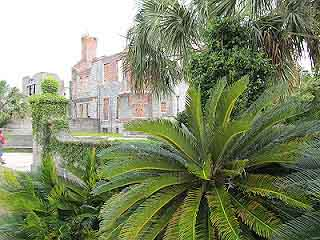
Cultural Ecology of the Atlantic Coast
Read more: Cultural Ecology of the Atlantic CoastCultural Ecology of the Atlantic Coast: Shell Middens and Ancient Tidal Forests By Mary Fairchild (Dungeness ; Cumberland Island.) It was just a year ago that I had first stumbled across some ancient scattered shells by the Carnegie Ruins on Cumberland Island and couldn’t stop thinking about them… Cultural ecology is a map of relationships between living things and their group dynamics over time. The Dungeness Historic District on Cumberland Island(pictured) and the surrounding area were inhabited for thousands of years by indigenous peoples who preceded the Tacatacuru. The Tacatacuru occupied Cumberland Island and the adjacent coastal areas of mainland Georgia. Their main village…
-
English Fossil Auction Coming June 2
Read more: English Fossil Auction Coming June 2From Skinner Auctions: The Natural History collection featured in the June Science, Technology & Clocks auction comprises over 125 lots of ancient history, including complete dinosaur skeletons, eggs and other bone fragments, a wooly mammoth tusk, fossilized fish, shark’s teeth, a sea scorpion, ammonites, trilobites, crinoids and more. Many lots of classic Jurassic fossils from the Lyme Regis, Dorset England were the property of pioneer collector Mary Anning and others carry the original catalogue labels of famed mid-19th century London dealer Bryce McMurdo Wright. For more information, please call Jay Dowling at 508-970-3131 or email science-tech@skinnerinc.com.
-
Richard Leakey Speaks On Evolution
Read more: Richard Leakey Speaks On EvolutionWritten by Associated Press via Washington Post – (hat tip Floyd whose daughter, Dr. Rebecca Ackermann, is a professor in the department of archaeology at the University of Cape Town, a former Leakey Scholar.) Paleoanthropologist Richard Leakey predicts end is near on debate over evolution … “If you look back, the thing that strikes you, if you’ve got any sensitivity, is that extinction is the most common phenomena,” Leakey says. “Extinction is always driven by environmental change. Environmental change is always driven by climate change. Man accelerated, if not created, planet change phenomena; I think we have to recognize that…
-

Events in June – July, 2012
Read more: Events in June – July, 2012June 22- 24 Lawrence Co. Rock Club 47th Annual Gem, Mineral & Fossil Show & SwapFr: 10-6:30, Sa: 9-6:30, Su: 10-4. Free admission.Monroe County Fairgrounds, at Airport Road and Hwy. 45 near Bloomington, IN. Contact Dave Treffinger: (812) 295-3463 July 19 “History of Area Coal Mining” – Presentation by Dick Joyce 7pm at Braidwood City Hall Refreshments and mingling at the Museum afterward. 7:00 PM – 8:30 PM http://www.braidwoodhistoricalsociety.org/apps/calendar/showEvent?calID=6439203&eventID=182898222 July 26-29 A Celebration of Agates – Internationally recognized agate experts and enthusiasts. Thursday – Agate seminars.Friday – Sunday Show with dealers, exhibits and speakers. AFMS & MWF Annual Meetings, with Awards…
-
Hawthorne Hill Nature Center Needs Rocks & Fossils!
Read more: Hawthorne Hill Nature Center Needs Rocks & Fossils!Hawthorne Hill Nature Center needs rocks! They are creating a family-friendly rock collection area. They are looking for all different kinds of rocks and would appreciate if you would contact them if you have rocks to donate – whatever you would like to donate – interesting shaped or naturally-colored rocks, stream stones, fossil-laden rocks, minerals, etc. How cool! This October, Hawthorne Hill Nature Center will be celebrating their very first “Rock Out” Month at HHNC and throughout Elgin with special programs at the nature center, Elgin Public Museum, and Elgin History Museum. To donate rocks & fossils, please contact: April…

ESCONI Gem, Mineral, and Fossil Show
Most Recent Post
- ESCONI Field Trip to the Winfield Mounds “Walking with the Ancestors” – Saturday, May 9th, 2026
 There will be a field trip to the Winfield Mounds on Saturday, May 9th, 2026. Meet at Hedge’s Station in Winfield, IL. at 1:00 PM. We will be departing from the meeting spot at 1:15 PM. The field trip ends around 3:00 PM. This guided nature-and-culture hike offers participants an immersive journey through the Winfield Mounds—one of DuPage County’s most significant Indigenous archaeological landscapes—situated along the dynamic ecotones of the West Branch of the DuPage River. Blending natural history with archaeological insight, the experience highlights how ancient peoples selected, shaped, and understood this riverine environment.
- About ESCONI
- Around the Web
- Calendar of Events
- Code of Ethics and Conduct
- ESCONI Books for Sale
- ESCONI Gem, Mineral, and Fossil Show
- ESCONI in the News
- ESCONI Videos
- Field Trips
- Flashback Friday
- Fossil Friday
- Mazon Creek
- Mazon Monday
- Member Spotlight
- Membership Information
- Reference Material
- Throwback Thursday
- Trilobite Tuesday
Field trips require membership, but visitors are welcome at all meetings!
| Friday, April 10th | General Meeting – 8:00 PM via Zoom. Jessica Hull will present “Life in the Devonian Period, The Age of Fishes.” |
| Saturday, April 11th | Junior Study Group Meeting – 2:00 PM, in person at the College of DuPage Technical Education Center (TEC) Building – Room 1038A (Map). Katherine Howard will present on Sand and Sediment Collecting. Specifics of this meeting are available from Scott Galloway, 630-670-2591, gallowayscottf@gmail.com. |
| Saturday, April 18th | Paleontology Study Group – 7:30 PM via Zoom and in person at the College of DuPage, TEC, Room 1038B (Map). Keith Robitschek will present “Digging the Marl of the Lance Formation.” |
| Friday, April 24th | MAPS Expo XLVII – Springfield, IL. |
| Saturday, April 25th | MAPS Expo XLVII – Springfield, IL. |
| Sunday, April 26th | MAPS Expo XLVII – Springfield, IL. |
| No meeting this month | Mineralogy Study Group |