
-

National Fossil Day – Oct. 17!
Read more: National Fossil Day – Oct. 17!ESCONI will be celebrating National Fossil Day at the Paleontology Study Group meeting on Saturday, October 20. 7:30 p.m. College of Dupage, – Tech Ed Building (TEC), Room 1038A. Dave Carlson will be giving a presentation on “Soft Tissue Preservation in Fossils”. Members will be bringing fossils for display with free samples for guests. Free. All ages welcome!
-
Talk by Alan Hodgkinson On Gemstone Identification
Read more: Talk by Alan Hodgkinson On Gemstone IdentificationHat tip D. Lovely! October 15, 2012 6:00 pm Jewelers Center 18th Fl. 5 So. Wabash Ave. Chicago, Illinois Today, often sophisticated equipment is needed in the identification of gemstones and diamonds. One of the most underused and misused pieces of equipment is the polariscope. In this enlightening presentation, renowned Scottish gemologist, Alan Hodgkinson, will demonstrate “Pushing the Polariscope” for ease of determining optic figures, identifying gemstones, distinguishing spectrums, and determining diamond type. Learn to use the polariscope in ways GIA did not teach you. RSVP Today to: Heidi Harders Email Heidi click here $40.00 includes light dinner…
-
I See Dead People
Read more: I See Dead PeopleFrom TED Video Blogs: Bioarcheology is a fairly new field — a subset of anthropology which combines biological anthropology and archeology. It’s the use of biological techniques to look at archeological human skeletons. What bioarcheology does is help recreate lives by examining human remains for clues to what they ate, what they did for work, what illnesses they may have had, what traumas they suffered, how tall they were, whether they were a man or a woman, and their age. .
-
Writeup About the June Archaeology Field Trip
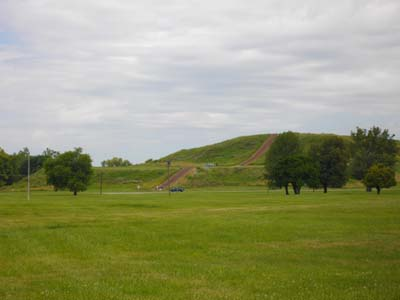
Read more: Writeup About the June Archaeology Field TripArchaeology June Field Trip On June 2nd and 3rd, we had an Archaeology field trip to see Cahokia Mounds, the Museum of Westward Expansion, the Saint Louis Arch, and the Lewis and Clark Memorial State Park. Cahokia Mounds offers a World-Class Interpretive Center with museum exhibit galleries, an orientation show theater, a museum shop and a courtyard for educational programs. Outdoors you’ll find self-guided tours, guided tours, trails and Monks Mound, the largest earthwork in North America. After viewing the orientation video in the Interpretive Center, we walked around looking at exhibits which explained how the people lived and what…
-
Arctic sea ice reaches lowest extent
Read more: Arctic sea ice reaches lowest extentArctic ice lowest since record keeping started.
-
Methane Beneath Antarctic
Read more: Methane Beneath AntarcticVia University of California Santa Cruz:: (hat tip Geology.com) … “It is easy to forget that before 35 million years ago, when the current period of Antarctic glaciations started, this continent was teeming with life,” Tulaczyk said. “Some of the organic material produced by this life became trapped in sediments, which then were cut off from the rest of the world when the ice sheet grew. Our modeling shows that over millions of years, microbes may have turned this old organic carbon into methane.”
-
New Finds in Burgess Shale in Canada
Read more: New Finds in Burgess Shale in CanadaVia The Star.com: Jean-Bernard Caron, curator of invertebrate paleontology at the Royal Ontario Museum, spent seven weeks this summer leading a team on an exploration of the Burgess Shale sites in Yoho National Park in British Columbia. The best-known site is the Walcott Quarry, where there was a major discovery of well-preserved, soft-bodied fossils in 1909. The team found a new site in Kootenay National Park, at a location Caron isn’t ready to reveal yet, with “very rich fossil deposits” from new and existing species. It could be comparable to the original site, said Caron.
-
A new study suggests widespread land-based microbial life in the Archean Era
Read more: A new study suggests widespread land-based microbial life in the Archean EraVia Sci-News: (Hat tip Dave Carlson at the ESCONI Yahoo Group): Scientists at the University of Washington suggest that early microbes might have been widespread on land, producing oxygen and weathering pyrite, an iron sulfide mineral, which released sulfur and molybdenum into the oceans.
-
Lepidopteris baodensis sp.
Read more: Lepidopteris baodensis sp.From PhysOrg: Recently, a mysterious seed fern, Lepidopteris baodensis sp. nov., dating to more than 251 million years ago (Ma), was discovered at the Baijiagou of Baode, Shanxi, China, from the Upper Permian Sunjiagou Formation. This discovery completely changed the understanding of the stratigraphic distribution of the genus Lepidopteris in China and promoted the taxonomic study of late Paleozoic plants. Read more at: http://phys.org/news/2012-09-mysterious-seed-fern-lepidopteris-upper.html#jCp
-

ESCONI Event for October, 2012
Read more: ESCONI Event for October, 2012Sat. 10/20 ESCONI Paleontology Meeting 7:30 p.m. College of Dupage, – Tech Ed Building (TEC), Room 1038A (Map)Topic: In celebration ofNational Fossil Day Dave Carlson will be giving a presentation on “Soft Tissue Preservation in Fossils”. Members will be bringing fossils for display with free samples for guests. Free. All ages welcome! Sun 10/21 Lizzadro Museum of Lapidary Art – “Curious about Mars?” Dr. Paul Sipiera from the Field Musuem will review the latest findings from the Curiosity Rover. Ages 8-Adult, 2 pm, Regular Museum Admission, Reservations Recommended Sat. 10/27 Archaeology Study Group Meeting. 7:30 p.m. College of Dupage, Building K, Rm 161. Topic: Artifact Identification…
-
Interview with Author of “The Rocks Don’t Lie”
Read more: Interview with Author of “The Rocks Don’t Lie”From Seattle Times: An interview with the author of “The Rocks Don’t Lie: A Geologist Investigates Noah’s Flood,” MacArthur Fellow and UW professor David Montgomery…. Q: Most people probably think creationism is a pretty old belief system, but in the book you clearly lay out that it’s not. Briefly describe how it developed. A: George McCready Price was the guy who championed flood geology (the theory that Noah’s flood was real) in its darkest hours through the early 20th century. He was not a trained geologist, but he argued that geologists had the whole theory wrong. His arguments evolved into…
-
When Students Became Interested In GeoScience Career
Read more: When Students Became Interested In GeoScience CareerFrom American Geosciences Institute (AGI), data on when geoscience students got interested in the field of geosciences.
-
Events for Friday and Saturday
Read more: Events for Friday and SaturdayFriday, 9/28 Board Meeting. 7:30 p.m. College of Dupage, DIFFERENT ROOM! Tech Ed Build. TEC 1038B (Map) Saturday, 9/29 – 9am to 5pm:Wheaton College Geology will again offer a large amount of valuable material to collectors at all levels. One room will be devoted to children’s and beginner’s goodies. One room will be for sale of higher-quality items, and one room for intermediate items. Marked prices range from less than a dollar to hundreds of dollars. “Deals” can be made to discount for larger numbers of purchases. These prices are not at the lowest, wholesale range, but are far less than most stores…
-
ESCONI Paleo Field Trip – Oct. 6, 2012
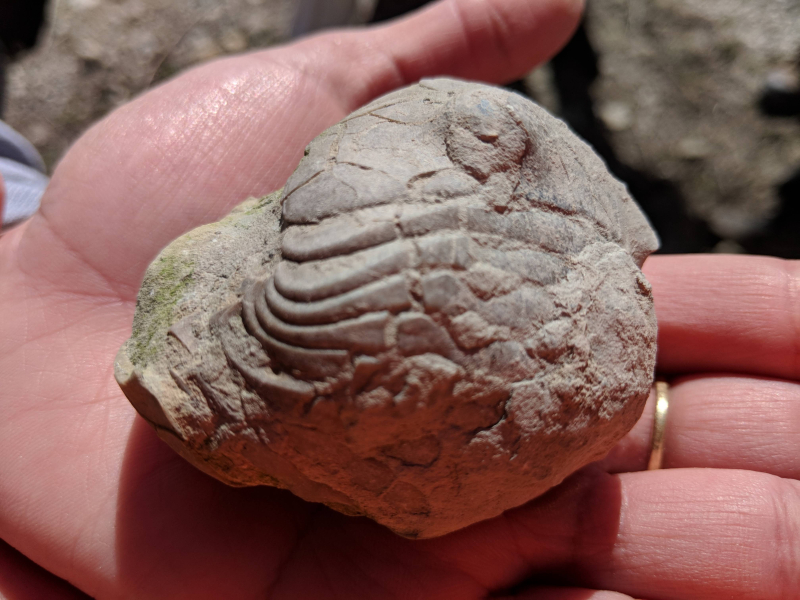
Read more: ESCONI Paleo Field Trip – Oct. 6, 2012There will be an ESCONI Field Trip to the Vulcan (was Larson) Quarry on Barber Greene Road in Sycamore, IL on October 6 2012, from 9 to noon. Sign up by sending John Catalani (Fossilnautiloid@aol.com) an email with the number of people and their names. John Catalani. will acknowledge by return email. By request of the quarry management, the trip is limited to 20 people. Rules: 1. Must be an ESCONI member. 2. Must be at least 18 years old. 3. Must wear a hard hat and boots. Be there by 9AM. Park by the metal office on the south…
-
Radio Interview on Human Relation – the Denisovans
Read more: Radio Interview on Human Relation – the DenisovansVia Science Friday: Reporting in Science, researchers write of sequencing the genome of a young Denisovan girl — an archaic human distantly related to Neanderthals and modern humans. Geneticist David Reich discusses the tale the genome tells about the Denisovan people and their interactions with modern humans.
-

Fate of Pumice Rafts
Read more: Fate of Pumice RaftsVia Wired: The NASA Earth Observatory has been doing an excellent job tracking the spread of the pumice from the Havre eruption in the Kermadec Islands. Currently the pumice is spread over an area of 270,000 km2 / 100,000 sq. miles of the Pacific Ocean and is continuing to spread (see above). This pumice will likely stay afloat for months if not longer and eventually make landfall wherever the currents dictate – potentially as far off as South America. Pumice rafts are not particularly uncommon (see map below), especially in areas of abundant submarine volcanism like the southwestern Pacific Ocean, and…
-
Mazon Creek Animal E-Book
Read more: Mazon Creek Animal E-BookE-books (self-publishing) are becoming more popular. Here is an e-book being sold on E-bay about Mazon Creek Animal Fossils. The author, TVTesta, is a previous member of ESCONI, as well as speaker to the Paleontology study groups. He is also a subject of a 2004 Chicago Reader article about the Mazon Creek fossils: http://www.chicagoreader.com/chicago/the-vanishing-mother-lode-of-mazon-creek/Content?oid=915941 Partial description of Mazon Creek Animal Fossils: …. The sole purpose of this book is to share photographs of remarkable and interesting museum quality Mazon Creek fossil specimens from the private collection of T.V. Testa.… This volume contains photos of Mazon Creek fossil animals including; the amphibian…
-
Fuego Volcano in Guatemala
Read more: Fuego Volcano in GuatemalaGuatemala has evacuated thousands of people after the Fuego volcano started spewing ash and lava. http://www.bbc.co.uk/news/world-latin-america-19594481 See also http://earthobservatory.nasa.gov/NaturalHazards/view.php?id=79168 for a view from space.
-
Mysterious Spheres on Mars
Read more: Mysterious Spheres on MarsVia AFP: NASA’s Opportunity rover, older brother to the Curiosity rover that landed on Mars last month, has made a new discovery that geologists find both puzzling and exciting, the US space agency said Friday. Opportunity, which has been on the Red Planet since 2004, has come across an outcrop of tiny spheres — up to around an eighth of an inch (three millimeters) in diameter — the likes of which scientists have never seen before.
-
Mazon Creek Field Trip
Read more: Mazon Creek Field TripSaturday and Sunday, 9/22 and 9/23 , meet at 8:00 A.M. Saturday at the BP Amoco in Coal City. No Age Limit. Hard Hats not required. Take I-55 to Exit 236 (Coal City). Take a right onto Highway 113 (Division Street). Go west to Broadway Street and Division in Coal City. We will be collecting Mazon Creek concretions from an old spoil pile on private property. Hard hats are not required. Boots are recommended. An Estwing rock hammer is the best tool. A small shovel or pick is helpful. Knee pads, backpacks, fanny packs, extra clothes (you will get wet…

ESCONI Gem, Mineral, and Fossil Show
Most Recent Post
- Ancient bees found nesting inside fossil bones in rare cave discovery
 Science Daily has a post about a recent paper that looked at novel bee nesting behavior. Researchers working on the Caribbean island of Hispaniola discovered a rare and unusual fossil interaction in a cave, ancient bees used fossilized bones as nesting sites.
- About ESCONI
- Around the Web
- Calendar of Events
- Code of Ethics and Conduct
- ESCONI Books for Sale
- ESCONI Gem, Mineral, and Fossil Show
- ESCONI in the News
- ESCONI Videos
- Field Trips
- Flashback Friday
- Fossil Friday
- Mazon Creek
- Mazon Monday
- Member Spotlight
- Membership Information
- Reference Material
- Throwback Thursday
- Trilobite Tuesday
Field trips require membership, but visitors are welcome at all meetings!
| Friday, April 10th | General Meeting – 8:00 PM via Zoom. Jessica Hull will present “Life in the Devonian Period, The Age of Fishes.” |
| Saturday, April 11th | Junior Study Group Meeting – 2:00 PM, in person at the College of DuPage Technical Education Center (TEC) Building – Room 1038A (Map). Katherine Howard will present on Sand and Sediment Collecting. Specifics of this meeting are available from Scott Galloway, 630-670-2591, gallowayscottf@gmail.com. |
| Saturday, April 18th | Paleontology Study Group – 7:30 PM via Zoom and in person at the College of DuPage, TEC, Room 1038B (Map). Keith Robitschek will present “Digging the Marl of the Lance Formation.” |
| Friday, April 24th | MAPS Expo XLVII – Springfield, IL. |
| Saturday, April 25th | MAPS Expo XLVII – Springfield, IL. |
| Sunday, April 26th | MAPS Expo XLVII – Springfield, IL. |
| No meeting this month | Mineralogy Study Group |