
-
ESCONI Member Jack Wittry Wins 2015 Strimple Award
Read more: ESCONI Member Jack Wittry Wins 2015 Strimple AwardESCONI Member Jack Wittry (Field Associate, The Field Museum) has won the 2015 Strimple Award from The Paleontological Society. Jack has been an ESCONI member for many years. Among his many contributions are two important books that describe the Mazon Creek fossil flora and fauna. Congratulations Jack! The Harrel S. Strimple Award recognizes outstanding achievement in paleontology by amateurs (someone who does not make a living full-time from paleontology). Contributions may be an outstanding record of research and publication, making outstanding collections, safeguarding unique paleontological materials through public service, teaching activities in the area of paleontology, and collaborations with others working in paleontology.…
-

ESCONI Events May 2015
Read more: ESCONI Events May 2015Fri, May 8 ESCONI General Meeting 8:00 p.m. College of Dupage – Berg Instructional Center (BIC), Room 1528 (Map) – Topic: “The Hell Creek Formation: The Twilight of Non-Avian Dinosaurs.” by Rob Sula Sat, May 9 ESCONI Mineralogy Meeting 7:30 p.m. College of Dupage – Tech Ed (TEC) Building, Room 1038B (Map) – Topic: “Evaporites”, ESCONI member Jim Daly Fri, May 15 ESCONI Archaeology Study Group Meeting, Canceled Sat, May 16 ESCONI Field Trip: Braceville, Collect Mazon Creek Fossils in Braceville, IL. See here for details. Sat, May 16 ESCONI Paleontology Study Group Meeting 7:30 p.m. College of Dupage, – Tech EdBuilding (TEC), Room…
-
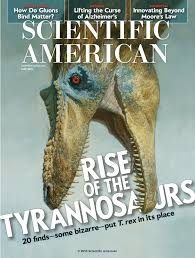
Meet the New Tyrannosaurs
Read more: Meet the New TyrannosaursScientific American has a video of Dr. Stephen Brusatte of the University of Edinburgh. In it, he charts the thrilling ascent of the tyrannosaurs. The May issue of Scientific American has a story called “Rise of the Tyrannosaurs”, which is highlighted on the cover of the magazine.
-
CBC Quirks & Quarks – Blueprint for a Woolly Mammoth
Read more: CBC Quirks & Quarks – Blueprint for a Woolly MammothThe week’s episode of CBC Quirks & Quarks has a segment on the sequencing of the full genome of the Woolly Mammoth. Dr. Hendrik Poinar, and evolutionary geneticist and Directory of the Ancient DNA Centre at McMaster University in Hamilton, Ontario, Canada, and colleagues extracted DNA from two mammoths, one is 45,000 years old and the other one is 4,000 years old. The original paper appeared in Current Biology. The giant, hairy elephants that used to roam the grasslands of the Arctic have been extinct for thousands of years, but thanks to DNA preserved in permafrost, the genome of the Woolly…
-

Palaeocast Episode 43: Ancient DNA
Read more: Palaeocast Episode 43: Ancient DNAThe new palaeocast episode is about ancient DNA. Over the last few years, more and more biologic material is being found associated with fossils. The main reason why we find it now is because we weren’t looking previously. DNA (deoxyribonucleic acid) is a molecule that encodes the genetic information within every species of life on earth. The information contained within the sequence of base pairs determines how any given organism develops and biologically functions. DNA is not just limited to the biological study, but is also now being utilised in palaeontology. But why is DNA not normally preserved? What’s the…
-
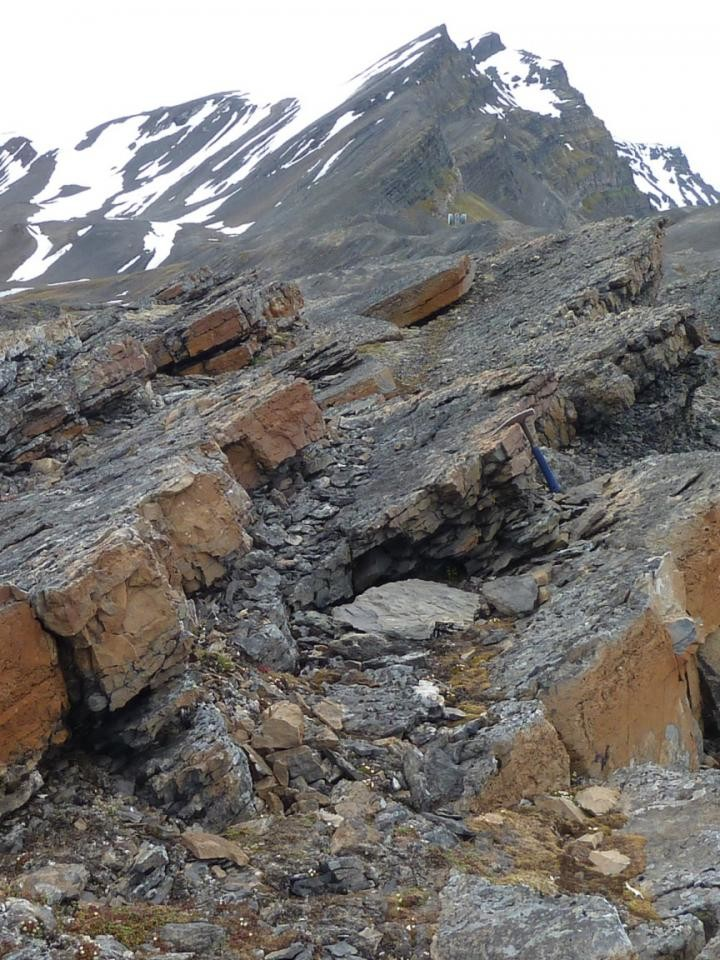
Science Daily: New evidence adds the Capitanian extinction to the list of major extinction crises
Read more: Science Daily: New evidence adds the Capitanian extinction to the list of major extinction crisesCredit: Photographer: Dierk Blomeier. For David P.G. Bond and colleagues, GSA Bulletin, 2015. Science Daily has a story about the Capitanian Extinction event. This event occurred in the mid-Permian, around 10 million years before the end Permian mass extinction, otherwise known as the “Great Dying”. At first it was thought to be a more local event, but now evidence from the high latitudes shows it to be global. The original paper appeared in the journal Geological Society of America Bulletin. Until now, this Capitanian extinction was known only from equatorial settings, and its status as a global crisis was controversial.…
-
Today is Earth Day 2015
Read more: Today is Earth Day 2015This is the 45th anniversary of the first Earth Day in 1970. Many events are planned. Check the website for an event near you!
-
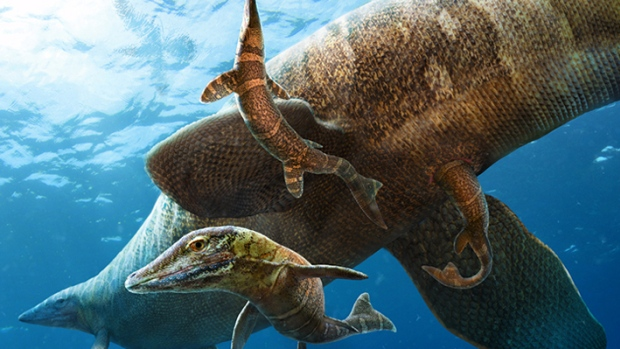
CBC Quirks & Quark – Gigantic Marine Lizards Had Live Births
Read more: CBC Quirks & Quark – Gigantic Marine Lizards Had Live BirthsArtist’s conception of Mosasaur giving birth (Yale/Julius T. Csotonyi) CBC Radio’s Quirks & Quarks has a segment on Mosasaurs. After re-examining fossils found over 100 years ago, researchers now believe that Mosasaurs probably gave birth to live young – similar to their cousins the Ichthyosaurs. The original paper is in the journal Paleontology. There is a Yale University press release here. Mosasaurs were giant marine lizards that lived in the oceans of the world during the Cretaceous period. They were part of the mass extinction that marked the end of that era, 65 million years ago. It was thought that, similar…
-
May General Meeting: Rob Sula, The Hell Creek Formation: The Twilight of Non-Avian Dinosaurs
Read more: May General Meeting: Rob Sula, The Hell Creek Formation: The Twilight of Non-Avian DinosaursThe Hell Creek Formation: The Twilight of Non-Avian Dinosaurs Take a trip 66 million years back in time and explore the late Cretaceous Hell Creek formation with Rob Sula. We’ll explore interpretations of fossils of Triceratops, Edmontosaurus and, of course, the legendary Tyrannosaurus rex. We’ll also examine some of the more obscure flora and fauna that shared the Hell Creek formation with these behemoths. Using actual fossils, excavation photos and site maps, Rob will examine this remarkable ecosystem that included the last non-avian dinosaurs to walk on earth.
-
Miner Safety Training, South Bend, IN, Saturday, April 25th
Read more: Miner Safety Training, South Bend, IN, Saturday, April 25thThe Michiana Gem & Mineral Society of South Bend, IN will be hosting a MSHA class this year. The class will be instructed by Joel Vicary on Saturday April 25th, 2015 from 10 am to 4 pm. An instruction book is included in the course. The cost of the course is $30 if you don’t have a book, $15 if you do. The location is, Our Redeemer Lutheran Church, 805 S. 29th St. South Bend, IN. If you have any questions, feel free to call John Davis at (574)-232-8823, email: sumu95@hotmail.com Web Site: www.michianagms.org
-
IAAA and Iowa Archaeological Society Annual Meeting, May 2-3, 2015
Read more: IAAA and Iowa Archaeological Society Annual Meeting, May 2-3, 2015ILLINOIS ASSOCIATION for ADVANCEMENT of ARCHAEOLOGY IOWA ARCHAEOLOGICAL SOCIETY JOINT ANNUAL MEETING – MAY 2 – 3, 2015 Black Hawk College – Building 1 35th Avenue and 70th Street Moline Illinois Be sure to attend the joint IAAA and Iowa Archaeological Society annual meeting this year – Saturday will include separate business meetings, followed by talks on Quad Cities and Iowa City archaeology. Following lunch (included with registration) we will have a series of talks on ancient and post-contact Native American sites in the Midwest. After a break with refreshments, our featured speaker Dr. Douglas Owsley of the Smithsonian…
-

Field Trip: Braceville, IL, Mazon Creek Fossils May 16-17, 2015
Read more: Field Trip: Braceville, IL, Mazon Creek Fossils May 16-17, 2015Collecting Mazon Creek Fossils on private property Meet at 8:00 AM Saturday or Sunday at the BP Amoco in Coal City. No Age Limit. Hard Hats not required. Take I-55 to Exit 236 (Coal City). Take a right onto Highway 113 (Division Street). Go west to Broadway Street and Division in Coal City. We will be collecting Mazon Creek concretions from an old spoil pile on private property. Hard hats are not required. Boots are recommended. An Estwing rock hammer is the best tool. A small shovel or pick is helpful. Knee pads, backpacks, fanny packs, extra clothes (you will…
-

Palaeocast Episode 42: Pterosaur aerodynamics
Read more: Palaeocast Episode 42: Pterosaur aerodynamics‘Generic’ azhdarchid pterosaur, similar to Quetzalcoatlus. Image courtesy of Mark Witton. Paleocast has a new episode. The topic is Pterosaur Aerodynamics. Palaeontology is more than just going out into the field, digging up bones, and putting them back together. A good understanding of biology, geology, and even engineering can help to figure out how extinct animals lived and especially how they moved around. To further comprehend how we can use knowledge of engineering in palaeontology, especially with respect to understanding extinct animal flight, we spoke to Colin Palmer from the University of Bristol, and the University of Southampton. His background in…
-
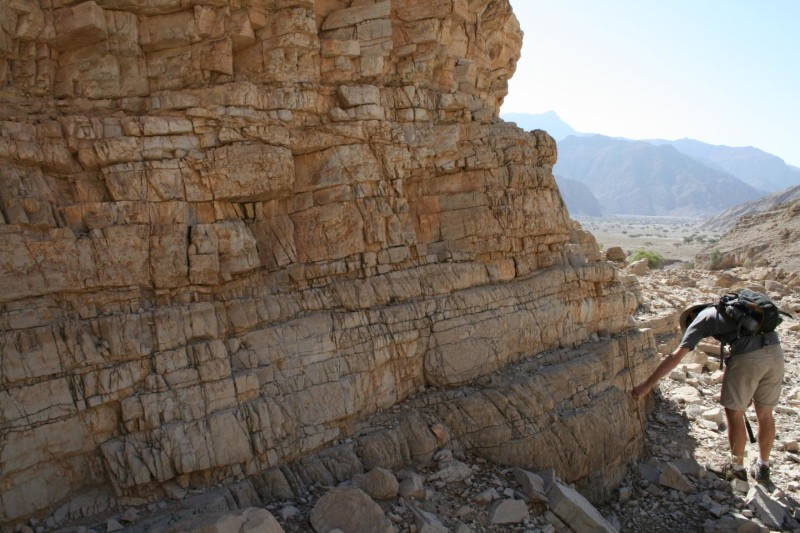
Greatest mass extinction driven by acidic oceans, study finds
Read more: Greatest mass extinction driven by acidic oceans, study findsScience Daily has an article about the Permian mass extinction, the worst in Earth’s history. It’s termed the “Great Dying” and perhaps 90-95% of species on Earth went extinct during the event about 252 million years ago. The original paper appeared in the journal Science. It happened when Earth’s oceans absorbed huge amounts of carbon dioxide from volcanic eruptions, researchers say. This changed the chemical composition of the oceans — making them more acidic — with catastrophic consequences for life on Earth, the team says. The study, co-ordinated by the University of Edinburgh, is the first to show that highly acidic…
-
Lapidary Classes at Cicada Pi Art Studio
Read more: Lapidary Classes at Cicada Pi Art StudioCicada Pi Art Studio and Gallery in Oak Park teaches several adult lapidary classes including silversmithing. Contact them, if you have interest in learning the art of setting stones. They also host private parties (custom projects can be designed with the organizer of the party). Their website is at www.cicadapi.com. The most recent class flyer is here. Sarah Taylor Cicada Pi Art Studio 177 S Oak Park Ave Oak Park, IL 60302 http://www.cicadapi.com (708) 628-3199
-
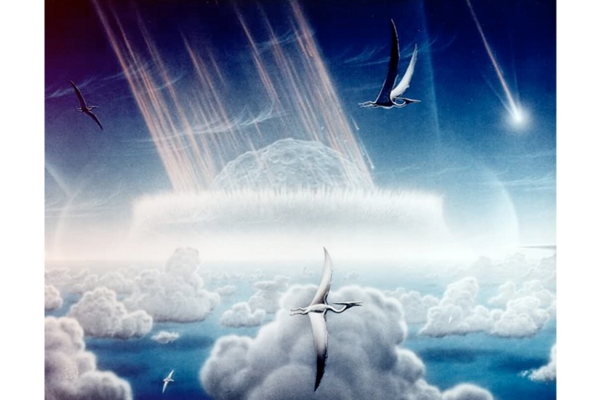
Scientists To Dig Deep Into Chicxulub
Read more: Scientists To Dig Deep Into ChicxulubCredit: Painting by Donald E. Davis. Live Science has a story of how scientists are planning to dig 5000 feet (1500 meters) deep into the Chicxulub crater to bring up a giant core. The core will be used to study the formation of the crater. The project is in the planning stage and is slated to begin in the spring of 2016. Why now? “The Chicxulub impact crater has been a remarkable scientific opportunity for the 20 years since it’s been discovered,” said Sean Gulick, of The University of Texas at Austin Institute for Geophysics. And, for the first time, scientists…
-
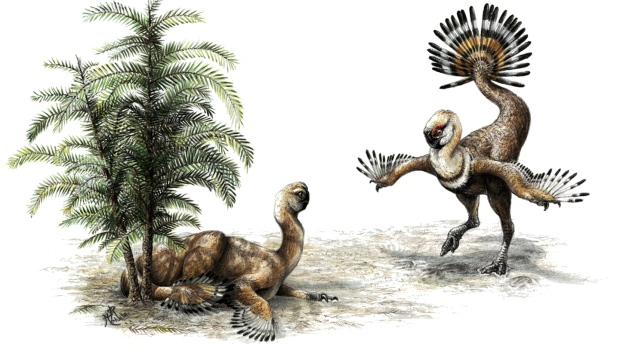
CBC Quirks & Quarks – The Romeo and Juliet of Dinosaur Fossils
Read more: CBC Quirks & Quarks – The Romeo and Juliet of Dinosaur FossilsArtist’s reconstruction of oviraptor mating displays (Sydney Mohr/University of Alberta) Lots of good stuff in this week’s Quirks & Quarks show. The segments include: Canada’s Disappearing Glaciers: Most glaciers in BC and Alberta are predicted to disappear by the end of the century. The Romeo and Juliet of Dinosaur Fossils: Two bird-like dinosaurs were fossilized together, and might have been mates. Comet Dust Makes Mercury a Dark Planet: Carbon from dissolving comets has stained Mercury black. Tambora – The Eruption that Changed the World: Mount Tambora erupted 200 years ago, and transformed the planet, killing 100,000 people, and having far…
-
Public Auction – Boone County Fairgrounds, Saturday, April 18th, 2015
Read more: Public Auction – Boone County Fairgrounds, Saturday, April 18th, 2015PUBLIC AUCTION LAPIDARY Boone County Fairgrounds 8791 Rte 76 (Fairgrounds Rd) Belvidere, Illinois Saturday April 18th at 9 am TERMS: Cash or Check with proper I.D NOT responsible for accidents or items after purchased. All items sold “as is”. Any questions call Gary at 815-871-9212 Download the Flyer
-
Brontosaurus Is Back!
Read more: Brontosaurus Is Back!Science Daily has an article about a peer reviewed paper that shows that Brontosaurus (the ‘thunder lizard’) is distinctly different than Apatosaurus. The authors, a group of paleontologists from Portugal and the UK, think they have conclusive evidence. The history of Brontosaurus is complex, and one of the most intriguing stories in science. In the 1870s, the Western United States formed the location for dozens of new finds of fossil species, most notably of dinosaurs. Field crews excavated numerous new skeletons mostly for the famous and influential paleontologists Marsh and Cope. During that period, Marsh’s team discovered two enormous, partial skeletons of long-necked…
-
Project Hyena: The Brain Scoop Needs Your Help!
Read more: Project Hyena: The Brain Scoop Needs Your Help!From the Field Museum and their excellent YouTube channel The Brain Scoop: We’ve got some awesome taxidermy hyenas from 1899 that we want to restore and put into a brand-new diorama in the Hall of Asian Mammals. But we need your help! We’ve teamed up with our in-house YouTube channel, The Brain Scoop, to launch an Indiegogo campaign in order to get the hyenas to their new home. So, what can you do? Spread the word! Share #projecthyenadiorama and let’s make the hyenas go viral. And get yourself some sweet swag – donate and show your hyena pride with a…

ESCONI Gem, Mineral, and Fossil Show
Most Recent Post
- PBS Eons: The Second-to-Last Mammoths Ever
 PBS Eons has a new episode. This one is about some of the last Mammoths on Earth.
- About ESCONI
- Around the Web
- Calendar of Events
- Code of Ethics and Conduct
- ESCONI Books for Sale
- ESCONI Gem, Mineral, and Fossil Show
- ESCONI in the News
- ESCONI Videos
- Field Trips
- Flashback Friday
- Fossil Friday
- Mazon Creek
- Mazon Monday
- Member Spotlight
- Membership Information
- Reference Material
- Throwback Thursday
- Trilobite Tuesday
Field trips require membership, but visitors are welcome at all meetings!
| Friday, May 2nd | Field Trip to Danville, IL. Details here. |
| Friday, May 8th | General Meeting – 8:00 PM via Zoom. Thomas Loebel will present “Seeing Beneath the Ground: Geophysics and Archaeological Explorations in Illinois”. |
| Saturday, May 9th | Junior Study Group Meeting – 2:00 PM, in person at the College of DuPage Technical Education Center (TEC) Building – Room 1038A (Map). “The Rock Cycle and Sedimentation” Specifics of this meeting are available from Scott Galloway, 630-670-2591, gallowayscottf@gmail.com. |
| Saturday, May 16th | Paleontology Study Group – 7:30 PM via Zoom. John Catalani will present “An Ordovician Konzentrat Lagerstätte: The Dixon Mifflin Residuum Fauna”. |
| Saturday, May 23rd | CGMA Show, Kane County Fairgrounds |
| Sunday, May 24th | CGMA Show, Kane County Fairgrounds |
| Saturday, May 30th | Field Trip to Braceville, IL. Details here. |
| Sunday, May 31st | Field Trip to Braceville, IL. Details here. |
| No meeting this month | Mineralogy Study Group |