
-

CBC Quirks & Quarks – Spectacular New Horned Dinosaur
Read more: CBC Quirks & Quarks – Spectacular New Horned DinosaurReconstruction of Regaliceratops peterhewsi (Julius T. Csotonyi. Courtesy of Royal Tyrrell Museum) Another new dinosaur has been described. This one is called Regaliceratops peterhewsi. CBC Radio’s Quicks & Quarks show has an interview with Dr. Caleb Brown, a paleontologist and Betsy Nichols PostDoctoral Research Fellow at the Royal Tyrell Museum in Drumheller, Alberta, CA. The animal, a ceratopsian, lived about 68 million years ago, and has been nicknamed Hellboy. The name stems partially from its appearance and partially because of the hard rock in which it was entombed. The original paper appeared in Current Biology.
-

CBC Quirks & Quarks – Dinosaur Fossils Preserve Blood Cells
Read more: CBC Quirks & Quarks – Dinosaur Fossils Preserve Blood CellsSoft tissue preservation in dinosaur bones is not a new topic. CBC Quirks & Quarks has a segment on a paper that appeared in Nature Communications back in January. Using a range of tools that are currently used to study nanostructures in living animals, the researchers, from the Department of Earth Science and Engineering at Imperial College London, think they have found blood cells and collagen remnants. The best part of all this is that this whole field of paleo-bone histology is just getting started. Who knows what will be discovered next… Maybe, they can shed some light on that ago…
-

Coal Through a Microscope
Read more: Coal Through a MicroscopeWhen viewed closely, most pieces of coal are composed of alternating bands of bright and dull material. Image by West Virginia Geological and Economic Survey. Geology.com has an interesting article about coal. Here in Illinois, we have a huge amount of it. Most, if not all, is from the Pennsylvanian and is closely associated with Mazon Creek fossils. Next time you’re out hunting for fossils and you come across a lump of coal. Have a closer look and appreciate the hidden beauty of coal!
-
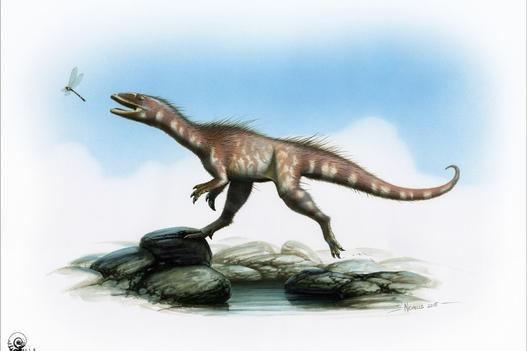
Dinosaur Welsh cousin of T-Rex found on a beach in Penarth
Read more: Dinosaur Welsh cousin of T-Rex found on a beach in PenarthA distant relative of our friend T-rex has been discovered in Wales. The animal lived about 201 million years ago and could represent the earliest dinosaur from the Jurassic. It was found by brothers Nick and Rob Hanigan from Llantwit Major while fossil hunting along the Lavernock beach in the Vale of Glamorgan. The “discovery of a lifetime” was made by Nick and Rob Hanigan from Llantwit Major while fossil hunting along the Lavernock beach in the Vale of Glamorgan after storms in spring 2014. After a cliff fall on the beach, they spotted several loose blocks containing part of the…
-

A Whale Inside A Whale, That Was Eaten By A Shark, Discovered In Egypt
Read more: A Whale Inside A Whale, That Was Eaten By A Shark, Discovered In EgyptA prehistoric turducken, of sort, was discovered in Egypt. The story is in the “Weird News” column over at Huffington Post. That really is weird! It’s like a prehistoric turducken, but on a colossal scale: Scientists in Egypt have discovered the remains of a 40 million-year-old whale with another whale inside it, and researchers believe the two were then eaten by sharks. The smaller whale found inside the fossils of the 60-foot-long basilosaurus may have been a fetus. However, basilosaurus had some pretty unusual dining habits. Like today’s orcas, this fierce and ancient predator was known to eat other whales,…
-
Dinomania: the story of our obsession with dinosaurs
Read more: Dinomania: the story of our obsession with dinosaursThe Guardian has a story about our ongoing obsession with dinosaurs. It’s all there from the beginning in the 1840s to the present. Enjoy! Deep in the bowels of the world’s greatest palaeontological museum, a hitherto unknown species of dinosaur has been waiting to be unveiled. Concealed behind a black cloth, it has spent the past month placed discreetly at the back of an immense storeroom filled with row after row of fossils. Some lie stored in wooden boxes like the Ark of the Covenant in the Indiana Jones films; others, less delicate, are stacked on open shelves. Horned skulls,…
-
Jurassic World, Opens June 12th, 2015
Read more: Jurassic World, Opens June 12th, 2015Jurassic World opens on June 12th 2015. Yeah, they could have done the science better. And, where are the feathers? But, it should be interesting. Remember, if nothing else, the original movie did increase interest in dinosaurs and science. This one has a new story with new animals, here’s the trailer.
-
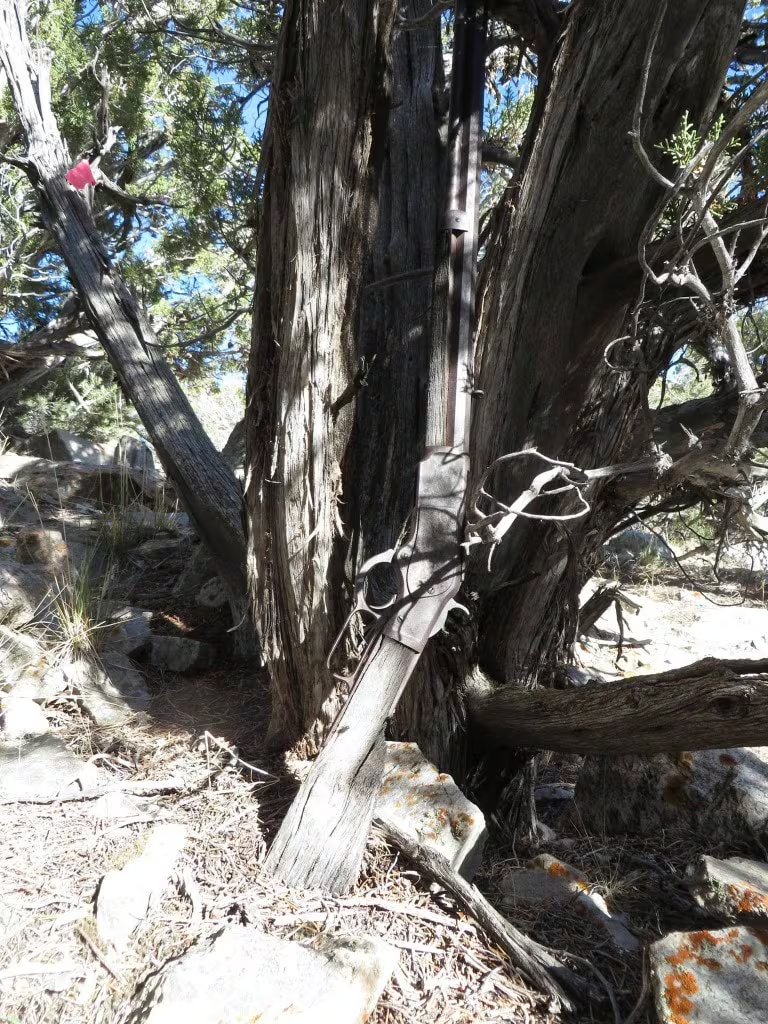
The mystery of the 132-year-old Winchester rifle found propped against a national park tree
Read more: The mystery of the 132-year-old Winchester rifle found propped against a national park treeThere is an interesting story over at the Washington Post about a 132 year old rifle that was discovered in Nevada’s Great Basin National Park. Archaeologists were conducting surveys, when they came upon the rifle, which was propped up against a juniper tree. Archaeologists conducting surveys in Nevada’s Great Basin National Park came upon a gun frozen in time: a .44-40 Winchester rifle manufactured in 1882. It was propped up against a juniper tree. “They just happened to notice the rifle under the tree,” said Nichole Andler, Basin National Park’s chief of interpretation. The public will get a chance to…
-
Paleontology on National Geographic Channel this weekend
Read more: Paleontology on National Geographic Channel this weekendThe National Geographic Channel has a paleontology theme this weekend. From dinosaurs, to mammoths, and even a T.rex Autopsy, there’s quite a bit of content. Here’s the schedule: Saturday, June 6: 4:00 p.m.: Mammoth: Back From the Dead (cloning mammoths) 5:00 p.m.: Bizarre Dinosaurs 6:00 p.m.: Waking the Baby Mammoth (about Lyuba!; again at 12:00 a.m.) 8:00 p.m.: Dino Death Match (again at 10:00 p.m.) 9:00 p.m.: Jurassic CSI (again at 11:00 p.m.) Sunday, June 7: 11:00 a.m.: Dinosaurs Decoded 12:00 p.m.: Jurassic CSI 1:00 p.m.: Dino Death Match (repeat, I believe) …
-

Most dinosaurs had scales, not feathers, fossil analysis concludes
Read more: Most dinosaurs had scales, not feathers, fossil analysis concludesThe discovery last year of Kulindadromeus, which had both scales and feathers, prompted speculation that this may have been the case for all dinosaurs. Photograph: Andrey Atuchin /SWNS.com Did dinosaurs have a feathery covering? That’s what a story in The Guardian discusses. In recent years, researchers have been discovering more and more evidence that feathers were more common than previously thought. However, a new study led by Nicolas Campione of the Uppsala University in Sweden shows that most of the dinosaurs were probably covered in scales. The original paper was published in the journal Biology Letters of the Royal Society.…
-

CBC Quirks & Quarks – 425-Million-Year Old Parasite Found With Its Host
Read more: CBC Quirks & Quarks – 425-Million-Year Old Parasite Found With Its HostThe tongue worm parasite (orange) is attached to the host ostracod. (David Siveter) CBC Radio’s Quirks & Quarks has another interesting segment. This one is about a 425 million year old parasite, a tongue worm, found attached to its host. The host is an ostracod, which is a type of crustacean. It was discovered in Herefordshire, England and is the first fossil of its kind. The paper appeared in the journal Current Biology. Dr. David Siveter, Emeritus Professor of Paleontology at the University of Leicester, studied the fossil and discovered three tongue worms – one inside attached to eggs and…
-
Reminder: General Meeting in June Will Be Held the Friday, on June 5th, 2015
Read more: Reminder: General Meeting in June Will Be Held the Friday, on June 5th, 2015Due to a scheduling conflict, June's general meeting will be held on the first Friday of the month, June 5th, 2015. The speaker will be Adam Smith of the Field Museum. His topic is a good one, "The Evolution of Birds". See you there!
-
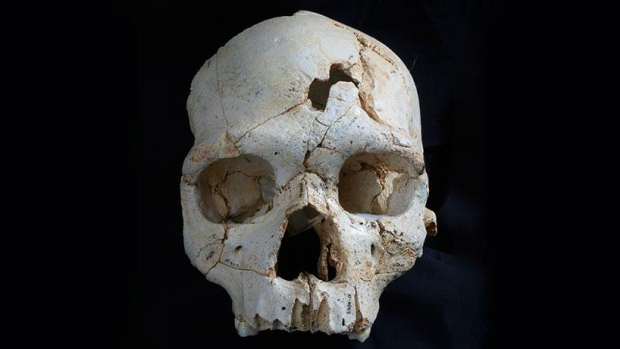
CBC Quirks & Quarks – CSI Paleo: Murder Most Ancient
Read more: CBC Quirks & Quarks – CSI Paleo: Murder Most Ancient(Javier Trueba / Madrid Scientific Films) CBC Radio’s Quirks & Quarks has a segment on what looks to be an ancient murder, the oldest one yet discovered. The mystery dates back 400,000 years and even pre-dates the Neanderthal people. The victim was found among 28 skeletons in a Spanish cave, known as the “pit of bones”. The cause of death is unknown for most of the individuals, however one skull had wounds consistent with those caused by a spear or hand axe. The original paper appeared in the journal PLoS One. Here’s another story in National Geographic. The first known…
-

Dinosaurs were likely warm-blooded
Read more: Dinosaurs were likely warm-bloodedA microscopic image of the thigh bone (femur) of a dinosaur shows concentric rings. Like tree rings, they formed each year in the dinosaur’s bones during the season when resources were scarce. The rings represent unrecorded time, so an annual growth rate (dashed line in graph) is an underestimate relative to the true growth rate during the favorable growing season. Credit: Scott Hartman Science Daily has an interesting article about the metabolism of dinosaurs. It’s an old controversy, were they cold-blooded (ectothermic) or warm-blooded (endothermic)? The study was a re-analysis of a paper that appeared back in 2014 in the…
-

Fossil ancestor shows sharks have a bony past
Read more: Fossil ancestor shows sharks have a bony pastPhys.org has a story about the origin of sharks. It has been thought that sharks had a more primitive beginning than other types of fish. This was due to their distinctive, all-cartilage skeleton. But now, a new fossil find from the Gogo in the Kimberly in Western Australia has revealed a surprise ‘missing link’ to earlier somewhat bony forms of fish. The original paper appeared in the journal PLOS One. Published today in the scientific journal PLOS One, research by Flinders University palaeontologist Professor John Long substantially strengthens the theory that the modern shark is less primitive than previously believed. In…
-

ESCONI Events June 2015
Read more: ESCONI Events June 2015Fri, June 5 ESCONI General Meeting 8:00 p.m. College of Dupage – Tech Ed (TEC) Building, Room 1038B (Map) – Topic: “The Evolution of Birds” by Adam Smith of the Field Museum Sat, June 13 ESCONI Mineralogy Meeting 7:30 p.m. College of Dupage – Tech Ed (TEC) Building, Room 1038B (Map) – Topic: “Flourite” Fri, June 19 ESCONI Archaeology Study Group Meeting, 7:30 p.m. College of Dupage – Tech Ed (TEC) Building, Room 1038B (Map) – Topic: “Primitive Money – design and use; 3000 BCE to 500 CE” In addition to the fascinating talk about ancient and primitive coinage-feel free to bring a…
-
General Meeting in June Will Be Held on June 5th, 2015
Read more: General Meeting in June Will Be Held on June 5th, 2015Due to a scheduling conflict, June’s general meeting will be held on the first Friday of the month, June 5th, 2015. The speaker will be Adam Smith of the Field Museum. His topic is a good one, “The Evolution of Birds”. See you there!
-
CBC Quirks & Quarks – Cloning a Mammoth
Read more: CBC Quirks & Quarks – Cloning a Mammoth(CC BY-SA 2.0) CBC Radio’s Quirks & Quarks has segment on cloning mammoths. There is an interview with Dr. Beth Shapiro, an evolutionary biologist from the University of California, Santa Cruz. She thinks that cloning a mammoth isn’t possible (yet) and that it may not be a wise idea. Here is a link to her new book, “How to Clone a Mammoth: The Science of De-extinction”. But according to Dr. Beth Shapiro, an evolutionary biologist from the University of California, Santa Cruz, cloning a mammoth (or other extinct species) is not possible – yet – and may never be wise. In…
-
Cool displays at the CGMA 39th Annual Show
Read more: Cool displays at the CGMA 39th Annual ShowMazon Creek Fossils! Trilobites! Minerals!
-
Some of the many faces at the CGMA 39th Annual Show
Read more: Some of the many faces at the CGMA 39th Annual ShowSome of the faces at the CGMA/MWF show yesterday.

ESCONI Gem, Mineral, and Fossil Show
Most Recent Post
- PBS Eons: The Second-to-Last Mammoths Ever
 PBS Eons has a new episode. This one is about some of the last Mammoths on Earth.
- About ESCONI
- Around the Web
- Calendar of Events
- Code of Ethics and Conduct
- ESCONI Books for Sale
- ESCONI Gem, Mineral, and Fossil Show
- ESCONI in the News
- ESCONI Videos
- Field Trips
- Flashback Friday
- Fossil Friday
- Mazon Creek
- Mazon Monday
- Member Spotlight
- Membership Information
- Reference Material
- Throwback Thursday
- Trilobite Tuesday
Field trips require membership, but visitors are welcome at all meetings!
| Friday, May 2nd | Field Trip to Danville, IL. Details here. |
| Friday, May 8th | General Meeting – 8:00 PM via Zoom. Thomas Loebel will present “Seeing Beneath the Ground: Geophysics and Archaeological Explorations in Illinois”. |
| Saturday, May 9th | Junior Study Group Meeting – 2:00 PM, in person at the College of DuPage Technical Education Center (TEC) Building – Room 1038A (Map). “The Rock Cycle and Sedimentation” Specifics of this meeting are available from Scott Galloway, 630-670-2591, gallowayscottf@gmail.com. |
| Saturday, May 16th | Paleontology Study Group – 7:30 PM via Zoom. John Catalani will present “An Ordovician Konzentrat Lagerstätte: The Dixon Mifflin Residuum Fauna”. |
| Saturday, May 23rd | CGMA Show, Kane County Fairgrounds |
| Sunday, May 24th | CGMA Show, Kane County Fairgrounds |
| Saturday, May 30th | Field Trip to Braceville, IL. Details here. |
| Sunday, May 31st | Field Trip to Braceville, IL. Details here. |
| No meeting this month | Mineralogy Study Group |