
-
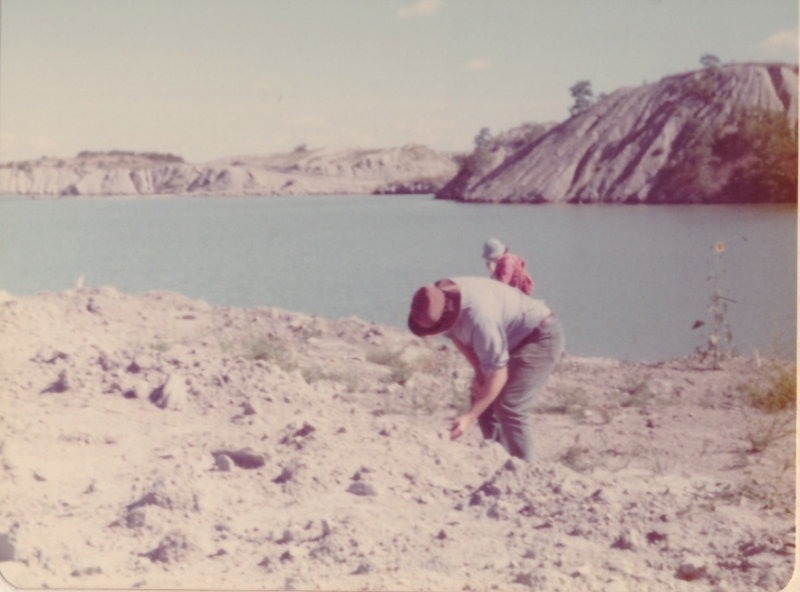
ESCONI Flashback Friday #6: Field Trip to Pit 11 September 1976
Read more: ESCONI Flashback Friday #6: Field Trip to Pit 11 September 1976As part of the run up to ESCONI’s 70th Anniversary. Here is Flashback Friday post #6. If you have pictures or stories to contribute, please send them over to esconi.info@gmail.com. Thanks! Kathy Dedina had some great pictures from past ESCONI events. Here are a series of pictures from a Pit 11 field trip in September 1976. Notice the lack of vegetation! It looks much different today.
-
ESCONI Field Trip to an Ordovician Hard Rock Quarry in Roscoe, IL July 13th, 2019
Read more: ESCONI Field Trip to an Ordovician Hard Rock Quarry in Roscoe, IL July 13th, 2019There will be a field trip for ESCONI members on Saturday, July 13, 2019 to an Ordovician, hard-rock quarry in Roscoe, IL (north of Rockford). We visited this quarry before in May 2017. The trip starts at 9 AM and ends at 12 noon. Rules are as follows: To sign up for this field trip, send me (Dave) an email with the number of members attending. My email address is: fossil54@att.net No phone calls please. Do NOT call the quarry. I will confirm via return email within 24 hours. If you do not hear back from me within that time,…
-
Field Museum: Meet a Scientist: Mazon Creek Fossils June 28th, 2019 11:00 AM to 1:00 PM
Read more: Field Museum: Meet a Scientist: Mazon Creek Fossils June 28th, 2019 11:00 AM to 1:00 PMLearn about Illinois fossils including the Tully Monster! Every Friday from 11am to 1pm, meet members of our scientific staff in the Grainger Science Hub and learn about their latest discoveries and newest research. They’ll bring real artifacts and specimens from the museum’s collection of nearly 40 million objects. You never know what you might discover when you meet a scientist, from natural habitat restoration to preparing new mammal species for installation. This program is free with museum admission. Join us for this hands-on opportunity to learn what our scientists do every day.
-
ESCONI Upcoming Field Trips For 2019
Read more: ESCONI Upcoming Field Trips For 2019The upcoming field trips for the remainder of the year are: Registration opens when the trip announcement is posted on the website, usually about a month before the trip. There are no early registrations. I am working on a trip in August, but it isnot set yet. Keep watching the website for more information! Dave Carlson, fossil54@att.net
-
ESCONI June 2019 Junior Meeting is on June 14th, 2019 – Topic: Maps
Read more: ESCONI June 2019 Junior Meeting is on June 14th, 2019 – Topic: MapsFor June, the topic of the Junior Meeting is "Maps". See you there!
-
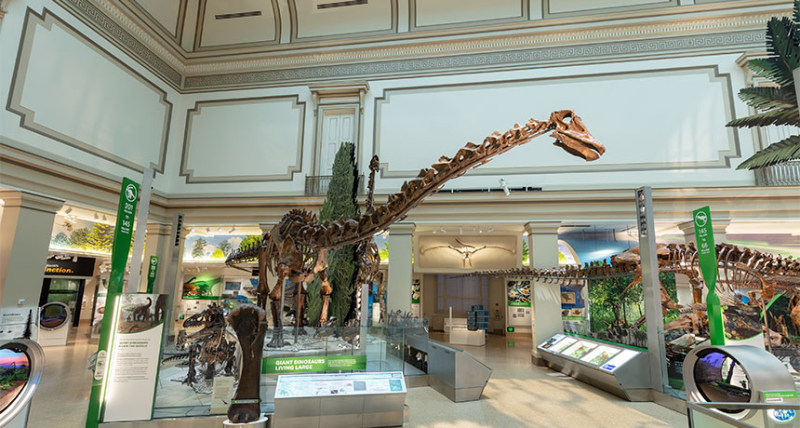
ScienceNews: The Smithsonian’s ‘Deep Time’ exhibit gives dinosaurs new life, Reopens today, June 8th, 2019!
Read more: ScienceNews: The Smithsonian’s ‘Deep Time’ exhibit gives dinosaurs new life, Reopens today, June 8th, 2019!ScienceNews has an article about the reopening of the dinosaur hall at the Smithsonian National Museum of Natural History in Washington, D.C. Today, June 8th, 2019 is the long awaited day. It’s called the “David H. Koch Hall of Fossils – Deep Time“. The renovations have taken 5 years to complete. The exhibit starts with humans and goes backwards through millions and billions of years. Check it out on your next visit to Washington! After five years, the Smithsonian National Museum of Natural History in Washington, D.C., is finally reopening its dinosaur hall on June 8. Visitors may come for…
-

ESCONI Flashback Friday #5: Dinner With Dr. Frederick Schram in August, 2011
Read more: ESCONI Flashback Friday #5: Dinner With Dr. Frederick Schram in August, 2011As part of the run up to ESCONI’s 70th Anniversary. Here is Flashback Friday post #4. If you have pictures or stories to contribute, please send them over to esconi.info@gmail.com. Thanks! Mary Fairchild did an excellent report about her dinner with Dr. Frederick Schram in August, 2011. There is much to enjoy in the report, including facts about early Mazon Creek projects, the people that did research, and the collectors who contributed fossils. You’ll find many familiar names listed with details about their contributions. It’s a good thing many are still with us, so many years later. Enjoy! The Mazon…
-

Infernovenator steenae, a new serpentine recumbirostran from the ‘Mazon Creek’ Lagertätte further clarifies lysorophian origins
Read more: Infernovenator steenae, a new serpentine recumbirostran from the ‘Mazon Creek’ Lagertätte further clarifies lysorophian originsThe Zoological Journal has another new paper describing a Mazon Creek vertebrate. This one is called Infernovenator steenae. The paper is authored by Arjan Mann, Jason D Pardo, and Hillary C Maddin of the Department of Earth Sciences, Carleton University in Ottawa, Ontario, CA. Earlier this year, Mann and Maddin published a description of a “microsaur” species named Diabloroter bolti. As before, the sculpture in the picture was created by David Duck, who has been an ESCONI member. Wow! Congrats yet again! The Carboniferous (Pennsylvanian; 309–307 Mya) ‘Mazon Creek’ Lagerstätte produces some of the earliest tetrapod fossils of major Paleozoic lineages.…
-

Ticks, Ticks, Ticks, Ticks, Ticks!
Read more: Ticks, Ticks, Ticks, Ticks, Ticks!As the weather gets warmer (and hopefully, dryer), you might be spending more time outside looking for fossils, minerals, etc. in the woods, fields, and quarries. One creature you may encounter is a tick. Ticks are arthropods, which unfortunately are vectors for a number of serious diseases. In Illinois, American Dog (Wood), Brown Dog, Lone Star, and Deer ticks are some of the more common species in Illinois. Here are some resources to learn more about avoiding ticks, treating bites, and getting medical attention if you get do come down with any disease symptoms.
-

National Geographic: Gem-like fossils reveal stunning new dinosaur species
Read more: National Geographic: Gem-like fossils reveal stunning new dinosaur speciesThe National Geographic has a story about the discovery a new dinosaur in Australia. The animal, called Fostoria dhimbangunmal, lived about 150 million years ago. It’s an early member of a group that will eventually evolve into duck-billed hadrosaurs. The bones are opalized and was discovered near a town called Lightning Ridge, famous for brightly colored opals. All the details are in a paper published in the Journal of Vertebrate Paleontology. “Any time we find a new Australian dinosaur it’s interesting, because we have so few,” says Stephen Poropat, a paleontologist from Swinburne University of Technology in Melbourne who was not…
-
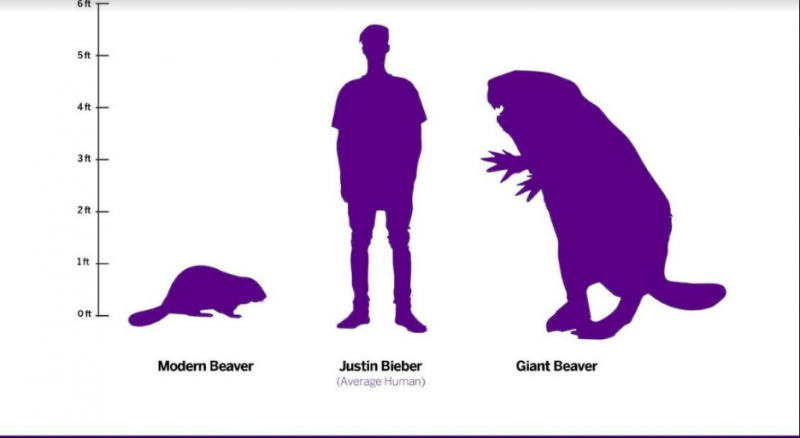
Why Did These Human-Sized Beavers Go Extinct During the Last Ice Age?
Read more: Why Did These Human-Sized Beavers Go Extinct During the Last Ice Age?The Smithsonian.com has a post about the extinction of 7 foot tall beavers. Up until just over 10,000 years ago, large beavers weighting upwards of 220 pounds roamed a large part of North America, from Alaska and Canada to Florida. A new study, by a group of Canadian researchers, was published in the journal Scientific Reports. It posits that these giant rodents went extinct when their habitat became increasing dry and warm at the end of the last ice age about 10,000 years ago. Yukon News‘ Hong reports that scientists believe the giant beaver migrated from what is now the…
-

ESCONI Events June 2019
Read more: ESCONI Events June 2019Field trips require membership, but visitors are welcome at all meetings! Sat, June 8rd ESCONI Field Trip, Rockford Area Gravel Pit in Rockford, IL, 9:00 AM to 12:00 PM – Details here Fri, June 14th ESCONI Junior Meeting, 7:00 PM College of Dupage – Tech Ed (TEC) Building, Room 1038B (Map) – Topic: “Maps” Fri, June 14th ESCONI General Meeting, 8:00 PM College of Dupage – Tech Ed (TEC) Building, Room 1038B (Map) – Topic: “Diamond Mine Disaster” by Michele Micetich of the Carbon Hill School Museum in Carbon Hill, IL ESCONI Paleontology Study Group Meeting – No meeting in June. …
-

PBS Eons: The History of Climate Cycles (and the Woolly Rhino) Explained
Read more: PBS Eons: The History of Climate Cycles (and the Woolly Rhino) ExplainedPBS Eons has a great video about climate cycles and what caused ebb and flow of the ice ages. Milankovitch cycles are front and center, with good explanation of how we are affecting the climate today. Throughout the Pleistocene Epoch, the range of the woolly rhino grew and shrank in sync with global climate. So what caused the climate — and the range of the woolly rhino — to cycle back and forth between such extremes?
-

Flashback Friday #4: Braceville Trip 05/16/2009
Read more: Flashback Friday #4: Braceville Trip 05/16/2009As part of the run up to ESCONI’s 70th Anniversary. Here is Flashback Friday post #4. If you have pictures or stories to contribute, please send them over to esconi.info@gmail.com. Thanks! Sometimes referred to as “Worm Hill”, the Braceville spoil pile dates to at least the 1880s. ESCONI hasn’t been going here since then, but we do have a long history of visiting to collect Mazon Creek concretions. It has provided many nice jellyfish, worms, shrimps, shark egg cases, cyclus, clams, and even the occasional plant fossil over the years. We have both Spring and Fall field trips. If you…
-
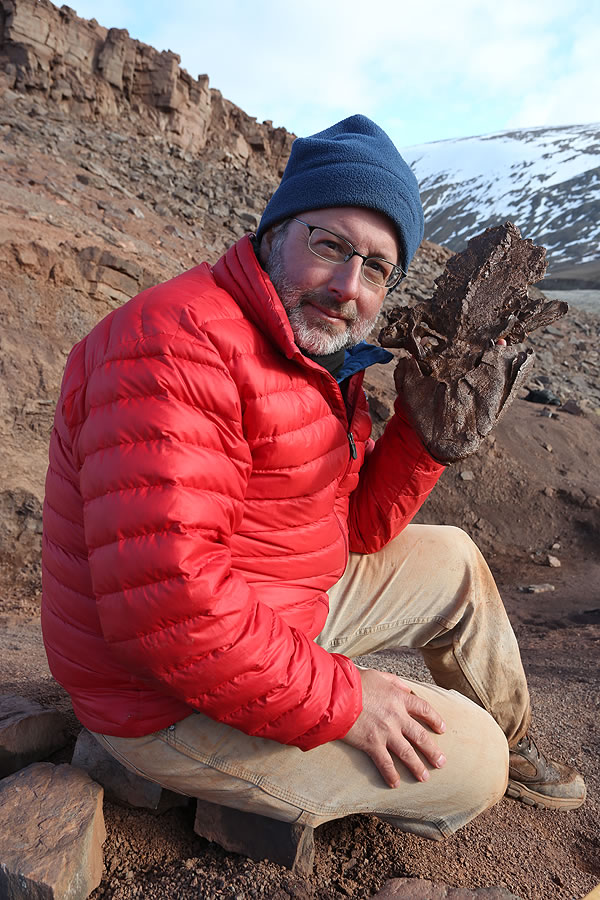
Palaeocast Episode 100: Tiktaalik
Read more: Palaeocast Episode 100: TiktaalikThere’s a new episode of Palaeocast. It’s an interview of Neil Shubin. He talks quite extensively about the discovery of Tiktaalik, where to look for fossils, why development matters, and his deep involvement in science communications. One of palaeontology‘s great themes of questioning is the rise of novelty: how new structures and functions arise in specific lineages. In this episode we speak with Neil Shubin, Professor of Organismal Biology at the University of Chicago, who has been studying novelty in the context of the vertebrate transition from water to land. Neil studies the fossil record of early tetrapods, the first…
-
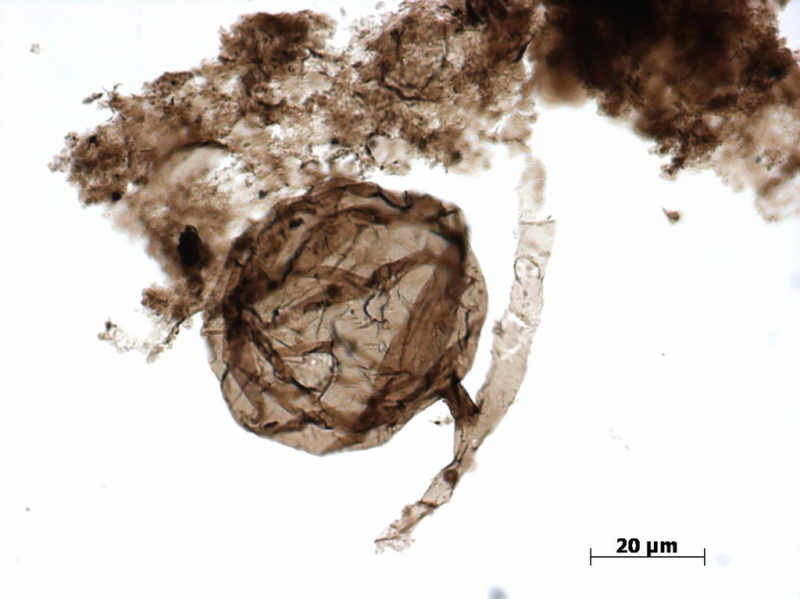
CBC Quirks & Quarks: Fungus fossils show the complexity of life a billion years ago
Read more: CBC Quirks & Quarks: Fungus fossils show the complexity of life a billion years agoCBC Quirks & Quarks has a segment on the discovery of some fungus fossils. The fossils were found in shale in the Grassy Bay Formation in the Northwest Territories and dates to the Precambrian era about a billion years ago. All the details are a paper published in the journal Nature. Elizabeth Turner, a professor of sedimentary geology at Laurentian University was part of the team that discovered the fossils. She told Quirks & Quarks host Bob McDonald that finding the fossils was a major surprise. The existence of fungus in this time was not unexpected. Scientists studying the history…
-
ESCONI June General Meeting on June 14th, 2019 at 8:00 PM – The 1883 Diamond Mine Disaster
Read more: ESCONI June General Meeting on June 14th, 2019 at 8:00 PM – The 1883 Diamond Mine DisasterThe speaker at our June 14, 2019 meeting will be Michele Micetich. Her program is on the Diamond Mine Disaster that occurred in 1883 at the Diamond No. 2 mine near Coal City. Michele is curator of the Carbon Hill School Museum in Carbon Hill, IL. It a great place to learn what life was like in and around the coal mines of the early 1900s. You can learn more on their website.
-
43rd Annual Chicagoland Gem, Mineral, & Fossil Show – May 25th and 26th, 2019: Pictures
Read more: 43rd Annual Chicagoland Gem, Mineral, & Fossil Show – May 25th and 26th, 2019: PicturesRalph Jewel has a great write up about the show with a bunch of awesome pictures over on The Fossil Forum. Check it out! Here are some pictures of the ESCONI volunteers at the 2019 CGMA Show.
-

Diabloroter bolti, a short-bodied recumbirostran ‘microsaur’ from the Francis Creek Shale, Mazon Creek, Illinois
Read more: Diabloroter bolti, a short-bodied recumbirostran ‘microsaur’ from the Francis Creek Shale, Mazon Creek, IllinoisThe Zoological Journal has a new paper describing a Mazon Creek “Microsaur” Diabloroter bolti. The paper is authored by Arjan Mann and Hillary C Maddin of the Department of Earth Sciences, Carleton University in Ottawa, Ontario, CA. The sculpture in the picture was created by David Duck, who has been an ESCONI member. Congrats! The Carboniferous (Pennsylvanian; 309–307 Mya) ‘Mazon Creek’ Lagerstätte produces some of the earliest tetrapod fossils of major Palaeozoic lineages. Previously, the Mazon Creek record of ‘microsaurs’ was known from a single specimen. However, the lack of key anatomy, such as the skull, precluded a confident taxonomic assignment,…
-
Today and Tomorrow are the 43rd Annual Chicagoland Gem, Mineral, & Fossil Show – May 25th and 26th, 2019
Read more: Today and Tomorrow are the 43rd Annual Chicagoland Gem, Mineral, & Fossil Show – May 25th and 26th, 2019The Chicagoland Gem, Mineral, & Fossil Show will be Memorial Day Weekend – Saturday May 25th and Sunday May 26th 2019, at the Kane County Fairgrounds in St. Charles, IL. Show times are 10 AM – 6 PM on Saturday and 10 AM to 5 PM on Sunday. Check here for all the details. Location Kane County Fairgrounds 525 S Randall RdSt Charles, IL 60174 FREE PARKINGINDOORS – AIR CONDITIONED – FOOD AVAILABLECamping Available – Call (630) 377-0197 Admission Prices* One Day Show Pass $5.00 Adults$3.00 Seniors & Students (ages 13-18)Children (Under 13) Attend Free Two Day Pass $8.00 Adults$5.00 Seniors & Students (ages…

ESCONI Gem, Mineral, and Fossil Show
Most Recent Post
- ESCONI April 2026 General Meeting via Zoom – “Life in the Devonian Period, The Age of Fishes”
 The April 2026 General Meeting will be held on April 10th, 2026 at 8:00 via Zoom. At the meeting, Jessica Hull will present “Life in the Devonian Period, The Age of Fishes.” The Devonian Period was a crucial moment in the history of life. In this presentation, Jessica Hull will bring fossils to life by describing how they would have lived based on the most up to date research. Dunkleosteus fans won’t want to miss this!
- About ESCONI
- Around the Web
- Calendar of Events
- Code of Ethics and Conduct
- ESCONI Books for Sale
- ESCONI Gem, Mineral, and Fossil Show
- ESCONI in the News
- ESCONI Videos
- Field Trips
- Flashback Friday
- Fossil Friday
- Mazon Creek
- Mazon Monday
- Member Spotlight
- Membership Information
- Reference Material
- Throwback Thursday
- Trilobite Tuesday
Field trips require membership, but visitors are welcome at all meetings!
| Friday, April 10th | General Meeting – 8:00 PM via Zoom. Jessica Hull will present “Life in the Devonian Period, The Age of Fishes.” |
| Saturday, April 11th | Junior Study Group Meeting – 2:00 PM, in person at the College of DuPage Technical Education Center (TEC) Building – Room 1038A (Map). Katherine Howard will present on Sand and Sediment Collecting. Specifics of this meeting are available from Scott Galloway, 630-670-2591, gallowayscottf@gmail.com. |
| Saturday, April 18th | Paleontology Study Group – 7:30 PM via Zoom and in person at the College of DuPage, TEC, Room 1038B (Map). Keith Robitschek will present “Digging the Marl of the Lance Formation.” |
| Friday, April 24th | MAPS Expo XLVII – Springfield, IL. |
| Saturday, April 25th | MAPS Expo XLVII – Springfield, IL. |
| Sunday, April 26th | MAPS Expo XLVII – Springfield, IL. |
| No meeting this month | Mineralogy Study Group |