-

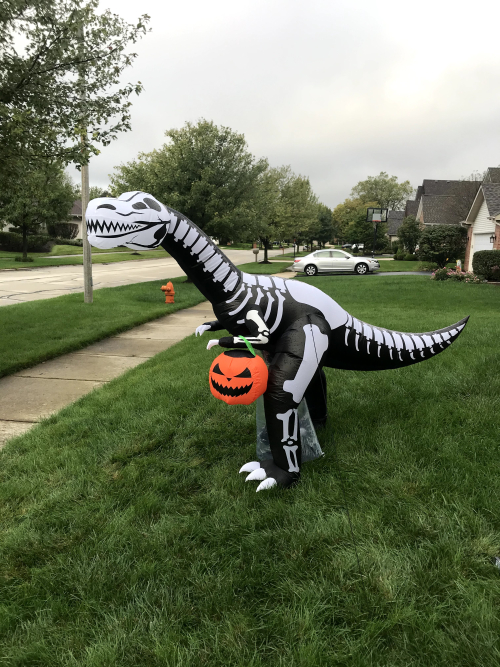
First evidence of feathered polar dinosaurs found in Australia
Read more: First evidence of feathered polar dinosaurs found in AustraliaPhys.org has a story about the first polar dinosaurs with feathers. Fossilized dinosaur and bird feathers have been found in what are fine muddy sediments in Australia. The deposit was once the bottom of a shallow lake that was close to the South Pole during the Cretaceous. The feathers date to about 118 million years ago and range from proto-feathers to downy body feathers to wing feathers from primitive birds. The description is in a paper published in the journal Gondwana Research. “Dinosaur skeletons and even the fragile bones of early birds have been found at ancient high-latitudes before. Yet,…
-
ESCONI November Paleontology Study Group Meeting – Saturday, November, 16th, 2019 at 7:30 PM.
Read more: ESCONI November Paleontology Study Group Meeting – Saturday, November, 16th, 2019 at 7:30 PM.The November Paleontology Study Group Meeting will be Saturday, November, 16th, 2019 at 7:30 PM. The topic is "Pontiac Crinoids". The presentation is by ESCONI Member Tom Williams. Come on out!
-
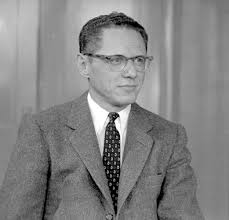
David Bardack, Professor Emeritus, Biological Sciences at the University of Illinois at Chicago
Read more: David Bardack, Professor Emeritus, Biological Sciences at the University of Illinois at ChicagoDavid Bardack, Professor Emeritus, Biological Sciences at the University of Illinois at Chicago has passed away. He was a specialist on fishes and was responsible for naming and describing many of the fishes of the Mazon Creek biota, including early hagfish and lamprey. He was 87. Here is a partial list of his papers.
-

Roy Plotnick: Who knows where the time flows?
Read more: Roy Plotnick: Who knows where the time flows?Roy Plotnick has a new post over on Medium. The topic is clear representation of data. Whether the topic is geology, chemistry, physics, or economics, it’s important to present data clearly and during a presentation or paper to describe it for all to understand. When I was a graduate student, my fellow student Anne Raymond (now at Texas A&M), taught me an important lesson about discussing a graph during a presentation. She insisted that you must point at each axis and describe what it says, including describing the range of data on the axis, before discussing the content of the…
-

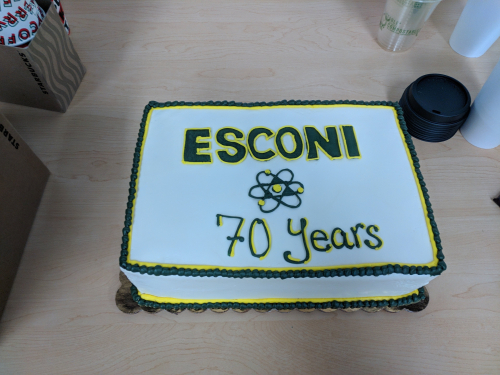
Happy 70th Birthday ESCONI!
Read more: Happy 70th Birthday ESCONI!ESCONI (Earth Science Club of Northern Illinois) was founded on November 11, 1949 with an initial meeting of 13 people interested in Earth Sciences. William Allaway was the 1st President of ESCONI. The purpose of ESCONI: The aim of the Earth Science Club of Northern Illinois is to promote an interest in the earth sciences, among these are geology, paleontology, mineralogy, micromounting, and the lapidary arts. The ESCONI Bulletin, Earth Science News, has been published 11 times per year continuously since January 1950. Excerpts from the original historical document (NewsletterHistory.pdf) On November 11, 1949. Thirteen People, each interested in some phase of…
-
ESCONI November General Meeting – ESCONI 70th Birthday Celebration Pictures
Read more: ESCONI November General Meeting – ESCONI 70th Birthday Celebration PicturesThe November General Meeting last Friday, November 8th, 2019 was a great time! We have a very large turnout and had to expand into the neighboring room. There were two speakers, Keith Robitschek and Paul Mayer. Keith did a presentation that discussed the history of ESCONI from 1949 to the present, while Paul spoke about the long fruitful relationship between the Field Museum and ESCONI. The Cake! The current Board of Directors. Jeff Lord President, Chris Cozart Curator, Irene Broede 2nd Vice President, John Catalani Field Trip Chairman, Don Cronauer Editor, Andy Jansen Treasurer and Librarian, Keith Robitschek Historian and…
-

PBS Eons: How We Domesticated Cats (Twice)
Read more: PBS Eons: How We Domesticated Cats (Twice)PBS Eons has a new episode and it’s a great one for cat lovers! It seems that cats have been domesticated twice and this is the story of Felis silvestris lybica. A 9,500 year old burial in Cyprus represents some of the oldest known evidence of human/cat companionships anywhere in the world. But when did this close relationship between humans and cats start? And how did humans help cats take over the world?
-
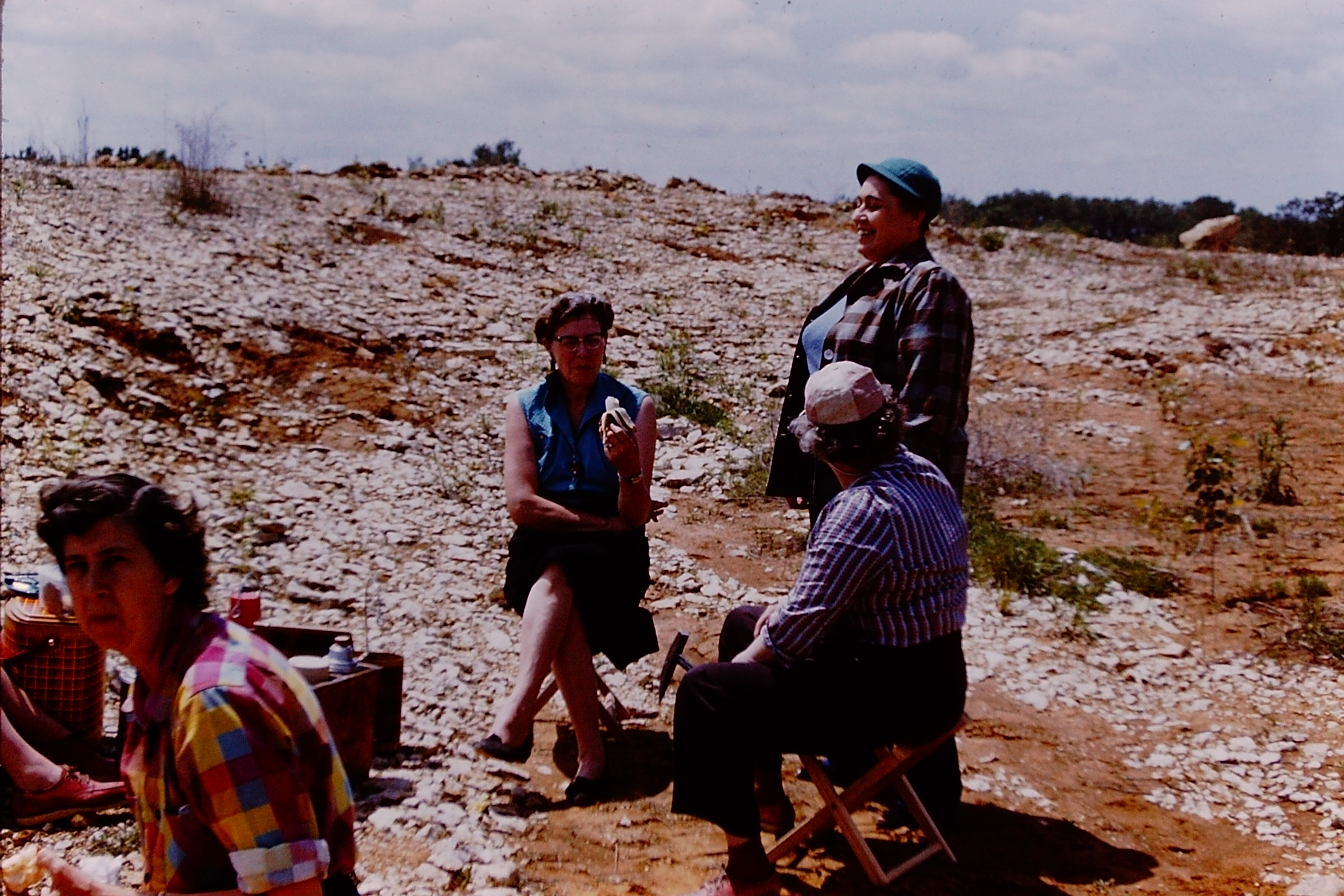
ESCONI Flashback Friday #26: Field Trip to Dixon, IL 05-24-1959
Read more: ESCONI Flashback Friday #26: Field Trip to Dixon, IL 05-24-1959As part of the run up to ESCONI’s 70th Anniversary, here is Flashback Friday post #26. If you have pictures or stories to contribute, please send them over to esconi.info@gmail.com. Thanks! Here are some pictures from a field trip to Dixon, IL on May 24th, 1958. Field trips in the past were much more of a family affair. Collecting fossils and picnics seem to go hand in hand… If the pictures show anything, these were very social event. Too bad there aren’t just a few pictures of what they found… I’ll have a few trilobites with my hot dogs and…
-
ESCONI November Junior Meeting – Space and Fossils on November 8th, 2019
Read more: ESCONI November Junior Meeting – Space and Fossils on November 8th, 2019Does your child like space and fossils? Bring them to our next junior meeting and we will expand their knowledge of both! Friday November 8th,2019 at 7pm College of DuPage Technical Education Center West side room 1038B Contact gallowayscottf@gmail.com with questions Go to www.ESCONI.org for the map.
-
ESCONI November General Meeting – ESCONI 70th Birthday Celebration on November 8th, 2019
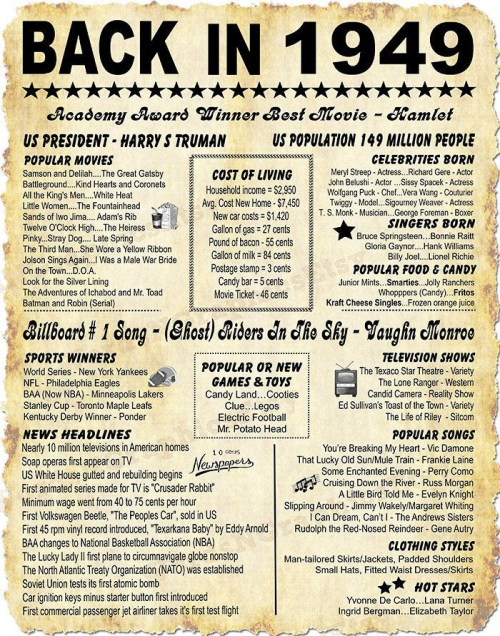
Read more: ESCONI November General Meeting – ESCONI 70th Birthday Celebration on November 8th, 2019Come on out to the November General Meeting! There will be cake, a slide show, and maybe some surprise guests! Officers of the Earth Science Club of Northern Illinois William H. Allaway Chairman Roy Beghtol Vice-Chairman Herb Beck Recording Secretary Jay E. Farr Corresponding Secretary Stevens T. Norvell Treasurer Mrs. Ethel Whitney Historian Curator B. J. Babbitt Editor Harry Nelson Associate Editor Active Membership $2.00 Associate Membership $1.25 Junior Membership $0.75 Non Resident Membership $1.25 Meetings on 2nd Friday of every month, except July and August, at 8:00 PM. Visitors Welcome!
-

Phys.org: New way to date rocks
Read more: Phys.org: New way to date rocksPhys.org has a post about a new way to date rocks. Scientists at the University of Queensland have developed a way to date rocks by analyzing a silicate mineral known as garnet. The method is detailed in a paper which appeared in the Journal GSA Bulletin. A new way to date a common mineral could help pinpoint ore deposits and improve mineral exploration globally, according to University of Queensland scientists. The researchers have identified a new reference material and used a state-of-the-art instrument to better date rock formations in central Asia. UQ’s Professor Jian-xin Zhao said the team started by…
-
LiveScience: Meet ‘Cold Dragon of the North Winds,’ the Giant Pterosaur That Once Soared Across Canadian Skies
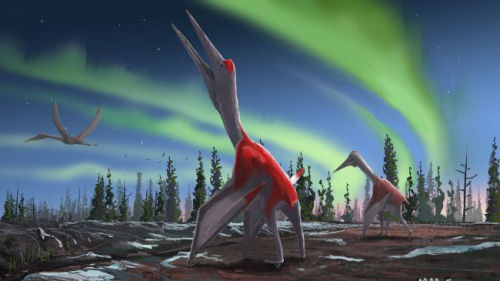
Read more: LiveScience: Meet ‘Cold Dragon of the North Winds,’ the Giant Pterosaur That Once Soared Across Canadian SkiesLive Science has a story about a new giant pterosaur. The animal, Cryodrakon boreas (cold dragon of the north winds), was discovered in Dinosaur Provincial Park in Alberta, Canada. It is thought to have lived between 77 million to 74 million years ago. The bones were originally found decades ago and were thought to be those of Quetzalcoatlus, a related azhdarchid pterosaur that was first discovered in Texas. These findings were recently published in the Journal of Vertebrate Paleontology. Millions of years ago, a flying reptile as big as an airplane took flight in what is now Canada. Now, this…
-

ESCONI Events November 2019
Read more: ESCONI Events November 2019Field trips require membership, but visitors are welcome at all meetings! Fri, Nov 8th ESCONI Junior Meeting, 7:00 PM College of Dupage – Tech Ed (TEC) Building, Room 1038A (Map) – Topic: “Space and Fossils” Fri, Nov 8th ESCONI General Meeting, 8:00 PM College of Dupage – Tech Ed (TEC) Building, Room 1038A (Map) – Topic: “ESCONI 70th Birthday Celebration” Mon, Nov 11th Happy 70th Birthday ESCONI! Sat, Nov 16th ESCONI Paleontology Study Group Meeting, 7:30 PM –Tech Ed (TEC) Building, Room 1038B (Map) – Topic: “Pontiac Crinoids” by ESCONI Member Tom Williams
-
ESCONI December 2019 Speaker is Dr. Thomas Cullen “Microsites to Macroinferences: a Multi-Scale Approach to Analyzing Dinosaur Paleoecology”
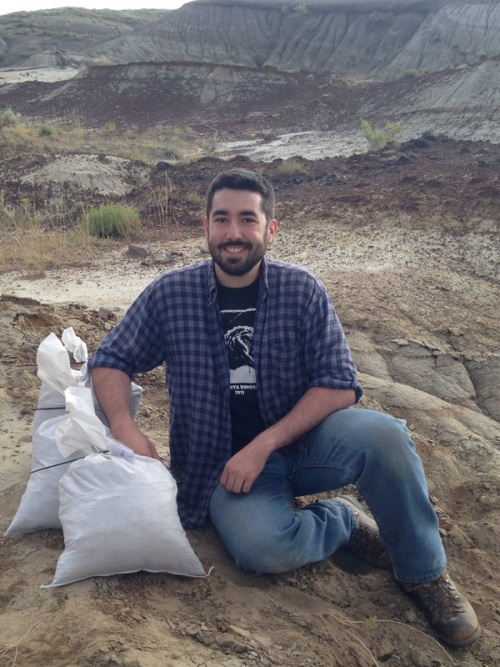
Read more: ESCONI December 2019 Speaker is Dr. Thomas Cullen “Microsites to Macroinferences: a Multi-Scale Approach to Analyzing Dinosaur Paleoecology”Dr. Thomas Cullen, Post-Doctoral Research Scientist at the Field Museum. The title of his talk is: “Microsites to Macroinferences: a Multi-Scale Approach to Analyzing Dinosaur Paleoecology”.
-
PBS Eons: Were These Monsters Inspired by Fossils?
Read more: PBS Eons: Were These Monsters Inspired by Fossils?PBS Eons has a new episode. This one is about monsters, more specifically the Cyclops. People have been discovering the traces and remains of prehistoric creatures for thousands of years. And they’ve also probably been telling stories about fantastic beasts since language became a thing. So, is it possible that the monsters that populate our myths and legends were influenced by the fossil record? Check out Monstrum's full episode on Cyclops: https://youtu.be/s-pMfIWl4kI
-
ESCONI Flashback Friday #25: Ode to a Blob
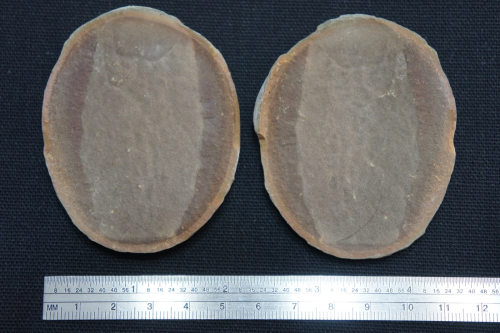
Read more: ESCONI Flashback Friday #25: Ode to a BlobAs part of the run up to ESCONI’s 70th Anniversary, here is Flashback Friday post #25. If you have pictures or stories to contribute, please send them over to esconi.info@gmail.com. Thanks! Rob Sula wrote this poem back in 2002. Rob as 1st Vice-President from 2008-2014. The poem is about Essexella asherae, the iconic Mazon Creek cnidarian. While there was a recent paper about whether it is a jellyfish or a sea anemone, the consensus opinion is that it is a jellyfish. ODE TO A BLOB Oh, lowly blob,Whose grave I did not rob. On the ground you sitSo round and…
-
ESCONI Holiday Party December 6th, 2019, 5:30 PM at Cozymel’s in Wheaton
Read more: ESCONI Holiday Party December 6th, 2019, 5:30 PM at Cozymel’s in WheatonAn artist’s depiction of the extinct giant, frond-shaped organisms known as rangeomorphs. Credit: Reid Psaltis The 2019 ESCONI Holiday Dinner is December 6, 2019, starting at 5:30 PM at Cozymel's in Wheaton. We will be ordering off the menu. As in the past few years, there will be door prizes given away. Please RSVP to Dave at fossil54@att.net
-
Roy Plotnick: The First Day of the Rest of Life
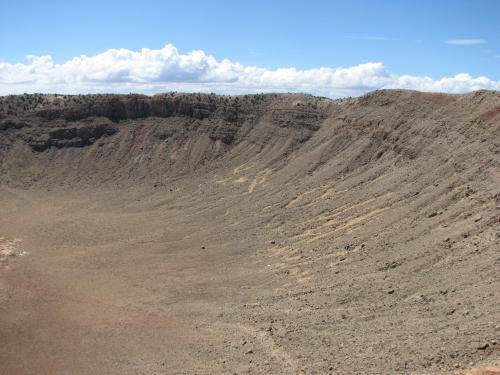
Read more: Roy Plotnick: The First Day of the Rest of LifeRoy Plotnick has a great post about of the last day of the Mesozoic Era (or the first day of the Cenozoic Era). It would have been a very bad day, indeed! On a day some sixty-six million years ago, life was Earth was suddenly and irreversibly altered. An enormous asteroid or comet struck the Earth next to what is now the Yucatan peninsula. After that, life on the Earth would never be the same. Dinosaurs, apart from birds (of course), died out. Even the birds, however, suffered dramatic losses. Extinctions struck plants and insects. Mammals may have lost more…
-

‘A scientific goldmine’: U of A paleontologists discover complete skeleton of small, carnivorous dino
Read more: ‘A scientific goldmine’: U of A paleontologists discover complete skeleton of small, carnivorous dinoThe Edmonton Journal has a story about a recent dinosaur find. In 2014, a remarkablely complete, small, carnivorous dinosaur in “exquisitely preserved” condition was discovered by University of Alberta paleontologist Clive Coy. The animal, called Saurornitholestes, lived about 76 million years ago. Saurornitholestes is a small, feathered carnivorous dinosaur part of the dromaeosaurid family — also known as raptors — and was long thought to have been closely related to the velociraptor from Mongolia. The skeleton was “exquisitely preserved,” with all the bones except for the tail preserved. “Paleontology, in general, is a gigantic puzzle where most of the pieces…

ESCONI Gem, Mineral, and Fossil Show
Most Recent Post
- Video for ESCONI April 2026 General Meeting – “Life in the Devonian Period, The Age of Fishes”
 The April 2026 General Meeting was held on April 10th, 2026 at 8:00 via Zoom. At the meeting, Jessica Hull presented “Life in the Devonian Period, The Age of Fishes.”
- About ESCONI
- Around the Web
- Calendar of Events
- Code of Ethics and Conduct
- ESCONI Books for Sale
- ESCONI Gem, Mineral, and Fossil Show
- ESCONI in the News
- ESCONI Videos
- Field Trips
- Flashback Friday
- Fossil Friday
- Mazon Creek
- Mazon Monday
- Member Spotlight
- Membership Information
- Reference Material
- Throwback Thursday
- Trilobite Tuesday
Field trips require membership, but visitors are welcome at all meetings!
| Friday, April 10th | General Meeting – 8:00 PM via Zoom. Jessica Hull will present “Life in the Devonian Period, The Age of Fishes.” |
| Saturday, April 11th | Junior Study Group Meeting – 2:00 PM, in person at the College of DuPage Technical Education Center (TEC) Building – Room 1038A (Map). Katherine Howard will present on Sand and Sediment Collecting. Specifics of this meeting are available from Scott Galloway, 630-670-2591, gallowayscottf@gmail.com. |
| Saturday, April 18th | Paleontology Study Group – 7:30 PM via Zoom and in person at the College of DuPage, TEC, Room 1038B (Map). Keith Robitschek will present “Digging the Marl of the Lance Formation.” |
| Friday, April 24th | MAPS Expo XLVII – Springfield, IL. |
| Saturday, April 25th | MAPS Expo XLVII – Springfield, IL. |
| Sunday, April 26th | MAPS Expo XLVII – Springfield, IL. |
| No meeting this month | Mineralogy Study Group |