-

Four New Species of Prehistoric Flying Reptiles Unearthed in Morocco
Read more: Four New Species of Prehistoric Flying Reptiles Unearthed in MoroccoSmithsonian Magazine has an article about the recent discovery of not 1. not 2, but 4 new species of pterosaur. These animals were found in the famous Kem Kem fossil beds in southeastern Morocco. They lived about 100 million years ago during the middle Cretaceous Period. All the details are in a paper published in the journal Cretaceous Research. These leathery-winged predators, part of an extinct group known as pterosaurs, were excavated from the Kem Kem fossil beds in southeastern Morocco. Three new species of toothed pterosaur, all part of the Ornithocheiridae family, identified from chunks of jaws studded with pointed teeth, were…
-
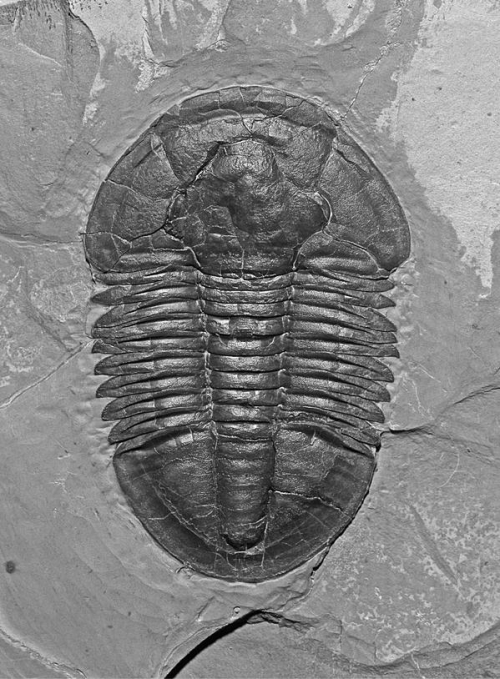
Trilobite Tuesday #2: AMNH Trilobite Top Tens
Read more: Trilobite Tuesday #2: AMNH Trilobite Top TensThe American Museum of Natural History has an interesting page titled “Trilobite Top Tens”. They have everything from Charles Walcott (NY Wolcott-Rust quarry and Burgess Shale), to Elrathia kingii (one of the most common trilobites), to Sir Roderick Murchison (rock star geologist from the 1800s). The categories are: The AMNH has a great website on trilobites. There is so much information… check it out!
-
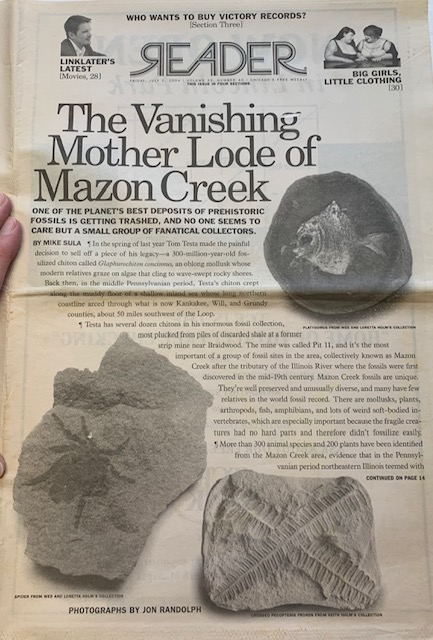
Mazon Monday #2: The Vanishing Mother Lode of Mazon Creek
Read more: Mazon Monday #2: The Vanishing Mother Lode of Mazon CreekThe Friday, July 2nd, 2004 edition of The Reader featured an article titled “The Vanishing Mother Lode of Mazon Creek”. The full text of the article is available online. Unfortunately, it doesn’t include the pictures. This article was written by Mike Sula, no relation to long time ESCONI member Rob Sula. The article does a great job with the history of Mazon Creek fossil collecting. Many of the colorful characters were interviewed for the piece and some were ESCONI members. Some even contributed specimens for the animal book “The Mazon Creek Fossil Fauna” by Jack Wittry, written in 2012. In…
-
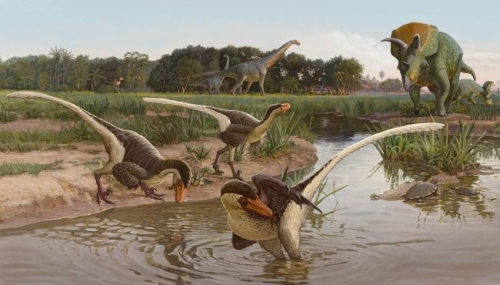
LiveScience: ‘Warrior’ dinosaur with nasty gouge mark on claw uncovered in New Mexico
Read more: LiveScience: ‘Warrior’ dinosaur with nasty gouge mark on claw uncovered in New MexicoLiveScience has a story about a new species of carnivorous dinosaur. This new animal is called Dineobellator notohesperus and is a cousin to Velociraptors. It lived about 70 million years ago in what is now New Mexico. This particular specimen has a couple injuries, a nasty rib injury and a gash on its sickle-shaped claw, both of which show signs of healing. Read all about it in paper in the journal Scientific Reports. The dinosaur’s fossils were discovered in the San Juan Basin of northwestern New Mexico during the summer of 2008. Given the dinosaur’s impressive injuries, the scientists named…
-
Field Museum Special Event: Meet a Scientist Thursday, April 9 | 3:30-4:30pm
Read more: Field Museum Special Event: Meet a Scientist Thursday, April 9 | 3:30-4:30pmFounders’ Council Special Event:Meet a Scientist Thursday, April 9 | 3:30-4:30pm We hope this invitation finds you, your family, and friends safe. As a Founders’ Council donor, we are offering you this special opportunity. Join us for our inaugural Meet a Scientist virtual event featuring McCarter Collections Manager of Fossil Vertebrates, Bill Simpson. Bill will share his extraordinary involvement with SUE over the years. SUE’s journey with the Field Museum begins in the summer of 1997 at Sotheby’s warehouse in New York. It continues with the remounting of the dinosaur and eventual display in the Griffin Halls of Evolving Planet. We encourage you to invite your friends and…
-
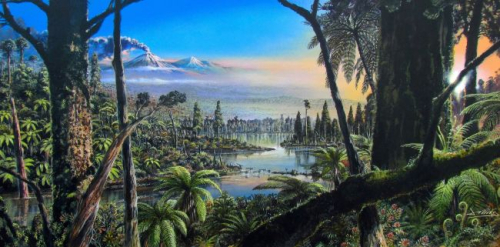
LiveScience: Remains of 90 million-year-old rainforest discovered under Antarctic ice
Read more: LiveScience: Remains of 90 million-year-old rainforest discovered under Antarctic iceLiveScience has a story about a fossil rainforest under the ice in Antarctica. This forest was found in West Antarctica and dates to about 90 million years ago, during the Cretaceous Period. The fossils show a tropical climate similar to New Zealand. Read all about it in a paper in the April 1st, 2020, edition of the journal Nature. The rainforest’s remains were discovered under the ice in a sediment core that a team of international researchers collected from a seabed near Pine Island Glacier in West Antarctica in 2017. As soon as the team saw the core, they knew they had…
-

Throwback Thursday #1: “If I Could Turn Back Time: ESCONI Rock Club” by Mary Fairchild
Read more: Throwback Thursday #1: “If I Could Turn Back Time: ESCONI Rock Club” by Mary FairchildMary Fairchild wrote this article back in 2006. Her and her family were heavily involved in ESCONI in the late 1990s and 2000s. Actually, Jim served as president of ESCONI from 2006 to 2008, along with various other positions. He currently serves as auctioneer at the annual ESCONI shows. As you will read, they have a deep appreciation of Mazon Creek fossils and the many people that have collected and contributed to the research over the years. This article relates some of their many experiences while members of ESCONI. Mary has a blog at mfairlady.com, which has a bunch of…
-

PBS Eons: How Dogs (Eventually) Became Our Best Friends
Read more: PBS Eons: How Dogs (Eventually) Became Our Best FriendsPBS Eons has a new episode. This one is about mans’ best friend… the dog! We’re still figuring out the details, but most scientists agree that it took thousands of years of interactions to develop our deep bond with dogs. When did they first become domesticated? Where did this happen? And what did the process look like, in terms of genetics and anatomy?
-

Trilobite Tuesday #1: The Trilobite: An Early Inhabitant of Illinois
Read more: Trilobite Tuesday #1: The Trilobite: An Early Inhabitant of IllinoisThe Illinois State Geologic Survey (ISGS) has a page on the trilobites of Illinois. It has good information about time periods and has a few pictures of the species that can be found here in Illinois. There’s even a paragraph on it’s body structure. Trilobites are so named because the segments on their upper (dorsal) surface usually possess longitudinal furrows that form a three (tri-) lobed division of the body. The central lobe is called the axial lobe, and the two lateral counterparts are called pleural lobes. The dorsal surface consisted of a hard, mineralized protective shield called a carapace;…
-
Museum Madness at the Field @FieldMuseum
Read more: Museum Madness at the Field @FieldMuseumIf you were missing March Madness, here's you chance to get in on Museum Madness! But hurry… your bracket has to be in tonight! Get up close and personal with some well-known, and other little-known, Field Favorites. Create your brackets for Museum Madness at the Field and then vote for your favorite! After each round of voting, see how you rank against other players. Who will win? You decide! Make your predictions now! And stay tuned for voting on Tuesday, March 31.
-
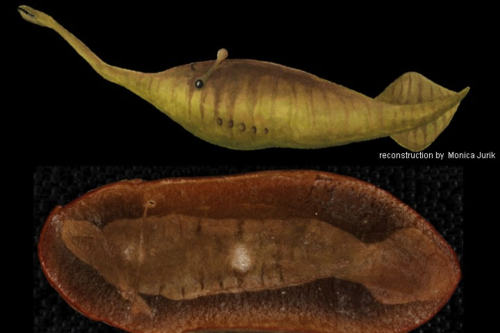
Mazon Monday #1: The Tully Monster
Read more: Mazon Monday #1: The Tully MonsterThe Tully Monster, or Tullimonstrum gregarium, has long been one of the most popular Mazon Creek fossil specimens. The reasons are unclear… maybe it’s the strange shape of the animal, or that it’s the State Fossil of Illinois, or the questions and controversy as to what type of animal it is. It is fairly rare, but not as much as most people believe. Oh, and by the way, it’s only found in Illinois. Francis Tully is credited with discovering it in a strip mine near Braidwood, IL, about 50 miles southwest of Chicago, in 1955. Mr. Tully was an amateur…
-
PBS Eons: How the Egg Came First
Read more: PBS Eons: How the Egg Came FirstThere’s a new episode of PBS Eons. This one is about eggs, the platypus, and of course birds! They tackle the endless question “What came first the Chicken or the egg?”. The story of the egg spans millions of years, from the first vertebrates that dared to venture onto land to today’s mammals, including the platypus, and of course birds. Like chickens? We’re here to tell you: The egg came first.
-
ESCONI May Paleontology Study Group Meeting – “The Gonioceras Fauna: Inhabitants of the Mohawkian Sea” on May 16th, 2020
Read more: ESCONI May Paleontology Study Group Meeting – “The Gonioceras Fauna: Inhabitants of the Mohawkian Sea” on May 16th, 2020On course, this depends on how everything is going with the gobal Covid-19 pandemic… here hoping! This exciting presentation will be given by ESCONI member John Catalani. The “Gonioceras Fauna”: Inhabitants of the Mohawkian Sea The Upper Ordovician “Gonioceras Fauna” of the Mohawkian Sea is remarkably abundant, diverse, and often well-preserved. I will start with an introduction to the Platteville Formation of the Ordovician System, the paleogeography of the Ordovician focusing on Laurentia (North America), and characteristics of the Mohawkian Sea of Laurentia. A bit about nautiloids and a description of Gonioceras, the namesake of the fauna, will follow. The…
-
New Website Features Coming Next Week!
Read more: New Website Features Coming Next Week!Some new website features coming next week. These will probably not all happen every week, but we’ll do our best to keep posts coming. Send us pictures and a brief description and we will post them.
-

Chicago’s Field Museum Has a Dinosaur on the Loose — and She Has a Twitter Account (Video)
Read more: Chicago’s Field Museum Has a Dinosaur on the Loose — and She Has a Twitter Account (Video)Travel and Leisure has a piece on SUE at the FIeld Museum. A bunch a good facts and information plus some of SUE’s recent tours of the museum as it is closed for the next few weeks. Chicago’s Field Museum sent out its very own dinosaur ambassador, SUE, to check on the museum as it remains closed due to the coronavirus pandemic. They couldn’t let those rockhopper penguins at the nearby Shedd have all the fun, after all. “Once SUE heard about the @shedd_aquarium penguins, we really didn’t have a choice,” the Field Museum wrote in a tweet along with a video…
-
PBS Eons: When Penguins Went From The Sky To The Sea
Read more: PBS Eons: When Penguins Went From The Sky To The SeaThere’s a new episode of PBS Eons. This one is about penguins and how they evolved from sea birds. Today, we think of penguins as small-ish, waddling, tuxedo-birds. But they evolved from a flying ancestor, were actual giants for millions of years, and some of them were even dressed a little more casually.
-
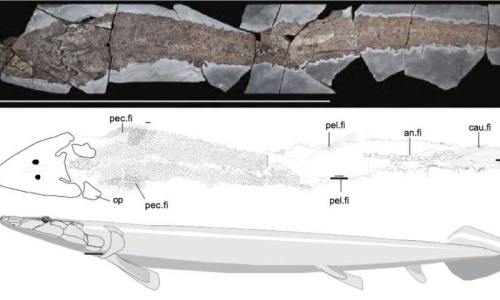
Phys.org: Ancient fish fossil reveals evolutionary origin of the human hand
Read more: Phys.org: Ancient fish fossil reveals evolutionary origin of the human handPhys.org has a story about the evolution of the human hand. A new complete specimen of a tetrapod-like fish, Elpistostege, reveals new clues in the evolution of the human hand from fish fins. The paper describing this discovery can be found in the journal Nature. An ancient Elpistostege fish fossil found in Miguasha, Canada has revealed new insights into how the human hand evolved from fish fins. An international team of palaeontologists from Flinders University in Australia and Universite du Quebec a Rimouski in Canada have revealed the fish specimen, as described in the journal Nature, has yielded the missing evolutionary link in…
-
Chicago Museums Closed Due To Covid 19
Read more: Chicago Museums Closed Due To Covid 19The Chicago Tribune has a story about the temporary closing of Chicago Museums due to Covid 19. The Field Museum, Shedd Aquarium, Art Institute, Planetarium, and Lincoln Park Zoo have closed for 2 weeks, Watch their websites for updated status. The Museum of Science and Industry, Art Institute of Chicago, Adler Planetarium and Field Museum have joined Shedd Aquarium in announcing Friday a coronavirus related temporary closure, less than a day after Lincoln Park Zoo was the first of the region’s major museums and nature parks to say it is closing. MSI, which welcomed almost 1.4 million visitors last year,…

ESCONI Gem, Mineral, and Fossil Show
Most Recent Post
- Fossil Friday #315: Eubleptus danielsi
 Eubleptus danielsi belongs to the Palaeodictyoptera an extinct order of medium-sized to very large, primitive Palaeozoic paleopterous insects. E. danielsi was described by Anton Handlirsch in 1906. Handlirsch (1865 – 1935) was an Austrian entomologist, who worked extensively on many insect orders. He did significant work studying of fossil insects. Handlirsch described E. danielsi in “Revision of American Paleozoic insects. Proceedings of the United States National Museum“.
- About ESCONI
- Around the Web
- Calendar of Events
- Code of Ethics and Conduct
- ESCONI Books for Sale
- ESCONI Gem, Mineral, and Fossil Show
- ESCONI in the News
- ESCONI Videos
- Field Trips
- Flashback Friday
- Fossil Friday
- Mazon Creek
- Mazon Monday
- Member Spotlight
- Membership Information
- Reference Material
- Throwback Thursday
- Trilobite Tuesday
Field trips require membership, but visitors are welcome at all meetings!
| Friday, May 2nd | Field Trip to Danville, IL. Details here. |
| Friday, May 8th | General Meeting – 8:00 PM via Zoom. Thomas Loebel will present “Seeing Beneath the Ground: Geophysics and Archaeological Explorations in Illinois”. |
| Saturday, May 9th | Junior Study Group Meeting – 2:00 PM, in person at the College of DuPage Technical Education Center (TEC) Building – Room 1038A (Map). “The Rock Cycle and Sedimentation” Specifics of this meeting are available from Scott Galloway, 630-670-2591, gallowayscottf@gmail.com. |
| Saturday, May 16th | Paleontology Study Group – 7:30 PM via Zoom. John Catalani will present “An Ordovician Konzentrat Lagerstätte: The Dixon Mifflin Residuum Fauna”. |
| Saturday, May 23rd | CGMA Show, Kane County Fairgrounds |
| Sunday, May 24th | CGMA Show, Kane County Fairgrounds |
| Saturday, May 30th | Field Trip to Braceville, IL. Details here. |
| Sunday, May 31st | Field Trip to Braceville, IL. Details here. |
| No meeting this month | Mineralogy Study Group |


