Category: Around the Web
-
The Dinosaur Database
The Dinosaur Database looks to be an interesting resourrce for all things dinosaur! Dinosaurs are categorized by region/continent and time period. A great place for dinosaur fans of all ages! Welcome to the internet’s largest dinosaur database. Check out a random dinosaur, search for one below, or look at our interactive globe of ancient Earth! Whether you are a kid,…
-

PBS Eons Shorts: Where did the dinosaur-killing asteroid come from?
PBS Eons has a new video short on Youtube.
-
A 30,000-Year-Old Fossil Frozen in Volcanic Ash Holds an Unbelievable Secret
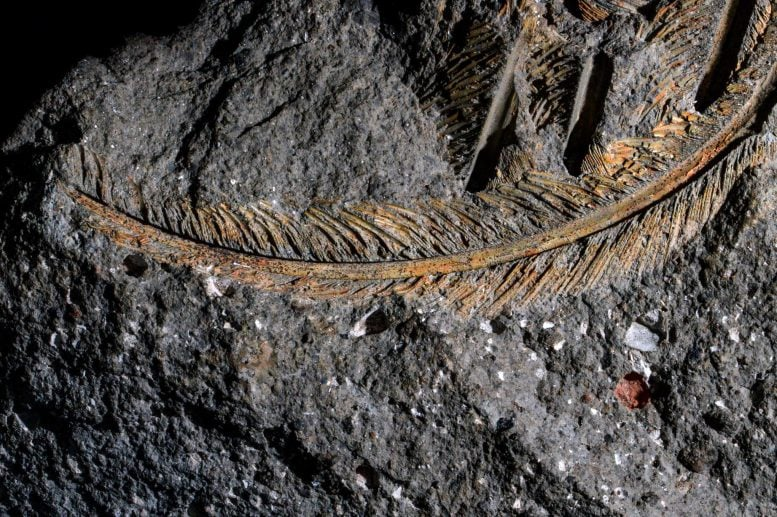
SciTechDaily brings news of a unique fossil discovery in Italy. A 30,000 year old fossil of a vulture shows that soft tissue can be preserved in volcanic rock deposits. The research was published in the journal Geology. The vulture fossil was originally discovered in 1889 near Rome by a local landowner, who recognized its exceptional…
-

Fossilized Evidence Reveals Extinction of Dinosaurs Led to Brief Epoch When Asteroids Ruled the Earth
It’s a few years old, but The Onion had a story about the extinction of the non-avian dinosaurs… MÉRIDA, MEXICO—Shedding new light on a rarely discussed prehistoric era, paleontologists from the Ohio State University announced Friday they had uncovered fossilized evidence that confirmed the extinction of dinosaurs led to a brief epoch when asteroids ruled…
-

Refuge from the worst mass extinction in Earth’s history discovered fossilized in China
Live Science has an interesting piece about refugia during the “Great Dying”. The End Permian mass extinction was Earth’s worst with an an estimated 80% of life going extinct. A new paper “Refugium amidst ruins: Unearthing the lost flora that escaped the end-Permian mass extinction” in the journal Science Advances, describes a refuge from the…
-
PBS Eons: The Arms Race That Made Insects Take Flight
PBS Eons has a new episode. This one is about the co-evolution of spiders and insects. Spiders and their ancestors have been driving an arms race that began before either stepped foot onto land and resulted in the first powered flight on Earth.
-

‘This is a crisis’: A southern Utah city is set to build a power station on top of a premier dinosaur fossil site
The Salt Lake Tribune has a story about the potential loss of a “paleontological jackpot” in Utah. St. George, Utah has an amazing dinosaur locality that dates to the beginning of the Jurassic Period about 200 million years ago. Unfortunately, the city of St. George plans to build a new electric substation on one of…
-
PBS Eons: Will We Survive The Future? (with John Green)
PBS Eons has another of their long form videos. This one is about the future… will we survive? Just because our ancestors have made it through every major period of upheaval in the Earth’s history so far doesn't mean that our survival through future changes is guaranteed. Humans have become a force of nature, but…
-

125-Million-Year-Old Scorpion Fossil Uncovered in China
SciNews has a story about a 125 million year old scorpion. The amazing fossil was discovered in the Yixian Formation at Heishangou village, Chifeng city, Nei Mongol, China. The fossil animal has been named Jeholia longchengi and dates to the early Cretaceous Period. The paper “First Mesozoic scorpion from China and its ecological implications” was…
-
PBS Eons: The Graveyard at the Center of the Earth
PBS Eons has a new episode. This one is about plate tectonics… how and why. Scientists have been trying to solve the mystery of why plate tectonics works the way it does for over a hundred years. And they might have just uncovered a key to cracking it.
-
New Duck-Billed Dinosaur Unearthed in China
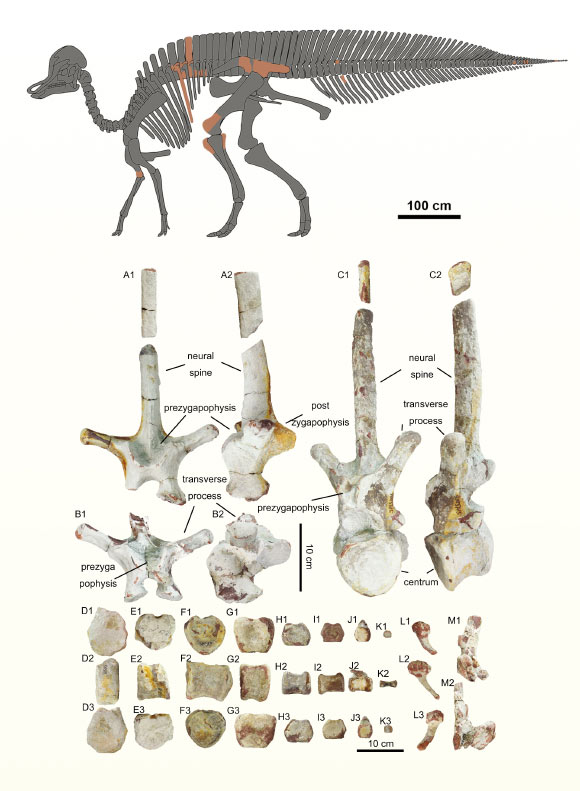
SciNews has a story about the discovery of a new dinosaur in China. The unnamed animal lived between 70 and 67 million years ago during the late Cretaceous Period, in what is now the Sanshui Basin in the northwestern part of the Pearl River Delta in South China. It represents the first lambeosaurine known from…
-
Chimaeropsis paradoxa Zittel, 1887 (Myriacanthoidei, Holocephali) from the Late Jurassic of Solnhofen
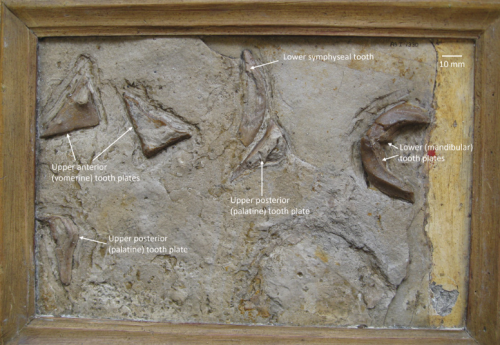
Bruce and Rene’ Lauer of the Lauer Foundation have co-authored another research paper, with lead author Christopher J. Duffin from the Natural History Museum in London – Department of Earth Sciences as the lead author. The study looked at Chimaeropsis paradoxa which is a holocephalian, a lesser-known group of ancient sharks. The paper was recently…
-
PBS Eons: How Mountains Make Evolution Weird
PBS Eons has a new episode. This one is about how barriers between populations can effect evolution. Mountains have a unique effect on diversity, messing with our understanding of animals through time, and pretty much just making evolution weird. And they would eventually reveal something even stranger about a group of mammals even closer to…
-

Fossils Preserve Both Skin and Scales from an Ancient Sea Monster
The New York Times’ Trilobites column has news of a breathtaking plesiosaur specimen. The animal lived about 183 million years ago during the Jurassic Period. The fossils were found in the legendary Posidonia Shale of southern Germany and excavated in from a quarry near Holzmaden in 1940. The specimen was prepared in 2020. At that…
-
PBS Terra: What Happened to America’s First Megacity?
PBS Terra is the sister Youtube channel to PBS Eons. In this episode, they discuss Cahokia, the mysterious city in southern Illinois. It rivaled London in size during its height in 1100 CE. Monk's Mound is an earthen pyramid that is larger than the Great Pyramid of Cheops. In its prime, Cahokia was a prosperous…
-
PBS Eons: Could You Survive The Messinian Salinity Crisis?
There's a new episode of PBS Eons. This one is about the "Messinian Salinity Crisis", which is the time when the Mediterranean Sea was separated from the Atlantic Ocean. In the Late Miocene Epoch, tectonic forces uplifted the Earth's crust, blocking off the Mediterranean Sea from the Atlantic Ocean. A once-thriving marine ecosystem was replaced…
-

Scientists find hidden ‘hotspot’ that helped create the Great Lakes before North America even existed
LiveScience has an interesting story about the origins of the Great Lakes and why they formed in their specific location around 20,000 years ago. A new study published in Geophysical Research Letters suggests that the Cape Verde hotspot, which still exists beneath the island nation in the Central Atlantic Ocean, played a key role in…
-
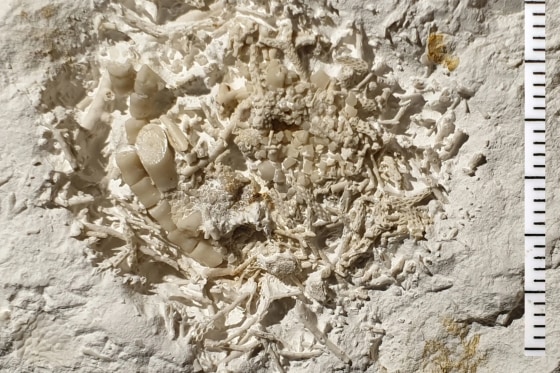
66-million-year-old vomit fossil discovered in Denmark
NBC News has a story about fossilized vomit. Yes, fossilized vomit, Unlike coprolites, which are fossilized dung, regurgitalites are rare in the fossil record. A danish fossil hunter, Peter Bennicke, found a strange clump of sea lily fragments embedded in chalk. He took it to the Geomuseum Faxe in November 2024, where a museum curator…
-
PBS Eons: What Killed These Sleeping Dinosaurs?
PBS Eons has a new episode. This one is about the fossils of Liaoning in northwestern China… amazingly, beautifully preserved dinosaurs that give us insight into dinosaur and bird evolution. Since the 1990s, paleontologists have been pulling 125-million-year-old complete dinosaur skeletons from the rocks of the Lujiatun in Northwestern China, most seemingly posed in perfect…
-
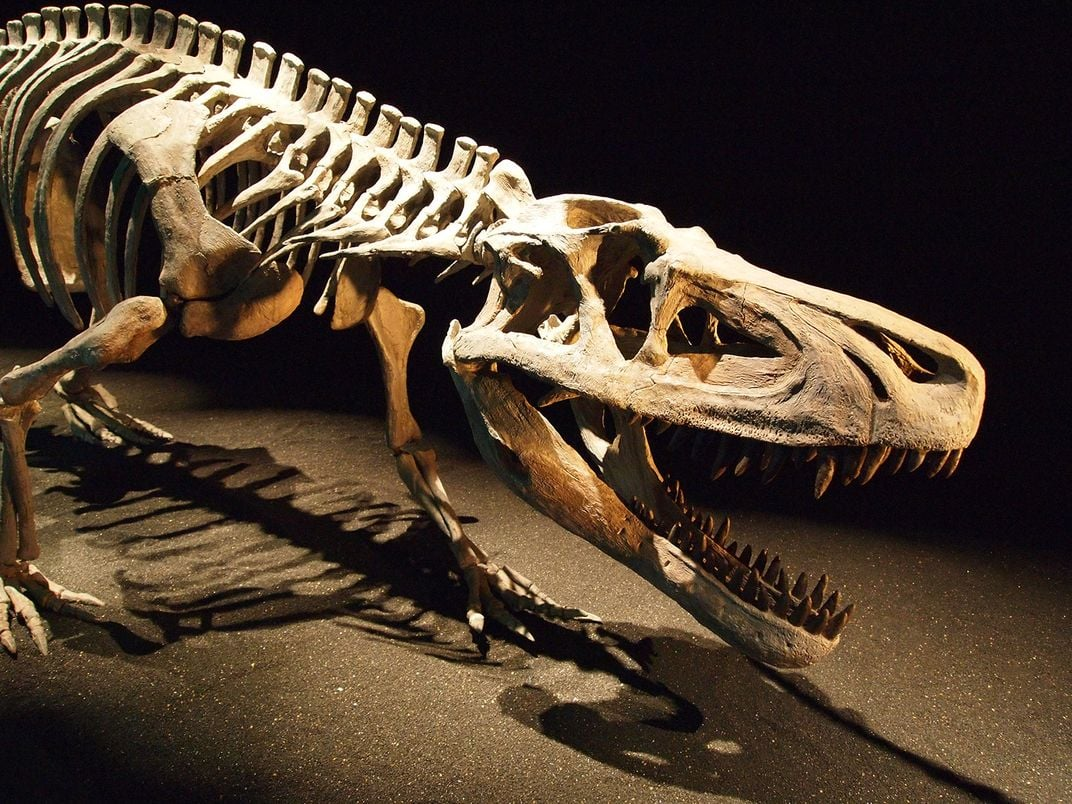
How a Mass Extinction Driven by Ancient Volcanoes Led to the Age of the Dinosaurs
Smithsonian Magazine features a story on the Triassic-Jurassic mass extinction, a pivotal event that reshaped life on Earth. The late Triassic was vastly different from the Jurassic and Cretaceous periods that followed. During this time, early dinosaurs played only minor roles, while the landscape was dominated by giant amphibians, a diverse array of crocodilian relatives—ranging…
-
PBS Eons: Could You Survive the K-Pg Extinction?
PBS Eons has another of their longer form videos which address major events in the history of the Earth. This one is about the K-Pg mass extinction event about 66 million years ago at the end of the Cretaceous Period. Would/could you survive? Remember, this event took out the non-avian dinosaurs, the ammonites, and many,…
-
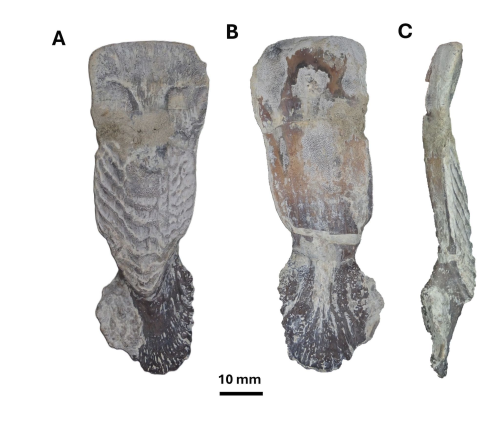
Paper: New Janassid Petalodontiform (Chondrichthyes) teeth from the Late Carboniferous of Kansas, USA
Bruce and Rene’ Lauer have been very busy. They are listed as co-authors of a new paper about shark teeth from the Late Carboniferous of Kansas – “New Janassid Petalodontiform (Chondrichthyes) teeth from the Late Carboniferous of Kansas, USA”. The paper was published in the jounal Neues Jahrbuch für Geologie und Paläontologie. Abstract An associated…
-

‘Once-in-a-century’ discovery reveals spectacular luxury of Pompeii
The BBC has an interesting story about Pompeii. Archaeologists have disvovered a “sumptuous” private bathhouse that provides insight into the luxurious life of some of the residents. The bathhouse had hot, warm and cold rooms, exquisite artwork, and a huge plunge pool. It was left as if people left just a few minutes ago. Pompeii,…
-

Fossils of Illinois: A Step Back Through Time
Paul Mayer, the Collection Manager of Fossil Invertebrates at the Field Museum, has done many presentations for ESCONI over the years. In October 2023, he gave a presentation entitled “Fossils of Illinois: A Step Back Through Time” at the Lizzadro Museum. Video of the presentation is available on Youtube. Join us for a presentation by…
-
PBS Eons: Did Asteroids Spark Life?
PBS Eons has a new video. This one is about the very early history of the Earth, a period called the Hadean. How did the building blocks of life form? Harold Miller did some experiments in the 1950s attempting to recreate the conditions. The impacts of a large asteroid might have provided the perfect condition…
-
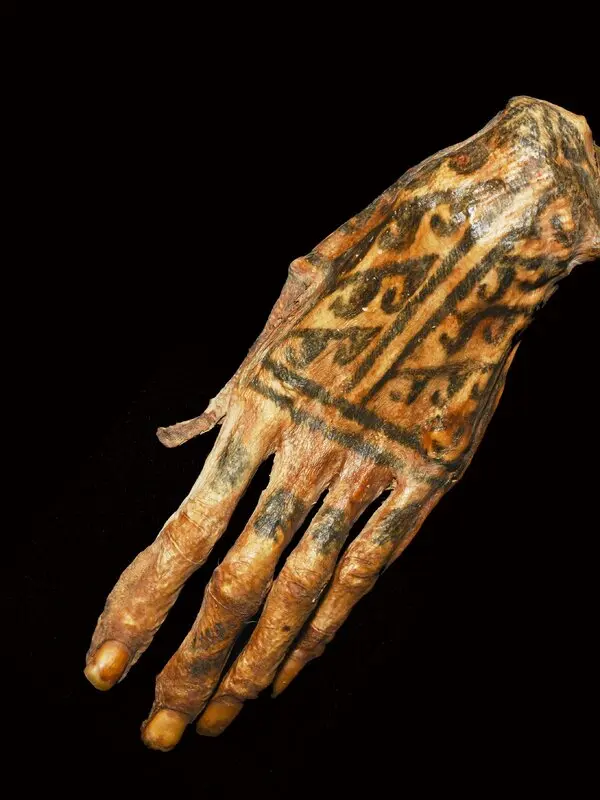
Mummies’ Ancient Tattoos Come Under Laser Focus
The New York Times has an article about ancient tattoos on mummies from Peru. Using a tool, laser-stimulated fluorescence, or L.S.F., usually used to study soft tissue in dinosaur fossils, scientists in Hong Kong have discovered intricate tattoos on mummified remains from the coast of Peru. The culture, referred to as the Chancay, left behind…
-
PBS Eons: Life and Death on Tiny-Dino Island
PBS Eons has another episode of their long form video series "Surviving Deep Time" This time they go to Hațeg island during the late Cretaceous. The domain of Hatzegopteryx thambema, the huge azhdarchid pterosaur. Could you survive? There was an island in the Late Cretaceous Period in the fragmented European archipelago that turned out to be…
-
‘Dinosaur highway’ dating back 166 million years discovered in England
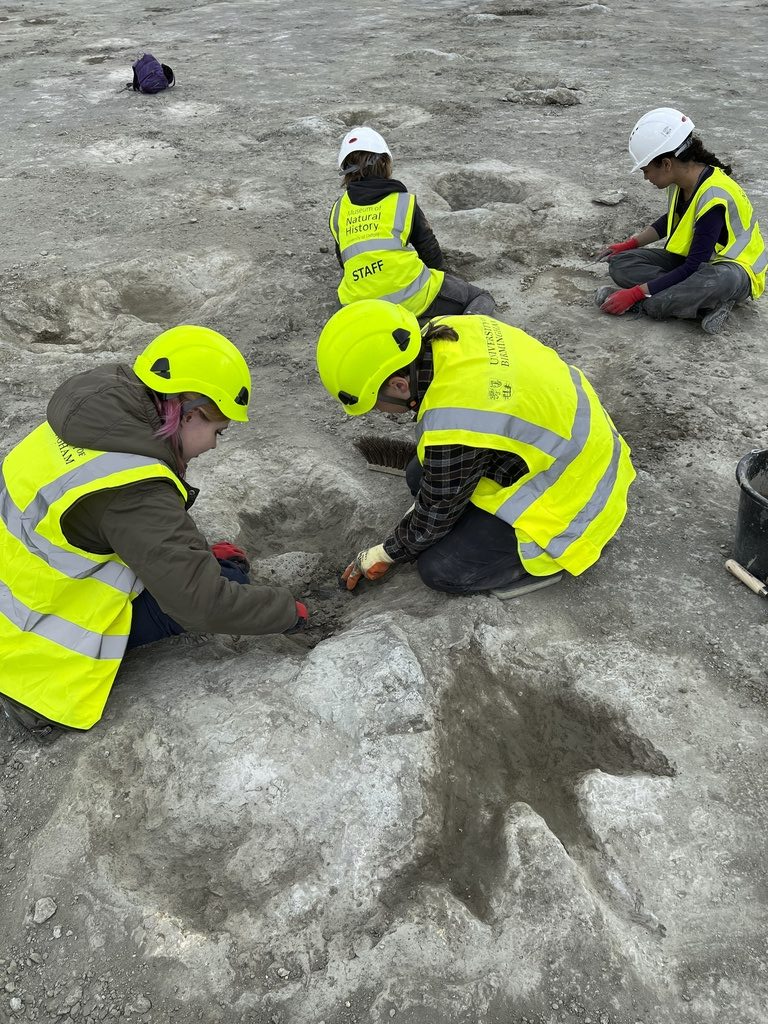
PBS News has a story about the discovery of a special dinosaur trackway in England. While digging up clay in a imestone quarry in southern England, a worker found nearly 200 dinosaur tracks that date to the Jurassic Period about 166 million years ago. There are four sets of sauropod tracks, thought to be Cetiosaurus…
-
New Pterosaur Species Unearthed in Argentina is Earliest of Its Kind
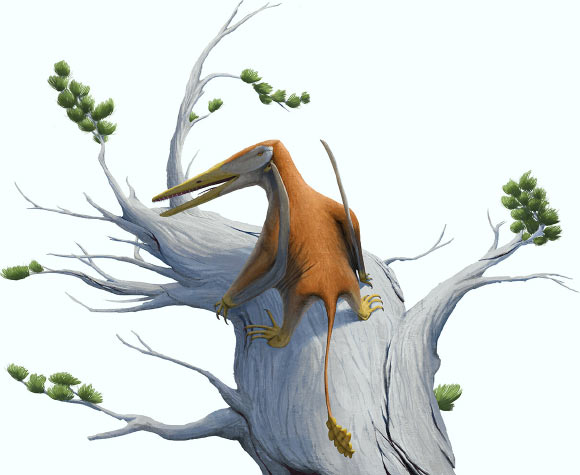
SciNews has a story about an early pterosaur from Argentina. Melkamter pateko lived between 184 and 174 million years ago in what is now Patagonia in Argentina. It is the earliest known member of Monofenestrata, a large clade of pterosaurs consisting of the Darwinoptera, Anurognathidae and Pterodactyloidea. The discovery of Melkamter pateko is reported in a paper in the…
-

Triassic Lizard-Like Parareptile Had Unusual Dental Apparatus
SciNews brings news of a new fossil parareptile from southwest England. Threordatoth chasmatos lived between 220 and 210 million years ago in the Triassic Period. It was discovered in Cromhall Quarry in south Gloucestershire, southwest England. The animal is a member of the Leptopleuroninae, a subfamily of extinct lizard-like parareptiles within the clade Procolophonidae. These animals…
