
-
Field Trip to Braceville, IL September 26-27, 2015
Read more: Field Trip to Braceville, IL September 26-27, 2015Collecting Mazon Creek Fossils on private property. Meet at 8:00 A.M. Saturday or Sunday at the BP Amoco in Coal City. No Age Limit. Hard Hats not required. Take I-55 to Exit 236 (Coal City). Take a right onto Highway 113 (Division Street). Go west to Broadway Street and Division in Coal City. We will be collecting Mazon Creek concretions from an old spoil pile on private property. Hard hats are not required. Boots are recommended. An Estwing rock hammer is the best tool. A small shovel or pick is helpful. Knee pads, backpacks, fanny packs, extra clothes (you will…
-

ESCONI Events September 2015
Read more: ESCONI Events September 2015Fri, Sept 11 ESCONI General Meeting 8:00 p.m. College of Dupage – Tech Ed (TEC) Building, Room 1038B (Map) – Topic: “Burrowing Dinosaurs” by Jamie Fearon of Wheaton College Sat, Sept 12 ESCONI Mineralogy Meeting 7:30 p.m. College of Dupage – Tech Ed (TEC) Building, Room 1038B (Map) – Topic: “Show and Tell” by ESCONI Club members Fri, Sept 18 ESCONI Archaeology Study Group Meeting, Canceled. See you in October! Sat Sept19 ESCONI Paleontology Study Group Meeting, 7:30 p.m. College of Dupage – Tech Ed (TEC) Building, Room 1038B (Map) – Topic: “Show and Tell” Bring your fossils and stories! Sat Sept26-27 ESCONI Field…
-
Rock and Mineral Swap Meet, Rockford, IL on September 12th, 2015
Read more: Rock and Mineral Swap Meet, Rockford, IL on September 12th, 2015There is a rock and mineral swap meet in Rockford, IL on September 12th, 2015. The event will be held at 6219 Forest Hills Road, Rockford, Illinois. Admission is free, $20 space donation for 10×10 booth. Contact John Wood 815-978-6960 gotwood63@gmail.com for more information. Bring it, swap it, buy it and sell it!
-

Study of Chilean quake shows potential for future earthquake
Read more: Study of Chilean quake shows potential for future earthquakeGeology Page has piece on the April 1st earthquake in Chile. The quake, an 8.2, occurred in a gap on a fault unruptured since 1877. The current thinking is it didn’t release stress in the right place and may have opened the possibility of another large quake. “We assumed that the area of the 1877 earthquake would eventually rupture, but all indications are that this 8.2 event was not the 8.8 event we were looking for,” said Kevin P. Furlong, professor of geophysics, Penn State. “We looked at it to see if this was the big one.” But according to…
-
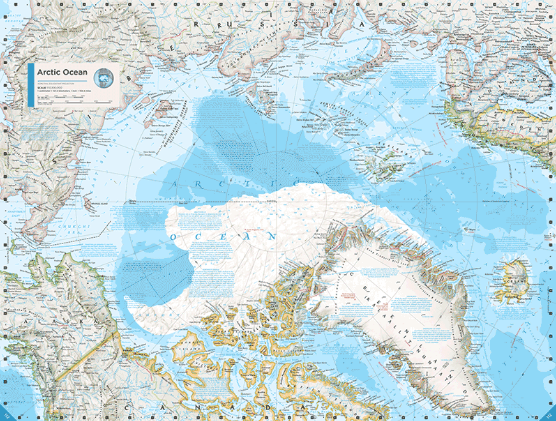
Shrinking Ice Caps
Read more: Shrinking Ice CapsNational Geographic has a great story and video about the shrinking ice in the Arctic. Many want to deny the warming planet, but the evidence is obvious when you look at the extent of ice in the Arctic Ocean. Unveiling his most aggressive plan yet to combat climate change, President Obama on Monday referenced recent dramatic changes that National Geographic made to its atlas because of melting sea ice. “Shrinking ice caps forced National Geographic to make the biggest change in its atlas since the Soviet Union broke apart,” Obama said during a speech at the White House. He’s right.…
-
Mazon Creek Fossil Hunt – Canal Corridor August 29th and August 30th 2015
Read more: Mazon Creek Fossil Hunt – Canal Corridor August 29th and August 30th 2015The annual Canal Corridor Mazon Creek Fossil Hunt will be held on August 29th and August 30th, 2015. If you want to go, hurry up, as the spots are filling fast. The hunt includes a talk by ESCONI member Dave Dolak and a BBQ dinner (chicken or steak). You will get to hunt in the Mazon River at one of the original fossil sites. Full information can be found here. Learn about the environment, ecosystems and climate of Northern Illinois as it was 300 million years ago by collecting fossil specimens at the Mazon Fossil Beds. You will be led through…
-
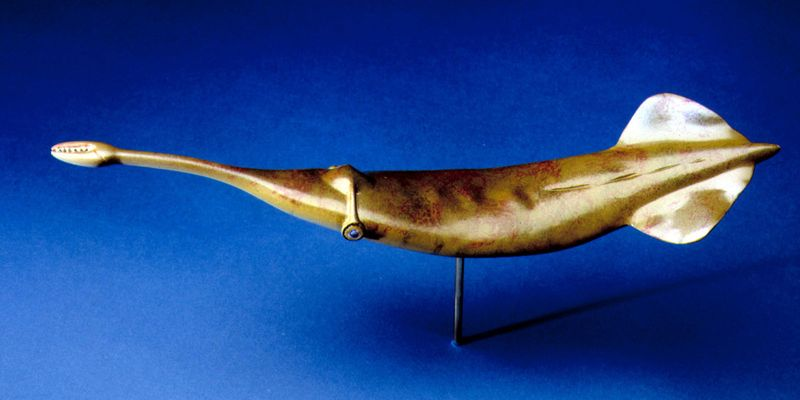
Monsters Storm The Field
Read more: Monsters Storm The FieldThe Field Museum Science NewsFlash blog has a great post about a recent donation of Mazon Creek fossils. The Thomas V. Testa collection of Mazon Creek fossils was just received from Field Associate (and ESCONI member) Jack Wittry. It’s probably one of the largest private and certainly one of the best collections. The donation, which consists of about 7000 Mazon Creek fossils, brings the Field Museum’s total to over 50000 specimens. Mazon Creek, an area about 50 miles southwest of Chicago, is one of the richest fossil sites in the world. It was once the swampy coastline of a warm…
-

Jurassic World: High Heels Edition (Parody)
Read more: Jurassic World: High Heels Edition (Parody)There have been quite a few criticisms about Jurassic World. Here’s a parody that exploits one for a few laughs. Good for a hot summer afternoon…
-
Estate Sale with Lapidary Tools
Read more: Estate Sale with Lapidary ToolsSorry for the late posting… here is an estate sale with lapidary tools. Details can be found here. The sale is in Downer Grove, IL and is/was for Friday, August 14th and Saturday, August, 15th. Enjoy!
-
Jamestown excavation unearths four bodies — and a mystery in a small box
Read more: Jamestown excavation unearths four bodies — and a mystery in a small boxThe Washington Post has an interesting story of a recent archaeological find at Jamestown in Virginia. Capt. Gabriel Archer, who died in Jamestown around 1609, was buried with a small sealed silver box. The box contains seven bone fragments and a small lead vial. It was probably a holy relic and was highly treasured as citizens of Jamestown endured many hardships, including starvation, disease, and war with the native Americans. The relic seems out of place and raises intriguing questions about Jamestown’s founders. JAMESTOWN, Va. — When his friends buried Capt. Gabriel Archer here about 1609, they dug his grave…
-

Four-legged snake fossil found
Read more: Four-legged snake fossil foundCNN has an interesting video about a 110-million-year-old snake fossil. The was discovered in Brazil and dates to the Cretaceous period. Its most interesting feature… the snake had 4 legs! Scientists hope it sheds light on how and why snakes lost their legs.
-
Fossil tour of Chicago skyscrapers August 9 and September 13
Read more: Fossil tour of Chicago skyscrapers August 9 and September 13From dabble, there is a paleontological tour of Chicago skyscrapers a few times this summer. The next dates are Sunday, August 9, and Sunday, September 13: https://dabble.co/chicago/science/classes/fossils-the-magnificent-mile-with-peter-kaplan ESCONI members are welcome to attend but please RSVP. If you prefer to do a self-guided tour, a .pdf of the guide booklet can be provided. Raise your hand if you know that the city of Chicago is surrounded by fossils … not just in the ground, but up in the buildings . Yeah, we didn’t either, until this awesome class came along. But we’re learning something new every day, and that tidbits of info…
-

The Devonian extinction saw the oceans choke
Read more: The Devonian extinction saw the oceans chokeDevonian land plants caused ecological havoc (Credit: Walter Myers/SPL) The BBC Earth Blog has a story about the Devonian mass extinction, which is one of the least understood of the great extinction events in Earth’s history. In new research, Matt Algeo has proposed that vascular land plants were the cause. The vascular land plants evolved during the Devonian Period. Their roots penetrated the ground, breaking up rocks. This process would have released minerals and nutrients that eventually made it to the oceans. This could have led to algal blooms, which in turn led to “anoxic dead zones”, as we see today with…
-
Field Trip: Mulford Quarry, Rockford, IL on August 8th, 2015
Read more: Field Trip: Mulford Quarry, Rockford, IL on August 8th, 2015There will be an ESCONI Field Trip to the Mulford Quarry in Rockford on August 8, 2015. Rules are as follows: 1. Must be an ESCONI member as of August 1, 2015. 2. Must be at least 18 years of age. 3. Starts at 9 AM and ends at 2 PM. 4. Bring a hard hat, boots (no sandals, tennis shoes, etc), eye protection and a safety vest. Use appropriate tools (rock hammers NOT claw or roofing hammers, etc). 5. Sign up by sending me (Dave) an email at fossil54@att.net with the number of ESCONI members attending. I will confirm…
-

Mapping Everywhere Fossils Have Been Found in the U.S.
Read more: Mapping Everywhere Fossils Have Been Found in the U.S.The Atlantic’s CITYLAB blog has a story about an interesting effort to map “The United States of Fossiliferousness”. Cason Clagg is a fossil fanatic. He’s a software developer and lives in Southern Oklahoma. He wants to map where fossils are found. He used data from the Paleobiology Database, which coincidently was inspired by David Raup’s work at the University of Chicago. There are several versions of the map. And, for those of you with an iphone, he plans to release an iphone app at some point in the future.
-
David Raup, Paleontologist Who Transformed His Discipline, 1933-2015
Read more: David Raup, Paleontologist Who Transformed His Discipline, 1933-2015Distinguished palaeontologist David Raup from the University of Chicago has died. He was 82. Raup was an innovator who undertook some of the major questions in palaeontology, including mass extinctions and biologic diversity in the fossil record. He promoted usage of computation and quantitative methods in palaeontological research at a time when computers were still in their infancy. Probably best known for his work on mass extinction, he and his collaborator Jack Sepkoski found two components to extinction, a slow background rate, interrupted by rare and possibly periodic mass extinctions. A true legend who will definitely be missed! Raup’s former…
-
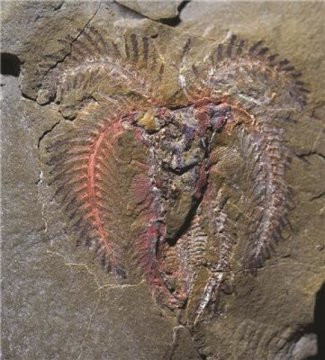
More Spectacular Moroccan fossils redefine evolutionary timelines
Read more: More Spectacular Moroccan fossils redefine evolutionary timelinesA marrellomorph arthropod, probably belonging to the genus Furca. c. Credit: Peter Van Roy ScienceDaily has a story about some spectacular new fossils from Morocco. These fossils are from the lower Fezouata formation, which dates to Ordovician. In the five years since its discovery, the Fezouata has revealed 160 new genera, with even more expected. Many of these animals are holdovers from the Cambian and were thought to be extinct long before this younger time period, about 20 million years younger. The original paper appeared in the Journal of the Geological Society on July 8th. The Lower Fezouata formation has…
-
Paleontologists give “Jurassic World” science thumbs down
Read more: Paleontologists give “Jurassic World” science thumbs downHave you gone to see “Jurassic World” yet? Quite a few people have, as its opening was one of the biggest ever. CBS News has good story that discusses the “science” of “Jurassic World” and the verdict is that it’s not very realistic. With “Jurassic World” hitting theaters Friday, paleontologists like James Kirkland are girding for the dumb questions they will they get from young dinosaur enthusiasts. Kirkland, the state paleontologist at the Utah Geological Survey who has been involved in the discovery of 20 dinosaurs including the Utahraptor, admits such Hollywood blockbusters could inspire a whole new generation…
-

myFOSSIL Project Newsletter for June 2015
Read more: myFOSSIL Project Newsletter for June 2015A new issue of the myFOSSIL Project newsletter is available for your enjoyment. You will also find links to past issues on that web page. myFOSSIL is an effort to link fossil clubs from around the country to educate the general public. Fostering Opportunities for Synergistic STEM with Informal Learners Throughout the U.S., more than 60 fossil clubs and societies hold meetings, host speakers, organize festivals, and run field trips; conduct outreach; work with scientists; build their own collections; and contribute to the study of paleontology. However, in contrast to other science hobbyist groups (e.g., birdwatchers), fossil clubs are not closely networked nationally. Moreover, some fossil…
-
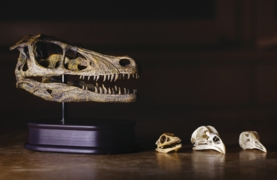
How Dinosaurs Shrank and Became Birds
Read more: How Dinosaurs Shrank and Became BirdsCredit: Katherine Taylor for Quanta Magazine Quanta Magazine has an interesting article on the evolution of birds. It’s pretty commonly known that birds are dinosaurs, theropod dinosaurs. That group includes some huge monsters like Tyrannosaurus rex. Even the closest relatives to birds were quite large, at 100 to 500 pounds. With the greater understanding of genetics and evo-devo, the story of how a line of dinosaurs shrank and evolved into birds is becoming much clearer. For decades, paleontologists’ only fossil link between birds and dinosaurs was archaeopteryx, a hybrid creature with feathered wings but with the teeth and long bony tail of…

ESCONI Gem, Mineral, and Fossil Show
Most Recent Post
- ESCONI Field Trip to Braceville, IL for Mazon Creek Fossils – Saturday, May 30th and Sunday, May 31st, 2026
 The ESCONI field trips to Braceville for Mazon Creek fossils are set for May 30th and 31st, 2026 from 9 AM to 3 PM. You can attend one or the other, but not both days. There is an attendance limit of 50 people each day. You must register to go on this trip. See rule 6 below for instructions. This is the ONLY way to register.
- About ESCONI
- Around the Web
- Calendar of Events
- Code of Ethics and Conduct
- ESCONI Books for Sale
- ESCONI Gem, Mineral, and Fossil Show
- ESCONI in the News
- ESCONI Videos
- Field Trips
- Flashback Friday
- Fossil Friday
- Mazon Creek
- Mazon Monday
- Member Spotlight
- Membership Information
- Reference Material
- Throwback Thursday
- Trilobite Tuesday
Field trips require membership, but visitors are welcome at all meetings!
| Friday, April 10th | General Meeting – 8:00 PM via Zoom. Jessica Hull will present “Life in the Devonian Period, The Age of Fishes.” |
| Saturday, April 11th | Junior Study Group Meeting – 2:00 PM, in person at the College of DuPage Technical Education Center (TEC) Building – Room 1038A (Map). Katherine Howard will present on Sand and Sediment Collecting. Specifics of this meeting are available from Scott Galloway, 630-670-2591, gallowayscottf@gmail.com. |
| Saturday, April 18th | Paleontology Study Group – 7:30 PM via Zoom and in person at the College of DuPage, TEC, Room 1038B (Map). Keith Robitschek will present “Digging the Marl of the Lance Formation.” |
| Friday, April 24th | MAPS Expo XLVII – Springfield, IL. |
| Saturday, April 25th | MAPS Expo XLVII – Springfield, IL. |
| Sunday, April 26th | MAPS Expo XLVII – Springfield, IL. |
| No meeting this month | Mineralogy Study Group |