-

PBS Eons: When a Tiny Land Bridge Triggered an Ice Age
Read more: PBS Eons: When a Tiny Land Bridge Triggered an Ice AgeThere’s a new episode of PBS Eons. This one is about the origin of Panama and how it changed the world. On land, the Isthmus of Panama kicked off possibly the greatest natural experiment in the history of life on Earth. In the water, this narrow strip of land did something completely different: it divided. And that division would have a much bigger effect on the planet than the land connection ever did.
-

Fossil Friday #296: Roachoid Wing from the Creek
Read more: Fossil Friday #296: Roachoid Wing from the CreekThis is the “Fossil Friday” post #296. Expect this to be a regular feature of the website. We will post fossil pictures you send in to esconi.info@gmail.com. Please include a short description or story. Check the #FossilFriday Bluesky/Twitter hash tag for contributions from around the world! This beautiful roachoid wing was collected from the Mazon River by Chris Berg… the esteemed president of ESCONI. We call them roachoids, because true roaches don’t show up in the fossil record until the late Jurassic. Roachoids have been found in Pit 11 and most of the Amazon Creek terrestrial deposits. Roachoids are the…
-

ESCONI Events for January 2026
Read more: ESCONI Events for January 2026Field trips require membership, but visitors are welcome at all meetings! Saturday, Jan 3rd Mineralogy Study Group – 7:30 PM via Zoom “Critical Minerals: What are they and Opportunities in Illinois” presented by Dr. Jared Freiburg of the Illinois State Geological Survey. Friday, Jan 9th General Meeting – 8:00 PM via Zoom Jean-Pierre Cavigelli, Tate Geological Museum, Casper College, will present “Fossil Birds of Wyoming” Saturday, Jan 10th Junior Study Group – 6:30 PM, Topic TBA Specifics of this meeting are available from Scott Galloway, 630-670-2591, gallowayscottf@gmail.com. The meeting will be in person at the College of DuPage Technical Education Center (TEC)…
-

Throwback Thursday #296: More Don Auler Mineral Slab Paintings
Read more: Throwback Thursday #296: More Don Auler Mineral Slab PaintingsDon was a very good artist. He did the artwork for the “Creature Corner” and ESCONI “Keys” books. He also was known for doing little painting on various mineral slabs. His paintings were integrated will the mineral colors and grain.
-

Archaeologists Find Oldest Evidence of Fire-Making
Read more: Archaeologists Find Oldest Evidence of Fire-MakingIn his New York Times column, Carl Zimmer discusses evidence for the oldest usage of fire-making. A paper published in the journal Nature, reports that a group of Neanderthals used flint and pyrite to make fires about 400,000 years ago in what is now eastern England. This was something they did repeatedly over the course of generations. Previously, the oldest accepted date for fire-making was around 50,000. “A lot of people had a hunch that they were making fire at this date,” said Nick Ashton, an archaeologist at the British Museum and an author of the study. “But now we…
-

Possible ancient artifacts are found in a B.C. thrift shop — and archeology scholars are on the case
Read more: Possible ancient artifacts are found in a B.C. thrift shop — and archeology scholars are on the caseThe Conversation has a story about a chance discovery in a thrift shop. The owner of Thrifty Boutique in Chilliwack, B.C. reached out to the archaeologists at Simon Fraser University in the spring of 2024. The owner wanted to know if some ancient artifacts had historical significance. Turns out the objects in question date to late antiquity or the medieval period. An unusual email arrived in the inbox of a faculty member at the department of archeology at Simon Fraser University in the spring of 2024. This email was from a thrift shop, Thrifty Boutique in Chilliwack, B.C. — unlike the many…
-
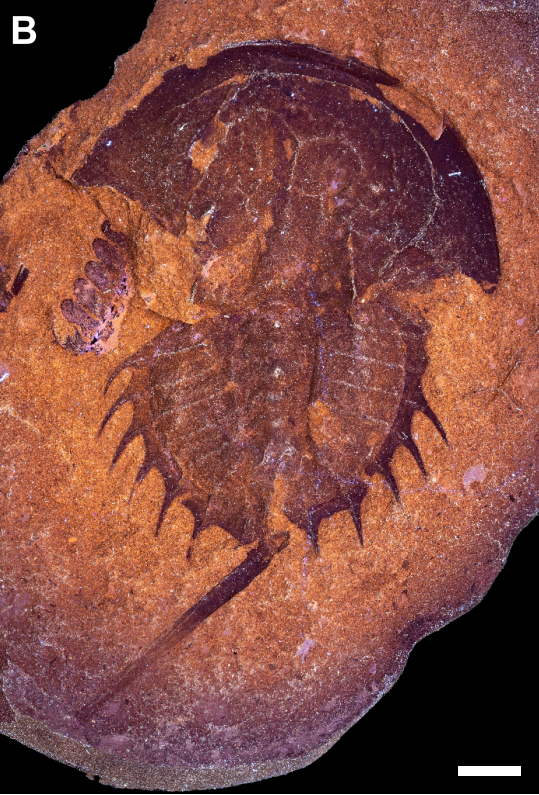
Mazon Monday #300: Mazon Creek horseshoe crab fossil shows evidence of ancient algal or parasitic infestation
Read more: Mazon Monday #300: Mazon Creek horseshoe crab fossil shows evidence of ancient algal or parasitic infestationThis is Mazon Monday post #300. What’s your favorite Mazon Creek fossil? Tell us at email:esconi.info@gmail.com. The Lauer Foundation just won’t let the Mazon Creek horseshoe crabs alone… first it was Euproops danae remains in bromalites (see Mazon Monday #283), now they’ve found evidence of ancient algal or parasitic infestation in another Euproops danae fossil from the Mazon Creek biota. The paper “Unique, dimple-like exoskeletal structures suggest syn-vivo infestations in Late Carboniferous horseshoe crabs” was published in the journal Biology Letters. The authors are familiar to anyone interested in Mazon Creek science – Russell Bicknell, Jason Dunlop, Andrew Young, Bruce Lauer, Rene’…
-

Video for ESCONI December 2025 General Meeting – “Fossils of the Comanche National Grasslands located in southeastern Colorado”
Read more: Video for ESCONI December 2025 General Meeting – “Fossils of the Comanche National Grasslands located in southeastern Colorado”The ESCONI December 2025 General Meeting was held on December 12th, 2025 at 8:00 PM via Zoom. The presenter was Steve Miller of the Western Interior Paleontological Society (WIPS). His topic is “Fossils of the Comanche National Grasslands located in southeastern Colorado”. Fossils of the Comanche National Grasslands located in southeastern Colorado The area offers access to the rocks and fossils of the first major cycle of marine deposition of the Cretaceous Western Interior Seaway. WIPS has explored the canyons, prairies, arroyos, cut banks, and deformed features which expose rocks from the Dakota Sandstone through the Smoky Hill Chalk. Learn…
-
ESCONI Board Members for 2026
Read more: ESCONI Board Members for 2026President: Chris Berg 1st. Vice President: Katherine Howard 2nd. Vice President: Keith Robitschek Recording Secretary: Valerie Anderson Treasurer: Andrew Jansen Publicity: Jeff Allen Librarian: Andrew Jansen Curator: Chris Cozart Historian: Richard Holm Field Trip Chairman: Jeremy Zimmerman Assistant Field Trip Chairman: Connor Puritz Editor: Melanie Berg Circulation: Rose Jansen Past President: Phil Anderson Membership: Rose Jansen Show Chairman: Phil Anderson MWF Liaison Representative: Dave Carlson Web Administrator: Richard Holm Study Groups and Activities: (Non-Board Positions) Archaeology Study Group Chair: Open Junior Study Group Chair: Scott Galloway Lapidary Study Group Chair: Open Mineralogy Study Group Chair: Dave Carlson Paleontology Study Group Chair: John Catalani Delegates To CGMA: Eric…
-

A Day at the Beach Hunting Mammoths
Read more: A Day at the Beach Hunting MammothsThe New York Times has an interesting story about “citizen paleontologists” in the Netherlands. The beaches around Rotterdam’s port, the largest harbor in Europe, are loaded in Pleistocene fossils from the dredging of the North Sea floor. The beach where van den Berg was hunting, called Maasvlakte 2, is a particularly popular destination for fossil seekers, because it was built using sediments dredged from the North Sea floor. From about 2.5 million to 11,700 years ago, the area that is now underwater was a mammoth steppe of grassy hills, flatlands, valleys and streams on a prehistoric landmass called Doggerland. “You…
-
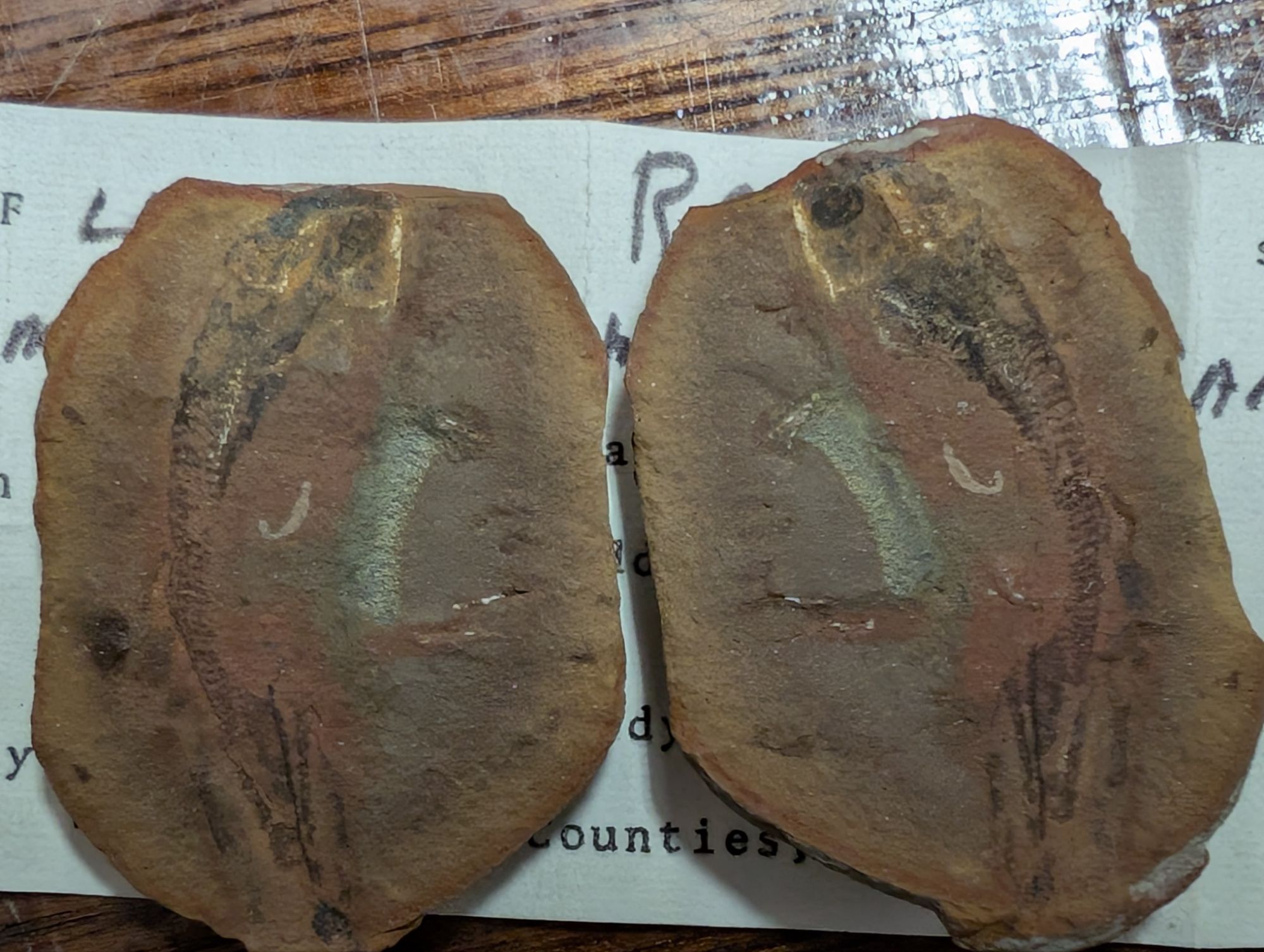
Fossil Friday #295: Juvenile Dvinosaur From Mazon Creek
Read more: Fossil Friday #295: Juvenile Dvinosaur From Mazon CreekThis is the “Fossil Friday” post #295. Expect this to be a regular feature of the website. We will post fossil pictures you send in to esconi.info@gmail.com. Please include a short description or story. Check the #FossilFriday Bluesky/Twitter hash tag for contributions from around the world! We have a particularly special Mazon Creek fossil to share this week, a juvenile dvinosaur, possibly Isodectes obtusum. Tetrapods are exceptionally rare in the Mazon Creek biota, and this specimen is not only complete but also preserves muscle banding and soft tissue, making it especially remarkable. This remarkable fossil was collected in the 1970s at…
-
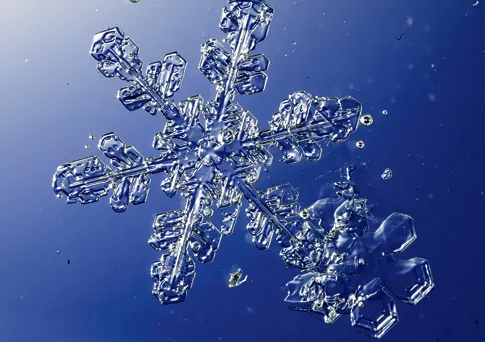
Throwback Thursday #295: Snowflake Collecting
Read more: Throwback Thursday #295: Snowflake CollectingYes, you read that correctly… Snowflake Collecting. Is that even possible? Well, ESCONI member Mark Blazek wrote this article for the January 1975 issue of the ESCONI newsletter.
-
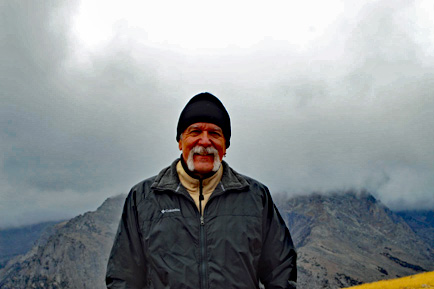
ESCONI December 2025 General Meeting – “Fossils of the Comanche National Grasslands located in southeastern Colorado”
Read more: ESCONI December 2025 General Meeting – “Fossils of the Comanche National Grasslands located in southeastern Colorado”The ESCONI December 2025 General Meeting will be held on December 12th, 2025 at 8:00 PM via Zoom. The presenter is Steve Miller of the Western Interior Paleontological Society (WIPS). His topic is “Fossils of the Comanche National Grasslands located in southeastern Colorado”. Fossils of the Comanche National Grasslands located in southeastern Colorado The area offers access to the rocks and fossils of the first major cycle of marine deposition of the Cretaceous Western Interior Seaway. WIPS has explored the canyons, prairies, arroyos, cut banks, and deformed features which expose rocks from the Dakota Sandstone through the Smoky Hill Chalk.…
-
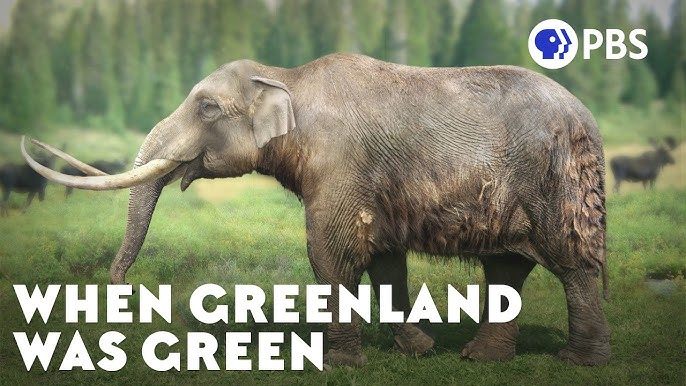
PBS Eons: What Was Greenland Like When it Was Green
Read more: PBS Eons: What Was Greenland Like When it Was GreenPBS Eons has a new episode. This one is about 2 million year old DNA from Greenland. It made the front page of the New York Times. Ancient DNA over 2 million years old, retrieved from the frozen dirt of Greenland. It reached back further in time than many scientists used to think was even theoretically possible. And it contained the genetic ghost of an /entire ecosystem/ – one that has no counterpart in today’s world and one that we had /no idea/ even existed. It told of a time when Greenland was green…and how we might borrow genes from…
-
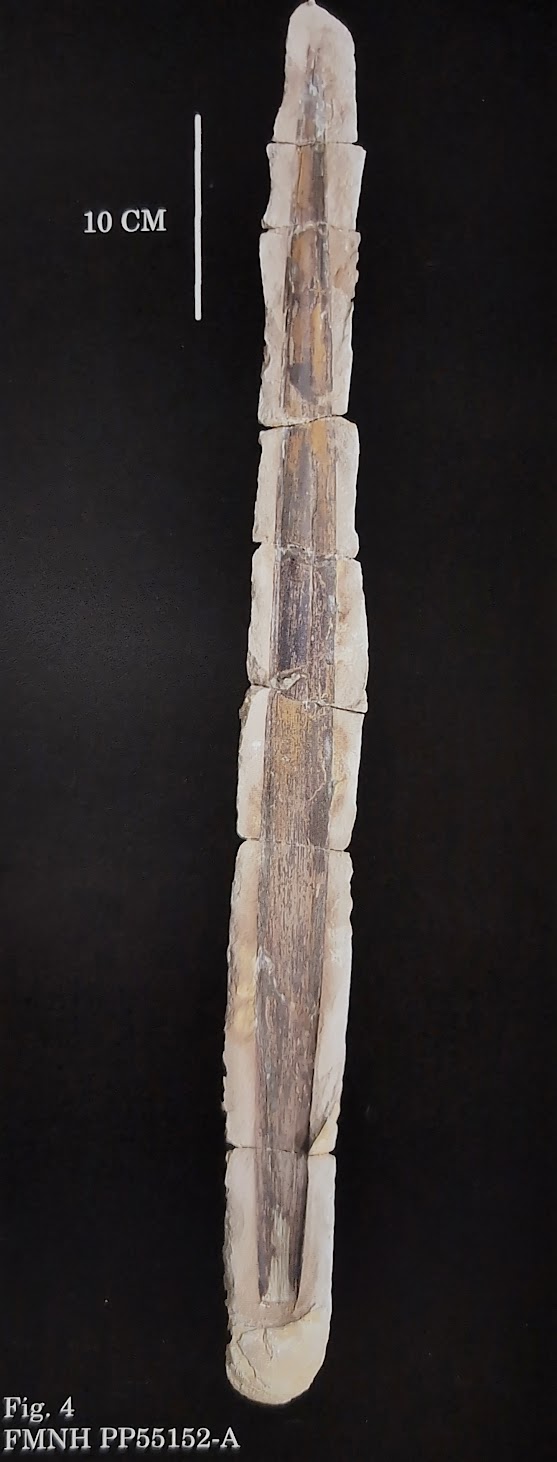
Mazon Monday #299: Cordaites borassifolius
Read more: Mazon Monday #299: Cordaites borassifoliusThis is Mazon Monday post #299. What’s your favorite Mazon Creek fossil? Tell us at email:esconi.info@gmail.com. Cordaites borassifolius is an extinct genus of early gymnosperms. Cordaites probably grew maybe 100 feet tall in the drier areas of the Carboniferous swamps. They had stilt-like roots, forming forests similar to modern day mangroves. Cordaites is relatively rare in the Mazon Creek biota with only one known species. Cordaites are believed to be closely related to conifers, although the exact relationship is unclear. They look quite different, but do share some key features, such as secondary wood in their trunks and clustered ovules and pollen in…
-

Photos from the 2025 ESCONI Holiday Luncheon
Read more: Photos from the 2025 ESCONI Holiday LuncheonThe 2025 ESCONI Holiday Luncheon was held on December 6th, 2025 at Warren’s Ale House in Wheaton, IL. We had a nice turnout. President Chris Berg had a very nice speech to highlight where we are and where we are headed for 2026. It was a very special day as we awarded an honorary membership to John and Kathy Catalani (yes, spelled correctly this time!). We thanked them for their many years of service to the club. John told us a very nice story about Andy and Jo Hay. It was also good to see Keith back in Chicago. We…
-
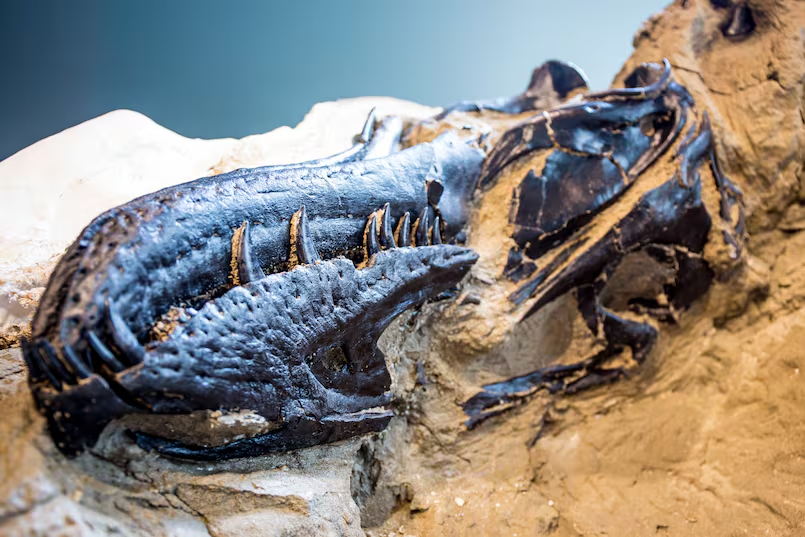
CBC Radio’s Quirks & Quarks… Smaller tyrannosaur solves decades-long debate about the T. Rex
Read more: CBC Radio’s Quirks & Quarks… Smaller tyrannosaur solves decades-long debate about the T. RexCBC Radio’s Quirks & Quarks has a great segment about Nanotyrannus. There’s an interview with James Napoli of Stony Brook University, who was coauthor on “Nanotyrannus and Tyrannosaurus coexisted at the close of the Cretaceous”, which was published in the journal Nature. Small tyrannosaur fossils belonging to a dinosaur about half the size and a tenth of the mass of other Tyrannosaurus rex fossils have been puzzling scientists for years. A new study, co-led by James Napoli at Stony Brook University, has finally revealed that they’re not just young T. Rexes, as was previously suspected, but an entirely new species. The research was…
-
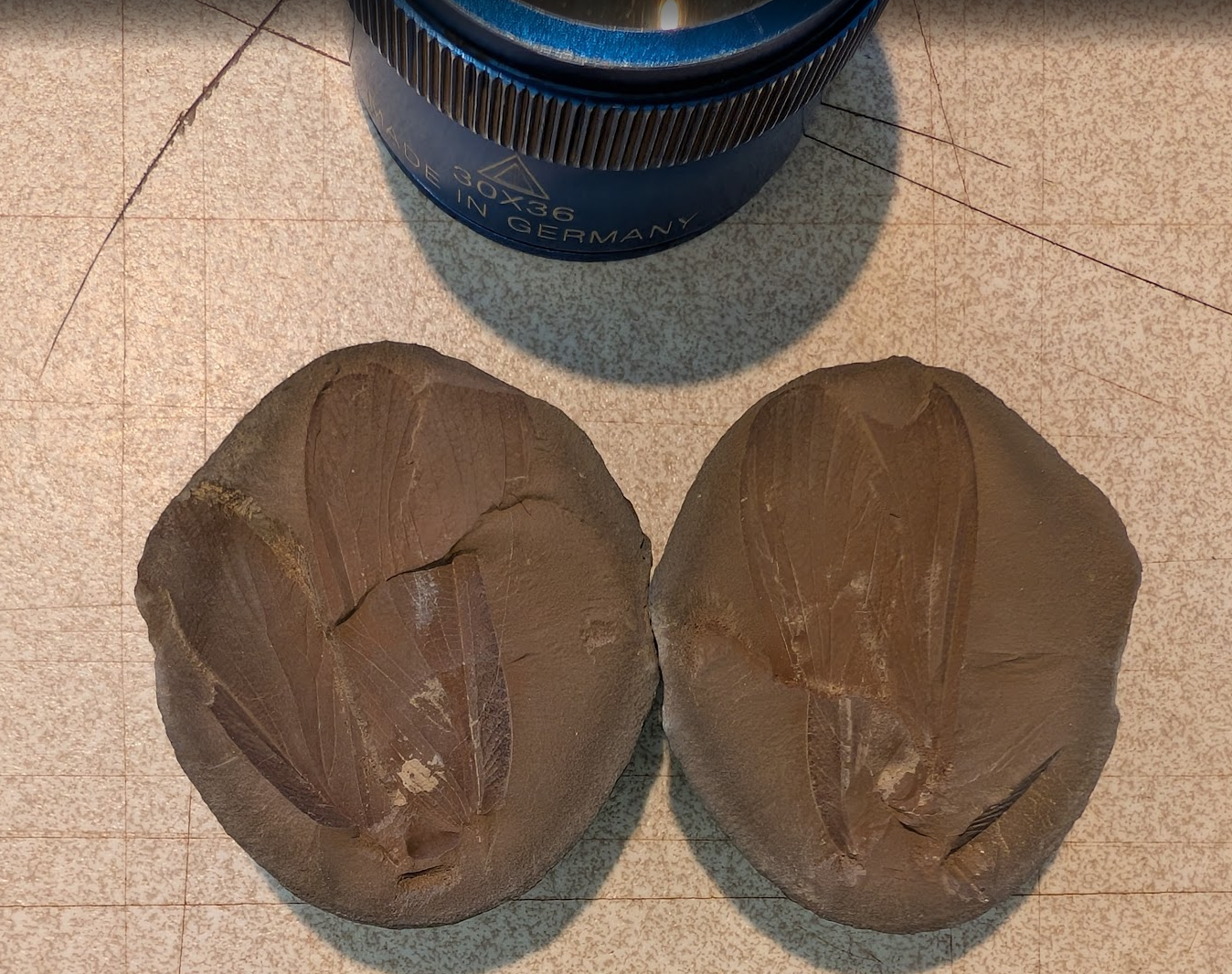
Fossil Friday #294: Phenopterum briggsi
Read more: Fossil Friday #294: Phenopterum briggsiThis is the “Fossil Friday” post #294. Expect this to be a regular feature of the website. We will post fossil pictures you send in to esconi.info@gmail.com. Please include a short description or story. Check the #FossilFriday Bluesky/Twitter hash tag for contributions from around the world! Phenopterum briggsi is a grylloblattidan species of insect from the Stephanian (Late Carboniferous) deposit of Montceau-les-Mines in southeastern France. It was described by Olivier Bethoux in 2010 in the paper “Description of a new grylloblattidan insect from Montceau-les-Mines (Late Carboniferous; France) and definition of Phenopterum Carpenter, 1950″. Have a look at Mazon Monday #294 for…
-

Throwback Thursday #294: Looking Back At ESCONI For December 2025
Read more: Throwback Thursday #294: Looking Back At ESCONI For December 2025A look back at December 1955, 1975, and 2000
-

ESCONI 2026 Gem, Mineral, and Fossil Show – March 21st and 22nd, 2026
Read more: ESCONI 2026 Gem, Mineral, and Fossil Show – March 21st and 22nd, 2026The ESCONI 2026 Gem, Mineral, and Fossil Show will be held on March 21st and 22nd, 2026 at the DuPage County Fairgrounds.

ESCONI Gem, Mineral, and Fossil Show
Most Recent Post
- Throwback Thursday #324: Poem “Cephalopodosis”
 We have nothing but respect for cephalopods in ESCONI, but this is a rather odd poem called “Cephalopodosis” from B. J. Babbitt. This poem appeared in the June 1950 edition of the ESCONI newsletter. Babbitt was the editor of the newsletter at the time. And, he remained editor for ESCONI’s first three years.
- About ESCONI
- Around the Web
- Calendar of Events
- Code of Ethics and Conduct
- ESCONI Books for Sale
- ESCONI Gem, Mineral, and Fossil Show
- ESCONI in the News
- ESCONI Videos
- Field Trips
- Flashback Friday
- Fossil Friday
- Mazon Creek
- Mazon Monday
- Member Spotlight
- Membership Information
- Reference Material
- Throwback Thursday
- Trilobite Tuesday
Field trips require membership, but visitors are welcome at all meetings!
| Friday, June 12th | General Meeting – 8:00 PM via Zoom. Adrienne Stroup of The Field Museum will present “At the Intersection of Art and Science: Outreach in Natural History Museums”. |
| Saturday, June 20th | Paleontology Study Group – 7:30 PM via Zoom. Lincoln Shoemaker will present “Factors controlling the distribution of Late Ordovician – Silurian crinoids.” |
| No meeting this month | Junior Study Group Meeting |
| No meeting this month | Mineralogy Study Group |