Tag: North America
-
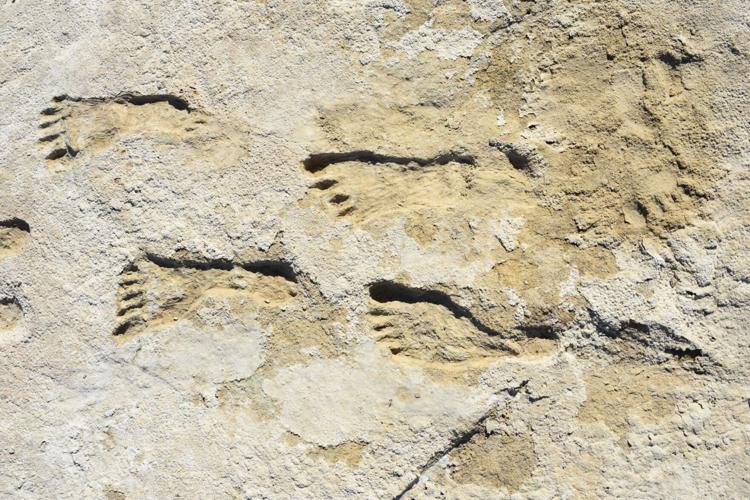
University of Arizona study confirms New Mexico fossils may be earliest evidence of humans in Americas
Tuscon.com has a story about the oldest evidence of human occupation in North America. A 2021 study from the University of Arizona revealed data that dated fossilized footprints from White Sands National Park to 23,000 year ago. This was controversial as the previously excepted oldest human evidence was 17,000 before present. Most of the criticism…
-

PBS: The Ancient Tribes That Settled the Americas
PBS and the first Americans… how did they get here and when? As early humans spread out across the world, their toughest challenge was colonizing the Americas because a huge ice sheet blocked the route. It has long been thought that the first Americans were Clovis people, who arrived 13,000 years ago. But an underwater…
-

PBS Eons: Pandas in North America?
PBS Eons has a new video. Pandas in America?!? How? How did a relative of the red panda end up in North America? What can this tell us about how long ago – and how many times – North America was connected to Europe and Asia?
-
PBS Eons: The Dinosaurs That Evolution Forgot
PBS has a new episode. This one is about the dinosaurs of the east coast of North America. North America was divided into two land masses by the Western Interior Seaway at the end of the Cretaceous about 100 to 66 million years ago. The east coast landmass is called Appalachia. Where are all the…
-

Video for ESCONI June 2024 General Meeting – “A North American fossil primate called Ekgmowechashala”
The June 2024 General Meeting was held on June 14th, 2024 via Zoom. Kathleen Rust of the University of Kansas spoke about Ekgmowechashala, a primate known only from the late early Oligocene of western North America. “I am planning on presenting findings from my most recent publication describing a new primate species from the late…
-
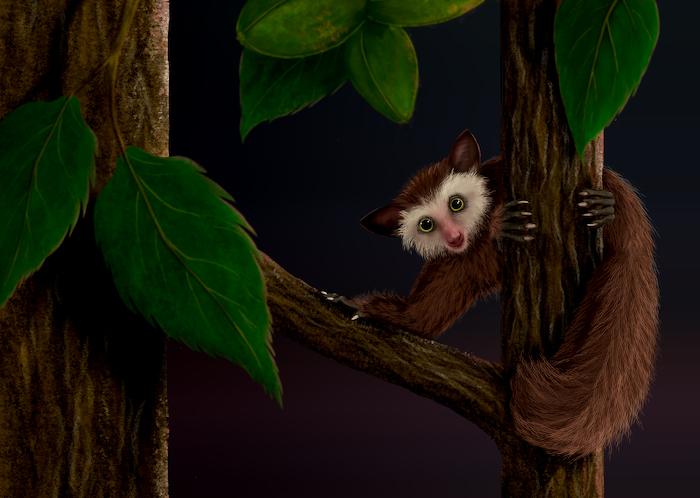
ESCONI June 2024 General Meeting – June 14th, 2024 at 8:00 PM via Zoom – “A North American fossil primate called Ekgmowechashala”
The June 2024 General Meeting will be held on June 14th, 2024 via Zoom. The presentation is by Kathleen Rust of the University of Kansas. She will be speaking about Ekgmowechashala, a primate known only from the late early Oligocene of western North America. I am planning on presenting findings from my most recent publication…
-
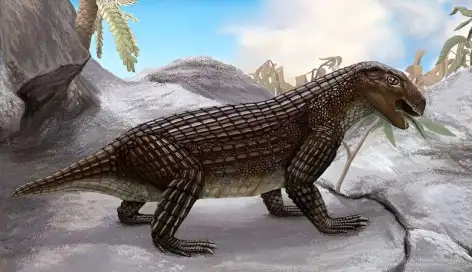
Unraveling the surprisingly complex history of crocodiles
Some ancient crocodiles, like Simosuchus, were doing things vastly different to surviving species, such as eating plants. Credit: Smokeybjb/Wikimedia Commons Phys.org has a story about the history of crocodiles. There are 28 species of living crocodiles, but this represents a small fraction of the the many types that have lived in the past. The ancestors…
-
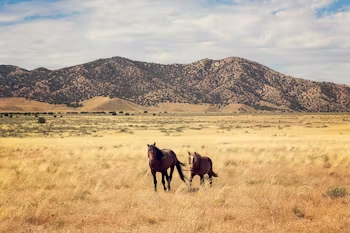
New DNA Analysis Reveals an Untold Story of Horses in America
Inverse has an article about the history of horses in America. It’s not commonly known, but horses evolved in North America about 4 million years ago. They went extinct around 10,000 years ago with many other species of North American mega fauna. The causes of the extinction are still being studied. Horses were reintroduced by…
-
PBS Eons: That Time the American West Blew Up
PBS Eons has a new video on Youtube. This one is about volcanism in North America during the Eocene Epoch some 50 million years ago. Why didn't these supervolcanoes produce extinction? How is it possible to have cataclysmic eruptions without any real cataclysm?
-
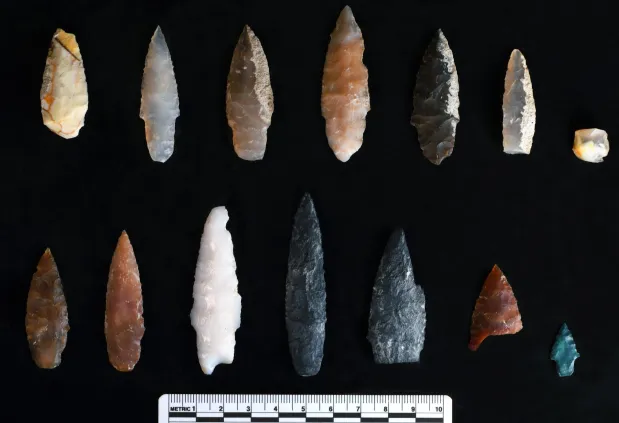
A Historic Discovery: Archaeologists Uncover Oldest Known Projectile Points in the Americas
SciTechDaily has a story about some Oregon State University archaeologists that have found the oldest projectile points in North America. The researchers were working at a site known as Cooper’s Ferry. The points have been dated to about 15,700 years, which is about 3,000 years older than Clovis points found throughout North America. The research…
-
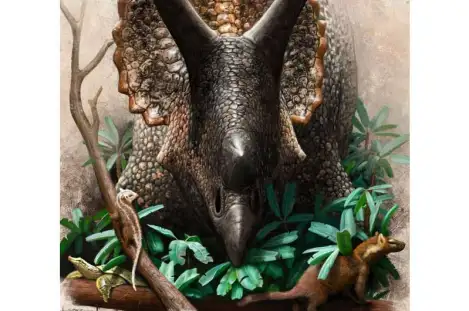
Dinosaurs were on the up before asteroid downfall, study finds
Phys.org has a story about the state of the non-avian dinosaurs just before the K-Pg mass extinction about 66 million years ago. For a while, it was thought they were in decline before the asteroid strike. A new study published in the journal Science Advances found that the non-avian dinosaurs were actually thriving, entrenched in…
-
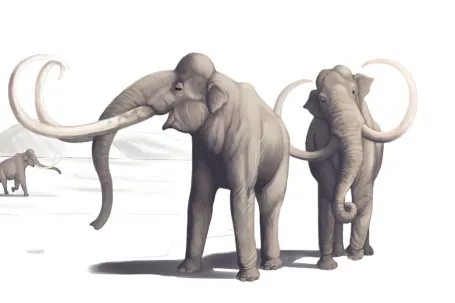
New Mexico mammoths among best evidence for early humans in North America
Phys.org has a story about early humans in North America. It’s long been thought that humans arrived in North America about 12,000 maybe 15000 years ago. There has been some spare evidence of a much earlier arrival, which was often played off as incorrect dating or just incorrect evidence. Now a team from the University…
-
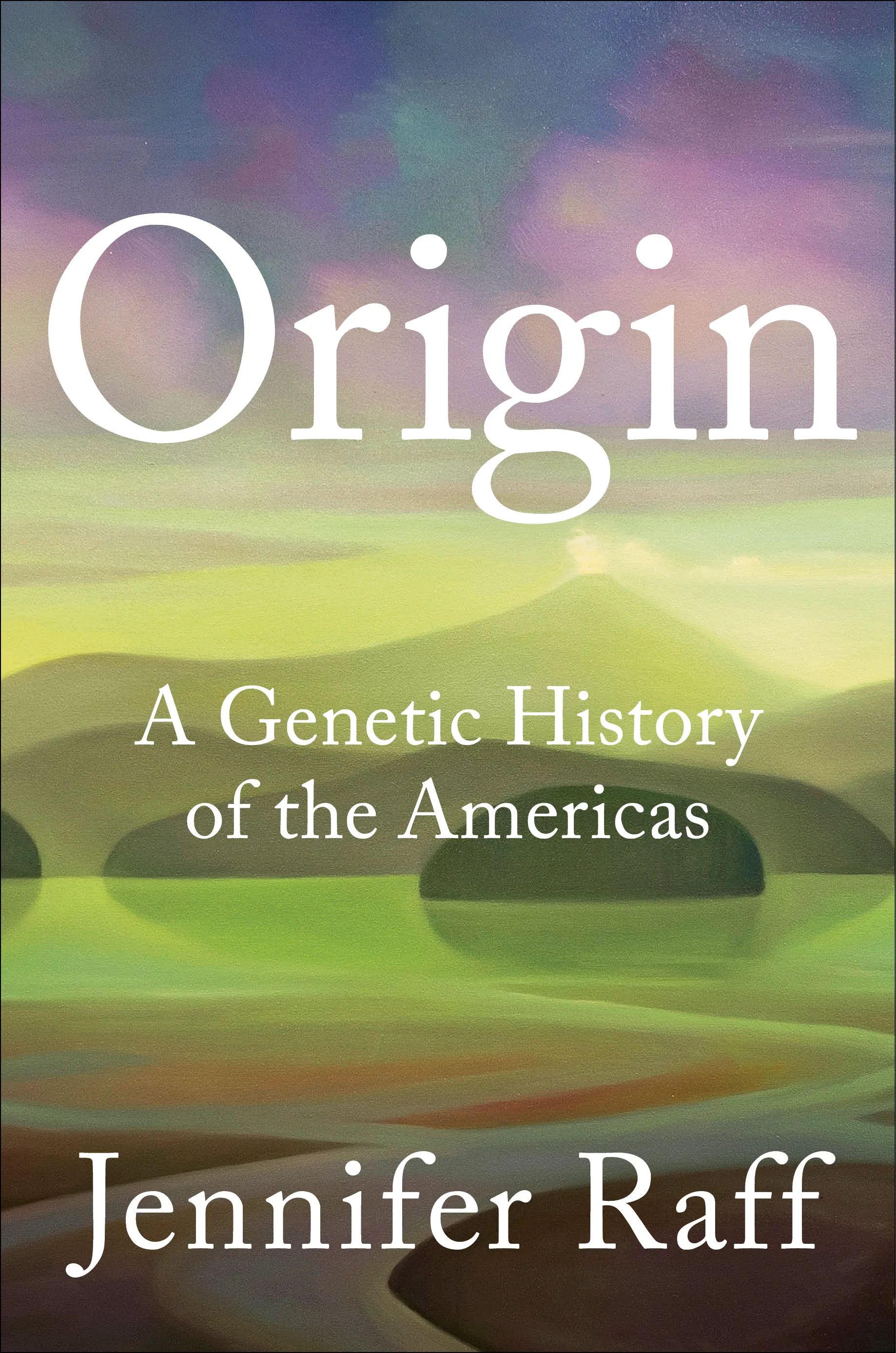
New Book: “Origin, A Genetic History of the Americas” by Jennifer Raff
Back in December 2020, Dr. Jennifer Raff of the University of Kansas spoke to in our General Meeting. Her program was titled “What Genetics Tells Us About the Peopling of the Americas”. It was an interesting look into what genetics can tell us about the settlement of North America. Now, she has a new book out,…
-

Mammoth and Horse DNA Left in Freezer Rewrite Ice Age Extinctions
Smithsonian Magazine has a story about research that shows that woolly mammoths and other Ice Age animals survived up to about 5,000 years ago instead of the accepted 13,000 years. Frozen permafrost samples collected about 10 years ago were analyzed and they revealed DNA of wooly mammoths, wild horses, and steppe bison. The research was…
-
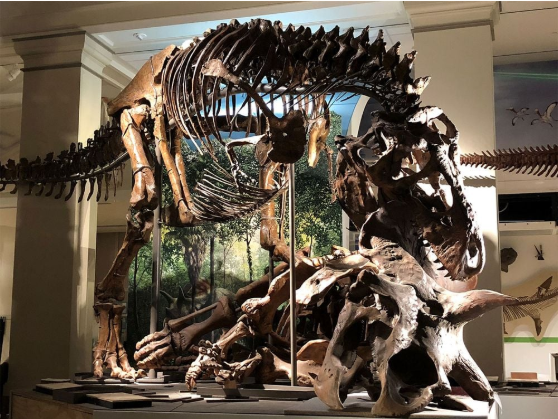
What We’ve Discovered About the ‘Tyrant Lizard King’ Since the Nation’s T. rex Was Unearthed
Smithsonian Magazine has a post about Tyrannosaurus rex. To date, about 50 T. rexes have been found, quite a few of those have been fragmentary. The Nation’s T. rex was discovered in 1988 in Montana by local rancher Kathy Wankel. It is often referred to as the “Wankel Rex”. Since then, we have learned so…
-
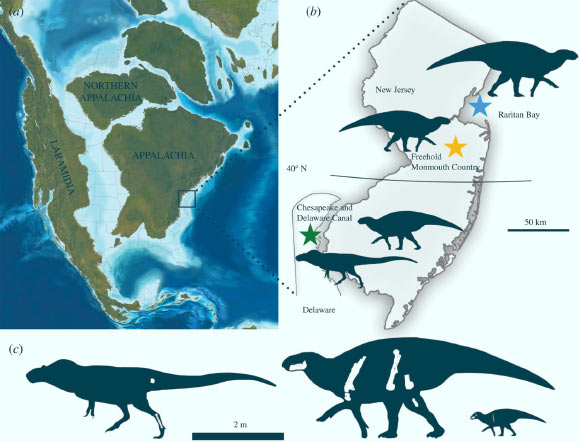
Two New Appalachian Dinosaurs Discovered
SciNews has a post about two new dinosaurs from Allalachia during the Cretaceous Period. Back in the Cretaceous Period, North America was bisected by the Western Interior Seaway. In the west was Laramidia for which the fossil record is very rich. The land mass to the east is called Appalachia. Much less is know about…
-
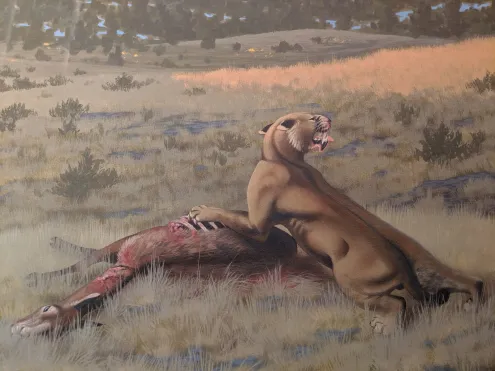
Nature: Newly Identified Species of Saber-Toothed Cat Was So Big It Hunted Rhinos in America
Nature as an article about the identification of a new species of large saber-toothed cat. The animal, Machairodus lahayishupup, lived between 5 and 9 million years ago in North America. It’s larger than its ancient relative Smilodon, weighing in around 600 pounds or larger. The research has been published in the Journal of Mammalian Evolution. A…
-
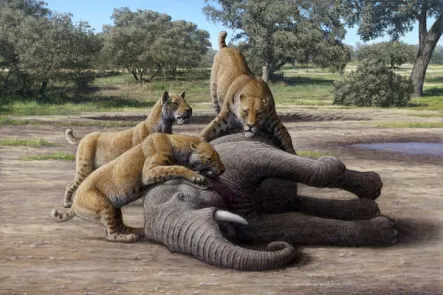
NYT: Baby Mammoths Were Meals for These Saber-Tooth Cats
The New York Times Trilobites column has a story about baby mammoths and saber-tooth cats. A recent paper in Current Biology provides evidence of saber-tool cats preying on baby mammoths. The research looked at fossils found in suburban San Antonio, Texas. When most people think of saber-tooth cats, they think of North America’s Smilodon. But…
-
PBS Eons: How To Survive the Little Ice Age
There’s a new episode of PBS Eons. Instead of northern Europe, this one looks at the little ice age in North America and how people survived. Nunalleq, a village in what’s today southwest Alaska, seemed to have thrived during the Little Ice Age. How did this village manage to survive and prosper during this…
-

SciNews: New Species of Duck-Billed Dinosaur Unearthed in New Mexico
SciNews has an article about a new dinosaur discovery. The animal, a duck-billed dinosaur called Ornatops incantatus, lived about 80 million years ago during the Cretaceous Period in what is now modern day New Mexico. A paper in the journal PeerJ has all the details. Its partial skeleton, including part of the skull, was found…
-
PBS Eons: What Happened to the World’s Biggest Beaver?
There’s a new episode of PBS Eons. This one is about Casteroides, which lived in North America up to about 10,000 years ago. It’s important to us that you understand how big this beaver was. Just like modern beavers, it was semiaquatic — it lived both on the land and in the water. The…
-
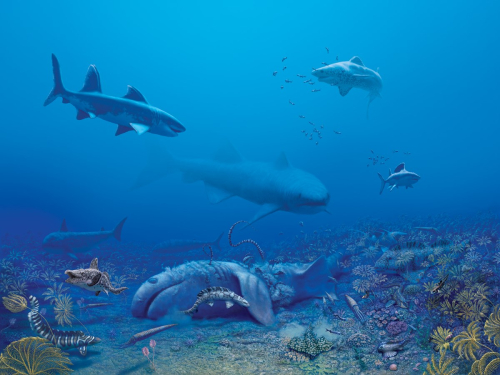
NPS.gov: Sharks, Fossils, and Caves: Secrets Revealed at Mammoth Cave
NPS.gov has a story about some remarkable new fossil discoveries in Mammoth Cave in Kentucky. The fossils date to the Mississippian Period about 325 million years ago and reveal a very diverse shark fauna. There are 40 species of shark, which includes six new species. The painting above and new information are being presented as…
-
PBS Eons: The First and Last North American Primates
There’s a new episode of PBS Eons. Did you know that primates actually evolved in North America? All the details here! Early primates not only lived in North America — our primate family tree actually originated here! So what happened to those early relatives of ours?
-
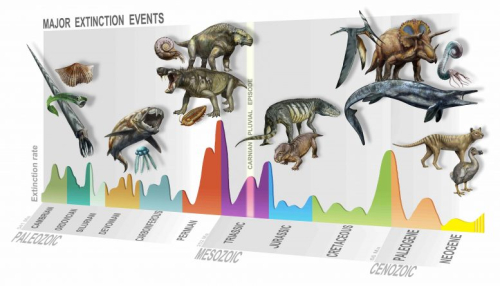
SciTechDaily: Discovery of a New Mass Extinction – Carnian Pluvial Episode – 233 Million Years Ago
SciTechDaily has a story about the identification of a new mass extinction. This one called the “Carnian Pluvial Episode”. It occurred about 233 million years ago during the Triassic Period. The cause is believed to be flood basaltic volcanic eruptions in western Canada. Some of the outcomes was the rise of the dinosaurs and the…
-
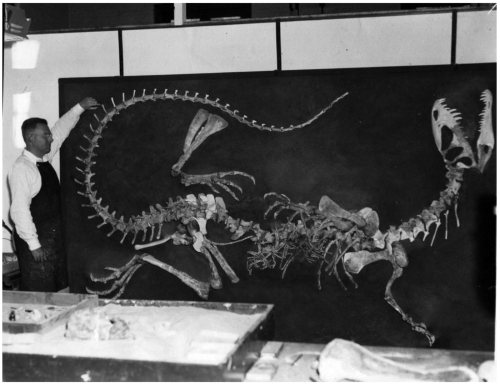
NatGeo: ‘Jurassic Park’ got almost everything wrong about this iconic dinosaur
National Geographic has a post about the “best worst-known” dinosaur – Dilophosaurus. Adam Marsh, a paleontologist at the Petrified Forest National Park in Arizona, led an effort to redescribe Dilophosaurus. That paper was published recently in the Journal of Paleontology. Now, the new analysis includes two previously unstudied fossil specimens from Arizona, providing the first…
-
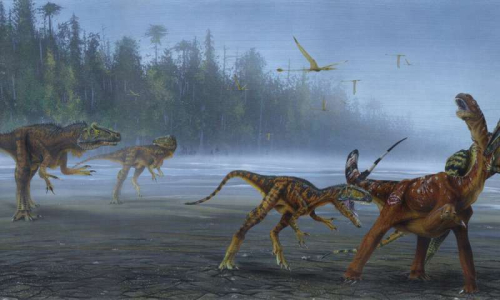
New species of Allosaurus discovered in Utah
Phys.org has a story about a new Allosaurus species discovered in Utah. The first specimen of the new species of Allosaur, called Allosaurus jimmadseni, was discovered back in the early 1990s in Dinosaur National Monument in northeastern Utah. It lived between 152 and 175 million years ago, during the Jurassic Period. It differs from the…
-
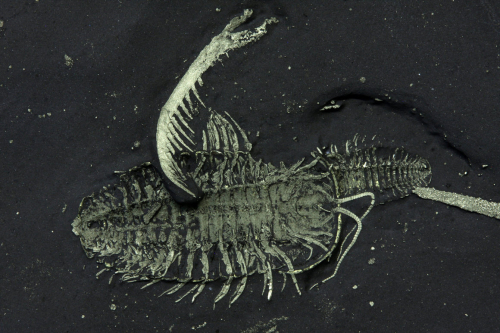
In Upstate New York, Ancient Arthropods Can Get Turned Into (Fool’s) Gold
Atlas Obscura has a piece about trilobites… golden trilobites. Trilobites are some of the most desirable fossils and highly detailed, pyritized trilobites are especially desirable. “Beecher’s Bed” is a famous trilobite quarry discovered and named for Charles Emerson Beecher, a paleontologist a the Peabody Museum of Natural History at Yale University. It is made of…
-
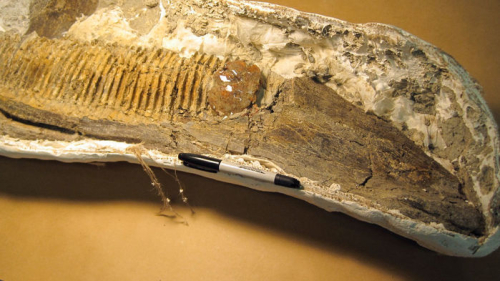
‘Remarkable’ fossil features an insect trapped in amber, stuck to a dinosaur jaw
Science has a post about a special fossil insect. The ‘remarkable’ fossil consists of sap-sucking aphids trapped in amber and stuck to the jawbone of a duck-billed dinosaur. It was discovered in 2010 in Dinosaur Provincial Park in Alberta, Canada. All the detail are in a paper publish in the journal Science. The “remarkable” two-for-one…
-
PBS Eons: Why Male Mammoths Lost the Game
There’s a new episode of PBS Eons. This one is about male mammoths and their dangerous and mostly solitary existence. Woolly mammoths, our favorite ice age proboscidean, disappeared from Europe and North America at the end of the last ice age, about 10,000 years ago. Today, we’ve teamed up with TierZoo to solve one…
-
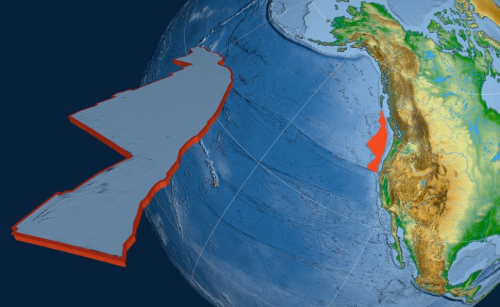
We Could Be Witnessing the Death of a Tectonic Plate, Says Earth Scientist
Live Science has a story about the tectonic plates along the West Coast of the United States. The plate named Juan de Fuca (pronounced “wahn de fyoo-kuh”), which is about the size of Michigan, has a large tear. The plate is located off the coast of Northern California extending north past Oregon, Washington, up to…
