Tag: insects
-
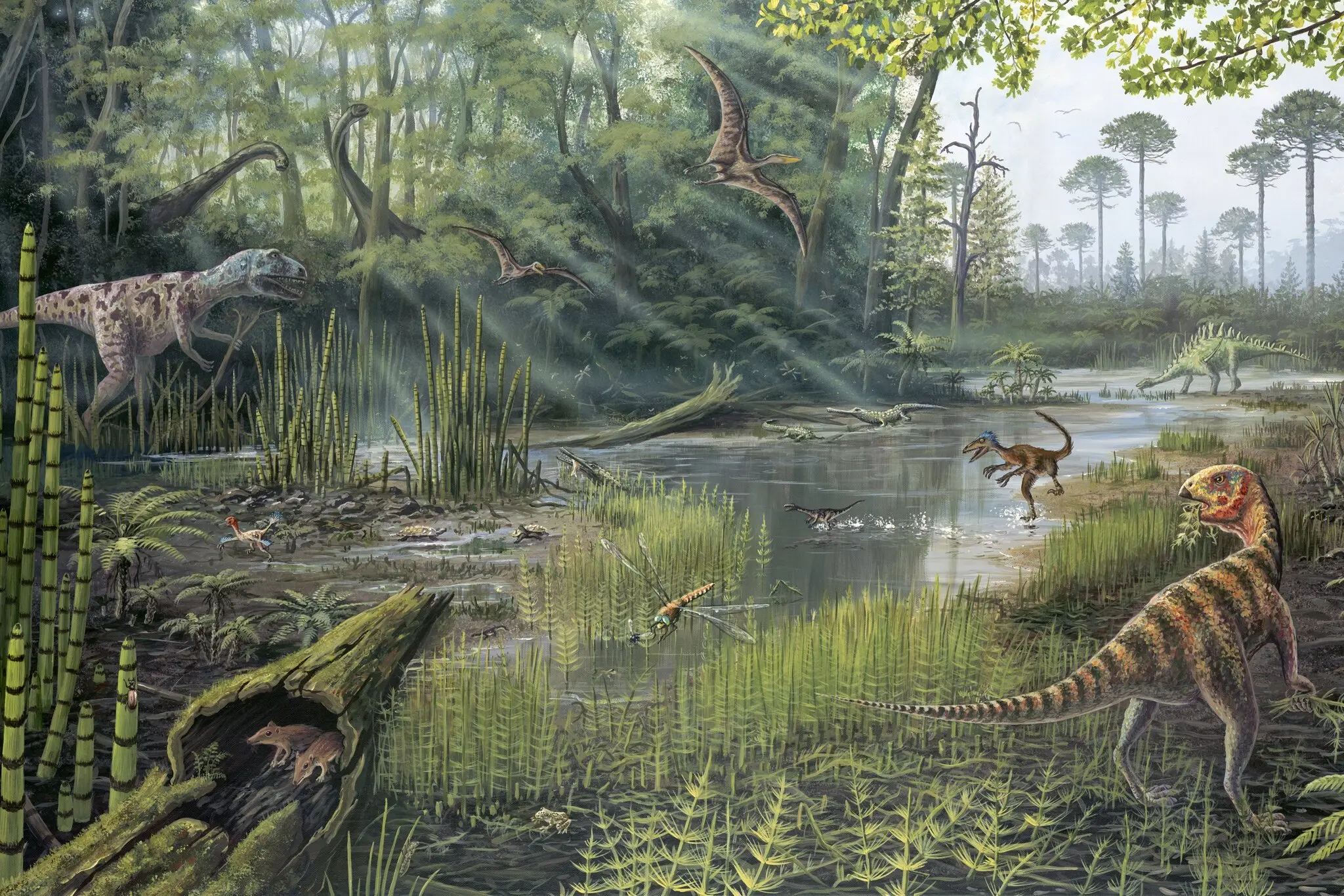
What Did Jurassic Forests Sound Like? Like This.
The New York Times has an interesting story about the sounds of Jurassic forests. Insect chirps, trills, and clicks make up a large part of the Earth’s modern soundscape. Recently, a group of researchers looked at fossilized insect wings from the Jurassic to determine the sounds they’d make 150 million years ago. The research paper…
-
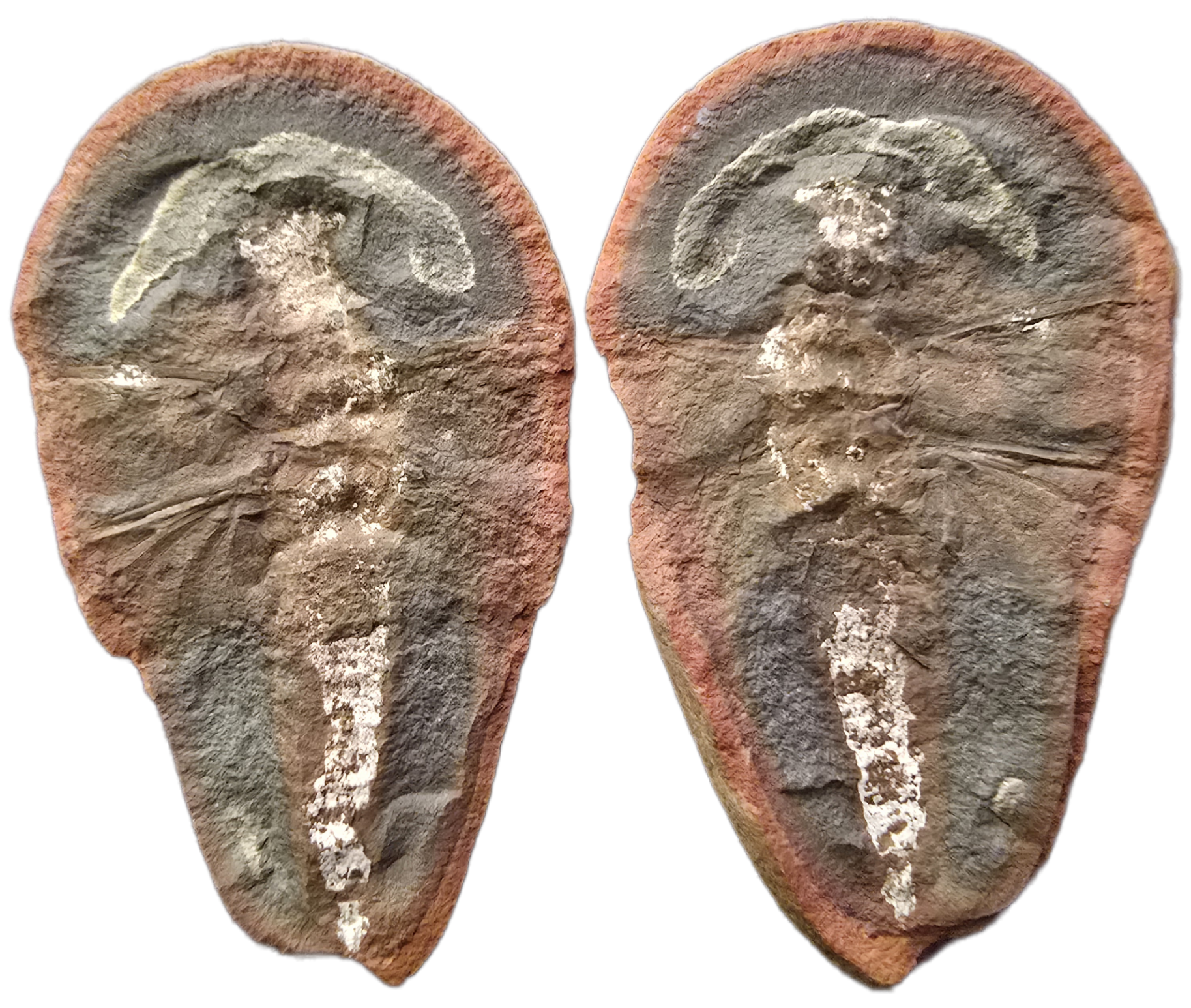
Fossil Friday #315: Eubleptus danielsi
Eubleptus danielsi belongs to the Palaeodictyoptera an extinct order of medium-sized to very large, primitive Palaeozoic paleopterous insects. E. danielsi was described by Anton Handlirsch in 1906. Handlirsch (1865 – 1935) was an Austrian entomologist, who worked extensively on many insect orders. He did significant work studying of fossil insects. Handlirsch described E. danielsi in “Revision of American Paleozoic insects. Proceedings of…
-

Mazon Monday #305: Herdina mirificus
This is Mazon Monday post #305. What’s your favorite Mazon Creek fossil? Tell us at email:esconi.info@gmail.com. Herdina mirificus is an extinct species of short-winged insect, currently classified in the order Protorthoptera. Protorthoptera is an extinct lineage of insects that lived during the middle to late Pennsylvanian Period some 318 to 299 million years ago. The…
-

Fossil Friday #296: Roachoid Wing from the Creek
This is the “Fossil Friday” post #296. Expect this to be a regular feature of the website. We will post fossil pictures you send in to esconi.info@gmail.com. Please include a short description or story. Check the #FossilFriday Bluesky/Twitter hash tag for contributions from around the world! This beautiful roachoid wing was collected from the Mazon…
-

PBS Eons: That Time the Earth Was Sticky
PBS Eons has a new episode. This is about Cretaceous amber… what it is, how it forms, and what is found in it. The Cretaceous Resinous Interval, a 54-million year period where amber was preserved in hundreds of locations across the world, was a gooey, gummy point in Earth’s history – and then amber suddenly…
-

ScienceNews: The first cicada concert was 47 million years ago
ScienceNews has a story about the first cicada concert. Fossil cicadas from Messel Pit in Germany suggests the first singing cicadas date to the Eocene some 47 million years ago. The fossil of Eoplatypleura messelensis, was collected around 1986 and identified as a cicada in 1988. Unfortunately, the researchers didn’t realize it was the oldest singing…
-

PBS Eons: The Arms Race That Made Insects Take Flight
PBS Eons has a new episode. This one is about the co-evolution of spiders and insects. Spiders and their ancestors have been driving an arms race that began before either stepped foot onto land and resulted in the first powered flight on Earth.
-
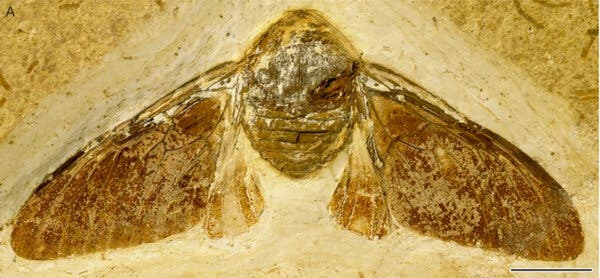
The Early Bird Got the Cicada, Then an Evolutionary Air War Started
The New York Times has a story about the evolution of flight in cicadas. New research published in the journal Science Advances found that cicadas likely evolved sleeker and more powerful wings due to the existential threat posed by birds. The researchers, including Chunpeng Xu a scientist at the Nanjing Institute of Geology and Palaeontology…
-

Mazon Monday #228: Eubleptus danielsi
Eubleptus danielsi belongs to the Palaeodictyoptera an extinct order of medium-sized to very large, primitive Palaeozoic paleopterous insects. Palaeodictyoptera give many clues to the evolution of wings in insects. E. danielsi was described by Anton Handlirsch in 1906. Handlirsch (1865 – 1935) was an Austrian entomologist, who worked extensively on many insect orders. He did…
-
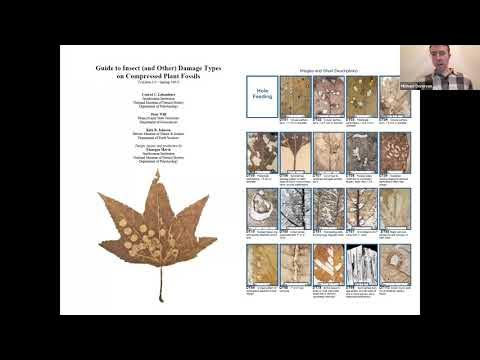
Video for ESCONI December 2023 General Meeting – “Ancient Forest Pests: Plant-Insect Interactions in the Fossil Record”
The December 8, 2023 General Meeting presentation was held via Zoom. It was presented by Michael Donovan, Collections Manager, Paleobotany at the Field Museum will present “Ancient Forest Pests: Plant-Insect Interactions in the Fossil Record”. Plants and insects are the most diverse multicellular organisms on Earth, and their abundant interactions are fundamental components of ecosystems…
-
PBS Eons: Beans & Bees (Not Bats) Gave Us Butterflies
PBS Eons has a new episode. This one is about the origin of butterflies. Turns out, instead of having bats to thank for the existence of butterflies, the groups we should actually be thanking are…bees and beans.
-
ESCONI December 2023 General Meeting – Friday, December 8th, 2023 at 8:00 PM via Zoom – “Ancient Forest Pests: Plant-Insect Interactions in the Fossil Record”
The December 8, 2023 General Meeting presentation will be held via Zoom: Michael Donovan, Collections Manager, Paleobotany at the Field Museum will present “Ancient Forest Pests: Plant-Insect Interactions in the Fossil Record”. Description: Plants and insects are the most diverse multicellular organisms on Earth, and their abundant interactions are fundamental components of ecosystems on land.…
-
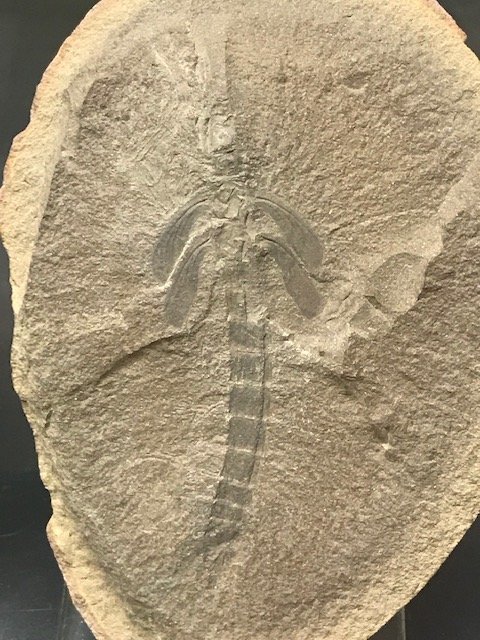
Mazon Monday #192: Mischoptera douglassi
This is Mazon Monday post #192. What’s your favorite Mazon Creek fossil? Tell us at email:esconi.info@gmail.com. Mischoptera douglassi is a winged fossil insect from the Pennsylvanian Period. It belongs to Superorder Palaeodictyopteroidea and Order Megascoptera. The first specimen was found by Lincoln Douglass in Pit 6 of the Northern Illinois Coal Company. Lincoln, was the…
-
PBS Eons: You’re Living On An Ant Planet
PBS Eons has a new episode over on Youtube. We are all living on an ant world…. How did ants take over the world? Well, it looks like they didn’t achieve world domination all by themselves. They may have just been riding the wave of a totally different evolutionary explosion.
-
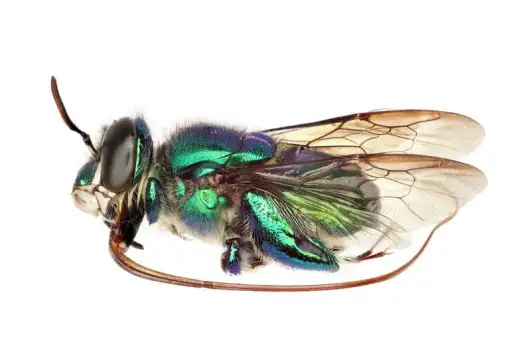
Bees likely evolved from ancient supercontinent, earlier than suspected
Phys.org has a story about the evolution of bees. A study in the journal Current Biology shows that bees are tens of years older than previously thought. The researchers looked at DNA from more than 200 species combined that with traits from 185 different bee fossils to develop an evolutionary history and genealogical models for…
-
PBS Eons: We Helped Make Mosquitoes A Problem
PBS Eons has a new video on Youtube. This one is about the pesky mosquitoes. Around 6,000 years ago, in the Sahel region of Africa, a lone female mosquito buzzed through the lush, green savannah. She couldn’t know it, but the planet itself was about to change in ways that would see her descendants evolve…
-
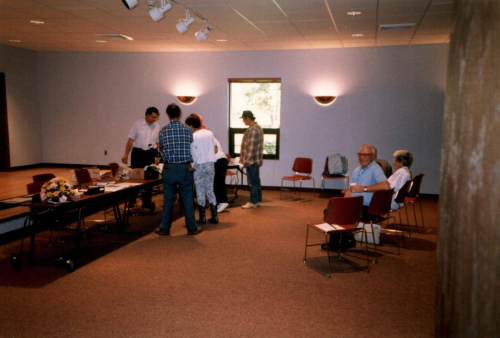
Mazon Monday #176: “Please, try for more fossil insects!”
Today’s post is an update to Mazon Monday #172, which was entitled “Fossil Insect Symposium 1990”. Long time ESCONI member Marty Houdek read that post and sent us some information about the event, because he was there! Actually, he’s in the last photo framed in the window, wearing the flannel shirt.
-
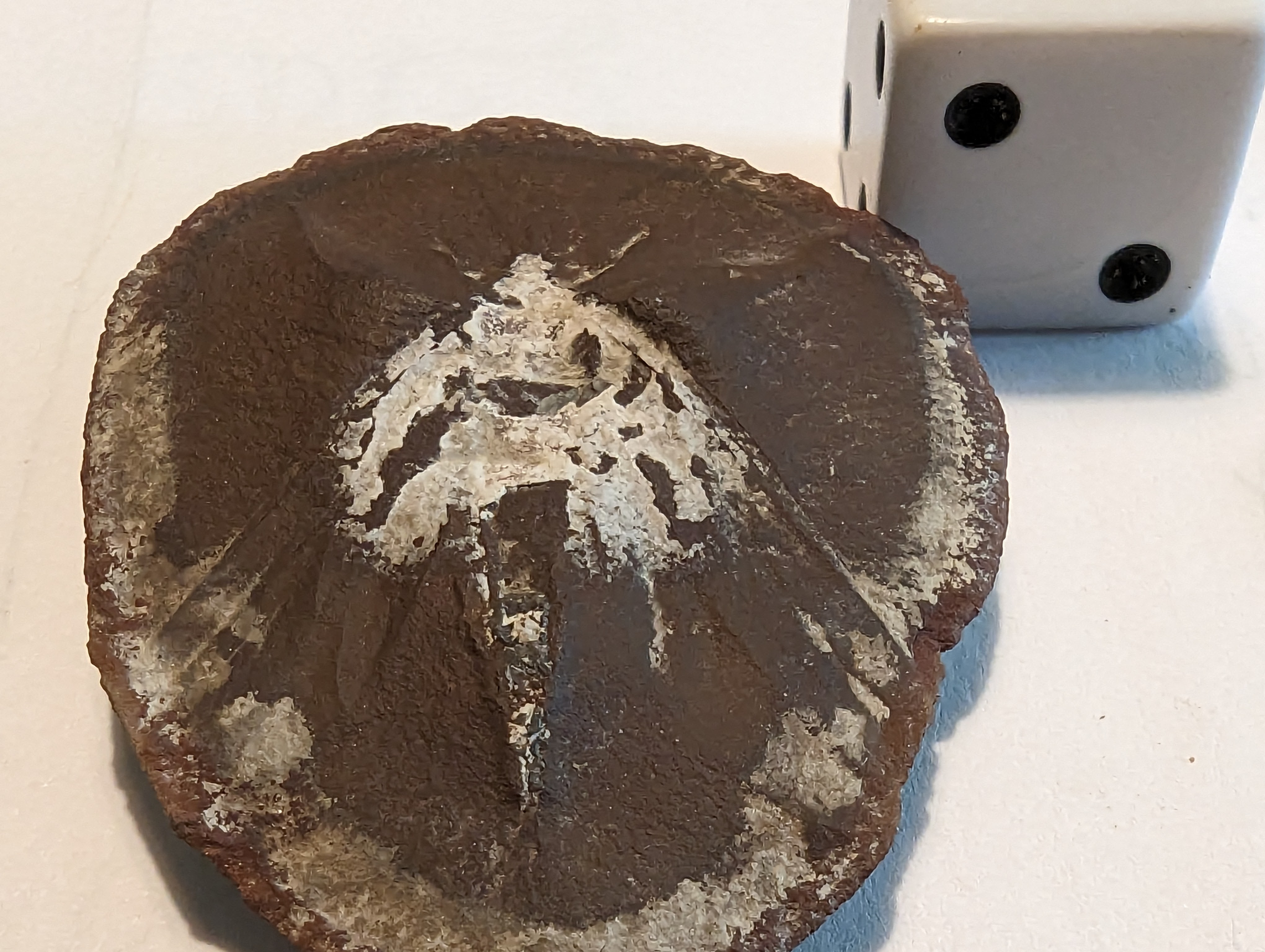
Fossil Friday #165: “Take ALL Fragments Home With You!!!”
This is the “Fossil Friday” post #165. Expect this to be a somewhat regular feature of the website. We will post any fossil pictures you send in to esconi.info@gmail.com. Please include a short description or story. Check the #FossilFriday Twitter hash tag for contributions from around the world! Another Fossil Friday, another Miamia bronsoni… insect…
-

Fossil Friday #164: A Miamia bronsoni with a story…
This is the “Fossil Friday” post #164. Expect this to be a somewhat regular feature of the website. We will post any fossil pictures you send in to esconi.info@gmail.com. Please include a short description or story. Check the #FossilFriday Twitter hash tag for contributions from around the world! Or… “A Mazon Creek Story 39 Years…
-
The Origin of Butterflies: A 100 Million-Year-Old Mystery Unraveled
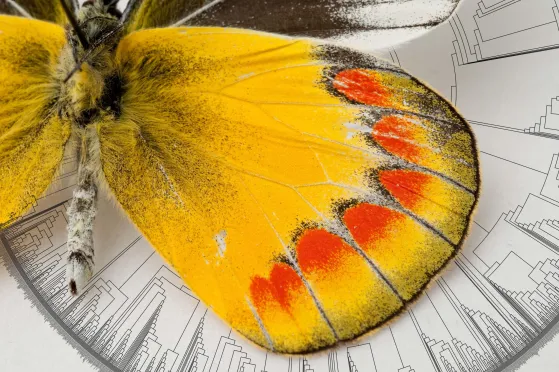
SciTechDaily has an article about the evolution of butterflies. A paper in the journal Nature Ecology and Evolution details new evidence about the origin of butterflies about 100 million years ago. Until recently, the order lepidoptera was thought to have arisen as a result of predation by bats after the extinction of the non-avian dinosaurs.…
-
Fossils reveal the long-term relationship between feathered dinosaurs and feather-feeding beetles
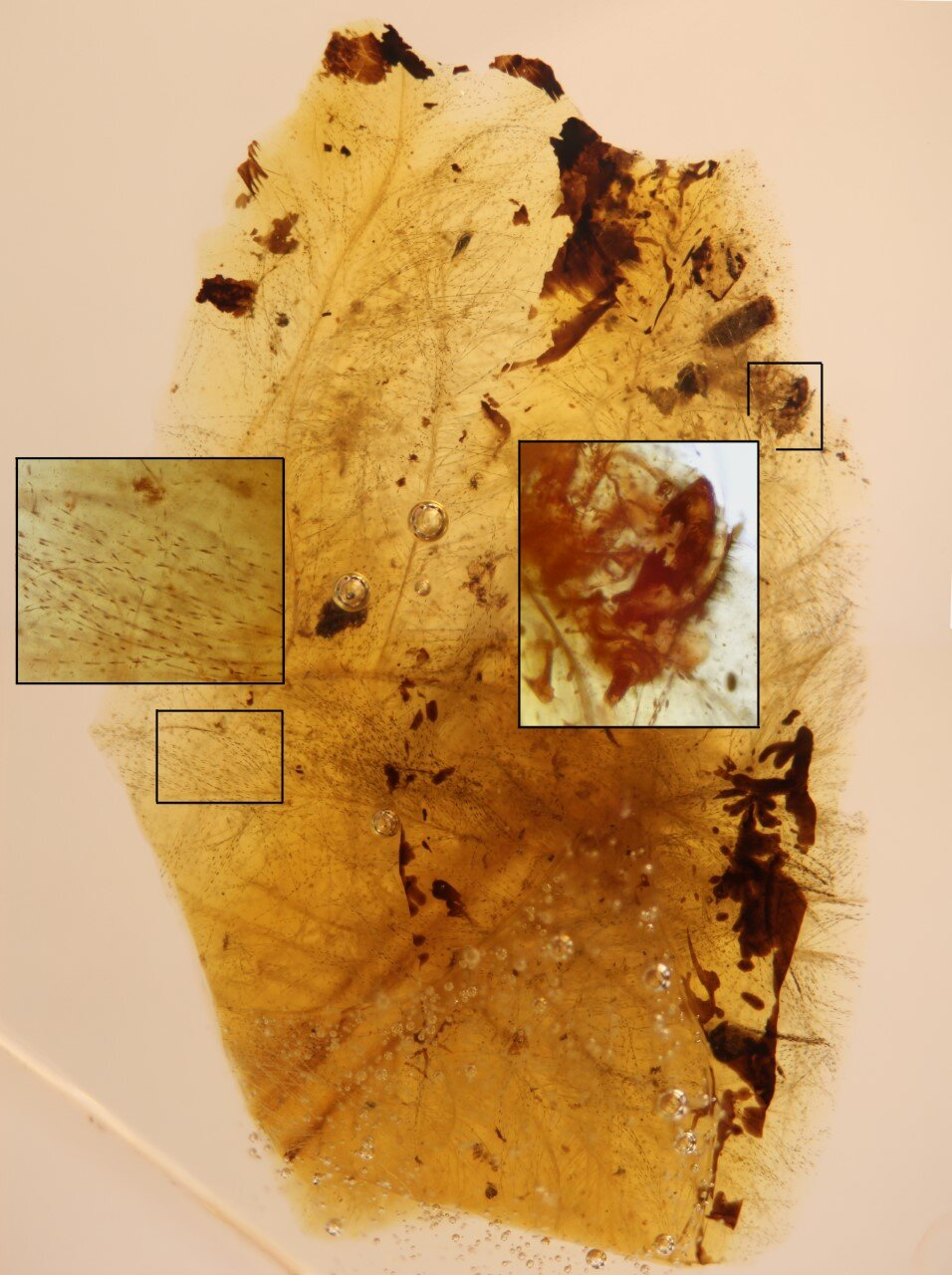
Phys.org has a story about an discovery in Mesozoic amber. The amber reveals a parasitic beetle feeding on some feathers. The researchers were unable to determine if the relationship was one of mutual benefit or one-sided. The amber is about 105 million years old from a Spanish locality near San Just. The paper was published…
-
PBS Eons: Why Does Caffeine Exist?
PBS Eons has a new episode. This one is about the origins of caffeine and why it evolved. Today, billions of people around the world start their day with caffeine. But how and why did the ability to produce this molecule independently evolve in multiple, distantly-related lineages of flowering plants, again and again?
-
Jurassic insect wore eggs on its legs, fossils show
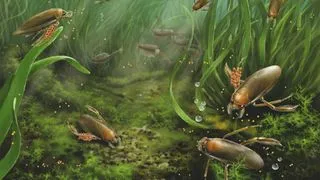
Live Science has a story about a Jurassic insect discovery. Fossils show that a water bug that lived about 160 million years ago carried its eggs on its legs. The fossils were discovered in the Haifanggou Formation, a fossil-filled rock deposit near the village of Daohugou in northeastern China. A paper in the journal Proceedings…
-
500-million-year-old fossilized brains of Stanleycaris prompt a rethink of the evolution of insects and spiders
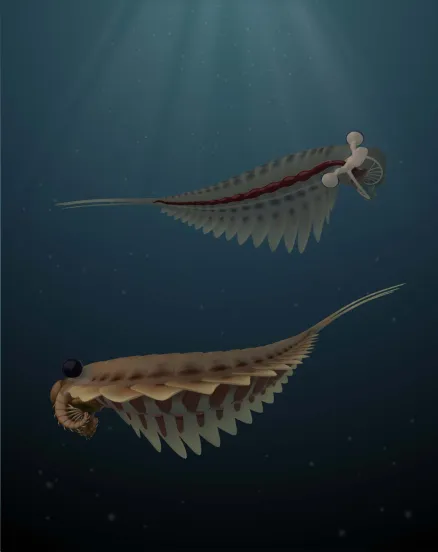
Phys.org has a story about fossilized brains…500 million year old brains. A recent paper from researchers at the Royal Ontario Museum in Toronto, Canada describes the fossilized brain in a species of Radiodont called Stanleycaris. The animal is related to Anomalocaris and distantly related to modern day spiders and insects. This amazing fossil was collected…
-
PBS Eons: When Ants Domesticated Fungi
There's a new episode of PBS Eons. This one is about one of Earth's first farmers… ants! While we’ve been farming for around 10,000 to 12,000 years, the ancestors of ants have been doing it for around 60 million years. So when, and how, and why did ants start … farming?
-

Fossil Friday #96: Mazon Creek Insect Nymph
This is the “Fossil Friday” post #96. Expect this to be a somewhat regular feature of the website. We will post any fossil pictures you send in to esconi.info@gmail.com. Please include a short description or story. Check the #FossilFriday Twitter hash tag for contributions from around the world! We have another Mazon Creek insect this…
-
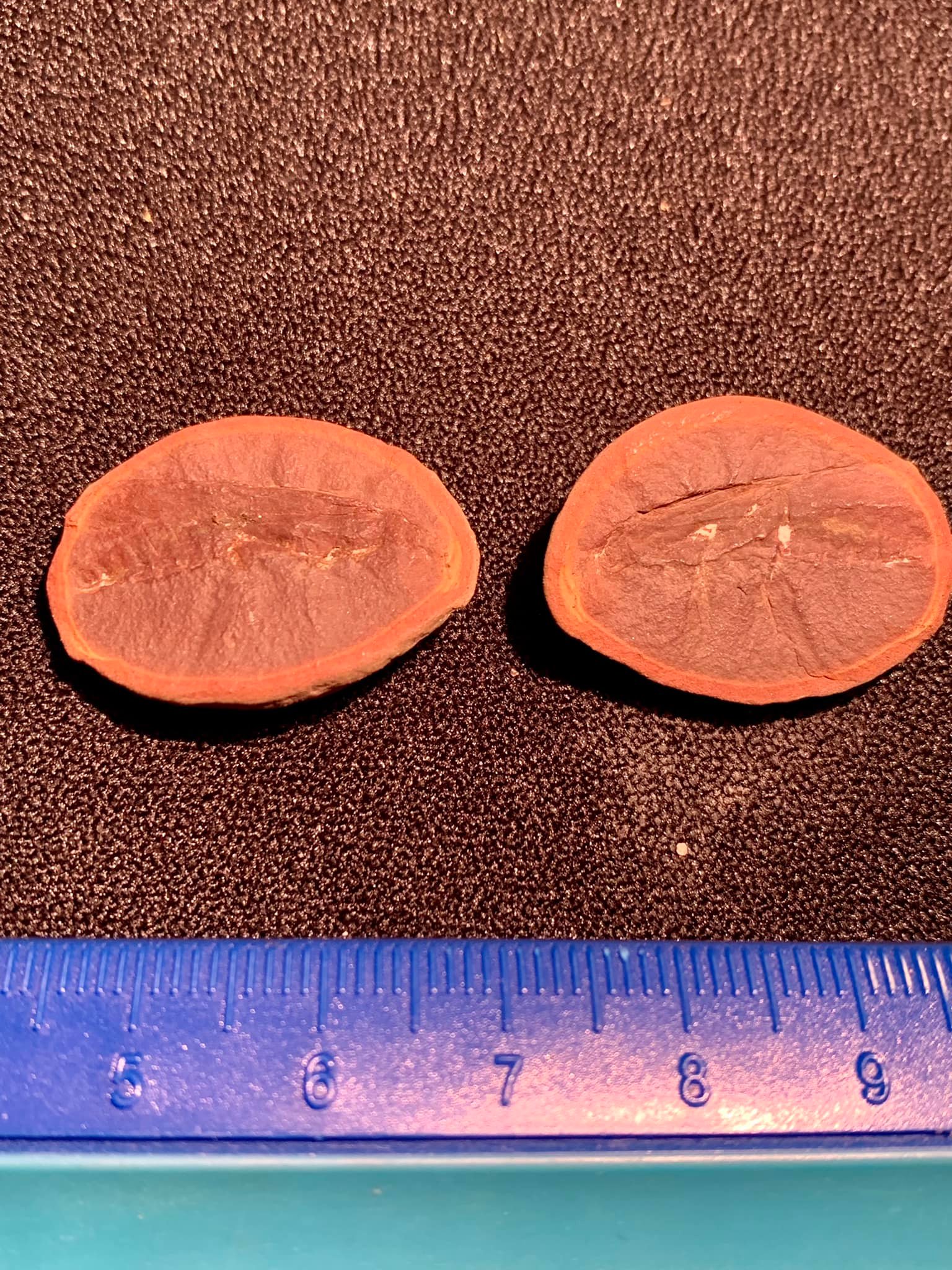
Fossil Friday #95: Mazon Creek Winged Insect – Diaphanopterodea
This is the “Fossil Friday” post #95. Expect this to be a somewhat regular feature of the website. We will post any fossil pictures you send in to esconi.info@gmail.com. Please include a short description or story. Check the #FossilFriday Twitter hash tag for contributions from around the world! This absolutely stunning Mazon Creek insect comes…
-
PBS Eons: How the Rise of Social Insects Shrunk These Dinosaurs
PBS Eons has a new episode. This one is about a group of dinosaurs called alvarezsaurs that some researchers think might have eaten insects. We often think of dinosaurs as either preying on other dinos or mammals, or as plant-eaters — but in ecosystems today, those aren’t the only two options. So why would…
-

NYT: Fossils of a Prehistoric Rainforest Hide in Australia’s Rusted Rocks
The New York Times has a story about an amazing fossil rain forest. Dating to about 15 million years ago during the Miocene Epoch, this deposit hold exquisitely preserved insects, spiders, plans, even a feather. A description of the site was published recently in the journal Science Advances, Fifteen million years ago, a river carved…


